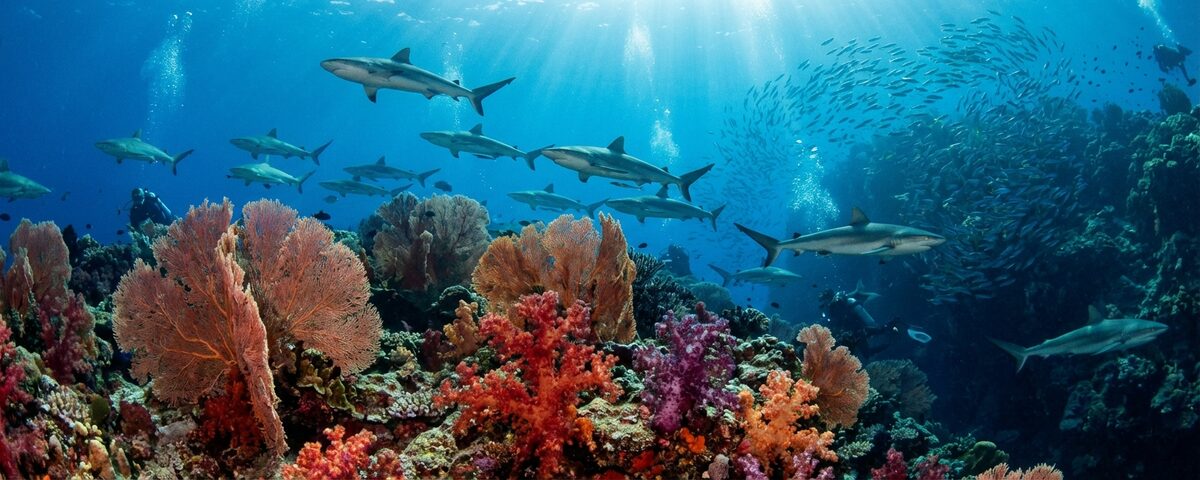
Fushi Kandu Dive Site
Laamu Atoll, Maldives · Near Maabaidhoo
Overview
Fushi Kandu cuts through the northeast barrier reef of Laamu Atoll, connecting the deep Indian Ocean to the atoll's interior lagoon between the uninhabited island of Fushi and the local island of Maabaidhoo. It is the only marine protected area in Laamu Atoll, and that designation tells you most of what you need to know about its importance. The channel functions as the primary artery through which ocean currents deliver nutrients, plankton, and pelagic visitors into one of the Maldives' least-dived atolls.
What sets Fushi Kandu apart from dozens of other channel dives across the Maldives is the combination of five distinct thilas rising from the channel floor at 30 to 40 metres. These submerged pinnacles are covered in gorgonian sea fans, soft corals, and whip corals that filter the constant flow of nutrient-rich water. The thilas create a topography that breaks the current into eddies and upwellings, concentrating marine life in ways that a simple channel wall cannot replicate. Grey reef sharks patrol the deeper sections in packs. Eagle rays cruise through mid-water. Schools of fusiliers and snappers bank and turn in formations so dense they temporarily block out the blue behind them.
The channel stretches roughly 250 metres across, narrow enough that on a clear day you can see both reef walls simultaneously from the centre. The shallow entrance sits at 10 to 15 metres before the floor drops away to a deeper plateau at 35 metres. This depth profile rewards experienced divers who can manage their gas consumption and no-decompression limits while dealing with current that ranges from manageable to genuinely demanding.
Laamu Atoll sits in the southern central Maldives, far enough from Malé that tourist infrastructure remains limited compared to North and South Malé or Ari Atoll. Six Senses Laamu is the only international resort in the atoll, and its in-house marine biology team (the Maldives Underwater Initiative, a collaboration with the Manta Trust, Blue Marine Foundation, and the Olive Ridley Project) has been studying Fushi Kandu's ecosystem since 2018. Their research has documented the channel's role as a critical cleaning station for reef manta rays, with 165 manta encounters recorded at the site in 2021 alone and a peak count of 11 mantas at the cleaning station simultaneously.
The site's protected status means no fishing is permitted within the channel boundaries. The difference is visible. Coral coverage remains high, fish populations are dense and unfazed by divers, and the larger predators behave with a confidence you rarely see at heavily dived sites further north. Fushi Kandu delivers the kind of diving experience that people travel to the Maldives hoping to find but often miss at the more accessible, more crowded atolls.
Marine Life at Fushi Kandu
Grey reef sharks are the headline act at Fushi Kandu. They work the current lines along the channel edges and around the thilas in groups of five to fifteen, sometimes more during incoming tides when the oceanic flow pushes baitfish into the channel mouth. These are not the tentative grey reefs you encounter at over-dived sites. They patrol with purpose, occasionally making close passes that remind you this is their territory and you are a guest in it.
The manta ray cleaning station sits near the channel entrance, just below the surf break known locally as 'Machine'. Reef mantas (Mobula alfredi) visit this station to have parasites and dead skin removed by cleaner wrasse. The shallow, warmer water above the cleaning station aids their thermoregulation and digestion. During the southwest monsoon from June to November, encounters become frequent and sometimes spectacular. Mantas arrive singly or in small groups, hovering almost motionless over the cleaning rocks while the tiny wrasse work their gill plates and belly surfaces. On exceptional days, the station hosts double-digit numbers of rays simultaneously.
Eagle rays are regular visitors, typically spotted gliding through mid-water across the channel. Spotted eagle rays are the most common species, their white-spotted dorsal pattern unmistakable against the blue. They tend to travel in pairs or small groups, though solitary individuals are equally common. They are skittish compared to the mantas and will alter course if approached too directly.
The five thilas within the channel are the site's structural backbone. Their surfaces are colonised by gorgonian sea fans that spread across the current-facing edges, some reaching well over a metre in span. Soft corals in purples, oranges, and reds fill the gaps between the gorgonians. Black coral bushes grow in the deeper sections below 25 metres. The overall effect is a vertical garden of filter feeders, each positioned to intercept the plankton carried by the channel's tidal flow.
Schooling fish dominate the water column. Blue-striped fusiliers stream past in curtains of silver and blue. Red snapper and blue-lined snapper aggregate along the reef edges in dense, copper-coloured clouds. Giant trevally hunt the perimeter of these schools, accelerating from a slow cruise to a sudden strike in the space of a heartbeat. Barracuda hold station in loose chevron formations near the channel mouth, usually at the edge of visibility where the blue deepens.
Whitetip reef sharks rest on sandy patches between the thilas during daylight hours. Nurse sharks tuck themselves under overhangs. Hawksbill turtles feed on sponges growing on the thila walls, tolerant enough of divers to allow close observation. Green turtles graze on algae at shallower depths near the channel entrance.
The macro life is less discussed but worth attention. Nudibranchs decorate the coral surfaces. Cleaner shrimp stations operate on several of the thilas, where moray eels and groupers queue patiently for their turn. Lionfish hover under ledges. Leaf scorpionfish cling to coral branches, their camouflage so effective that most divers swim past without noticing them.
Dolphins are spotted regularly from the surface at Fushi Kandu. Spinner dolphins and bottlenose dolphins frequent the channel entrance, and on occasion they make appearances during dives, circling a group of divers once or twice before disappearing back into the blue. Five different dolphin species have been recorded in the waters around the channel.
Dive Conditions
Current is the defining feature of every dive at Fushi Kandu. The channel funnels tidal flow between the open ocean and the atoll lagoon, and the strength varies from a gentle drift on neap tides to a genuine challenge during springs. Incoming current (ocean to lagoon) typically brings cleaner water and better visibility, pushing pelagic species into the channel mouth. Outgoing current (lagoon to ocean) tends to carry more particulate matter but concentrates plankton near the thilas, which is what draws the mantas and the schooling fish.
The channel entrance can be approached two ways. On moderate current days, your guide will have the boat drop you to one side of the entrance, and you swim in along the reef wall. On stronger current days, a negative entry is standard: you drop from the boat in open blue water and descend quickly to depth, letting the current carry you into the channel. The negative entry requires confidence and good buoyancy control. Hesitation at the surface means getting swept past the entry point, and the boat has to reposition for another attempt.
Depth management matters here. The channel floor sits at 35 metres, with the thilas rising to around 10 to 15 metres at their shallowest. The temptation to explore the deeper sections around the thila bases is real, but bottom time at 30-plus metres burns through your no-decompression limit fast. Plan your dive profile before entry: decide whether you are doing a deep start with a gradual ascent up the thilas, or holding mid-water around 18 to 22 metres for a longer dive with better gas efficiency.
Visibility ranges from 15 metres on a murky outgoing tide to 35 metres on a clean incoming current during the dry northeast monsoon. The realistic average sits around 20 to 25 metres. January through April delivers the best clarity overall, with calmer seas and less rainfall. The wet southwest monsoon from May to November brings plankton-rich water that reduces visibility somewhat but dramatically increases biological activity.
Water temperature is stable year-round, holding between 27 and 30 degrees Celsius. Thermoclines occasionally drop the temperature by 2 to 3 degrees at depth during incoming tides, when colder oceanic water pushes into the channel. A 3mm full wetsuit handles the warmth comfortably. Some divers prefer a 5mm for repetitive daily diving or if they plan extended time at 30-plus metres where the thermocline bites.
Surface conditions at the channel entrance can be rough when wind opposes current. Short, choppy waves make entries and exits uncomfortable but rarely dangerous. Your boat captain will position for the most sheltered entry point based on conditions. After the dive, deploy your SMB early; the channel sees boat traffic from resort transfers and fishing vessels outside the protected zone.
The site is diveable year-round. There is no closed season, though some liveaboard operators avoid the deep south during the wettest months of July and August when weather windows become less predictable.
⚓ Divemaster Notes
Read the current before every entry. This is not a site that tolerates lazy planning. Check surface flow direction against the reef, confirm the tide state with your boat captain, and brief your group on the entry method before anyone gets in the water. On strong incoming tides, the negative entry into the channel mouth is the only viable approach. If your group includes divers who have never done a negative entry, brief them thoroughly on the boat. Hesitation at the surface results in a missed entry and wastes everyone's dive time while the boat repositions.
The five thilas inside the channel create complex current patterns. Water accelerates around and between the pinnacles, and eddies form on the lee side of each thila. Use these eddies to your advantage: position your group in the shelter of a thila to observe pelagic traffic in the adjacent current stream without fighting the flow. Moving between thilas requires crossing open current, so signal your group clearly before each crossing and ensure everyone moves together.
Depth discipline is critical. The channel floor at 35 to 40 metres is seductive, particularly around the thila bases where the biggest gorgonians grow and the grey reef sharks concentrate. But dropping to 35 metres on air gives you roughly 10 minutes of no-decompression time, which is barely enough to look around before you need to start ascending. If your group wants deep time, insist on Nitrox and plan a single deep excursion followed by a gradual ascent up the thila walls.
For manta encounters at the cleaning station near the channel entrance, position your group at 8 to 12 metres on the reef edge, below and to the side of the station. Do not approach from above. Mantas at cleaning stations are following established flight paths, and a group of divers positioned in their approach corridor will cause them to abort and leave. Settle in, control your bubbles, and wait. If the mantas are present, they will come to you. If your group starts finning toward them, the encounter is over.
SMB deployment is mandatory before ascending above 5 metres. The channel entrance sees regular boat traffic from resort transfers, local fishing vessels operating outside the protected boundary, and surf boats heading to the Machine break above the cleaning station. A diver surfacing without a marker in this area is at genuine risk.
Photography guidance: wide-angle is the only sensible choice for this site. The thilas with their gorgonian fans, the shark aggregations, the manta cleaning station, and the schooling fish formations all demand a wide field of view. Bring dual strobes for the thila wall shots where ambient light at 25-plus metres renders everything monochrome blue. For the mantas at the cleaning station, available light often works better than strobes because the shallow depth and clean water provide sufficient ambient illumination, and strobe pulses can disturb cleaning behaviour.
How to Get to Fushi Kandu
Laamu Atoll sits in the southern central Maldives, roughly 270 kilometres south of Malé. Getting there requires either a domestic flight or a seaplane transfer, as there is no ferry service that runs the full distance in a reasonable timeframe.
Kadhdhoo Airport (KDO) on Laamu Gan handles domestic flights from Velana International Airport (MLE) in Malé. Maldivian Airlines operates the route with turboprop aircraft, and the flight takes approximately 40 minutes. Fares vary between $100 and $200 USD one way depending on season and booking window. From Kadhdhoo Airport, Maabaidhoo is a short speedboat ride of 15 to 20 minutes across the atoll lagoon.
Six Senses Laamu operates private seaplane transfers for resort guests, departing from the seaplane terminal at Velana International Airport. The flight takes about 65 minutes and offers panoramic views of the atolls below. Seaplane transfers must be booked through the resort and are included in some package rates.
From Maabaidhoo, Fushi Kandu is a 10 to 15 minute boat ride to the northeast. The channel sits between Maabaidhoo and the uninhabited island of Fushi, making it one of the closest premium dive sites to any inhabited island in the atoll.
Mundoo, another inhabited island nearby, also serves as an access point. A small number of guesthouses operate on Mundoo, though the tourism infrastructure is basic compared to the guesthouse hubs in Malé and South Malé atolls. Diving from a local island in Laamu costs significantly less than resort diving, typically $50 to $80 USD for a two-dive trip.
For liveaboard access, boats running deep south itineraries from Malé typically reach Laamu Atoll on day two or three of a week-long trip. The transit involves crossing several atolls and open channels, and operators schedule the passage to arrive at Laamu's key sites during optimal tidal windows.
International flights arrive at Velana International Airport (MLE) on Hulhulé island, connected to Malé by bridge. Plan your arrival to connect with the domestic flight schedule to Kadhdhoo. Afternoon arrivals in Malé may require an overnight stay in the capital before continuing south the following morning.
Gear Recommendations
A 3mm full wetsuit handles the 27 to 30 degree water comfortably for most divers. A 5mm is worth considering if you plan repetitive daily diving over several days or if you intend to spend significant time below 25 metres where thermoclines can drop the temperature by 2 to 3 degrees during incoming tides.
Surface marker buoy and reel are mandatory, not optional. The channel entrance sees boat traffic throughout the day, and surfacing without a visible marker is a serious safety risk. Carry your own rather than relying on your operator's rental gear. A brightly coloured SMB in good condition could save your life in this specific environment.
A reef hook can be useful at Fushi Kandu, particularly when you want to hold position on a thila edge and watch the pelagic parade without burning air fighting the current. Hook into dead rock only, never live coral, and ensure your group knows the protocol for hooking and unhooking in current. Some operators discourage reef hooks due to coral damage risk; follow your guide's policy.
A dive torch opens up the overhangs and crevices around the thilas where nurse sharks rest, moray eels lurk, and the true colours of the soft corals hide behind the blue light filter of depth. Something in the 800 to 1500 lumen range is sufficient. Avoid overpowered lights that disturb resting sharks or blind your fellow divers in confined spaces.
Nitrox (EANx32 or EANx36) is strongly recommended for this site. The depth profile at Fushi Kandu means you will spend meaningful time between 20 and 35 metres, and the extended no-decompression limits that Nitrox provides translate directly into more time watching sharks, more time on the thila walls, and less time staring at your computer willing the numbers to stay green. Six Senses' dive centre offers Nitrox; availability at local island operators varies.
For photography, a wide-angle setup is essential. A fisheye or wide rectilinear lens (10-17mm on crop, 15-30mm on full frame) captures the scale of the thilas and the density of the schooling fish. Dual strobes are necessary for the deeper thila shots where ambient light fails. A compact camera with a wide-angle wet lens works well for non-dedicated photographers who still want to document the site.
A dive computer with a clear, easy-to-read display is important at a site where depth management directly determines dive quality and safety. If you are diving on air, set a conservative no-decompression alarm. The thilas make it very easy to drift deeper without noticing.
Recommended Dive Operators
Six Senses Laamu runs its dive centre through Deep Blue Divers, a PADI 5-Star operation staffed by a multilingual team of instructors and divemasters. Their guides know Fushi Kandu in granular detail, adjusting dive plans based on real-time current readings and recent marine life sighting patterns. The centre's equipment is well maintained, Nitrox is available, and group sizes are kept small. The integration with the Maldives Underwater Initiative means their guides carry genuine marine biology knowledge, not just route familiarity. Resort diving prices are premium, reflecting the Six Senses brand, but the quality of guiding and the post-dive facilities justify the cost for guests already staying at the resort.
Reveries Diving Village on Maabaidhoo offers a local island alternative. This guesthouse-dive operation combination provides affordable access to Fushi Kandu and other Laamu sites at a fraction of resort pricing. Their guides are local to the atoll and bring the kind of granular knowledge that comes from diving these sites year-round across all seasons and conditions. Equipment quality is adequate though not luxury-grade. If you own your own core gear (mask, computer, wetsuit), bring it.
For liveaboard access, several operators include Laamu Atoll on their deep south routes. Emperor Voyager and Emperor Serenity run southern Maldives itineraries that pass through Laamu, with Fushi Kandu as a scheduled highlight. Their onboard guides carry extensive experience across all Maldivian atolls and adjust dive plans based on conditions. Pricing ranges from $200 to $350 per person per night depending on cabin grade and season.
Carpe Diem Maldives operates deep south safari routes covering Laamu, Thaa, and Huvadhoo atolls. Their boats are well equipped for photography with dedicated camera rinse tanks and charging stations. The advantage of a liveaboard visit is timing flexibility: captains can position the boat for optimal current windows rather than being tied to a morning or afternoon schedule from a fixed base.
Scubaspa's luxury liveaboard vessels occasionally include Laamu on extended itineraries combining diving with onboard spa services. Top-end pricing at $350 to $500 per night, but the experience targets couples and divers seeking a premium all-inclusive package.
Liveaboard Options
Laamu Atoll sits on the deep south liveaboard route, a multi-day itinerary that ranks among the most rewarding in the Maldives for experienced divers willing to trade convenience for remoteness.
Emperor Voyager and Emperor Serenity both run southern Maldives safaris that include Laamu Atoll. Their 'Deep South' itinerary typically departs Malé and works southward through Meemu, Thaa, and Laamu atolls before continuing to Huvadhoo and sometimes Addu. Fushi Kandu features as a primary dive stop in Laamu, usually with two or three dives at the site to cover both deep channel exploration and manta cleaning station visits. Pricing runs $200 to $350 per person per night depending on cabin category. Their boats carry experienced guides, Nitrox is included, and the dive deck facilities are well organised for large groups.
Carpe Diem and Carpe Vita operate similar deep south routes with a focus on smaller group sizes and personalised guiding. Their itineraries often spend two full days in Laamu Atoll, allowing multiple dives at Fushi Kandu across different tidal states. Camera facilities include dedicated rinse tanks, charging stations, and camera tables. Mid-range to premium pricing at $250 to $400 per night.
MV Mozaique targets the mid-range market on southern routes. Their guides are familiar with Laamu's sites and coordinate with Six Senses' marine biology team for current sighting reports. Nitrox is included in package pricing. Comfortable accommodation without the luxury premium.
Scubaspa Ying and Scubaspa Yang occasionally extend their central atoll routes to include Laamu on longer 10 to 14 night safaris. The spa-and-dive combination targets couples and premium travellers. Pricing at the top end of the market ($350 to $500 per night) but the onboard experience is difficult to replicate.
Four Seasons Explorer runs occasional Laamu itineraries as part of their broader Maldives liveaboard programme, offering ultra-premium pricing with service standards to match.
Booking deep south trips requires advance planning. These routes run primarily from November through April when weather in the southern atolls is most reliable. The shoulder months of May and October offer lower prices and fewer boats, though weather windows become less predictable. Demand for the best cabins on popular departure dates is strong; booking six to twelve months ahead is advisable for peak season.