Fish Head (Mushimasmingili Thila) Dive Site
North Ari Atoll, Maldives · Near Mahibadhoo
Overview
Fish Head is the Maldives' shark dive, a submerged pinnacle in North Ari Atoll where grey reef sharks congregate in numbers that have made this site famous for over three decades. The thila (the Dhivehi word for a submerged reef) rises from 30 metres to about 10 metres below the surface, creating a current-swept platform where predators gather to patrol the nutrient-rich waters flowing through the atoll.
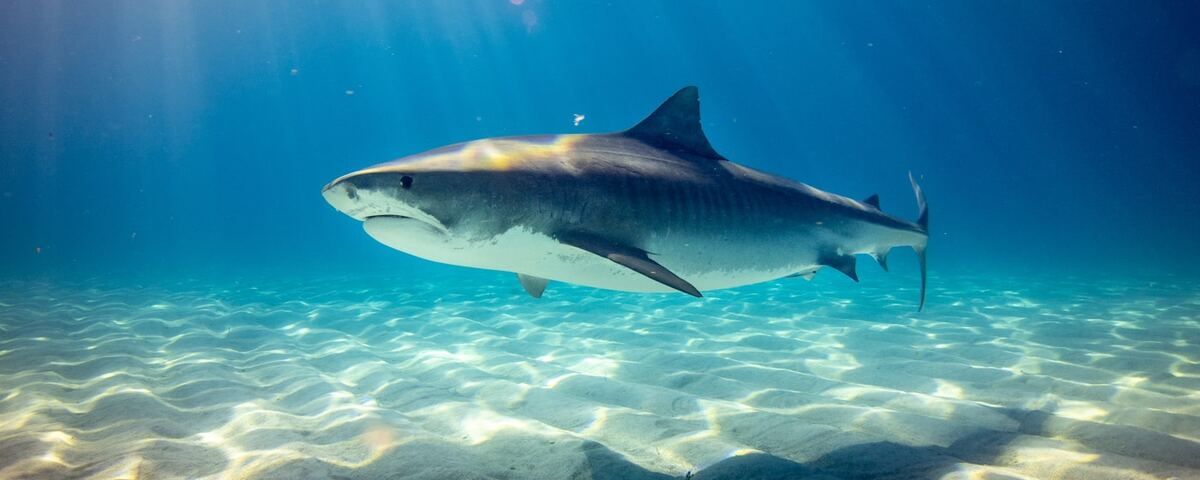
The grey reef sharks are the draw, and they deliver. On a good day, 20 to 40 grey reef sharks circle the thila in organised patrols, their sleek grey bodies contrasting against the blue water. These are not timid reef residents; they are confident, curious predators that approach divers closely enough for the encounter to feel genuinely wild. Fish Head was one of the first sites in the Maldives where shark feeding occurred (now banned since 2009), and while the feeding has stopped, the sharks' comfort with divers persists.
The thila itself is a roughly circular structure covered in soft coral, with overhangs and caves around its perimeter that shelter Napoleon wrasse of remarkable size, schools of snapper, and groupers that have grown fat in this protected marine area. The top of the thila at 10 metres provides a platform for observing the shark action in the surrounding water column.
Current is the defining feature. Fish Head sits in the path of the atoll's tidal flow, and the current brings the nutrients that sustain the food chain that attracts the sharks. Strong current days produce the best shark activity but demand competent drift diving skills. Mild current days are less dramatic but more comfortable for exploration.
The Maldives Marine Research Institute has studied the shark population at Fish Head for years, and their data shows stable numbers following the 2009 shark feeding ban. This is encouraging: the sharks come to Fish Head because the ecology supports them, not because they associate divers with food.
The thila's protected status means fishing is prohibited in the area, and the shark population reflects decades of sustained protection. The grey reef sharks at Fish Head are among the most habituated to divers in the Maldives, having been observed by thousands of divers over the decades without negative interaction. This habituation is what allows the close encounters that define the site.
Fish Head sits roughly in the centre of North Ari Atoll, accessible from multiple resort islands and a convenient stop on liveaboard itineraries transiting between the northern and southern sections of the atoll. The site's central position means it receives visits from operators across the atoll, making it one of the most frequently dived thilas in the Maldives.
Marine Life at Fish Head (Mushimasmingili Thila)
Grey reef sharks are the headline, circling the thila in groups of 10 to 40. They patrol at various depths, from the thila top at 10 metres to the surrounding deep water at 25 to 30 metres. The sharks are accustomed to divers and approach closely, often passing within 2 to 3 metres during their circuit. Individual sharks are recognisable by markings and fin damage, and long-term visitors may see the same individuals across multiple dives.
Napoleon wrasse of genuinely impressive size (exceeding 1 metre) inhabit the overhangs around the thila's base. These charismatic fish are curious and often approach divers, their bulbous foreheads and massive lips creating expressions that are impossible not to anthropomorphise.
Schools of bluefin trevally and rainbow runners circle the thila in the current, hunting in coordinated groups. Fusilier and snapper form dense schools along the current-swept sides. Eagle rays pass through periodically. White-tip reef sharks rest on the sandy patches at the thila's base.
The thila's soft coral coverage is colourful, with sea fans and whip corals on the current-exposed faces. Overhangs shelter dense populations of squirrelfish and soldierfish. Moray eels inhabit the crevices. Anemones with clownfish dot the thila top.
During the northeast monsoon season (November to April), the current patterns bring cleaner water and more consistent shark aggregations. The southwest monsoon (May to October) can produce excellent diving too, but visibility tends to be lower and the shark activity is less predictable.
Occasional visitors include guitar sharks resting on the sandy patches, oceanic triggers swimming in mid-water, and the rare whale shark passing through the atoll. These bonus encounters are unpredictable but add an element of excitement to every dive.
Dive Conditions
The thila rises from 30 metres to 10 metres below the surface, with the primary diving range at 10 to 25 metres. The sharks are visible from the thila top, but the best encounters occur on the current-exposed side at 15 to 20 metres.
Current ranges from moderate to strong. Reef hooks are standard equipment for holding position on the thila while watching the shark action. On strong current days, the reef hook is the difference between an extended observation session and an uncontrolled drift past the thila.
Visibility is 15 to 30 metres, typically better during the northeast monsoon. Water temperature is 27 to 30 degrees. A 3mm wetsuit is standard for the Maldives.
Advanced certification is recommended. The combination of current, depth, and the need to manage position while distracted by shark encounters demands genuine dive competence.
The thila is small enough that a single circumnavigation takes about 25 minutes at a moderate pace. Most divers prefer to hook in on the current-exposed side and observe the shark activity from a fixed position rather than attempting a full circuit.
⚓ Divemaster Notes
Fish Head is the dive I use to show people what the Maldives is really about. The brochures promise sharks, and Fish Head delivers them with a consistency that makes me look good. I have dived this thila over 300 times, and I have never done a dive here without seeing grey reef sharks. Never.
The approach matters. I bring the group down to the thila top at 10 metres, let everyone check buoyancy and get comfortable, then lead them to the current-exposed edge. The sharks are usually visible within the first minute, cruising in the water column beyond the thila. I signal the group to deploy reef hooks on the edge and settle in.
The best encounters happen when the group is still. The sharks have a circuit they follow around the thila, and a still group positioned on the edge becomes part of the scenery. The sharks pass closer with each circuit as they assess the group as non-threatening. By the third or fourth pass, they are often within arm's reach.
The Napoleon wrasse in the overhangs are worth visiting on the second half of the dive, after the shark observation session. These fish are enormous and friendly, approaching divers with genuine curiosity. A Napoleon wrasse hovering 30 centimetres from your mask, examining you with its intelligent eyes, is a contact experience that rivals the shark encounters for memorability.
One thing I always emphasise: do not chase the sharks. Grey reef sharks respond to pressure by increasing distance and eventually departing the area. A group that sits still gets 40 minutes of continuous shark action. A group that chases gets 5 minutes of increasingly distant views before the sharks leave entirely.
The current management at Fish Head requires experience. The tidal flow through the atoll can shift direction during a dive, sometimes without warning. When this happens, the sharks often reposition to the new current-facing side. I read the current constantly and am prepared to reposition the group to maintain the best shark observation angle. Flexibility is more important than a fixed dive plan at this site.
A final practical point: the thila has no shallow section suitable for an extended safety stop in comfort. The top at 10 metres is exposed to current, and holding position there during a 3-minute stop can be tiring. I plan my ascent to reach the mooring line, which provides a fixed reference for the safety stop.
How to Get to Fish Head (Mushimasmingili Thila)
Fish Head sits in North Ari Atoll, accessible by liveaboard or resort day trip. From Male, the transfer to North Ari Atoll takes approximately 60 to 90 minutes by speedboat or 20 minutes by seaplane. Several resorts in the atoll offer Fish Head as a regular dive site.
Liveaboard itineraries covering the Ari Atolls (North and South) include Fish Head as a standard highlight. Trips depart from Male and typically spend 2 to 3 days in the Ari Atoll area.
The Maldives diving season runs year-round, with the northeast monsoon (November to April) generally offering better visibility and more predictable conditions. Fish Head is diveable throughout the year.
Gear Recommendations
3mm wetsuit. Reef hook essential. Wide-angle lens for the shark encounters. SMB for safety stops. Nitrox recommended. Dive computer with conservative settings.
Recommended Dive Operators
LUX* South Ari Atoll resort includes Fish Head on their dive excursions. Constance Halaveli in North Ari Atoll has experienced guides for the thila. Liveaboard operators including Carpe Diem Fleet, Emperor Maldives, and Horizon III all include Fish Head on their Ari Atoll itineraries.
Liveaboard Options
Fish Head is a highlight of Ari Atoll liveaboard itineraries. Carpe Diem Fleet operates multiple vessels with North Ari routes. Emperor Maldives runs comprehensive atoll-to-atoll itineraries including Fish Head. Horizon III and Four Seasons Explorer offer premium liveaboard experiences. Trips typically run 5 to 7 nights, departing from Male. The northeast monsoon season (November to April) offers the best conditions. Book 2 to 4 months ahead for peak season.