Bounty Wreck Dive Site
Gili Islands, Indonesia · Near Gili Meno
Overview
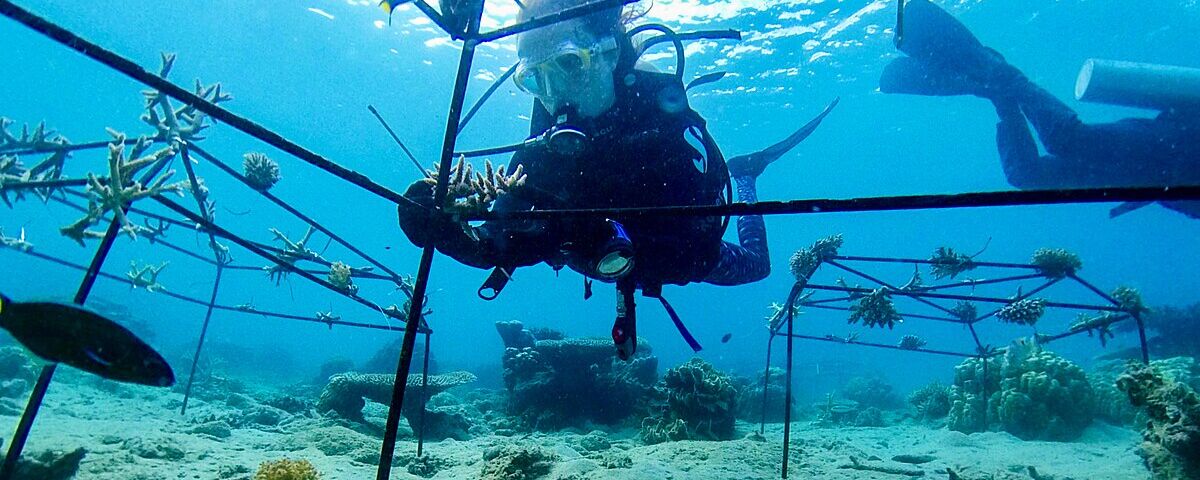
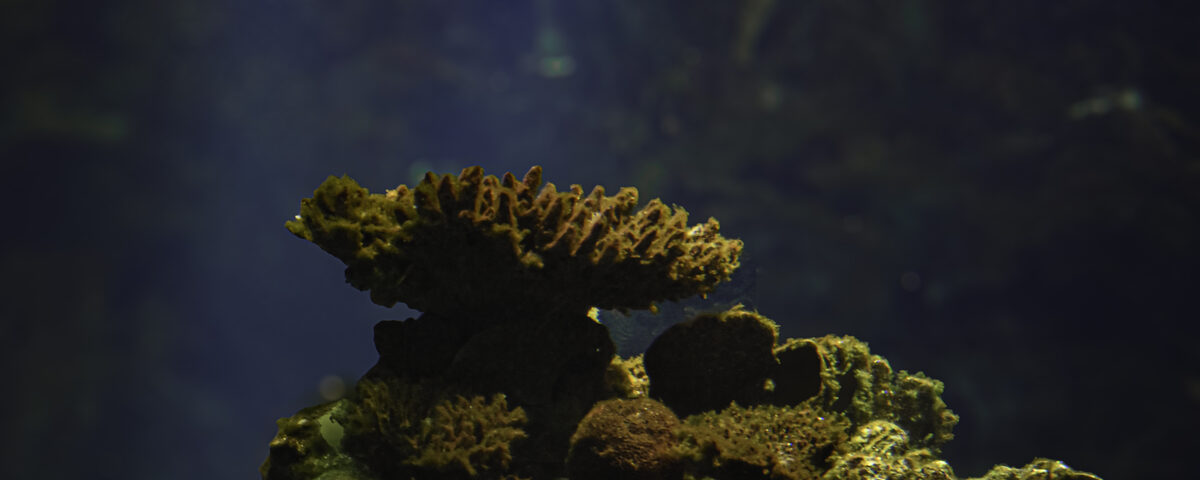
A floating dock that sank during a storm in 1999 has become one of the Gili Islands' most photogenic dives. The Bounty Wreck sits on a slope off the west side of Gili Meno, its top at about 6 metres and its deepest point at 18 metres. Over 25 years of submersion, the metal structure has transformed into an artificial reef covered in hard and soft coral, attracting a resident community of marine life that treats the wreck as home.
The wreck itself is small enough to circumnavigate in a few minutes, but the density of marine life on and around it rewards a much slower approach. Schools of glassfish fill the interior spaces, creating shimmering clouds of translucent bodies that shift and reform as divers approach. Scorpionfish park themselves on coral-encrusted surfaces, relying on their camouflage to remain undetected. The surrounding slope adds to the dive, with coral bommies hosting turtles and a rubble zone that's surprisingly productive for macro life.
This is not the USAT Liberty in Tulamben. It's smaller, shallower, and far less dramatic in scale. But for its size, the Bounty Wreck punches well above its weight in terms of marine life density per square metre, and the depth profile makes it accessible to every diver from Open Water certification upward. It's also one of the better sites in the Gilis for finding pygmy seahorses, which is not something you'd expect from a wreck dive.
The Bounty was originally a pontoon used to construct a jetty on Gili Meno. A hole opened in the hull, the pontoon sank to the slope, and nature took over. It's a perfect example of how artificial structures become genuine marine habitat given enough time and the right conditions.
Marine Life at Bounty Wreck
Glassfish are the visual signature of the Bounty Wreck. Thousands of them occupy the interior spaces and crevices of the structure, forming dense schools that catch the light and shift like a single organism when a diver's exhaust bubbles pass through them. The effect is mesmerising, particularly when shafts of sunlight penetrate the water and illuminate the school from above. It's one of the most photographed subjects in Gili Islands diving.
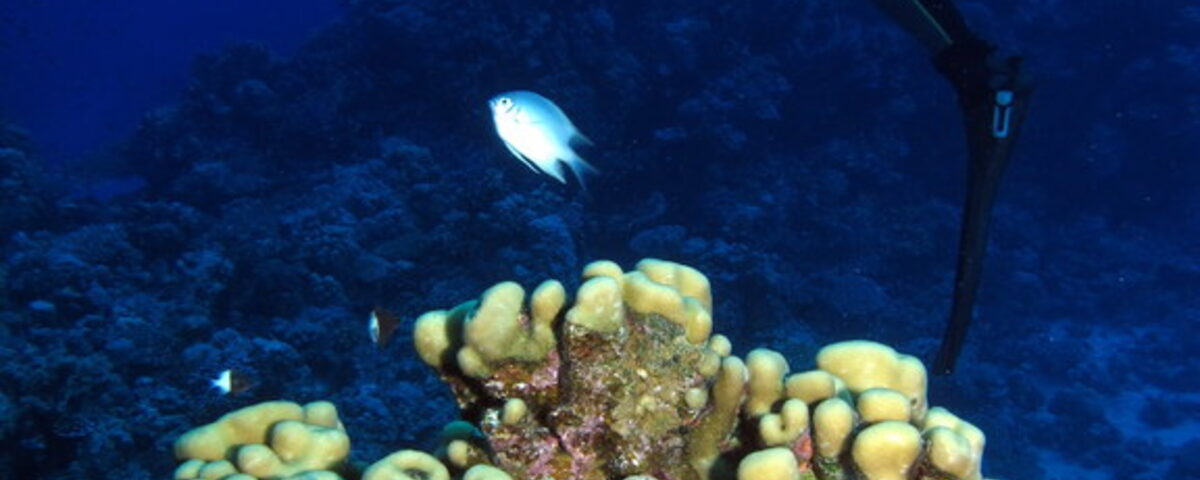
Scorpionfish are resident on the wreck surfaces, blending into the coral growth so effectively that most divers swim past without seeing them. Frogfish appear periodically on the structure; they move around every few weeks, so check with your guide for current locations. Damselfish defend their coral gardens on the structure aggressively, charging at divers who drift too close. Sweetlips (both juvenile and adult) cluster in the sheltered spots under overhangs, their spotted patterns distinctive.
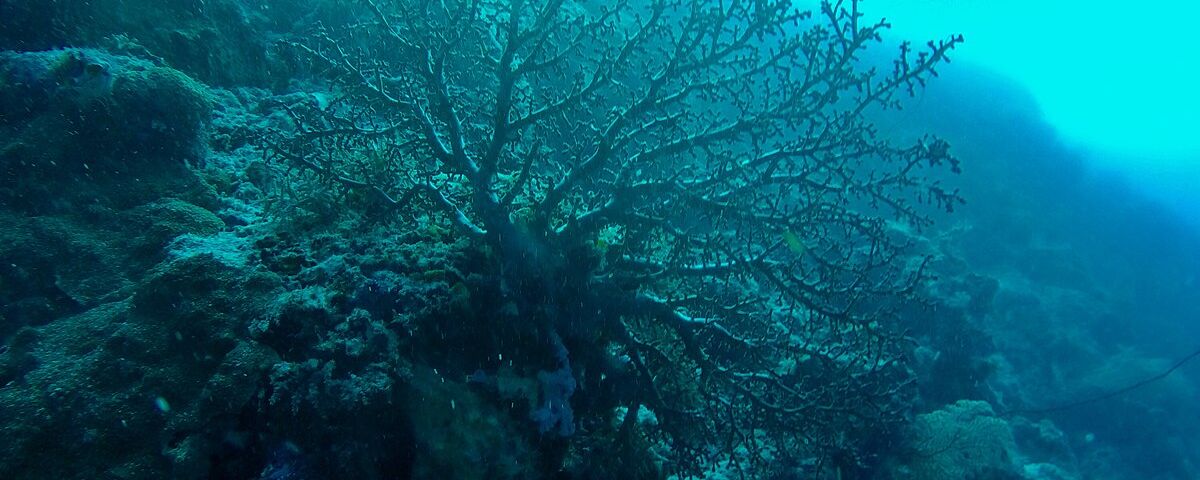
Away from the wreck, a large coral bommie nearby hosts turtles and a resident population of glassfish in its own right, creating a secondary point of interest. Old bicycles on the southern side of the wreck have coral growing over them, creating oddly photogenic subjects that make for memorable images. The rubble zone around the wreck base is where the macro critters concentrate: peacock mantis shrimp in their burrows, nudibranchs crawling across hard surfaces, and the real prize, pygmy seahorses on gorgonian fans near the wreck's deeper sections. On the sandy bottom beyond the structure, garden eels sway in the current in their thousands.
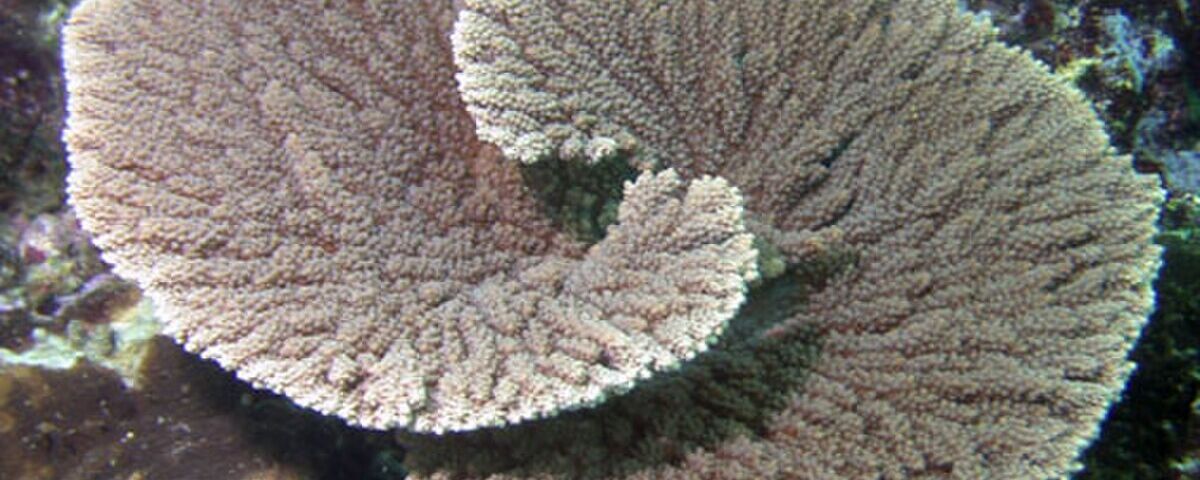
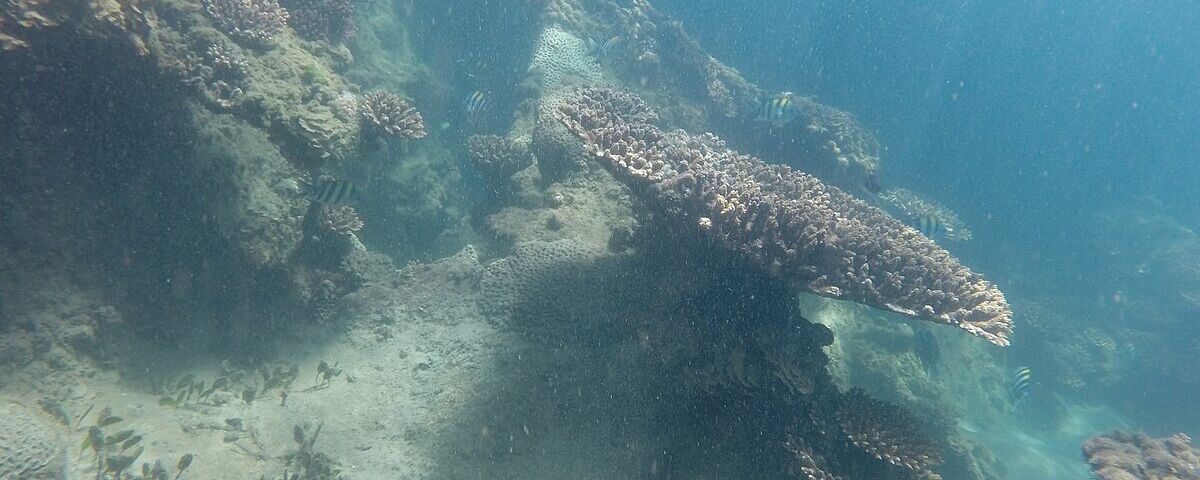
The wreck itself has developed distinct zones over its 25 years underwater. The top section (6 to 10 metres) catches the most light and has the densest hard coral growth, with table corals spreading across the flat surfaces. The mid-section has more soft coral and harbours the largest glassfish concentrations in the interior spaces. The base (15 to 18 metres) sits in the rubble zone where the macro critters concentrate and where the gorgonian fans with pygmy seahorses grow. Each zone offers a different photographic and observational experience.
Dive Conditions
The Bounty Wreck sits in relatively sheltered water on Gili Meno's west coast. Current is typically mild, occasionally moderate when the tidal flow through the channel picks up. The slope means the wreck is easy to navigate with natural depth references, and the shallowest part at 6 metres provides a comfortable safety stop location on the structure itself rather than hanging in blue water.
Visibility is usually 10 to 20 metres, occasionally better during the dry season. The site is diveable year-round, with slightly better conditions from April to November when seas are calmer and visibility tends to be higher. There's no tricky entry or exit; boat access with a giant stride into calm water and a short descent to the wreck.
The depth profile (6 to 18 metres) makes this one of the most accessible wreck dives in Indonesia. Open Water divers can safely explore the entire structure without going near their certification depth limit. There's no overhead environment or penetration required; the wreck is open, unconfined, and structurally stable after 25 years of coral colonisation. You dive around it and over it, not through it.
⚓ Divemaster Notes
The Bounty Wreck is a perfect second or third dive of the day. The shallow depth means it's easy on air consumption and you can spend 45 minutes or more exploring without worrying about your NDL. I typically pair it with a deeper first dive at Deep Turbo or Shark Point, using the Bounty as the relaxed shallower dive to finish the morning.
The pygmy seahorses at this site are a genuine selling point that most general dive guides don't mention. They're on the gorgonian fans near the base of the wreck between 15 and 18 metres, but they're tiny (under 2 centimetres) and require sharp eyes or an experienced guide to spot. If finding them matters to you, tell your guide before the dive and make it clear that macro critters are your priority. Not every guide looks for them by default.
The glassfish schools are best in the early morning before multiple dive groups have disturbed them. First boat of the day gets the densest, most photogenic formations. By the third or fourth group, the fish have been scattered by bubbles and fin kicks and take time to reform. If you're a photographer who cares about the glassfish, ask your operator to schedule Bounty as a first dive and be the first group in the water.
The old bicycles on the south side of the wreck make for amusing photographs but they're also genuinely interesting as an example of how coral colonises artificial structures over decades. Some of them are now so encrusted that you'd struggle to identify them as bicycles without knowing what to look for. They're a reminder that this entire wreck was once a functional dock.
One limitation worth being honest about: this is not a penetration wreck. If you want to swim through a wreck interior, explore engine rooms, and navigate compartments, the USAT Liberty in Tulamben is the dive for that. The Bounty is open, small, covered in coral, and functions more as an artificial reef than a traditional wreck dive. Set your expectations for a coral-covered structure with amazing critters rather than an adventure into a shipwreck, and you'll enjoy it far more.
How to Get to Bounty Wreck
The Bounty Wreck is on Gili Meno's west coast, accessed by dive boat from any of the three Gili Islands. From Gili Trawangan, the crossing takes about 10 minutes across the channel. From Gili Air, about 15 minutes. From Gili Meno itself, it's a short boat ride along the coast.
Gili Meno is the smallest and quietest of the three islands, with a handful of dive operators of its own. Most divers access the wreck through operators based on Gili Trawangan or Gili Air, where the choice of dive centres is broader and the logistics simpler.
The standard route to the Gili Islands is fast boat from Bali (2 to 2.5 hours from Padang Bai or Serangan) or public boat from Bangsal harbour on Lombok (20 minutes). Lombok International Airport is the closest major airport, with road transfer to Bangsal taking about 2 hours.
Gear Recommendations
Standard tropical gear. Camera with either macro lens (for pygmy seahorses, frogfish, and critters) or wide-angle lens (for glassfish schools and wreck-with-coral portraits). Both choices are equally valid here depending on your priorities.
Torch useful for lighting the interior spaces where the glassfish gather and revealing the colours of the coral growth. External strobe recommended for photography, as the interior sections of the wreck are shadowed.
Recommended Dive Operators
Blue Marlin Dive has a branch on Gili Meno itself, making them the closest operator to the site and the most frequent visitors. Their guides know the wreck intimately and can locate current frogfish and scorpionfish positions. Trawangan Dive from Gili Trawangan includes the Bounty Wreck regularly, often paired with Meno Wall or Turtle Heaven for a multi-site Gili Meno dive day.
Oceans 5 from Gili Air runs reliable trips to this site with good guides. For macro-focused divers specifically seeking the pygmy seahorses and smaller critters around the wreck, Divine Divers on Gili Trawangan provides guides who specialise in critter finding.
Liveaboard Options
Not a liveaboard destination. Day trip access from all three Gili Islands through local operators.
The shallow profile and easy conditions make this an ideal dive to schedule late in a multi-dive day.