Froggie's Lair Dive Site
Mabul, Malaysia · Near Semporna
Overview
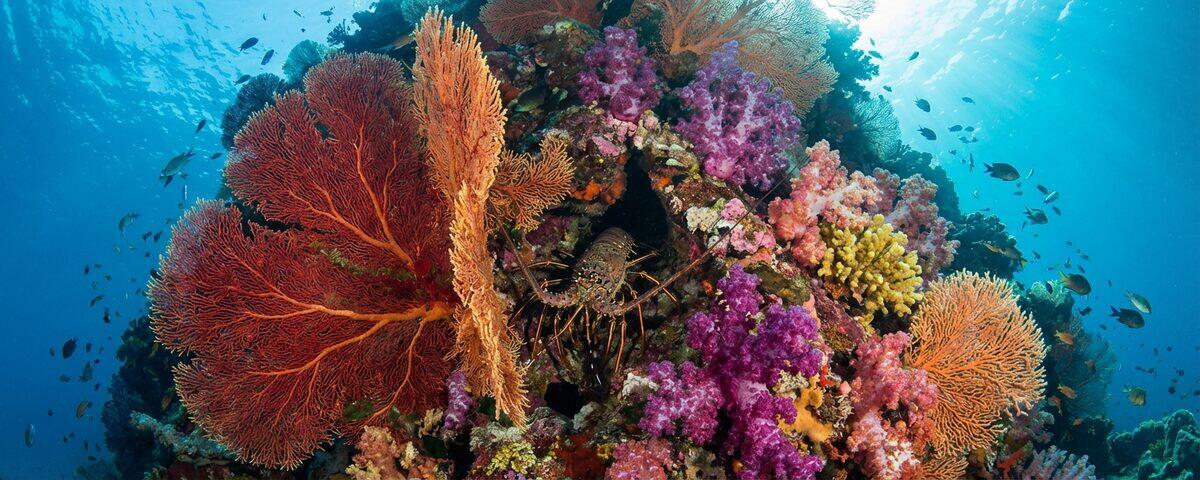
Froggie's Lair is the dive site that made Mabul Island famous as a muck diving destination, and it remains the single best reason to spend your non-Sipadan days exploring the island's own reefs rather than sitting in your resort waiting for the next permit day. Sitting on the northeastern side of Mabul, this shallow site slopes gently from a coral reef flat at around 3 metres down to a sandy bottom at 14 to 15 metres, where the transition zone between reef and sand concentrates an absurd density of critters into a strip that macro photographers could spend hours picking through without running out of subjects.
The name is slightly misleading. Yes, frogfish live here. But Froggie's Lair is not primarily a frogfish site. It is a muck diving showcase where the frogfish happen to share space with ghost pipefish, flamboyant cuttlefish, blue-ringed octopuses, nudibranchs by the dozen, seahorses, mantis shrimp, and whatever else has decided to set up residence on the rubble and sand this week. The marine life roster changes constantly, which is part of the appeal. Your divemaster will know what is currently in residence and where to find it. The guides here carry small pointing sticks and know individual animals by location, sometimes for weeks or months at a time.
Two small boats were deliberately sunk at the site years ago, adding artificial structure to the natural reef slope. These wrecks have become critter magnets, accumulating encrusting corals, sponges, and hydroids that in turn attract the small predators and ambush hunters that make muck diving addictive. The boats sit at moderate depth and provide excellent focal points for a dive that might otherwise feel directionless on the featureless sandy stretches.
Visibility here is not going to impress anyone coming from Sipadan. Mabul sits on a shallow continental shelf, and the sandy substrate means particulate matter hangs in the water column. Expect 3 to 10 metres on a typical day, with the better end of that range during the calm season from April to December. The reduced visibility is actually part of the site's character. It forces you to slow down, stay close to the bottom, and look properly. You cannot cruise through Froggie's Lair at speed and see anything worth seeing. The rewards go to patient divers who hover motionless above a patch of rubble and wait for something to reveal itself.
Most divers visit Mabul as part of a Sipadan package. The standard arrangement gives you two or three permit days on Sipadan's walls chasing turtles and sharks, with the remaining days spent on Mabul's house reefs. It is a common mistake to treat Mabul days as filler. Underwater photographers who know the region well will tell you that Froggie's Lair and the surrounding sites consistently deliver more unique photographic subjects per dive than Sipadan, where you are essentially photographing the same green turtles and whitetip reef sharks that every other visitor captures. Mabul's critters are different on every dive.
Marine Life at Froggie's Lair
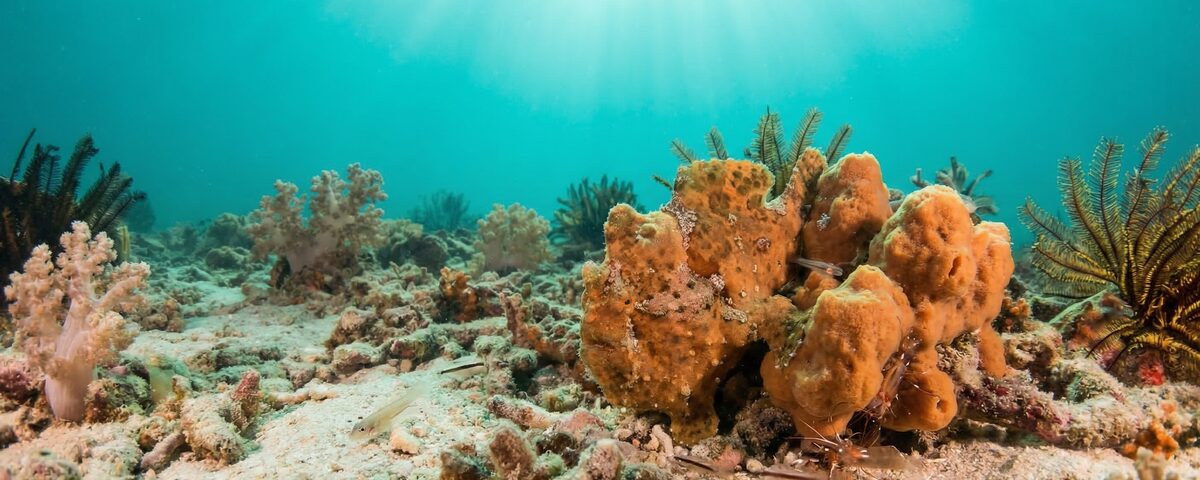
Frogfish are the namesake attraction, and the site delivers. Painted frogfish are the most commonly sighted species, ranging from bright yellow to orange to mottled brown depending on the sponge or coral they have chosen to mimic. They sit motionless for hours, sometimes days, in the same spot, which means your guide will often know exactly where to take you. Giant frogfish occasionally appear on larger sponge formations, reaching sizes of 25 to 30 centimetres while somehow remaining nearly invisible against their chosen perch. Finding your first frogfish without a guide pointing directly at it is genuinely difficult. They are that good at camouflage.
Ghost pipefish are a highlight and one of the species that keeps photographers returning to this site season after season. Ornate ghost pipefish and robust ghost pipefish both appear here, hovering vertically near crinoids and sea fans, matching the colours and textures of their host so precisely that they seem to vanish when you blink. The ornate variety is particularly striking, with elaborate fin extensions that break up its outline. Your guide's knowledge of current ghost pipefish locations is worth whatever tip you leave.
Flamboyant cuttlefish walk across the sandy patches on modified arms, pulsing purple, yellow, and pink in patterns that look genuinely impossible for a living creature. They are small, rarely exceeding 8 centimetres, but they are one of Mabul's most sought-after photographic subjects. Unlike most cuttlefish, the flamboyant variety walks rather than swims, which makes them easier to photograph but no less mesmerising to watch. They are also one of the few venomous cephalopods, though they show zero interest in divers.
Blue-ringed octopuses turn up in the rubble zones with enough regularity that sightings are a genuine possibility rather than a lottery win. The electric blue rings that pulse across their skin when disturbed are unmistakable. Keep your distance. They carry enough tetrodotoxin to be lethal, and there is no antivenom. Photographers with macro lenses and steady hands can capture stunning portraits from a respectful distance of 30 centimetres or so.
Nudibranchs are everywhere. Chromodoris species in blues, oranges, and purples graze on sponges across the reef slope. Phyllidia nudibranchs with their distinctive black and yellow tubercles are common. Nembrotha species, sometimes called variable nudibranchs, add greens and reds to the palette. On a good day you might spot ten or fifteen different species on a single dive. Macro photographers treat nudibranchs as warm-up subjects here, which tells you something about the overall critter density.
Seahorses cling to gorgonian fans and whip corals at various depths. The thorny seahorse is the most frequently encountered species, its knobbled body blending with the coral it grips. Pygmy seahorses are possible on the larger gorgonians, though spotting them requires either excellent eyesight or a guide who checks their known locations regularly.
Mantis shrimp peer out from burrows in the rubble, their stalked eyes rotating independently as they track your approach. Both smashing and spearing varieties live here. The peacock mantis shrimp, with its vivid green and orange colouring, is the most photogenic and can sometimes be coaxed into holding still long enough for a portrait if you approach slowly and avoid sudden movements.
The two sunken boats attract schools of juvenile barracuda and batfish that circle the structures in loose formations. Lionfish perch on the wreck surfaces, extending their venomous spines as they hunt smaller fish at dawn and dusk. Moray eels, mostly giant morays and white-eyed morays, occupy crevices in both the natural reef and the artificial structures.
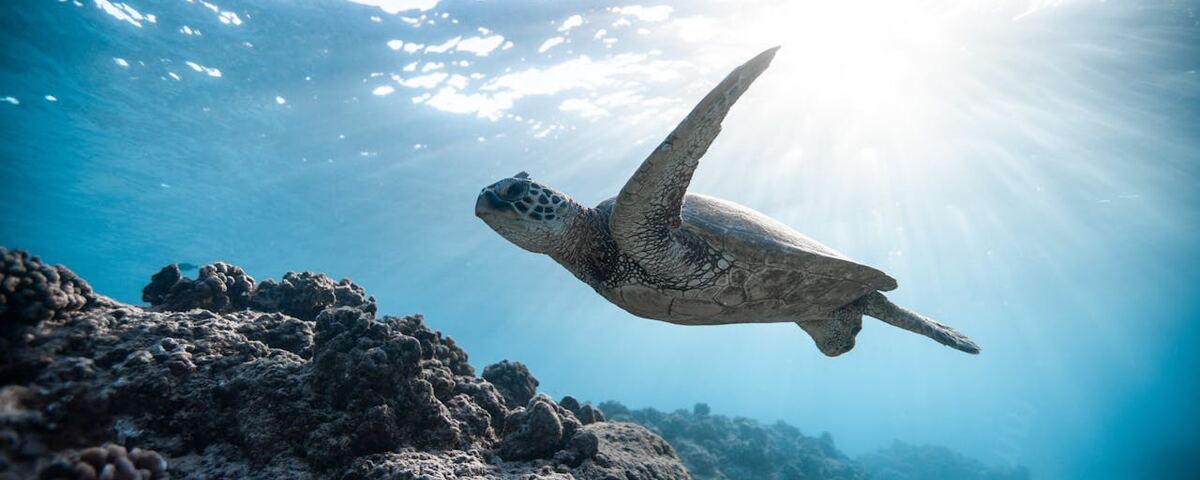
Green and hawksbill turtles cruise through regularly. Mabul supports a resident turtle population, and encountering one or two during a Froggie's Lair dive is normal rather than noteworthy. They tend to rest on the reef flat in the shallows and feed on sponges along the slope.
Crocodile fish lie flat on sandy ledges with their mottled skin rendering them nearly invisible until you are right on top of them. Flatheads occupy similar ambush positions. Snake eels sometimes poke their heads from the sand, resembling a sea snake closely enough to startle divers who are not expecting them.
Dive Conditions
Froggie's Lair is one of the most forgiving dive sites in the Sipadan and Mabul area. The reef slopes gently from a coral flat at around 3 metres down to a sandy bottom at 14 to 15 metres, with no steep drop-offs, wall sections, or overhead environments. The maximum depth you will encounter is about 15 metres if you follow the sand slope to its deepest point, which means air consumption is generous and bottom times are long. A 60-minute dive on a single tank is comfortable for most divers.
Currents are effectively absent on most days. The site sits on the leeward northeastern side of Mabul, sheltered from the prevailing conditions that affect the more exposed sites around the island. Occasionally a gentle drift develops, but it rarely exceeds a lazy push that requires no effort to manage. This makes Froggie's Lair suitable for Open Water certified divers, including those still building confidence after their course.
Visibility is the main variable. Expect 3 to 10 metres depending on recent weather, tides, and how many divers have been through the site that day. The sandy substrate kicks up easily, and careless finning by divers ahead of you can reduce visibility to a couple of metres in seconds. Proper buoyancy control and a frog kick technique make a real difference here. Divers who drag fins across the bottom create silt clouds that ruin conditions for everyone behind them. If your group includes beginners, brief them firmly on hovering above the substrate.
The better visibility window runs from April to December, with the calm season typically delivering 5 to 10 metre visibility. During the northeast monsoon from January to March, visibility can drop to 3 metres or less, and surface conditions become choppier. The site remains diveable year round, but the experience is noticeably better outside monsoon season.
Water temperature holds steady between 26 and 30 degrees throughout the year. A 3mm wetsuit is the standard choice for single dives. On multi-dive days with three or four profiles, some divers prefer a 5mm suit to offset the cumulative cooling effect, particularly if spending extended periods hovering motionless above critter subjects.
Entry is by boat, with a short ride from the resort jetties. Giant stride entries are standard. Some operators offer this as a shore dive accessible from the jetty area on the northeastern side of the island, which means you can dive it repeatedly without waiting for a boat schedule. Surface conditions on the leeward side are typically calm with minimal swell.
The dive profile is uncomplicated. Most divers descend to the sand transition zone at 12 to 15 metres, work slowly along the reef edge searching for critters, then gradually ascend up the slope as their air or no-decompression time dictates. Safety stops are easily performed on the shallow reef flat at 5 metres, where anemones and their resident clownfish provide entertainment during the three-minute wait.
⚓ Divemaster Notes
Brief your group on buoyancy and fin technique before the dive. Froggie's Lair is shallow and current-free, which makes it physically easy, but the sandy substrate punishes poor buoyancy control mercilessly. One diver dragging fins across the bottom can ruin visibility for the entire group. Insist on frog kicks and neutral buoyancy above the substrate. Position less experienced divers at the front of the group where their silt clouds drift behind rather than through the group.
Start at the sandy transition zone around 12 to 14 metres and work slowly along the reef edge heading south. The highest critter density concentrates in the band between 8 and 14 metres where coral rubble meets sand. The two sunken boats sit within this zone and are worth visiting for the encrusting life they attract, but do not spend the entire dive on them. The natural reef slope between the wrecks often holds better critter finds.
Carry a pointing stick or a thin aluminium rod. Subtle directional cues are essential for critter diving where subjects are measured in centimetres and camouflaged against their background. Point at the substrate near the animal, not at the animal itself. Tapping the reef near a frogfish will cause it to move and potentially relocate, losing the subject for future groups.
For photographers, this is exclusively a macro lens dive. A 60mm or 100mm macro lens is the right choice. Wide angle captures nothing of interest here. Compact camera users should mount a close-up diopter or wet-mount macro lens. Dual mini strobes positioned close to the lens port with inward angles minimise the backscatter that Mabul's particulate water produces. A fibre optic snoot is a luxury here but produces stunning isolated subject shots against the dark backgrounds of crevices and overhangs.
A dive torch in the 800 to 1500 lumen range is genuinely useful, not for navigation but for illuminating crevices where critters hide and for restoring colour to subjects that appear washed out at depth. Keep the beam off blue-ringed octopuses for extended periods, as prolonged light agitates them.
Night dives here are outstanding and worth scheduling specifically. Flamboyant cuttlefish are more active after dark, hunting across the sand in the open. Spanish dancers occasionally appear. Mandarin fish perform their mating dance at dusk in the rubble patches, rising briefly from cover in pairs. A dusk dive starting 30 minutes before sunset catches both the mating display and the transition to full nocturnal activity. If your operation runs night dives at Froggie's Lair, prioritise them.
This site pairs naturally with Lobster Wall for contrast. Froggie's Lair gives you the muck diving experience on a gentle sandy slope. Lobster Wall provides vertical reef structure and deeper exploration. Running both on the same day covers two completely different underwater environments within 10 minutes of boat travel.
How to Get to Froggie's Lair
Mabul Island sits in the Celebes Sea off southeastern Sabah, Malaysian Borneo, roughly 25 minutes by speedboat from Sipadan Island. The gateway town is Semporna, a small port about 90 minutes by road from Tawau.
Flights reach Tawau Airport (TWU) from Kota Kinabalu (daily services on Malaysia Airlines and AirAsia, approximately 50 minutes) and from Kuala Lumpur (direct AirAsia flights, around 2 hours 45 minutes). From Tawau Airport, road transport to Semporna takes 60 to 90 minutes depending on traffic. Most dive resorts arrange airport transfers as part of their packages. Private car transfers cost roughly 100 to 150 MYR, while shared minivans run 25 to 40 MYR.
From Semporna, resort speedboats reach Mabul Island in 30 to 45 minutes. All diving is arranged through your chosen resort, and Froggie's Lair is a standard site on every Mabul operator's rotation. You will typically dive it on your non-Sipadan days, though several operators also offer it as an afternoon dive between Sipadan morning sessions. Some resorts run it as a shore dive accessible from the jetty area, which gives you flexibility to dive it outside scheduled boat times.
Sipadan permits are limited to 176 divers per day and allocated through licenced operators. A standard four to five night package includes two to three Sipadan days plus unlimited Mabul house reef diving. Froggie's Lair falls under the Mabul house reef category and requires no separate permit. Budget 3,000 to 8,000 MYR for a complete package depending on resort category, covering accommodation, meals, diving, equipment rental, and Sipadan permits.
Total travel time from Kuala Lumpur to Mabul runs roughly 6 to 8 hours: flight to Tawau, road transfer to Semporna, and speedboat to the island. International travellers from Singapore, Hong Kong, or Australia typically connect through KL or Kota Kinabalu. Budget airlines keep the domestic legs affordable, usually under 500 MYR return for KL to Tawau.
Gear Recommendations
A macro lens is the single most important piece of equipment for this dive. In the 60mm to 105mm equivalent range for interchangeable lens cameras, this covers everything from nudibranchs and seahorses to frogfish and ghost pipefish. Compact camera users should invest in a wet-mount close-up lens or diopter adapter. Without macro capability, you will photograph blurry blobs of colour and wonder what everyone else was so excited about.
Dual strobes are the standard setup for macro photography in Mabul's waters. Position them close to the lens port and angle inward to reduce the backscatter that suspended particles produce. The water here carries more particulate than Sipadan, and strobe positioning makes the difference between clean shots and images full of bright white spots. Fibre optic snoot attachments isolate small subjects beautifully against dark backgrounds, though they require practice to aim consistently.
A dive torch of 800 to 1500 lumens serves double duty: illuminating crevices during the search phase and restoring natural colour to subjects that lose their reds and oranges at even moderate depth. A narrow beam torch works better than a wide flood for critter hunting. Use it to scan the edges of coral rubble and the interiors of small overhangs where the most interesting animals hide.
A 3mm full wetsuit handles the 26 to 30 degree water temperature for single dives. For multi-dive days with three or four profiles, consider a 5mm suit. The accumulated cooling from extended hovering over critter subjects, where you generate less body heat than a swimming diver, adds up across the day.
Reef-safe mineral sunscreen is appropriate for surface intervals. Mabul's reefs face pressure from proximity to local settlements, and the conservation efforts that local operators invest in deserve respect from visiting divers.
A surface marker buoy and reel are sensible habit even on a site this shallow and sheltered. Currents are effectively absent, but carrying your own SMB is good practice anywhere in the Celebes Sea and costs nothing in terms of effort.
A dive computer with nitrox capability is standard for Mabul diving. Most operators offer enriched air at 32 percent, which is less about extending bottom time at these shallow depths (you will hit your air supply limit long before your no-decompression limit) and more about the additional safety margin on repetitive multi-dive days.
Recommended Dive Operators
Sipadan Water Village operates overwater chalets on Mabul's southeastern side and runs a well-organised dive centre with experienced guides. Their Froggie's Lair knowledge is strong because the site sits near their operational area, and their divemasters carry pointing sticks and macro spotting expertise as standard. Packages are comprehensive, covering transfers, meals, equipment, and Sipadan permits. Mid to upper range pricing reflects the resort quality and service.
Seaventures Dive Rig sits on a converted oil platform between Mabul and Sipadan. The rig's house reef directly beneath the platform is a muck diving destination in its own right, and their guided boat dives to sites like Froggie's Lair benefit from guides who have logged thousands of dives in these waters. The accommodation is industrial-chic rather than luxury, and the unlimited house reef diving from the rig adds genuine value. Their guides are particularly strong on critter identification and will help photographers find the difficult subjects.
Borneo Divers runs the longest-established operation in the area, having pioneered recreational diving at Sipadan in the 1980s. Their Mabul resort is comfortable, their senior staff carry decades of local knowledge, and their guide-to-diver ratios tend to be favourable for small group experiences. Premium pricing reflects heritage and expertise.
Scuba Junkie offers a more budget-friendly option from both Semporna and Mabul. Popular with backpackers and younger divers, their packages deliver solid diving at competitive prices without cutting corners on safety. They run active marine conservation programmes and coral restoration work around Mabul, which provides context for the diving and appeals to environmentally conscious visitors. Their guides are enthusiastic and competent, if sometimes less experienced than those at the premium operations.
Liveaboard Options
Mabul is a resort-based destination. The standard and recommended way to dive Froggie's Lair is through a land-based operator with their own jetty, house reef access, and boat fleet. Liveaboards are not the typical access point for Mabul sites.
A handful of liveaboard vessels run Sabah itineraries that include Mabul and Sipadan stops as part of wider Celebes Sea routes. MV Celebes Explorer operates periodic trips covering Sipadan, Mabul, Kapalai, and occasionally extending to Layang-Layang Atoll during hammerhead season from March to August. These typically run 7 to 10 nights and price between 8,000 and 15,000 MYR depending on season and cabin category.
For muck diving sites like Froggie's Lair specifically, the resort-based approach is genuinely superior. A liveaboard passing through might allocate one dive to the site. A resort stay lets you dive it repeatedly across your trip, including dedicated night dives and dawn sessions for mandarin fish mating displays. The flexibility to return to the same critter locations across multiple dives, watching subjects change behaviour between day and night, is something a transit liveaboard visit simply cannot replicate.
If a liveaboard experience in Borneo appeals, consider splitting your trip: a Mabul resort stay for the muck and macro diving, then a separate liveaboard for the pelagic experience at Layang-Layang or an extended Celebes Sea routing. The two approaches complement each other well.