Lobster Wall Dive Site
Mabul, Malaysia · Near Semporna
Overview
Lobster Wall is the closest thing Mabul Island has to a proper vertical wall dive, and it might be the best dive site on the island full stop. Sitting on Mabul's western reef, the site drops from a shallow coral plateau at around 3 to 4 metres down a steep wall face to 40 metres and beyond, where a cave system at depth adds a layer of exploration that most Mabul sites simply cannot offer.
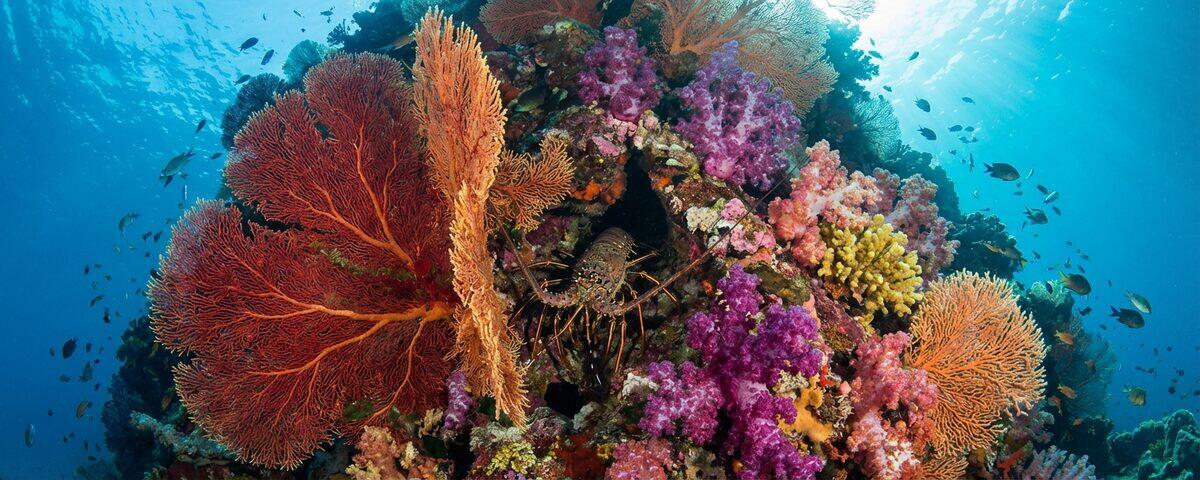
The name is not marketing. The wall is riddled with cracks, fissures, and overhangs where spiny lobsters and slipper lobsters tuck themselves away during the day, antennae poking out from dark recesses like sentries guarding every crevice. On a single dive you might count twenty or thirty lobsters without trying particularly hard. They are everywhere, wedged into gaps in the rock, sharing space with moray eels, mantis shrimp, and the occasional blue-ringed octopus that makes critter hunters lose their composure entirely.
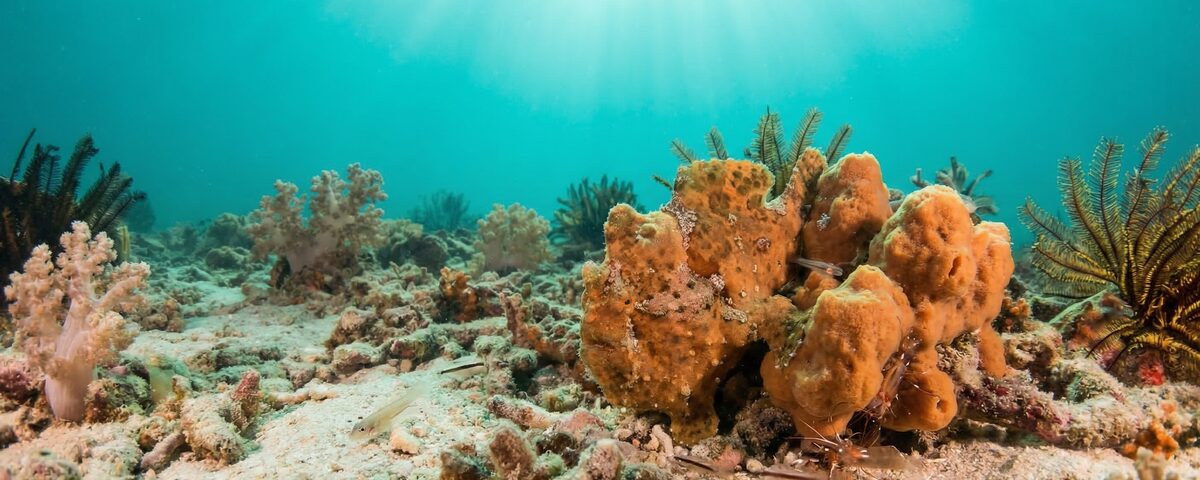
What separates Lobster Wall from other Mabul sites is the combination of wall structure and critter density. Most Mabul diving happens on gentle sandy slopes, which is what makes the island a muck diving destination in the first place. Lobster Wall breaks that pattern. The vertical relief creates habitat variety: hard coral gardens on the shallow plateau, sea fans and soft corals on the wall face, sandy rubble patches at the base, and that deep cave complex for divers with the certification and gas management to explore it safely.
Mabul sits roughly 25 minutes by speedboat from Sipadan Island, and most divers visit both during a single trip. The standard package gives you two or three days on Sipadan's walls chasing sharks and turtles, with the remaining days spent on Mabul's house reefs. It is a common mistake to treat Mabul days as filler between Sipadan permits. Divers who do that miss sites like Lobster Wall entirely, and underwater photographers who know the region will tell you that Mabul's macro life consistently outperforms Sipadan for sheer variety of critters per square metre.
The site works well at any time of day, though morning dives tend to catch the lobsters at their most visible before they retreat deeper into the wall during afternoon hours. Night dives here are something else entirely. The lobsters emerge fully from their hiding spots to feed on the reef, and the wall comes alive with hunting crabs, free-swimming flatworms, and octopuses on the prowl. If your operator offers night diving at Lobster Wall, take it without hesitation.
Conditions favour the calmer months from April through December. The northeast monsoon between January and March brings reduced visibility and choppier surface conditions, though the site remains diveable. Water temperatures hold between 26 and 30 degrees year round, and most divers find a 3mm suit perfectly comfortable.
Marine Life at Lobster Wall
The lobsters come first, obviously. Painted spiny lobsters are the most common species, their orange and white banded legs visible from several metres away as they wedge themselves into wall crevices. Slipper lobsters are harder to spot, flattened against rock surfaces and relying on camouflage rather than armour. Count them if you like, but you will probably lose track somewhere past fifteen.
Ghost pipefish are a highlight here, and the site reliably produces sightings of both ornate and robust ghost pipefish depending on the season. They hover vertically near sea fans and crinoids, matching colours so precisely that finding one feels like solving a visual puzzle. Your guide will know the current hosting locations. Tip them well.
Frogfish appear on this wall with reasonable frequency, usually sitting motionless on sponges or coral rubble where their textured skin makes them vanish against the background. Painted frogfish and giant frogfish are the most common species. The giant variety can reach 30 centimetres and still manage to be nearly invisible until someone points directly at them.
Flamboyant cuttlefish walk along the sandy patches at the wall's base on modified arms, flashing purple, yellow, and pink in patterns that look genuinely psychedelic. They are small, rarely longer than 8 centimetres, and they are one of the only cephalopods toxic enough to be genuinely dangerous. Not that they show any interest in divers. They are too busy hunting.
Blue-ringed octopuses turn up in the rubble zones, identifiable by the iridescent blue circles that pulse across their skin when agitated. Photographers love them. Common sense says keep your distance. They carry enough venom to kill a person and there is no antivenom, though bites are extraordinarily rare because the animals are not aggressive.
The wall's upper sections host fields of anemones with resident Clark's anemonefish and spine-cheek anemonefish. Seahorses, usually the thorny seahorse species, cling to gorgonian fans and whip corals at mid-depths. Mandarin fish inhabit the rubble patches near the base of the wall and are most active at dusk during their mating displays.
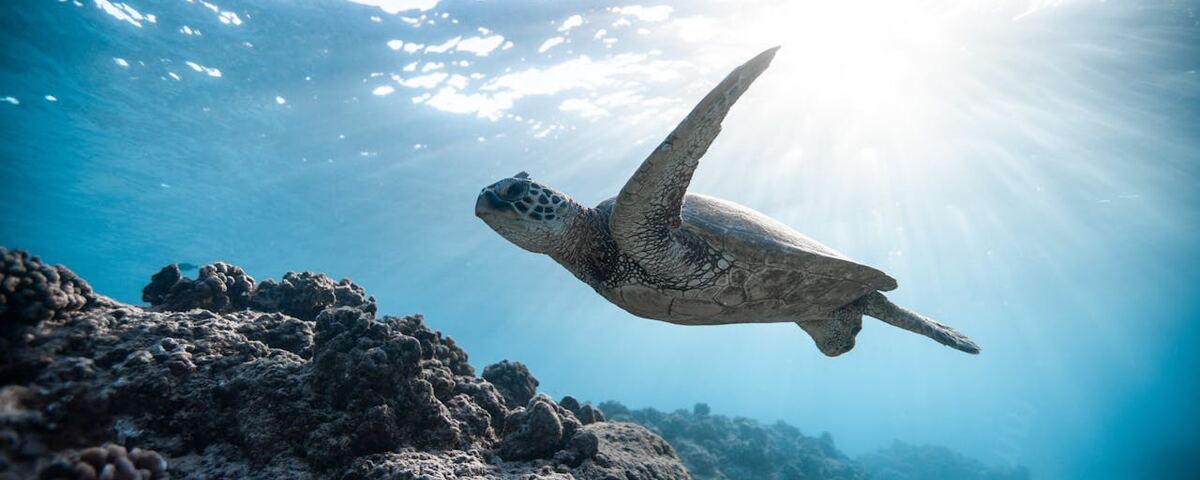
Green turtles and hawksbill turtles cruise through regularly. Mabul supports a healthy resident population, and Lobster Wall's coral coverage provides both feeding grounds and resting spots. Schools of squirrelfish and soldierfish crowd the overhangs, their large eyes reflecting torch light in the darker sections. Crocodile fish lie flat on sandy ledges, relying on camouflage to ambush passing prey.
Nudibranchs are prolific. Chromodoris, Phyllidia, and Nembrotha species graze on sponges and hydroids across the wall face. Macro photographers can spend an entire dive between 10 and 20 metres and never run out of subjects. The density of critter life per square metre here genuinely rivals Lembeh Strait, which is not something said lightly about any dive site.
Dive Conditions
The wall drops steeply from a coral reef flat at 3 to 4 metres, reaching vertical sections between 15 and 30 metres before continuing to slope beyond 40 metres into deeper water. At around 40 metres, a cave system cuts into the wall, accessible to technical divers or well-qualified deep divers with appropriate gas planning. The cave is not a penetration dive in the overhead environment sense for most visitors, more of a deep overhang that extends several metres into the rock, but it is deep enough to require careful air management and bottom time awareness.
Currents at Lobster Wall are generally mild to moderate. The site sits on Mabul's western side, which provides some shelter from the prevailing currents that run through the channel between Mabul and Sipadan. On most days the current barely registers, making this a comfortable hover-and-search dive rather than a drift. Occasionally the flow picks up enough to make the dive a gentle drift along the wall, which is pleasant rather than challenging. Strong currents are rare here compared to Sipadan's exposed points.
Visibility ranges between 10 and 20 metres. This is Mabul, not Sipadan, and expectations should be set accordingly. The island sits on a shallow continental shelf with sandy substrates, and suspended particulate matter is a constant presence. That said, 15 to 20 metre visibility days are common during the calmer months and provide more than enough clarity for macro photography. The reduced visibility compared to Sipadan actually works in your favour for critter hunting, as it forces you to stay close to the wall where everything interesting lives.
Water temperature is consistent year round at 26 to 30 degrees. Thermoclines are possible below 30 metres, with drops of 1 to 2 degrees that feel noticeable but not uncomfortable. A 3mm full wetsuit is the standard choice. For multi-dive days or divers who run cold, a 5mm suit prevents the accumulated chill that builds over three or four dives.
Entry is by boat, with a short ride from the resort jetties on Mabul. Giant stride entries are standard. Surface conditions are typically calm on the leeward western side, though swell can build during the monsoon transition months. The dive profile naturally limits bottom time at depth. Most divers spend 5 to 10 minutes exploring the deeper wall sections before ascending to the 10 to 20 metre range where the critter density is highest, finishing with a safety stop on the shallow coral plateau.
⚓ Divemaster Notes
Start the dive at the shallow reef plateau and descend along the wall to the south, where the lobster concentrations are densest between 15 and 25 metres. The most productive stretch for critter hunting runs roughly 200 metres along the wall's midsection, where overhangs create sheltered pockets that attract everything from lobsters and moray eels to frogfish and ghost pipefish.
Brief your group on search patterns. Most divers look straight ahead along the wall and miss what is sitting right in front of them. The best critter spotters work systematically: check inside every crack, scan every sea fan for ghost pipefish, look under every overhang. A pointing stick or a small torch for illuminating dark crevices is essential on this dive. Shine the torch into wall fissures to reveal lobster antennae, and check sandy ledges for crocodile fish and flatheads.
The deep cave complex at 40 metres is worth mentioning in the briefing but not worth visiting with open water certified divers. The cave is at the site's maximum recreational depth, and bottom time at 40 metres on air is genuinely limited. Advanced or deep specialty certified divers who want to explore it should plan a dedicated profile: drop to 40, spend 5 minutes maximum at the cave, then ascend to the productive macro zone between 12 and 20 metres for the remainder of the dive.
For photographers, this is a macro lens dive. A 60mm or 100mm macro is the right tool. Wide angle captures the wall nicely but misses the critters that make the site special. A diopter or close-up lens stacked on a compact camera gets you close enough for nudibranchs and blue-ringed octopus portraits. Dual mini strobes or a single strobe with diffuser handle the close-range work well.
Night dives change the site completely. The lobsters emerge to feed, moving openly across the reef face. Spanish dancers (large nudibranchs, sometimes 40 centimetres across) occasionally appear on the wall. Hunting octopuses move from crevice to crevice, changing colour constantly. Mandarin fish perform their mating dance at dusk in the rubble patches near the wall base. If scheduling allows, run a dusk dive starting 30 minutes before sunset to catch both the mating display and the transition to nocturnal activity.
This site pairs well with Froggie's Lair for a second dive. The contrast between Lobster Wall's vertical structure and Froggie's sandy slope gives divers two completely different search environments in a single day.
How to Get to Lobster Wall
Mabul Island sits in the Celebes Sea off southeastern Sabah, Malaysian Borneo, roughly 25 minutes by speedboat from Sipadan Island. The gateway town is Semporna, a small port about 90 minutes by road from Tawau.
Flights reach Tawau Airport (TWU) from Kota Kinabalu (daily, Malaysia Airlines and AirAsia, about 50 minutes) and Kuala Lumpur (direct AirAsia flights, roughly 2 hours 45 minutes). From Tawau Airport, road transport to Semporna takes 60 to 90 minutes. Most dive resorts arrange airport transfers. Expect around 100 to 150 MYR for a private car or 25 to 40 MYR for a shared minivan.
From Semporna, resort speedboats reach Mabul Island in approximately 30 to 45 minutes. All diving is arranged through your resort, and Lobster Wall is a standard site on every Mabul operator's rotation. You will typically dive it on your non-Sipadan days, though some operators run it as an afternoon dive between Sipadan morning dives.
Sipadan permits are limited to 176 divers per day and allocated through licenced operators. A standard four to five night package includes two or three Sipadan days plus unlimited Mabul house reef diving. Lobster Wall falls under the Mabul house reef category and does not require a separate permit. Budget 3,000 to 8,000 MYR for a full package depending on resort tier, including accommodation, meals, diving, equipment, and Sipadan permits.
The total travel time from Kuala Lumpur to Mabul runs about 6 to 8 hours: flight to Tawau, road transfer to Semporna, and speedboat to the island. International travellers from Singapore, Hong Kong, or Australia typically connect through KL or Kota Kinabalu.
Gear Recommendations
Macro photography gear is the priority here. A dedicated macro lens in the 60mm to 105mm equivalent range is ideal for the critters that make this site worth diving. Ghost pipefish, nudibranchs, blue-ringed octopuses, and seahorses all demand close focus capability. If shooting a compact camera, a wet-mount close-up lens or diopter adapter transforms your results on subjects this small.
Dual strobes are recommended for macro work. Position them close to the lens port and angle inward to minimise backscatter in Mabul's particulate-rich water. Fibre optic snoot attachments work exceptionally well here for isolating small subjects against dark wall backgrounds. A single strobe with a diffuser is the minimum for acceptable results.
A dive torch in the 800 to 1500 lumen range is essential, not optional. The wall's overhangs and crevices are dark enough that lobsters, moray eels, and other cavity-dwelling species are invisible without artificial light. Use the torch to scan cracks and illuminate subjects for your buddy's camera. Keep the beam off blue-ringed octopuses for extended periods as the light agitates them.
A 3mm full wetsuit handles Mabul's warm water comfortably for single dives. Multi-dive days with three or four dives warrant a 5mm suit, particularly if your profiles include the deeper wall sections below 25 metres. Thermoclines at depth add a subtle chill that compounds across repeated dives.
Surface marker buoy and reel are sensible kit for any Mabul dive, though the risk of being swept into open water here is lower than at Sipadan. Currents are mild and the dive site sits close to shore. That said, carrying your own SMB is good practice anywhere in the Celebes Sea.
Reef-safe mineral sunscreen is appropriate for the surface intervals. Mabul's reefs are healthy but face pressure from proximity to settlements. Matching your personal gear choices to the conservation ethic of the area makes sense, particularly given the efforts local operators are making to protect and restore coral around the island.
A dive computer with nitrox capability is standard for Mabul diving. Most operators offer enriched air (typically 32%), which extends bottom time on the repetitive multi-dive days that are standard here. When your dive plan includes a 40 metre wall and three subsequent shallower dives, the extra safety margin from nitrox is worth the small surcharge.
Recommended Dive Operators
Seaventures Dive Rig sits on a converted oil platform between Mabul and Sipadan, and their divemasters know Lobster Wall intimately. The rig's house reef is famous in its own right for muck diving, but their guided boat dives to sites like Lobster Wall benefit from guides who have logged thousands of dives in these waters. The accommodation is basic but characterful, and the unlimited house reef diving directly beneath the rig is a genuine bonus.
Sipadan Water Village operates from overwater chalets on Mabul Island with a well-organised dive centre. Their Sipadan and Mabul packages are comprehensive, covering all transfers, meals, equipment, and diving. The resort's location on Mabul means Lobster Wall is a short boat ride from the jetty. Their guides carry macro spotting sticks and know the current ghost pipefish and frogfish locations, which makes a real difference on critter-focused dives.
Borneo Divers runs the longest-established operation in the area, having brought recreational diving to Sipadan in the 1980s. Their Mabul resort is comfortable and their senior staff carry decades of site knowledge. Premium pricing reflects the heritage and service quality, but the experience level of their guides is hard to match.
Scuba Junkie offers a more budget-conscious option from both Semporna and Mabul Island. Popular with backpackers and younger divers, their packages are among the most affordable without compromising on safety or guide quality. They also run active marine conservation programmes and coral restoration projects around Mabul, which adds context to the diving.
Liveaboard Options
Mabul is a resort-based destination. The diving is structured around land-based operators with their own jetties, house reefs, and boat fleets. Liveaboards are not the standard way to dive Lobster Wall or any other Mabul site.
A small number of liveaboard vessels run Sabah itineraries that include Mabul and Sipadan as part of wider Celebes Sea trips. MV Celebes Explorer operates periodic routes covering Sipadan, Mabul, Kapalai, and sometimes extending to Layang-Layang Atoll during hammerhead season (March to August). These trips typically run 7 to 10 nights and price between 8,000 and 15,000 MYR depending on season and cabin category.
For most divers, the resort-based approach provides better value and more flexibility for sites like Lobster Wall. Resort stays include unlimited house reef diving (including night dives), which means you can dive Lobster Wall multiple times across your trip, once during the day and once at night if you choose. A liveaboard passing through may only allocate one dive to the site.
If a liveaboard experience in Borneo appeals, consider combining a Mabul resort stay (for the macro diving) with a separate liveaboard trip to Layang-Layang for the pelagic experience. The two destinations complement each other well and together cover the full spectrum from tiny critters to open ocean sharks.