Fotteyo Kandu Dive Site
Vaavu Atoll, Maldives · Near Keyodhoo
Overview
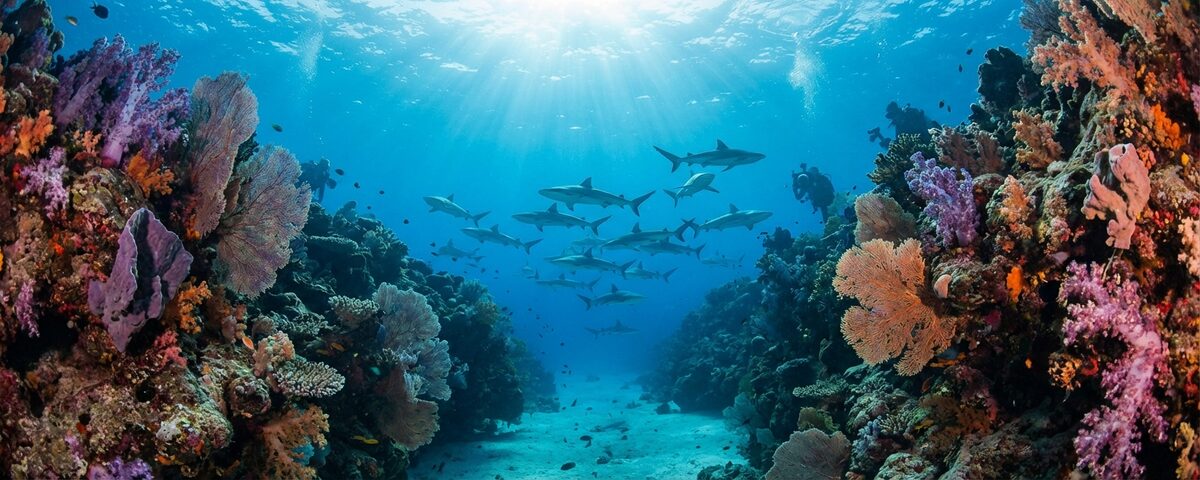
Fotteyo Kandu sits at the eastern extremity of Vaavu Atoll, the furthest point east in the entire Maldivian archipelago. Among channel dives in the Maldives, this one consistently tops the lists, and once you've dived it you understand why. The kandu cuts through a 50-kilometre stretch of unbroken reef known as Fotteyo Falhu, connecting the open Indian Ocean to the atoll's interior lagoon, and the result is a channel that funnels current, nutrients, and an extraordinary concentration of pelagic life past walls covered in some of the healthiest soft coral in the country.
The channel itself is roughly 50 metres wide and runs north to south. Both walls drop vertically from about 5 metres to well beyond 40 metres, carved with overhangs, small caves, and swim-throughs that shelter dense populations of reef fish and invertebrates. The soft coral coverage on the overhang ceilings is genuinely world-class. Dendronephthya in every shade from deep crimson to electric orange cluster so thickly in places that the rock underneath disappears entirely.
What separates Fotteyo from other Maldivian kandus is the combination. You get the pelagic action of an exposed ocean channel (grey reef sharks in schools, eagle rays, occasional hammerheads) together with the reef quality of a protected marine garden. Most channels offer one or the other. Fotteyo delivers both, and in quantity.
The site's remote position at the far eastern edge of Vaavu means it sees relatively few divers compared to the kandus in North and South Malé Atolls. Liveaboards visiting the central atolls typically dedicate a full day to Fotteyo and its surrounding reef, and many guests nominate it as the single best dive of their trip. That's not idle praise when the competition includes sites like Maaya Thila and Fish Head.
Timing matters here more than at most Maldivian sites. The incoming current (flowing from the ocean into the atoll) produces the best conditions, pushing clean oceanic water through the channel, bringing visibility up to 30 metres and concentrating sharks at the channel mouth. On an outgoing current the dive is still good, but the pelagic action drops noticeably and the visibility can halve. Good liveaboard operators time their arrival at Fotteyo to coincide with the tide tables, and the difference between a well-timed and poorly-timed dive here is stark.
The channel's uninhabited status (the nearby island of Fotteyo is empty) means no fishing pressure, no runoff, and no light pollution. The reef health reflects this. Hard coral coverage on the channel top is dense and diverse, and fish populations are visibly larger and less wary than at sites closer to inhabited islands.
Marine Life at Fotteyo Kandu
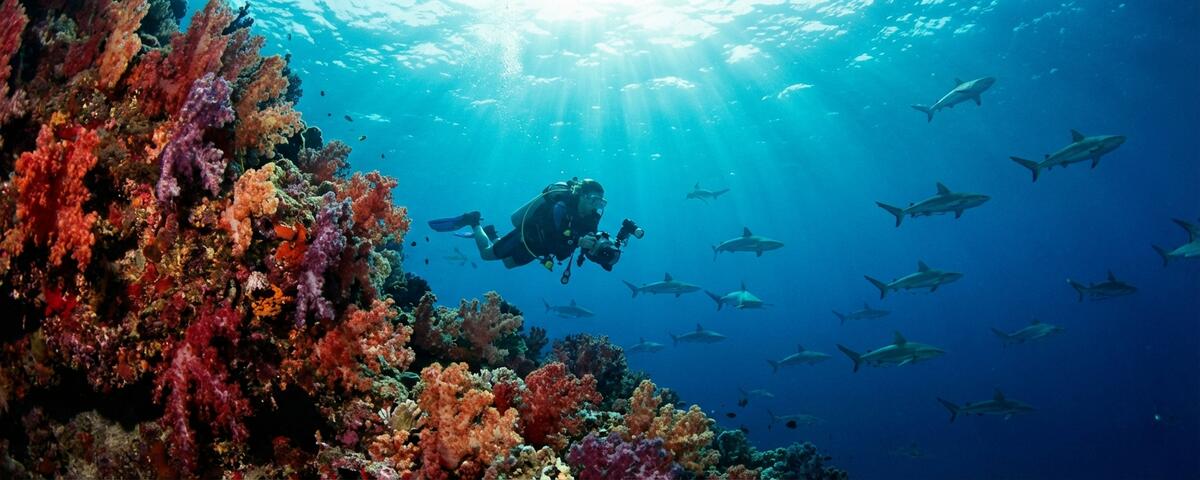
Grey reef sharks are the headliners, and they deliver consistently. Schools of 20 to 50 grey reefs patrol the channel mouth during incoming current, cruising in loose formations at 20 to 30 metres. They're not shy here. The lack of fishing pressure means they hold their ground when divers approach, sometimes circling closer for a look before peeling away into the blue. On strong current days, the school tightens and the sharks stack up in the flow, barely moving their tails as the current does the work.
White-tip reef sharks rest under the overhangs during the day, tucked into the gaps between soft coral clusters. Counts of 5 to 10 white-tips per dive are normal. Black-tip reef sharks appear in the shallower sections of the channel, particularly near the reef top at 5 to 8 metres.
Eagle rays pass through the channel regularly, usually in pairs or small groups of 3 to 5. They tend to cruise the mid-water column at 15 to 20 metres, and the contrast of their spotted wings against the blue background makes them one of the most photographed subjects at the site.
The soft coral is the other major draw, and it's not secondary to the sharks. The overhang ceilings between 10 and 25 metres are carpeted in Dendronephthya soft corals so dense and vibrant that they genuinely look artificial on first viewing. Reds, oranges, yellows, and purples create a colour palette that underwater photographers specifically travel to shoot. The overhangs face into the current, which feeds the filter-feeding corals and explains their exceptional health and density.
Schools of blue-lined snapper and yellow-back fusilier stream through the channel in their hundreds. Oriental sweetlips cluster under overhangs in groups of 20 or more. Napoleon wrasse patrol the channel walls, the large males approaching closely enough that you can see the individual markings on their faces. Trevally hunt in packs through the schooling fish, their attacks creating bursts of silver confusion.
Turtles are common, mostly hawksbills feeding on sponges along the channel walls. Moray eels occupy the crevices, with giant morays occasionally poking their heads from holes in the overhang walls.
The deeper sections below 30 metres offer occasional sightings of hammerhead sharks, particularly in the early morning when they rise from deeper water. These are not guaranteed, but Fotteyo has a stronger track record for hammerheads than most Vaavu sites. Whale sharks are rare but recorded, usually passing through the channel mouth during the wet season transition.
Macro life exists but isn't the focus. Nudibranchs dot the reef walls, glass fish swarm in the caves, and cleaner shrimp stations attract queues of grouper and sweetlips. The caves and swim-throughs shelter soldierfish and squirrelfish in dense aggregations.
Dive Conditions
Fotteyo Kandu is a channel dive with conditions that vary significantly based on tidal state. Understanding the current is not optional here; it determines everything about the dive profile, the marine life encounters, and frankly whether the dive is worth doing at all.
Incoming current (ocean to lagoon) is the target condition. This pushes clean oceanic water through the channel, bringing visibility to 25 to 30 metres and concentrating pelagic life at the channel mouth. The sharks position themselves in the flow, the soft corals open fully to feed, and the entire channel feels alive. This is the Fotteyo you came for.
Outgoing current reverses the flow, pushing lagoon water out. Visibility drops to 15 to 20 metres, the sharks disperse, and the dive profile shifts from pelagic spectacle to reef exploration. Still a good dive by general Maldives standards, but noticeably less impressive than an incoming current session.
Current strength ranges from moderate to genuinely strong. On strong incoming current days, reef hooks are essential for holding position at the channel mouth to watch the shark show. Without a hook, you'll be swept into the channel and miss the best of the pelagic action. Most liveaboard operators provide reef hooks, but confirm before you board.
The standard dive profile starts with a negative entry in the blue water at the channel mouth, descending to 25 to 30 metres to meet the sharks and the main current flow. From there, divers drift into the channel along one wall, working the overhangs and caves at 15 to 25 metres as the current carries them inward. The safety stop is done on the reef top inside the channel at 5 metres, where hard coral gardens provide a final scenic flourish.
Depth ranges from 5 metres on the reef top to well beyond 40 metres on the outer wall. Most of the interesting marine life concentrates between 15 and 30 metres. The deeper sections are for experienced deep divers only, and the narcosis risk on air at 40 metres in current is real.
Water temperature is 27 to 30 degrees year-round. A 3mm wetsuit is standard. Some divers prefer a 5mm shorty for the deeper sections where water temperature drops slightly.
Advanced Open Water certification is the minimum, and most operators require a minimum of 30 logged dives. Comfort with current diving, negative entries, and reef hook use is assumed, not taught. If your last current dive was years ago, do a warm-up dive at a gentler site before attempting Fotteyo.
⚓ Divemaster Notes
Fotteyo is the dive that sells the trip. I've guided central Maldives itineraries for six years and no other site produces the same reaction from guests. The post-dive silence on the dhoni, followed by everyone talking at once. That's Fotteyo.
Timing is everything. I check the tide tables obsessively for this site. Incoming current starting about 90 minutes before peak flow is the sweet spot. The sharks are assembling at the channel mouth, the visibility is climbing as clean ocean water pushes in, and the current is strong enough to make reef hooks useful but not so strong that novice advanced divers are struggling. If the tide tables say the incoming starts at 10am, I want my group in the water by 10:15.
The negative entry at the channel mouth requires a clear briefing. Guests who've never done a blue-water descent need extra attention. I tell them: deflate completely at the surface, dump your head down, and kick hard for the first 5 metres. Once you're below the surface chop, the current actually helps pull you down. Meet at 25 metres on the reef corner. Anyone who struggles with the descent gets paired with me directly.
Reef hooks. Every diver needs one, and every diver needs to know how to use one before we get here. I don't teach reef hook technique at Fotteyo; I teach it on the warm-up dive the day before. At Fotteyo, you hook into the reef at 20 to 25 metres on the channel mouth corner and let the current stream you horizontal. From this position, the grey reef sharks parade past at eye level. It's spectacular, and it only works if everyone hooks in properly and stays neutrally buoyant.
The overhang section from 10 to 25 metres along either channel wall is where I take photographers who care more about soft coral than sharks. The lighting in the overhangs is tricky; strobes are essential because the overhang ceilings block ambient light. I position photographers so their strobes light the soft coral from below while the blue water background provides contrast.
One thing that catches people out: the current can reverse mid-dive during tidal transitions. If you enter on a dying incoming and it switches to outgoing, you suddenly find yourself fighting current to continue along the wall. I monitor the current direction constantly and signal the group to start working toward the channel interior before the switch happens. Getting caught in an outgoing current at the channel mouth is manageable but uncomfortable and burns air fast.
Air consumption is higher here than at protected sites. The current, the depth, and the adrenaline from sharks all contribute. I brief a turnaround pressure of 120 bar and a hard ascent at 80 bar. Nitrox makes a real difference for bottom time at the 25 to 30 metre sweet spot.
How to Get to Fotteyo Kandu
Fotteyo Kandu is in the far eastern section of Vaavu Atoll, accessible almost exclusively by liveaboard. No resorts sit within day-trip range of the site, and the few guesthouses on inhabited Vaavu islands (Keyodhoo, Felidhoo) don't typically operate dive boats to Fotteyo due to the distance and fuel costs.
The gateway is Malé, served by Velana International Airport with direct flights from most major Asian and Middle Eastern hubs. Singapore, Colombo, Dubai, and Doha all offer frequent connections. European carriers run seasonal directs from London, Frankfurt, and Rome during peak season.
Liveaboard itineraries covering the central Maldives depart from Malé harbour, typically on Saturday or Sunday evenings. The sail to Vaavu Atoll takes roughly 4 to 6 hours depending on sea conditions and the vessel's speed. Most boats arrive at Vaavu by early morning and begin diving the same day.
The journey from Malé to the eastern edge of Vaavu where Fotteyo sits adds another 2 to 3 hours of sailing within the atoll. Operators typically schedule Fotteyo for the second or third day of the itinerary, after warm-up dives at sites closer to the atoll's western edge.
For those determined to dive Fotteyo from a local island, Keyodhoo is the closest inhabited island with guesthouse accommodation. A private boat charter from Keyodhoo to the dive site takes approximately 45 minutes. Arrange this through local dive operators in advance; availability depends on weather and demand. Costs run USD 150 to 250 for a boat charter depending on group size.
Peak dive season runs January to April during the northeast monsoon, with the calmest seas and best visibility. Booking liveaboard trips for this window should be done 3 to 6 months in advance, as the central Maldives itineraries are among the most popular routes.
Gear Recommendations
Reef hook mandatory. No exceptions. Bring your own if possible; liveaboard-supplied hooks vary in quality and you want one you trust when you're hanging in current at 25 metres with sharks circling. 3mm wetsuit standard; 5mm shorty for divers who run cold, especially on deeper profiles. Wide-angle lens is the correct choice here: the subjects are big (sharks, eagle rays, sweeping reef walls) and the vis supports wide shots. Strobes essential for overhang soft coral photography where ambient light drops off sharply. SMB and reel mandatory for safety stops in current. Nitrox strongly recommended for extended bottom time at depth; most liveaboards offer it as standard or for a modest daily surcharge. Dive computer with current depth and no-deco time clearly visible; you'll be watching your gauges more than usual on this dive.
Recommended Dive Operators
Emperor Maldives operates several vessels on central Maldives routes that include Vaavu Atoll. Their dive guides know Fotteyo's tidal patterns and time dives accordingly. The Emperor Serenity and Emperor Voyager both regularly include the site on their central itineraries. Group sizes are manageable and the briefings are thorough on current management.
Carpe Diem Fleet runs the Carpe Vita and Carpe Diem on routes through Vaavu. Their crew has extensive experience at Fotteyo and will adjust the day's schedule to hit the optimal tidal window. The fleet's smaller dhoni tenders make channel entries straightforward even in moderate current.
Four Seasons Explorer is the premium option, running 3 and 7-night itineraries from Kuda Huraa or Landaa Giraavaru. Their Vaavu routes include Fotteyo as a headline dive. The service standard and dive equipment are excellent, though you pay accordingly.
MV Horizon III offers a good balance of price and quality on central routes. The boat carries a maximum of 20 divers and their Fotteyo dives benefit from smaller group sizes. Their guides are particularly good at positioning groups for shark encounters without crowding.
Ocean Divine operates the Orion on central Maldives itineraries. Their focus on photography-friendly diving (small groups, patient guides, flexible dive plans) makes them a strong choice for underwater photographers targeting Fotteyo's soft corals and shark action.
Liveaboard Options
Fotteyo Kandu is almost exclusively a liveaboard dive site, and the central Maldives itinerary that includes Vaavu Atoll is one of the most popular routes in the country. Emperor Maldives (Emperor Serenity, Emperor Voyager), Carpe Diem Fleet (Carpe Vita, Carpe Diem), MV Horizon III, and Ocean Divine Orion all run regular central routes that include Fotteyo as a highlight. The Four Seasons Explorer offers a premium alternative with 3 and 7-night itineraries that visit Vaavu. Budget for liveaboard trips in the central Maldives runs USD 250 to 600 per night depending on vessel class and cabin type. Peak season (January to April) books out fastest; reserve 3 to 6 months ahead. Most boats depart Malé on Saturday or Sunday and run 7-night loops. A 10 to 14-night itinerary gives you the best chance of multiple dives at Fotteyo if conditions allow.