Miyaru Kandu Dive Site
Vaavu Atoll, Maldives · Near Fulidhoo
Overview
Miyaru Kandu earned its name honestly. "Miyaru" is Dhivehi for shark, and this channel on the northeast rim of Vaavu Atoll delivers exactly what the name promises. A wide cut through the atoll reef connects the open Indian Ocean to the protected lagoon, funnelling current, plankton, and an improbable density of grey reef sharks past walls riddled with caves and overhangs.
The channel runs roughly north to south between Rihiveli and Fulidhoo islands, with the southwest corner of Rihiveli forming the primary dive entry point. Both walls drop steeply from a shallow reef top at around 5 metres to a sandy channel floor at 25 to 30 metres, though the outer wall plunges well beyond recreational limits. The entire channel holds protected marine area status, which goes some way toward explaining the quantity of sharks here. No fishing, no extraction, and the results are visible on every dive.
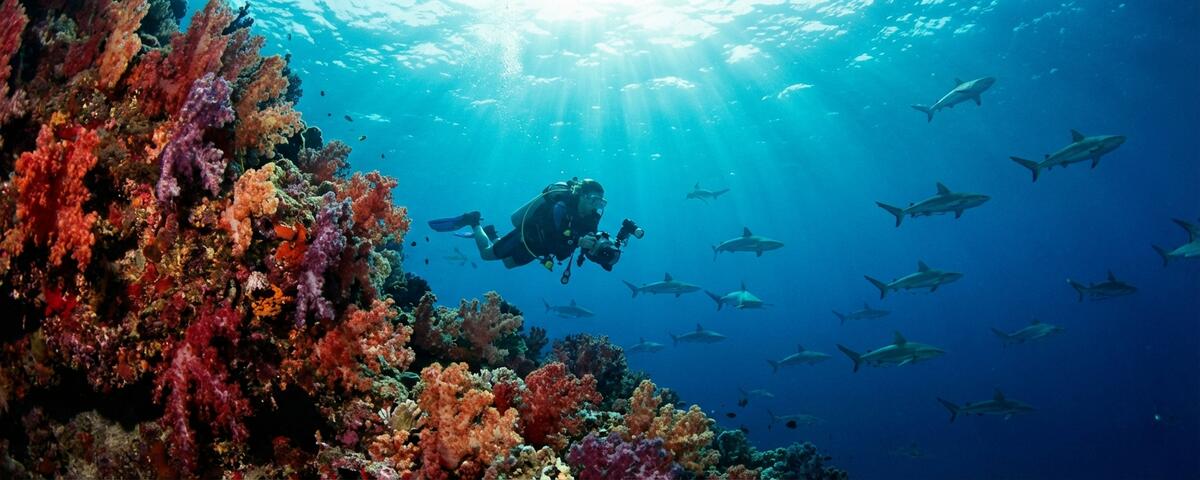
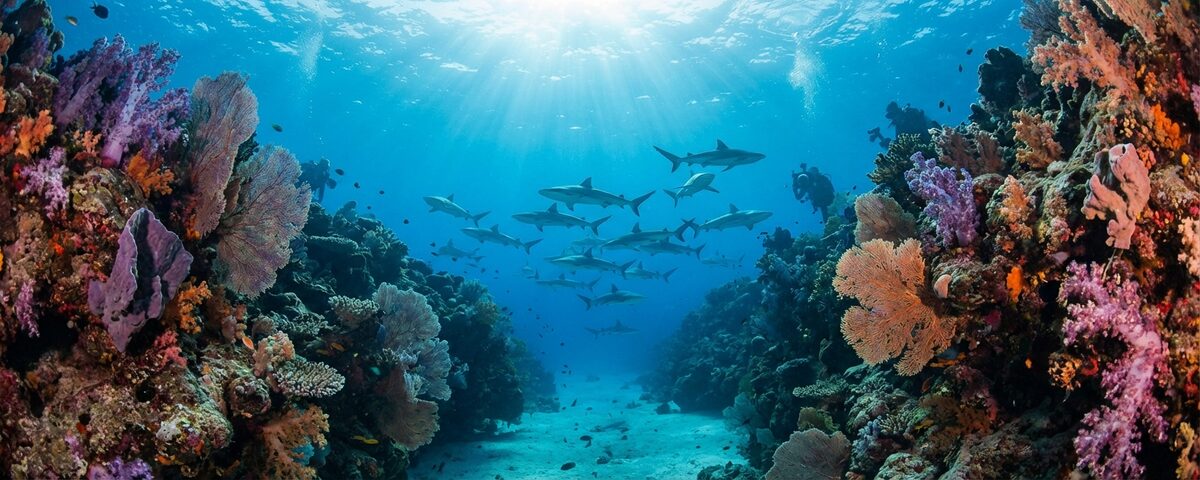
What sets Miyaru Kandu apart from other Vaavu channels is the reliability of the shark encounters. This isn't a site where you might see a grey reef if you're lucky. On an incoming current, schools of 20 to 40 grey reefs assemble at the channel mouth with the punctuality of commuters catching the 8:15. They stack in the current, barely twitching their tails, letting the flow do the work. The consistency is what brings divers back; guides who've logged hundreds of dives here report near-100% encounter rates during optimal tidal windows.
The channel topography adds genuine variety to what could otherwise be a single-note shark dive. The north wall features a notable cave system at around 33 metres, with a large cavern that regularly shelters resting grey reef sharks. Both walls are carved with smaller overhangs between 10 and 25 metres, their ceilings draped in soft corals and packed with squirrelfish and soldierfish. On calm-current days, when the sharks scatter from the mouth, these overhangs become the main event, and the reef fish population that emerges in the absence of current is genuinely impressive.
Vaavu Atoll sits roughly 65 kilometres south of Male, close enough for speedboat transfers but far enough that the reefs see a fraction of the diver traffic that hammers North and South Male. Miyaru Kandu is a staple on central Maldives liveaboard itineraries, typically paired with Fotteyo Kandu (the other headline Vaavu dive) on the same trip. The two sites complement each other well: Fotteyo for soft coral spectacle, Miyaru for raw shark numbers.
Marine Life at Miyaru Kandu
Grey reef sharks run the show, and they know it. During incoming current, they congregate at the channel mouth in loose schools that routinely number 20 to 40 individuals. The sharks here have a distinctive Maldivian feature: white tips on the trailing edge of their dorsal fins, which catches even divers who've seen grey reefs elsewhere. They patrol at 15 to 25 metres, cruising the current line with that effortless economy of movement that makes sharks so compelling to watch. On strong current days the school tightens, stacking vertically in the flow, and individual sharks pass close enough for eye contact.
White-tip reef sharks occupy the overhangs and cave systems, tucking themselves into gaps between coral formations during daylight hours. The cave on the north wall at 33 metres is a reliable spot; five to eight white-tips are typically wedged under the ledge, barely moving. Occasionally a nurse shark joins them, its bulk filling most of the available floor space.
Eagle rays cruise the channel on most dives, usually in pairs or small groups of three to five, traversing the mid-water column at 15 to 20 metres. Spotted eagle rays are more common than mantas here, though reef mantas have been recorded passing through the channel mouth during the northeast monsoon months.
Giant trevally hunt through the channel in packs, their silver flanks flashing as they accelerate into schools of fusiliers. The attacks happen fast and watching a GT pack work is one of those underwater moments that genuinely gets the heart rate up. Schools of blue-lined snapper mass along the walls in their hundreds, forming the kind of dense curtains that wide-angle photographers live for.
Napoleon wrasse are resident, with at least two large males that local guides know individually. They're approachable here, unusually so for a species that tends toward wariness. Hawksbill turtles graze the sponges on both walls. Oriental sweetlips cluster under overhangs in groups, their spotted flanks creating a natural pattern that photographs beautifully against the dark cave background.
The soft coral on the overhang ceilings is healthy and colourful, predominantly Dendronephthya in reds and oranges, though it doesn't reach the density of Fotteyo's famous walls. Black coral trees grow in the deeper sections, and the hard coral coverage on the reef top is diverse and well-established, having benefited from the site's protected status.
Hammerhead sharks are the bonus encounter. They're not guaranteed, but Miyaru Kandu has a reasonable track record for scalloped hammerheads in the early morning, particularly between December and March when they rise from deeper water at dawn. One in four dives during peak season produces at least a distant sighting, which by hammerhead standards is solid.
Dive Conditions
Miyaru Kandu is a current-driven channel dive, and understanding the tidal patterns is the difference between a world-class shark encounter and a pleasant but unremarkable reef dive.
Incoming current (ocean to lagoon) is what you want. The flow pushes clean oceanic water through the channel, concentrating sharks at the mouth and bringing visibility up to 25 to 30 metres. This is the condition every liveaboard guide aims for when planning the day's schedule. The sharks position themselves in the incoming flow, the soft corals open to feed, and the entire channel feels electrically alive.
Outgoing current reverses everything. Visibility drops to 15 to 20 metres as lagoon water pushes out, and the sharks disperse from the channel mouth into the open water. The dive isn't bad on an outgoing tide; the caves and overhangs still deliver good reef exploration, and the fish life along the walls remains strong. But you won't get the headline shark action.
Current strength varies from gentle (1 knot on neap tides) to genuinely powerful (4 knots during spring tide transitions). On strong current days, reef hooks are essential for holding position at the channel mouth. Without one, the current carries you into the channel before you've had time to appreciate the shark show. Most liveaboard operators provide reef hooks, but bring your own if you want something you trust.
The standard dive profile starts with a negative entry in the blue at the channel mouth, descending to 20 to 25 metres to meet the shark school. Divers hook into the reef corner and let the current stream them horizontal, watching the grey reefs parade past at eye level. After 15 to 20 minutes on the hook (or when air consumption dictates), you release and drift into the channel along one wall, exploring the caves and overhangs at 15 to 25 metres as the current carries you inward. The safety stop happens on the shallow reef top inside the channel at 5 metres, where hard coral gardens provide the finale.
On low-current days the dive changes character entirely. Without the flow, there's no need for reef hooks, and the channel can be explored at leisure. The sharks scatter, but the reef fish emerge in compensation: angelfish, butterflyfish, surgeonfish, and parrotfish that hide when the current runs strong. Giant moray eels venture from their holes to hunt, and the caves become explorable spaces rather than current shelters.
Depth ranges from 5 metres on the reef top to 30 metres on the channel floor, with the outer wall dropping well past recreational limits. The cave on the north wall sits at 33 metres, which puts it at the edge of Advanced Open Water range. Watch your depth gauge carefully here; the wall drops away so steeply that it's easy to drift below 30 metres without noticing.
Water temperature holds at 27 to 30 degrees throughout the year. A 3mm wetsuit works for most divers; a 5mm shorty adds comfort on deeper profiles where the thermocline occasionally drops a degree or two. Advanced Open Water certification is the minimum requirement, and most operators want to see at least 30 logged dives. Comfort with current, negative entries, and reef hook technique is assumed.
⚓ Divemaster Notes
Miyaru Kandu is one of those sites where the briefing matters more than usual. I've guided it probably 150 times across six seasons, and the dives that go wrong are always the ones where someone wasn't prepared for the current or the negative entry.
The tide tables are the bible for this site. I check them the night before and again at breakfast. Incoming current starting 60 to 90 minutes before peak flow is the window I'm after. The sharks are already assembling at the channel mouth, the visibility is improving as ocean water pushes in, and the current is strong enough to make reef hooks worthwhile but not so powerful that less experienced advanced divers are struggling. Miss this window and you get a different dive entirely.
Negative entries here are non-negotiable on current days. I brief it simply: deflate at the surface, head down, kick hard for the first 5 metres. Once you're below the surface chop the current actually pulls you down. I pair nervous divers with myself and we descend together. The meeting point is the reef corner at 20 to 25 metres. Anyone who can't manage a controlled negative descent gets a corner briefing and enters with me on a close buddy system.
Reef hooks. I teach the technique on a warm-up dive the day before, never at Miyaru Kandu itself. At the channel mouth, everyone hooks into the reef at 20 to 25 metres, inflates their BCD slightly to get horizontal, and lets the current do the rest. From this position the grey reefs parade past at eye level, sometimes within 3 to 4 metres. It's spectacular, but only if everyone is properly hooked and neutrally buoyant. One diver flailing around ruins it for the group because the sharks give the whole formation a wider berth.
The cave at 33 metres on the north wall is worth visiting for experienced groups, but I keep it brief and only take divers who are comfortable at depth with good air consumption. The white-tip sharks resting inside are a reliable draw. I give the group 3 to 4 minutes maximum before signalling the ascent.
Air consumption runs higher here than at sheltered sites. The current, the depth, and the adrenaline from being surrounded by sharks all contribute. I brief a turnaround at 120 bar and a hard ascent at 80 bar. Nitrox extends bottom time usefully at the 20 to 25 metre sweet spot and I recommend it to anyone who'll listen.
One thing I always mention in the briefing: the current can shift mid-dive during tidal transitions. If you entered on a dying incoming and it flips to outgoing, the dynamic changes. I watch for this constantly and signal the group to start working into the channel before the switch happens. Getting caught at the channel mouth in the early stages of an outgoing current is manageable but wastes air and time.
How to Get to Miyaru Kandu
Miyaru Kandu sits on the northeast edge of Vaavu Atoll, roughly 65 kilometres south of Male. The site is accessible by liveaboard (the primary method) and by speedboat from a handful of local islands.
The gateway is Male, served by Velana International Airport with frequent connections from Singapore, Colombo, Dubai, Doha, and seasonal direct flights from major European cities. From Male, liveaboard departures for central Maldives itineraries leave from the harbour, typically on Saturday or Sunday evening. The sail to Vaavu Atoll takes 4 to 6 hours depending on conditions, with most boats arriving by early morning.
Within Vaavu Atoll, Miyaru Kandu is positioned near Fulidhoo, the most developed local island in the atoll. Fulidhoo has guesthouse accommodation and a small but growing dive scene. Speedboat transfers from Male to Fulidhoo take approximately 90 minutes and cost USD 40 to 60 per person on public ferries or USD 250 to 400 for a private speedboat charter. From Fulidhoo, the dive site is a short 15 to 20-minute boat ride.
Fulidhoo-based dive operators can arrange single dives and day packages to Miyaru Kandu, though availability depends on weather and minimum group sizes. For consistent access and the ability to time dives around tidal windows, a liveaboard remains the better option. The boats can reposition to hit Miyaru Kandu at exactly the right moment in the tide cycle, which a shore-based operator working fixed schedules cannot always do.
Peak diving season runs January to April during the northeast monsoon. Seas are calmest, visibility peaks, and the shark activity at channel sites tends to be strongest. The southwest monsoon (May to November) brings rougher conditions and reduced visibility at some sites, though Miyaru Kandu's sheltered position on the northeast side of the atoll provides some protection from the prevailing swell. Liveaboard bookings for peak season should be made 3 to 6 months in advance.
Gear Recommendations
Reef hook mandatory on current days. Bring your own if possible; liveaboard-supplied hooks vary in quality and clip reliability. A 3mm wetsuit is standard for the Maldives' 27 to 30 degree water, though a 5mm shorty adds warmth on deeper cave profiles. Wide-angle lens is the correct choice: sharks, channel walls, and schooling fish are the subjects, and the visibility supports wide compositions. Strobes are useful for cave and overhang photography where ambient light falls off sharply, but they're not essential for open-water shark shots in good visibility. SMB and reel are mandatory for safety stops in current where the boat may need to track your position. Nitrox recommended for extended bottom time at the 20 to 25 metre reef hook station. Dive computer with clear depth and no-deco displays; you'll be watching gauges more than usual when the sharks distract you from your instruments.
Recommended Dive Operators
Emperor Maldives runs regular central Maldives itineraries on the Emperor Serenity and Emperor Voyager, both of which include Vaavu Atoll with dedicated dives at Miyaru Kandu. Their guides time the channel dives to incoming current and provide thorough briefings on reef hook technique and negative entries. Group management is solid, with a maximum of 8 to 10 divers per guide.
Carpe Diem Fleet operates the Carpe Vita and Carpe Diem on central routes that pair Miyaru Kandu with Fotteyo Kandu on the same Vaavu visit. Their smaller dhoni tenders make channel entries straightforward, and the crew has the flexibility to adjust schedules around optimal tidal windows.
Fulidhoo Dive Centre is the primary shore-based operator, running daily trips to Miyaru Kandu when conditions and group sizes permit. They know the local tidal patterns intimately and can arrange early morning dives for the best hammerhead chances. Good option for budget-conscious divers staying in Fulidhoo guesthouses.
MV Horizon III carries a maximum of 20 divers on central Maldives routes, keeping group sizes manageable at popular sites like Miyaru Kandu. Their guides position groups well for shark encounters without crowding, and the boat's schedule prioritises tidal timing over fixed itineraries.
Ocean Divine Orion focuses on photography-friendly diving with small groups, patient guides, and flexible dive plans. For underwater photographers targeting Miyaru Kandu's shark action and cave systems, their approach gives you the time and space to compose shots properly rather than being herded through on a fixed schedule.
Liveaboard Options
Miyaru Kandu features on most central Maldives liveaboard itineraries, which typically cover Vaavu and Meemu Atolls as part of a 7 to 10-night loop from Male. Emperor Maldives (Emperor Serenity, Emperor Voyager), Carpe Diem Fleet (Carpe Vita, Carpe Diem), MV Horizon III, and Ocean Divine Orion all run regular central routes. Budget ranges from USD 200 to 500 per night depending on vessel class and cabin type. Peak season bookings (January to April) fill quickly; reserve 3 to 6 months ahead for the best dates. Most itineraries depart Male on Saturday or Sunday and return after 7 nights, though extended 10 to 14-night routes exist for divers wanting multiple dives at key sites. The advantage of a liveaboard over shore-based diving is tidal timing: the boat repositions to hit Miyaru Kandu at the optimal point in the tide cycle, which a fixed resort schedule cannot guarantee.