Gato Island Dive Site
Malapascua, Philippines · Near Malapascua Island
Overview
Gato Island is a small rocky island north of Malapascua with a feature that no other dive site in the Philippines can match: an underwater cave tunnel that passes completely through the island from one side to the other. You enter on one side, swim through a passage illuminated by torchlight and occasional shafts of natural light from above, and emerge on the other side. It's a swim-through rather than a technical cave dive, wide enough for two divers abreast and with natural light visible throughout, but it still feels like proper caving.
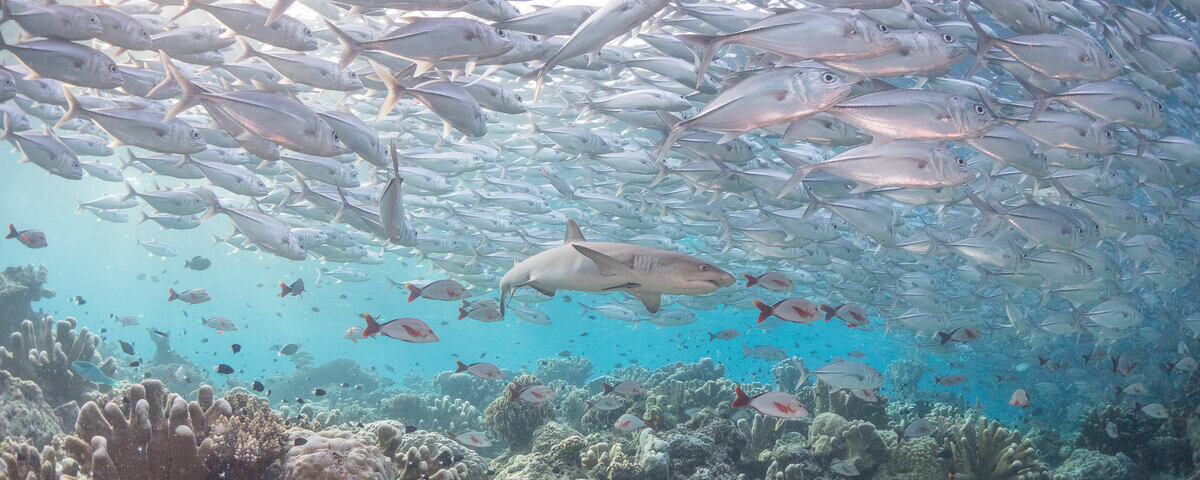
The island itself is a marine sanctuary, and the protection shows in the reef health and fish density surrounding it. The tunnel is the headline feature, but the reef walls dropping around the island's perimeter offer excellent diving in their own right, with white-tip reef sharks resting on the sandy ledges and bamboo sharks hiding in the crevices.
Gato is designated as a protected area and a sea snake breeding site. Sea snakes of several species are common here, and while they're venomous, they're also extremely non-aggressive. They'll swim past you, sometimes close enough to touch (don't), displaying zero interest in interaction. The frequency of sea snake encounters at Gato is higher than anywhere else around Malapascua and provides a fascinating complement to the thresher shark dives at Monad Shoal.
The combination of the tunnel swim-through, healthy reef, resting sharks, and sea snake activity makes Gato Island a genuinely varied dive that offers something different from the open-ocean experience at Monad Shoal. Most Malapascua dive packages include at least one visit to Gato, usually as an afternoon dive after the dawn thresher shark session.
Gato Island's marine sanctuary status has been in place since 2000, and the effects of two decades of protection are visible in the reef health and fish populations around the island. The sanctuary is managed by the local community, who patrol the area and enforce fishing restrictions. The conservation fees paid by divers contribute directly to this management, creating an economic incentive for reef protection that benefits both the marine environment and the local community.
The tunnel at Gato Island is part of a limestone karst formation that extends both above and below the waterline. The island's rocky structure is riddled with crevices, overhangs, and passages that provide habitat for a wide range of species. Above water, the island supports sea bird colonies, and the guano from these birds contributes nutrients to the surrounding waters, which may partially explain the reef's productivity.
Marine Life at Gato Island
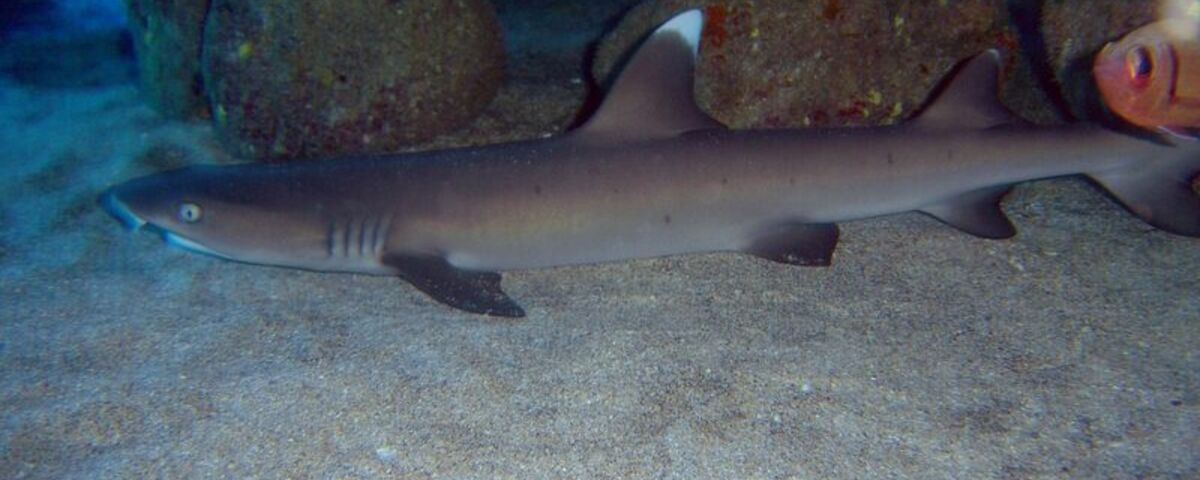
White-tip reef sharks are the most commonly sighted sharks at Gato, resting on sandy ledges and in crevices around the island's perimeter. On a typical dive, you'll see 3 to 6 individuals at various points around the site. Bamboo sharks (brownbanded bamboo shark) hide in the crevices and under overhangs, their elongated bodies curled into the available space.
Sea snakes are common and conspicuous. Banded sea kraits and olive sea snakes are the most frequently observed species, swimming through the reef with graceful undulating movement. They're venomous but not aggressive, and encounters are typically at arm's length as the snakes go about their business hunting in the reef crevices.
The tunnel itself is roughly 30 metres long, 3 to 5 metres wide, and 2 to 4 metres high. The floor is sandy and the walls are rocky, with some coral and sponge growth. The tunnel hosts its own population of shrimp, crabs, and small fish. Natural light filters through cracks and openings in the ceiling, creating atmospheric lighting that changes with the angle of the sun.
The reef walls around the island host healthy coral growth, with sea fans, soft corals, and barrel sponges on the deeper sections. Turtles are occasional visitors. Schools of fusilier and snapper stream along the walls. Nudibranchs are present in good variety on the coral surfaces. Frogfish have been found on the reef, though they require sharp-eyed guides to spot.
The variety of marine habitats around Gato Island, including reef walls, sandy patches, the tunnel, and rocky overhangs, supports a wider range of species than a single-habitat site. In a single dive circumnavigation, you might encounter reef wall species, sand-dwelling species, cave-adapted species, and pelagic species passing in the blue water beyond the island's perimeter. This habitat diversity is compressed into a small area, making the site feel more species-rich per metre of diving than many larger sites.
Bamboo sharks at Gato are particularly photogenic. These slender, elongated sharks rest curled into crevices during the day, their banded brown and cream colouring creating natural camouflage against the reef substrate. They're completely harmless and tolerant of close approach, making them excellent portrait subjects. Ask your guide for known resting spots.
The sea krait activity at Gato peaks during the breeding season (roughly November to February), when mating aggregations can be observed in the shallows around the island. Outside of breeding season, individual sea kraits are still common and can be observed hunting in reef crevices, swimming between surface breathing breaks and underwater foraging trips. Their graceful, undulating movement through the water is quite different from the swimming pattern of any fish species.
Dive Conditions
The tunnel is at 10 to 15 metres depth, wide enough for comfortable passage without technical cave diving equipment or training. Natural light is visible from both ends throughout the swim-through, and the passage is short enough (roughly 30 metres) that the exit is always within sight. This is a cavern dive rather than a cave dive, and it's suitable for divers with basic torch and overhead environment awareness.
Current around the island is typically mild to moderate. The sheltered side (determined by the current direction) provides calm conditions while the exposed side can have current running along the wall. Your guide will choose the circuit direction based on the day's conditions.
Visibility is 10 to 25 metres, generally clearer than at the Coron wrecks. Water temperature is 26 to 29 degrees. The island's protected status means the reef is in excellent condition.
The boat ride from Malapascua takes about 30 to 40 minutes. Most operators schedule Gato Island as an afternoon dive after the dawn Monad Shoal trip, which spaces the dives well and gives you time for breakfast between them.
The tunnel swim-through can be combined with a circumnavigation of the island for a comprehensive dive, or it can serve as the centrepiece of a shorter, more focused dive. The circumnavigation takes approximately 40 to 50 minutes at a moderate pace, with the tunnel adding about 5 minutes. Total dive times of 50 to 60 minutes are standard.
The sanctuary fee for Gato Island supports the local community's marine protection efforts. The fee is typically included in the dive price but may be charged separately by some operators. Regardless of how it's collected, the money goes directly to the community guardians who patrol the island and enforce fishing restrictions.
⚓ Divemaster Notes
Gato Island is the perfect complement to Monad Shoal. After the intensity and concentration of the dawn thresher shark dive, Gato offers a more relaxed experience with variety: the tunnel, the sharks, the snakes, and healthy reef. It's a different kind of diving entirely.
The tunnel is straightforward but requires basic awareness. Stay mid-water to avoid stirring up the sandy bottom. Keep your torch angled downward to avoid blinding divers coming from the other direction (yes, you can meet groups swimming the other way). Don't touch the walls or ceiling. The passage is wide enough that claustrophobia shouldn't be an issue for most divers, but if you're uncomfortable with overhead environments, discuss it with your guide before descending.
The white-tip reef sharks at Gato are habituated to divers and will often remain resting as you approach within a metre or two. Slow, calm approach from the side rather than directly head-on. They have excellent eyesight and are watching you long before you see them.
Sea snake encounters unnerve some divers, but these animals are genuinely uninterested in humans. I've dived Gato hundreds of times and never seen aggressive behaviour from a sea snake. They may swim close to inspect you, but they'll move on quickly. The biggest risk is actually that a startled diver kicks one accidentally, so watch your fin tips.
The sanctuary fee for Gato Island is separate from the standard dive costs and is payable to the local community guardians. It directly supports marine protection for the area, and I'm happy to pay it every time.
How to Get to Gato Island
Gato Island is approximately 30 to 40 minutes by dive boat from Malapascua Island. All Malapascua dive operators include Gato Island in their site rotation. Malapascua itself is reached from Cebu via a 3 to 4 hour road transfer to Maya port, then a 30-minute boat crossing.
Gear Recommendations
Torch essential for the tunnel. 3mm wetsuit sufficient. Wide-angle lens for the tunnel and shark encounters. Macro lens useful for nudibranchs and critter hunting on the reef walls. SMB for the ascent. No reef hook needed.
Recommended Dive Operators
The same operators that run Monad Shoal handle Gato Island. Thresher Shark Divers, Evolution Diving Resort, Exotic Island Dive Resort, and Bueo Dive Resort all offer Gato Island dives. Look for guides experienced with the tunnel swim-through who can manage group buoyancy and positioning effectively.
Liveaboard Options
Day trips from Malapascua are the standard and only practical access for Gato Island. The island-based dive operations provide the most convenient scheduling.