Kimud Shoal Dive Site
Malapascua, Philippines · Near Malapascua Island
Overview
Kimud Shoal is Malapascua's second act. While the island's fame rests entirely on the thresher shark encounters at Monad Shoal, Kimud Shoal offers something Monad doesn't: a diverse reef dive with varied pelagic encounters, healthy coral, and a depth range that rewards exploration rather than the single-target vigil that defines the thresher shark experience.
The shoal is a submerged reef structure sitting about 30 minutes by boat from Malapascua Island, rising from the seabed to about 15 metres below the surface. The top of the shoal is a plateau covered in hard coral, and the edges drop away in stepped terraces and slopes to 35 metres before reaching the sand. The structure catches current from the Visayan Sea, concentrating nutrients and marine life along its edges.
Kimud Shoal has developed a reputation as Malapascua's hammerhead shark site. Scalloped hammerheads visit the shoal seasonally, typically between December and April, cruising past the reef edge at 25 to 35 metres. Sightings are less consistent than the thresher shark encounters at Monad Shoal, but when they happen, the experience of seeing hammerheads in Philippine waters is extraordinary.
Beyond the hammerhead potential, Kimud Shoal is simply a strong reef dive. The coral is healthy, the fish life is varied, and the topography is more interesting than Monad Shoal's flat-top plateau. For divers staying on Malapascua for several days (which is common, given the need for multiple dawn dives at Monad to maximise thresher shark chances), Kimud Shoal provides welcome variety.
The site sees far fewer divers than Monad Shoal, which receives virtually every diver on the island every morning. Kimud Shoal is typically an afternoon or second-dive option, meaning smaller groups and a more relaxed experience. This reduced traffic benefits both the reef health and the diving experience.
The shoal's name comes from the local Visayan word for the underwater feature, reflecting the long familiarity of local fishermen with the structure. Before dive tourism arrived on Malapascua, the shoal was known as a productive fishing ground, and the hammerhead sharks were seen as competitors for the same fish stocks rather than attractions in their own right. The shift from fishing to diving has transformed the economic relationship between the community and the sharks.
Marine Life at Kimud Shoal
Scalloped hammerhead sharks are the headline encounter, visiting the shoal during the cooler months (December to April). They typically appear in the deeper water beyond the reef edge, at 25 to 35 metres, often as solitary individuals or in small groups of 2 to 5. Sightings are not guaranteed on any given dive but occur with enough regularity during the season to make the site worthwhile for shark enthusiasts.
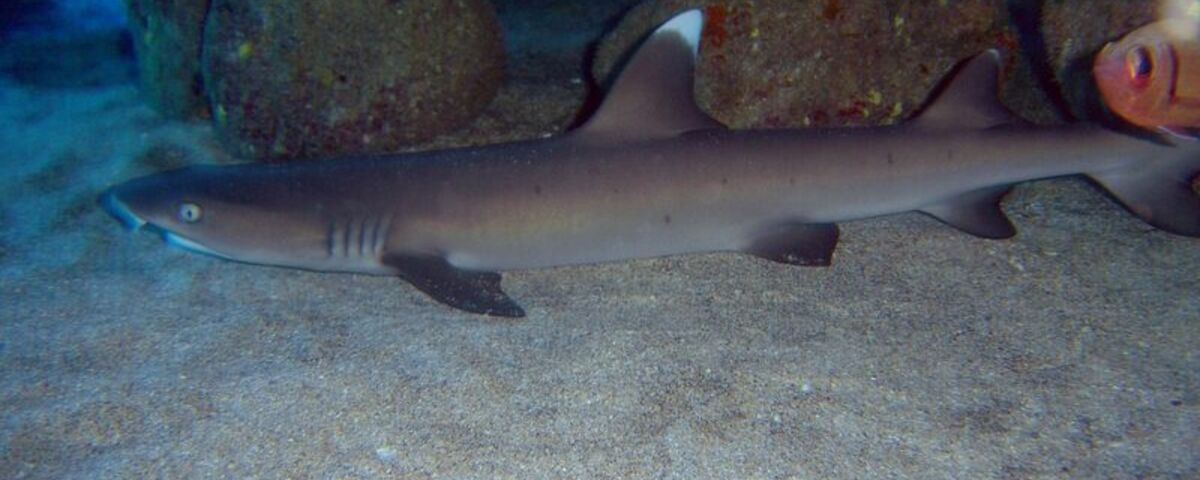
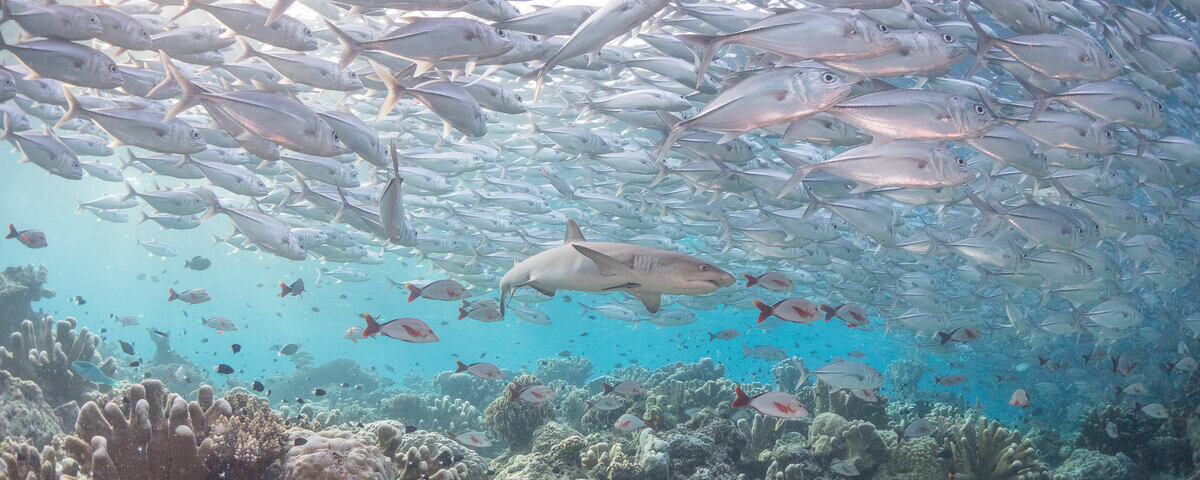
Grey reef sharks and white-tip reef sharks patrol the shoal's edges more reliably than the hammerheads. Thresher sharks occasionally pass through, though Monad Shoal remains the more consistent site for these encounters. The shark community at Kimud reflects the broader Visayan Sea ecosystem.
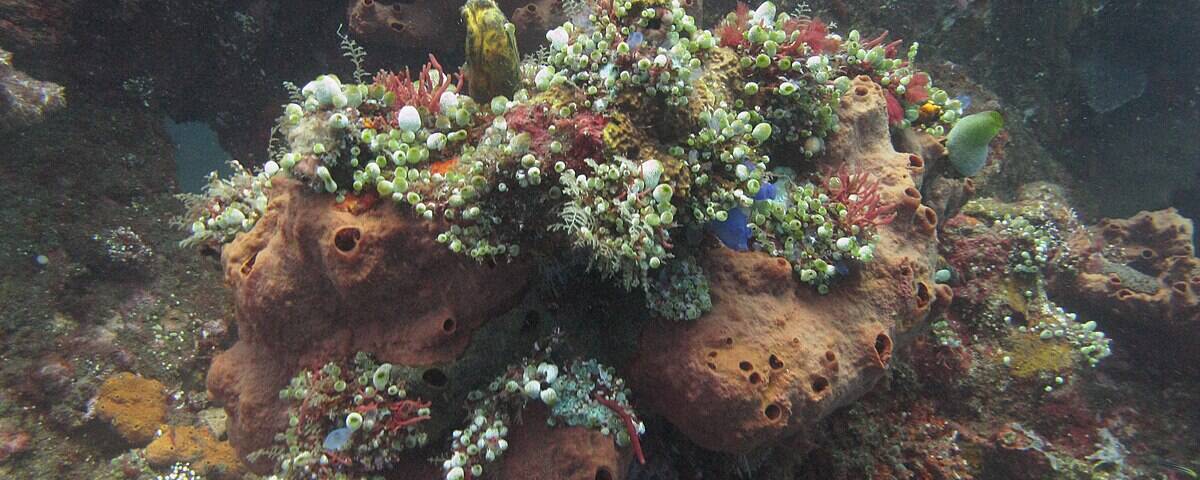
The reef top supports healthy hard coral growth, with table corals, staghorn formations, and massive corals creating a structured habitat. Schools of fusilier, surgeonfish, and snapper orbit the shoal, and giant trevally hunt the school edges with predatory efficiency. Barracuda form loose aggregations in the blue water off the reef edge.
Turtles rest on the reef top and the stepped terraces, with green and hawksbill species both present. Napoleon wrasse drift past, and groupers shelter under overhangs along the reef edges. The invertebrate community includes nudibranchs, sea fans with associated pygmy seahorses (guide-dependent), and various species of crinoid.
Devil rays (mobula rays) pass through Kimud Shoal occasionally, typically during the transitional months. These encounters are unpredictable but memorable when they occur. Eagle rays sweep along the reef edges, and large schools of jack are sometimes encountered in the blue water surrounding the shoal.
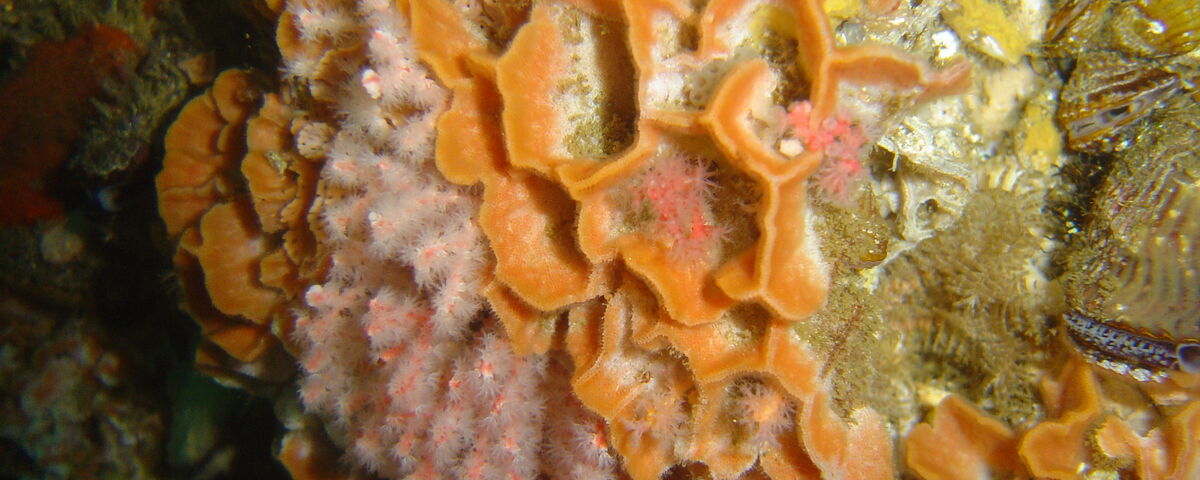
The macro life on Kimud Shoal is secondary to the pelagic encounters but includes the standard Visayan reef community: nudibranchs, commensal shrimp, pipefish, and various scorpionfish species camouflaged on the reef surface.
Dive Conditions
Current at Kimud Shoal ranges from moderate to strong, driven by tidal flow across the shoal structure. The exposed position in the Visayan Sea means conditions are less sheltered than the reef sites closer to Malapascua Island.
When current is running, the reef edges come alive with fish activity and the chances of pelagic encounters increase. Divers use the reef structure for shelter, settling on the lee side and watching the current-exposed edge where the sharks and big fish concentrate. Reef hooks are useful for holding position on the reef edge during strong flow.
Visibility ranges from 10 to 25 metres, generally best during the dry season (November to May). Water temperature is 26 to 29 degrees, though thermoclines at depth can produce a notable chill.
The depth profile (15 to 35 metres) puts the hammerhead zone at the deeper end of recreational limits. Depth management is critical, particularly since hammerhead encounters tempt divers to drop deeper than planned in pursuit of better views. Set a depth limit before the dive and honour it regardless of what's swimming below.
Advanced certification is required for the depth and current combination. This is not a site for newly certified divers, and operators should assess experience before including Kimud Shoal on the dive schedule.
The seasonal pattern at Kimud Shoal follows the northeast monsoon cycle. The cooler water temperatures and plankton-rich conditions of the northeast monsoon season (November to May) coincide with peak hammerhead activity. During the southwest monsoon (June to October), the shoal is still diveable but hammerhead sightings drop significantly, and seas can be rougher for the boat crossing from Malapascua.
⚓ Divemaster Notes
Kimud Shoal is my afternoon dive recommendation for guests who've done the dawn thresher shark dive at Monad Shoal and want something different for their second dive. The reef here is more interesting than Monad, the coral is healthier, and the hammerhead potential adds a layer of excitement.
I plan Kimud Shoal dives for the incoming tide, when current is building and the shark activity is highest. The group descends to the reef top at 15 metres, moves to the current-exposed edge, and settles at 22 to 25 metres facing outward. This is where the hammerheads pass, if they're passing that day.
Patience is everything for hammerhead encounters. I've waited 30 minutes without a sighting and then had three appear in the last 5 minutes of the dive. The temptation to move around searching is strong, but movement reduces your chances. The sharks come to the reef edge; your job is to be there when they arrive.
The coral on the reef top is genuinely beautiful and worth attention beyond the pelagic hunting. I always build in 10 to 15 minutes of reef exploration at the end of the dive, working the terraces during the gradual ascent. The nudibranchs and crinoids here add macro interest to what is primarily a shark dive.
One honest note: hammerhead sightings at Kimud Shoal are less reliable than thresher shark sightings at Monad Shoal. I'd estimate hammerhead encounters on roughly 30 to 40 percent of dives during the season, compared to 70 to 80 percent for thresher sharks at Monad during optimal conditions. Set expectations accordingly. Kimud Shoal is a great dive even without hammerheads; the hammerheads are a bonus, not a guarantee.
Safety first: the nearest recompression chamber is in Cebu city, several hours away. Conservative dive planning is not optional here. I run all Kimud Shoal dives on Nitrox with conservative computer settings.
How to Get to Kimud Shoal
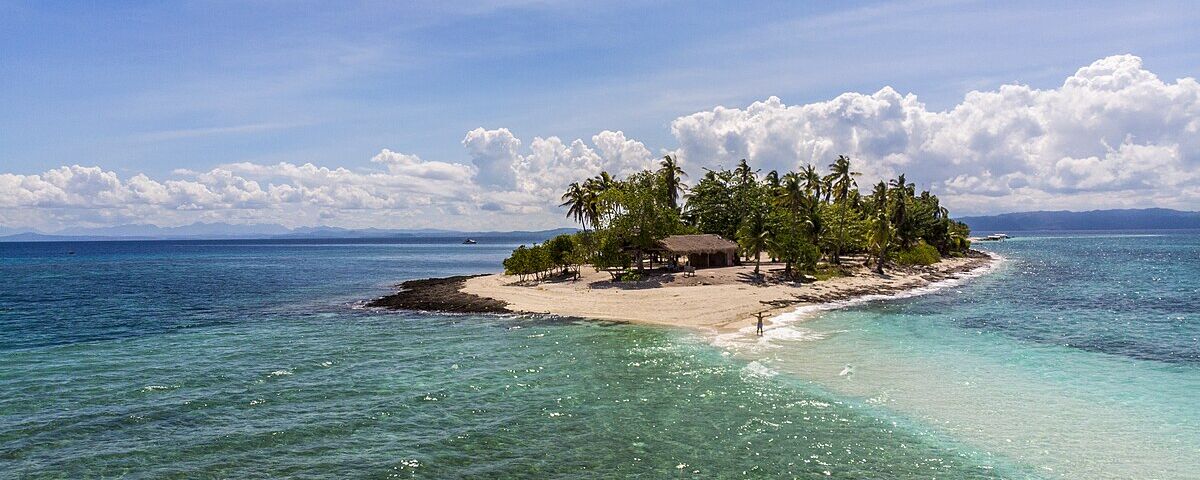
Kimud Shoal is about 30 minutes by dive boat from Malapascua Island. The island sits off the northern tip of Cebu in the Visayas.
Reaching Malapascua involves flying to Cebu (international and domestic flights from major Asian hubs and Philippine cities), then travelling by road to Maya port (approximately 3 to 4 hours from Cebu city, or 2 hours from Mactan-Cebu airport) and taking a bangka (outrigger boat) crossing to Malapascua (approximately 30 minutes).
Some operators and resorts arrange direct transfers from Cebu airport to Malapascua, including the port crossing. The journey is long but straightforward.
Malapascua is a small island with limited infrastructure. Accommodation ranges from simple guesthouses to mid-range dive resorts. The diving community is concentrated along Bounty Beach on the island's south side.
Gear Recommendations
3mm wetsuit with possible thermocline encounters. Reef hook useful for holding position in current on the reef edge. Wide-angle lens for shark encounters and reef scenes. SMB mandatory for safety stops and ascent in current. Dive computer with depth alarms set to planned maximum. Nitrox strongly recommended for the deeper profiles and remote location safety margin.
Recommended Dive Operators
Thresher Shark Divers is the longest-established operation on Malapascua, with experienced guides who know Kimud Shoal's conditions. Sea Explorers has a professional operation with well-maintained equipment and current-savvy guides. Malapascua Exotic Island Dive and Beach Resort offers reliable dive services. Evolution Diving offers smaller group sizes and flexibility in site selection based on conditions.
Liveaboard Options
Malapascua is primarily a shore-based destination. Divers stay on the island and access Kimud Shoal by day-trip boat. Occasional liveaboard itineraries covering the Visayas may include Malapascua, but this is uncommon. The island's accommodation and dive infrastructure are designed for multi-day stays with daily boat diving.