Deep Slope Dive Site
Malapascua, Philippines · Near Malapascua Island
Overview
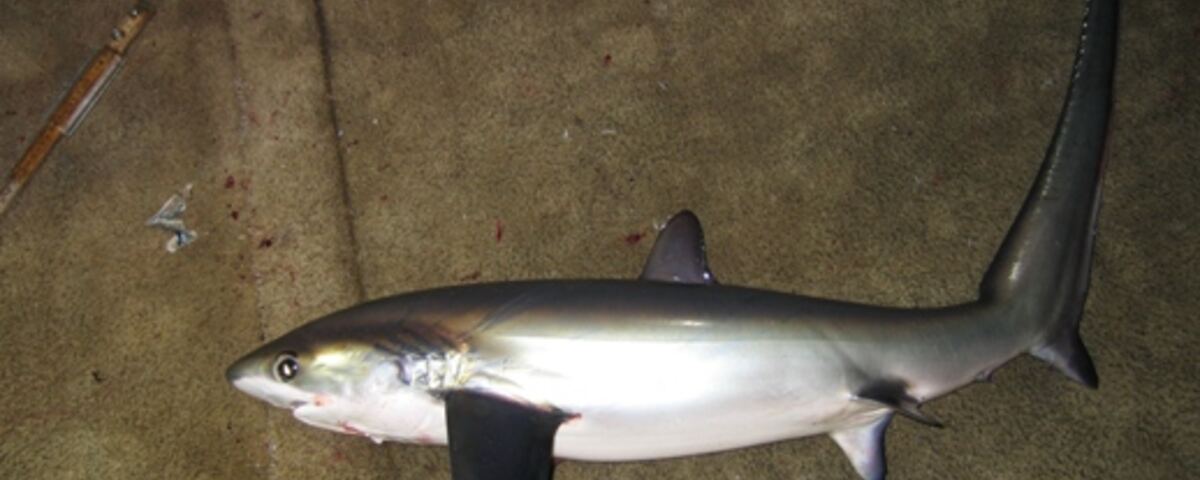
Deep Slope is Malapascua's macro paradise, the site that critter hunters gravitate towards once they've had their fill of thresher sharks at Monad Shoal. Sitting off the island's southern coast, this sloping reef drops from about 10 metres to well beyond recreational limits, with the most productive section for marine life concentrated between 15 and 28 metres.
The site's name is prosaic but accurate. It's a slope. It's deep (by Malapascua standards). What the name doesn't convey is the density of macro subjects hiding in the gorgonians, soft corals, and rubble patches along the descent. Pygmy seahorses on sea fans, nudibranchs in absurd variety, ornate ghost pipefish hovering vertically against whip corals. Deep Slope is where Malapascua proves it's not a one-trick thresher shark destination.
The slope faces into the open channel between Malapascua and the mainland, which means nutrient-rich water sweeps across the site regularly. This current feeds the soft coral growth that covers much of the mid-depth range, creating the habitat that the small critters depend on. When the current is running, the gorgonians and sea fans extend fully into the flow, making the pygmy seahorse searches more productive (they're easier to spot on an open fan).
Dive operators on Malapascua typically schedule Deep Slope as an afternoon dive, pairing it with the dawn thresher shark dive at Monad Shoal. This sequencing works well because Deep Slope rewards slow, patient diving rather than the adrenaline-focused approach of the cleaning station encounters.
The site doesn't have a single dramatic feature. There's no cave, no wreck, no cleaning station. It's a slope with excellent critters, and that's enough. The diving here is contemplative: hovering over a sea fan while your guide points out a 1.5-centimetre pygmy seahorse, then moving 3 metres to find a different species of nudibranch on a coral head. It's the kind of diving where 60 minutes passes in what feels like 15.
Deep Slope's main limitation is depth. The best critter sections are between 18 and 25 metres, which eats into no-decompression time and demands awareness of air consumption. Divers who rush through their air miss the point entirely; this is a site that rewards breathing control and minimal movement.
Marine Life at Deep Slope
Pygmy seahorses are the headliner. Denise's pygmy seahorse and Bargibant's pygmy seahorse have both been documented on the gorgonian sea fans along the slope. These extraordinary animals rarely exceed 2 centimetres in length and match their host fan's colour so precisely that finding them without guide assistance borders on impossible. Once spotted, they're surprisingly cooperative photographic subjects, remaining on their fan while photographers jostle into position.
Nudibranch diversity is exceptional. The slope's varied substrate supports dozens of species, from large chromodoris specimens with vivid colour patterns to tiny, cryptic species that require macro lenses and patience to document. Flatworms in electric colours inhabit the same surfaces, and the two groups are frequently confused by newer divers.
Ornate ghost pipefish appear seasonally, their leaf-like bodies hovering vertically near whip corals and crinoids. Robust ghost pipefish (the larger, more colourful variety) are less common but present. Seahorses of the more conventional type (thorny seahorses and common seahorses) cling to sparse coral outcrops in the rubble sections.
Frogfish are found along the slope with reasonable regularity, though they require dedicated searching. The dark substrate provides good camouflage for both painted and warty frogfish. Mantis shrimp occupy burrows in the rubble patches, their colourful eyes visible from the entrance.
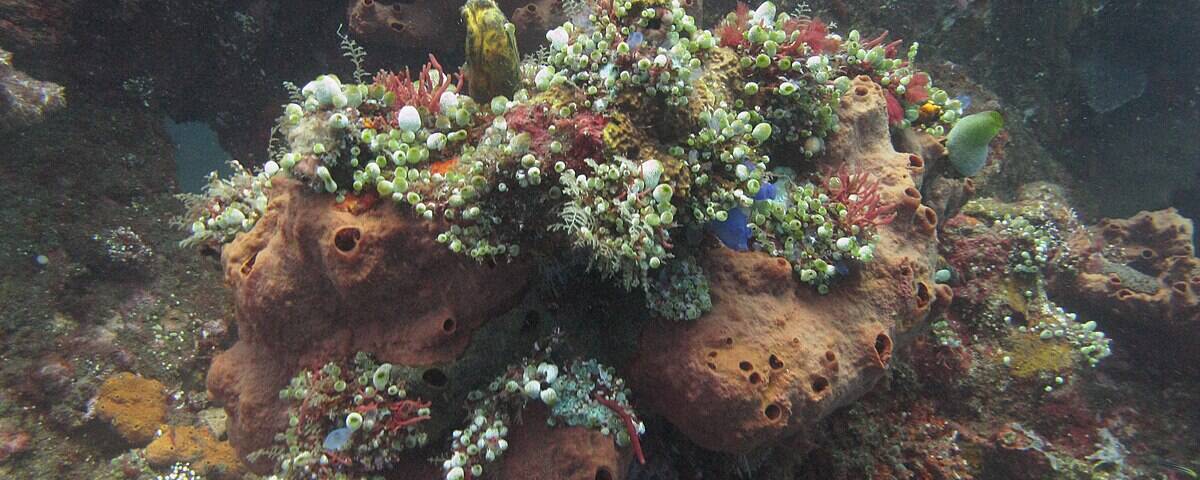
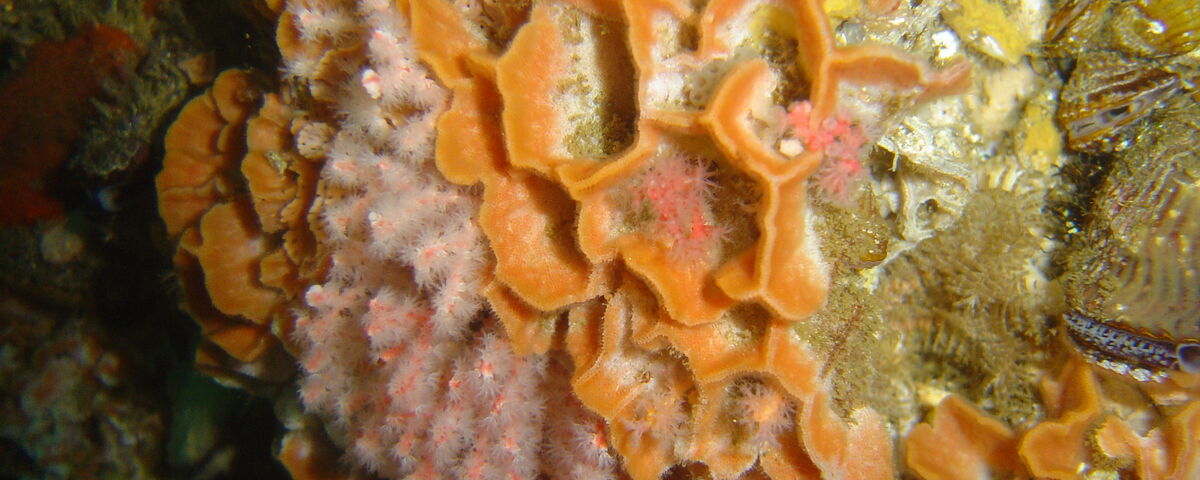
The soft coral coverage along the slope is the backdrop that makes everything work. Purple, pink, and white gorgonians fan out into the current, sea whips extend from the rock surfaces, and anemones host resident clownfish. Cuttlefish hunt across the reef surface, changing colour and texture as they move between hiding spots.
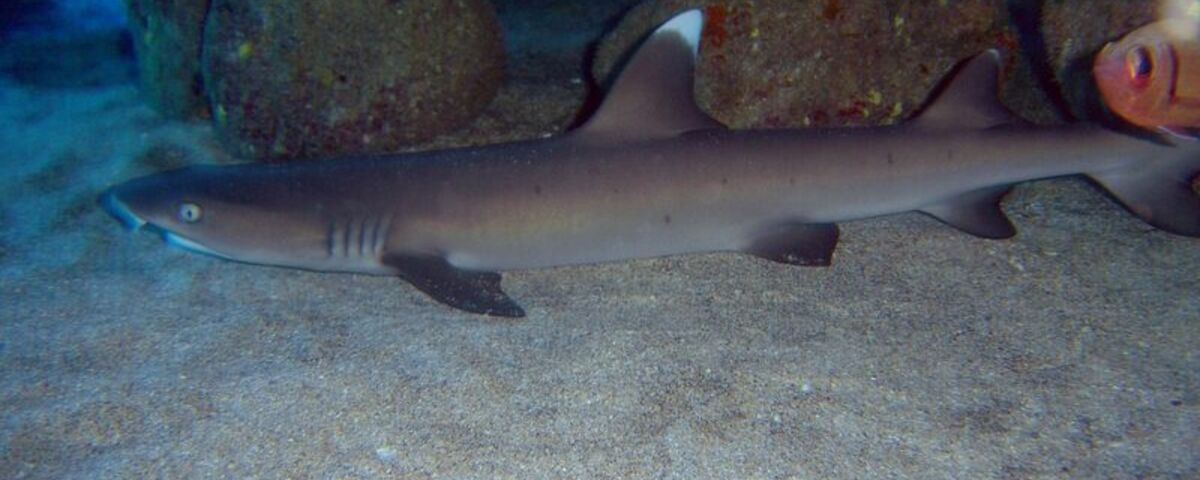
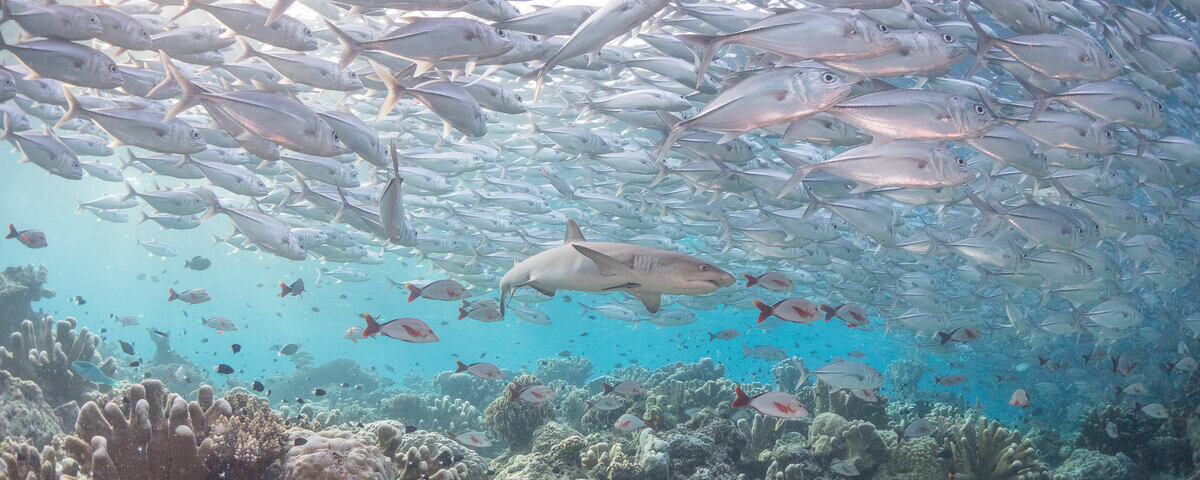
Schooling fish are present but secondary to the macro attractions. Anthias swarm the coral heads, fusilier pass in the blue water off the slope edge, and the occasional barracuda school adds mid-water interest. Reef sharks have been spotted on the deeper sections but are not a reliable sighting.
The rubble sections between the main coral features host their own community. Juvenile fish shelter in the loose substrate, using the gaps between fragments as protective habitat. The rubble also supports encrusting organisms that provide food for the nudibranch populations, creating a chain of dependency from substrate to predator that plays out in miniature across every dive.
Dive Conditions
Current at Deep Slope ranges from mild to moderate, generally less intense than at the exposed offshore sites like Monad Shoal. The slope's orientation relative to the channel means the flow sweeps across the site rather than hitting it head-on, which keeps conditions manageable while still delivering the nutrient flow that feeds the soft coral.
Visibility is typically 10 to 25 metres, with the clearer conditions during the dry season (November to May). The Visayan Sea can produce plankton blooms that reduce visibility temporarily, but these are inconsistent.
Water temperature holds between 26 and 29 degrees year-round. A 3mm wetsuit is standard, though divers spending extended time at the 25-metre level may appreciate the extra warmth of a 5mm.
The slope drops steadily without dramatic walls or overhangs, which makes depth management straightforward. The main discipline is avoiding the gradual descent that happens when you follow interesting subjects deeper and deeper. Set a depth alarm on your computer and stick to it.
Entry is by banca, with a descent down the mooring line to the slope. The dive follows the slope at a chosen depth contour, working laterally along the reef before ascending gradually for the return. Surface conditions are typically calm, with Malapascua's sheltered southern coast providing protection from the northeast monsoon.
Intermediate certification is recommended. The depths where the best critters live (18 to 25 metres) require awareness of no-decompression limits and good air management. Buoyancy control needs to be precise for macro photography without disturbing the subjects.
⚓ Divemaster Notes
Deep Slope is where I earn my tips. Finding a pygmy seahorse on a gorgonian fan when the guest is holding a macro lens and looking expectant, that's guide work at its most satisfying. The seahorses don't move much once you know their host fan, but they do relocate occasionally, so I check the known fans on every dive to keep my mental map current.
I run this dive at a consistent 20-metre depth contour, moving laterally along the slope. Going deeper than 25 metres on air isn't worth it; the critter density actually drops below that depth, and the no-deco penalty isn't justified. Nitrox divers get substantially more productive time in the sweet spot.
The afternoon light matters for photography. The slope's aspect means the sun angle in the afternoon creates nice backlighting conditions for the gorgonian fans, which is ideal for pygmy seahorse silhouette shots. Morning dives work too, but the light is more directly overhead and less flattering.
One thing I always tell macro photographers: don't hunt. The critters on Deep Slope are densely distributed, so the strategy is to move slowly along the slope and let your guide point things out. Photographers who swim ahead searching on their own miss the tiny stuff and disturb the site for everyone behind them.
Buoyancy is everything here. If you can't hover motionless at 20 metres without touching the reef, you're not ready for Deep Slope's macro treasures. I assess this at easier sites first and only bring divers here when I'm confident they won't crash into the gorgonians.
How to Get to Deep Slope
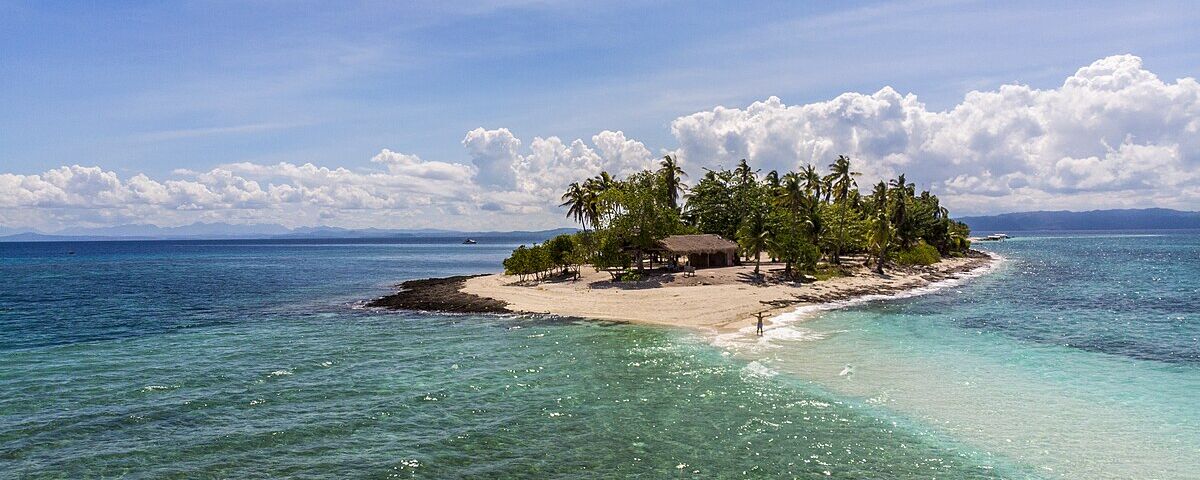
Deep Slope sits off Malapascua Island's southern coast, roughly 10 to 15 minutes by banca from the beach dive centres. Malapascua itself is reached by public banca from Maya port on the northern tip of Cebu Island. Maya is about 4 hours by bus or private car from Cebu City, or you can fly to Cebu and arrange a private transfer.
Most dive operators on Malapascua include Deep Slope in their standard site rotation, typically as an afternoon dive. The island has a good selection of dive centres clustered around Bounty Beach.
No specific fees apply beyond standard dive operator charges. The season runs year-round with the best conditions November to May.
Gear Recommendations
3mm wetsuit for the warm water. Macro lens (60mm or 100mm equivalent) is the priority optic. Dual macro strobes with diffusers. Focus light for guide pointing and autofocus assistance in low light. Pointer stick for stabilisation (resting lightly on bare rock, never on coral). Nitrox recommended to extend bottom time in the 18 to 25-metre critter zone. SMB for safety stops.
Recommended Dive Operators
Evolution Diving Resort has house reef critter experts who know every pygmy seahorse location on the slope. Thresher Shark Divers combines the thresher experience with strong macro diving capabilities. Fun & Sun Dive Center offers personalised guiding for photographers. Malapascua Exotic Island Dive Resort runs experienced operations with good guide-to-diver ratios.
Liveaboard Options
Malapascua is primarily a land-based diving destination, with the island's dive centres offering daily boat trips to all sites. Liveaboards from the Visayas occasionally include Malapascua on their itineraries, with the Philippine Siren and Solitude One both running routes through the area. These trips combine Malapascua's thresher sharks and macro diving with other Visayan highlights.