Manta Point (Lankanfinolhu) Dive Site
North Malé Atoll, Maldives · Near Malé
Overview
Manta Point at Lankanfinolhu is one of the most accessible manta ray encounters in the Maldives, a cleaning station on the eastern side of North Male Atoll where reef manta rays gather to be groomed by cleaner wrasse. The station sits on a coral outcrop at 10 to 15 metres depth, and during the southwest monsoon season (May to November), manta rays visit with a regularity that makes this one of the most reliable manta encounter sites in the Indian Ocean.
The appeal of Manta Point is its proximity to Male and its simplicity. The site is a short boat ride from the capital and the resorts of North Male Atoll, requiring no liveaboard or long transfer. The cleaning station operates at moderate depth in mild current, making it accessible to intermediate divers who might not manage the more demanding manta sites in the outer atolls.
The manta rays here are predominantly reef mantas (Mobula alfredi), typically 2 to 4 metres in wingspan. They arrive at the cleaning station, hover over the coral outcrop, and present themselves to the cleaner wrasse that inhabit the station. The interaction is gentle and predictable: the mantas queue, hold position while being cleaned, then depart and circle back for another pass. During peak season, multiple mantas may be at the station simultaneously, creating traffic patterns that are both graceful and oddly orderly.
Outside the cleaning station, the reef supports standard North Male Atoll marine life: reef fish, small sharks, and healthy coral. The reef slope drops from 8 metres to about 20 metres, providing a comfortable diving range that allows long observation times at the cleaning station without depth pressure.
The Maldives Manta Ray Project has identified and catalogued hundreds of individual mantas in North Male Atoll, and divers can contribute to the research by photographing the belly patterns (which are unique to each individual, like fingerprints) and submitting them to the project's database.
The Maldives Manta Ray Project, based in the atolls, has identified hundreds of individual mantas using photo-identification of belly markings. Divers visiting Manta Point can contribute to this research by photographing the ventral patterns of mantas they encounter and submitting images to the project's database. Some individual mantas have been tracked across multiple atolls and seasons, revealing migration patterns that inform conservation policy.
The reef around the cleaning station supports a broader ecosystem that makes the site worthwhile even on manta-free dives. The coral health is good, the fish diversity reflects North Male Atoll's position in the Indian Ocean current system, and the occasional eagle ray or shark encounter provides variety.
The cleaning station's reliability is partly a function of the reef's health. The cleaner wrasse that service the mantas require healthy coral substrate to maintain their population. The management of the surrounding reef directly affects the manta encounters, creating an ecological incentive for reef conservation that aligns with the tourism economy.
Marine Life at Manta Point (Lankanfinolhu)
Reef manta rays are the main event. During the southwest monsoon (May to November), mantas visit the cleaning station regularly, with encounters on the majority of dives during peak months. Individual mantas range from 2 to 4 metres in wingspan. Seeing 2 to 5 mantas on a single dive is common during the peak; seeing none is unusual but possible.
The cleaning behaviour is mesmerising. The manta approaches the station, slows to a near-hover, and extends its cephalic fins (the horn-like structures on either side of the mouth) to allow cleaner wrasse access to its gills and skin. The manta holds this position for minutes at a time, seemingly oblivious to divers watching from a few metres away.
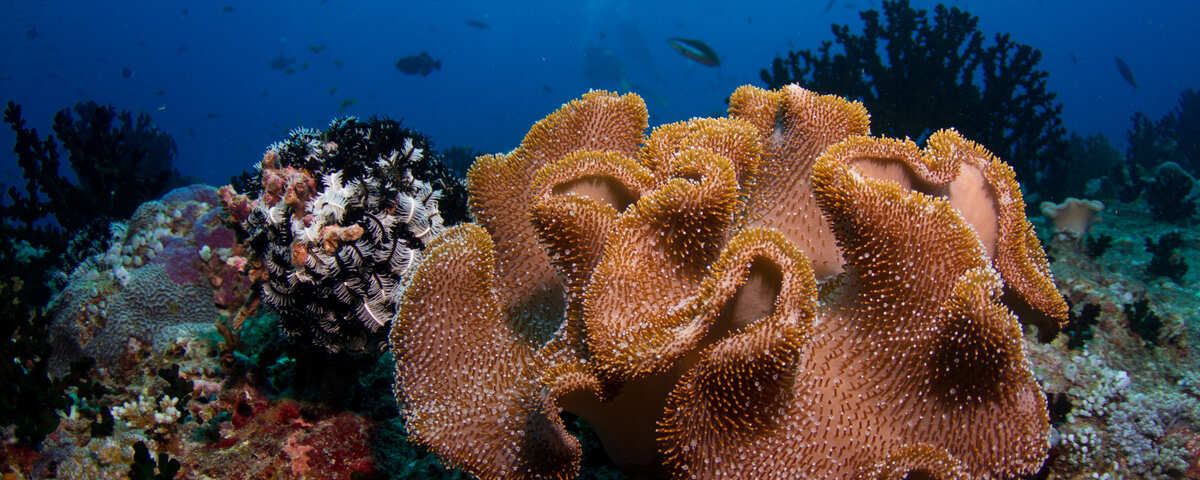
The reef around the cleaning station supports healthy coral growth with schools of surgeonfish, fusilier, and snapper. Eagle rays pass through occasionally. White-tip reef sharks rest on the reef slope. Moray eels and lionfish inhabit the coral structures.
The sandy areas between reef patches host stingrays. Octopus hunt across the reef. The macro life is secondary to the manta experience but present for divers between manta passes.
The site occasionally attracts oceanic manta rays (Mobula birostris), which are considerably larger than the reef mantas. These sightings are uncommon but unforgettable when they occur.
Dive Conditions
The cleaning station sits at 10 to 15 metres on a coral outcrop. The reef slope extends from 8 to 20 metres, providing comfortable depth for extended manta observation. The site is shallow enough for generous no-decompression time.
Current is typically mild to moderate at the station, though it can increase during tidal changes. The mantas prefer the cleaning station during incoming current, when plankton concentrations increase.
Visibility ranges from 10 to 25 metres, with the lower clarity during the plankton-rich southwest monsoon (which is also the best manta season, creating an ironic trade-off). Water temperature is 27 to 30 degrees.
Intermediate certification is sufficient. The key skill required is the ability to hold position near the cleaning station without touching the reef or disturbing the mantas. Good buoyancy control is essential, as approaching too close or rising into the manta's flight path will cause it to abort the cleaning visit.
The site is close enough to Male that half-day diving trips are feasible, making it accessible even for short Maldives visits. Divers transiting through Male with a free half-day can arrange a Manta Point trip through local operators, adding a manta encounter to what might otherwise be an airport layover.
⚓ Divemaster Notes
Manta Point is the dive that turns non-divers into divers. The accessibility of the site and the reliability of the manta encounters during season make it one of the most powerful introductions to marine wildlife that diving can offer. I have seen people cry underwater here. Not from fear; from the sheer emotional impact of a 3-metre manta ray hovering a few metres in front of them.
The protocol at cleaning stations is strict and I enforce it without compromise. Stay below the manta's elevation. Do not swim towards it. Do not touch it. Do not block its approach to the station. Position yourself 3 to 5 metres from the station, kneel or hover (depending on the substrate), and let the manta come to you. If everyone follows these rules, the mantas stay for extended sessions. If one diver breaks ranks and swims towards a manta, it departs and may not return for 10 minutes.
I position photographers downflow of the station, so the manta is approaching them as it comes in to be cleaned. This gives the widest-angle shot with the manta's belly visible (important for identification photography) and the cleaning station in the background.
The timing of dives matters. I have found that mid-morning (09:00 to 11:00) and late afternoon (15:00 to 17:00) produce the most consistent manta activity at this station. The midday hours are less reliable, possibly because the mantas shift to feeding behaviour in the more plankton-rich surface waters.
One honest limitation: the southwest monsoon that brings the mantas also brings reduced visibility and occasionally rough surface conditions. Some days the vis is 10 metres and you see the manta only when it is directly in front of you. These close-range encounters in limited visibility are actually more intense than the clear-water sessions, though less photogenic.
I keep a mental catalogue of individual mantas that visit the station regularly. Some have distinctive markings or injuries that make them recognisable between visits. Returning guests appreciate hearing that the manta they are watching is the same individual they photographed on their last trip. It creates a personal connection to the conservation story that statistics cannot match.
How to Get to Manta Point (Lankanfinolhu)
Manta Point is in North Male Atoll, approximately 30 to 45 minutes by speedboat from Male. Most North Male Atoll resorts include the site on their dive schedules during manta season. The proximity to Male makes it accessible even for short trips.
Male is the Maldives' international gateway, with direct flights from Singapore, Sri Lanka, India, the Middle East, and European hubs. Resorts in North Male Atoll offer speedboat transfers from the airport, typically 15 to 60 minutes depending on the resort's location.
Manta season runs May to November (southwest monsoon). Outside this period, mantas are less frequent at this specific site but may be present at other cleaning stations in the atoll. Year-round diving is possible, with the northeast monsoon (December to April) offering better visibility but fewer manta encounters at this location.
Gear Recommendations
3mm wetsuit. Wide-angle lens mandatory for the manta encounters. Strobes are optional (the mantas are large enough to photograph in ambient light at this depth). SMB for safety stops. No reef hook needed at this site. No Nitrox needed for the depth range.
Recommended Dive Operators
Bandos Maldives dive centre has long experience guiding Manta Point dives. Baros Maldives provides intimate, small-group manta encounters. Kurumba Maldives is the closest resort to Male with regular Manta Point trips. Ocean Group Maldives operates from multiple North Male resorts.
Liveaboard Options
Manta Point is primarily accessed from North Male Atoll resorts on day trips. Liveaboards passing through North Male Atoll include the site on their itineraries. Most Maldives liveaboard routes begin or end in Male, and operators often schedule a North Male dive day that includes Manta Point during the appropriate season.