Broken Rock Dive Site
South Ari Atoll, Maldives · Near Dhangethi
Overview
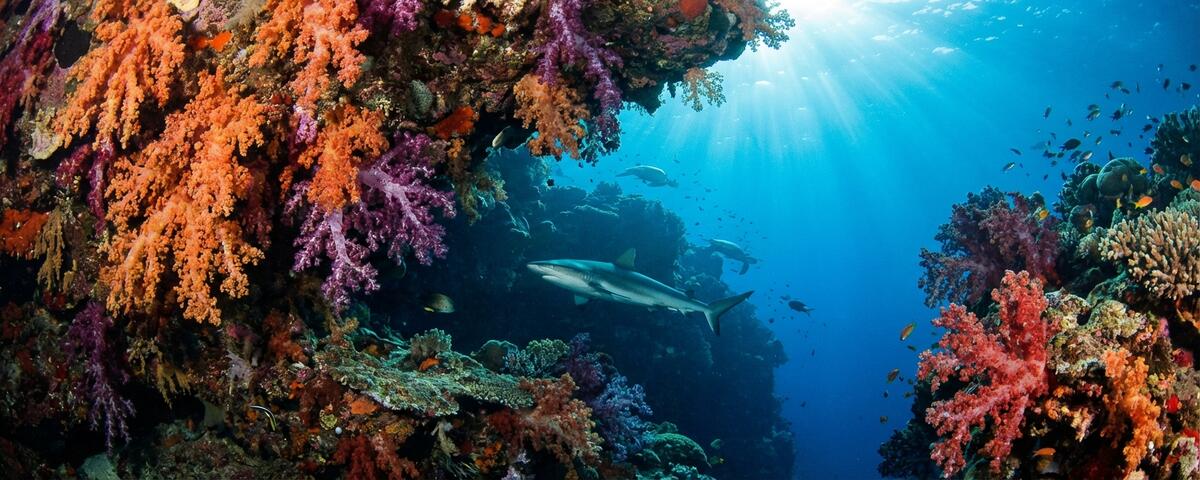
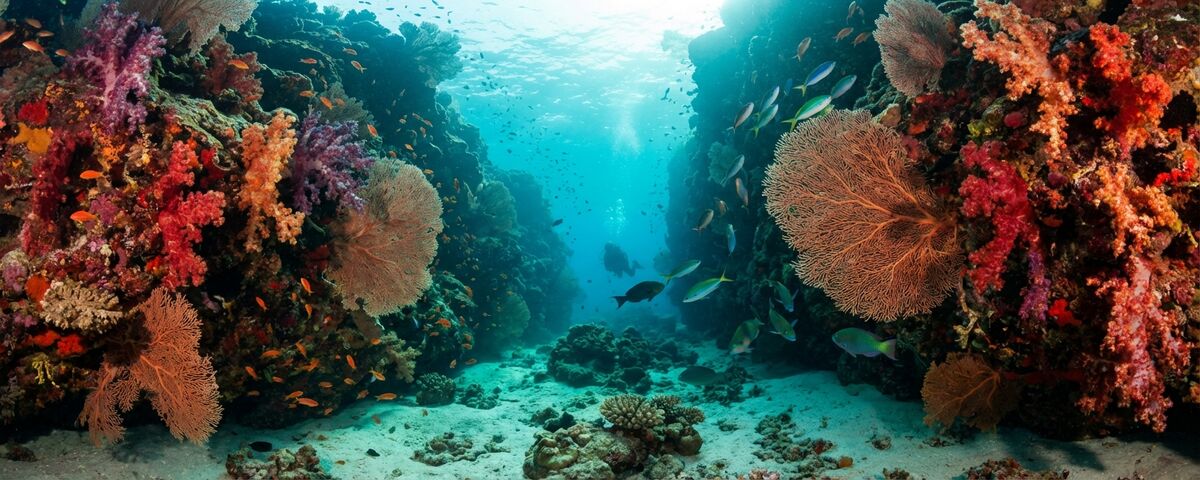
Broken Rock sits in the Dhigurah Channel between Dhangethi and Dhigurah islands in South Ari Atoll, and it is one of the most visually striking dive sites in the Maldives. The site gets its name from exactly what you would expect: a large oval-shaped reef formation, roughly 50 metres long, that has been split clean through by the force of water moving through the channel. The result is a canyon about two metres wide cutting straight through the middle of the reef, its walls smothered in soft corals, gorgonian fans, and sponges so densely packed they look like an underwater garden that somebody watered with steroids.
What makes Broken Rock special is not just the canyon itself but the way the entire site works together. The reef top starts at around 10 metres and drops to 25 or 30 metres on the outer edges, with the canyon running as a deep slot through the heart of the structure. Swimming through it feels like drifting through a coral cathedral. The walls close in on both sides, sea fans extend overhead, and the light filtering down from above shifts from blue to purple as the soft corals absorb and reflect it. It is the kind of dive that makes photographers forget about their air consumption.
The channel location means current is a constant factor here, and that current is what feeds the reef. Nutrient-rich water floods through the Dhigurah Channel with the tides, sustaining the soft coral growth that covers every available surface and drawing in predators from the open ocean. Grey reef sharks patrol the deeper edges, whitetip reef sharks rest in the sandy patches below, and Napoleon wrasse cruise past with the unhurried confidence of creatures that have never been hunted.
South Ari Atoll is better known for its whale shark encounters along the outer reef, but Broken Rock offers something different: an intensely concentrated dose of reef beauty and marine diversity packed into a single formation. You can spend an entire dive exploring just the canyon and its immediate surroundings without covering the same ground twice. The topography creates so many overhangs, swim-throughs, and crevices that every pass through the canyon reveals details you missed the first time.
Most liveaboards running South Ari itineraries include Broken Rock as a standard stop, and for good reason. It consistently ranks among the top ten dive sites in the country, and repeat visitors to the Maldives often list it as a highlight even after dozens of dives across multiple atolls. The combination of dramatic topography, world-class soft coral coverage, and reliable large marine life encounters is difficult to match anywhere in the Indian Ocean.
Marine Life at Broken Rock
The soft coral coverage is the first thing that hits you. The canyon walls are carpeted in dendronephthya soft corals in shades of pink, purple, orange, red, and yellow, growing so densely that the underlying rock is barely visible. Large gorgonian sea fans extend from the walls at angles, some measuring over a metre across, their intricate lattice structures backlit by ambient light from above. Black coral bushes occupy the deeper sections, and wire corals spiral out from crevices like underwater calligraphy.
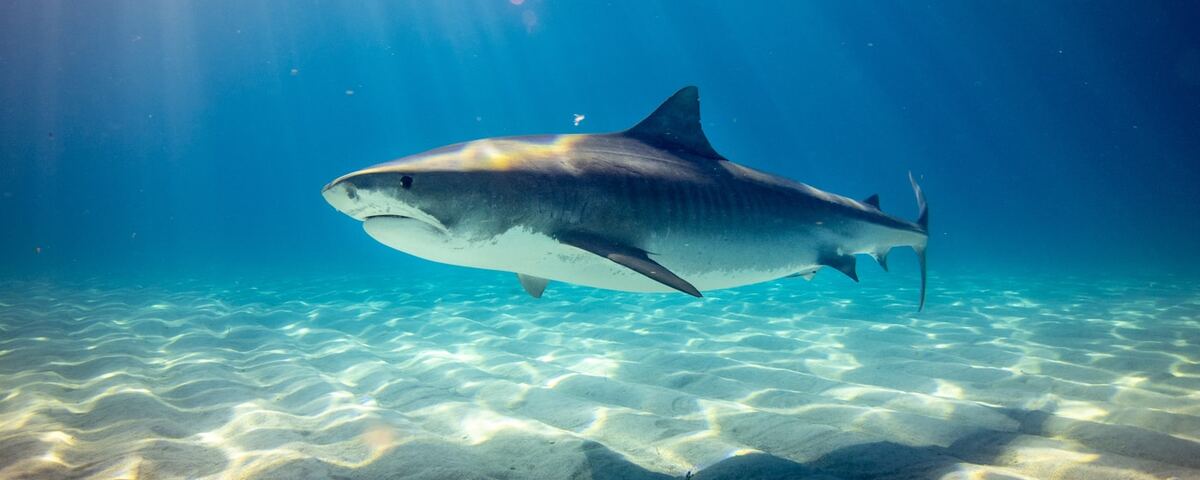
Grey reef sharks are the most commonly sighted large predators. They patrol the channel edges where the current runs strongest, typically at depths below 20 metres. Whitetip reef sharks prefer the calmer areas, resting on sandy ledges beneath overhangs during the day. Eagle rays pass through the channel in small groups, their spotted wings catching the light as they bank into the current. Occasionally a manta will transit the channel, though the dedicated manta sites nearby at Rangali and Maamigili are more reliable for that.
Napoleon wrasse are resident. There are usually two or three individuals on any given dive, and they show little concern about divers. These fish can reach well over a metre in length, and watching one turn its body sideways to fit through a narrow section of the canyon is genuinely entertaining. Coral groupers occupy territories throughout the reef structure, their red bodies dotted with blue spots, and they sit motionless on ledges watching you pass.
The crevices and overhangs harbour a different world. Giant moray eels occupy holes along the canyon walls, sometimes two sharing the same opening. Scorpionfish sit camouflaged on coral rubble, and lionfish hover under overhangs with their venomous fins splayed. Nudibranchs in various species crawl across sponges and soft coral bases. Cleaner shrimp stations attract queuing fish, and commensal shrimp live within the larger sea anemones scattered across the reef top.
Schooling fish use the canyon as a highway. Fusiliers stream through in dense ribbons, blue and yellow stripes catching the light. Schools of red-toothed triggerfish hover above the reef top, and bannerfish hang in loose aggregations near the canyon entrance. Oriental sweetlips shelter under overhangs in small groups, their spotted patterns making them easy to identify. Titan triggerfish patrol the reef top with their usual territorial aggression, so watch your fins during nesting season from roughly March to June.
The reef top itself supports healthy hard coral growth alongside the dominant soft corals. Plate corals and brain corals occupy the flatter sections, and anemones with their resident clownfish dot the landscape. The contrast between the hard coral reef top and the soft coral canyon walls gives Broken Rock a visual diversity that most single-site dives cannot match.
Dive Conditions
Broken Rock sits in the Dhigurah Channel, which means current is the defining characteristic of every dive here. The channel funnels tidal water between the outer ocean and the atoll interior, and the flow can shift from manageable to seriously challenging within the space of 30 minutes as the tide turns. Good dive operators time their visits to coincide with incoming current, which brings the clearest water and the best marine life encounters.
The reef top sits at approximately 10 metres, with the canyon floor at around 18 to 22 metres. The outer reef slopes drop to 25 or 30 metres on the north and south sides, where the larger pelagics tend to patrol. Most of the interesting diving happens between 12 and 22 metres, concentrated in and around the canyon itself.
Visibility ranges from 15 to 30 metres depending on the current state and season. The northeast monsoon period from December to May generally brings the best visibility, with 25 to 30 metre days common. The southwest monsoon from June to November can reduce visibility to 15 metres, though the increased plankton during this period sometimes attracts larger filter feeders to the area.
Water temperature holds between 26 and 30 degrees Celsius throughout the year. A 3mm wetsuit is standard. Some divers prefer 5mm during the northeast monsoon months when thermoclines occasionally bring cooler water up from the deep channel floor, dropping temperatures at depth to 24 or 25 degrees for brief periods.
The canyon swim-through requires good buoyancy control. The passage is roughly two metres wide at most points, narrowing to less than a metre in places, and the soft coral growth reduces the usable space further. Fin kicks against the walls will damage coral that took years to grow and will earn you a stern conversation with your guide. Frog kicks or modified flutter kicks with minimal amplitude are the way through.
Current management is the primary skill requirement. On mild current days, the site is accessible to confident intermediate divers with good buoyancy. On strong current days, it becomes a genuinely advanced dive requiring reef hooking on the exposed edges and careful timing for the canyon transit. Your dive guide will make the call based on conditions, and if they suggest skipping the canyon swim-through on a particular day, listen to them.
Entries are typically negative descents from the dhoni to the reef top, dropping quickly to avoid being swept off the site by surface current. Exits involve deploying an SMB from depth and completing a free-water safety stop while drifting, with the dhoni tracking your bubbles and collecting you downstream.
⚓ Divemaster Notes
Broken Rock is one of those sites where the briefing matters more than usual. I have seen overconfident divers charge into the canyon on a strong current day and come out the other side missing a fin or having scraped soft coral off the walls with their tank. The canyon is beautiful precisely because the coral is untouched, and keeping it that way requires divers who can hold their buoyancy in a two-metre-wide slot with current pushing them sideways.
I always start on the upcurrent side of the reef, dropping to 20 or 22 metres on the outer slope first. This is where the grey reef sharks patrol, and spending the first five minutes at depth watching them circle before they habituate to your presence is worth the gas. Then I work up and around to the canyon entrance on the sheltered side, which gives the group time to settle in before the tricky bit.
The canyon transit itself takes three to five minutes at a comfortable pace. I signal the group to go single file and maintain at least two metres between each diver. The temptation is to stop and photograph every sea fan, and I get it, but blocking the canyon while the diver behind you fights current is not the way. I tell photographers to note locations on the way through and circle back for a second pass if air allows.
There is a specific overhang on the south wall about halfway through the canyon that almost always has a resting whitetip shark tucked underneath. I point it out on every dive, and somehow it surprises people every time. The shark is so well camouflaged against the grey rock that divers swim straight past without seeing it. Look for the tail extending beyond the overhang edge.
After the canyon, I bring the group up to the reef top at 10 to 12 metres for the back half of the dive. The contrast is striking. You go from this enclosed, soft-coral world into bright open reef with hard corals, anemones, and turtle traffic. Green turtles are common on the reef top, and they are relaxed enough to allow close approaches.
One thing I always mention in briefings: the current can reverse mid-dive. Tidal changes in the Dhigurah Channel are not always predictable to the minute, and what started as a gentle incoming flow can flip to outgoing while you are inside the canyon. If you feel the current shift direction, do not fight it. Go with it, exit the canyon whichever way is downstream, and regroup on the sheltered side of the reef. Fighting a channel current in the Maldives is a losing proposition.
Air management is the other critical factor. The deeper start and the effort of current management mean air consumption runs higher than on a calm reef dive. I typically call the dive at 70 bar and begin the ascent from the reef top, deploying SMBs at 10 metres and drifting the safety stop. The dhoni crew here are excellent at tracking bubbles and picking up groups in open water.
How to Get to Broken Rock
Broken Rock is located in South Ari Atoll, accessible from several resort islands and local island guesthouses in the area. The nearest inhabited island is Dhangethi, which sits roughly three kilometres to the northeast. Dhigurah island is approximately five kilometres to the south.
The closest international airport is Velana International Airport (MLE) in Male. From Male, the transfer options to South Ari Atoll are seaplane (30 to 40 minutes, operated by Trans Maldivian Airways, landing at resort water platforms), domestic flight to Maamigili Airport (20 minutes, operated by Maldivian or FlyMe, followed by a speedboat transfer), or speedboat (roughly 2 to 3 hours, usually arranged through resorts for higher-end properties).
Dhangethi and Dhigurah both have local guesthouses that offer dive packages with operators who regularly visit Broken Rock. The budget-friendly approach is to fly domestically to Maamigili and take a short speedboat to either island. Several dive centres on Dhigurah run daily trips to Broken Rock when conditions allow, typically departing between 8:00 and 9:00 AM.
Most divers experience Broken Rock as part of a liveaboard itinerary covering South Ari Atoll. The standard South Ari route runs from Male down the atoll's eastern side, hitting whale shark areas around Dhigurah and Sun Island before looping through sites like Broken Rock, Kudarah Thila, and Fotteyo Kandu. A typical liveaboard trip covering South Ari runs five to seven nights and includes 15 to 20 dives across the atoll.
Resort-based diving is also possible from properties like LUX* South Ari, Lily Beach, or Sun Island Resort, all of which have house dive centres with Broken Rock on their regular site rotation. Boat time from most South Ari resorts to Broken Rock is 15 to 45 minutes depending on location.
Gear Recommendations
A 3mm wetsuit is standard for Maldives water temperatures, though a 5mm is worth considering if you feel the cold on repetitive dive days. Reef hook strongly recommended for the outer edges of the reef where current runs strongest; you will want both hands free for photography while holding position. SMB and reel are mandatory for the drifting exit. Dive computer with Nitrox capability recommended, as Nitrox extends bottom time on a profile that typically runs 18 to 22 metres. Wide-angle lens is the primary photography choice here: the canyon walls and soft coral coverage demand a wide field of view, and fish-eye or rectilinear wide zooms in the 10 to 17mm range produce the best results. Torch essential for revealing the true colours of the soft corals, which appear muted blue-grey without artificial light but explode in vivid pinks, reds, and oranges under a beam. Compact macro lens worth carrying for the nudibranch and critter hunting on the reef top if your housing supports lens changes. Gloves not typically worn in the Maldives but consider thin reef gloves if using a reef hook frequently.
Recommended Dive Operators
South Ari Dive Center on Dhangethi island is the closest operator to Broken Rock and dives the site more frequently than anyone else. Their guides know the current patterns intimately and time canyon transits with precision. They offer PADI courses alongside guided diving and cater to both guesthouse guests and walk-in divers. Dhigurah Dive Center on neighbouring Dhigurah runs regular trips with small groups and experienced local guides who have been diving these waters for years. For liveaboard coverage, Carpe Diem Maldives operates well-regarded South Ari itineraries with experienced cruise directors who adjust schedules based on conditions rather than following a rigid plan. Scubaspa runs premium liveaboard trips combining diving with spa treatments, and their South Ari routes reliably include Broken Rock. Emperor Maldives has been running liveaboard operations in the Maldives for over two decades and their crew know South Ari inside out. For resort-based diving, LUX* South Ari Atoll has an excellent dive centre with multilingual instructors and a strong safety culture.
Liveaboard Options
Liveaboards are the most popular way to dive Broken Rock, and South Ari Atoll itineraries consistently rank among the most booked routes in the Maldives. Carpe Diem Maldives runs modern vessels with spacious dive decks, camera stations, and Nitrox included on most packages. Their South Ari routes typically run five to seven nights and include three to four dives per day. Emperor Maldives offers several vessel classes from the comfortable Emperor Atoll to the premium Emperor Serenity, all staffed with experienced Maldivian and international dive guides. Scubaspa combines full spa facilities with serious diving, which sounds gimmicky but actually works well for couples where one partner dives less. The MV Mozaique runs smaller-group charters through South Ari with a focus on photography and flexible scheduling. Maldives Aggressor operates the Aggressor II on routes that include South Ari Atoll as part of longer 10-night itineraries covering multiple atolls. Most liveaboard departures for South Ari routes are from Male, with some operators offering Maamigili embarkation to reduce transfer time. Peak season bookings from January through April should be made six to twelve months in advance, as South Ari routes sell out consistently.