Kudarah Thila Dive Site
South Ari Atoll, Maldives · Near Dhangethi
Overview
Kudarah Thila is one of those South Ari Atoll dive sites that divemasters talk about with a particular tone of voice. Not the breathless excitement reserved for whale shark encounters, but the quieter reverence of people who have seen genuine underwater architecture and know they are looking at something uncommon. The thila, a submerged pinnacle rising from the atoll floor, sits inside a protected marine area south of Dhangethi island. Its top reaches to roughly 12 metres below the surface, and its walls drop steeply to sandy bottom at around 30 metres before the reef slopes continue deeper into the channel.
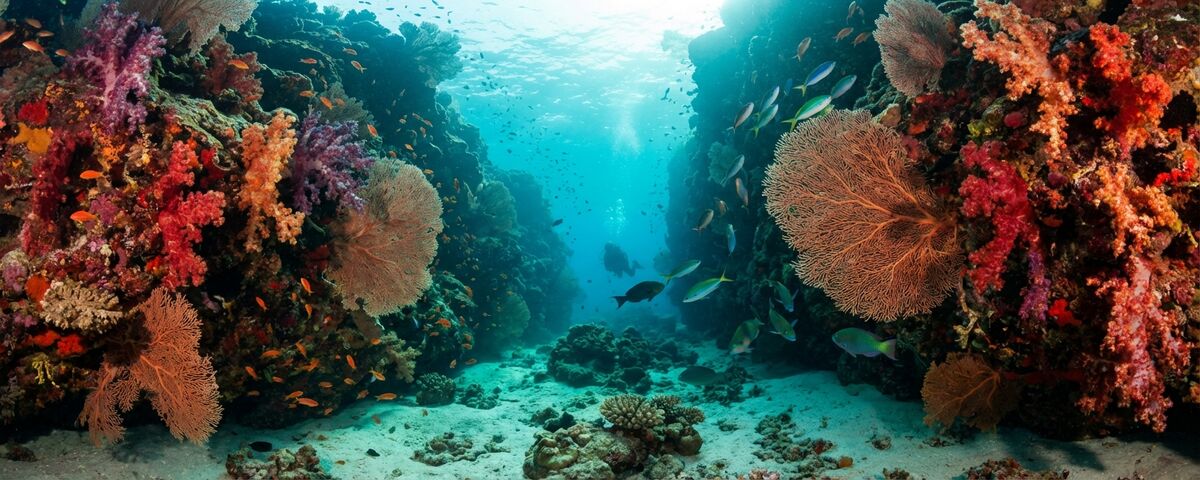
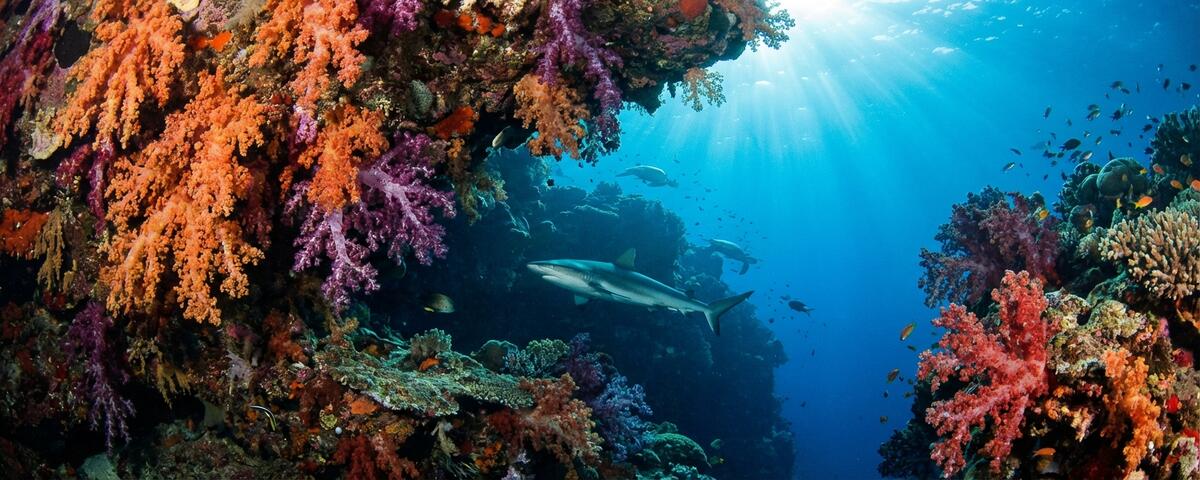
What makes Kudarah Thila remarkable is its overhangs. The pinnacle is riddled with them, particularly on the northern and western faces, where the rock undercuts to form swim-through caves and sheltered ledges draped in soft corals so dense they carpet every available surface. Orange, red, purple and yellow soft corals compete for space with sea fans that stretch outward into the current, filtering plankton from the flow. During an incoming current, the entire thila seems to come alive as these filter feeders open up and the colours intensify.
The site was designated a protected dive area by the Maldivian government, which means no fishing and no anchoring. The result is immediately obvious underwater. Fish populations here are noticeably healthier and denser than at unprotected sites nearby. Schools of blue-striped snapper pack the overhangs in shimmering yellow walls. Napoleon wrasse cruise past with the unhurried confidence of animals that have never been speared. Grey reef sharks patrol the deeper sections in groups of three to five, circling the thila on a route they seem to have memorised.
The thila is relatively compact, roughly 80 metres long and 40 metres wide at its broadest point. This means a single dive can cover most of the structure if the current cooperates, though rushing it would be a waste. The northern overhang alone deserves ten minutes of careful exploration, and the eastern wall has a series of smaller caves where nurse sharks rest during daylight hours. Most dive groups circle the thila in a single loop, adjusting depth as they go: deeper on the current-facing side where the pelagics concentrate, shallower on the lee side where the soft corals are most spectacular.
South Ari Atoll has earned its reputation primarily through whale sharks at Maamigili and the legendary Maaya Thila. Kudarah Thila sits in the shadow of those bigger names, which is part of its appeal. Fewer boats, fewer divers, and the kind of reef health that comes from not being hammered by traffic. On a good day with incoming current, clear water, and the soft corals fully extended, this is as fine a thila dive as you will find anywhere in the Maldives.
Marine Life at Kudarah Thila
Soft corals are the headline. The overhangs on Kudarah Thila host some of the densest soft coral growth in South Ari Atoll, with Dendronephthya species in orange, crimson, and vivid purple hanging from the cave ceilings in clusters. When the current runs and these corals open fully, the colour is almost absurd. Photographers who have dived the Red Sea will recognise the density, but the species mix here is distinctly Indian Ocean.
Sea fans grow large on the outer walls, particularly on the northern and western faces where nutrient-rich current hits the structure first. Gorgonian fans over a metre across angle themselves perpendicular to the flow, and they make excellent foreground subjects for wide-angle photography when a diver or shark passes behind them.
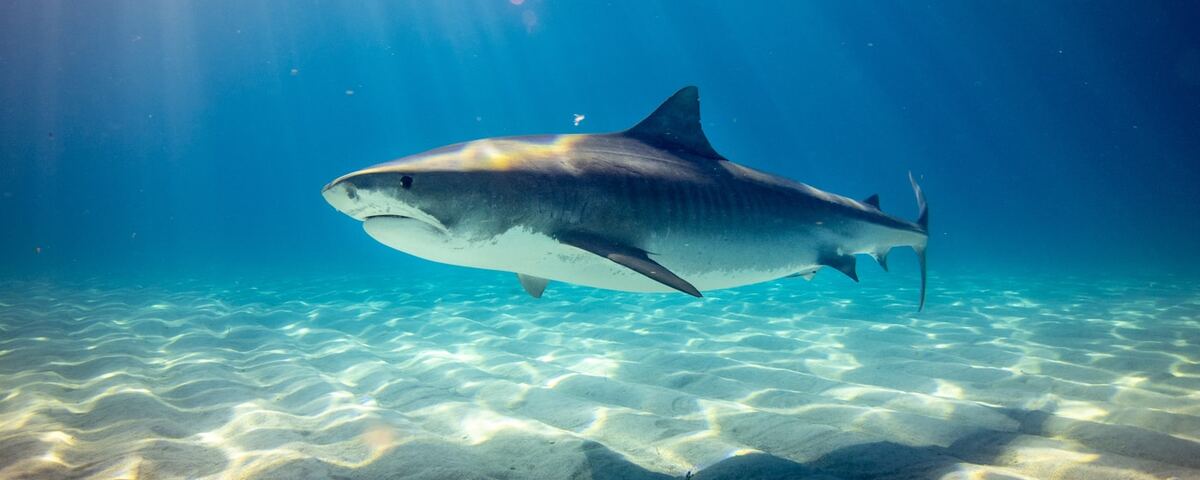
Grey reef sharks are the most reliable large predators. Groups of three to eight sharks circle the thila at depths between 20 and 30 metres, usually on the current-exposed side. They follow a consistent patrol route, so if you settle at one point on the wall and wait, the same sharks will pass you multiple times during a dive. Whitetip reef sharks rest under ledges on the deeper sections, often in pairs. Nurse sharks occupy the eastern caves, usually visible as brown masses tucked into crevices.
Napoleon wrasse are resident. At least two or three large individuals, probably the same ones, patrol the thila on most dives. These are big fish, well over a metre in length, and they often approach divers with apparent curiosity before drifting away.
The snapper aggregations are something else. Blue-striped snappers (Lutjanus kasmira) pack the overhangs in schools numbering in the hundreds, forming living curtains of yellow that part as divers pass through. Oriental sweetlips and harlequin sweetlips shelter underneath the same overhangs, their patterned bodies standing out against the coral backdrop.
Hawksbill turtles are common, feeding on the sponges that grow alongside the soft corals. Reef octopuses are worth looking for in the crevices. Longnose hawkfish perch on the sea fans. Moray eels, primarily giant morays and honeycomb morays, occupy holes in the rock face with their heads protruding.
Macro life is solid if you take the time. Nudibranchs turn up on the coral rubble areas around the base of the thila. Mantis shrimp occupy burrows in the sandy patches. Cleaner shrimp stations operate on several of the larger coral heads, with fish queuing up for parasite removal in a scene you can watch for as long as your air holds out.
During the northeast monsoon (January to April), visibility regularly exceeds 30 metres and the water takes on that crystalline blue the Maldives is famous for. Pelagic encounters pick up during this season too, with eagle rays occasionally passing through and the odd hammerhead reported from the deeper reaches.
Dive Conditions
Kudarah Thila is an advanced dive, and the currents are the reason. The thila sits in a channel position that funnels water between reef structures, and the flow can shift from manageable to serious within minutes. Incoming (easterly) current generally produces the best conditions: cleaner water, active marine life, and soft corals at full extension. Outgoing (westerly) current tends to bring murkier water and pushes divers off the structure more aggressively.
The top of the thila sits at roughly 12 metres, which sounds like a comfortable safety stop depth, but the current at the top can be the strongest on the site. Experienced divers will recognise the pattern: calmer at depth where the pinnacle breaks the flow, more exposed at the summit. Your guide will likely recommend starting deep (25 to 30 metres) on the current-facing side and spiralling upward as you work around to the sheltered lee.
Visibility ranges from 15 metres during plankton-rich periods to 35 metres on the clearest days. The northeast monsoon (January to April) generally delivers the best visibility. The southwest monsoon (May to November) can bring reduced vis but also more plankton, which attracts mantas to nearby cleaning stations and whale sharks to the atoll's outer edge.
Water temperature is remarkably consistent, hovering between 27 and 30 degrees year-round. A 3mm shorty is enough for most people, though a full 3mm suit is sensible for those doing three or more dives daily. Thermoclines occasionally push cooler water (25 degrees) up from depth, but these are brief and localised.
Dive time depends heavily on depth profile and air consumption. A typical circuit of the thila at 18 to 25 metres will give you 40 to 50 minutes on standard air. Nitrox extends this comfortably and is strongly recommended given the site's compact size, since more bottom time means more of the overhangs explored.
Surface conditions are usually calm inside the atoll. The thila is protected from open ocean swell by the surrounding reef structures, so surface interval between dives is comfortable even in rougher weather. Entry is by negative descent from the dhoni (dive boat), dropping directly to the reef top to avoid being swept off the thila by surface current before you reach depth.
⚓ Divemaster Notes
I always brief Kudarah Thila carefully because the current catches people out. The surface might look flat calm, but once you drop below 10 metres, the flow around the thila can be properly strong. My standard approach: negative entry, everyone drops together to the reef top at 12 metres, and we immediately descend the wall on whichever side the current is hitting. If the current is coming from the east, we start on the east wall at 25 metres and work our way around counterclockwise. If it is from the west, we reverse it. The principle is the same either way: face the current first while you have full air and energy, then ride it around to the sheltered side for the second half of the dive.
The northern overhang is the star attraction. It is a wide, deep undercut between 18 and 22 metres, and the ceiling is completely covered in soft corals. I tell my divers to fin to the edge, settle their buoyancy, and then drift slowly underneath, looking up. It is like swimming into a cathedral that someone has painted in every shade of red and orange. If the current is running, which it usually is, the soft corals will be fully extended and the colours are at their best. This overhang is also where the blue-striped snappers aggregate most densely. On a good day, there are so many fish under there that you cannot see the coral behind them.
I keep my groups tight here. Kudarah is compact enough that losing a diver is unlikely, but the current can separate people quickly if attention drifts. A reef hook is useful if you want to stop on the exposed side and watch sharks pass, though the rock is delicate in places, so I ask people to clip onto solid substrate rather than live coral.
The eastern caves are worth checking for nurse sharks, but do not push too far inside. The passages narrow quickly and stirring up silt in there reduces visibility to nothing. A torch is essential for these sections.
My personal favourite moment on Kudarah is the ascent to the top of the thila for the safety stop. After circling the deep walls and caves, you come up to 12 metres and find a different world: hard coral gardens, damselfish clouds, anemones with their clownfish. It is a completely different dive at the top compared to the walls, and it makes a perfect finish.
One thing I have noticed over ten years of diving this site: the soft coral coverage has actually improved since the protected area designation. Whatever the government is doing with enforcement, it seems to be working. The thila looks healthier now than it did when I first dived it.
How to Get to Kudarah Thila
Kudarah Thila sits in South Ari Atoll, roughly 100 kilometres southwest of Malé. Getting there involves either a seaplane or a domestic flight followed by a speedboat transfer, depending on your resort or liveaboard.
From Velana International Airport (MLE) in Malé, seaplane transfers to South Ari Atoll resorts take approximately 25 to 30 minutes. Trans Maldivian Airways (TMA) and Maldivian Air Taxi operate the routes. Seaplane transfers are weather-dependent and only operate during daylight hours (roughly 06:00 to 15:30 for departures). If your flight lands in Malé after dark, you will need overnight accommodation near the airport before continuing.
The domestic flight alternative runs from Malé to Maamigili Airport (VAM) in South Ari Atoll, taking about 20 minutes. Maldivian Airlines operates this route multiple times daily. From Maamigili, speedboat transfers to nearby resorts and dive centres take 10 to 45 minutes depending on which island you are staying on.
Dhangethi, the nearest inhabited island, has a small guesthouse scene that has grown over the past few years. Local dive operators on Dhangethi run trips to Kudarah Thila regularly, and this is the most budget-friendly option. Speedboat from Maamigili to Dhangethi takes roughly 15 minutes.
Most divers encounter Kudarah Thila as part of a liveaboard itinerary covering South Ari Atoll, or from one of the resort dive centres in the area. The site is a 10 to 30 minute boat ride from most South Ari bases.
Gear Recommendations
Reef hook strongly recommended for holding position on the current-exposed side while watching shark patrols. Clip to bare rock, not live coral. A 3mm wetsuit covers most conditions, though a full suit beats a shorty for protection against fire coral and hydroids on the overhangs. Nitrox 32% is the standard fill at most South Ari operations and extends bottom time significantly on a site where you want every extra minute. Underwater torch essential for peering into the eastern caves and for illuminating the true colours of the soft corals, which look dull brown without artificial light at 20 metres. Wide-angle lens is the right choice here: the overhangs and soft coral ceilings demand a wide field of view, and the shark encounters work best with a rectilinear 10-17mm or equivalent. SMB and reel are mandatory for ascent in current. Dive computer with audible depth alarm set to 30 metres helps avoid the temptation to follow the wall deeper than planned.
Recommended Dive Operators
LUX* South Ari Atoll operates one of the best resort dive centres in the area, with experienced guides who know Kudarah Thila intimately. Their five-star PADI centre runs daily trips to the thila when conditions allow. Sun Island Resort (Nalaguraidhoo) has a large dive operation with multiple dhonis and covers all major South Ari sites including Kudarah. Lily Beach Resort runs a well-regarded dive centre with small group sizes and knowledgeable guides, many of whom are Maldivian locals who grew up diving these reefs. Ocean Group Maldives operates from Dhangethi island and offers a more local experience at significantly lower prices than the resort operations. They run regular trips to Kudarah Thila and other nearby sites. Carpe Diem Maldives and Explorer Ventures run liveaboard itineraries that include South Ari Atoll, with Kudarah Thila featuring on most multi-day routes through the area.
Liveaboard Options
South Ari Atoll is a staple on almost every Maldives liveaboard itinerary, and Kudarah Thila features regularly. The Carpe Vita and Carpe Diem run weekly routes through the central atolls that include multiple South Ari dives. Scubaspa Ying and Scubaspa Yang combine spa luxury with serious diving and frequently visit Kudarah on their Ari Atoll loops. The MV Manthiri is a more traditional Maldivian dhoni conversion that runs excellent dive-focused itineraries at a lower price point. Explorer Ventures' Maldives Master covers the full atoll chain on longer voyages. The MV Virgo runs shorter 4-night routes focused specifically on South Ari's whale sharks and thilas. Most liveaboards visit Kudarah Thila as a morning dive, pairing it with Maaya Thila or Broken Rock later in the day for a full South Ari Atoll double. Liveaboard access is advantageous here because boats can time their arrival to match the best current phase, something resort-based day boats with fixed schedules sometimes miss.