Dhigu Thila Dive Site
South Malé Atoll, Maldives · Near Maafushi
Overview
Dhigu Thila sits in the channel between Gulhi island and the Anantara Dhigu resort in South Malé Atoll, and it is one of those dive sites that quietly delivers more than its reputation suggests. The thila stretches roughly 400 metres in length, making it one of the largest submerged reefs in the atoll. Its top sits at just 3 to 5 metres below the surface, shallow enough that snorkellers can appreciate the reef from above, while the walls drop to 26 metres on the east and south sides where the real character of the site reveals itself.
What makes Dhigu Thila worth the boat ride from Maafushi is the combination of accessible depth, structural complexity, and surprisingly varied marine encounters. The western plateau runs at a comfortable 10 to 12 metres, ideal for newer divers working on their buoyancy or instructors running courses in open water. Move east or south and the reef transforms into a network of caves, overhangs, and small swim-throughs decorated with soft corals and gorgonian fans that catch the current and filter plankton from the water column.
The thila's position in a channel means current plays a central role in planning your dive. Incoming tides push nutrient-rich water from the open ocean across the reef, drawing in pelagics and reef predators. Outgoing currents create a different effect entirely: plankton accumulates against the eastern face of the thila, and this concentrated food source draws manta rays during the southwest monsoon season. The eastern end of Dhigu Thila has earned the local nickname "manta point" among Maafushi dive operators for good reason. Between June and November, mantas cruise in to feed with a regularity that borders on clockwork.
South Malé Atoll sits directly south of the capital and receives far less dive traffic than North Malé. The budget guesthouse boom on Maafushi has changed that equation somewhat over the past decade, bringing affordable diving to an atoll that was previously the exclusive domain of resort guests and liveaboards. Dhigu Thila benefits from this shift. It gets dived regularly enough that the local guides know every overhang and cleaning station, but not so heavily that the reef shows signs of wear. The corals remain in strong condition, particularly the soft coral colonies on the deeper overhangs that have been growing undisturbed for decades.
The site works across a wide skill range. A guided snorkel over the top reef is genuinely rewarding. An Open Water diver can spend a comfortable 50 minutes on the western plateau and shallow top. An Advanced diver can drop down the walls, explore the caves at 22 metres, and spend the safety stop watching the action on the reef crest. It is the kind of thila that rewards repeated visits because no single dive covers everything.
Marine Life at Dhigu Thila
The top reef at 3 to 5 metres is a sun-drenched coral garden. Hard corals dominate here: branching Acropora, massive Porites heads, and patches of table coral that provide shelter for juvenile fish. Butterflyfish work the coral in pairs. Surgeonfish and parrotfish graze across the reef flat in loose aggregations. The light at this depth is strong, and on a calm day the visibility from the surface down to the reef crest creates that classic Maldivian postcard effect where the water barely seems to exist between you and the coral.
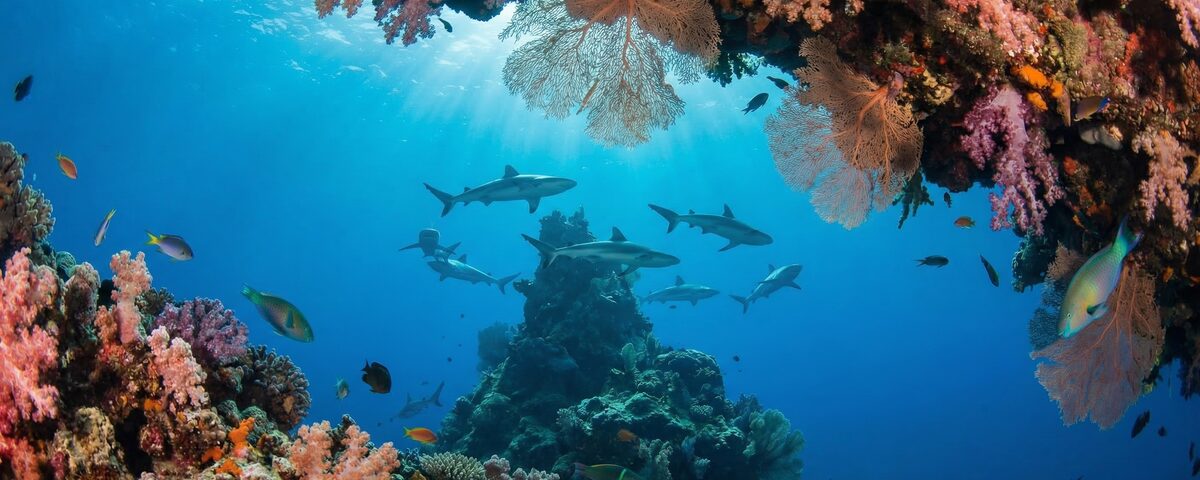
Drop below 10 metres on the western plateau and the reef character shifts. Gorgonian sea fans appear on the current-facing edges, their branches spread wide to intercept passing plankton. Some of these fans reach over a metre across. Sea whips and soft corals in purples and reds cluster in the gaps between the gorgonians. Barrel sponges anchor to the harder substrate. The density of filter feeders here tells you everything about the nutrient load carried by the channel currents.
Napoleon wrasse are resident on this thila. You will almost certainly see at least one, often cruising the reef edge with that distinctive slow, heavy-bodied confidence that makes them look like they own the place. They are not shy here. Years of regular diving contact have habituated the larger individuals, and they will approach within a couple of metres if you hold still.
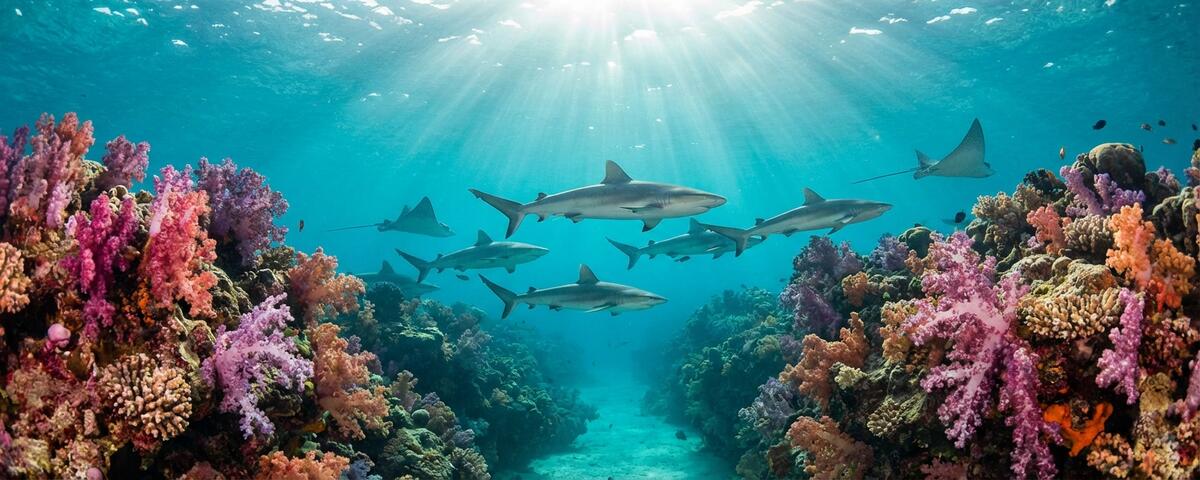
Nurse sharks rest under the overhangs during the day, usually at 18 to 22 metres on the south side. Finding them requires a torch and some patience. They tuck themselves deep into the recesses and lie motionless on the sand. Whitetip reef sharks patrol the reef edge, more active and visible than the nurses. On a good day you might count eight or ten whitetips working different sections of the wall. Grey reef sharks appear less frequently but regularly enough that the deeper sections always carry a sense of anticipation.
Schools of red snapper and blue-lined snapper gather in dense formations along the eastern wall. The snappers hang in the water column just off the reef, their bodies angled slightly into the current, and when the light catches them the effect is like a wall of polished copper. Fusiliers stream past in enormous schools that can block your view of the reef entirely for a few seconds. Jacks and trevallies hunt the edges of these schools, picking off stragglers.
Oriental sweetlips and giant sweetlips hover under the larger overhangs, often alongside the nurse sharks. Scorpionfish hide in plain sight on the reef surface, their camouflage so effective that you can stare directly at one and not see it until it moves. Moray eels occupy crevices throughout the thila, with giant morays and honeycomb morays being the most common species.
The eastern end of the thila is where the manta action happens. During the southwest monsoon (June to November), outgoing currents push plankton against the reef face and mantas arrive to feed. They work the water column in sweeping passes, mouths gaping, occasionally barrel-rolling through the densest plankton patches. On peak days, three or four mantas feed simultaneously. This is not a cleaning station visit where the rays hover motionless. This is active feeding behaviour, dynamic and constantly moving, which makes it more challenging to photograph but infinitely more exciting to watch.
Marble rays and eagle rays cruise the sand channels adjacent to the thila. The eagles are skittish and tend to move on quickly if approached, but the marble rays are more tolerant and sometimes allow a slow approach to within a few metres. Green turtles and hawksbill turtles visit the thila regularly. The hawksbills feed on sponges growing on the overhangs while the greens tend to graze algae on the shallower reef flat.
Bumphead parrotfish pass through occasionally in small groups, usually early morning. Hearing them before you see them is normal. The crunching sound of their fused beak teeth grinding coral carries surprisingly far underwater.
Dive Conditions
Current is the defining variable at Dhigu Thila. The site sits in a channel, and the tidal flow determines both the dive plan and what you will encounter. Incoming current (water flowing from the ocean into the atoll) brings cleaner water, better visibility, and pushes pelagic species toward the thila. Outgoing current (water flowing from the atoll to the ocean) reduces visibility somewhat but concentrates plankton on the eastern face, which is what draws the mantas.
On an incoming current, start at the eastern corner. The current will carry you along the south wall toward the west, giving you a comfortable drift past the overhangs and caves. On an outgoing current, start at the western end and drift east toward the manta feeding area. Your guide will read the current direction before entry and plan accordingly.
Current strength varies from barely perceptible on neap tides to genuinely strong during spring tides. The western plateau at 10 to 12 metres experiences less current than the deeper walls, making it a reliable option when the flow is pushing hard. The caves and overhangs at 22 to 26 metres provide natural shelter if the current becomes uncomfortable at depth.
Visibility ranges from 10 metres on a murky outgoing current day to 30 metres on a clean incoming current with good conditions. The realistic average sits around 15 to 20 metres. January through April typically delivers the best visibility as the northeast monsoon brings drier weather and calmer seas. The wet season from June to November can produce cloudier water, particularly during heavy rain periods, but this is also when the plankton blooms and the mantas arrive. There is a genuine trade-off between clarity and megafauna.
Water temperature holds between 26 and 29 degrees Celsius throughout the year. The Maldives sits close enough to the equator that seasonal temperature variation is minimal. A 3mm full wetsuit is standard. Some divers wear a 5mm for repetitive daily diving, particularly if they run cold or are doing three dives a day for several consecutive days.
The shallow top reef at 3 to 5 metres makes for an excellent safety stop area with plenty to look at. Surface conditions in the channel can be choppy when wind opposes current, but the dive boat typically drops you upcurrent and picks you up downcurrent, so surface swimming is minimal.
The site is diveable year-round. There is no closed season in South Malé Atoll. The two monsoon seasons each bring different conditions and different highlights, which is part of what makes Dhigu Thila a site worth visiting in any month.
⚓ Divemaster Notes
Read the current before every entry. This is not a site where you set a plan on the boat and stick to it regardless. Check the surface flow against the reef, ask your boat captain what the tide is doing, and adjust. A drift dive in the wrong direction at Dhigu Thila means fighting current for 40 minutes while your group burns through air and sees half the site.
The caves and overhangs on the south and east walls at 22 to 26 metres are the most visually impressive feature of this thila, but they also concentrate silt. Brief your group about fin technique before anyone enters an overhang. A single poorly placed flutter kick can reduce visibility inside a cave from 15 metres to less than a metre in seconds. Frog kick or modified flutter only. If your group includes divers with questionable buoyancy control, keep them on the western plateau and skip the caves entirely.
Nurse sharks under the overhangs are resting. Do not allow your group to crowd them or shine torches directly into their eyes. A startled nurse shark bolting from a confined overhang creates a collision risk in tight spaces. Observe from a respectful distance.
For manta encounters on the eastern end during monsoon season, position your group at 10 to 15 metres on the reef edge, slightly below where the mantas are feeding. Do not chase. Mantas that are actively feeding will make repeated passes through the same area if undisturbed. Groups that swim toward them break the pattern and the rays move on. Hold position, control your breathing, and let them come to you.
The top reef at 3 to 5 metres makes for a productive safety stop, but boat traffic in the channel is real. Deploy SMBs before ascending above 5 metres. The channel sees dhoni traffic throughout the day, and a diver surfacing without a marker in the middle of the channel is genuinely at risk.
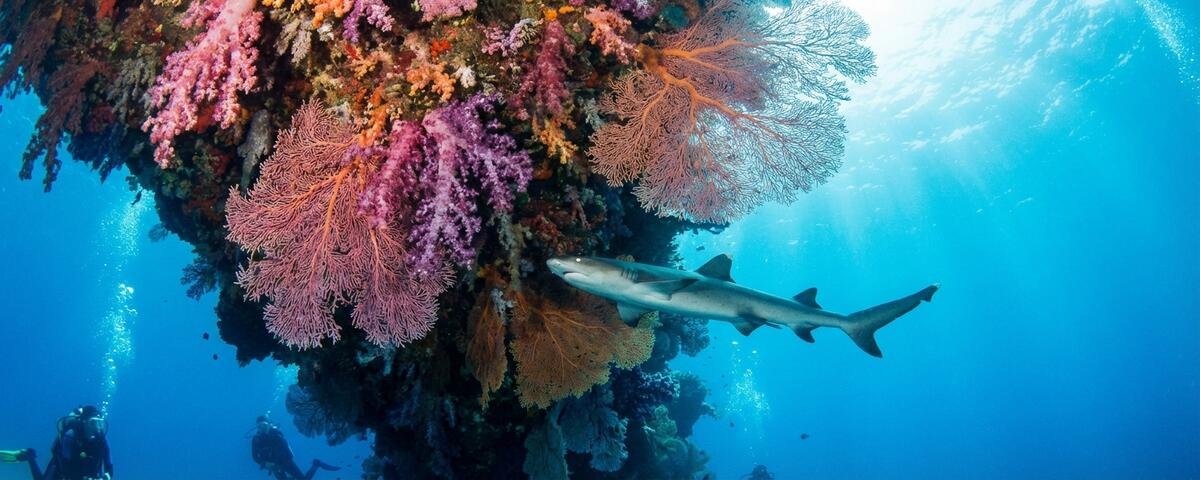
Photography note: the overhangs with soft corals and gorgonians on the south wall at 18 to 22 metres are the money shots at this site. Wide-angle with dual strobes to fill the shadows under the overhangs. The Napoleon wrasse are habituated enough for close-up portraits with a fisheye lens. For mantas on the east end, a wide rectilinear lens with fast autofocus outperforms a fisheye because the mantas tend to approach from a single direction rather than circling.
Dive time management: the site is 400 metres long. You cannot cover it in one dive. Pick a section based on current direction and your group's interest. West plateau for beginners and courses. South wall for caves and overhangs. East end for mantas and pelagics. Trying to see everything produces a rushed dive where nobody sees anything properly.
How to Get to Dhigu Thila
Maafushi is the primary access point for Dhigu Thila. This inhabited local island in South Malé Atoll has become the Maldives' budget travel hub, with dozens of guesthouses, restaurants, and dive operators lining its streets. Getting to Maafushi from Malé is straightforward: public ferries depart daily from Villingili Ferry Terminal (reached by a short ferry hop from Malé) and the crossing takes about 90 minutes. The fare is around 22 MVR (roughly $1.50 USD). Speedboat transfers cut the journey to 30 minutes and cost $25 to $35 per person, available through most guesthouses.
From Maafushi, Dhigu Thila is a 15 to 20 minute dhoni ride. Every dive operator on the island includes it in their regular site rotation. A standard two-dive trip from Maafushi costs $60 to $80 USD including equipment rental, guide, and boat. Single dives run $35 to $50. These are among the lowest dive prices in the Maldives, and a significant part of why Maafushi has exploded in popularity with budget-conscious divers.
Gulhi island sits even closer to the thila and has a small but growing number of guesthouses and one or two dive operations. From Gulhi, the boat ride is under 10 minutes. Gulhi receives far fewer tourists than Maafushi and offers a quieter experience, though with fewer operator choices.
Resort guests at Anantara Dhigu, Anantara Veli, or Naladhu Private Island can access the site through their resort dive centres. The thila is practically on the resort's doorstep. Resort diving prices are significantly higher than Maafushi operators, typically $90 to $120 per dive, but the equipment, boats, and guide ratios reflect the premium.
Liveaboards passing through South Malé Atoll frequently include Dhigu Thila on their itineraries, particularly boats running routes between North Malé and South Malé or continuing south toward Vaavu and Meemu atolls.
International flights arrive at Velana International Airport (MLE) on Hulhulé island, connected to Malé by bridge. From the airport, you can arrange a speedboat transfer directly to Maafushi without transiting through Malé city, which saves time. Most Maafushi guesthouses arrange airport transfers for $25 to $35 per person.
Gear Recommendations
A 3mm full wetsuit is the standard for Maldives diving. Water temperature at Dhigu Thila holds between 26 and 29 degrees year-round, so anything heavier than 3mm is unnecessary for most divers. If you run cold or plan multiple dives daily over several days, a 5mm offers additional warmth without restricting movement.
A dive torch is essential for exploring the overhangs and caves on the south and east walls. The nurse sharks, shrimp, and smaller critters hiding in the recesses are invisible without artificial light. A torch also brings out the true colours of the soft corals under the overhangs, where natural light at 22 metres renders everything in shades of blue. Something in the 800 to 1500 lumen range handles the job without being excessive.
Surface marker buoy and reel are mandatory, not optional. The channel sees boat traffic throughout the day and surfacing without a visible marker is a serious safety risk. Most Maafushi operators provide SMBs, but bringing your own ensures it actually works when you need it.
Reef hooks are not necessary at this site. The current rarely reaches the intensity that demands hooking in, and the reef structure does not lend itself to hook-and-watch diving the way channel walls do at sites like Kandooma Thila or Miyaru Kandu.
For photography, the site rewards two setups. Wide-angle with strobes captures the overhang soft coral scenery, the Napoleon wrasse portraits, and the manta encounters on the eastern end. A macro lens picks up the scorpionfish, nudibranchs, and shrimp cleaning stations that cover the reef. If forced to choose one, go wide. The overhangs filled with colourful soft corals and a whitetip shark gliding past is the signature image from Dhigu Thila.
Nitrox (EANx32) extends bottom time on the deeper sections significantly. If your operator offers it, use it. An extra 10 to 15 minutes at 20 metres makes the difference between rushing past the caves and actually appreciating them. Several Maafushi operators offer Nitrox for an additional $5 to $10 per tank.
Most operators on Maafushi provide full rental equipment. Quality varies between operations. If you own your own mask, computer, and wetsuit, bring them. Rental BCDs and regulators are functional but your own gear always performs better.
Recommended Dive Operators
Maafushi Dive and Water Sports is one of the longest-established operations on the island. Their guides know Dhigu Thila inside out and adjust their dive plans based on current direction and what has been spotted on recent dives. PADI certified centre with rental equipment in reasonable condition. They run small groups, typically four to six divers per guide.
Dive Club Maldives operates from Maafushi with a reputation for solid safety practices and a genuine focus on marine education. Their briefings before Dhigu Thila dives are thorough, covering current direction, entry and exit points, and specific marine life to watch for based on recent patterns. Good option for less experienced divers who want a more structured dive.
Ocean Pro Dive Centre runs daily trips from Maafushi and maintains well-serviced equipment. They offer competitive pricing and their boat captains have years of experience navigating the channels around the thila. Nitrox available for an additional charge, which extends bottom time on the deeper sections of the site.
Anantara Dhigu resort dive centre provides premium access for resort guests. Equipment is top-quality, boats are spacious, and group sizes are small. Their in-house marine biologist occasionally leads specialty dives focusing on the thila's ecology. The price premium over Maafushi operators is substantial, but for guests already staying at the resort, the convenience and service level justify it.
For liveaboard access, Emperor Divers includes Dhigu Thila on several of their Maldives itineraries. Their boats carry experienced guides who have dived the site in all conditions and seasons. The advantage of a liveaboard visit is timing: they can hit the site at optimal current windows rather than being locked to a morning or afternoon schedule.
Liveaboard Options
South Malé Atoll sits on several popular liveaboard routes, and Dhigu Thila appears as a regular stop on itineraries covering the central atolls.
Emperor Explorer and Emperor Serenity run multi-day routes through North and South Malé. Their "Best of Maldives" itinerary typically includes Dhigu Thila alongside Kandooma Thila, Guraidhoo Kandu, and other South Malé highlights before continuing south. Pricing runs $200 to $350 per person per night depending on cabin category and season. Their onboard guides carry years of experience at this specific site and adjust dive plans based on live current readings.
Carpe Diem and Carpe Vita operate similar central atoll routes with a focus on smaller group sizes and personalised guiding. Their boats are well maintained with good camera facilities including rinse tanks and charging stations. Premium pricing at $250 to $400 per night but the service matches.
MV Mozaique targets the mid-range market with comfortable accommodation and solid diving operations. Their South Malé routes include Dhigu Thila as a morning dive, timed for the best current conditions. Nitrox included in the package price.
Scubaspa Ying and Scubaspa Yang combine liveaboard diving with spa treatments, targeting couples and divers who want a more luxurious experience. Their routes include South Malé Atoll and the boat's spa facilities are a genuine draw after multiple days of diving. Top-end pricing at $350 to $500 per night.
For budget liveaboard options, several locally operated boats run shorter two to three-night circuits through South Malé and Vaavu atolls at $150 to $200 per night. Standards vary more widely at this price point, so check recent reviews. The diving is identical since everyone visits the same sites, but cabin comfort, food quality, and safety equipment differ.
Booking well in advance is advisable for the peak season from January through April. The shoulder months of May, November, and December offer lower prices and less crowded sites with only marginally reduced conditions.