Elephant Head Rock Dive Site
Similan Islands (Andaman Sea), Thailand · Near Khao Lak
Overview
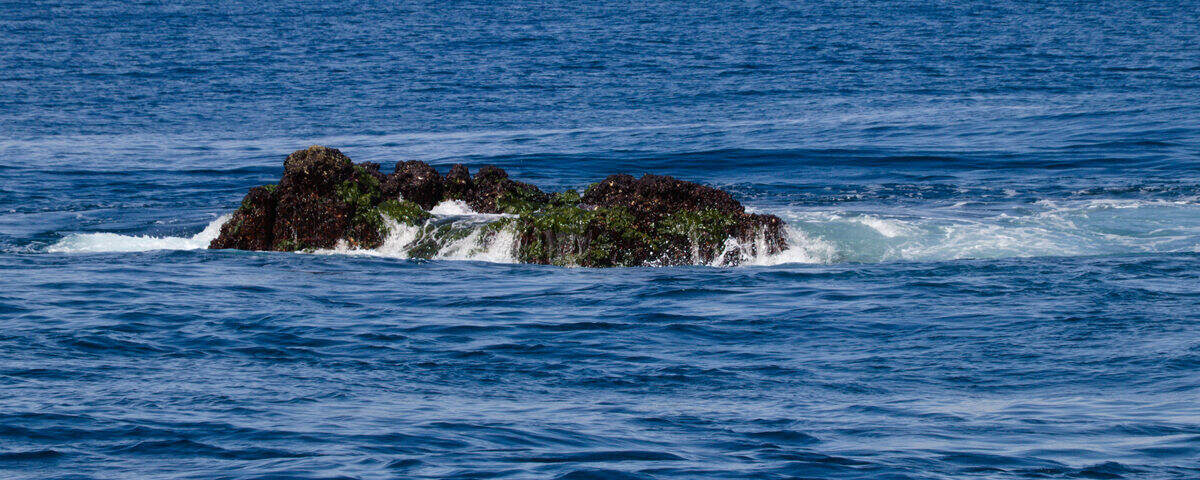
Elephant Head Rock is the Similan Islands' underwater playground, a chaotic tumble of massive granite boulders that have created a labyrinth of swim-throughs, channels, and caverns between Islands 7 and 8. The above-water formation vaguely resembles an elephant's head (you will need to squint), but below the surface the rock pile is genuinely spectacular: house-sized boulders stacked against each other at improbable angles, creating passages that range from comfortably wide to squeeze-through tight.
The site's appeal is topographical rather than biological, which makes it unusual in the Similan context. While other Similan sites draw divers with manta rays or whale sharks, Elephant Head Rock draws them with the sheer fun of swimming through a three-dimensional maze of granite. The swim-throughs vary in size, depth, and complexity, offering routes for every comfort level. Some are wide enough for two divers side by side with 3 metres of clearance above. Others require careful orientation and a guide who knows the exits.
That said, the marine life on and around the boulders is solid. The granite surfaces host hard and soft coral growth, with sea fans on the current-exposed faces. Schools of snapper and fusilier stream between the rock formations. White-tip reef sharks rest in the deeper swim-throughs. The variety of habitats created by the boulder maze (shaded overhangs, current-swept channels, sandy-bottomed gaps) supports a range of species that a single reef structure could not.
The granite boulders are a geological signature of the Similan Islands. These huge, rounded rocks were shaped by millions of years of weathering above and below the waterline, and they give the Similan underwater landscape its distinctive character. Elephant Head Rock concentrates the largest and most dramatically stacked formations into a single dive site.
Light effects in the swim-throughs are the site's photographic gift. Sunlight filters through gaps between boulders, creating shafts and beams that illuminate the passages. The contrast between the dark interior of the swim-throughs and the bright exits, often framed by coral growth and silhouetted fish, produces images that are among the most recognisable from the Similan Islands.
The site's accessibility and the forgiving nature of the swim-throughs (none require technical training or equipment) make it a favourite for dive instructors assessing group capability. A diver who navigates Elephant Head Rock comfortably is ready for Koh Bon's current and Richelieu Rock's deeper features. A diver who struggles here needs more practice before the advanced Similan sites.
The boulder pile is the result of the Similan Islands' geological history. The islands are granite intrusions that have been weathered by tropical conditions for millions of years. The massive, rounded boulders are the product of this weathering process, and they give the Similan underwater landscape a character completely different from the limestone and coral formations that dominate most tropical diving.
Marine Life at Elephant Head Rock
The swim-throughs are the main attraction. Multiple routes wind through the boulder maze at various depths, each offering different perspectives on the rock formations. Some passages are decorated with soft coral on the walls and ceiling. Others are bare granite, their smooth surfaces a testament to the millions of years of wave action that shaped them.
White-tip reef sharks rest in the deeper channels and swim-throughs, sometimes several visible in a single passage. They are habituated to divers and rarely move unless closely approached. The deeper swim-throughs below 20 metres are where the sharks tend to concentrate.
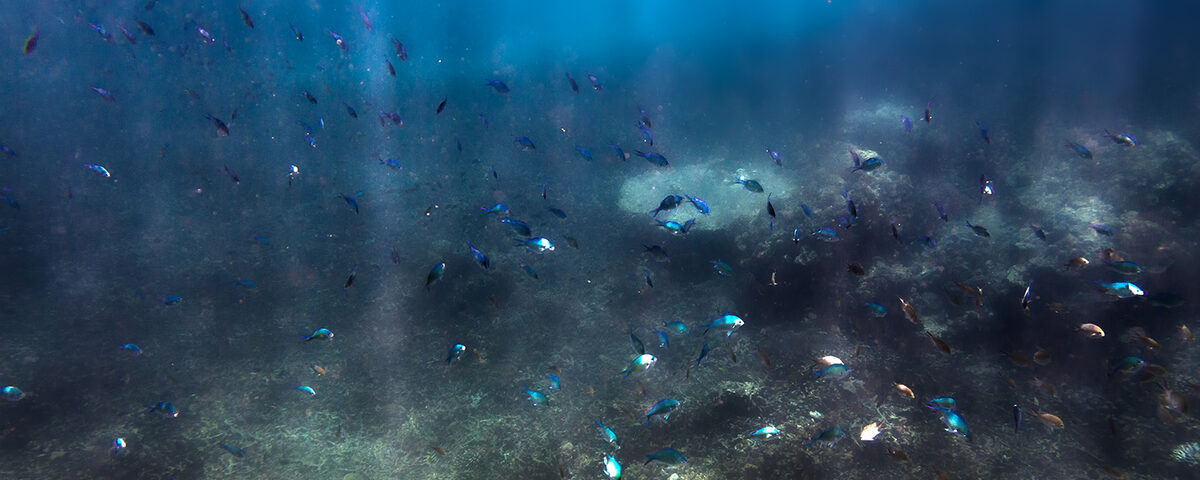
Schools of snapper, fusilier, and trevally move through the gaps between boulders, their silvery bodies flashing in the shafts of light. Barracuda hold position in the open areas between rock formations. Batfish drift above the boulders in their characteristically languid manner.
The boulder surfaces support healthy coral growth. Hard corals occupy the sunlit upper faces, while soft corals and sea fans colonise the shaded and current-exposed surfaces. Barrel sponges anchor in the gaps between rocks. Moray eels inhabit the crevices, and lionfish station themselves at swim-through entrances.
Macro life includes nudibranchs on the coral surfaces, commensal shrimp on the sea fans, and scorpionfish camouflaged against the encrusted rock. Cuttlefish are sometimes found in the calm interior passages between boulders.
The sandy patches between boulder groups host blue-spotted stingrays and garden eels. Looking up through the swim-throughs towards the surface reveals silhouettes of the schooling fish framed against the blue sky above, which is one of the site's signature photographic compositions.
Lobsters shelter in the deeper crevices between boulders, their antennae extending from the gaps. Banded coral shrimp occupy the overhang ceilings, their red and white stripes visible in torchlight. Nudibranch species populate the coral surfaces on the boulders, with chromodoris species particularly common.
The diversity of habitats means Elephant Head Rock supports a broader species range than many single-structure reef sites. The combination of light and dark zones, current-swept and sheltered passages, and rocky and sandy substrates creates niches for species with different habitat preferences.
Dive Conditions
Elephant Head Rock extends from the surface to about 30 metres, with the swim-throughs distributed throughout this range. The shallowest passages are at 5 to 10 metres, accessible to all certified divers. The deeper, more complex routes reach 25 to 30 metres and benefit from advanced training.
Current is typically mild to moderate. The boulder formations provide natural shelter, and the interior passages are usually calm regardless of the external flow. Strong current days are uncommon but possible, in which case the sheltered interior routes become the focus.
Visibility is excellent by Similan standards: 15 to 30 metres. The Andaman Sea water is considerably clearer than the Gulf of Thailand, and the granite formations provide visual reference points that make the dive feel spacious even in lower visibility conditions.
Water temperature is 27 to 30 degrees. A 3mm wetsuit is standard. The shaded swim-through interiors can feel slightly cooler than the open water.
Intermediate certification is recommended. The swim-throughs themselves are not technical (they are all open to the sky with multiple exits), but comfortable buoyancy control is essential to navigate the passages without damaging coral or stirring sediment.
The site is often combined with nearby Similan sites (West of Eden, Waterfall Bay) on a multi-dive day. Liveaboards typically spend a full day in this area, offering 3 to 4 dives across the adjacent sites.
⚓ Divemaster Notes
Elephant Head Rock is the dive I use to gauge my group's buoyancy and spatial awareness before taking them to more demanding sites. The swim-throughs test skills in a forgiving environment: wide passages with multiple exits, good ambient light, and no serious consequences for bumping a wall other than embarrassment.
I have three standard routes through the maze, graded by difficulty. The first is wide passages at 10 to 15 metres, suitable for all divers. The second adds narrower channels at 15 to 20 metres that require single-file navigation. The third drops into the deep swim-throughs below 20 metres where the sharks rest and the passages twist through the boulder pile. I select the route based on the group's demonstrated ability on prior dives.
The light effects are time-sensitive. Mid-morning dives (09:00 to 11:00) produce the best shafts of light through the gaps, as the sun angle is high enough to penetrate the passages. Afternoon dives have different, more horizontal light that can be equally photogenic but less dramatic.
For photographers, the classic composition is to position yourself inside a swim-through and shoot towards the exit, framing a diver in silhouette against the blue water and the light beams. This requires a cooperative buddy and a wide-angle lens. The swim-through interiors are dark enough that strobes are useful for foreground illumination.
The white-tip sharks in the deep swim-throughs are docile and predictable. I know the specific channels where they rest, and I can usually guarantee a shark encounter by routing through the right passage at 22 to 25 metres. The sharks tolerate quiet observation at 2 to 3 metres distance.
How to Get to Elephant Head Rock
Elephant Head Rock sits between Islands 7 and 8 in the Similan Islands National Park, accessible by liveaboard from Khao Lak or Phuket. It is a standard stop on virtually all Similan liveaboard itineraries, typically dived on the first or second day of the trip.
Day trips from Khao Lak also include Elephant Head Rock, with speedboats reaching the Similans in approximately 60 to 90 minutes. Day trips are cheaper but offer only 2 dives compared to the 3 to 4 per day on liveaboards.
Season: November to May. The Similan Islands National Park is closed during the monsoon season.
Gear Recommendations
3mm wetsuit. Torch essential for illuminating swim-through interiors. Wide-angle lens for the passages and light-beam compositions. SMB for safety stops. Nitrox useful for extended time in the deeper swim-throughs. Good buoyancy control is more important than specific gear at this site.
Recommended Dive Operators
All Similan liveaboard operators include Elephant Head Rock. The Junk, Similan Diving Safaris, Wicked Diving, and MV Giamani are established options. For day trips, Sea Dragon Dive Center and Khao Lak Scuba Adventures operate regular Similan day trip departures from Tab Lamu Pier.
Liveaboard Options
Elephant Head Rock is a standard stop on Similan Islands liveaboard itineraries. Most trips include at least one dive here, often on the first day. Liveaboard operators include The Junk, Similan Diving Safaris, Wicked Diving, and MV Giamani. Season: November to May.
The Similan Islands season runs November to May, and liveaboard bookings during peak months (January to March) should be made 3 to 6 months in advance. Elephant Head Rock is dived year-round within the season, with no significant variation in marine life or conditions between months.