Richelieu Rock Dive Site
Similan Islands (Andaman Sea), Thailand · Near Khao Lak
Overview
Richelieu Rock is the best dive site in Thailand and arguably the finest in Southeast Asia. That is not hyperbole. This horseshoe-shaped limestone pinnacle, barely breaking the surface at low tide, sits in the Andaman Sea north of the Similan Islands, in the path of currents that carry nutrients, plankton, and the whale sharks that feed on them. Jacques Cousteau reportedly named it among his ten favourite dive sites. Every major diving publication has ranked it in their Asian top five. The reputation is deserved.
The rock rises from a sandy bottom at about 35 metres to just below the surface, forming a compact horseshoe shape that creates a sheltered interior and exposed outer walls. Every surface is smothered in soft coral: purple, red, orange, and yellow growths that make the entire structure look like it has been dipped in paint. The colour density at Richelieu Rock is almost absurd. On a clear day with good light, the visual impact is immediate and overwhelming.
Whale sharks are the headline act. Richelieu Rock is Thailand's most reliable whale shark encounter site, with the season running from February to May (peak March and April). The plankton blooms that occur in the Andaman Sea during this period attract whale sharks to the nutrient-rich waters around the pinnacle, and encounters range from distant sightings to heart-stopping close passes where a 6-metre shark glides past at arm's length.
Beyond the whale sharks, the marine life density is staggering. Schools of barracuda, trevally, and snapper stack up around the rock. Seahorses hide in the soft coral. Ghost pipefish appear during the season. Harlequin shrimp, one of the most sought-after macro subjects in Asia, are found here with guides who know where to look. Richelieu Rock manages to be simultaneously a world-class pelagic site and a world-class macro site, which is a combination that almost no other location delivers.
The limitation is access. Richelieu Rock sits well north of the Similan Islands, reachable by liveaboard or a long day trip from the Thai-Myanmar border area. Most divers experience it as part of a 4 to 6-night Similan Islands liveaboard trip, which is honestly the best way to do it: multiple dives at Richelieu Rock across different conditions lets you experience the site's full range.
Marine Life at Richelieu Rock
The soft coral coverage is the first thing that registers. Purple soft corals dominate the upper sections, with red, orange, and yellow colonies filling the gaps. The colour saturation is genuinely extraordinary and photographs beautifully under strobes, though even in natural light the effect is vivid.
Whale sharks are the seasonal highlight (February to May). These filter feeders visit the plankton-rich waters around the rock, sometimes circling the pinnacle for extended periods. Juvenile whale sharks (3 to 7 metres) are the most frequent visitors, though larger individuals appear. The encounters are unpredictable in timing but reliable enough during peak months that most multi-dive visits produce at least one sighting.
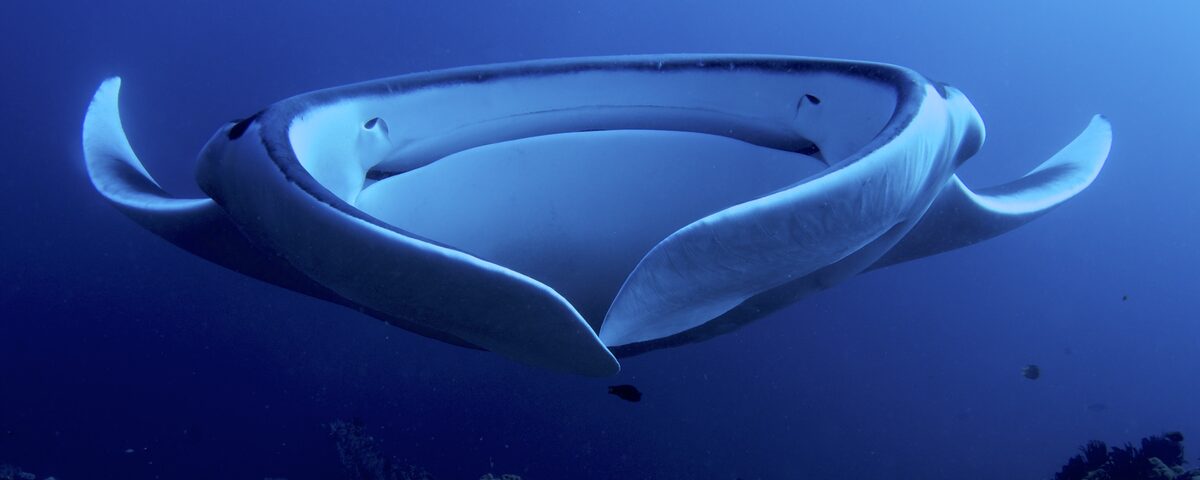
Manta rays visit Richelieu Rock during the same plankton season, sometimes feeding alongside the whale sharks. These are oceanic mantas rather than reef mantas, occasionally exceeding 4 metres in wingspan.
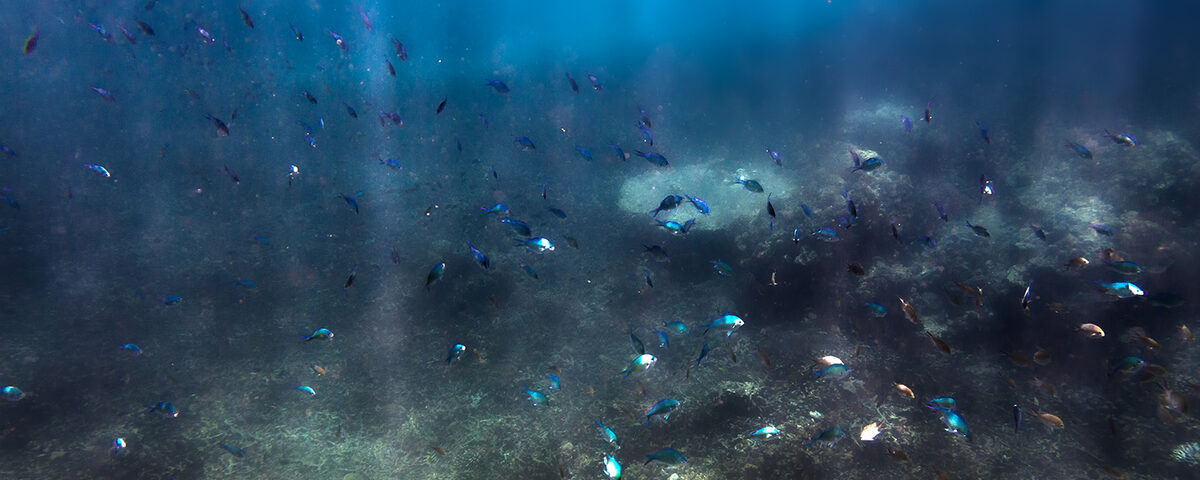
The schooling fish are ever-present. Barracuda form dense schools on the current-exposed side. Trevally hunt in aggressive packs through the smaller fish. Snapper aggregate in the hundreds around the rock's features. Batfish hover in the mid-water in characteristic flat-bodied groups.
Macro life is exceptional. Tiger tail seahorses cling to the soft coral branches. Ornate ghost pipefish appear seasonally, their elaborate camouflage making them nearly invisible against the coral backdrop. Harlequin shrimp, with their distinctive blue and white spotted patterns, inhabit the rock's crevices and are a major draw for underwater photographers. Frogfish, nudibranchs, and porcelain crabs round out the small-creature inventory.
The horseshoe shape creates distinct environments: the sheltered interior for macro work in calm water, and the exposed exterior for pelagic action in current. A single circumnavigation of the rock at 15 metres takes about 30 minutes, but most divers spend their entire dive exploring one section in detail rather than rushing the circuit.
Dive Conditions
The pinnacle rises from 35 metres to just below the surface, with the richest marine life between 5 and 25 metres. The horseshoe shape provides shelter from current on the interior, while the outer walls catch the full flow.
Current varies significantly. Calm days allow comfortable circumnavigation at any depth. Strong current days restrict diving to the sheltered interior or the lee side, which still provides outstanding diving thanks to the concentrated fish life in these zones. The current brings the nutrients that drive the site's productivity, so strong flow days often produce the best marine life.
Visibility ranges from 10 to 30 metres, with the clearer water typically arriving mid-season (March to April). Early and late season can bring reduced visibility from plankton blooms, which is the trade-off for whale shark season.
Water temperature is 27 to 30 degrees. A 3mm wetsuit is standard. Thermoclines are rare at this site compared to deeper Similan sites.
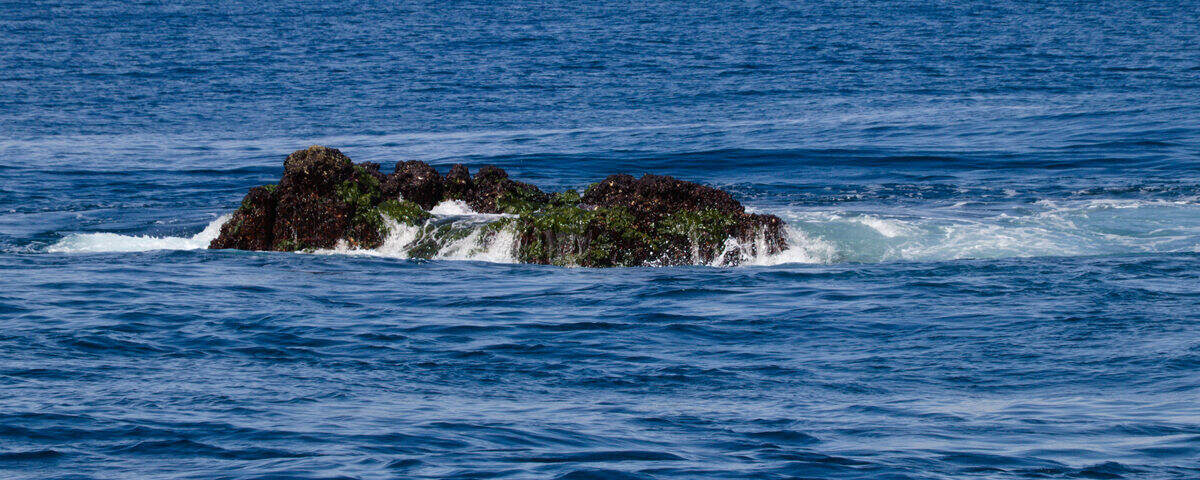
The rock barely breaks the surface at low tide and is completely submerged at high tide, making it an open-water dive with no above-water reference point. Entry is from a dive tender or liveaboard, with negative entries sometimes required in current.
⚓ Divemaster Notes
Richelieu Rock is the dive I became a dive professional to lead. The site has everything: colour, pelagics, macro, swim-throughs, and the constant possibility of a whale shark appearing from the blue. I have over 200 dives here, and it still surprises me.
I divide my guiding strategy by conditions. On calm days, I run a slow circumnavigation at 15 to 18 metres, pausing at the known macro spots: the seahorse hideouts on the east side, the harlequin shrimp territory on the south wall, the ghost pipefish zone in the seasonal soft coral growth. On current days, I take the group to the sheltered interior of the horseshoe, where we settle at 10 to 15 metres and let the show come to us. The fish aggregations in the interior during current are some of the densest I have seen anywhere.
Whale shark protocol is simple: stop swimming, hold position, control your buoyancy, and let the shark set the terms. I have seen divers chase whale sharks and I have seen divers stay still. The still divers always get the longer, closer encounter. Every time.
The macro at Richelieu Rock deserves as much attention as the pelagics. I always carry a pointer stick to indicate the harlequin shrimp locations, because they are genuinely invisible without guidance. The tiger tail seahorses are easier to spot but still require knowing the specific soft coral branches they favour. These change between dives, so I update my mental map every time.
One thing I tell every group: bring both lenses if you can. Wide-angle for the whale sharks and schooling fish, macro for the seahorses and ghost pipefish. If you can only bring one, bring wide-angle. You can always come back for the macro, but you cannot replicate a whale shark pass with a 100mm lens.
How to Get to Richelieu Rock
Richelieu Rock sits approximately 200 kilometres northwest of Phuket and north of the Similan Islands, in Thai waters near the Myanmar border. The primary access is by liveaboard from Khao Lak or Phuket, as part of a Similan Islands itinerary that typically includes 2 to 4 dives at Richelieu Rock.
Liveaboard trips depart from Tab Lamu Pier near Khao Lak (the closest port) or from Phuket. Trip durations range from 2 nights (short Richelieu-focused trips) to 6 nights (comprehensive Similan and Surin Islands coverage). Khao Lak is approximately 1.5 hours north of Phuket Airport by road.
Day trips to Richelieu Rock operate from Kuraburi (the closest mainland point) and take roughly 3 hours each way. These trips offer a single dive at Richelieu and are budget-friendly but physically exhausting.
The diving season is November to May, strictly enforced by the Thai National Parks authority. The Similan and Surin Islands are closed to all visitors during the monsoon season (June to October). Book liveaboards well in advance for the February to April whale shark peak.
Gear Recommendations
3mm wetsuit. Both wide-angle and macro lenses if possible; wide-angle as priority. Powerful strobes for the soft coral colours. SMB for safety stops. Nitrox recommended for extended bottom time. Dive computer with conservative settings. Reef hook useful on strong current days for holding position on dead rock.
Recommended Dive Operators
The Junk is a converted traditional Thai sailing vessel offering characterful liveaboard trips with excellent food and experienced guides. Similan Diving Safaris runs well-organised itineraries from Khao Lak with multiple Richelieu Rock dives. Wicked Diving operates modern liveaboards with a strong environmental ethos. MV Giamani provides comfortable mid-range liveaboard access with comprehensive Similan and Richelieu coverage.
Liveaboard Options
Richelieu Rock is primarily a liveaboard destination. The Junk, Similan Diving Safaris, Wicked Diving, and MV Giamani all run Similan Islands itineraries that include Richelieu Rock as the highlight. Trips range from 2 nights (Richelieu-focused) to 6 nights (comprehensive). Most itineraries include 2 to 4 dives at Richelieu Rock across different conditions. The season runs November to May, with February to April the premium months for whale shark encounters. Book 3 to 6 months ahead for peak season berths.