Current City Dive Site
Komodo, Indonesia · Near Labuan Bajo
Overview
Current City sits on a rocky islet called Batu Besar, just south of Tatawa Besar in the central corridor of Komodo National Park. The name is not subtle, and it is not meant to be. This site delivers some of the strongest, most consistent current diving in a park already famous for its flow. When tidal exchanges push water through the channels between Komodo and Rinca, Batu Besar stands directly in the path, and everything that comes with fast-moving water, the fish, the nutrients, the adrenaline, concentrates here.
The site works as two entirely different dives depending on which face you choose. The east side cops the full force of the current, regularly exceeding three knots during peak tidal flow. This is serious drift diving, the kind where you barely kick and still cover ground faster than you can process what you are seeing. The west side is another story altogether. Sheltered by the rock itself, the western face offers steep walls dropping to about 30 metres, a series of coral caves, and enough shelter to slow down and actually look at things.
What makes Current City worth the effort is not just the current itself but what the current brings. Fast-moving water carries nutrients from the deep channels between islands, and those nutrients feed a food chain that stacks up impressively at this single rocky outcrop. Soft corals grow thick on every available surface, filtering food from the flow. Schools of sweetlips, some of the largest aggregations in the park, hang in the lee of overhangs and caves. Sharks patrol the edges where the current accelerates past the rock's contours.
This is not a site you visit for relaxation. It is a site you visit because the combination of topography and oceanography creates something genuinely special, a concentration of marine life that rivals the park's headline sites but without the crowds that Batu Bolong and Castle Rock attract. Most day-trip operators pair it with Tatawa Besar as part of a central Komodo itinerary, and divers who treat it as the warm-up act are missing the point entirely.
Marine Life at Current City
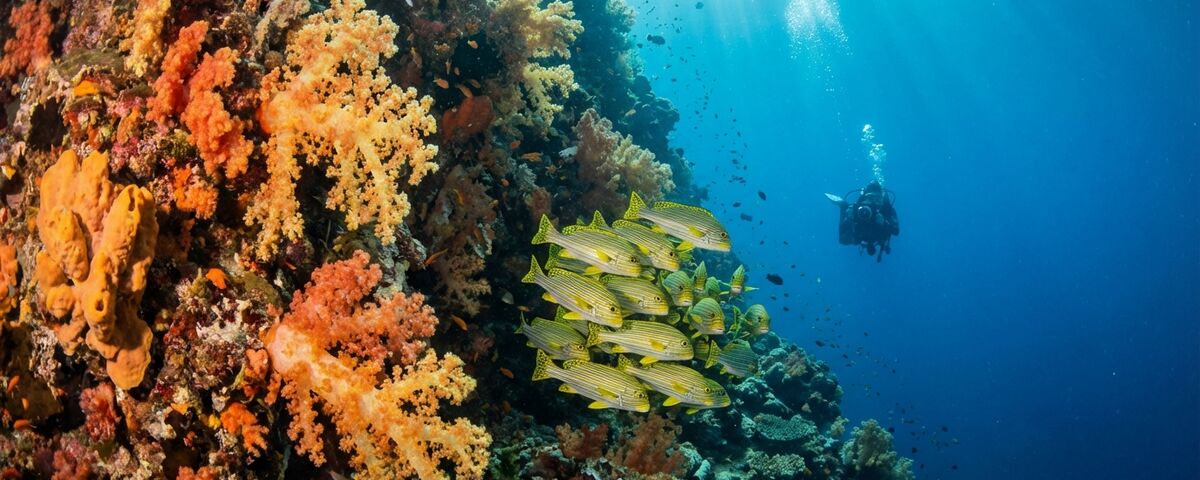
The sweetlips are the signature species. Large schools of diagonal-banded sweetlips and oriental sweetlips gather under overhangs and in the entrances to coral caves on the western wall, their yellow and grey bodies forming dense clusters that part reluctantly as divers approach. These are not the scattered individuals you find at calmer sites. At Current City, they aggregate in numbers that can fill your entire field of vision, a behaviour driven by the shelter the rock provides against the surrounding current.
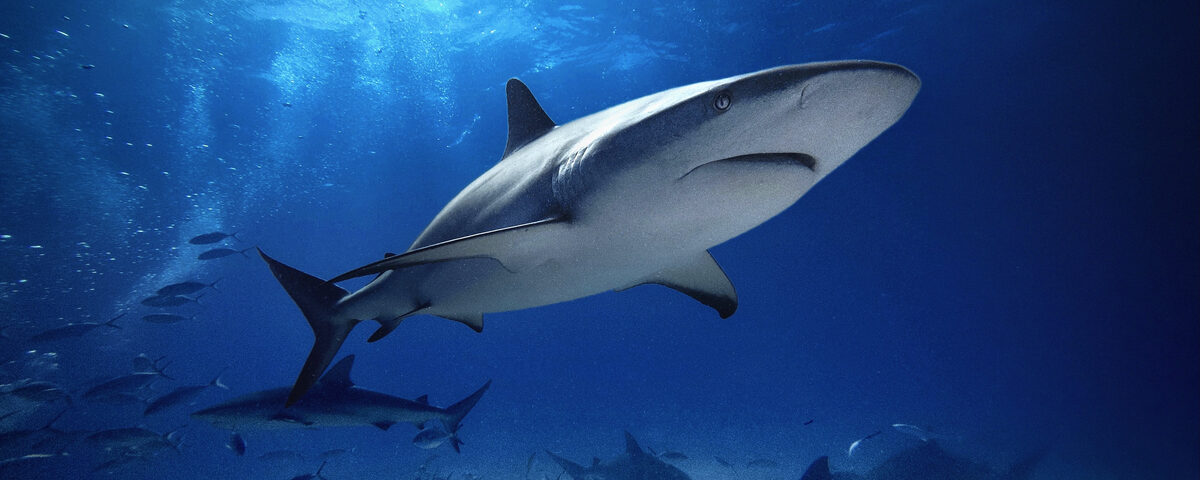
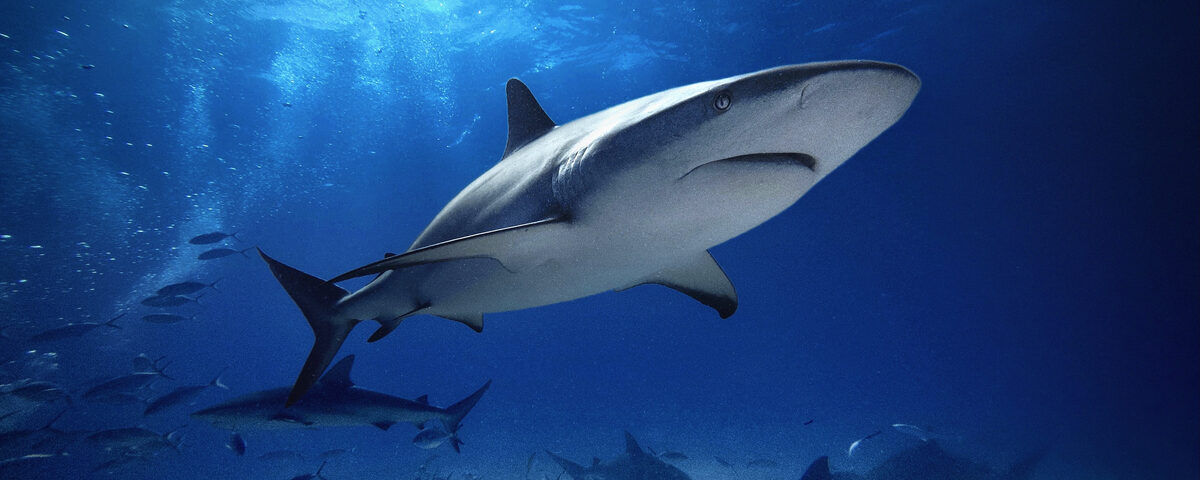
Whitetip reef sharks rest on ledges and sandy patches at the base of the western wall, typically between 20 and 28 metres. They are docile during the day but worth watching, particularly in the early morning when they are still transitioning from their nocturnal hunting mode. Blacktip reef sharks occasionally cruise through the shallower sections, and grey reef sharks make appearances off the exposed eastern face during stronger current cycles.
Giant fantail stingrays are a reliable find at Current City, more so than at most other central Komodo sites. They rest on sandy patches between coral outcrops, their broad bodies half-buried in sediment. Some of these animals are genuinely large, well over a metre across, and they tolerate careful approaches by divers with good buoyancy control.
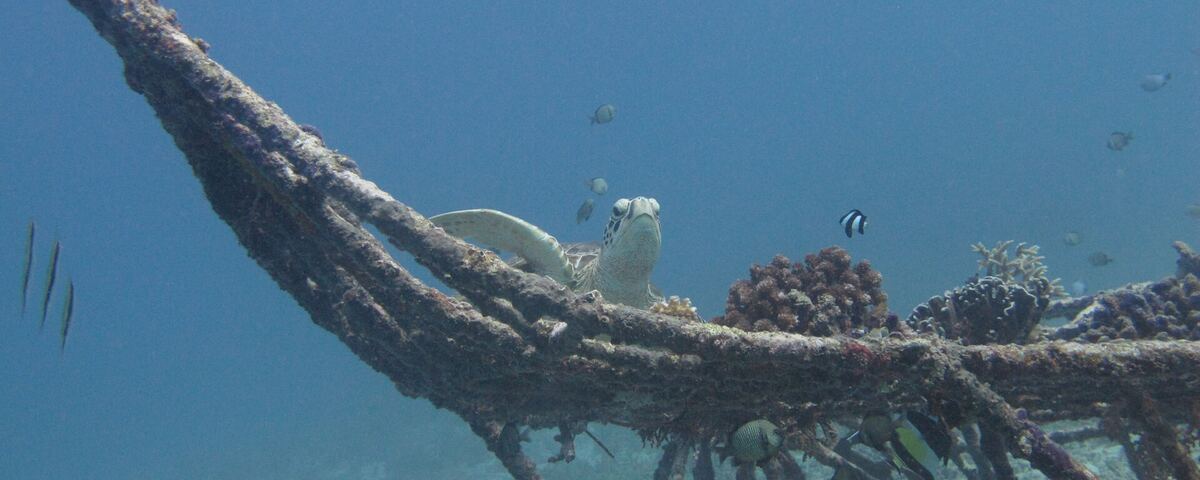
Hawksbill and green turtles are regulars, feeding on sponges along the wall and resting in crevices. The turtles here seem less bothered by divers than at busier sites, possibly because Current City receives less traffic. Giant trevally work the current edges, hunting in pairs or small groups with the explosive bursts of speed that make them such effective predators. Schools of fusilier and surgeonfish pack the mid-water column during current, creating the silvery curtain effect that defines so many Komodo dives.
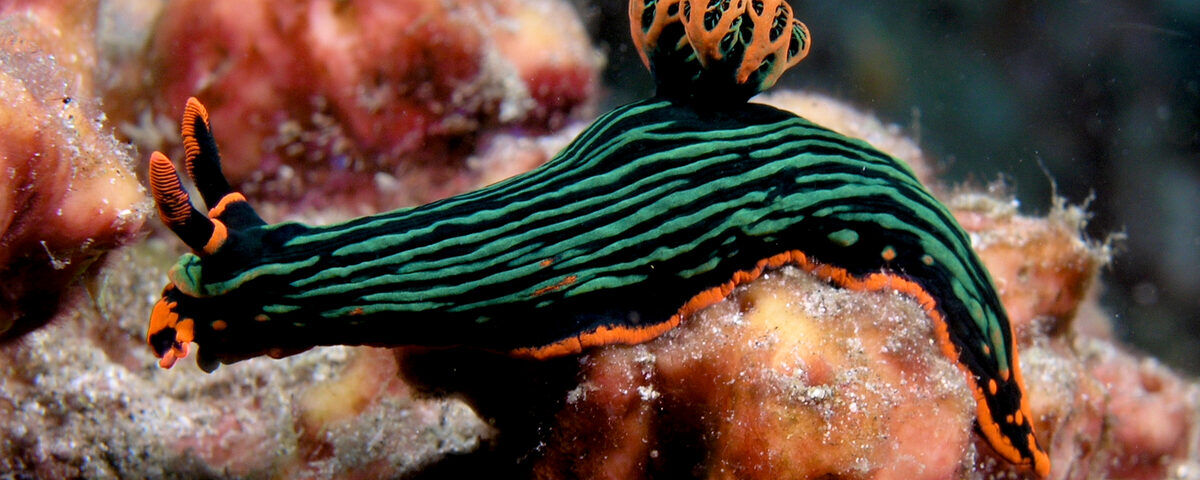
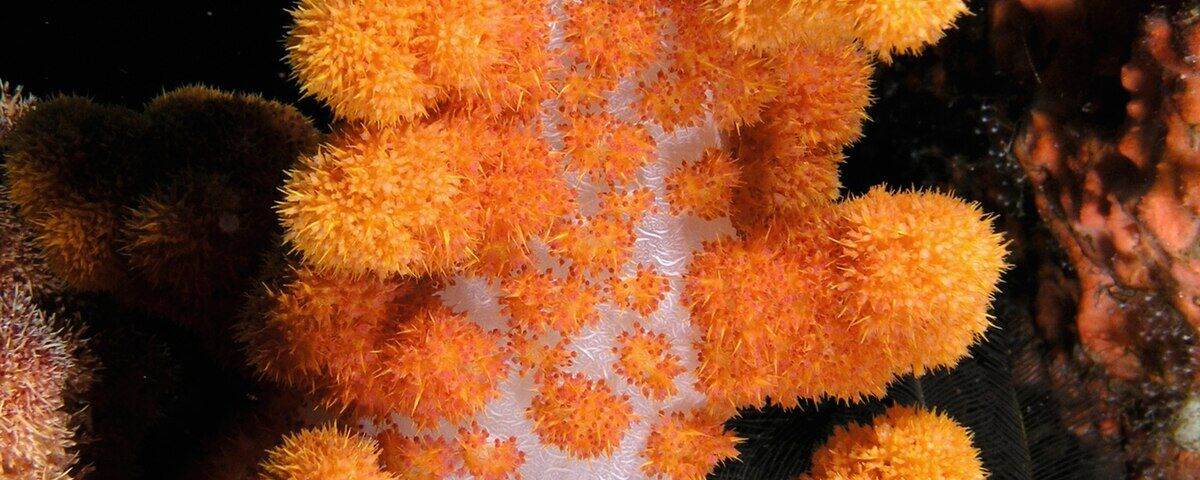
The soft coral coverage on the western wall deserves specific mention. Orange, yellow, and purple soft coral trees grow densely on the wall face and cave entrances, their polyps extended to feed in the current. Sea fans spread perpendicular to the flow, some reaching impressive spans. The invertebrate diversity is strong: nudibranchs on sponges, mantis shrimp in rubble pockets at the base of the wall, and cleaning stations where wrasse and shrimp service groupers and sweetlips.
On the eastern face during drift dives, the marine life shifts to a more pelagic character. Schools of barracuda are periodic visitors. Napoleon wrasse pass through with the unhurried bulk that makes them such distinctive animals. The drift itself is the spectacle here: the reef streams past, soft corals bend in the flow, and fish hold station against the current in formations that look choreographed.
Dive Conditions
Current is the defining variable. The eastern face regularly exceeds three knots during peak tidal exchange, making it one of the strongest drift dives in central Komodo. This is not current you fight against. You commit to it, maintain your depth, stay aware of the reef passing below, and let the water carry you. Down-currents are possible at the edges of the rock where flow accelerates around corners, so maintaining a safe distance from the reef edge during drift sections is important.
The western face is dramatically calmer. Sheltered by the bulk of Batu Besar itself, current on the west side drops to mild or negligible during the same tidal conditions that produce three-knot flow on the east. This makes the west wall accessible to confident intermediate divers, while the eastern drift is firmly advanced-only territory.
Your operator and guide will make the call on which side to dive based on the day's tidal conditions. Good operators check current before committing and will redirect to Tatawa Besar or Siaba Besar if conditions exceed the group's capability. A guide who does not check current before dropping divers at Current City is a guide you should not dive with again.
Depth ranges from about 5 metres on the shallow reef crest to 30 metres and beyond at the wall base. The west wall's most interesting features sit between 10 and 25 metres, with the caves and largest sweetlips aggregations concentrated around 15 to 22 metres. The eastern drift is typically conducted between 12 and 20 metres, where the reef structure provides enough visual reference to maintain orientation.
Visibility varies between 10 and 25 metres depending on tidal phase and plankton levels. Incoming tide from the north tends to bring clearer, warmer water. Outgoing tide from the south can bring cooler, greener water with reduced visibility but often better marine life activity. Water temperature follows Komodo's seasonal patterns: 27 to 29 degrees from April to September, dropping to 24 to 27 degrees during the cooler months when southern upwelling brings nutrient-rich water through the channels.
Entry is by boat, with a negative entry standard practice when current is running. Your boat captain positions the vessel uptide of the dive site and you drop fast to reach the rock before the current carries you past it. On the western wall, a more relaxed giant stride entry is usually fine. Surface conditions at the mooring are generally calm on the sheltered side.
⚓ Divemaster Notes
Current City is one of those sites where the gap between a good guide and a mediocre one becomes immediately obvious. The entire dive hinges on timing and positioning, and getting either wrong turns a world-class experience into a stressful one.
For the western wall dive, I start at the northern end of Batu Besar and work south along the wall face. The first cave system appears at about 16 metres, roughly 40 metres along from the entry point. This is where the largest sweetlips schools concentrate, particularly in the mornings. I position the group below the cave entrance looking upward, which gives the best perspective on the school's density and lets natural light silhouette the fish against the blue water above.
The second major feature is a double overhang at around 20 metres, about two-thirds of the way along the western face. Whitetip sharks rest under the lower overhang consistently. Approach slowly and from the side rather than directly head-on, and you can get close enough for wide-angle photography without disturbing them.
For the eastern drift, timing is everything. I never take a group on the east face during peak current. The sweet spot is about 30 to 45 minutes before or after the tidal peak, when current is strong enough to produce excellent drift conditions (roughly 1.5 to 2 knots) but not so powerful that it becomes uncontrollable. At peak flow, even experienced divers struggle to maintain depth and direction.
One pattern I have noticed over hundreds of dives: the best marine life activity happens when current is building rather than fading. As the flow strengthens, predators become more active and schooling fish tighten their formations. By the time current reaches its peak, the feeding frenzy is already winding down and the fish have moved to shelter.
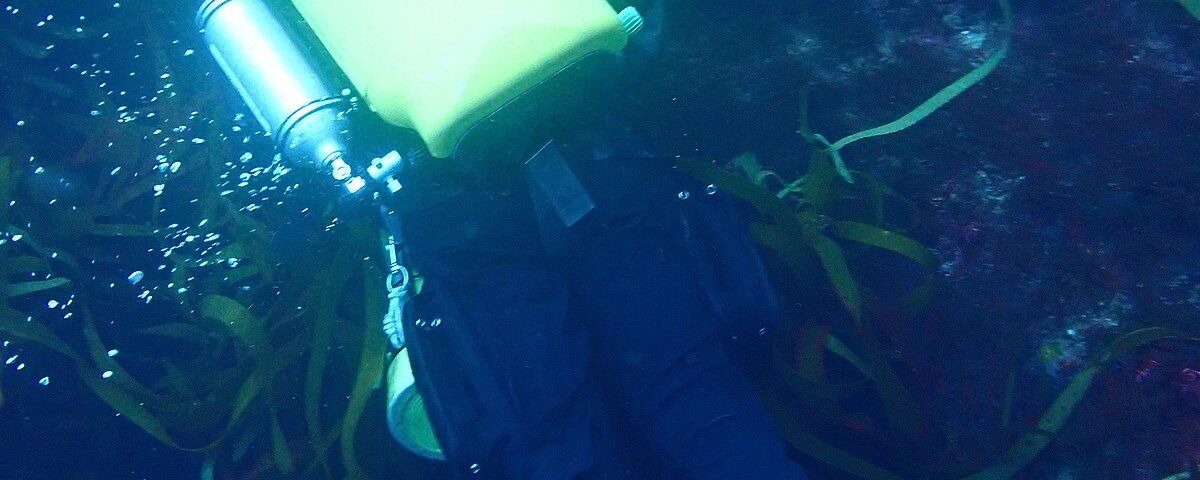
Safety stops after a drift dive on the east side need planning. Deploy your SMB early, at 8 to 10 metres rather than waiting for 5 metres, because the current can carry you a significant distance during ascent. Your boat should be tracking your bubbles or SMB. If the boat is not following, abort the drift earlier than planned and surface where the boat can reach you.
One common mistake: divers treating the western wall as the consolation prize when the east side is too strong. The west wall is a genuinely excellent dive in its own right. The caves, the soft coral coverage, and the sheer volume of sweetlips make it one of the better wall dives in central Komodo. Do not rush through it because you are disappointed about missing the drift.
How to Get to Current City
Current City is located at Batu Besar, a small rocky islet just south and slightly west of Tatawa Besar in the central corridor of Komodo National Park. The boat ride from Labuan Bajo takes approximately 1.5 to 2 hours depending on sea conditions and vessel speed.
Most operators visit Current City as part of a central Komodo day trip, typically pairing it with one or two nearby sites like Tatawa Besar, Tatawa Kecil, or Siaba Besar. The central sites sit in the channels between Komodo Island and Rinca, accessible by standard day-trip boats from Labuan Bajo harbour.
Labuan Bajo is the gateway town on the western tip of Flores. Komodo Airport receives direct flights from Bali (roughly one hour with Garuda Indonesia, Lion Air, or Wings Air) and from Jakarta. From the airport, taxis reach the harbour in about 10 minutes. The town has developed significantly in recent years with hotels, restaurants, and dive operators clustered around the waterfront.
Komodo National Park entrance fees apply. The fee structure has been revised several times, and most dive operators bundle the park fee into their trip pricing. Confirm this when booking, as some operators charge it separately.
Liveaboard itineraries through the central and northern park regularly include Current City, though it is sometimes swapped for other sites depending on conditions. The advantage of a liveaboard is scheduling flexibility: if current is too strong during the morning tidal exchange, the boat can return during a calmer phase later in the day.
Gear Recommendations
Reef hook is useful on the east face if you want to stop during a drift and observe a particular feature, though most dives here are conducted as continuous drifts rather than hook-and-hang sessions. The west wall does not require a reef hook and using one risks damaging the healthy soft corals.
SMB is mandatory. On drift dives, deploy it early during your ascent to give the boat time to track your position. A brightly coloured spool-deployed SMB is better than a simple inflatable one at this site because the current can push you a fair distance during your safety stop.
A 3mm wetsuit covers the warm months comfortably. Between July and September, consider a 5mm suit or hooded vest, particularly for the deeper sections of the west wall where thermoclines can drop temperatures noticeably. The temperature difference between 10 metres and 25 metres can be four or five degrees during upwelling periods.
Wide-angle lens is the clear choice for the sweetlips schools, caves, and drift photography. The subjects at Current City are big, close, and moving, which rewards wide-angle framing over macro detail. Dual strobes help in the caves where natural light drops off quickly. Torch for exploring overhangs and cave interiors, where morays, crustaceans, and resting sharks shelter.
Nitrox extends bottom time meaningfully on the west wall, where the most interesting features sit between 15 and 25 metres. Most Labuan Bajo operators offer nitrox fills. Dive computer with audible depth and NDL alarms is important here; the combination of current, depth, and visual stimulation makes it easy to exceed planned limits without realising it.
Recommended Dive Operators
Blue Marlin Komodo has been running trips to central Komodo sites for years and their guides read Current City's conditions accurately. They know when to dive the west wall for sheltered exploration and when the east side is running at a manageable pace for a drift dive. Dragon Dive Komodo operates smaller group sizes and takes current assessment seriously, which matters at a site where the difference between an excellent dive and a dangerous one comes down to timing. Uber Scuba Komodo carries reef hooks as standard gear and provides thorough current briefings before every dive; their guides position groups in the right spots on the west wall for the sweetlips aggregations and cave systems. Scuba Junkie Komodo operates from Sebayur island and can time visits to Current City around optimal tidal windows, with the added flexibility of being based inside the park rather than making the full run from Labuan Bajo each morning.
Liveaboard Options
Most Komodo liveaboard itineraries include the central sites where Current City sits. The Samambaia and Damai run premium trips through central and northern Komodo, typically visiting Batu Besar as part of their Tatawa area dives. Both vessels offer excellent dive deck facilities and experienced cruise directors who time dives to current conditions rather than fixed schedules.
Blue Dragon runs shorter three to five night trips focused on the central park, making Current City a regular stop on their itineraries. Their smaller vessel and flexible scheduling mean they can return to the site at different tidal phases if the first attempt finds conditions too strong or too slack.
The Lotus Liveaboards fleet operated by Azul Komodo sails traditional phinisi vessels through the central corridor, with Current City featuring on their standard routes. Indo Siren caters specifically to underwater photographers, with dedicated camera facilities and rinse stations. Their guides know the photographic hotspots at Current City, particularly the sweetlips cave and the soft coral sections on the western wall.
Liveaboard access provides the biggest advantage at Current City: timing flexibility. Day-trip boats from Labuan Bajo operate on fixed schedules and may arrive at the site when current conditions are suboptimal. A liveaboard anchored nearby can wait for the tidal window and drop divers at exactly the right moment, which at this site makes the difference between an average dive and an exceptional one.