Barracuda Point Dive Site
Sipadan, Malaysia · Near Semporna
Overview
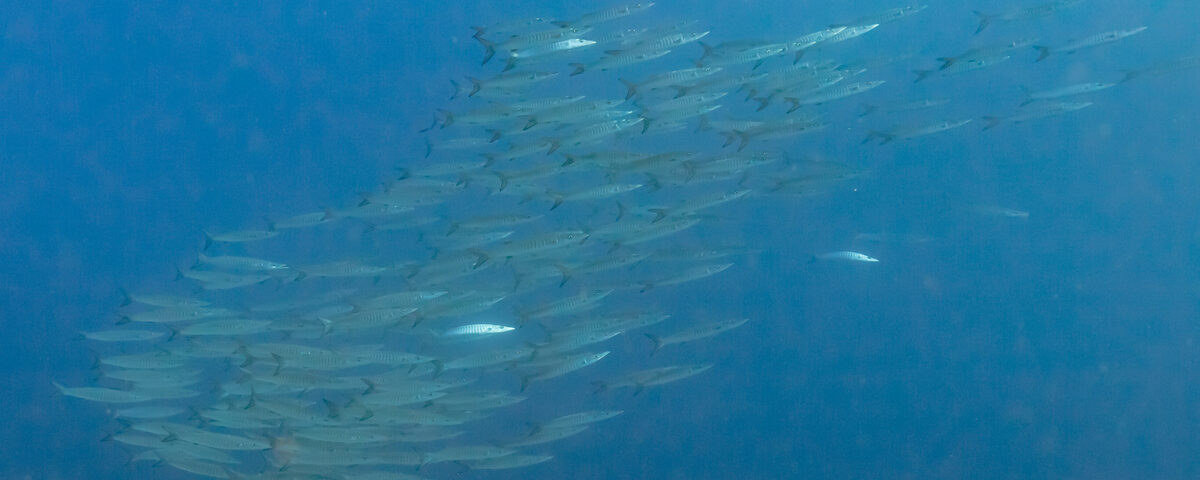
Barracuda Point at Sipadan is one of the most iconic dive sites on Earth, and the reason is a single, staggering spectacle: thousands of chevron barracuda forming a tornado that stretches from the reef top to deep water, spinning in a vortex that can be 20 metres tall and 5 metres wide. This is not marketing exaggeration. The barracuda tornado at Sipadan is a genuine natural phenomenon, one of the few underwater experiences that consistently leaves even veteran divers speechless.
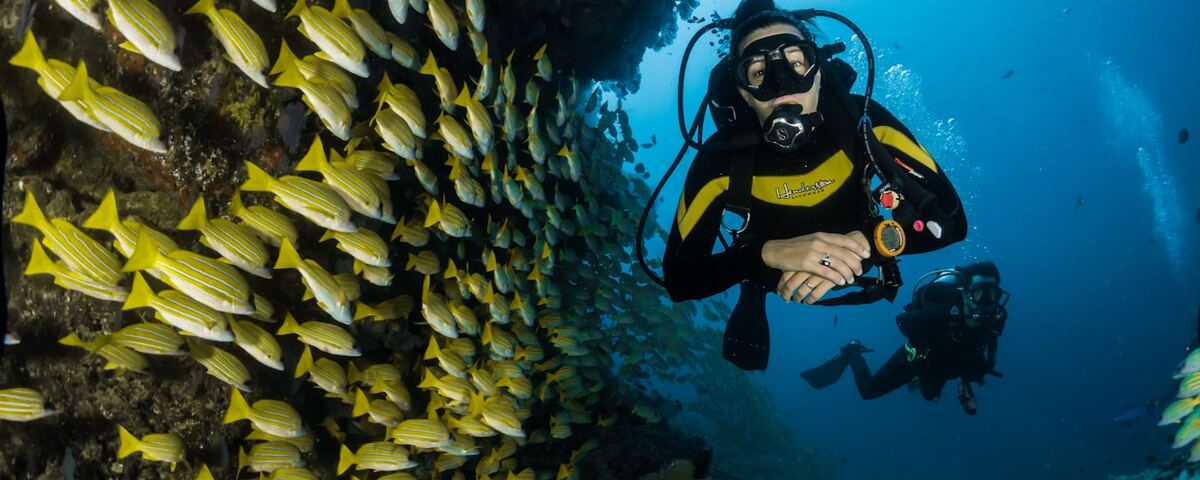
The site occupies the northern tip of Sipadan Island, where two walls meet at a point that juts into the Celebes Sea. The current splits around this point, creating upwellings that concentrate nutrients and attract the schooling fish that make Sipadan famous. The barracuda are the headline, but the supporting cast includes white-tip reef sharks in groups of a dozen or more, massive schools of big-eye trevally, Napoleon wrasse of extraordinary size, and green turtles so numerous they become background scenery.
Sipadan itself is a tiny oceanic island rising from the seabed 600 metres below, the only island in Malaysia formed by a living coral reef growing on top of an extinct volcanic cone. The walls drop vertically from 5 metres to the abyss, and this oceanic isolation is what creates the biomass density that has made Sipadan a permanent fixture on every serious diver's bucket list.
The dive is typically a wall drift, starting at the northern point and drifting along the east or west wall depending on current direction. The barracuda tend to station at the point itself, and the first few minutes of the dive, dropping into the tornado at 10 to 20 metres, are usually the most intense. From there, the wall provides continuous entertainment as turtles, sharks, and schooling fish accompany the drift.
The limitation is the permit system. Only 120 dive permits are issued per day for the entire island, and these must be obtained through a resort or dive operator based on Mabul or Kapalai. You cannot simply show up and dive Sipadan. The permit scarcity means booking months ahead is standard, and even then, your resort allocates your Sipadan days across your stay rather than granting unlimited access.
Sipadan's oceanic isolation creates an ecosystem of extraordinary richness. The island is a sea mount, rising from the deep Celebes Sea to the surface, and the wall that surrounds it supports a vertical ecosystem that hosts different species at each depth band. The shallow reef flat, the mid-water zone, and the deep wall each have their own community, and Barracuda Point's position at the northern tip means it intersects all three zones at a single point.
The morning dive at Barracuda Point is generally the most productive, with the barracuda tornado at its tightest formation and the current at its most predictable. Afternoon dives can still be excellent, but the tornado tends to be more dispersed as the day progresses.
Marine Life at Barracuda Point
The barracuda tornado is the centrepiece. Thousands of chevron barracuda form a rotating vortex that can extend from 5 metres to beyond 30 metres depth. The school shifts and reforms throughout the dive, sometimes tightening into a dense cylinder and sometimes stretching into ribbons and arcs. Swimming into the centre of the tornado, surrounded by barracuda on all sides, is one of the definitive experiences in scuba diving.
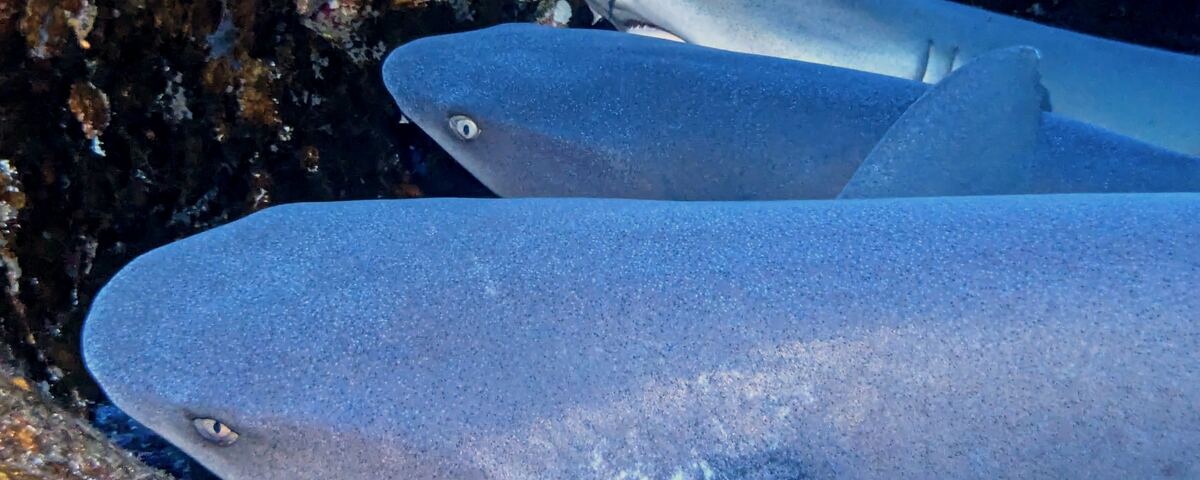
White-tip reef sharks gather in groups along the wall, often resting on ledges or cruising in loose formations of 10 to 15 individuals. Grey reef sharks patrol the deeper sections of the point. The occasional hammerhead has been reported at depth, though sightings are uncommon.
Green turtles are everywhere. Sipadan's turtle population is so healthy that seeing 20 to 30 on a single dive is routine. They rest on the wall, swim past in the current, and hover at cleaning stations where wrasse attend to their shells. Hawksbill turtles are less common but present.
Schools of big-eye trevally form their own formations, sometimes rivalling the barracuda tornado in size. Napoleon wrasse of 1 metre-plus length drift past with regal unconcern. Bumphead parrotfish travel in herds along the reef top, their massive heads and size making them unmistakable.
The wall itself is covered in healthy hard and soft coral, with sea fans on the deeper sections. Anemone gardens dot the reef flat. The coral health reflects Sipadan's protected status and the absence of destructive fishing.
Dive Conditions
The wall at Barracuda Point drops vertically from 5 metres to beyond recreational limits. The dive profile follows the wall, typically at 10 to 25 metres, with the barracuda tornado concentrated around the point at 10 to 20 metres.
Current ranges from moderate to strong at the point, where the water splits around the island's northern tip. The current is what creates the fish concentrations, so stronger flow days often produce the most spectacular barracuda formations. Reef hooks are commonly used for holding position at the point to watch the tornado.
Visibility is 15 to 30 metres, with the clearer water during the April to December season. Water temperature is a consistent 27 to 30 degrees. A 3mm wetsuit is standard.
The dive requires advanced skills due to the current intensity at the point and the wall's vertical profile that makes depth management essential. Negative entries are sometimes required to reach the wall before the current carries divers past the point.
The morning dive is typically the most productive for the barracuda tornado. The school tightens during the early hours when the current pattern is most stable. By afternoon, the tornado may disperse into looser formations, though the fish remain in the area.
Night dives at Barracuda Point are not standard but are occasionally offered. The nocturnal wall reveals hunting white-tip reef sharks, sleeping turtles, and the bioluminescence that occurs in Sipadan's plankton-rich waters.
⚓ Divemaster Notes
Barracuda Point is the dive that justifies every logistical hassle of getting to Sipadan. The permit system, the advance booking, the flights to Tawau, the boat transfers: all of it evaporates the moment you drop into the barracuda tornado for the first time.
I time my dives for the incoming current, which pushes water against the point and creates the upwelling that concentrates the barracuda. The tornado is usually tightest and most photogenic during the first 15 minutes of an incoming tide. As the current stabilises, the school tends to spread out.
The approach to the tornado matters. I bring the group down to 15 metres on the wall and drift towards the point, letting the barracuda come into view gradually. The temptation is to swim directly towards the school, but that approach often causes it to shift position. A patient drift produces the best encounters.
After the point, the drift along the wall is spectacular in its own right. I count turtles for fun and have never counted fewer than 15 on a single Barracuda Point dive. The white-tip shark groups on the ledges at 18 to 22 metres are a reliable highlight.
One critical rule at Sipadan: stay with the group and stay near the wall. The open water beyond the wall edge drops to 600 metres, and a diver swept off the wall in current has a serious problem. The wall is your reference, your safety net, and your highway. Do not leave it.
Photographers should bring the widest lens they own. The barracuda tornado requires ultra-wide coverage, and a fisheye lens is ideal. Strobes are less important than positioning; the ambient light at 10 to 15 metres is usually sufficient for the tornado shots.
How to Get to Barracuda Point
Sipadan is 36 kilometres off the southeast coast of Sabah, Malaysian Borneo. The island itself has no accommodation (since 2004); all divers stay on nearby Mabul or Kapalai islands and take day boats to Sipadan.
Semporna is the mainland gateway, reached by flight from Kota Kinabalu to Tawau (55 minutes) followed by a 90-minute road transfer. From Semporna, boats to Mabul and Kapalai take 30 to 45 minutes. From Mabul to Sipadan is another 15 to 20 minutes by speedboat.
The permit system limits Sipadan diving to 120 permits per day. These are allocated through resorts and dive operators on Mabul and Kapalai. Booking accommodation that includes Sipadan permits is the standard approach. Most resorts guarantee a minimum number of Sipadan days per stay, typically 2 to 3 out of a 4 to 5-night booking.
Book 3 to 6 months in advance during peak season (July to September). Walk-in permits are not available.
Gear Recommendations
3mm wetsuit. Reef hook essential for holding position at the point. Wide-angle or fisheye lens mandatory. SMB for safety stops. Nitrox recommended. Dive computer with conservative settings for the wall depth.
Recommended Dive Operators
Sipadan Scuba operates from Mabul with experienced Sipadan guides. Scuba Junkie Mabul Beach Resort combines accommodation with a well-run dive operation. Borneo Divers is the longest-established operator in the area. Seaventures Dive Rig offers a unique oil rig platform accommodation on Mabul with Sipadan trip access.
Liveaboard Options
Sipadan is not a liveaboard destination. All diving is done via day boats from Mabul or Kapalai island resorts. The permit system is tied to accommodation operators, making the resort-based model the only practical approach. Stay on Mabul for 4 to 5 nights to maximise your allocated Sipadan permit days. Sipadan diving does not operate on a liveaboard model. The island's permit system is tied to accommodation operators on Mabul and Kapalai. Most visitors stay 4 to 5 nights to maximise their allocated Sipadan days while filling the remaining days with Mabul muck diving and Kapalai reef diving.