South Point Dive Site
Sipadan, Malaysia · Near Semporna
Overview
South Point is Sipadan's deep-water pelagic encounter, the site where the island's wall meets the strongest currents from the Celebes Sea and the chances of sharks, schooling hammerheads, and other open-ocean visitors are highest. If Barracuda Point is Sipadan's greatest show, South Point is its wildcard: less predictable, potentially more rewarding, and considerably more demanding.
The dive site wraps around Sipadan's southern tip, where the wall drops vertically into deep water and the current sweeping around the island creates conditions that attract pelagic species. Schools of scalloped hammerhead sharks are the prize sighting, appearing at the deeper sections of the wall (25 to 40 metres) with enough regularity during the right conditions to justify the advanced depth and current.
Beyond the hammerheads, South Point delivers everything Sipadan is famous for in concentrated form. The white-tip shark numbers here are impressive, with groups of 20 or more resting on the wall ledges at various depths. The turtle population is as dense as elsewhere on the island. Schools of bumphead parrotfish patrol the reef top. Big-eye trevally form swirling formations similar to, though typically smaller than, the barracuda tornado at the northern point.
The current at South Point is the price of admission. It runs stronger and less predictably than at other Sipadan sites, and the wall's exposure to open ocean means there is nowhere to hide when the flow increases. This is a drift dive in the truest sense: you go where the current takes you, and your ability to manage depth and position in strong flow determines the quality of the experience.
South Point is not allocated on every Sipadan permit day. Some operators rotate it with other sites depending on conditions, and on high-current days the site may be bypassed in favour of the more sheltered eastern wall. This unpredictability adds to both the challenge and the reward.
The wall at South Point is covered in impressive gorgonian fans at the deeper sections, their delicate structures stretching into the current to capture nutrients. These fans, some exceeding 2 metres in diameter, provide a photogenic backdrop to the shark and pelagic encounters that define the site.
South Point rewards patience and acceptance of uncertainty. Some of the most memorable dives happen when conditions are moderate and the pelagics appear gradually rather than all at once. Other dives produce nothing beyond the standard Sipadan wall experience, which is still exceptional by any global standard. The unpredictability is the honest truth about deep-water pelagic diving.
The reef structure at South Point includes large gorgonian sea fans on the deeper wall sections, barrel sponges at various depths, and healthy hard coral on the upper reaches. The wall's biological richness is comparable to the other Sipadan sites, but the pelagic overlay at the southern point adds a dimension that the sheltered eastern wall cannot match.
South Point is also one of the best sites on Sipadan for turtle encounters. The ledges at 15 to 20 metres host resting green turtles in significant numbers, and the combination of turtles, white-tip sharks, and schooling fish on the wall creates a scene of almost excessive marine wealth.
Marine Life at South Point
Scalloped hammerhead sharks are the target species, typically observed at 25 to 40 metres depth in the blue water beyond the wall edge. Schools of 10 to 30 hammerheads have been documented, though most encounters involve smaller groups or solitary individuals. The sharks tend to appear in the early morning, ascending from the deep water as temperatures shift.
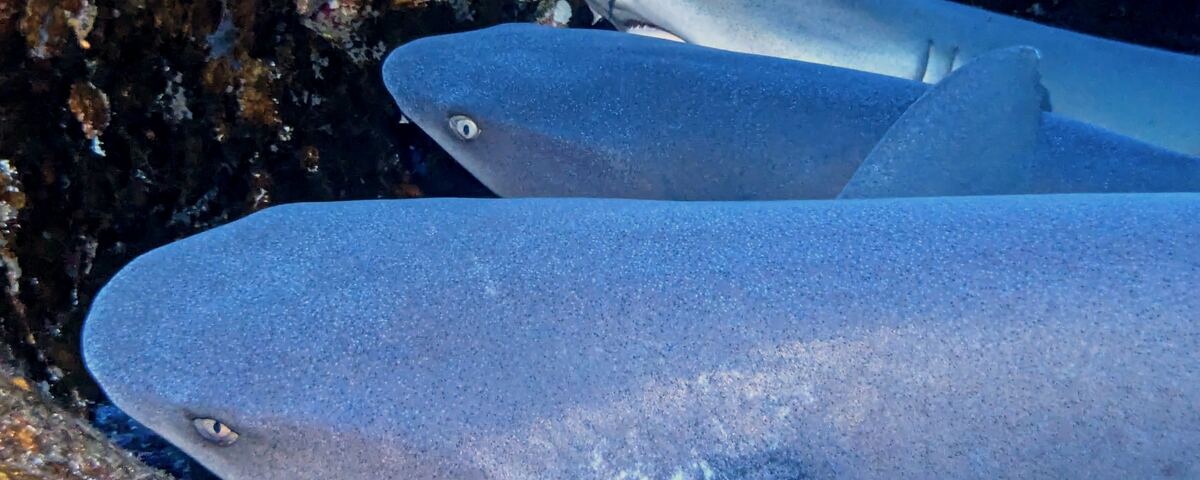
White-tip reef sharks gather in large groups on the wall ledges, with South Point hosting some of the densest concentrations on the island. Groups of 15 to 25 sharks resting together on a single ledge at 18 to 22 metres are a common sight. Grey reef sharks patrol the deeper wall sections.
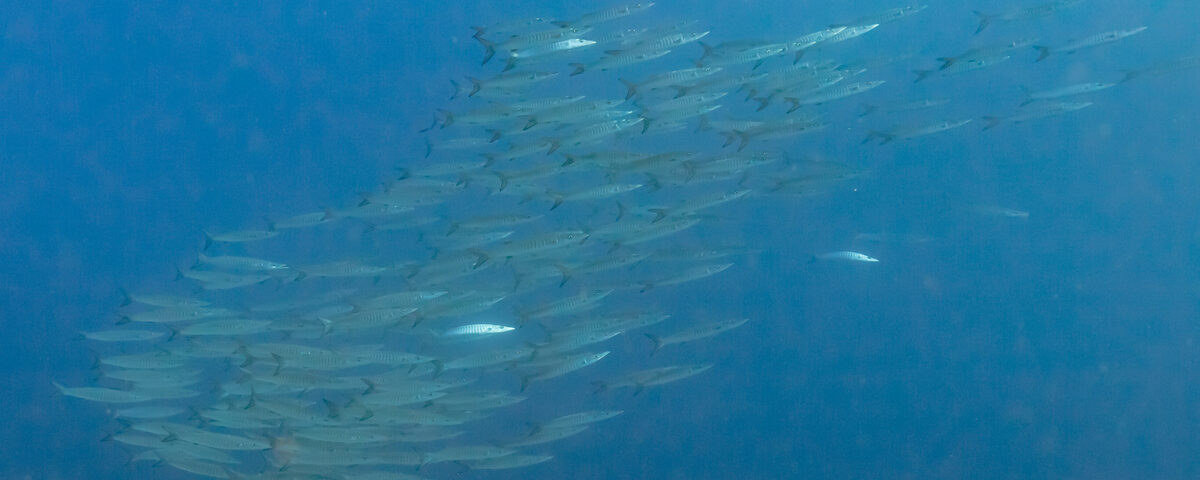
Schools of big-eye trevally form swirling formations, and chevron barracuda are present (though the tornado phenomenon is more reliable at Barracuda Point). Napoleon wrasse of impressive size cruise the wall. Green turtles rest on every available ledge.
Bumphead parrotfish travel in herds of 20 to 50 along the reef top, their combined mass creating a sound that is audible underwater as they bite coral. The contrast between their gentle, cow-like demeanour and their massive size is endlessly entertaining.
The wall coral is healthy, with hard coral on the upper sections and gorgonian fans on the deeper, current-swept faces. The coral diversity reflects Sipadan's position in the Coral Triangle, where species overlap from multiple biogeographic regions.
The wall itself is covered in healthy hard and soft coral, with the coral diversity reflecting Sipadan's position in the Coral Triangle. Massive barrel sponges dot the wall at various depths. The deeper sections (below 25 metres) host impressive gorgonian fans that stretch into the current. Moray eels and lionfish inhabit the wall crevices throughout.
Dive Conditions
South Point's wall drops from 5 metres to beyond recreational limits. The dive is typically a drift along the wall at 15 to 25 metres, with deeper excursions to 30 to 40 metres for hammerhead encounters. The current drives the dive direction and pace.
Current is moderate to strong, often the strongest on the island. The current intensity is what attracts the pelagic species, so strong flow correlates with better encounters. Reef hooks are essential for pausing on the wall during high-current phases.
Visibility is 15 to 30 metres, with the oceanic water at South Point often slightly clearer than the sheltered eastern side. Water temperature is 27 to 30 degrees.
Advanced certification with drift diving experience is the genuine minimum. The combination of current, depth, and the temptation to drop below safe limits chasing hammerheads makes this Sipadan's most demanding dive.
⚓ Divemaster Notes
South Point is the dive I save for my strongest groups. The current here separates divers who are genuinely advanced from those who hold the card but lack the experience. I assess groups on easier Sipadan sites before committing to South Point.
The hammerhead approach requires depth and patience. I take experienced groups to 28 to 30 metres on the wall edge, hook in, and scan the blue water. The hammerheads pass at the visibility limit, sometimes circling closer if the group is still and quiet. Bubbles and movement deter them. The best encounters happen when the group forgets they are waiting and the sharks simply appear.
Air management is non-negotiable at South Point. The depth eats bottom time, the current increases breathing rate, and the excitement of a hammerhead sighting can cause divers to forget their gauges entirely. I check air every five minutes at depth and begin the ascent with generous reserve.
The white-tip shark groups at 18 to 20 metres are the consolation prize on days when the hammerheads are absent, and they are a spectacular consolation. Twenty sharks resting on a single ledge, with turtles swimming through the group and Napoleon wrasse hanging in the background, is a scene that would be the highlight of any other dive destination.
For photographers, South Point demands fast shutter speeds and pre-configured settings. The hammerheads appear and disappear within seconds at the visibility edge, and there is no time to adjust exposure. Set your camera for blue-water ambient light at depth before the dive and accept that the conditions are what they are.
I always carry a surface marker buoy ready for immediate deployment at South Point. The current here can push divers off the wall and into open water, and a deployed SMB is the difference between a 5-minute pickup and a serious search operation. I brief every group: if you are separated from the wall, deploy your SMB immediately. Do not try to swim back. Let the boat find you.
How to Get to South Point
Access is identical to all Sipadan sites: day boats from Mabul or Kapalai island resorts, with the 120 daily permit system. South Point is included in the standard Sipadan dive site rotation, though operators adjust the itinerary based on daily conditions.
Sipadan is reached via Semporna (flight to Tawau, 90-minute road transfer), then boat to Mabul/Kapalai. Book 3 to 6 months ahead for permits.
South Point is allocated based on daily conditions. Operators check the current patterns each morning and select the optimal sites for the day's Sipadan dives. If current conditions at South Point are unfavourable, operators redirect to the sheltered eastern wall sites. This means South Point visits cannot be guaranteed for a specific day.
Gear Recommendations
3mm wetsuit. Reef hook mandatory. Wide-angle lens for pelagics. SMB essential. Nitrox strongly recommended for the depth profile. Dive computer with conservative settings. Torch for the deep wall sections. Wide-angle with fast autofocus for the hammerhead shots that appear and disappear within seconds at the visibility edge. A 15mm fisheye is ideal for the close-range shark passes. Carry a secondary strobe attachment for balanced lighting in the blue water.
Recommended Dive Operators
Sipadan Scuba, Scuba Junkie, Borneo Divers, and Seaventures all include South Point on their Sipadan rotations when conditions permit. Operators with experienced guides who know the hammerhead patterns offer the best deep-water encounters.
Liveaboard Options
Sipadan diving is resort-based from Mabul and Kapalai. No liveaboards operate to Sipadan. The permit system requires accommodation-linked booking.