Drop Off Dive Site
Sipadan, Malaysia · Near Semporna
Overview
Drop Off is Sipadan's original dive site and the one that put the island on the global diving map. When Jacques Cousteau's team explored Sipadan in the 1980s, it was the wall at Drop Off that prompted him to describe the island as 'an untouched piece of art.' The description still holds. The wall drops vertically from a shallow reef flat at 3 metres into a blue abyss that extends beyond 600 metres, and the density of marine life from top to bottom is staggering.
The site sits on Sipadan's eastern side, directly in front of where the old resort jetty once stood. It is the most sheltered of Sipadan's major sites, which makes it accessible in conditions that might close the more current-exposed points. This accessibility, combined with the wall's consistent marine life, makes Drop Off the dive that first-time Sipadan visitors are most likely to experience.
What makes Drop Off special is not any single feature but the cumulative effect. The wall is dense with life at every depth. Turtles at the top, sharks in the middle, sea fans and soft corals in the deep. Schools of fish at every level. A cave entrance (Turtle Cavern is nearby) adds structural interest. The healthy reef flat provides an outstanding safety stop. Everything that makes Sipadan world-class is represented on a single dive.
The wall structure varies along its length: some sections are sheer vertical drops, others have overhangs and ledges that create shelter for resting sharks and turtles. The coral coverage is excellent throughout, with massive table corals on the reef flat and gorgonian fans on the deeper wall faces.
The site's historical significance is worth noting. Sipadan was uninhabited and largely unknown to the diving world until the 1980s, when early exploration revealed the extraordinary wall diving and the marine life density. Drop Off was the access point for those first dives, and the underwater landscape that confronted those early explorers remains essentially unchanged. The protection Sipadan has received since the 2004 resort closure and the ongoing permit system has maintained the reef in a condition that those first visitors would recognise.
The wall at Drop Off extends for several hundred metres, providing enough terrain for multiple distinct dives along different sections. Operators vary their drop points to distribute diving pressure and ensure the reef experiences are diverse across repeat visits.
The name 'Drop Off' is literal and earned. The transition from the 3-metre reef flat to the vertical wall is one of diving's most dramatic natural features. Standing on the reef flat, you can see the edge ahead where the coral simply ends and the blue begins. Swimming to that edge and looking down the sheer wall into 600 metres of depth is a defining moment for any diver experiencing it for the first time.
Marine Life at Drop Off
Green turtles are Sipadan's most visible residents, and Drop Off delivers them in abundance. Expect to see 15 to 30 turtles on a typical dive, resting on ledges, feeding on sponges, or cruising past at close range. The turtles at Sipadan are habituated to divers and rarely flee, making close observation effortless.
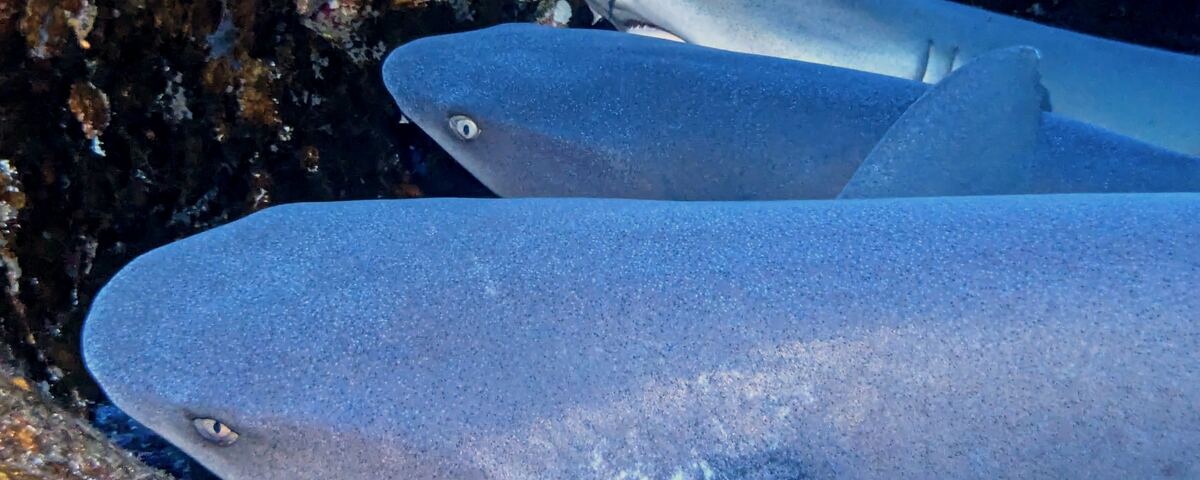
White-tip reef sharks rest on the wall ledges, often in groups. The Drop Off wall hosts several consistent shark resting spots between 15 and 25 metres. Grey reef sharks cruise the deeper sections. The occasional eagle ray sweeps past the wall face.
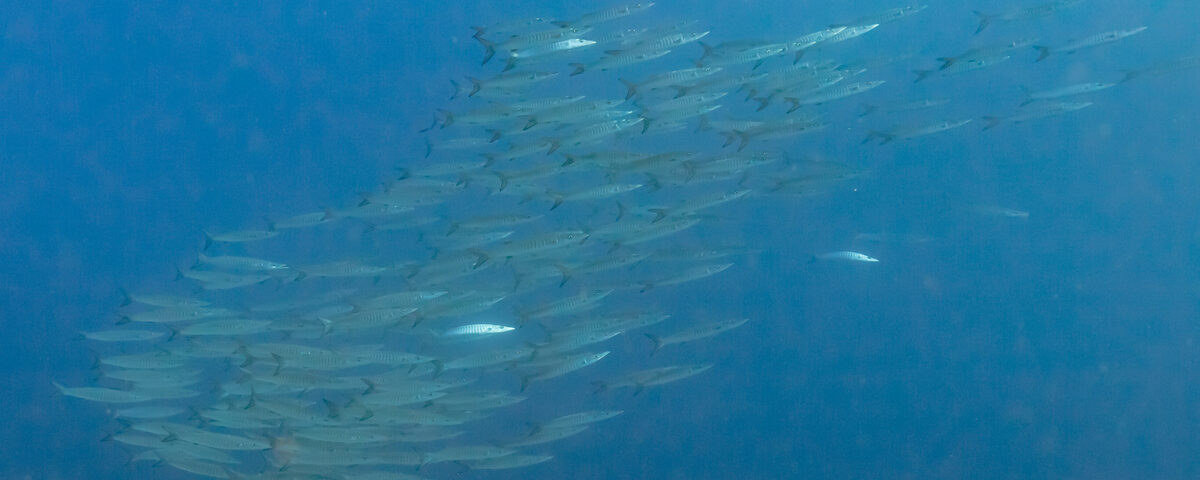
Schools of big-eye trevally, barracuda, and bumphead parrotfish are present along the wall. The fish density at Drop Off is a reliable constant rather than a seasonal phenomenon. Napoleon wrasse appear regularly, and their size at Sipadan (often exceeding 1 metre) reflects the long-term protection the island has received.
The wall corals are healthy and diverse. Hard coral dominates the upper sections, with impressive table coral formations on the reef flat. Soft corals and gorgonian fans colonise the deeper sections. Barrel sponges dot the wall at various depths.
Macro life includes nudibranchs, commensal shrimp, and flatworms on the wall surfaces. The reef flat hosts anemone gardens with multiple clownfish species. Moray eels of several varieties occupy wall crevices throughout.
Bumphead parrotfish herds of 20 to 50 individuals traverse the reef flat on predictable routes, their combined size and number creating one of Sipadan's most distinctive sights. The sound of their feeding, a crunching of coral audible underwater, announces their approach before they become visible.
The anemone gardens on the reef flat host Clark's anemonefish, false clowns, and tomato anemonefish. The diversity of anemone and clownfish species within a small area is remarkable and provides excellent macro photography during safety stops.
Dive Conditions
The wall drops from a reef flat at 3 metres to beyond 600 metres. The practical diving range is 5 to 30 metres, with the richest marine life in the 10 to 25-metre band. The reef flat provides an excellent shallow area for safety stops and beginning/ending dives.
Current is typically mild to moderate at Drop Off, making it the most accessible of Sipadan's wall sites. The eastern aspect provides shelter from the stronger flows that affect the northern and southern points.
Visibility ranges from 15 to 30 metres. Water temperature is 27 to 30 degrees. A 3mm wetsuit is standard.
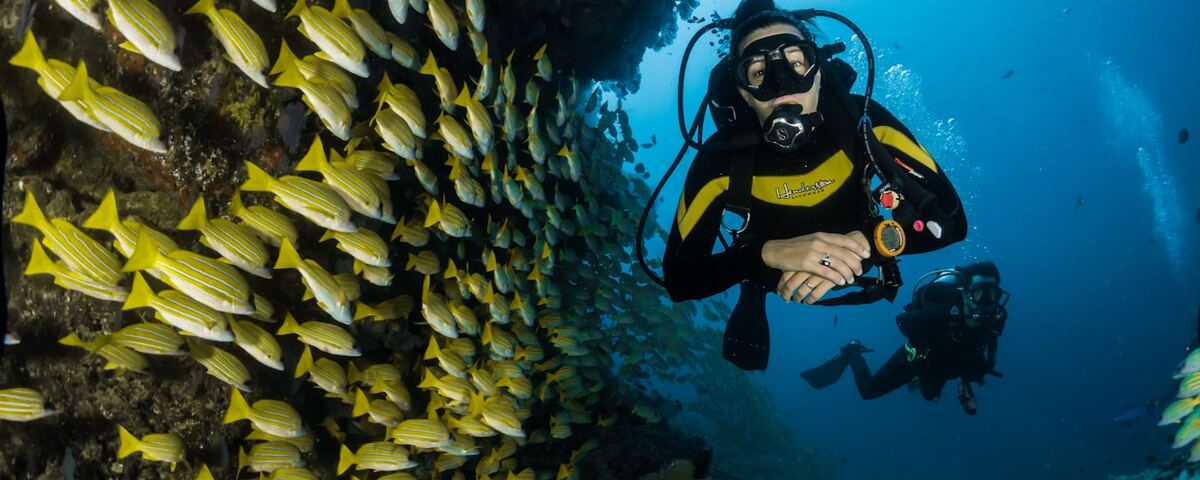
Intermediate certification is sufficient for this site, though wall diving experience and good buoyancy control are important given the vertical profile and the depth potential.
The eastern aspect means morning dives benefit from optimal sun angle for photography, with direct light illuminating the upper wall sections and penetrating to the 15-metre range where the main action occurs.
⚓ Divemaster Notes
Drop Off is my warm-up dive and my first-impression dive. When guests arrive at Sipadan for their first time, I bring them here because it delivers the full Sipadan experience in a forgiving environment. The wall is dramatic, the turtles are everywhere, the sharks are on the ledges, and the conditions are manageable.
I start the dive with a backward roll into 3 metres of water over the reef flat, let the group settle their buoyancy, then swim to the wall edge. That moment when the reef flat ends and the wall drops into the blue below is one of the great reveals in diving. First-timers invariably pause to absorb the vertigo of looking down 600 metres of vertical wall.
The dive follows the wall at 15 to 20 metres, drifting gently with the mild current. I stop at the known turtle resting spots and shark ledges, giving photographers time to work. The beauty of Drop Off is that there is no need to rush; the marine life is continuous along the wall rather than concentrated at a single feature.
I finish every Drop Off dive on the reef flat at 3 to 5 metres, where the table corals and anemone gardens provide the best safety stop environment on the island. The bumphead parrotfish herds pass over the reef flat on predictable routes, and timing the safety stop for a bumphead encounter is a skill I am unreasonably proud of.
One practical point: the wall's depth is seductive. The visibility at Sipadan means you can see details at 30 metres that would be invisible at shallower depths on murkier sites. New wall divers tend to sink deeper than intended, drawn by the clarity and the desire to see what is below. Set a depth limit and respect it.
One final thought on Drop Off: it is the dive I use to judge a diver's readiness for Sipadan's more demanding sites. If a diver maintains good buoyancy at Drop Off, manages their depth on the wall, follows the group, and ends the dive with appropriate air reserve, they are ready for Barracuda Point and potentially South Point. If they struggle with any of these basics, I keep them on the eastern wall sites for the remainder of their Sipadan days. Drop Off is the audition, and the more challenging sites are the reward for passing it.
The reef flat safety stop is genuinely one of the best in the world. Three metres of water over healthy table corals, schools of reef fish, and the occasional bumphead parrotfish herd crossing overhead. I have had guests tell me the safety stop at Drop Off was the highlight of their Sipadan day.
How to Get to Drop Off
Standard Sipadan access: day boats from Mabul or Kapalai via the 120 daily permit system. Drop Off is included on virtually every Sipadan dive itinerary and is often the first site dived by new arrivals.
Semporna is the mainland gateway (flight to Tawau plus road transfer). Book permits through resort accommodation 3 to 6 months in advance.
Gear Recommendations
3mm wetsuit. Wide-angle lens for the wall and marine life. Torch for peering into wall crevices and coral details. SMB for safety stops. Nitrox useful for extended wall time. Dive computer with depth alarms.
Recommended Dive Operators
All Sipadan operators dive Drop Off regularly. Sipadan Scuba, Scuba Junkie, Borneo Divers, and Seaventures are established options. Drop Off is often the check dive site for operators assessing new guests before the more demanding sites.
Liveaboard Options
Sipadan is not a liveaboard destination. All diving operates from Mabul and Kapalai island resorts via day boats and the daily permit system.