Black Rock Dive Site
Tubbataha (Palawan), Philippines · Near Puerto Princesa
Overview
Black Rock is a small, dark pinnacle rising from the depths near Tubbataha's South Atoll, and it's the site most likely to produce encounters with the larger sharks that inhabit this remote reef system. The rock sits in the path of currents flowing through the atoll, creating a concentration point for pelagic species that regular reef sites don't offer.
The pinnacle tops out at about 8 metres and drops steeply on all sides to beyond 30 metres. The dark volcanic rock gives the site its name and provides a dramatic contrast to the vivid coral and fish life covering its surfaces. When current is running, Black Rock becomes one of the most exciting dives in the Philippines: sharks cruise the edges, trevally hunt in frenzied schools, and the water column fills with pelagic activity that makes you forget to check your gauge.
Black Rock is where Tubbataha's hammerhead sharks are most frequently reported. The sightings are not daily and not guaranteed, but this site produces more hammerhead encounters than any other in the park. The deep water surrounding the pinnacle is the highway that hammerheads and other deep-water species use to transit between the north and south atolls, and Black Rock sits right on the route.
The current makes this an advanced dive. The pinnacle's exposed position means flow can be strong and unpredictable. Reef hooks and blue-water experience are required. But the payoff is proportional: Black Rock on a good current day is one of the top five dives in the Philippines, full stop.
Black Rock's reputation among Philippine dive professionals is near-mythical. Guides who have dived across the country consistently rank it among their top three sites nationally, and for many it is the single best dive they've done in Philippine waters. The combination of shark diversity, pelagic action, pristine coral, and the sense of remoteness that comes from diving in the middle of the Sulu Sea creates an experience that mainland sites, no matter how good, cannot replicate.
The volcanic origin of the pinnacle creates a dark, dramatic backdrop that contrasts sharply with the vivid coral growth and the silver flash of schooling fish. This visual contrast, combined with the exceptional water clarity of Tubbataha, makes Black Rock one of the most photogenic dive sites in the Philippines. The deep blue water surrounding the pinnacle provides a clean background for shark silhouettes that photographers particularly value.
Marine Life at Black Rock
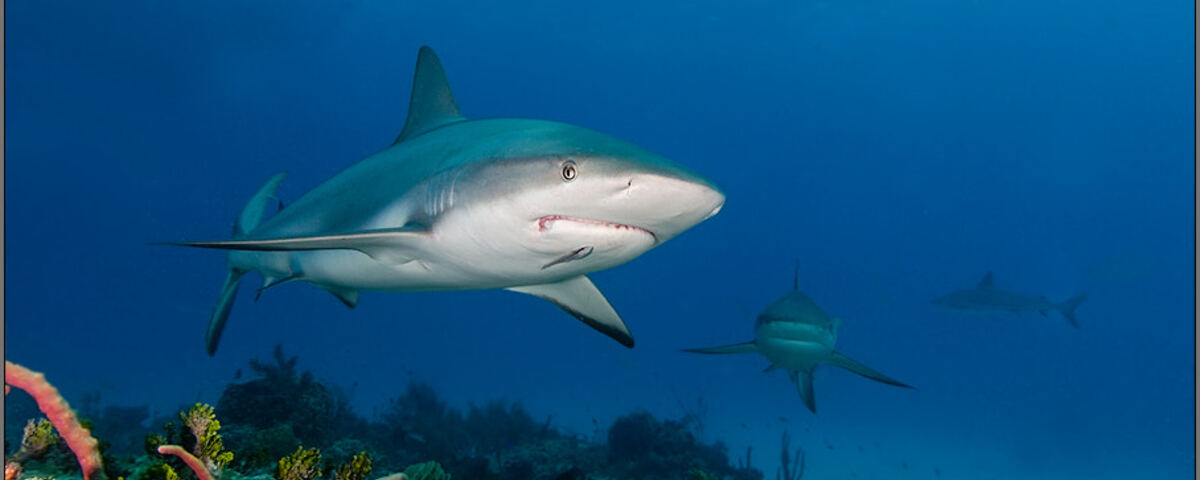
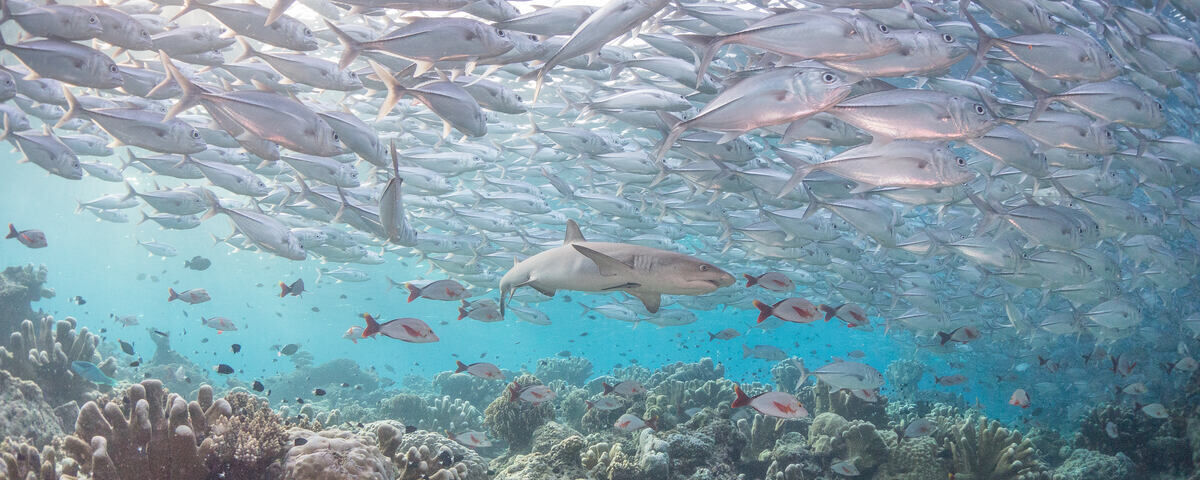
Grey reef sharks are the most commonly sighted species, often in groups that number double digits. They cruise the pinnacle's edges and the surrounding blue water, their sleek profiles unmistakable against the deep blue backdrop. White-tip reef sharks rest on ledges. Black-tip reef sharks appear in the shallower sections.
Hammerhead sharks are the prize sighting. Scalloped hammerheads have been documented at Black Rock, typically seen at the deeper sections of the pinnacle (25 to 30 metres) or in the blue water beyond. Sightings are less frequent than the reef sharks but consistent enough that experienced guides know when conditions favour an appearance.
Giant trevally hunt aggressively around the pinnacle, making explosive strikes at the schools of fusilier and snapper that concentrate on the lee side. Barracuda form spiralling schools. Dog-tooth tuna blast through on hunting runs. The pelagic activity at Black Rock when current is running rivals any site in the Coral Triangle.
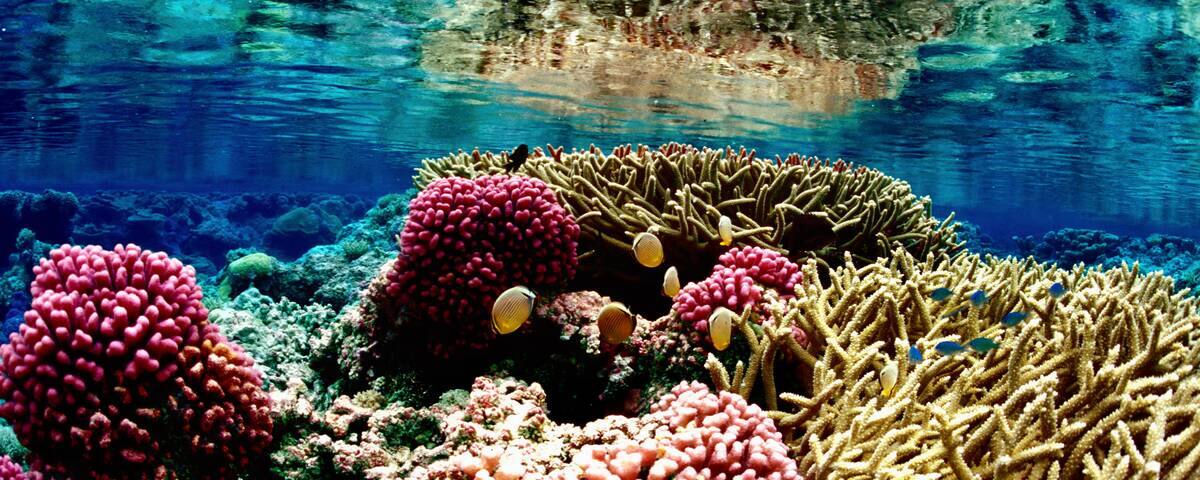
The pinnacle itself is covered in healthy coral: hard corals on the upper sections where light penetrates, soft corals and sea fans on the deeper, current-facing surfaces. Napoleon wrasse are regular visitors. Eagle rays pass through periodically. Whale shark sightings have been reported in Tubbataha waters, with Black Rock's position making it a potential encounter point.
The reef flat surrounding the pinnacle at 8 to 12 metres supports a dense community of reef fish, including clown triggerfish, titan triggerfish, and various species of butterflyfish and angelfish. The transition zone between the flat and the drop-off is where many of the best encounters occur.
The shark community at Black Rock includes species at different trophic levels, from the reef-resident white-tips to the pelagic grey reef sharks to the apex hammerheads. Observing these species interact, maintaining their territories and responding to each other's presence, provides insight into shark social dynamics that feeding sites (where behaviour is distorted by food provision) cannot offer.
The pinnacle's deeper sections occasionally produce sightings of silvertip sharks, a species that is relatively uncommon in the Philippines and tends to inhabit deeper, more remote reef systems. Silvertips are distinguishable by their white-tipped fins and more robust build compared to grey reef sharks. Their presence at Black Rock is an indicator of the reef system's health and the deep-water connectivity that Tubbataha's position in the Sulu Sea provides.
The coral coverage on Black Rock's upper sections is healthy and diverse, with table corals, staghorn formations, and massive Porites boulders providing habitat for the full range of Indo-Pacific reef species. Clown triggerfish, with their distinctive black and white spotted pattern, are common and territorial. Titan triggerfish are present and, during nesting season, aggressively territorial. The reef flat at the pinnacle's top provides an excellent safety stop environment, with enough marine life activity to make the decompression time pass quickly.
Dive Conditions
Current at Black Rock ranges from moderate to strong, making this an advanced dive site. The pinnacle's exposed position in the atoll's current flow means conditions can change during a dive. Reef hooks are standard equipment for positioning at the pinnacle edge to watch the shark action.
Visibility is exceptional: 20 to 40 metres, consistent with Tubbataha's overall water clarity. The deep blue water surrounding the pinnacle creates dramatic backdrops for marine life photography. Water temperature is 27 to 30 degrees.
The dive profile is typically 35 to 45 minutes, with time at depth limited by NDL and air consumption. The excitement of shark encounters at depth increases both breathing rate and the risk of exceeding safe limits. Conservative planning is essential, given the absence of a nearby decompression chamber.
Entry is by tender from the liveaboard, with negative entries common when current is running. The boat crew drops the group upstream of the pinnacle, and the guide navigates to the rock during descent.
The hammerhead encounters at Black Rock are most frequent during the early morning dives, when the sharks are ascending from their deep-water nocturnal habitat. As the morning progresses and water temperature at depth increases, the hammerheads tend to descend, reducing encounter frequency. For the best hammerhead chances, schedule your Black Rock dive for the first slot of the day.
⚓ Divemaster Notes
Black Rock is the dive I dream about before every Tubbataha trip. When it's on, it's the best shark dive in the Philippines. When it's off, it's still a beautiful pinnacle dive with healthy coral and reef sharks. The current makes the difference.
For hammerheads, position yourself at the pinnacle edge at 25 to 28 metres and look into the blue. The hammerheads typically appear at the edge of visibility, cruising past the pinnacle at a distance before circling back for a closer pass if the group is calm and still. Exhaled bubbles seem to deter them, so controlled, slow breathing helps.
The current at Black Rock can shift direction during a dive when the tide turns. Your guide should be monitoring this and repositioning the group accordingly. If you feel the current change direction or increase significantly, signal your guide and be prepared to adjust position.
Don't chase the sharks. At Tubbataha, the sharks are genuinely wild and react to pressure by increasing distance. A still group on the pinnacle edge gets better encounters than a group of enthusiastic chasers every single time.
The safety margin here needs to be wider than at mainland sites. No chamber, no rescue helicopters, no shore support. Dive within your limits, watch your air, and ascend with reserve. The sharks will be there tomorrow.
Black Rock rewards patience and return visits. The hammerheads don't show every dive, and building a realistic expectation before the dive prevents disappointment. I tell my groups: the grey reef sharks are guaranteed, the hammerheads are a possibility. When the hammerheads do appear, the experience is ten times more exciting because it wasn't expected. When they don't, the reef sharks and the pelagic action still make it one of the best dives of the trip.
The boat drop at Black Rock requires precision from the crew. Miss the pinnacle on the descent and you are in blue water with a current carrying you away from the site. The guide should carry a compass bearing to the pinnacle and the boat crew should drop the group upstream with enough margin to account for drift during descent. Communication between guide and captain is critical here.
How to Get to Black Rock
Black Rock is located near Tubbataha's South Atoll, accessible only by liveaboard from Puerto Princesa, Palawan. The overnight crossing takes 10 to 12 hours. Black Rock is typically visited as part of the South Atoll diving rotation on multi-day Tubbataha liveaboard trips.
The March to June season applies. Booking well in advance is essential.
Gear Recommendations
Reef hook essential. Wide-angle lens for sharks and pelagic action. Full 3mm wetsuit. SMB mandatory. Dive computer with conservative settings. Nitrox strongly recommended. Torch useful for the deeper wall sections.
Recommended Dive Operators
S/Y Philippine Siren, Solitude One, and Discovery Fleet all include Black Rock on their Tubbataha itineraries. Operators with experienced guides who know the hammerhead patterns offer the best chances of encounters.
Liveaboard Options
Exclusively liveaboard. S/Y Philippine Siren, Solitude One, Discovery Palawan, and other Tubbataha-certified operators include Black Rock on their standard itineraries.