Wall Street Dive Site
Tubbataha (Palawan), Philippines · Near Puerto Princesa
Overview
Wall Street drops vertically from a shallow reef top into the deep blue of the Sulu Sea, and it does so with a perfection that makes you wonder if someone designed it. The wall at Tubbataha Reefs Natural Park is one of the most pristine vertical reef structures anywhere in the world, a sheer face of hard coral, soft coral, and gorgonian fans dropping from 3 metres to beyond 40 metres without interruption. This is what a tropical wall looks like when human impact is reduced to near zero.
Tubbataha sits in the middle of the Sulu Sea, 150 kilometres from the nearest significant landmass (Palawan) and accessible only by liveaboard during a narrow seasonal window of March to June. This remoteness is its protection. No fishing boats, no coastal run-off, no anchor damage, no tourist snorkellers standing on the coral. The result is reef health that mainland sites simply cannot match.
Wall Street occupies a section of the North Atoll's outer reef, where the wall faces into the open Sulu Sea. The visibility here routinely exceeds 30 metres and sometimes reaches 40, which means you can hover at 15 metres and see the wall stretching above you to the sunlit shallows and below you into the dark deep. It's a sensory experience that shallow reef dives can't replicate.
The wall's name references its reputation as the premier dive site at Tubbataha, though the park has dozens of sites along the two atolls that could each claim that title depending on the day's conditions. What Wall Street delivers consistently is the wall itself: the structure, the colour, the scale, and the marine life that inhabits it from top to bottom.
Tubbataha earned UNESCO World Heritage status in 1993, and the Philippine government's commitment to enforcement (a permanent ranger station, patrol boats, and significant penalties for violations) means the protection is real, not theoretical. Diving here feels like travelling back in time to a reef system that has never been degraded. Because it hasn't.
Marine Life at Wall Street
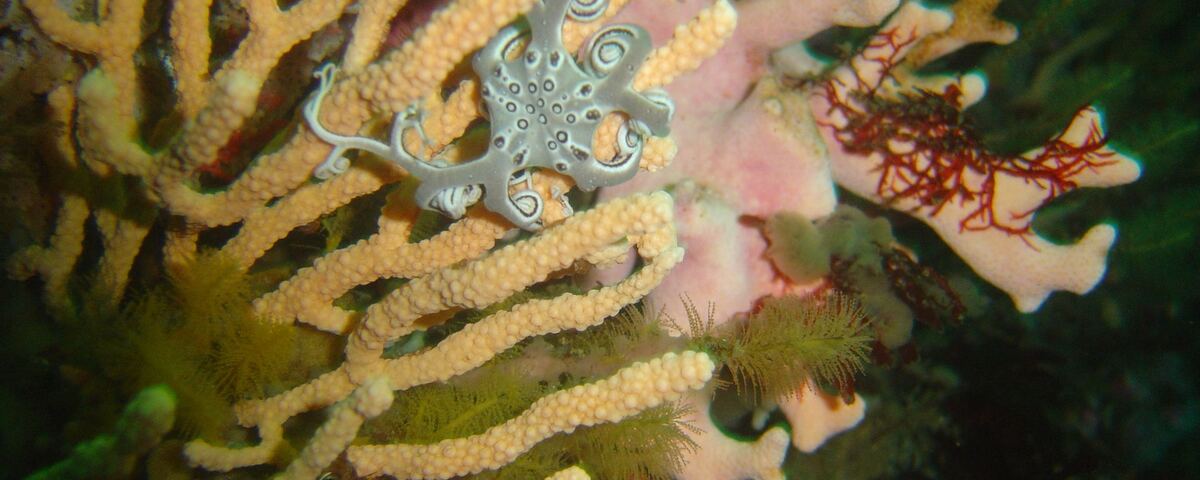
The wall surface is a mosaic of hard coral, soft coral, and gorgonian fans. The gorgonians are particularly impressive, some spanning 2 metres across, their intricate fan structures silhouetted against the blue water when viewed from the side. Barrel sponges anchor to the wall at various depths, their openings providing shelter for small fish and shrimp.
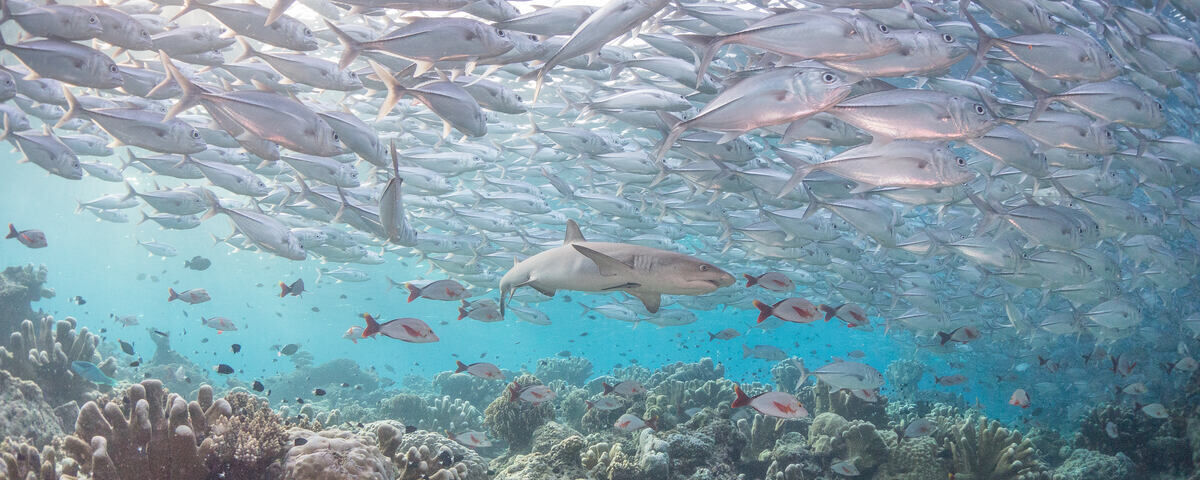
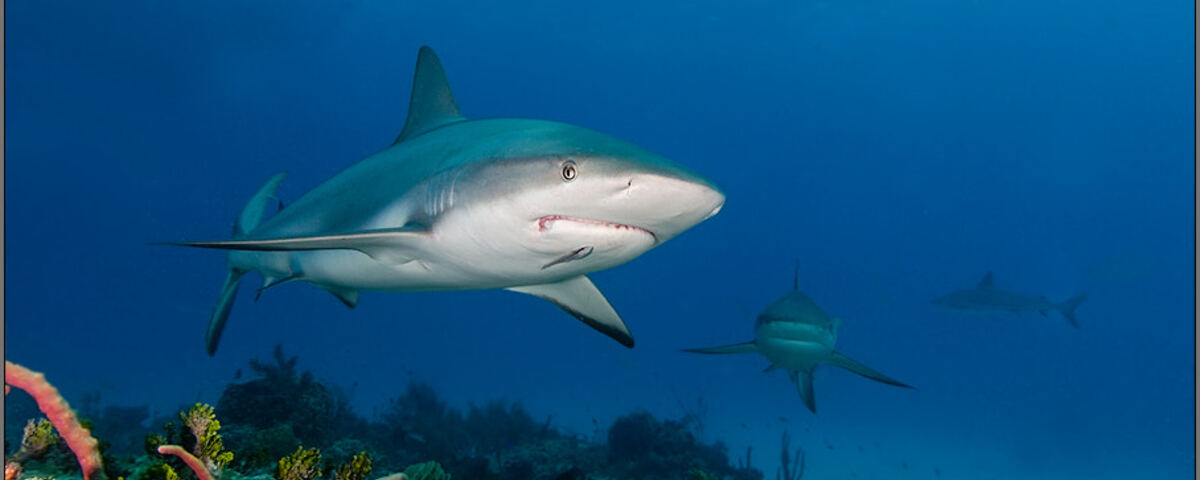
Shark activity is the pelagic highlight. Grey reef sharks patrol the wall edge in groups, often 5 to 10 visible simultaneously. White-tip reef sharks rest on ledges and in crevices throughout the wall. Black-tip reef sharks cruise the shallower sections. During the peak of the season, hammerhead sharks (typically scalloped hammerheads) pass through the deeper blue water beyond the wall's edge. These sightings are not daily occurrences but happen with enough frequency to keep divers scanning the deep water.
Turtle encounters are reliable, with green and hawksbill turtles present on virtually every dive. Some individuals are large, with shell lengths exceeding a metre, suggesting the protected status has allowed long-term survival. Napoleon wrasse, often in pairs, drift along the wall face with characteristic unconcern for divers.
Schooling fish stack up on the wall during current. Snapper, surgeonfish, and fusilier form dense aggregations that follow the wall contour. Giant trevally hunt the school edges, and barracuda form cylindrical schools in the blue water off the wall. Eagle rays sweep past occasionally, their spotted wings contrasting against the blue backdrop.
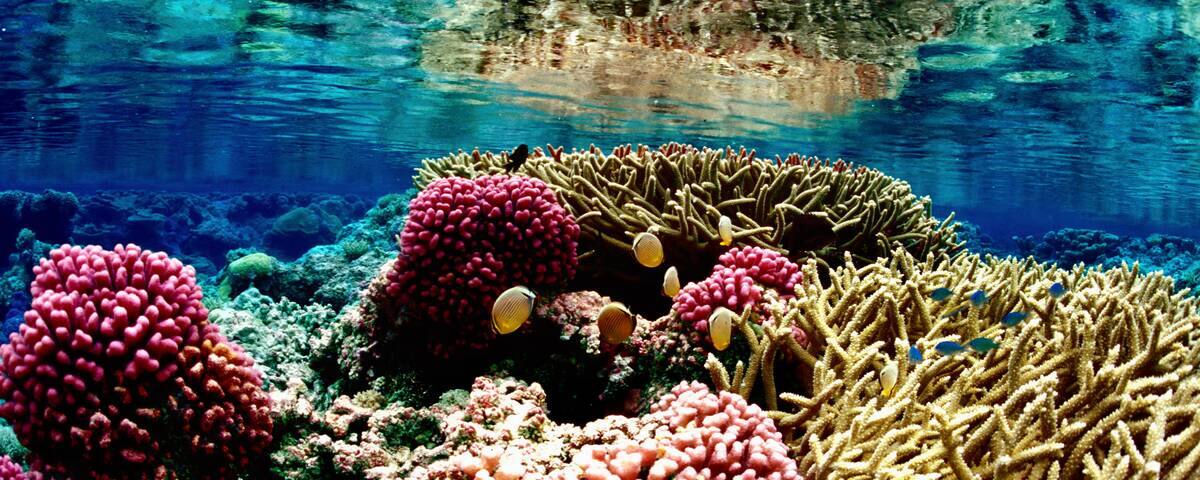
The reef top at 3 to 5 metres is a coral garden of exceptional health. Table corals overlap in a canopy that shelters juvenile fish, and the hard coral diversity is among the highest documented in the Philippines. This shallow zone provides a spectacular safety stop location where you're surrounded by healthy coral and fish activity.
Manta rays visit Tubbataha seasonally, and Wall Street is one of the sites where they're most commonly encountered. The nutrient upwellings along the wall attract plankton, and the mantas follow. Sightings are unpredictable but add a thrilling possibility to every dive.
Dive Conditions
Wall Street is typically dived in mild to moderate current, with the wall's vertical structure channelling flow along its face. The current brings nutrients and drives the fish activity, and the wall provides shelter by simply turning to face into the rock when flow intensifies.
Visibility is the defining condition. The open-ocean position and absence of terrestrial run-off produce clarity that ranges from 20 to 40 metres. On the best days, the visibility is limited only by the ambient light. This clarity transforms wall diving into a three-dimensional experience where you can see the wall above, below, and along its length simultaneously.
Water temperature is consistently warm at 27 to 30 degrees, comfortable in a 3mm wetsuit. The depth drops beyond recreational limits, so wall diving discipline (setting a maximum depth and sticking to it) is essential. The most productive zone for marine life is between 10 and 25 metres.
Entry is from a liveaboard tender boat, with the dive planned according to the current direction and strength. Dives typically drift along the wall, with the tender following the group's bubbles for pickup. The wall is long enough to provide substantial drift distances without repeating terrain.
Intermediate certification is the minimum, primarily for the depth management demands of wall diving. The conditions themselves (warm water, mild current, excellent visibility) are not technically demanding.
⚓ Divemaster Notes
Wall Street is where I take first-time Tubbataha divers because the wall is simply the most impressive introduction to the park. When someone drops over the reef edge and sees 30-plus metres of visibility with a pristine wall stretching in both directions, the reaction is always the same: stunned silence and a lot of wide eyes behind the mask.
I plan the dive to start at the wall edge at about 5 metres, descending along the face to 20 to 25 metres where the gorgonian fans are densest and the shark activity concentrates. The group works gradually shallower along the wall, finishing with a safety stop on the reef top where the coral garden provides entertainment during the mandatory pause.
Watch the deep. The wall drops beyond recreational limits, and the clarity makes the deep look deceptively close. I've seen divers drop to 35 metres without realising it because the blue water below them looked no different from the water at 25 metres. Set your depth alarm and trust your computer.
The grey reef sharks here are not habituated to divers the way they are at heavily dived sites. They're wilder, less predictable, and sometimes more curious. Calm, still behaviour from divers tends to bring them closer. Erratic movement sends them to the edge of visibility. Standard shark encounter protocol: stay still, stay horizontal, no sudden movements.
Tubbataha gets fewer than 1,000 divers per year. Compare that to, say, the Maldives at several hundred thousand. You're diving a reef system that has experienced almost zero diver impact. Treat it accordingly. No touching, no fin contact with the wall, no collecting anything. Leave it as you found it.
How to Get to Wall Street
Tubbataha Reefs Natural Park is in the middle of the Sulu Sea, roughly 150 kilometres from Puerto Princesa on Palawan. Access is by liveaboard only, with voyages departing from Puerto Princesa. The crossing takes approximately 10 to 12 hours, typically overnight.
Puerto Princesa is served by domestic flights from Manila, Cebu, and Clark. The liveaboard departure point is at Puerto Princesa harbour.
The diving season is strictly March to June, limited by the southwest monsoon. Outside this window, the seas are too rough for the crossing and diving is not permitted. Most liveaboard trips run 5 to 7 nights, with 3 to 4 days of diving at the reefs.
Tubbataha charges a park fee (approximately PHP 3,000 for foreign divers, subject to change). This fee supports the ranger station and patrol operations that protect the reefs. Your liveaboard operator handles the payment and permits.
Advance booking is essential. The limited season and the cap on the number of operators permitted to visit means liveaboard berths sell out months ahead, particularly for April and May.
Gear Recommendations
3mm wetsuit. Wide-angle lens essential for the wall scenes, shark encounters, and the gorgonian fans. Torch for bringing out colours on the deeper sections of the wall. SMB for drift ascents off the wall. Dive computer with depth alarm. Nitrox highly recommended for extended wall diving within safe limits.
Recommended Dive Operators
Solitude One is a dedicated Philippines liveaboard that runs multiple Tubbataha seasons with experienced crew and marine biologist guides. Discovery Fleet (previously Discovery Palawan) operates Tubbataha-specific itineraries with well-maintained vessels. The MV Resolute runs liveaboard trips from Puerto Princesa to Tubbataha during the season. All Tubbataha operators must hold permits from the Tubbataha Management Office, which limits the field to vetted operations.
Liveaboard Options
Tubbataha is exclusively a liveaboard destination. Solitude One, Discovery Fleet, and the MV Resolute are the primary operators, all departing from Puerto Princesa. Trips run 5 to 7 nights during the March to June season. The crossing is approximately 10 to 12 hours each way, with 3 to 4 full days of diving at the reefs. Book 6 to 12 months ahead for the best cabin options during peak season (April to May).