Nusa Kode Dive Site
Komodo, Indonesia · Near Labuan Bajo
Overview
Nusa Kode is a small island tucked into the southern reaches of Komodo National Park, sitting between the larger bulk of Rinca Island and the open Indian Ocean. The diving here represents the quieter, more contemplative side of Komodo, a striking contrast to the adrenaline-fuelled current rides at Castle Rock or Batu Bolong further north. Where those sites throw everything at you in a wall of sensory overload, Nusa Kode rewards patience and a slow fin rate.
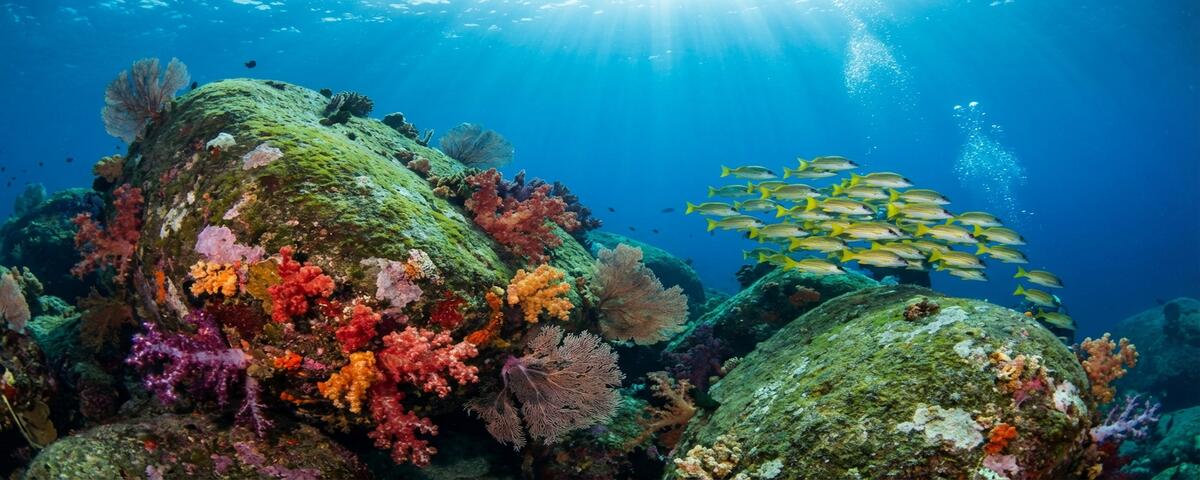
The island's southwestern tip is defined by enormous encrusted boulders scattered across a sloping reef from 5 metres down to about 30. These aren't the dramatic pinnacles you find elsewhere in the park. They're rounder, gentler formations, stacked and tumbled across the seabed like some geological afterthought. But the coral coverage is remarkable. Estimates from marine surveys put it at roughly 80 per cent of the hard substrate, which is exceptional by any standard and outstanding for a site that sees regular liveaboard traffic.
The plankton-rich southern waters that keep Nusa Kode's corals fed are the same waters responsible for the site's most notable characteristic: cold thermoclines. Water temperatures can drop to 21 degrees on deeper sections, a genuine shock if you've been diving the warmer northern sites in a 3mm shorty all week. The upwelling that causes this temperature plunge also drives the productivity that supports the reef system, so you trade comfort for quality.
What draws repeat visitors to Nusa Kode isn't the fish counts or the pelagic encounters. It's the atmosphere. The boulder landscape creates an environment that feels ancient and undisturbed. Light plays through gaps between the rocks, illuminating pockets of soft coral and gorgonian fans that have been growing undisturbed for decades. The relatively mild currents (rarely exceeding one knot even on spring tides) mean you can hover and observe rather than grip the reef and hold on.
Nusa Kode also serves as the gateway to some of Komodo's most celebrated southern sites. Cannibal Rock sits in Loh Dasami bay between Nusa Kode and Rinca, and Manta Alley runs along the island's eastern wall. Most liveaboard itineraries that visit Nusa Kode will combine it with dives at these neighbouring sites, making for a full day of southern Komodo exploration that feels distinctly different from the northern circuit.
Marine Life at Nusa Kode
The headline species at Nusa Kode are the resident groupers, and they are properly large. Giant groupers exceeding a metre in length patrol the boulder formations, moving with that slow, deliberate confidence that only apex reef predators seem to possess. Potato cod appear regularly around the southwestern boulders, their mottled grey skin blending surprisingly well against the encrusted rock. Malabar groupers complete the heavyweight trio. You won't see all three species on every dive, but on a good day you'll encounter at least one, and the sheer size of these fish is enough to stop you mid-fin-kick.
Schools of bohar snapper are the most reliable fish encounter. These large, red-toned snappers aggregate in loose formations around the deeper boulders, occasionally tightening into dense balls when a hunting trevally pushes through. Midnight snapper schools add to the numbers, their dark bodies moving in coordinated sweeps along the reef edge.
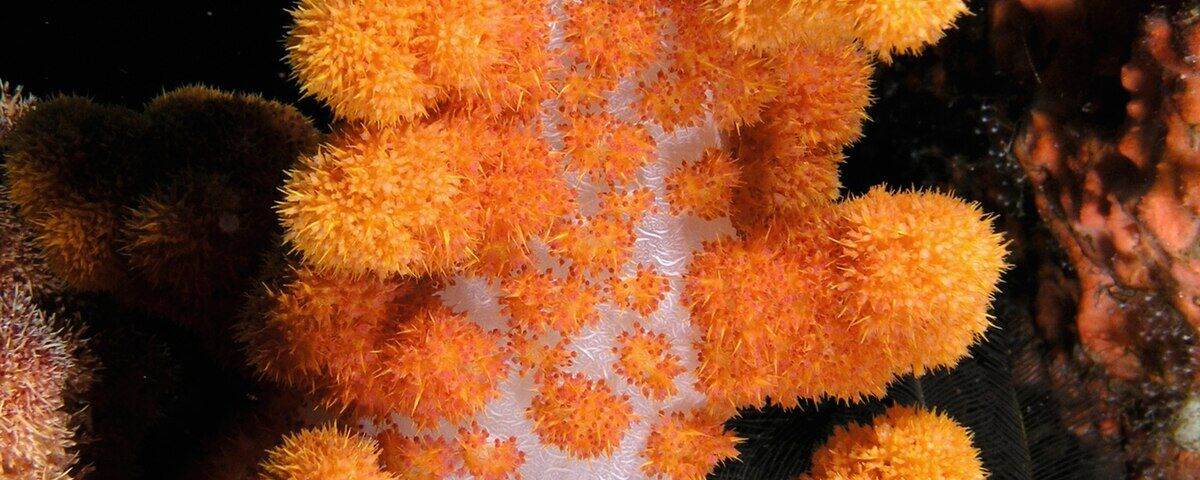
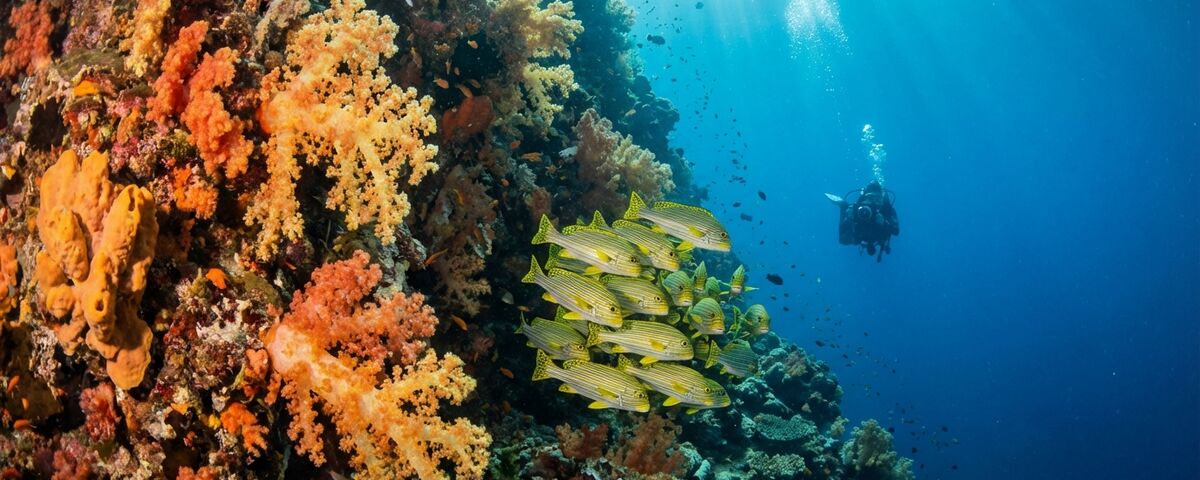
The coral coverage itself is a significant part of the attraction. Hard coral dominates the shallower sections, with tabletop acropora formations spreading across the boulder tops where they catch the most light. Deeper, soft corals take over. Dendronephthya species in orange and red colonise the boulder overhangs, while gorgonian sea fans spread across current-exposed faces. The variety is genuinely impressive for a site that's often described as having 'not many fish' by guides who are comparing it to the northern sites' overwhelming abundance.
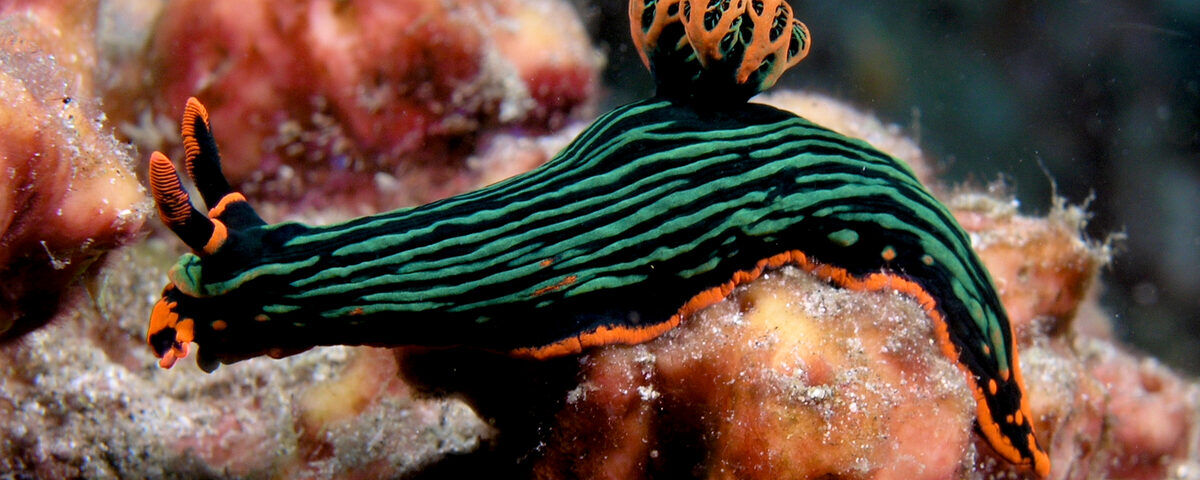
Macro life is solid without being spectacular. Nudibranchs are scattered across the reef, and commensal shrimp occupy the sea fans. Reef octopus hide in the boulder crevices, occasionally betraying themselves with a colour flash when a torch beam passes too close. Blue-spotted stingrays rest on the sandy patches between boulder formations.
The cold water brings occasional surprises. Mola mola (ocean sunfish) have been spotted here during the peak upwelling months of July and August, drawn by the same cold, nutrient-rich water that feeds the reef. These encounters are rare and unpredictable, but the possibility exists in a way it simply doesn't at the warmer northern sites.
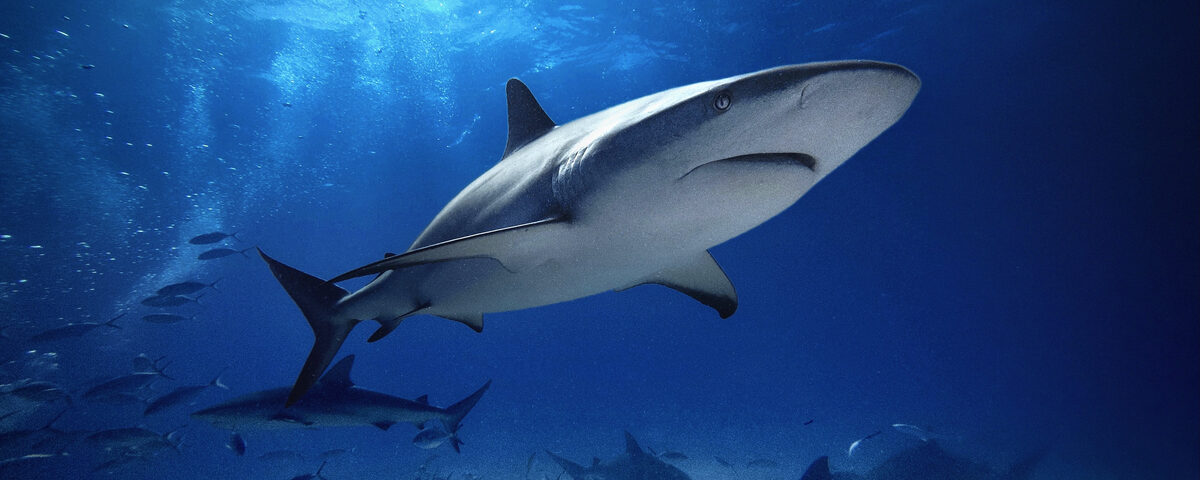
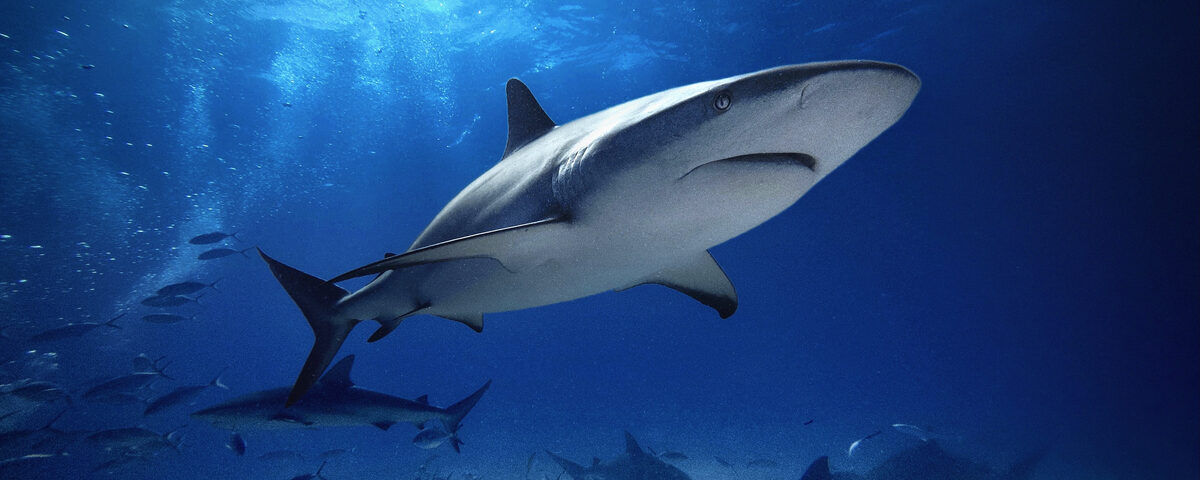
Green and hawksbill turtles are common, grazing on the reef or resting under boulder overhangs. Reef sharks, typically white-tips, cruise the deeper edges of the site but tend to keep their distance.
Dive Conditions
Nusa Kode is one of the most forgiving dive sites in southern Komodo for current. Where neighbouring sites like Torpedo Alley and Cannibal Rock can throw unpredictable surges, Nusa Kode's boulder reef sits in a relatively sheltered position that keeps water movement to 0 to 1 knot on most dives. This makes it accessible to intermediate divers, though the cold water and remote location mean complete beginners are rarely brought here.
The depth profile is straightforward. The boulder field starts in the shallows at about 5 metres and slopes gradually to a sandy bottom at 28 to 30 metres. Most of the interesting reef structure sits between 10 and 20 metres, which is where you'll spend the bulk of your dive time. The average depth of 18 metres gives comfortable no-decompression limits on air, and Nitrox extends that further for photographers who want to linger at the grouper stations.
Visibility varies significantly with conditions. On clear days during the dry season, you'll get 20 to 25 metres of visibility and the boulder landscape opens up beautifully. When the plankton blooms are heavy (common in the wet season), visibility can drop to 10 metres. That reduced visibility correlates with better feeding activity, so it's a trade-off rather than a downside.
The cold thermoclines deserve respect. Surface temperatures can read 28 or 29 degrees, giving no indication of what waits below 15 metres. A sudden drop to 21 or 22 degrees is genuinely uncomfortable in a thin wetsuit, and it can trigger rapid air consumption in divers who aren't expecting it. A 5mm suit or a hood and vest combination is sensible for anyone planning to spend time at depth.
Surface conditions are typically calm in the sheltered waters around the island, making entries and exits straightforward from both speedboats and liveaboard tenders.
⚓ Divemaster Notes
I've guided Nusa Kode over 80 times, and my advice to every group is the same: slow down. This is not Castle Rock. There is no current pushing you along, no urgency to get to the next pinnacle before your air runs out. The site rewards the divers who pick a boulder formation and just sit with it for five minutes.
The groupers here are not shy, but they are not stupid either. If you charge at a giant grouper with your camera, it will move away at exactly the speed needed to stay out of range. If you settle on the sand a few metres away and wait, the same fish will drift closer out of curiosity. I've had potato cod come within arm's length of patient divers who simply stayed still. The trick is committing to the wait.
I always brief my groups about the thermocline. Every single time, at least one diver in the group is surprised by the cold. It hits at around 15 to 18 metres on most days, and it can be a 6 or 7 degree drop over a few metres. I've seen divers burn through their air supply 30 per cent faster below the thermocline because their breathing rate spikes. If you're wearing a 3mm wetsuit, add a hood at minimum.
The best boulder formations are on the southwestern point. I start the dive heading southwest from the drop point, descending to 20 metres where the largest groupers tend to station themselves. From there, we work back along the reef at 12 to 15 metres, checking the overhangs for soft coral and macro life. The safety stop is best done over the shallow boulder tops where the hard coral gardens are densest and the light is best for photography.
One thing I tell every group: don't compare this dive to what you did at Batu Bolong or Crystal Rock that morning. The south Komodo sites are a different category entirely. If you come here expecting a thousand fish and charging current, you'll be disappointed. If you come here expecting boulder landscapes, big resident fish, and cold, clear water, you'll love it.
How to Get to Nusa Kode
Nusa Kode sits in the southern zone of Komodo National Park, roughly 4 to 5 hours by boat from Labuan Bajo. This puts it firmly outside day-trip range for most operators. The standard access route is via liveaboard, with multi-day itineraries that cover the southern Komodo circuit including Cannibal Rock, Torpedo Alley, Manta Alley, and the Horseshoe Bay area.
Labuan Bajo is the jumping-off point, reachable by direct flights from Bali (1 hour 15 minutes, multiple daily services on several carriers) or from Jakarta. The airport has expanded considerably and handles the growing dive tourism traffic well.
A handful of Labuan Bajo day-trip operators will run dedicated south Komodo trips on request, but these require very early departures, long transit times, and typically manage only two dives before the return journey. Liveaboard access is strongly recommended for any serious diving at Nusa Kode.
The Komodo National Park entrance fee applies (currently IDR 150,000 for weekday visits and IDR 350,000 for weekends/holidays, though these fees change regularly). Liveaboard operators typically include park fees in their packages.
Gear Recommendations
5mm wetsuit strongly recommended (3mm with hooded vest as minimum). The cold thermoclines at depth will ruin your dive in a thin suit. Torch useful for illuminating the soft coral under boulder overhangs and spotting macro life in crevices. Wide-angle lens for the boulder landscape and grouper portraits. Macro lens equally rewarding for the nudibranch and soft coral photography. Nitrox recommended for extending bottom time at the productive 15 to 20 metre zone. SMB for safety stops in open water.
Recommended Dive Operators
Dive Komodo runs well-organised liveaboard trips through the southern circuit with experienced local guides who know the boulder formations intimately. Their multi-day itineraries pair Nusa Kode with Cannibal Rock and Manta Alley. Wunderpus Liveaboard offers small-group trips (max 10 divers) with a photography focus that suits the site's slower pace. Blue Marlin Komodo operates day trips to the south on request during peak season, though liveaboard bookings give more dive time. For premium experiences, the Seven Seas fleet includes Nusa Kode on their extended Komodo itineraries with outstanding onboard facilities.
Liveaboard Options
Most liveaboards operating the Komodo circuit include Nusa Kode on their southern itineraries. The standard pattern is 3 to 5 day trips departing Labuan Bajo, with Nusa Kode dived on day 2 alongside Cannibal Rock and Torpedo Alley. Dive Komodo's liveaboard runs weekly departures during peak season (April to November) with 3-day and 6-day options. Wunderpus offers photography-focused trips with longer dive times at each site. The Seven Seas fleet provides premium liveaboard experiences with excellent facilities. Budget liveaboard options start around USD 250 per day including diving and meals. Premium boats run USD 400 to 600 per day. Book 2 to 4 months ahead for peak season (July to September).