Pillarsteen Dive Site
Komodo, Indonesia · Near Labuan Bajo
Overview
Pillarsteen sits off the southeastern tip of Padar Island, wedged in the channel between Komodo and Rinca where the Indian Ocean pushes cooler water north through the park's narrowest passages. The site takes its name from a distinctive rock pillar that breaks the surface, marking the entrance to one of Komodo's most varied underwater landscapes. Below the waterline, a complex system of walls, caves, and swim-throughs drops away from the pillar into deep water, creating a dive that feels more like exploring a flooded canyon system than a typical coral reef.
What makes Pillarsteen unusual among Komodo's sites is the combination of topographic complexity and the influence of that southern water. The cooler temperatures (sometimes dipping below 24 degrees) bring nutrients and plankton that support dense soft coral growth on the cave walls and attract pelagic visitors that don't always show up at the warmer northern sites. The trade-off is visibility. Where Castle Rock and Crystal Rock regularly deliver 25-metre-plus vis, Pillarsteen can drop to single digits when the plankton blooms roll through. On a clear day, you get 20 metres. On a murky one, you get torchlight and atmosphere.
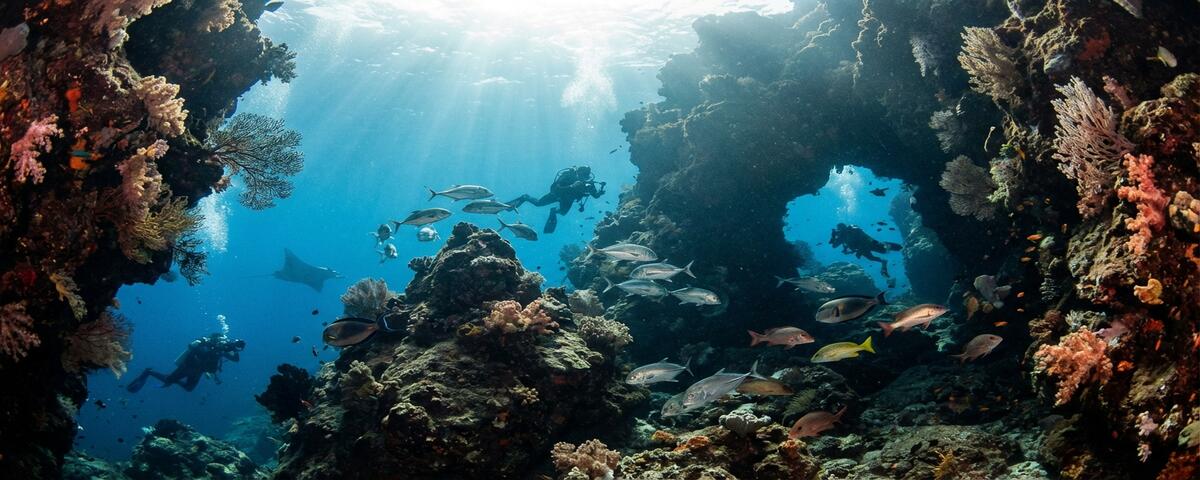
The topography is the real draw here. Divers enter near the pillar and drop onto a wall that curves westward, opening into a series of caves and swim-throughs at various depths between 8 and 25 metres. Some are wide enough for two divers side by side. Others require single file and careful buoyancy. The rock surfaces inside are coated in soft corals, sponges, and crinoids that thrive in the reduced light, creating colour palettes you simply don't see on the sun-blasted reef tops elsewhere in the park.
Pillarsteen doesn't appear on every operator's daily rotation, partly because of its less predictable conditions and partly because the marquee sites in central and northern Komodo pull the crowds. That works in its favour. When your boat shows up, you're often the only group on the site. For experienced divers who've already ticked off the Komodo highlights, Pillarsteen offers something genuinely different: a moody, atmospheric dive where the architecture matters as much as the marine life.
Marine Life at Pillarsteen
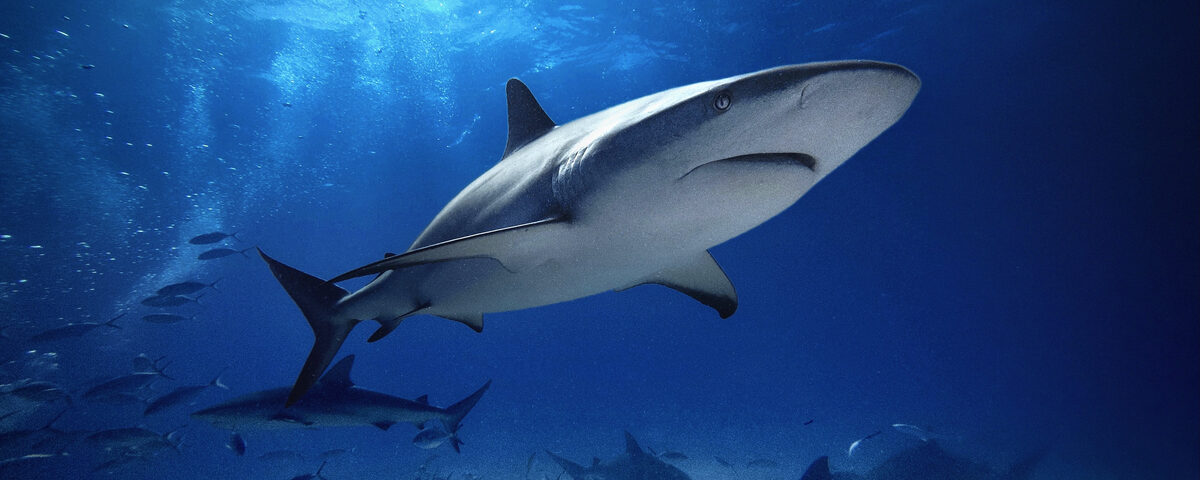
The caves and overhangs at Pillarsteen shelter a different cast of characters than the open-water pinnacles further north. White-tip reef sharks rest in the deeper recesses, tucked into sandy pockets at the base of the walls where the current can't reach them. They're not shy here, likely because they see fewer divers than the sharks at Castle Rock or Batu Bolong. You can often approach within a couple of metres before they shift position.
Green and hawksbill turtles are regulars on the wall, feeding on the sponges and soft corals that coat the rock faces. The turtles here tend to be larger than average for the park, possibly because the nutrient-rich southern water supports better feeding. Giant trevally patrol the edges of the wall where it meets open water, and on days with strong current running, schools of big-eye trevally and barracuda stack up in the blue just off the site.
Bamboo sharks are one of Pillarsteen's quieter attractions. These small, docile sharks rest on ledges and in crevices during the day, their banded patterns blending with the rocky substrate. Spotting one requires a slow pace and a good torch, because they prefer the darkest corners of the cave system. Your guide will know the regular hiding spots.
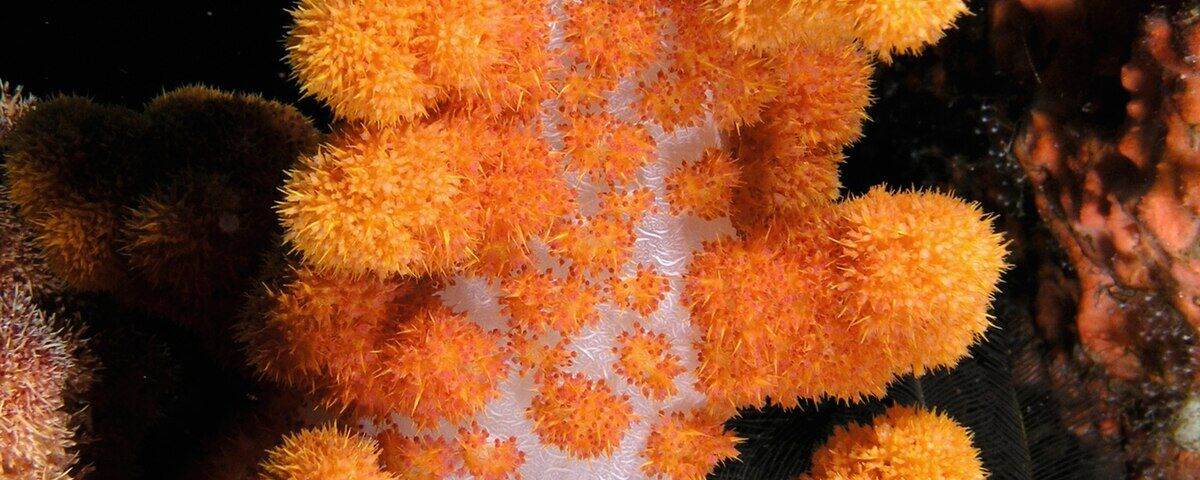
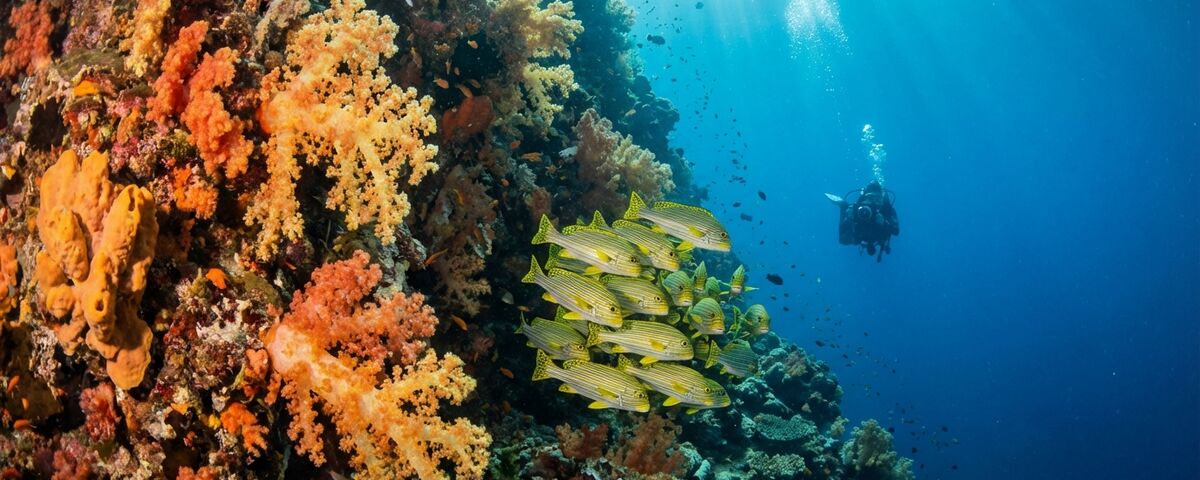
The soft coral coverage is exceptional for Komodo. The reduced light inside the caves and the cooler water create conditions that favour dense growths of Dendronephthya (tree soft corals) in purples, pinks, and oranges. Sea fans spread across the cave mouths where the current funnels through, and barrel sponges the size of bathtubs anchor to the wall at depth. Crinoids cluster on every available perch, their feathered arms filtering the plankton-rich water.
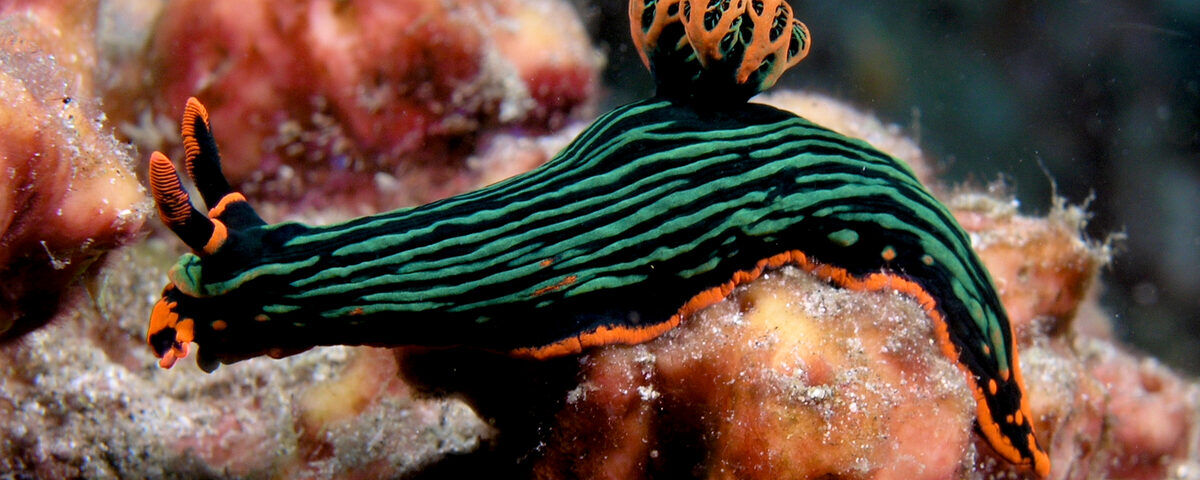
Macro life is strong for a wall site. Nudibranchs are common on the sponge-covered surfaces, with Chromodoris and Phyllidia species particularly abundant. Leaf scorpionfish sit motionless on ledges, relying on camouflage. Moray eels, both giant and honeycomb, occupy crevices throughout the structure. In the sand patches at the base of the wall, blue-spotted stingrays half-bury themselves, and mantis shrimp peer from their burrows.
On good current days, the pelagic action picks up considerably. Grey reef sharks occasionally pass through in the deeper sections, and eagle rays have been spotted gliding along the wall. The site's position in the cooler southern channel means it occasionally gets visitors from the deep, ocean sunfish (mola mola) have been reported here during the cold-water months of July through September, though sightings are far from guaranteed.
Dive Conditions
Pillarsteen is a genuine advanced dive, and conditions here are less predictable than at the popular central Komodo sites. The site sits in the path of cold upwellings from the Indian Ocean, which means water temperatures can swing significantly during a single dive. Surface temperature might read 27 degrees, but a thermocline at 18 metres can drop that to 22 or even lower. A 5mm wetsuit is sensible here, even if you've been comfortable in a 3mm at the northern sites all week.
Current ranges from gentle drift to seriously strong, and direction changes with the tide. Your operator should time the dive for the right tidal window, ideally a gentle incoming current that pushes you along the wall from east to west, through the cave system and out onto the reef at the far end. Diving against the current at Pillarsteen is exhausting and not particularly productive, so good timing is everything.
Visibility is the most variable factor. The plankton-rich southern water that brings the nutrients also brings the green tinge. Expect anywhere from 5 to 20 metres, with the best visibility typically early in the morning before the tidal exchange stirs things up. On low-vis days, a dive torch is not optional; it's essential for navigating the caves safely and for revealing the colours of the soft corals that look dull grey in reduced ambient light.
Entry is by boat, typically a negative entry to avoid being swept past the pillar on the surface. Descend immediately to the wall and orient yourself before the current takes you. The cave system has multiple entry and exit points, but getting disoriented inside is a real risk if visibility drops. Stay close to your guide, maintain awareness of your air consumption (caves increase breathing rates), and carry a surface marker buoy for deployment at the end of the dive.
The depth range is broad. The wall tops out at about 5 metres near the pillar and drops to 40 metres and beyond on the outer face. Most of the interesting cave diving happens between 8 and 25 metres, so there's no need to go deep unless you're specifically looking for the deeper pelagic encounters. A good guide will keep the group at 15 to 20 metres for the bulk of the dive, where the caves are most developed and the light filtering in through the openings creates the best atmosphere.
⚓ Divemaster Notes
Pillarsteen rewards patience and good torch work more than it rewards speed. The natural instinct on a drift dive is to let the current carry you through as quickly as possible. Resist that here. The caves and swim-throughs are where the interesting stuff lives, and rushing through means missing the bamboo sharks, the macro life on the cave walls, and the soft coral formations that make this site special.
I've dived Pillarsteen in 5-metre vis and in 20-metre vis, and honestly both have their merits. Low visibility turns the caves into something genuinely atmospheric: torch beams cutting through green water, soft corals materialising from the murk, a white-tip suddenly visible at arm's length. It's a completely different experience from the crystal-clear pinnacle dives in northern Komodo, and that contrast is part of the appeal.
Buoyancy control matters more here than at almost any other Komodo site. The caves and swim-throughs are not tight in the technical diving sense, but they're tight enough that poor buoyancy means contact with the walls. The soft corals are fragile. The silt on ledges lifts easily and kills visibility for everyone behind you. If you're not confident in your trim and buoyancy, this is not the dive to test them.
One thing that catches people off guard is the temperature drop. You might start the dive comfortable at 27 degrees and hit a thermocline that drops you to 22 within the space of a few metres. If you're wearing a thin wetsuit because the northern sites were warm, you'll feel it. I always recommend a 5mm here, even when surface conditions suggest otherwise.
The exit from the cave system on the western end deposits you onto a gentle reef slope that makes for a good safety stop area. There's enough coral and fish life here to keep things interesting during your three minutes at five metres, and the current is usually lighter on this side. Deploy your SMB before ascending; boats can struggle to spot divers surfacing close to the rocky shoreline.
How to Get to Pillarsteen
Pillarsteen is accessed exclusively by boat from Labuan Bajo, the gateway town for Komodo National Park on the western tip of Flores. The site sits off the southeast corner of Padar Island, roughly 45 minutes to an hour by speedboat from Labuan Bajo harbour, depending on sea conditions and your operator's vessel.
Labuan Bajo itself is reached by air from Bali (1.5 hours, multiple daily flights on several carriers) or by ferry from other points in Nusa Tenggara. The airport is small but functional, and most dive operators offer airport transfers. The town has grown rapidly in recent years, with a solid range of accommodation from backpacker hostels to boutique resorts.
Most day-trip operators include Pillarsteen as one of two or three dives on a southern Komodo itinerary, often paired with Three Sisters or Nusa Kode. Liveaboard trips through the park will typically hit Pillarsteen during their southern leg, usually on the second or third day.
Komodo National Park requires an entrance fee (currently around IDR 150,000 for domestic visitors and IDR 350,000 for international visitors on weekdays, with higher rates on weekends and holidays; check current rates as these change regularly). Your operator will normally handle this, but confirm before booking.
The boat ride to Pillarsteen takes you past Padar Island's famous viewpoint, the same three-bay panorama that fills Instagram feeds. If your operator is amenable, a surface interval on Padar for the hike is a popular add-on. The trail to the top takes about 30 minutes and the view is worth the sweat.
Gear Recommendations
A 5mm wetsuit is strongly recommended, even if you've been comfortable in less at other Komodo sites. The thermoclines at Pillarsteen regularly drop temperatures into the low 20s, and spending 40 minutes in the caves where water circulation is reduced makes cold exposure worse than on open-water dives. A hood is worth considering for cold-sensitive divers.
A quality dive torch is essential, not optional. The caves reduce ambient light significantly, and without a torch you'll miss most of the soft coral colour and the macro life on the walls. A primary torch with a wide beam works best for navigating and illuminating the cave interiors. A secondary backup torch is good practice at any cave site.
A reef hook is not typically needed at Pillarsteen (unlike Castle Rock or Crystal Rock) because the dive profile involves moving through the cave system rather than holding position against current. However, carrying one is sensible in case you encounter a section where current picks up and you want to stop and observe.
A surface marker buoy (SMB) and reel are essential. The site is close to rocky shoreline, and boats may not be able to follow your bubbles through the cave sections. Deploy your SMB before ascending from the safety stop to give your boat crew a clear pickup point.
For photography, a wide-angle setup captures the cave architecture and the swim-throughs beautifully, especially with strobes to bring out the soft coral colours. Macro shooters will find plenty of subjects on the cave walls, but the varying visibility means autofocus can hunt in the particulate water. Manual focus or back-button focus works better here. Bring a focus light separate from your strobes.
Recommended Dive Operators
Blue Marlin Dive operates out of Labuan Bajo and runs regular trips to the southern sites including Pillarsteen. Their guides know the cave system well and time dives according to conditions rather than fixed schedules, which matters at a site this variable. They run small groups, typically six divers maximum per guide.
Komodo Dive Center (at Komodo Resort on Sebayur Island) offers Pillarsteen on their southern rotation. Staying on Sebayur means shorter boat rides and earlier arrivals at the dive sites, which can make a difference for visibility. Their PADI-certified guides have extensive local knowledge and the resort provides a comfortable base between dives.
Wicked Diving Komodo runs both day trips and multi-day liveaboard packages that include the southern sites. Their boats are well-maintained and they carry emergency oxygen and first aid equipment as standard, which is worth noting for a site with caves and variable conditions.
For liveaboard options, boats like the Tiare Cruise, Black Manta, and Ombak Putih all include southern Komodo in their itineraries. A liveaboard gives you the flexibility to dive Pillarsteen at the optimal time rather than being locked into a day-trip schedule, and the overnight mooring near Padar means first-light dives with the best visibility.
When booking, specifically ask whether Pillarsteen is on the itinerary. Not all operators visit regularly, and some will substitute easier southern sites if conditions look marginal. An operator who dives here often will know the tidal windows and have a backup plan if visibility is poor.
Liveaboard Options
The major Komodo liveaboard operators all include southern sites in their standard itineraries, though Pillarsteen specifically may not appear by name on every schedule. The Tiare Cruise runs 4 to 7-day routes through the park and typically dives the southern sites including the Padar area on day two or three. Their wooden phinisi boat is comfortable and their dive guides are experienced with the cave sites.
The Black Manta is a steel-hulled vessel offering similar southern itineraries, with the added benefit of nitrox for divers who want extended bottom time in the caves. At Pillarsteen's depths, nitrox makes a meaningful difference to no-decompression limits.
Ombak Putih covers the full park over multi-day trips and includes the southern sites as standard. Their itinerary flexibility means they can add or swap sites based on conditions, which is valuable at Pillarsteen where visibility is unpredictable.
Sea Safari VI and the Komodo Sea Dragon (from Komodo Resort) are additional options that regularly visit the southern sites. Most liveaboards depart from Labuan Bajo, and trips range from 3-day weekend runs to full 7-day park explorations.
A liveaboard's main advantage for Pillarsteen is timing. Day boats from Labuan Bajo arrive mid-morning after an hour's transit, by which point tidal exchange may have already reduced visibility. A liveaboard moored near Padar overnight can put divers in the water at first light, when conditions are typically best. If Pillarsteen is on your wish list, mention it when booking and ask the operator to prioritise early-morning timing for this site.