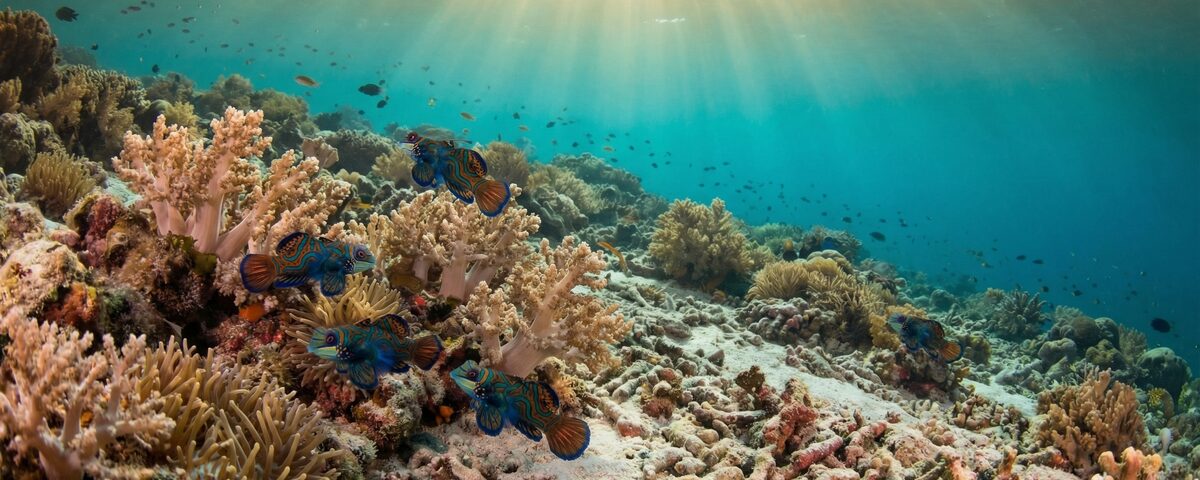
Mandarin Valley Dive Site
Sipadan-Mabul, Malaysia · Near Semporna
Overview
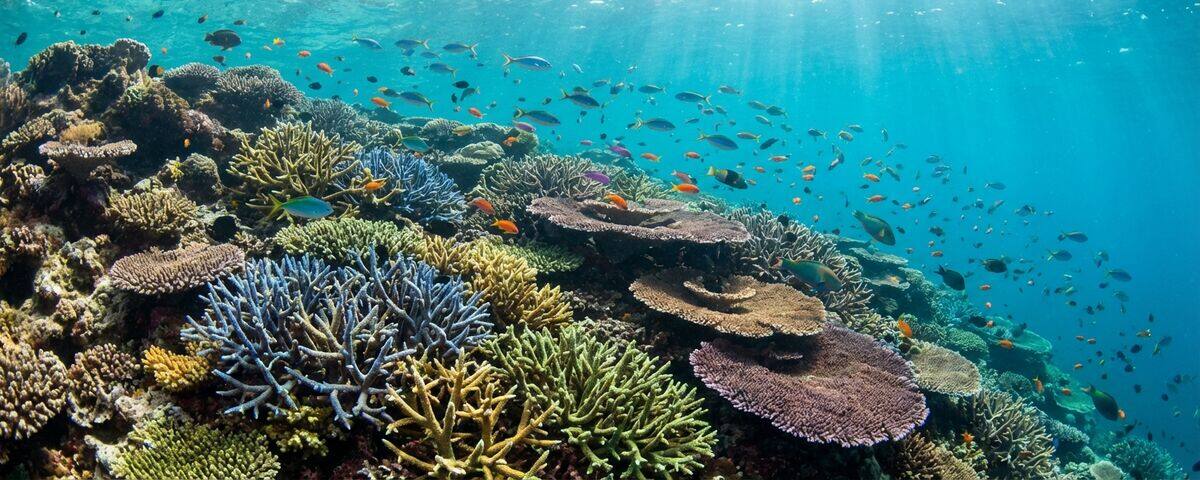
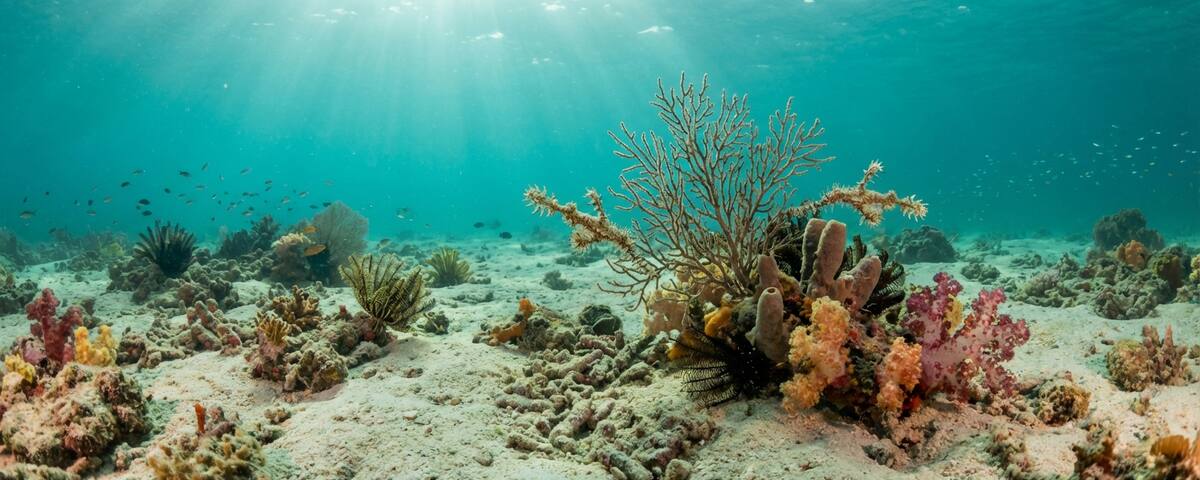
Mandarin Valley sits beneath the stilts of Sipadan-Kapalai Dive Resort, spread across a sandy slope dotted with coral rubble and hard coral patches between 5 and 20 metres. The site earned its name from the mandarin fish that emerge at dusk to perform their mating dance in the shallows, and it has become one of the most reliable spots in Southeast Asia to witness this behaviour.
Kapalai itself barely qualifies as an island. It's a sandbank in the Celebes Sea between Sipadan and Mabul, submerged at high tide, with the resort perched above on wooden stilts. The reef below developed around these structures over decades, creating an accidental artificial reef system that now supports an absurd density of marine life for such a small area. Mandarin Valley is the most popular section of this reef, stretching along the eastern side where the slope drops gradually into deeper water.
What separates Mandarin Valley from other muck diving sites in the region is accessibility. You don't need to be an advanced diver to enjoy it. Depths stay moderate, currents rarely exceed a gentle drift, and the resort's dive centre runs guided tours multiple times daily. The site works equally well for macro photography veterans who've been chasing mandarin fish across Asia and for intermediate divers seeing their first nudibranch.
The real magic happens in the final hour of daylight. As the sun drops toward the horizon and the reef transitions from day shift to night shift, mandarin fish rise from their hiding spots in the rubble. Pairs spiral upward together, release eggs and sperm at the apex, then separate back into the coral. The whole display lasts seconds per pair, but with dozens of fish active simultaneously, you can watch the show unfold for the entire dive. It's one of the most photographed behaviours in the underwater world, and Mandarin Valley delivers it with a consistency that few other sites can match.
Marine Life at Mandarin Valley
Mandarin fish are the star attraction, full stop. Synchiropus splendidus, with their psychedelic orange and blue patterning, look like someone designed them specifically to sell underwater cameras. During daytime dives they hide deep in coral rubble, nearly impossible to spot. Come back at dusk and the whole reef transforms. Males display their colours to females, pairs lock together and ascend a few centimetres above the reef, and the mating dance plays out against fading light. Getting a sharp photograph of this is genuinely difficult, which is part of the appeal.
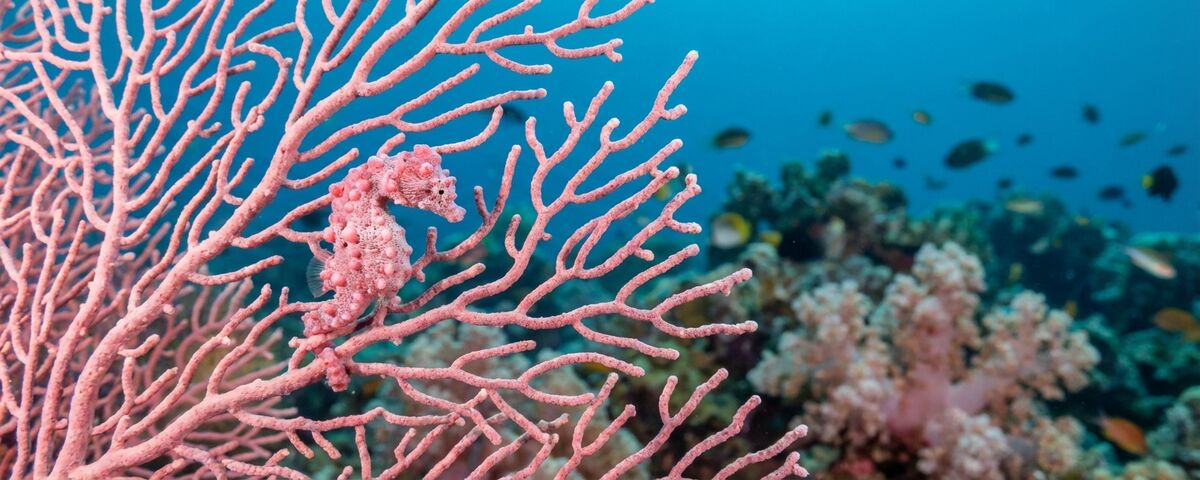
The supporting macro life is outstanding even without the mandarin fish. Flamboyant cuttlefish stalk across sandy patches on their modified arms, pulsing purple and yellow warnings. Ghost pipefish drift vertically among sea fans and crinoids, matching their hosts so well that spotting one feels like solving a puzzle. Frogfish sit motionless on sponges, painted varieties and warty ones, changing colour over weeks to match their perch.
Nudibranchs carpet every surface. Chromodoris species with their vivid mantles are the easiest to find, but patient divers turn up Nembrotha, Glossodoris, and the occasional solar-powered Phyllodesmium. Blue-ringed octopus appear in rubble areas, usually tucked into shells or coconut halves. Mantis shrimp peer from burrows with those compound eyes that see wavelengths humans can only theorise about.
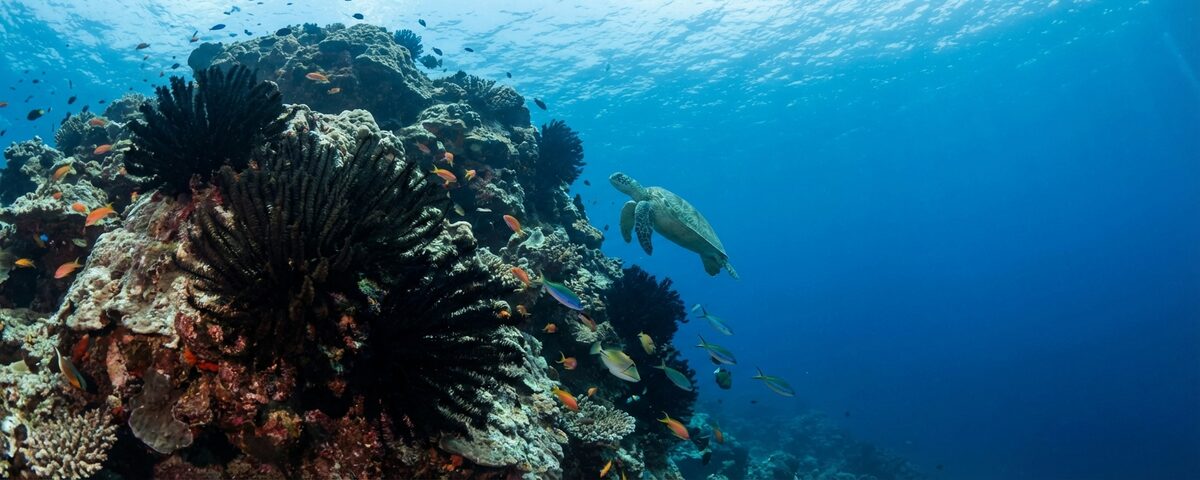
Bigger animals pass through less predictably. Hawksbill turtles graze on sponges along the slope. Cuttlefish (the full-sized Sepia latimanus, not just the flamboyant species) hunt around the coral patches. Reef octopus change texture and colour in real time as they flow across the substrate. Schools of cardinalfish hover in dense clouds near the stilts, providing food for the resident lionfish that hang upside down beneath the resort's walkways.
Night dives reveal a completely different reef. Basket stars unfurl from their daytime hiding spots. Decorator crabs emerge covered in anemone fragments and algae. Hunting moray eels, freed from their holes, swim openly along the reef edge. The mandarin fish return to hiding, replaced by bobbit worms extending from the sand with their terrifying snap-trap jaws.
Dive Conditions
Mandarin Valley is a forgiving dive site by Sipadan-area standards. Maximum depth sits around 20 metres at the base of the slope, though most of the best critter encounters happen between 8 and 15 metres. Currents are typically mild, occasionally pushing to moderate when tidal flow picks up through the channel between Kapalai and Mabul. Nothing here requires advanced current management skills.
Visibility varies between 10 and 25 metres. The clearer conditions arrive during the dry season from April through October, when prevailing winds shift and plankton levels drop. Even on murkier days, though, macro diving doesn't demand pristine visibility. You're working at close range with a torch and a lens, not scanning for pelagics on a wall.
Water temperature holds between 27 and 30 degrees Celsius year-round. The Celebes Sea doesn't experience the dramatic thermoclines that sites in the Pacific or Indian Ocean deal with. A 3mm wetsuit is plenty for single dives. Multi-dive days (three or four dives is standard at Kapalai) might warrant stepping up to a 5mm suit for comfort on the later afternoon sessions.
Surface conditions are sheltered. Kapalai sits in relatively protected water, and the dive site is directly beneath or adjacent to the resort. Boat rides are measured in minutes when needed, though many guests simply walk down the jetty stairs and drop in. Entry is typically a giant stride from the jetty or a short negative entry from a speedboat at the edge of the reef.
The dusk dive for mandarin fish has specific timing requirements. Entry needs to happen roughly 30 minutes before sunset. Too early and the fish haven't started. Too late and you'll miss the brief window where enough light remains for photography but the fish are active. The resort's dive guides time this precisely, and they've been doing it long enough to get it right.
⚓ Divemaster Notes
The dusk mandarin fish dive requires specific briefing. Entry timing is critical: 25 to 30 minutes before sunset. Brief your group to descend slowly and move to the rubble zones at 8 to 12 metres where the fish concentrate. Torches should stay on low power or use red filters. Full-power white light sends the fish straight back into hiding and ruins the dive for everyone.
Group management during the mating display is the biggest challenge. Photographers lock onto a pair of fish and lose spatial awareness entirely. Set a clear rule: pick a patch of rubble, settle into position, and stay put. Chasing individual fish across the reef disrupts the display and kicks up sediment that ruins visibility for nearby divers.
Maximum group size for the dusk dive should be four, ideally three. More than that and you're competing for position over the rubble patches. If running multiple groups, stagger entry by five minutes and assign each group a different section of the reef.
Daytime macro diving here is straightforward. Point out the flamboyant cuttlefish areas (sandy patches between coral heads at 10 to 14 metres) and the ghost pipefish on the sea fans. Check with the resort's resident guides for current frogfish locations, as these animals sit in one spot for days or weeks before relocating.
Blue-ringed octopus sightings should be pointed out carefully. Brief divers not to touch or harass them. They're docile unless provoked, but their venom is lethal and there's no antivenom. A respectful distance and a long lens is the appropriate approach.
The site is suitable for intermediate divers on daytime dives. For the dusk dive, ensure divers are comfortable with low-light conditions and buoyancy control near the bottom. Silting out a rubble patch by dragging fins or landing on it makes the mandarin fish dive significantly worse for everyone downstream.
How to Get to Mandarin Valley
Kapalai sits about 30 kilometres south of Semporna town in Sabah, Malaysian Borneo. The only way to reach it is by speedboat, typically a 45-minute ride from Semporna jetty.
Fly into Tawau Airport (TWU). Malaysia Airlines and AirAsia run daily flights from Kota Kinabalu (55 minutes) and Kuala Lumpur (2 hours 45 minutes). Singapore and other regional hubs connect through KL. From Tawau Airport, Semporna is about 90 minutes by road. Most resort packages include airport transfers.
Sipadan-Kapalai Dive Resort is the only accommodation on Kapalai, built entirely on stilts over the sandbank. Staying there puts you directly above Mandarin Valley, which is both convenient and slightly surreal. You can watch the reef from your room's glass floor panels.
Alternatively, resorts on nearby Mabul Island access Kapalai's sites by short boat transfer (under 10 minutes). Mabul options include Sipadan Water Village, Seaventures Dive Rig (a converted oil platform), Scuba Junkie Mabul Beach Resort, and several budget operations in Mabul village.
Mandarin Valley does not require a Sipadan permit, as Kapalai falls outside the Sipadan Island Park boundary. Sipadan permits (limited to 176 per day) are allocated through licensed operators and typically included in multi-day dive packages alongside dives at Kapalai and Mabul sites.
Gear Recommendations
Macro lens is essential. A 60mm or 100mm setup covers everything from mandarin fish (which are roughly 6 centimetres long) to nudibranchs and ghost pipefish. If you're choosing between macro and wide-angle for a Kapalai trip, bring the macro every time. There's nothing here that demands a fisheye.
For the dusk mandarin fish dive specifically, a fast autofocus system matters more than resolution. The fish move quickly during their mating ascent, and the light is fading. Shoot at higher ISO than you'd normally want and compensate with strobe power. Two strobes positioned wide give the most even lighting across the rubble zone.
Torch with adjustable power or a red filter is mandatory for the mandarin dive. White light at full power terminates the mating behaviour immediately. Red light is less disruptive, though some photographers debate whether it affects the fish at all. Err on the side of caution.
A 3mm wetsuit handles most conditions. For multi-dive days (three or four dives is normal here), a 5mm full suit prevents the slow chill that accumulates across repeat immersions. Hood and gloves are unnecessary.
Pointer stick helps guides indicate small critters without touching the reef. Divers should carry their own torch for spotting subjects in crevices and under overhangs. Reef hook is unnecessary here since currents are mild.
Surface marker buoy is good practice even though most dives end at the resort jetty. If you drift off the reef, the boat crew needs to see you.
Recommended Dive Operators
Sipadan-Kapalai Dive Resort is the default choice for Mandarin Valley diving. Living above the site means you can dive it multiple times daily with zero boat transfer. Their guides know exactly which rubble patches the mandarin fish are using, which matters because the fish shift locations over weeks as coral rubble gets rearranged by storms or sedimentation.
From Mabul, Scuba Junkie runs well-organised trips to Kapalai and maintains strong marine conservation credentials. They've been tagging turtles and monitoring reef health in the area for years. Seaventures Dive Rig, the converted oil platform, also accesses Kapalai regularly and offers unlimited diving on their own house reef between scheduled boat dives.
Budget travellers working from Semporna can book day trips through operators like Billabong Scuba and Uncle Chang's. These trips typically combine a Kapalai dive with Mabul sites or, if your timing and permit allocation align, a Sipadan day. The compromise is that you won't be on-site for the dusk mandarin fish dive, which is the single best reason to visit Mandarin Valley.
For photographers specifically, staying at Kapalai for at least three nights gives you multiple shots at the dusk dive across different conditions. One evening might produce ten active pairs and another might give you thirty. The variability is part of the experience, and having repeat attempts dramatically improves your chances of nailing the shot.
Liveaboard Options
Several Borneo liveaboards include Kapalai in their Sipadan-area itineraries. MV Celebes Explorer operates multi-day trips covering Sipadan, Mabul, and Kapalai with two to three Sipadan permit days and remaining dives spread across local reefs. The Scuba Junkie liveaboard runs similar routes.
Liveaboard access to Mandarin Valley depends on the specific itinerary and timing. Confirm with the operator that evening dusk dives at Kapalai are included. Some itineraries prioritise Sipadan wall dives and schedule Kapalai as a filler between permit days, which means you might not be in position for the mandarin fish display at the right time.
For dedicated Mandarin Valley diving, a resort stay beats a liveaboard. The ability to walk down to the jetty and drop onto the reef whenever conditions suit is worth more than the flexibility of a boat. Liveaboards make sense when you want to combine Kapalai with a broader Celebes Sea itinerary that hits multiple regions.