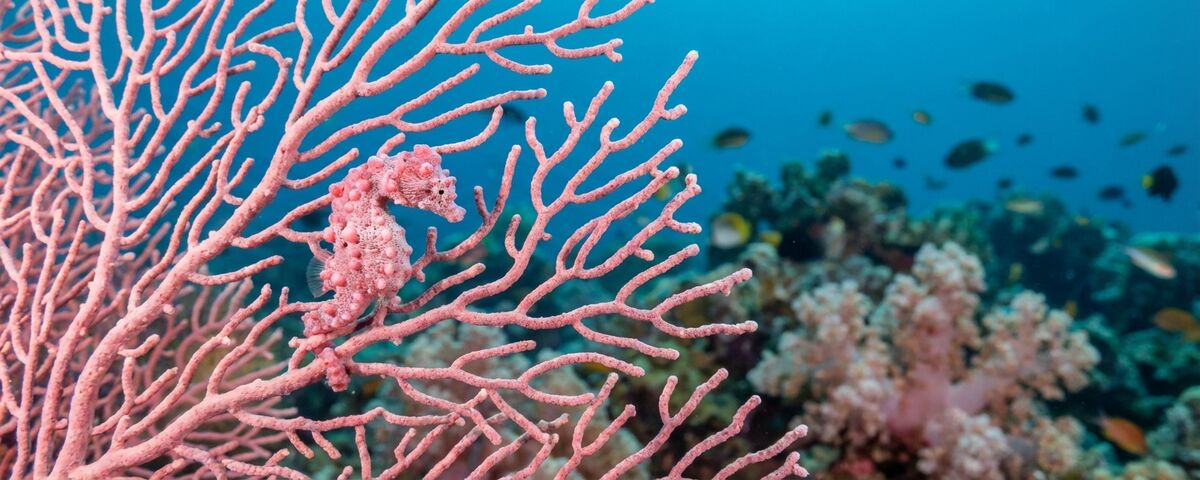
Mid Reef Dive Site
Sipadan-Mabul, Malaysia · Near Semporna
Overview
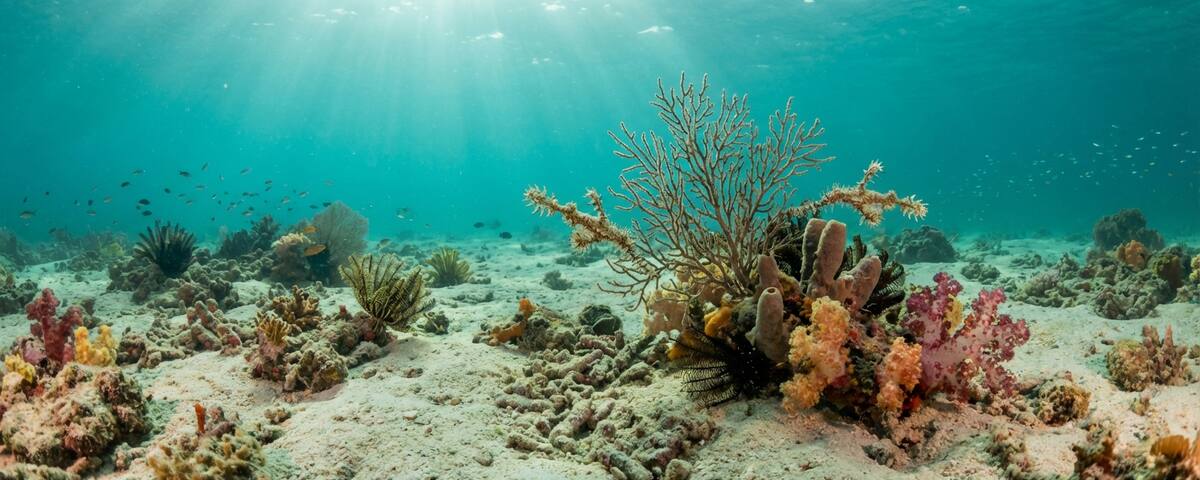
Mid Reef sits south of Mandarin Valley off Kapalai Island, a sandbank in the Celebes Sea that vanishes entirely at high tide. The reef drops from around 10 metres to 25 metres along a coral slope scattered with gorgonian sea fans, and it has earned a quiet reputation among macro photographers as one of the finest pygmy seahorse sites in Sabah.
Kapalai diving tends to fly under the radar. Most visitors to this corner of Malaysian Borneo fixate on Sipadan, barely 15 minutes by speedboat to the south. That's understandable. Sipadan has the walls, the tornados of barracuda, the turtles stacked three deep on every ledge. But Kapalai's reefs, and Mid Reef in particular, offer something Sipadan doesn't: world-class muck and macro diving on a healthy coral substrate with genuine current to keep things interesting.
The site draws experienced divers for good reason. Currents here can rip through without warning, and the best critter encounters happen at depth along the gorgonian fans where the pygmy seahorses hide. Ball-line descents are standard. This isn't a site you drift into casually between easier dives. You come here with a plan, a sharp eye, and a macro lens.
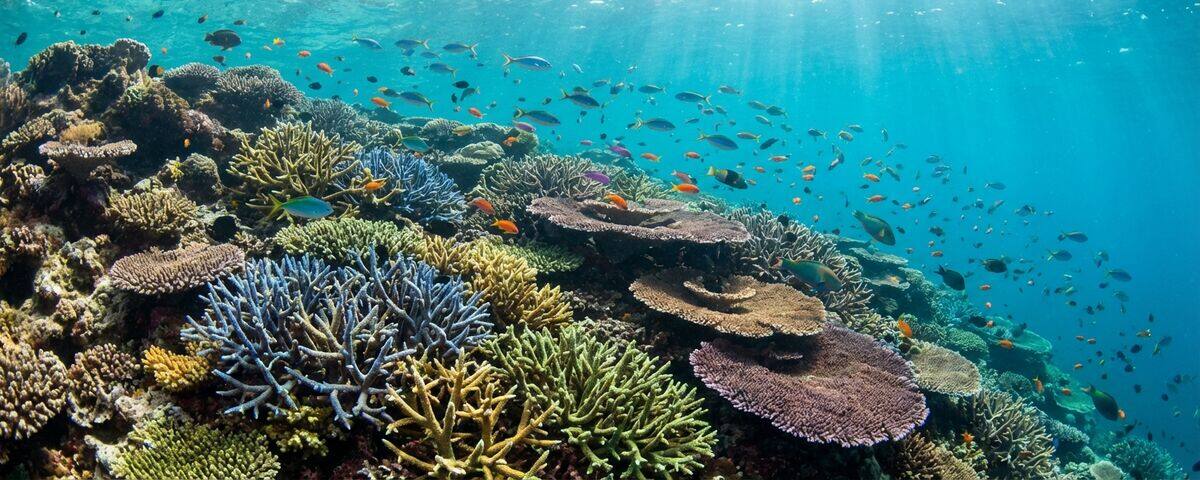
What makes Mid Reef worth the effort is density. The ratio of rare critters per square metre rivals the better-known muck sites in Lembeh or Anilao, but on a reef that's also genuinely pretty. Hard corals in good condition, soft coral gardens adding colour to the deeper sections, and enough fish life overhead that you could ignore the macro entirely and still have a solid dive. Most people don't ignore the macro, though. The pygmy seahorses are too good.
Marine Life at Mid Reef
Pygmy seahorses are the headline act. Denise's pygmy seahorse and Bargibant's pygmy seahorse both live on the gorgonian fans between 18 and 25 metres. These animals are smaller than your thumbnail and match their host fan so precisely that finding one without a guide who knows exactly which fan to check is borderline impossible. Once your eye adjusts, though, you start to see them. Sometimes two or three on a single fan, curled around the branches with their tails gripping tight against the current.
The supporting cast is equally strong. Harlequin ghost pipefish drift vertically among crinoids, their feathery appendages making them look like part of the reef itself. Frogfish, both painted and warty varieties, sit motionless on sponges. Ribbon eels peek from holes in the rubble zones between coral heads, their electric blue and yellow bodies making them one of the few critters here that's actually easy to spot.
Stonefish lie on the substrate doing their best impression of a rock, which is exactly what they are: a rock that can send you to hospital. Flamboyant cuttlefish walk across the sandy patches on modified arms, pulsing colours like a broken television. Blue-ringed octopus appear occasionally, usually in the rubble areas at the reef's edge.
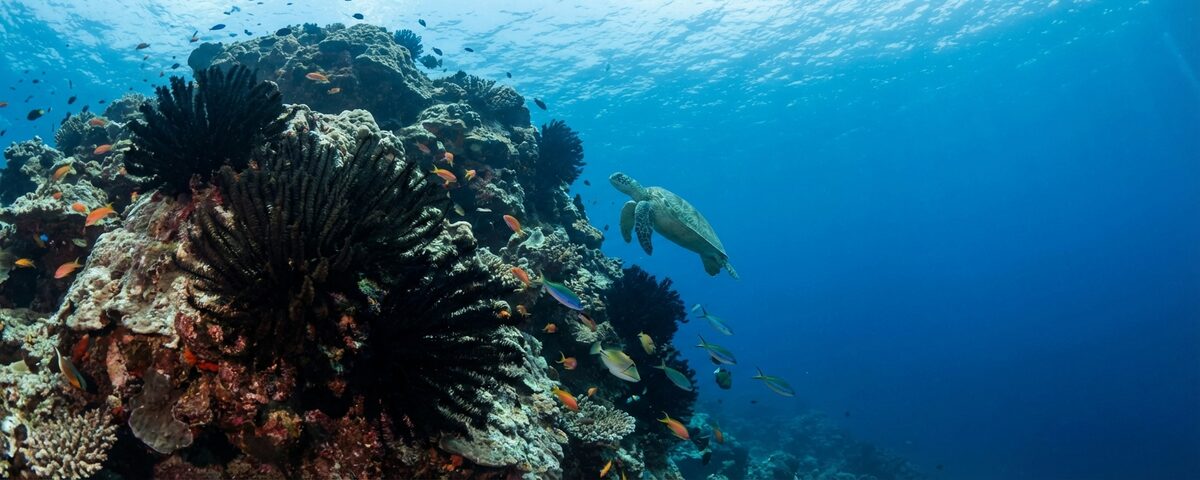
Bigger life shows up too. Whitetip reef sharks patrol the deeper sections. Green and hawksbill turtles cruise through. Schools of jacks and barracuda swirl overhead when current brings nutrients across the reef. Mantis shrimp peer from burrows with those unsettling compound eyes that see colours humans can't even name.
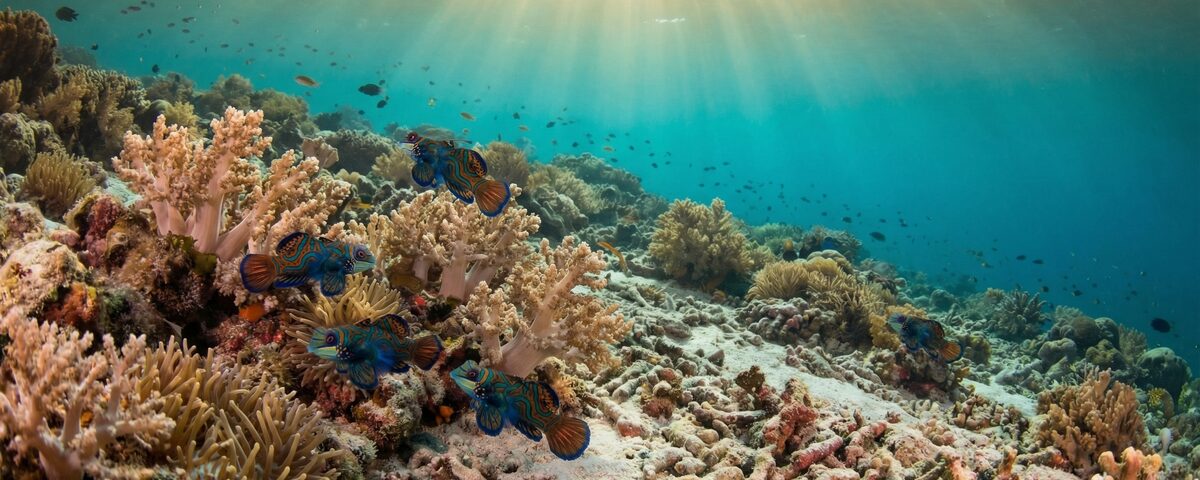
Night dives here are exceptional. Mandarin fish emerge from their daytime hiding spots to perform their mating dance at dusk, bobbing upward in pairs before separating back into the coral. Lobsters, crayfish, and hunting moray eels make the reef feel like an entirely different site after dark.
Dive Conditions
Current is the defining feature of Mid Reef and the reason it's rated for advanced divers. Flow across the reef can swing from negligible to genuinely strong within a single dive, and predicting it from the surface is unreliable. Most dive guides use a ball line for descent, which keeps the group together and prevents anyone from being swept off the reef during the initial drop.
Once on the bottom, the current is manageable if you stay close to the reef and use the coral structure as shelter. The problem comes when photographers stop to shoot a pygmy seahorse at 22 metres and lose track of their position relative to the group. Stay close to your buddy and your guide. This is not a site for wandering off alone.
Visibility ranges from 10 to 30 metres depending on current direction and recent weather. Plankton-rich water reduces visibility but tends to bring more fish activity. The clearest conditions typically come during the dry season between April and October, though Kapalai is diveable year-round.
Water temperature sits between 26 and 30 degrees Celsius. The deeper sections can feel cooler when thermoclines push through, but nothing that a 3mm wetsuit can't handle. Surface conditions are usually calm, as Kapalai sits in relatively sheltered water between the Celebes Sea and the Sulu Sea.
Maximum depth is around 25 metres. The reef slopes rather than drops, so depth management is straightforward as long as you're watching your computer. The real risk here is task fixation: staring through a macro lens at a pygmy seahorse while your depth, air, and no-deco time all tick away unnoticed.
⚓ Divemaster Notes
Brief your group on current management before the dive. Ball-line descent, regroup at the bottom, stay within visual contact at all times. Photographers will want to linger at depth on the gorgonian fans, so set clear time and depth limits before entry.
The pygmy seahorse fans shift over time. Check with the Kapalai guides for current locations even if you've dived this site before. The seahorses don't move between fans, but individual fans die or get damaged, and new colonies establish elsewhere. As of recent reports, the best fans are on the deeper section of the reef between 20 and 23 metres.
Pointing torches directly at pygmy seahorses stresses them. Use a red filter or keep your torch on low power and indirect. The same goes for strobes. If you're photographing them, limit yourself to a few shots and move on. There are usually multiple fans with seahorses, so spreading the pressure across them is better practice.
For night dives, the mandarin fish mating dance happens at dusk, not full dark. Time your entry for the last 20 minutes of daylight and head to the rubble zones near the reef edge. The mandarins are in the same areas where you find them during the day, but they emerge from their hiding spots and pair up as light fades.
If current is too strong on arrival, your dive guide should have a backup plan. Mandarin Valley next door offers similar critters in calmer conditions, and the House Reef directly under the resort is always available.
How to Get to Mid Reef
Kapalai sits about 30 kilometres south of Semporna town in Sabah, Malaysian Borneo. The boat transfer from Semporna takes roughly 45 minutes by speedboat.
To reach Semporna, fly into Tawau Airport (TWU). Malaysia Airlines and AirAsia operate daily flights from Kota Kinabalu (55 minutes) and Kuala Lumpur (2 hours 45 minutes). From Tawau Airport, Semporna is about 90 minutes by road. Most resorts arrange airport transfers as part of their packages.
Kapalai has one resort: Sipadan-Kapalai Dive Resort, built entirely on stilts over the sandbank. Staying there puts you minutes from Mid Reef by boat. Alternatively, resorts on nearby Mabul Island (Sipadan Water Village, Mabul Water Bungalows, Scuba Junkie) can access Kapalai's dive sites in under 10 minutes.
Sipadan permits are limited to 176 divers per day and allocated through licensed operators. Most Kapalai and Mabul packages include Sipadan permit days alongside dives on local reefs. Mid Reef doesn't require a permit, as it falls outside the Sipadan marine park boundary.
Gear Recommendations
Macro lens is non-negotiable here. A 60mm or 100mm macro setup is ideal for pygmy seahorses and the smaller critters. If you only have one lens, bring the macro and skip the wide-angle. There's nothing at Mid Reef that demands a fisheye.
A focus light helps enormously for finding subjects and for your autofocus to lock on in the gorgonian fans. Bring a torch with adjustable power or a red filter for pygmy seahorse encounters. Full-power white light at close range causes them to turn away or curl into the fan.
Standard 3mm wetsuit for most of the year. If you feel the cold or plan to do three or four dives per day (common at Kapalai), a 5mm full suit is worth the extra warmth on deeper dives. Reef hook is useful if current picks up and you want to park at a specific fan for photography without grabbing coral.
Surface marker buoy is mandatory. If you get separated from the group in current, you need to be visible on the surface. Kapalai's boat crews are experienced with pickups, but make their job easier.
Recommended Dive Operators
Sipadan-Kapalai Dive Resort is the obvious choice for Kapalai diving since you're literally on top of the dive sites. Their house reef is a short swim away, and Mid Reef is a two-minute boat ride. The resort's dive guides know every gorgonian fan and which ones currently have pygmy seahorses in residence.
From Mabul, Scuba Junkie runs well-organised trips to Kapalai sites and maintains strong environmental credentials. Seaventures Dive Rig, the converted oil platform on Mabul, also dives Kapalai regularly and offers unlimited house reef diving between scheduled boat trips.
For budget options, Semporna-based operators like Billabong Scuba and Uncle Chang's run day trips to both Sipadan and Kapalai, though you lose the convenience of being based at the dive sites. If pygmy seahorses are the priority, staying at Kapalai or Mabul and doing multiple dives on Mid Reef across different days gives you the best chance of quality sightings.
Liveaboard Options
Several Borneo liveaboards include Kapalai and Mabul as part of Sipadan-area itineraries. MV Celebes Explorer and the Scuba Junkie liveaboard operate multi-day trips covering Sipadan, Mabul, Kapalai, and Mataking. These trips typically include two to three Sipadan permit days with the remaining dives spread across Kapalai and Mabul sites.
Liveaboard access to Mid Reef depends on the itinerary. Confirm with the operator that Kapalai sites are included rather than assumed. Some itineraries prioritise Sipadan wall dives and treat Kapalai as a backup option for rough weather days, which undersells what the reef has to offer.