West Ridge Dive Site
Sipadan-Mabul, Malaysia · Near Semporna
Overview
West Ridge is where Sipadan drops off the map. Literally. The western flank of this volcanic island plunges more steeply than any other side, with the wall falling away from a shallow coral shelf into 600 metres of open water in the Celebes Sea. It is one of Sipadan's less trafficked dive sites, which says more about the absurd quality of its neighbours than anything about West Ridge itself. On most islands, this would be the headline attraction.
The site runs along the western face of Sipadan, stretching roughly from the Hanging Gardens boundary in the south to the Staghorn Crest area in the north. Divers typically enter from a boat moored on the shallow reef flat and drift along the wall with the current, which here tends to be gentler than at the island's more exposed northern and eastern points. That calmer flow makes it a good afternoon dive when the morning has been spent battling currents at Barracuda Point or South Point.
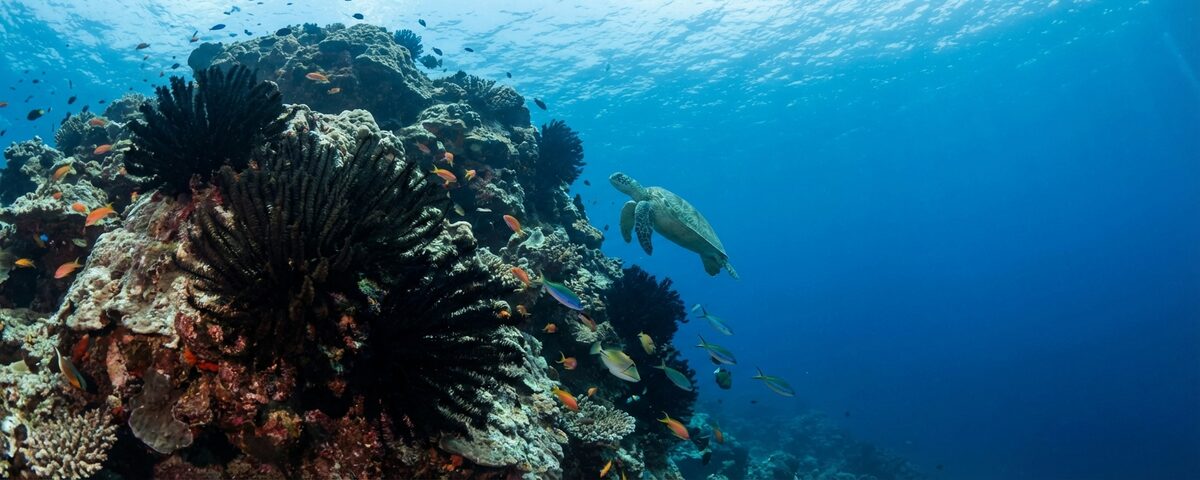
What draws divers back to West Ridge is the black coral. Massive antipatharian bushes grow from the wall between 15 and 35 metres, some reaching well over two metres across. These are old organisms, decades in the making, and they thrive here because the western wall catches less of the strong currents that hammer the island's other faces. The gentler conditions let delicate filter feeders establish themselves in ways they cannot elsewhere around Sipadan.
Turtles are the other constant. Both green and hawksbill turtles patrol this stretch of wall in numbers that would make any other dive site in Southeast Asia jealous. They feed on the sponges and soft corals that colonise the wall, and many have resident territories they return to dive after dive. It is entirely normal to count a dozen turtles on a single pass along the ridge, and on a quiet afternoon with few other boats around, they settle into a relaxed indifference to divers that makes for extraordinary close encounters.
The wall itself is vertical in places and gently sloping in others, creating a varied topography that rewards exploration at multiple depth ranges. Shallow sections between 5 and 12 metres host dense hard coral gardens with anemones and their resident clownfish. Mid-range depths of 15 to 25 metres are where the black coral forests and larger pelagics concentrate. Below 25 metres, the wall steepens dramatically and the blue takes over, with grey reef sharks and the occasional whitetip cruising the drop-off edge.
Marine Life at West Ridge
Green turtles dominate the scene at West Ridge. They rest on ledges, feed on sponges growing from the wall face, and cruise past divers with the slow confidence of animals that have never been hunted here. Hawksbill turtles are less numerous but reliably present, usually spotted closer to the wall where they pick at encrusting organisms with their pointed beaks. Counting 10 to 15 turtles on a single dive is standard rather than exceptional.
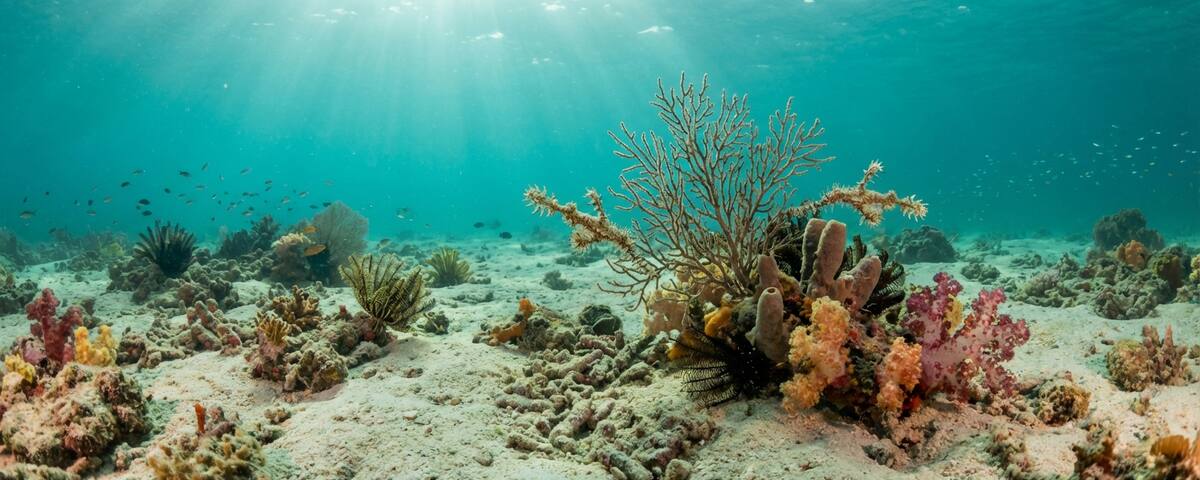
The black coral formations are the site's signature feature. Antipatharian bushes grow in dense clusters between 15 and 35 metres, their dark branching structures hosting communities of longnose hawkfish, gobies, and juvenile damselfish that shelter among the branches. Some individual colonies measure over two metres in diameter, and they create a striking visual contrast against the blue water beyond the wall.
Groupers are resident along the ridge. Potato cod (giant groupers) patrol the mid-depths, sometimes approaching divers with characteristic curiosity. Napoleon wrasse appear regularly, their bulbous foreheads unmistakable as they glide along the wall edge. These are large, confident fish that have grown accustomed to divers over years of protection.
Reef sharks work the deeper sections. Grey reef sharks cruise the wall below 20 metres, and whitetip reef sharks rest in crevices and on sandy ledges. Neither species is aggressive towards divers, though the greys can be assertive about personal space if you drift too close.
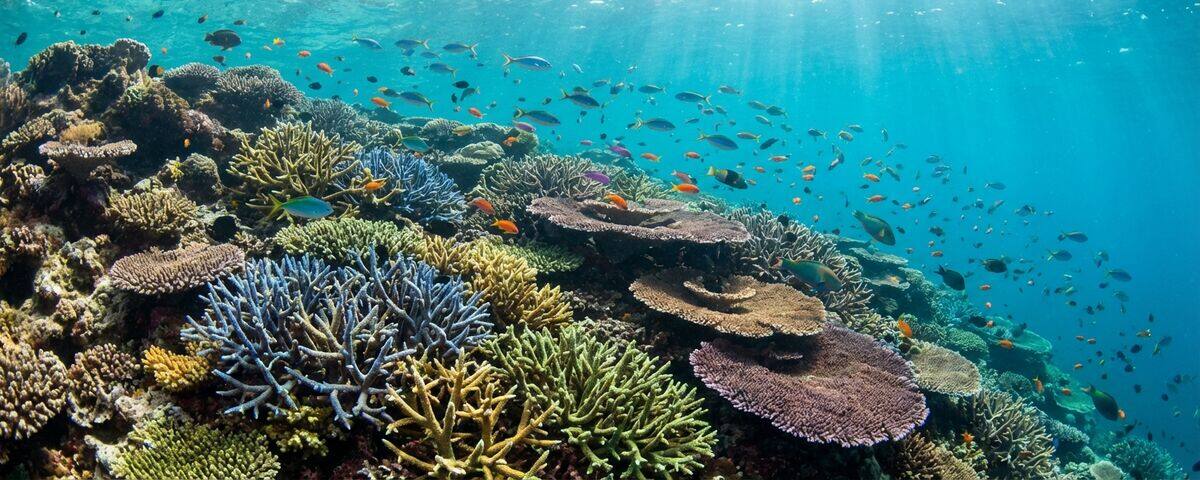
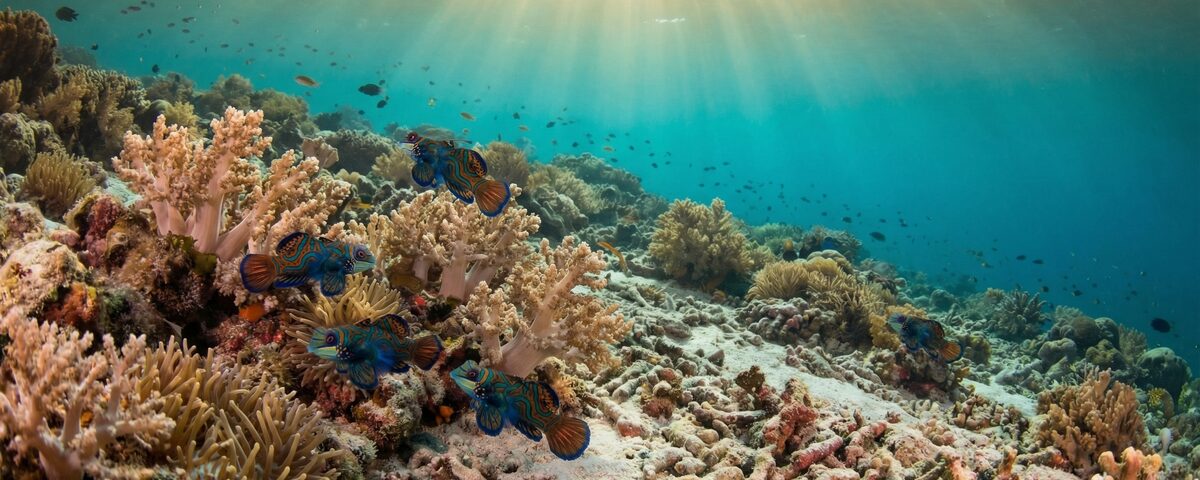
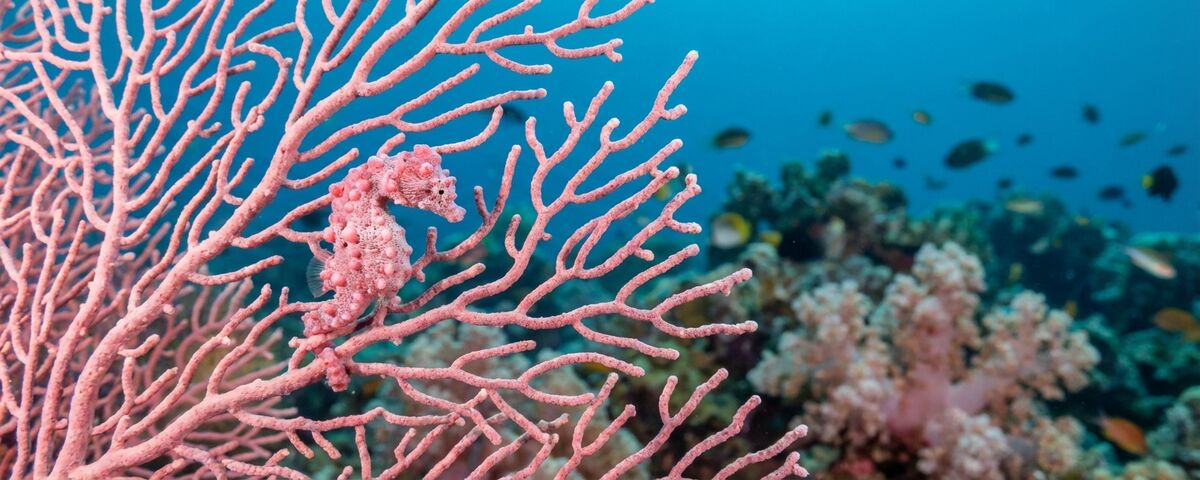
The shallower reef flat between 5 and 12 metres teems with smaller reef life. Clark's anemonefish and false clown anemonefish occupy their host anemones throughout. Oriental sweetlips shelter under table corals during the day. Butterflyfish, angelfish, and moorish idols add colour to the hard coral gardens. For macro enthusiasts willing to look closely, nudibranchs and flatworms inhabit the crevices, and leaf scorpionfish occasionally turn up wedged between coral heads.
Bumphead parrotfish sometimes pass through in groups, their heavy jaw plates audible underwater as they crunch coral. Schools of fusiliers stream along the wall edge in silver ribbons, attracting the attention of hunting trevally. On lucky dives, a chevron barracuda school drifts through from an adjacent site, turning the water into a swirling column of silver.
Dive Conditions
West Ridge sits on Sipadan's leeward side, which generally translates to calmer conditions than the island's northern and eastern sites. Current runs gentle to moderate on most days, with occasional stronger surges during spring tides. The flow typically moves north to south along the wall, making drift diving the natural approach. Operators drop divers at the northern end and collect them from the southern exit point, though the direction reverses with the tide.
The wall begins at a reef flat between 3 and 5 metres deep, dropping to a sloping face from 5 to 15 metres before steepening into a true vertical wall. Maximum recreational diving depths reach 30 metres, though the wall itself continues far beyond that into the abyss. Most of the interesting marine life concentrates between 8 and 25 metres, so there is no need to go deep to have an excellent dive.
Visibility ranges from 15 to 30 metres depending on conditions. The clearest water tends to arrive between April and June and again in September to November, when the Celebes Sea settles between monsoon transitions. Plankton blooms can reduce visibility to 15 metres during transitional periods, though these same blooms bring manta rays and whale sharks into the broader Sipadan area.
Water temperature holds between 26 and 30 degrees Celsius year round. A 3mm wetsuit is sufficient for most divers. Those who run cold or plan multiple dives per day might prefer a 5mm suit, particularly during the slightly cooler months of December to February.
Surface conditions on the western side of the island are typically calm, with the island itself providing shelter from prevailing easterly winds. This makes entries and exits straightforward, and it is one of the reasons operators favour West Ridge for afternoon dives when wind chop builds on the eastern sites.
Dive time averages 45 to 55 minutes depending on depth profile and air consumption. The gentle current and moderate depths allow for relaxed, unhurried diving that suits photography and observation.
⚓ Divemaster Notes
West Ridge is my go-to for the afternoon dive slot. After a morning of fighting current at Barracuda Point or getting tumbled around at South Point, my divers want something more relaxed, and this site delivers without sacrificing quality. The west-facing wall catches beautiful afternoon light that filters down through the water and illuminates the black coral forests in ways the morning sun never quite manages.
I brief my groups to stay between 12 and 22 metres for the bulk of the dive. That depth band covers the black coral gardens, the turtle resting stations, and the best chance of spotting the resident potato cod and Napoleon wrasse. Going deeper than 25 metres is rarely necessary unless you specifically want to watch the grey reef sharks, which tend to patrol below the recreational zone.
The drift is usually gentle enough that you can stop, hover, and spend time with individual animals. This is one of the few Sipadan sites where you can actually photograph a turtle without it being swept away (or you being swept away from it) by the current. I tell photographers to find a turtle feeding on the wall, settle in about two metres away, and wait. The turtle will ignore you completely after a minute or two, and you get the kind of relaxed, natural behaviour shots that are impossible at the high-current sites.
One thing I always watch for: the wall undercuts in several places between 15 and 20 metres, creating overhangs where whitetip sharks like to rest. These overhangs also attract sleeping turtles, and on more than one occasion I have found both species sharing the same ledge. The trick is to approach from below and look up into the overhang rather than peering over the edge from above, which tends to spook everything.
My best sighting here was a giant grouper, easily 1.5 metres long, that materialised from behind a black coral bush at 18 metres and swam directly at my group. It passed within arm's reach of three divers before disappearing back into the blue. The thing about West Ridge is that it rewards patience and slow movement. Rush through it and you will have a pleasant wall dive. Take your time and you will understand why the divemasters who have been here for years still get excited about this site.
How to Get to West Ridge
Sipadan Island is accessed exclusively by boat from Mabul Island or Semporna on the east coast of Sabah, Malaysian Borneo. No accommodation exists on Sipadan itself; the island was cleared of all resorts in 2004 to protect the marine environment.
Most divers base themselves on Mabul Island, a 15-minute boat ride from Sipadan. Mabul offers a range of accommodation from budget lodges to high-end water village resorts. The boat transfer from Semporna to Mabul takes approximately 45 minutes by speedboat.
Semporna is the mainland gateway. Tawau Airport (TWU) is the nearest airport, receiving daily flights from Kota Kinabalu (50 minutes) and Kuala Lumpur (2 hours 40 minutes via AirAsia and Malaysia Airlines). From Tawau Airport, Semporna is a 90-minute drive by road, with transfers arranged through dive resorts or by taxi.
The permit system is the critical factor. Sabah Parks issues a limited number of daily diving permits for Sipadan, currently around 176 permits shared among approximately 24 licensed operators. Each permit allows one diver one day of diving at Sipadan, with a maximum of three dives per permit day. Permits must be arranged through a licensed dive operator; independent divers cannot obtain them directly.
Booking well in advance is essential. During peak season (April to October), permits can sell out months ahead. Staying at a Mabul or Kapalai resort that holds permit allocations significantly improves your chances. Some operators guarantee a minimum number of Sipadan days within a multi-day dive package.
Gear Recommendations
A 3mm wetsuit is standard for Sipadan's warm waters, with a 5mm option for divers planning three or more dives per day. Reef hook not required here, as currents are generally manageable, though carrying one is sensible practice anywhere around Sipadan. SMB and reel are mandatory for safety stops in open water. Wide-angle camera setup recommended for the wall vistas, turtle encounters, and black coral forests. A macro lens is worthwhile too, as the site's calmer conditions allow time for nudibranch hunting along the wall. Nitrox strongly recommended to extend bottom time in the 15 to 25 metre range where the best marine life concentrates. Torch useful for looking into overhangs and illuminating the true colours of the black coral and sponges, which appear washed out without artificial light at depth.
Recommended Dive Operators
Scuba Junkie runs operations from both Semporna and Mabul Island with a strong reputation for professional guiding and good permit allocations. Their Mabul Beach Resort provides a comfortable mid-range base. Seaventures Dive Rig is a converted oil rig platform off Mabul that offers a unique stay with reliable Sipadan access and an excellent house reef for between-permit days. Sipadan Water Village is the premium option on Mabul, a water bungalow resort with its own jetty and strong permit allocation. SMART (Sipadan Mabul Resort) operates from the eastern end of Mabul with a focus on serious divers. Borneo Divers, one of the original operators in the area since the 1980s, runs from their own island resort on Mabul with deep experience guiding Sipadan sites. Uncle Chang's in Semporna offers a budget-friendly option with shared accommodation and day trips, though Sipadan permit availability can be less certain than with the island-based resorts.
Liveaboard Options
Sipadan is not a typical liveaboard destination. The permit system is designed around resort-based operators on Mabul and Kapalai islands, and most liveaboards operating in the Celebes Sea focus on other areas. However, several liveaboards include Sipadan in their Borneo itineraries. The Celebes Explorer runs seasonal trips through the Sipadan area as part of broader Sabah routes. Some operators based out of the Philippines also cross the Celebes Sea to include Sipadan on extended voyages. The most reliable way to dive West Ridge and other Sipadan sites remains booking through a Mabul-based resort with confirmed permit allocations. A typical dive package runs 3 to 5 nights on Mabul with 1 to 3 days of Sipadan permits included, supplemented by excellent diving at Mabul and Kapalai on non-permit days.