Kuda Haa Dive Site
North Malé Atoll, Maldives · Near Malé
Overview
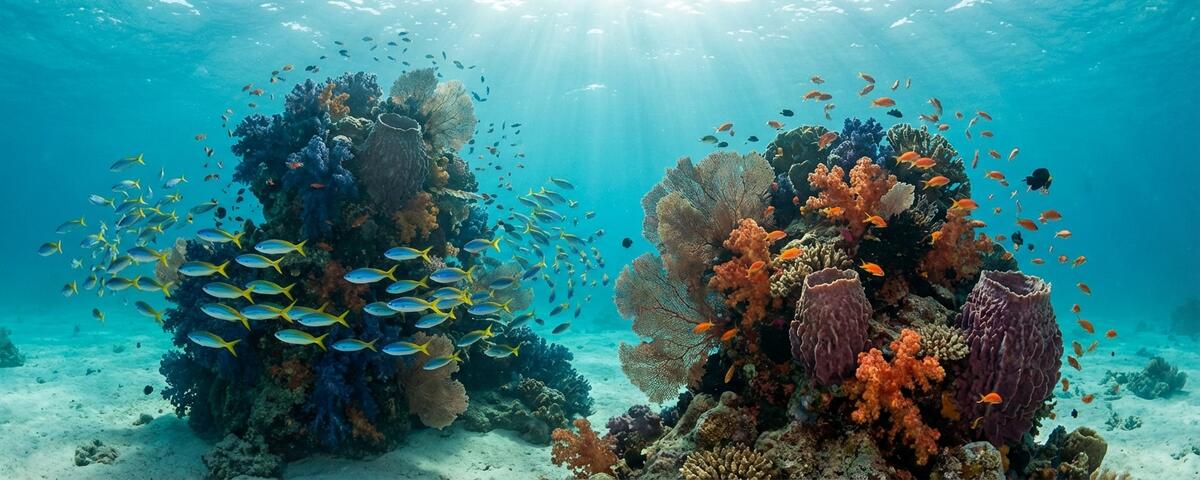
Kuda Haa is one of those dive sites that earns its reputation through sheer density of life rather than any single headline species. Sitting in the southwestern reaches of North Malé Atoll, this protected marine area consists of two connected submerged pinnacles that rise from the sandy atoll floor like a camel's humps, and the quantity of marine life packed onto and around these formations is staggering. Divers who've been here call it "fish soup," which sounds like lazy shorthand until you drop below the surface and realise it's probably the most accurate description anyone could give.
The larger thila tops out at around 6 metres below the surface, shallow enough that both pinnacles are visible from the boat on calm days. The smaller one begins deeper, around 14 metres, and both slope away to sand at 30 metres or so. Between them runs a ridge that connects the two formations, creating a natural amphitheatre where currents funnel nutrients and the fish congregate in absurd numbers. Fairy basslets cloud the water in shimmering purple and orange. Fusiliers stream past in schools so thick they block the light.
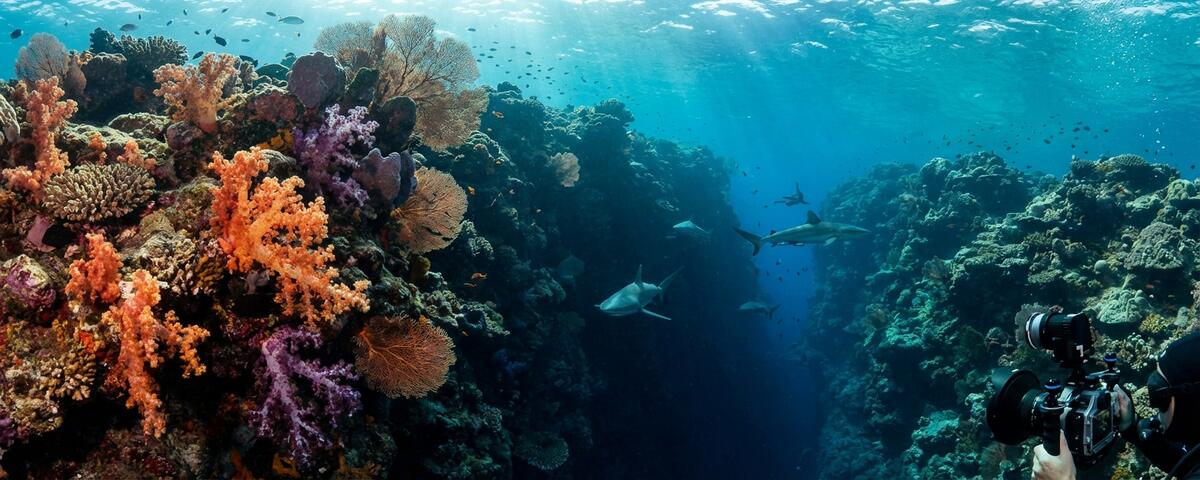
What makes Kuda Haa special is the combination of macro and reef fish abundance in a relatively compact space. The coral coverage is excellent: hard corals in healthy colonies across the shallower tops, soft corals and sea fans decorating the overhangs and caves that punctuate both pinnacles, and blue and green sponges adding colour to every available surface. It's a site where you could spend an entire dive on a single overhang and still miss things.
The protected marine area designation has paid dividends. Fish here are noticeably less wary than at unprotected sites nearby, and the coral shows none of the anchor damage or bleaching scars you find at more heavily trafficked locations. It helps that Kuda Haa sits roughly an hour's boat ride from Malé, far enough that the day-trip crowd thins out, but close enough that liveaboards and resort boats can reach it without burning half the day in transit.
Current is the variable that makes or breaks a dive here. When conditions are right (light to moderate flow), the site is manageable for competent intermediate divers, though most operators list it as advanced due to the open-water location and the need for blue-water descents. When the current picks up, the exposed position between Giraavaru and the atoll edge means conditions can change quickly. The site rewards patience: pick the right tidal window and Kuda Haa delivers one of the most visually overwhelming dives in the Malé atolls.
Marine Life at Kuda Haa
The fairy basslets are what hit you first. Thousands of them, maybe tens of thousands, swarming the upper reaches of both thilas in shifting clouds of purple, orange, and pink. They're everywhere: tucked into the coral heads, hovering above the reef top, and streaming out from the overhangs in living curtains. Underwater photographers sometimes spend entire dives shooting nothing but basslets here because the density and colour saturation is genuinely unmatched at most other Maldivian sites.
Napoleon wrasses patrol both pinnacles, the big males cruising with that unmistakable slow-motion authority. They're accustomed to divers at Kuda Haa and will often approach within a couple of metres, particularly if you stay still on the ridge between the two thilas. Counts of two or three Napoleons per dive are typical.
The macro life is where Kuda Haa really earns its reputation among serious divers. Nudibranchs in genuine variety: chromodoris, phyllidia, and the occasional spanish dancer on night dives. Leaf fish sit motionless on coral heads, perfectly camouflaged until your guide points them out. Frogfish (usually painted frogfish) turn up regularly, tucked into sponges or perched on coral rubble at the base of the pinnacles. Mantis shrimp peer from burrows in the sand patches between the two formations.
Bigfin reef squid hover in small groups in the water column above the ridge. Scorpionfish blend into the reef top so convincingly that you'll swim past three before you learn to spot the pattern. Moray eels occupy the crevices and caves: giant morays, whitemouth morays, and the occasional honeycomb moray with its striking black-and-yellow pattern.
The schooling fish are relentless. Blue-lined snapper in tight formations. Yellowback fusiliers in streams that pour through the gap between the pinnacles. Big-eye trevally in loose hunting packs working the edges. Bluefin trevally occasionally join them, identifiable by the electric blue fins that flash as they turn. Large yellowfin tuna cruise through on the current side, usually at the deeper edges of the site around 25 to 30 metres.
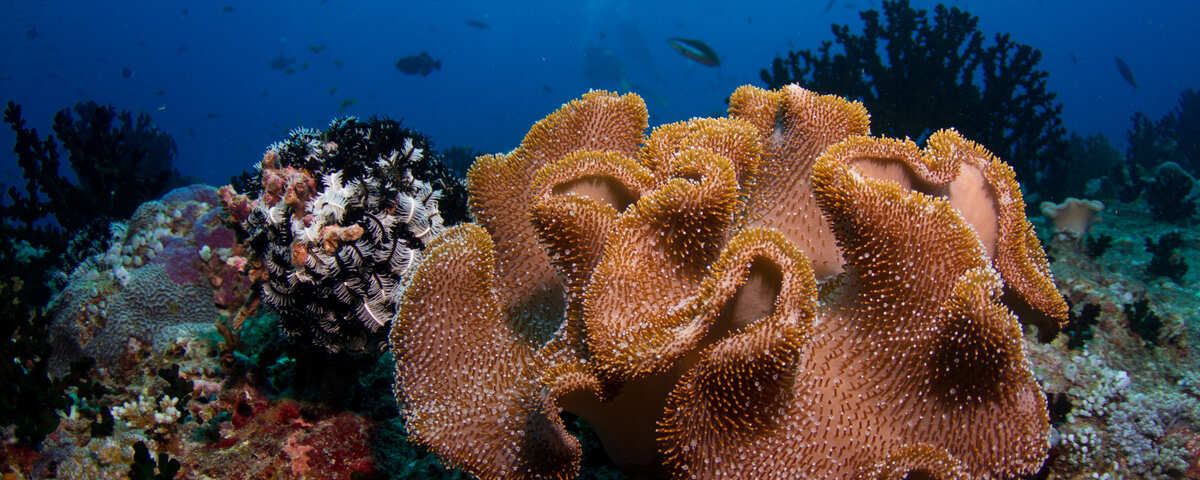
Coral health is outstanding across both pinnacles. The shallower thila supports dense hard coral gardens: branching acropora, massive porites, and plate corals that step down the slopes like natural terracing. The overhangs and caves are dressed in soft corals, sea fans, and tubastrea cup corals that open to feed when the current runs. Black coral bushes grow at the deeper margins of both thilas, their fine branching structure hosting tiny gobies and shrimp that are almost invisible without a macro lens.
On the sandy bottom between and around the pinnacles, garden eels wave in their hundreds. Stingrays occasionally rest on the sand patches. The transition zone between pinnacle and sand is prime territory for jawfish, which hover above their burrows and retreat with theatrical speed when approached.
Dive Conditions
Kuda Haa is an open-water thila dive, which means there's no reef wall to hide behind if conditions turn. The site sits in the channel between Giraavaru and the outer atoll rim, exposed to tidal currents that vary from barely perceptible to genuinely challenging depending on the moon phase and time of day.
The ideal condition is a light incoming current. This brings clean oceanic water across the pinnacles, pushing visibility toward the 20 to 25 metre mark and activating the soft corals and filter feeders. The fish concentrate on the downstream side of the thilas in these conditions, creating the "fish soup" effect the site is famous for. A gentle current also keeps the basslets actively feeding in the water column rather than sheltering in the reef.
Strong current transforms the dive entirely. The exposed position means there's nowhere to shelter, and inexperienced divers can find themselves swept off the pinnacle and into open water. Reef hooks aren't commonly used here (the coral is too delicate and it's a protected area), so the technique is to tuck behind the pinnacle on the lee side and let the current flow past. On very strong current days, competent operators will postpone the dive rather than risk it.
The descent is a blue-water negative entry to the reef top at 6 metres. On calm days this is straightforward, but in any swell or surface current, the approach requires confidence with open-water descents. The boat drops divers upcurrent of the thila, and you need to descend quickly enough to hit the pinnacle rather than drifting over it. Missing the thila means a surface swim back and another attempt, which burns air and patience.
Visibility ranges from 10 metres on poor days (usually during the wet season or after plankton blooms) to 25 metres when the current cooperates. The 15 to 20 metre range is typical. This is slightly less than the headline visibility numbers you'll see for Maldives channel dives, but Kuda Haa's subjects are all close-range, so moderate visibility rarely spoils the dive.
Water temperature sits between 26 and 29 degrees year-round. Most divers wear a 3mm wetsuit. The site is diveable all year, but January through May offers the best combination of calm seas, good visibility, and manageable currents. The southwest monsoon (June to November) brings rougher surface conditions and more variable underwater visibility, though the macro life remains excellent regardless of season.
Surface conditions matter here because the site is a 45 to 60 minute boat ride from Malé in open water. Choppy crossings are common during the wet season, and seasickness-prone divers should medicate before departure. The return journey after a dive in the southwest monsoon can be genuinely unpleasant on a small dhoni.
A surface marker buoy is mandatory. The site has no permanent mooring, and boats need to locate surfacing divers in open water. Deploy your SMB at 5 metres during your safety stop and keep it visible until pickup.
⚓ Divemaster Notes
Kuda Haa is a site I use to gauge a group's skill level early in a trip. The open-water descent sorts the confident divers from the ones who need closer attention, and the current exposure tells me who can handle the more demanding channel dives later in the itinerary.
The briefing needs to cover the negative entry clearly. I position the boat 30 to 40 metres upcurrent of the larger thila and tell everyone: deflate, go down, kick toward the pinnacle. The reef top at 6 metres is your target. If you can't see the reef by 10 metres, look for the basslet cloud. It's visible before the rock is, and it'll guide you in. Anyone who misses the pinnacle entirely surfaces, regroups, and tries again. No shame in it, but it does happen.
I always start on the larger (shallower) thila and work toward the smaller one via the connecting ridge. This puts the deeper section in the middle of the dive when air supply and no-deco time are both still comfortable, and it finishes on the shallower thila for the safety stop. The ridge between the two formations at 15 to 18 metres is where the biggest concentration of fish gathers, and lingering here for 5 to 10 minutes is the highlight of the dive for most guests.
For photographers, and this site attracts a lot of them, I flag three specific zones. First: the basslet clouds on the reef top of the larger thila, best shot from slightly below looking up toward the surface with natural light. Second: the overhangs on the eastern face of the larger thila between 12 and 20 metres, where the soft corals and sea fans make spectacular wide-angle frames. Third: the sand patches at the base for macro, particularly the junction between pinnacle and sand where frogfish, leaf fish, and nudibranchs concentrate.
One thing to emphasise in the briefing: this is a protected marine area. No touching, no gloves, no reef hooks. The coral here is exceptional precisely because it's been protected, and I've seen careless fin kicks do real damage on the shallower sections. Buoyancy control matters more here than at most sites because the interesting stuff starts at 6 metres and extends all the way down. Divers who can't maintain position without grabbing reef shouldn't be at this site yet.
Night diving at Kuda Haa is outstanding but requires confident navigation. The pinnacles are small enough that disorientation is a real risk in the dark. I run a fixed route, clockwise around the larger thila at 12 to 15 metres, and the group stays tight. Spanish dancers come out on night dives, the corals are all extended and feeding, and the sheer volume of invertebrate life that emerges after dark transforms the site into something completely different from its daytime personality.
Air management is important. The open-water location means there's no shallow reef to retreat to if someone runs low. I brief 100 bar for the ascent signal and 50 bar as the hard limit for initiating a direct ascent with SMB. On a typical 50-minute dive, most divers finish with 60 to 80 bar, which is comfortable but doesn't leave huge margins.
How to Get to Kuda Haa
Kuda Haa sits in the southwestern section of North Malé Atoll, roughly 10 kilometres west of Malé city and north of the island of Giraavaru. The GPS coordinates are 4.1255°N, 73.2447°E, though your boat captain won't need them: every dive operator in Malé knows this site.
From Malé, the boat ride takes 45 to 60 minutes depending on the vessel and sea conditions. Most operators depart from the dive centre jetty at their resort or from Malé harbour if you're on a guesthouse-based trip. Liveaboards operating in North Malé Atoll include Kuda Haa on almost every itinerary as a standard site.
Velana International Airport (MLE) is the arrival point for virtually all international visitors. Direct flights connect from Singapore, Colombo, Dubai, Doha, Istanbul, and most major Asian and Middle Eastern hubs. European connections typically route through the Gulf. From the airport, transfers to Malé city take 15 minutes by taxi-ferry or airport ferry.
Resort-based divers staying in North or South Malé Atoll can reach Kuda Haa as a day-trip dive. Resorts on the western side of North Malé Atoll (Anantara Veli, Adaaran Select Hudhuranfushi, Oblu by Atmosphere) have the shortest boat rides, typically 20 to 40 minutes. Resorts on the eastern side add another 20 to 30 minutes of transit.
Guesthouse divers on Malé or nearby local islands (Villingili, Himmafushi, Thulusdhoo) can book Kuda Haa through any of the local dive operators who run regular trips. Prices range from USD 60 to 100 per dive including equipment, depending on the operator and group size.
Liveaboard operators from Malé harbour offer the most convenient access, as Kuda Haa is typically the first or second dive on North Malé Atoll itineraries. The site pairs well with nearby Banana Reef, HP Reef, and the other Malé atoll thilas for a full day of diving in the area.
Gear Recommendations
SMB and reel are mandatory: no permanent mooring means boat pickup in open water, and your surface marker is how the captain finds you. Bring your own if possible; borrowed SMBs have a way of failing at the worst moment. Wide-angle lens is the primary recommendation for this site: the pinnacle silhouettes, basslet clouds, and overhang soft corals all demand wide framing. That said, Kuda Haa is one of the few Maldivian sites where a macro lens genuinely competes for priority. If you have a choice, bring the wide-angle on the first dive and switch to macro for the second. Torch recommended even on day dives for illuminating the overhangs and caves where soft corals and invertebrates concentrate. Nitrox advisable for divers planning extended time on the ridge and deeper thila at 14 to 25 metres; most operators offer it. 3mm wetsuit is standard; 5mm for cold-sensitive divers or multiple dives in a day. No reef hooks. The site is a protected marine area with delicate coral, and operators will (rightly) refuse to let you use one here.
Recommended Dive Operators
Euro-Divers Maldives operates from several resorts in North Malé Atoll and runs regular trips to Kuda Haa. Their guides know the site intimately and time visits around tidal conditions for optimal current. Group sizes stay small, typically 4 to 6 divers, which suits the site's compact layout.
Sub Oceanic Maldives, based at Hilton Maldives Amingiri in North Malé Atoll, has Kuda Haa as one of their closest premium dive sites. The short boat ride means they can time departures precisely to hit the right current window. Their equipment is well-maintained and they offer Nitrox as standard.
Dive Desk Maldives runs trips from Malé for guesthouse-based divers and independent travellers. They know the North Malé sites thoroughly and their pricing is competitive compared to resort-based operators. Kuda Haa is one of their flagship offerings and they visit it multiple times per week during peak season.
Macana Maldives operates one of the most popular liveaboard fleets in the country, with several vessels running North Malé itineraries. Kuda Haa features on most of their short-trip routes departing from Malé harbour. The guides carry a good understanding of the macro life and can point out the frogfish and leaf fish that less experienced eyes miss.
Scubaspa Maldives combines luxury spa facilities with serious diving on their liveaboard vessels. Their North Malé routes include Kuda Haa, and the smaller diver groups (the boats carry spa guests and divers) mean less crowding on the pinnacle.
Liveaboard Options
Kuda Haa is a standard stop on almost every liveaboard itinerary operating in the Malé atolls, which makes it one of the most accessible thila dives in the Maldives. Macana Maldives runs several vessels on North Malé routes with Kuda Haa as a regular fixture on short 3 to 5-night trips. Scubaspa Maldives offers a premium experience combining dive trips with onboard spa services; their North Malé routes visit Kuda Haa alongside HP Reef and Banana Reef. Emperor Maldives (Emperor Serenity, Emperor Voyager) includes Kuda Haa on their Malé atoll circuits, often as a warm-up dive before heading to more current-exposed sites. Budget liveaboards departing Malé harbour typically price at USD 150 to 250 per night; mid-range vessels run USD 250 to 400; premium operators like Scubaspa and Four Seasons Explorer push above USD 500 per night. Most North Malé itineraries are 3 to 7 nights, with Kuda Haa appearing on the first or second day. Peak season bookings (January to April) should be made 2 to 4 months ahead.