Secret Bay Dive Site
Anilao (Batangas), Philippines · Near Anilao
Overview
Secret Bay is a black sand muck diving site that looks entirely unremarkable from the surface: a small, sheltered bay with dark volcanic sand and some fishing boats at anchor. Underwater, it's one of the most productive critter hunting grounds in the Philippines, home to species that macro photographers cross oceans to find.
Muck diving isn't about pretty reefs or big animals. It's about the weird, the wonderful, and the camouflaged. The dark volcanic sand at Secret Bay provides habitat for creatures that have evolved to be invisible: frogfish that look like rocks, octopus that match the colour and texture of the substrate, seahorses clinging to bits of rope, and nudibranchs that eat hydroids while displaying colours that seem designed by an artist with no sense of restraint.
The site is shallow, calm, and accessible to divers of all levels, which is part of its appeal. The deepest useful area is around 15 metres, and most of the interesting critters live between 5 and 10 metres. There's no current, no swell, no challenge to the diving itself. The challenge is entirely in finding the animals, which is why a good guide makes the difference between a boring sand dive and a world-class macro experience.
Anilao pioneered muck diving in the Philippines, and Secret Bay is one of the sites that started it all. The sandy substrate might look like nothing, but in terms of species diversity per square metre, few places on earth can compete with what lives in this unassuming bay.
The distinction between muck diving and reef diving is fundamentally about what you're looking at and how you find it. Reef diving is landscape-scale: you see the reef, the fish, the colours, the structure. Muck diving is detective work at centimetre scale: you search the featureless substrate for animals that have evolved specifically to be invisible. The reward is proportional to the effort, and the effort at Secret Bay is rewarded more consistently than at almost any muck site in Southeast Asia.
Marine Life at Secret Bay
The star attractions rotate seasonally, but the core cast is reliably present. Frogfish of multiple species are found on the sand, on debris, and clinging to rope and fishing line. Painted frogfish, warty frogfish, and the tiny juvenile frogfish (some smaller than a fingernail) are all documented here. Their camouflage is so effective that you can be staring directly at one and not see it until the guide points at the exact spot.
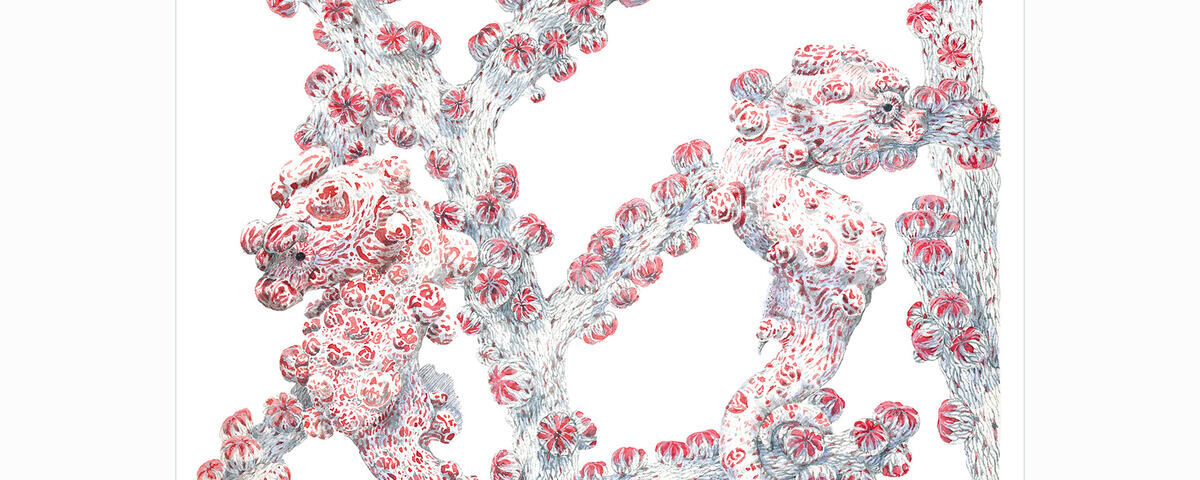
Seahorses are present, with the common seahorse and thorny seahorse both found on the site. Pygmy seahorses inhabit whatever sparse gorgonian growth is present. Blue-ringed octopus (highly venomous; observe from safe distance) appears regularly, usually partly buried in the sand. Wonderpus and mimic octopus are the high-value targets: bizarre, intelligent animals that can change their appearance to mimic other species.
Flamboyant cuttlefish are found here, walking across the sand on their lower arms with their skin flashing in psychedelic colour patterns. These small cuttlefish are one of the most sought-after critter sightings in the Indo-Pacific, and Secret Bay is one of the most reliable locations for finding them.
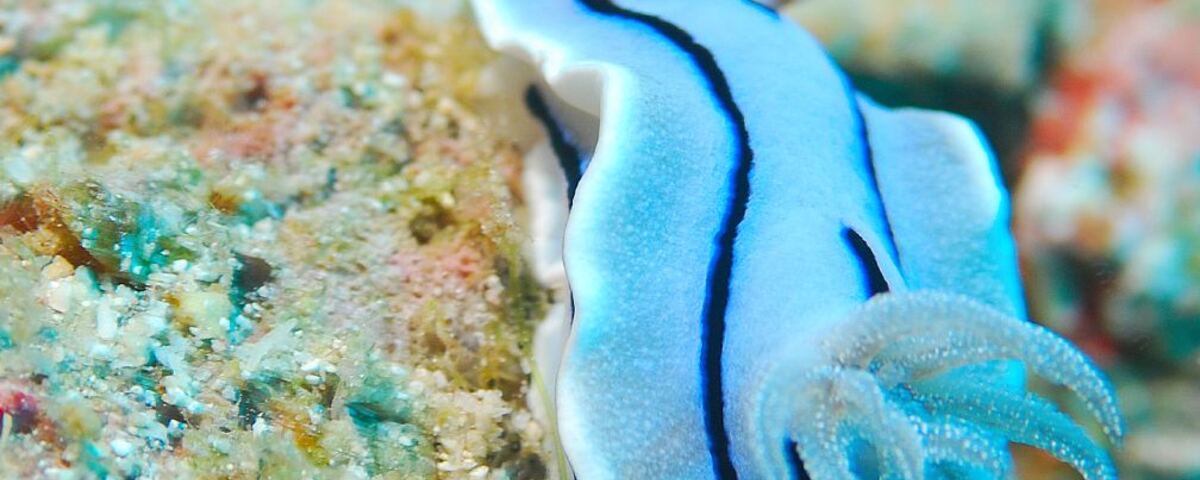
Snake eels burrow in the sand with just their heads visible. Mantis shrimp peer from their burrows with their distinctive stalked eyes. Stargazers bury themselves face-up in the sand, waiting to ambush passing prey. Ghost pipefish appear seasonally. Various species of nudibranch crawl on the sand and on whatever hard substrate is available.
The honest assessment: if you're not interested in macro life, this dive will bore you. There's no reef, no schooling fish, no dramatic topography. It's a flat sand bottom with stuff hiding in it. For the people who appreciate that, it's paradise.
The bobtail squid at Secret Bay deserves special mention. These tiny cephalopods (2 to 3 centimetres) bury themselves in the sand during the day and emerge at night to hunt. Their iridescent colouring and comically oversized eyes make them one of the most endearing critter subjects in Anilao. They're common at Secret Bay during night dives, usually found in the first 10 metres of depth on the sand flats.
Dive Conditions
Secret Bay is as easy as diving gets. The bay is sheltered from wave action, there's no current, visibility is limited but stable (3 to 10 metres, which is normal for muck sites), and the maximum useful depth is about 15 metres. Water temperature ranges from 25 to 30 degrees.
The dark sand reduces visibility compared to clear-water sites, but this is the nature of muck diving. You're not looking at distant vistas; you're examining the sand within arm's reach with a magnifying glass mentality. The low visibility is irrelevant to the experience.
Entry can be from shore (wade in over the sand) or by banca from nearby resorts. Shore entry is common for night dives. The site is diveable year-round, with no significant seasonal variation in critter availability, though some species (ghost pipefish, for example) have seasonal peaks.
Dive times of 70 to 90 minutes are standard at muck sites. The shallow depth, no current, and warm water make extended bottom times safe and comfortable. Air consumption is low because you're moving slowly and breathing calmly (or should be).
The dark sand substrate at Secret Bay affects camera settings significantly. The low reflectivity of volcanic sand means your camera's metering will tend to overexpose, producing washed-out images. Manual exposure settings with reduced flash power produce more accurate results. Test your settings on the sand before approaching your first critter to avoid blown-out shots of rare subjects.
For non-photographers, the muck diving experience at Secret Bay requires a mental shift. Instead of scanning the reef for large, obvious marine life, you're scanning the sand for small, camouflaged creatures. It's a different skill set from reef diving, closer to bird-watching than whale-watching. Once you develop 'muck eyes', you'll see things you never noticed before, both here and at every other dive site you visit afterwards.
⚓ Divemaster Notes
Secret Bay is where I separate the photographers from the divers. This site rewards patience, observation, and the ability to hover motionless over a patch of sand for ten minutes. If you can do that, the sand comes alive. If you can't, it's just sand.
Guide quality is the single most important factor at muck sites. A good guide has mental maps of where each resident creature lives, knows which species are currently active, and can spot a 1-centimetre frogfish on black sand from 2 metres away. Without a guide, you'll see sand. With a guide, you'll see 20 species in an hour. Choose your operator based on guide reputation, not price.
The flamboyant cuttlefish is the prize sighting at Secret Bay. These animals are small (5 to 8 centimetres), walk along the bottom rather than swimming, and display pulsing colour patterns that are genuinely hypnotic. They're present year-round but seem more active during the early morning and late afternoon. Ask your guide specifically about flamboyant cuttlefish locations.
Buoyancy control is critical at muck sites, and I'm not being polite about it. If you can't hover 30 centimetres above the sand without touching down, you'll destroy the habitat with every fin kick. The silt cloud you create will obliterate visibility for everyone behind you and may bury the very critters you came to see. Practice hovering before you come to Anilao.
Night dives at Secret Bay are exceptional. The critter composition changes completely after dark: Spanish dancers emerge, octopus hunt in the open, bobtail squid appear on the sand, and the entire cast of nocturnal creatures that hide during the day comes out. Some of my best Anilao dives have been night dives at Secret Bay.
I keep a mental map of Secret Bay's critter locations that I update with every dive. The resident frogfish shifts position every few days. The seahorses move seasonally. The octopus territories fluctuate. A good muck diving guide maintains this dynamic map through regular diving and communication with other guides. When I take a group to Secret Bay, I know where at least 10 specific animals are located before we even get in the water.
How to Get to Secret Bay
Secret Bay is located along the Anilao coast, accessible from Anilao dive resorts by banca (5 to 15 minutes) or as a shore dive depending on your base's location. The site is included in most Anilao dive packages.
Anilao is approximately 2.5 to 3 hours by road from Manila. The drive is straightforward on the SLEX and Star Tollway highway system before transitioning to local roads in Batangas province.
Gear Recommendations
Macro lens is mandatory. 60mm or 100mm equivalent, with the 100mm preferred for the smallest subjects. Focus light essential for autofocus in the dark substrate. Dual strobes for macro lighting. 3mm wetsuit sufficient in warm months, 5mm during the cooler amihan season. No SMB needed for shore dives. Torch for night dives.
Recommended Dive Operators
Crystal Blue Resort specialises in muck diving and critter identification, with guides trained to find the smallest and most camouflaged subjects. Aiyanar Beach and Dive Resort offers guided muck dives with macro photography support. Anilao Photo Hotel caters specifically to underwater photographers with camera rooms, rinse tanks, and guides who understand photographic requirements.
Liveaboard Options
Secret Bay is accessed from Anilao's shore-based dive resorts. Liveaboard operations are not part of the Anilao diving model.