Kirby's Rock Dive Site
Anilao (Batangas), Philippines · Near Anilao
Overview
Kirby's Rock is the site Anilao regulars argue about. Some insist it's the best macro dive in Batangas; others save their loyalty for Twin Rocks or Secret Bay. The truth is that Kirby's Rock occupies a sweet spot: more structure than the muck sites, more critters than the reef sites, and a depth profile that rewards patient exploration without demanding advanced skills.
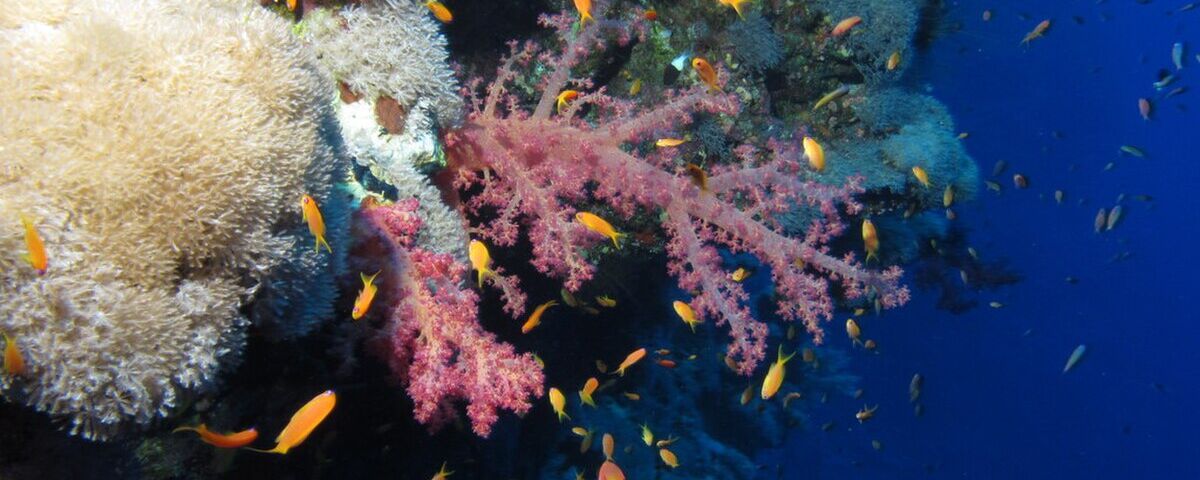
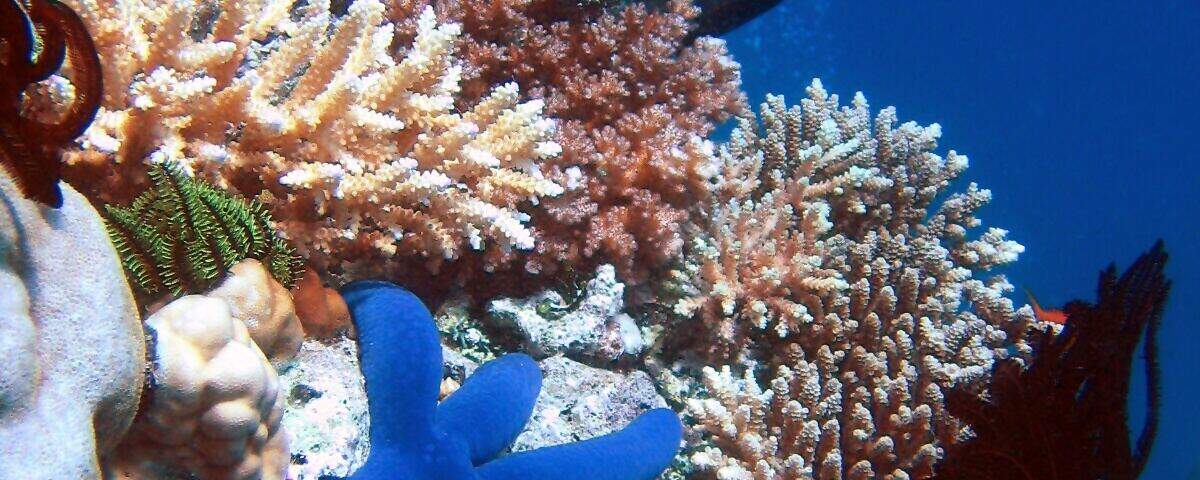
The site centres on a coral-covered rock formation that rises from a sandy slope, surrounded by rubble, sponges, and scattered coral bommies. The rock itself is modest in size, but the diversity of substrate in the surrounding area creates varied micro-habitats within swimming distance. Hard coral transitions to soft coral, which transitions to rubble, which meets sand, and each zone harbours different species.
Kirby's Rock has earned particular fame among underwater photographers for its seahorse population. Multiple species have been documented here, and the guides at the local resorts maintain ongoing knowledge of active seahorse positions. Finding a seahorse without a guide is theoretically possible but practically unlikely; their camouflage is simply too effective for untrained eyes.
The site's moderate depth (most activity between 12 and 22 metres) puts the critter-rich zone within comfortable reach for intermediate divers, while the deeper sand slope offers additional subjects for those with the air and qualification to explore it. The current is typically mild, sheltered by the site's position close to the coast, though it can pick up enough to concentrate feeding activity and bring in schooling fish.
Kirby's Rock exemplifies what makes Anilao special: not dramatic topography or big-animal encounters, but an almost unreasonable concentration of unusual small creatures living in close proximity on a reef that looks unassuming until you start looking carefully.
The site was named after a local divemaster whose ability to find critters on this particular reef became legendary among the Anilao diving community. That personal connection to a specific guide is characteristic of how Anilao dive sites work: the guide network is the living database that makes critter finding possible, and the sites carry the names of the people who first revealed their secrets.
Marine Life at Kirby's Rock
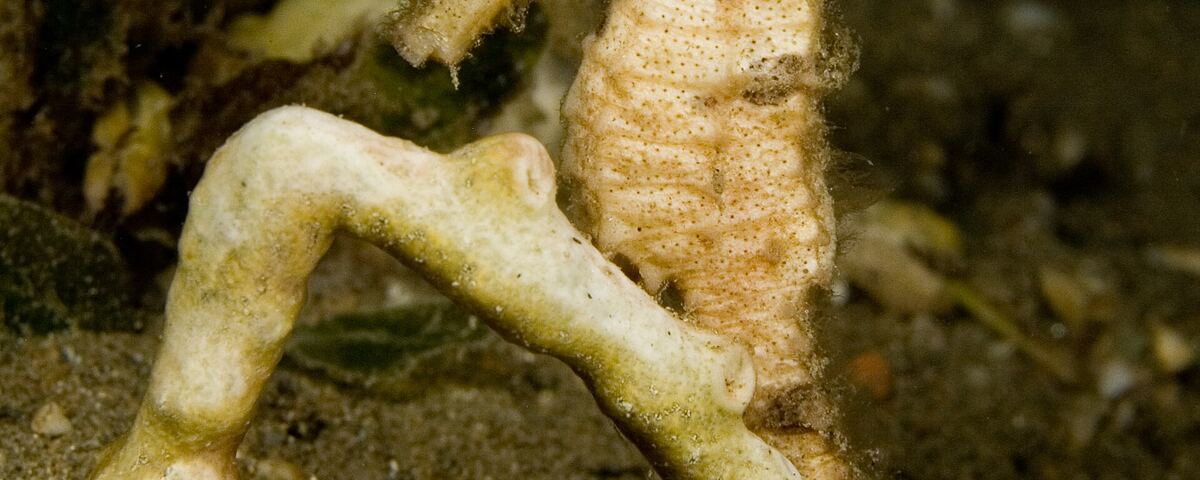
Seahorses are the star attraction. Thorny seahorses (Hippocampus histrix) are the most commonly found species, clinging to coral branches, sponges, or debris with their prehensile tails. Common seahorses (Hippocampus kuda) are also present. Sizes range from tiny juveniles to fully grown adults, and their camouflage matches their chosen perch so precisely that finding them unaided requires knowing exactly what to look for.
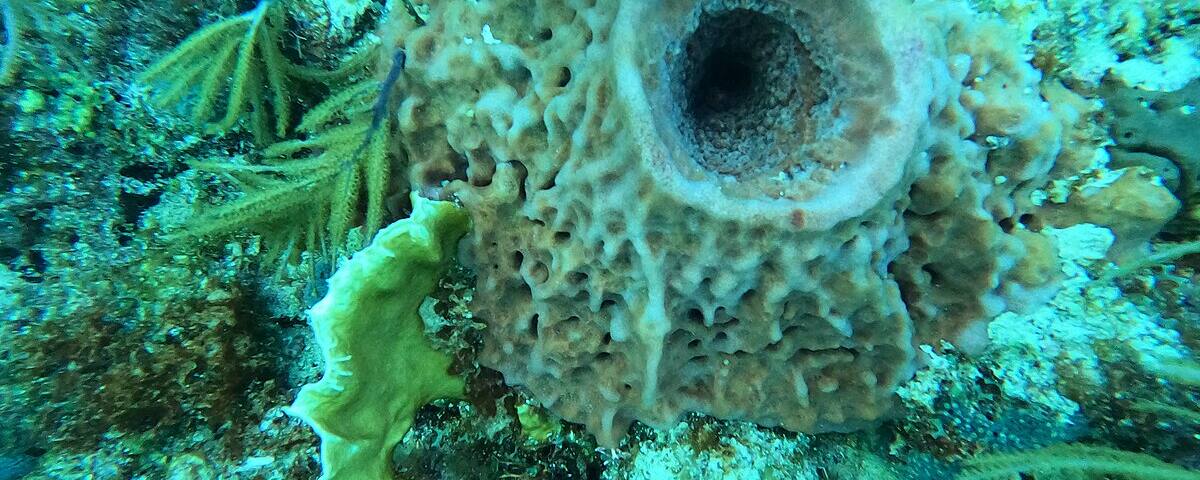
Frogfish are reliably present, though less numerous than at Twin Rocks. Painted and hairy frogfish are the most common species, typically found on sponge surfaces where their colour matches the host. Their sedentary nature means once located, they can be visited on consecutive dives.
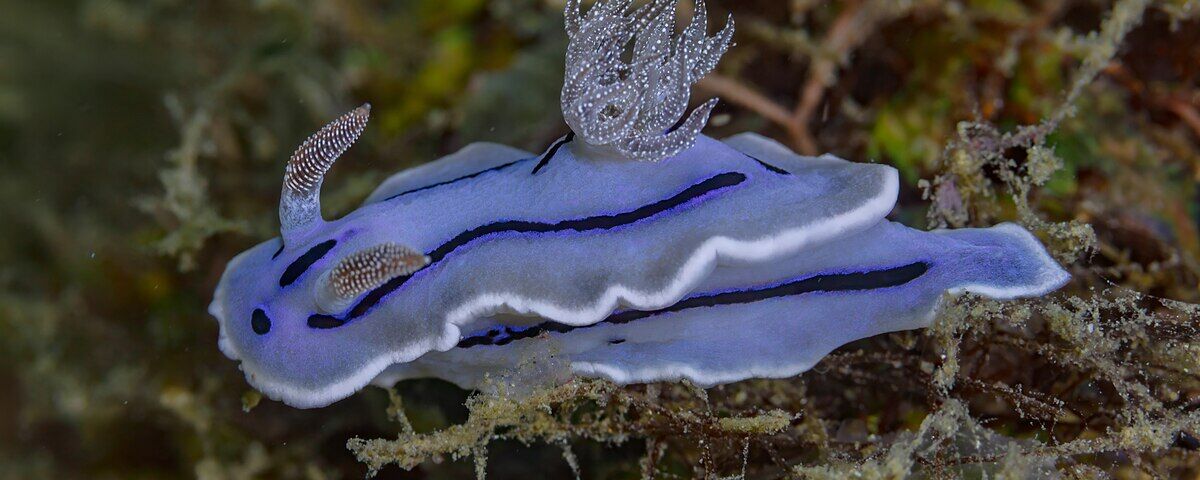
The nudibranch diversity matches Anilao's broader reputation. Chromodoris, Glossodoris, Nembrotha, and Phyllidiidae species are common, with rarer species appearing seasonally. The substrate variety at Kirby's Rock means different nudibranch species in different zones: sponge-associated species on the main rock, rubble-dwellers on the transition zones, and sand-associated species near the deeper edges.
Ghost pipefish appear seasonally, with ornate ghost pipefish being the most commonly found species. Their camouflage against sea fans and crinoids is remarkable, and locating one without a guide pointing directly at it is a genuine achievement. Robust ghost pipefish are also documented here during the cooler months.
The reef structure around the main rock supports clownfish communities, various species of pipefish, and schools of cardinalfish that hover in clouds around the coral heads. Cuttlefish are regular visitors, and the occasional octopus hunts across the rubble zone with its colour-changing display. Mantis shrimp occupy burrows throughout the sandy areas, their colourful eyes peering from the entrances.
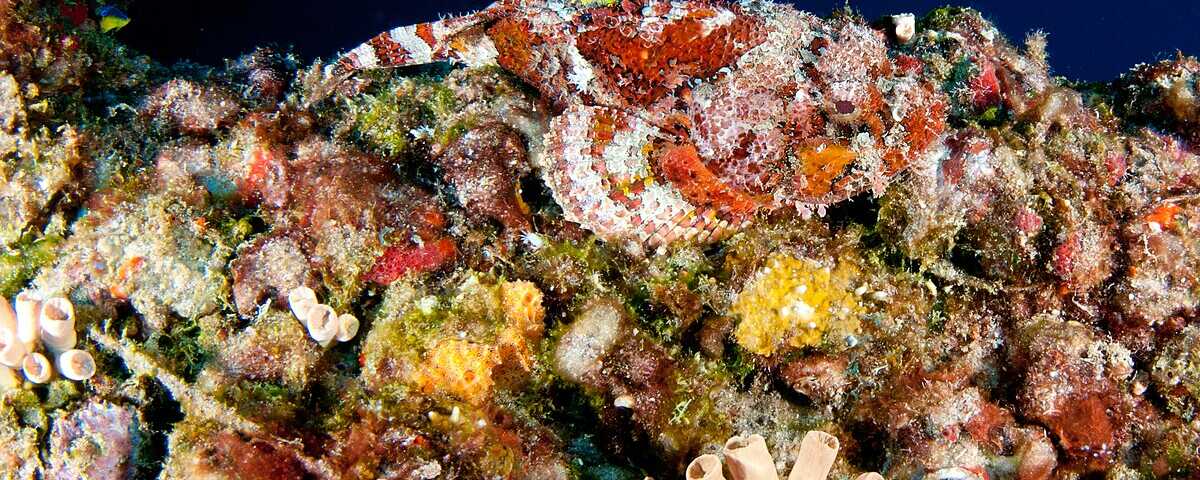
Scorpionfish and stonefish are present and well-camouflaged on the rubble substrate. These are a reminder to watch where you rest your hands (you shouldn't be touching anything anyway, but the point stands). Crocodilefish lie flat on the sand in the deeper sections, nearly invisible until pointed out.
Bobtail squid are occasionally found in the sand areas at Kirby's Rock, particularly during dawn dives. These tiny cephalopods (typically 2 to 3 centimetres) bury themselves in the sand during the day and emerge to hunt at twilight. Under UV light, they fluoresce with an otherworldly glow that has made them a bucket-list photographic subject.
Dive Conditions
Kirby's Rock sits in a moderately sheltered position along the Anilao coast. Current is typically mild, occasionally picking up to moderate during tidal transitions. The increased flow, when it occurs, tends to bring feeding activity and can concentrate schooling fish around the rock structure.
Visibility ranges from 8 to 20 metres, typical of the Anilao area. The mixed substrate can produce localised silt if divers are careless with their fin techniques, reducing visibility in the immediate vicinity. Macro photography working distances are short enough that visibility rarely matters for the primary subjects.
Water temperature is 25 to 29 degrees. A 3mm wetsuit is standard. The depth profile (8 to 28 metres, with most activity between 12 and 22 metres) allows comfortable dive times of 50 to 70 minutes for average air consumers.
Entry is by dive boat from the nearby resorts, with a short ride of 10 to 20 minutes. The site is straightforward to navigate, with the main rock formation as a central reference point. The dive typically follows a circuit around the rock, exploring the different substrate zones before returning.
Intermediate certification is recommended primarily for the depth (the deeper sand zone exceeds 18 metres) rather than any technical difficulty. Divers with solid buoyancy control and macro photography interests will find the site rewarding regardless of certification level.
The transition zones between different substrate types (coral to rubble, rubble to sand) are particularly productive for critter hunting. These edges concentrate species from both habitats and often reveal animals that prefer the boundary between environments. Your guide will work these edges systematically, and the pace of discovery accelerates at each substrate transition.
⚓ Divemaster Notes
Kirby's Rock is my go-to site for seahorse encounters. I maintain a running list of active seahorse positions and update it after every dive. The thorny seahorses tend to stay on the same perch for one to three weeks before relocating, so my data is usually accurate for returning guests.
The trick to photographing seahorses without stressing them is approach speed. Move in at glacier pace, stop when they show signs of turning away, and give them time to settle. A comfortable seahorse will face the camera and pose. A stressed one turns its back and grips its holdfast tighter. The difference in photographic results is night and day.
I plan the dive route based on what the guest wants to see. Seahorse-focused dives head straight to the known positions in the 15 to 20 metre zone. Nudibranch hunts cover the rubble zones around the main rock. Frogfish searches work the sponge-covered sections systematically. Trying to do all three in one dive is possible but produces a rushed experience. Pick your priority.
The deeper sand edge (22 to 28 metres) sometimes produces flamboyant cuttlefish, but this is less reliable here than at dedicated muck sites. If a guest specifically wants flamboyant cuttlefish, I'd recommend Secret Bay or Twin Rocks over Kirby's Rock.
One tip for photographers: the ambient light at 15 to 18 metres produces a pleasant blue background for backlit macro shots when the sun is overhead. Position your subject between you and the surface, expose for the background, and use a single strobe or snoot to light the subject. The blue water backdrop with a sharply lit seahorse in the foreground is the signature Kirby's Rock shot.
The morning dive at Kirby's Rock often produces different critter activity from the afternoon. Certain species (notably the seahorses) are more active in the morning light, while others (like some nudibranch species) are more mobile in the afternoon. If you have the luxury of two dives here, do one morning and one afternoon for the broadest species coverage.
How to Get to Kirby's Rock
Kirby's Rock is a short boat ride from the Anilao resort strip, roughly 10 to 20 minutes depending on the departure point. Anilao is 2.5 to 3 hours by road from Manila, the nearest international gateway.
Resort-based dive operations along the Anilao coast include Kirby's Rock on their standard site rotation. Most visitors book multi-day dive packages that cover Kirby's Rock alongside other macro sites like Twin Rocks and Secret Bay.
Manila's NAIA airport handles flights from across Asia and beyond. The drive to Anilao follows the South Luzon Expressway and Batangas coastal road.
Gear Recommendations
3mm wetsuit. Macro lens is the priority: 100mm equivalent for seahorses and nudibranchs, 60mm for broader context shots. Dual macro strobes with snoot attachment for creative lighting. Focus light essential. Pointer stick for substrate stabilisation. No current management gear needed.
Recommended Dive Operators
Crystal Blue Resort offers experienced guides with current seahorse and frogfish location data. Aiyanar Beach and Dive Resort provides reliable service with photographer-friendly guide ratios. Buceo Anilao specialises in macro photography and runs dedicated critter-finding dives. Club Ocellaris caters to macro enthusiasts with knowledgeable local guides.
Liveaboard Options
Anilao is a shore-based destination. Divers stay at coastal resorts and dive Kirby's Rock as a day trip. No liveaboard operations serve this site specifically.