Anita's Reef Dive Site
Similan Islands, Thailand · Near Khao Lak
Overview
Anita's Reef sprawls across the eastern flank of Koh Ha (Island 5) in the Similan archipelago, and it remains one of the most underrated dives in the entire national park. Most divers fixate on the soft coral spectacles at East of Eden or the granite boulder playgrounds on the western side, which means Anita's Reef often gets treated as a warm-up dive or a second-choice when conditions push boats east. That reputation does the site a disservice. The hard coral coverage here is among the healthiest in the Andaman Sea, and the sheer variety of reef fish patrolling its gentle slope makes it a genuinely rewarding dive on its own terms.
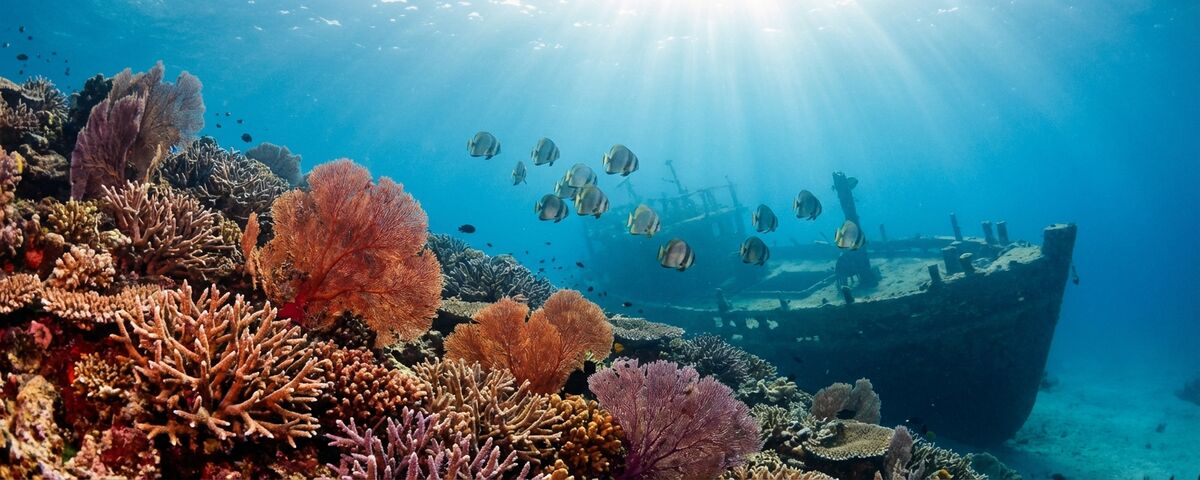
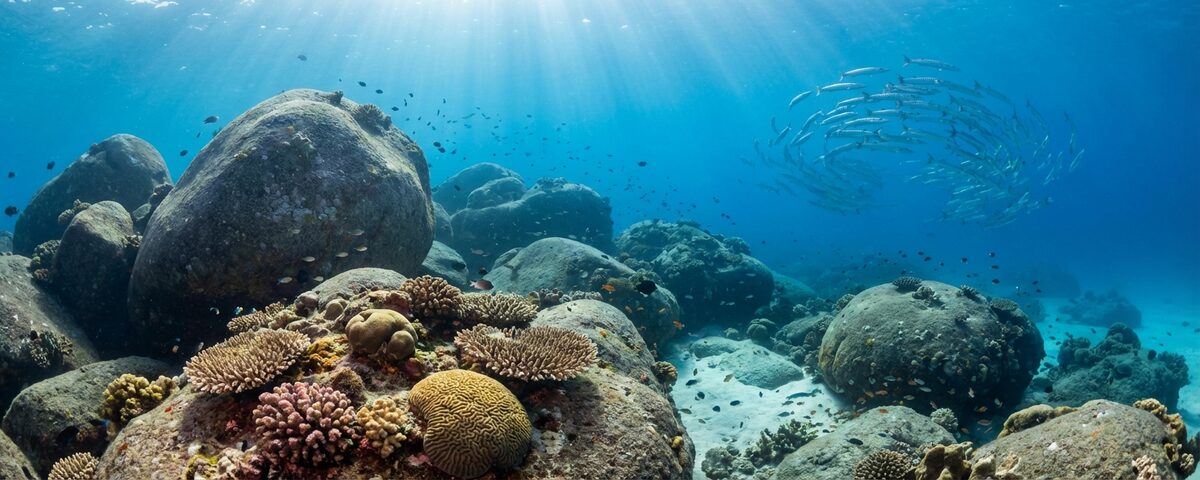
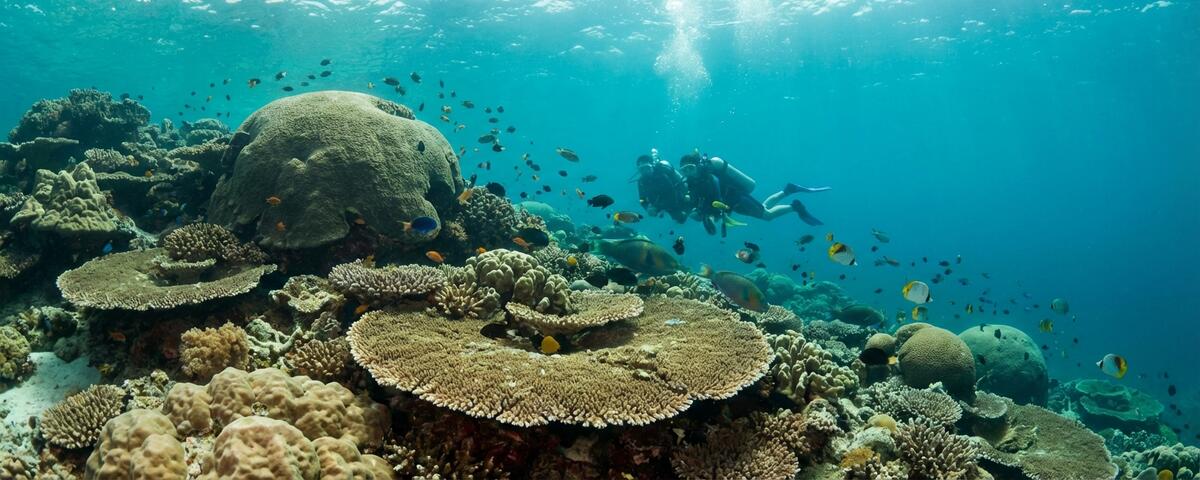
The reef runs roughly north to south along the sheltered coast of Koh Ha, dropping from a shallow coral garden at 5 metres down to a sandy bottom at 28 to 30 metres. Unlike the dramatic bommie structures that define East of Eden further north, Anita's Reef builds its appeal through breadth rather than a single focal point. Massive porites boulder corals anchor the mid-depth sections between 10 and 18 metres, some of them several metres across and centuries old. Table corals fan out in overlapping layers at the shallower depths. Staghorn thickets fill the gaps between the boulders, creating a lattice of habitat that supports an exceptional density of small reef fish.
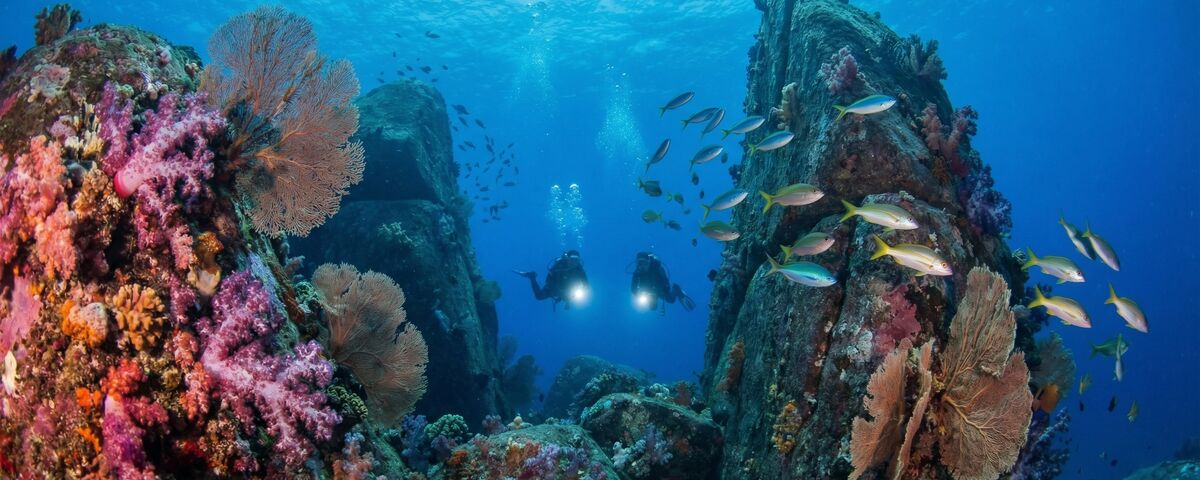
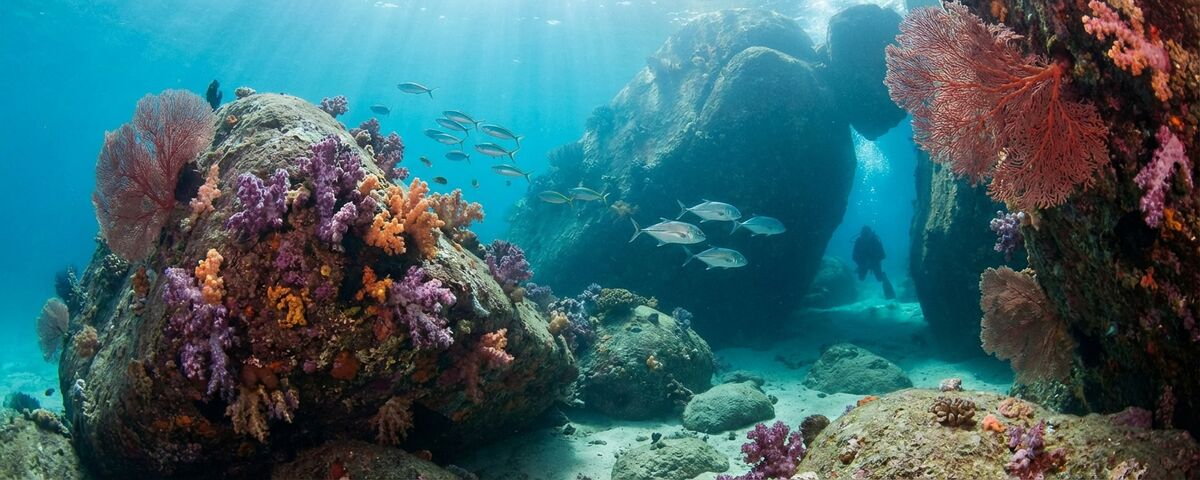
The site takes its name from a Thai dive instructor, Anita, who mapped the reef in the early days of Similan liveaboard diving during the 1990s. She identified the key navigation landmarks along the slope, including a distinctive double-boulder formation at 15 metres that still serves as the primary reference point for guides today. The formation looks like two enormous marbles resting against each other, and the gap between them creates a swim-through just wide enough for one diver at a time.
Protected from the northwest monsoon swell by Koh Ha's landmass, the eastern reef face experiences calmer conditions than any of the western exposure sites. Surge is rare. Currents are typically gentle, occasionally non-existent, which makes this one of the few Similan sites where a newly certified diver can genuinely relax and enjoy the experience rather than fighting to maintain position.
The Similan Islands National Park closes each year from mid-May through mid-October. Anita's Reef is accessible only during the open season, with the best conditions running from January through April when visibility peaks, water temperature stabilises at the upper end of its range, and plankton blooms bring nutrient-rich water that attracts the larger pelagics passing through the archipelago.
Marine Life at Anita's Reef
Hard corals dominate the landscape here and they do it with authority. The boulder corals in the 12 to 18 metre band are the reef's structural foundation, enormous rounded formations covered in Christmas tree worms that retract in a flash when you wave a hand overhead. Some of these porites colonies are estimated at 200 years old or more. Between them, branching corals create dense thickets where damselfish hover in aggressive little territories, charging at anything that comes too close, including divers twenty times their size.
Table corals spread across the shallower sections like stacked dinner plates, and the largest ones span two metres or more. Underneath them, you will find pairs of long-nosed butterflyfish picking at polyps, and the occasional whitetip reef shark resting in the shade during early morning dives. These sharks are not big, typically around a metre in length, but they are reliably present in the 20 to 25 metre range along the reef's southern section.
The swim-through at the double-boulder formation is worth approaching slowly. Glassfish sometimes pack the gap so densely that you cannot see through to the other side. Lionfish hang motionless at the entrance, waiting for the glassfish to drift within striking range. On the outer face of the boulders, look for nudibranchs: chromodoris species in blue and orange, and the occasional larger Spanish dancer tucked into a crevice during daylight hours.
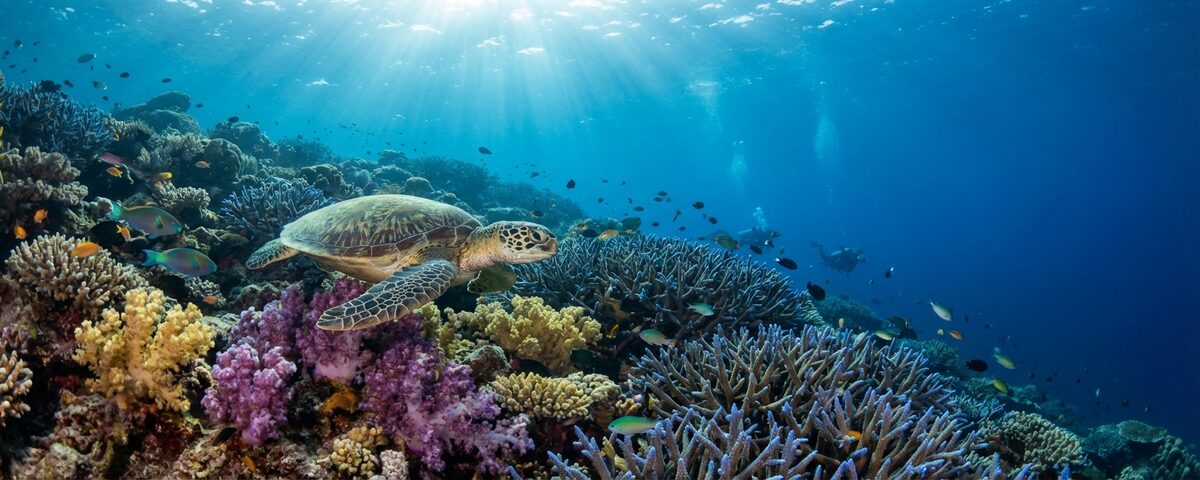
Hawksbill turtles are the most commonly seen large marine animal at Anita's Reef. They feed on the sponges growing between coral heads and show little concern for divers, continuing to munch away while you hover a couple of metres off. Green turtles pass through less frequently but are seen most weeks during peak season. Both species rest on ledges along the reef slope between feeding bouts.
Schooling fish provide constant mid-water activity. Yellowtail barracuda form cylindrical formations above the reef crest, rotating slowly in the current. Bigeye trevally school in the deeper sections, their silver bodies catching the light in a way that makes them visible from 20 metres away. Fusiliers stream past in blue and yellow ribbons. Sergeant majors patrol every surface.
The sandy patches at the reef's base hold blue-spotted ribbontail rays, kuhl's stingrays, and the occasional reef octopus hunting along the coral margin. The octopus encounters are some of the most memorable. Watch one change colour and texture three times in ten seconds as it moves from sand to coral to rubble, and you will understand why people become obsessed with cephalopods.
Macro life rewards patience. Porcelain crabs shelter inside anemones alongside resident Clark's anemonefish. Mantis shrimp occupy burrows in the rubble zones. Banded boxer shrimp wave their white antennae from cleaning stations on the boulder corals. For photographers, the combination of good visibility and calm conditions means you can spend time composing shots without fighting surge or current.
Dive Conditions
Anita's Reef sits in one of the most protected positions in the Similan archipelago. The eastern orientation and Koh Ha's bulk provide a natural barrier against the prevailing northwest swell, so even on days when the western sites are being pounded by waves and surge, conditions here remain manageable.
Currents are typically mild and predictable. The standard pattern is a gentle drift from north to south, which suits the natural layout of the dive. Drop in at the northern end, drift along the reef slope, and the boat picks you up to the south. On perhaps one dive in five, the current reverses to run south to north, and occasionally it disappears entirely, leaving glassy calm water with zero drift. Even at its strongest, the current at Anita's Reef rarely troubles anyone with reasonable buoyancy control. It is not in the same league as the exposed west coast sites.
The reef slopes gradually from 5 metres near shore to around 30 metres where it meets clean sand. Most of the interesting diving happens between 8 and 22 metres, which keeps bottom times generous. An average dive at 15 metres on a standard aluminium tank runs 50 to 60 minutes without pushing any limits. Deeper excursions to the sandy bottom for rays and sharks shorten that, but you can always ascend to the shallow coral garden for an extended safety stop with plenty to look at.
Visibility fluctuates with the season but trends high for the Andaman Sea. Expect 20 to 25 metres as a baseline during the diving season, with regular days hitting 30 metres or more between February and April. Plankton blooms in December and January can temporarily reduce visibility to 15 metres, but these same blooms attract manta rays and whale sharks to the broader Similan area, so the trade-off is worth it.
Water temperature stays between 27 and 29 degrees throughout the season. A 3mm wetsuit handles it comfortably. On multi-dive liveaboard days, some people switch to a 5mm by the third or fourth dive, but that is preference rather than necessity.
Surface conditions on the eastern side are almost always calm enough for comfortable entry and exit. Negative entries are not required. Giant stride from the day boat or liveaboard tender, and the descent to the reef crest takes less than a minute in the clear water.
⚓ Divemaster Notes
Anita's Reef works brilliantly as a first dive for groups that include less experienced divers, and there is no shame in treating it that way. The gentle slope, mild currents, and shallow coral garden for safety stops make it about as forgiving as the Similans get. But do not sleepwalk through the briefing just because the conditions are easy.
The double-boulder swim-through at 15 metres is the site's signature feature. Brief your group on single-file passage and neutral buoyancy before they reach it. The gap is narrow enough that a diver with poor buoyancy control will bounce off the walls and damage coral on both sides. If the glassfish are packed in thick (which they often are), remind divers that pushing through the cloud is fine but flailing arms are not.
Start the dive at the northern end of the reef and work south with the current. This puts the double-boulder formation roughly at the midpoint of the dive, which is where air consumption and attention levels are both still in good shape. The southern section of the reef tends to have more large marine life, so finishing there gives the dive a natural progression from coral garden to big animal encounters.
For photography groups, allow extra time at the table coral formations between 8 and 12 metres. The overlapping plates create layered compositions that photograph exceptionally well in the morning light, and the resident butterflyfish pairs are habituated enough to let a patient photographer get within half a metre. Wide-angle works best for the coral landscapes; switch to macro for the cleaning stations on the boulders.
Watch for titan triggerfish nesting in the sandy patches from January onwards. Their nesting territory extends in a cone shape upwards from the nest, so the standard advice is to swim horizontally away rather than ascending if one becomes aggressive. Brief this clearly for newer divers who may instinctively try to go up.
Night dives at Anita's Reef are underrated. The shallow, calm conditions make it an ideal night dive site for divers with limited night diving experience. Decorator crabs, painted spiny lobsters, and hunting moray eels transform the reef after dark. Spanish dancers occasionally appear on the boulder corals, and sleeping parrotfish in their mucus cocoons are easy to find along the reef crest.
The site pairs naturally with East of Eden for a two-dive morning. Boat repositioning between the two takes only a few minutes, and the contrasting reef types (hard coral garden versus soft coral bommie) give divers variety without redundancy.
How to Get to Anita's Reef
Anita's Reef sits approximately 70 kilometres off the Phang Nga province coast in the Andaman Sea. Khao Lak serves as the primary departure point for all Similan Islands diving.
Day trip speedboats leave from Tab Lamu Navy Pier (Thap Lamu) each morning during the open season, typically departing between 7:30 and 8:30am. The crossing to the Similan Islands takes 60 to 90 minutes depending on sea state. Two-dive day trips including national park fees, equipment rental, lunch, and hotel transfers from Khao Lak run between 3,500 and 5,500 THB. Not every day trip operator includes Anita's Reef specifically on its standard itinerary, as some favour East of Eden and the western granite sites instead. Ask when booking if Koh Ha east side is on the schedule.
Liveaboards provide the most reliable access and the flexibility to dive Anita's Reef at optimal times. Multi-day trips covering the Similan and Surin island chains run two to five nights, with three to four dives per day. Anita's Reef often appears as a first dive of the day or a checkout dive, which means calm conditions and minimal boat traffic. Liveaboard pricing ranges from 10,000 THB for budget two-night trips to 80,000 THB or more for premium four-night itineraries that extend north to Richelieu Rock and Koh Bon.
Getting to Khao Lak starts with a flight to Phuket International Airport, served by AirAsia, Thai Lion Air, Bangkok Airways, Nok Air, and Thai Smile from Bangkok (1 hour 15 minutes). From Phuket Airport, Khao Lak is a 90 minute drive north along Route 4. Most dive operators include airport or hotel transfers in their packages. Independent travellers can arrange minivan transfers (300 to 500 THB) or private taxis (1,500 to 2,500 THB) from Phuket.
National park entrance fees apply to all visitors: 500 THB for foreign adults, 300 THB for children (2024/25 season rates). These fees are typically bundled into day trip and liveaboard pricing, but confirm with your operator before departure.
Gear Recommendations
A 3mm full wetsuit handles the 27 to 29 degree water comfortably for single dives. On liveaboard schedules with three or four dives per day, a 5mm suit prevents the gradual chill that builds across repetitive immersions, particularly on deeper profiles at the southern end of the reef.
Wide-angle photography setups suit the coral landscape compositions and the schooling fish. The table coral formations at 8 to 12 metres with sunbeams filtering through the shallows produce the kind of images that justify carrying a dome port and strobes. Strobes are not optional for colour accuracy below 10 metres; the hard corals and Christmas tree worms need artificial light to show their true colours.
A macro lens earns its keep on the boulder corals. The cleaning stations, nudibranchs, and porcelain crabs provide subjects that a wide-angle lens cannot do justice. If carrying only one setup, go wide. The reef's scale and the coral formations are the story here, and you can always crop into mid-range subjects.
A dive torch improves every dive at Anita's Reef, day or night. Boulder coral crevices hide sleeping fish, boxer shrimp, and moray eels that are invisible without a light beam. For night dives, a primary torch of at least 1000 lumens and a backup are standard. A red filter helps when approaching nocturnal critters that spook under white light.
Reef-safe sunscreen matters here more than at deeper sites. The shallow coral garden sits at 5 to 8 metres, well within the range where chemical sunscreen wash-off accumulates. Mineral zinc oxide formulations protect both the diver and the reef.
Surface marker buoy and reel are good practice, though the calm eastern conditions and mild currents make this less critical than at exposed sites. Some operators require them regardless. If you own your own mask, computer, and suit, bring them. Rental gear from Khao Lak operators is serviceable but your own equipment always fits better and fogs less.
Recommended Dive Operators
Sea Dragon Dive Center has operated from Khao Lak for over two decades, running both day trips and a fleet of liveaboard vessels. Their guides know every boulder and swim-through on Anita's Reef from thousands of repetitions. PADI 5 Star IDC Centre with instruction available in English, German, and Thai. Day trips and custom liveaboard itineraries that can emphasise specific sites on request.
Wicked Diving combines Similan diving with genuine marine conservation work. Their liveaboard trips run smaller groups than most competitors, which translates to more space on the reef and less fin damage to the coral. Guides carry slates with species identification charts and actively point out the macro life that less attentive operations swim past. A good choice for photographers and divers who want more from a Similan trip than a tick on a list.
Similan Dive Center is a long-established Khao Lak operation with experienced Thai and international dive staff. They run daily departures during the season and offer PADI and SSI courses from Open Water through Divemaster, with certification dives conducted at Similan sites including Anita's Reef. Reliable equipment maintenance and a straightforward approach to trip logistics.
The Manta Queen fleet operates multiple liveaboard vessels at different price points from Tab Lamu pier. Manta Queen 2 covers the budget end, while Manta Queen 3 and 6 offer more cabin space and comfort. All vessels include the standard Similan sites on their routes. The fleet's volume means they run consistently throughout the season, even when smaller operators cancel for low numbers.
Khao Lak Explorer runs a well-maintained speedboat for day trips and coordinates with several liveaboard vessels for longer itineraries. Their guides have a reputation for adapting dive plans to current conditions rather than sticking rigidly to a preset route, which increases the chances of diving Anita's Reef when conditions there are optimal.
Liveaboard Options
The Similan Islands are Thailand's flagship liveaboard destination, and virtually every vessel operating from Khao Lak or Tab Lamu pier passes Anita's Reef on its itinerary. Liveaboard access means early morning dives before day trip boats arrive and the option for night dives on the site, both of which transform the experience.
The Manta Queen fleet provides the broadest range of pricing and trip lengths. Manta Queen 2 runs budget two-night Similan trips from around 10,000 to 15,000 THB, covering the core island sites including Koh Ha's east side. Manta Queen 3 and 6 step up in comfort and cabin space for 15,000 to 25,000 THB on similar routes. All vessels carry experienced guides who know the Similan sites from years of repetition.
MV Giamani is a well-maintained sailing vessel that prioritises small group sizes and a slower pace. Their four-night itineraries cover both Similan and Surin Islands, reaching Richelieu Rock, Koh Bon, and Koh Tachai alongside the core Similan sites. Pricing runs 40,000 to 60,000 THB depending on cabin, but the atmosphere and attention to detail justify the premium for divers who want more than a production-line trip.
MV Sawasdee Fasai and MV Pawara operate as mid-range to premium steel-hulled liveaboards with air-conditioned cabins and full camera facilities including rinse tanks and charging stations. Four-night routes from the Similans north to Surin and Richelieu Rock run 30,000 to 55,000 THB. Both vessels have solid reputations for safety and crew quality.
The Junk offers something different: a converted traditional wooden sailing vessel with genuine character. The cabins are not the most spacious, but the crew's knowledge of every Similan site runs deep, and the ambiance of diving from a wooden boat in the Andaman Sea appeals to a certain type of diver. Two and four-night options available.
Book early for January through March. The most popular vessels sell out months in advance for peak season. The shoulder months of November, December, April, and early May offer lower pricing, smaller crowds on the reef, and diving conditions that remain excellent.