Boulder City Dive Site
Similan Islands, Thailand · Near Khao Lak
Overview
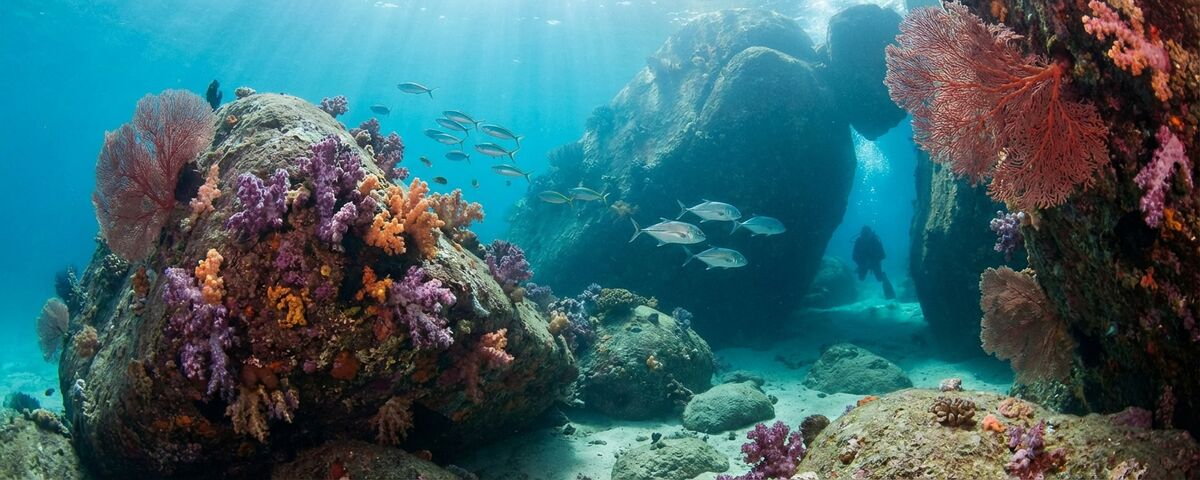
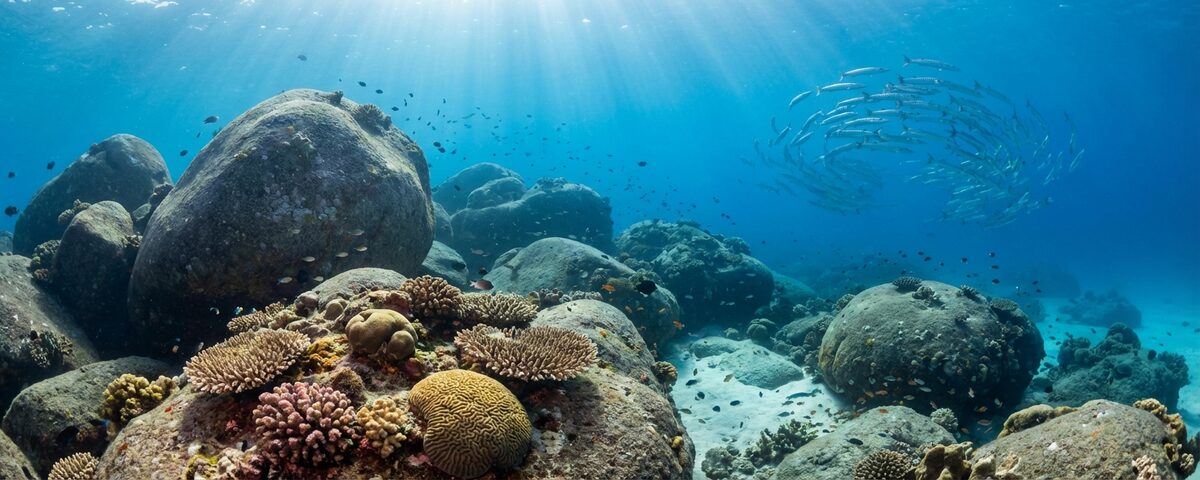
Boulder City sits off the southern tip of Koh Similan (Island 8), and it delivers exactly what the name promises: a sprawling field of enormous granite boulders scattered across the seabed like some geological giant got bored and started chucking rocks. The formation extends from around 12 metres down to 35 metres, with channels, canyons and swim-throughs carved between boulders the size of small houses. It is one of the Similan archipelago's premier advanced sites, attracting divers who want current-swept pelagic action and dramatic underwater topography in one package.
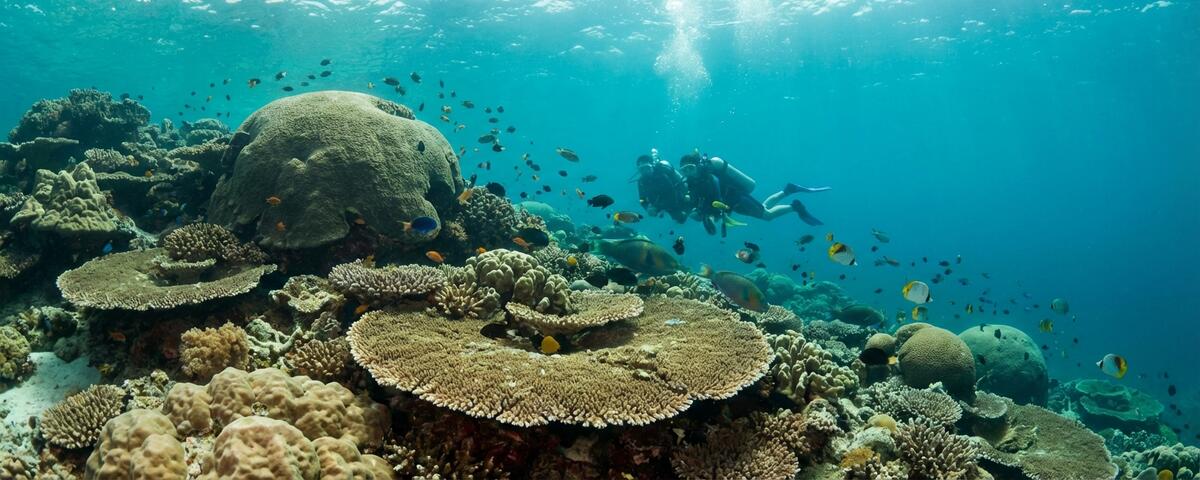
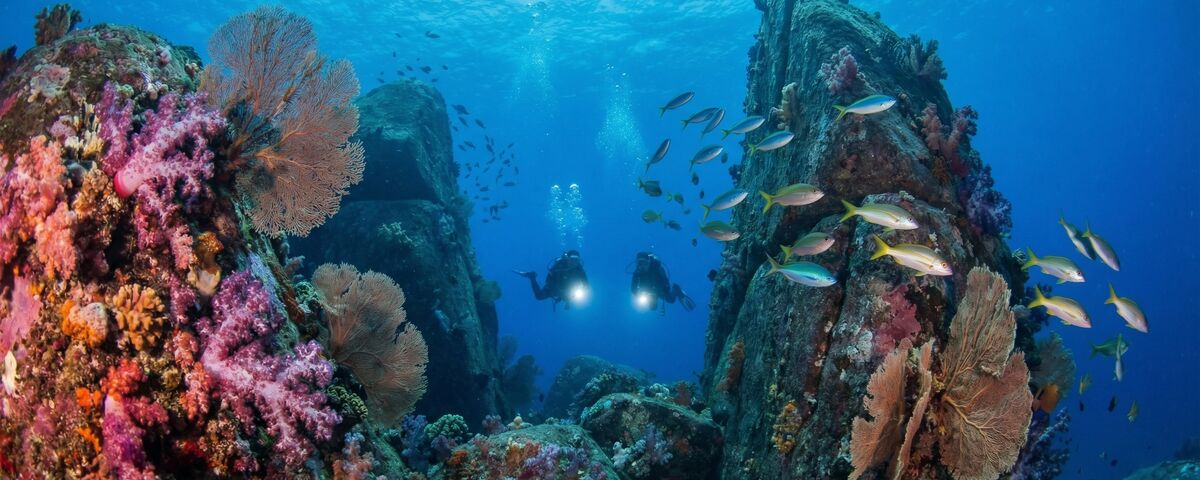
The site occupies an exposed position on the southern end of the island, which means it catches everything the open Andaman Sea throws at it. Currents can be strong here, properly strong, and they bring nutrients that sustain the dense soft coral growth covering nearly every sheltered surface. Purple and red sea fans spread wide from the boulder walls. Barrel sponges grow to absurd proportions in the deeper sections. The whole place feels alive in a way that the calmer eastern reef sites simply cannot match.
What separates Boulder City from similar granite formation sites in the Similans is scale. Elephant Head Rock, a few kilometres north, has its dramatic swim-throughs, but Boulder City covers a wider area with more variation in terrain. You could dive it five times and take a different route each time, finding new channels and overhangs that previous dives missed entirely. The site rewards exploration, and it punishes complacency. Lose sight of your guide in one of the deeper channels and you can surface a long way from the boat.
Liveaboard operators working the Similan route include Boulder City on most itineraries, though it gets bumped when conditions are rough or the current is running too hard for the group's experience level. When it is on, though, it is properly on. The combination of big boulders, big current, and big fish makes this one of those dives that people talk about at the evening briefing. Not every dive at Boulder City delivers a highlight reel, but enough of them do that it has earned a reputation as one of the top three sites in the national park.
The Similan Islands National Park closes annually from mid-May to mid-October for the southwest monsoon. Boulder City, like all Similan sites, is accessible only during the open season. Peak conditions run from January through April when visibility is at its highest and the stronger currents bring the best pelagic encounters.
Marine Life at Boulder City
The pelagic traffic at Boulder City is the main draw, and the currents are responsible for it. Schools of bigeye trevally gather in the channels between boulders, forming dense silver walls that part and reform as divers pass through. Bluefin trevally patrol the outer edges in smaller groups, their blue-tinged fins catching the light as they accelerate into hunting runs. Giant trevally, the solitary bruisers of the jack family, cruise past individually, each one big enough to make you look twice.
Whitetip reef sharks are common residents, resting under overhangs during the day and patrolling the channels at dawn and dusk. Most encounters happen below 20 metres where the boulders create sheltered corridors. Blacktip reef sharks appear less frequently but are seen perhaps every third or fourth dive, usually in the shallower sections above the main formation. Leopard sharks rest on the sandy patches between boulder clusters at depth, their spotted bodies blending into the substrate until you are almost directly above them.
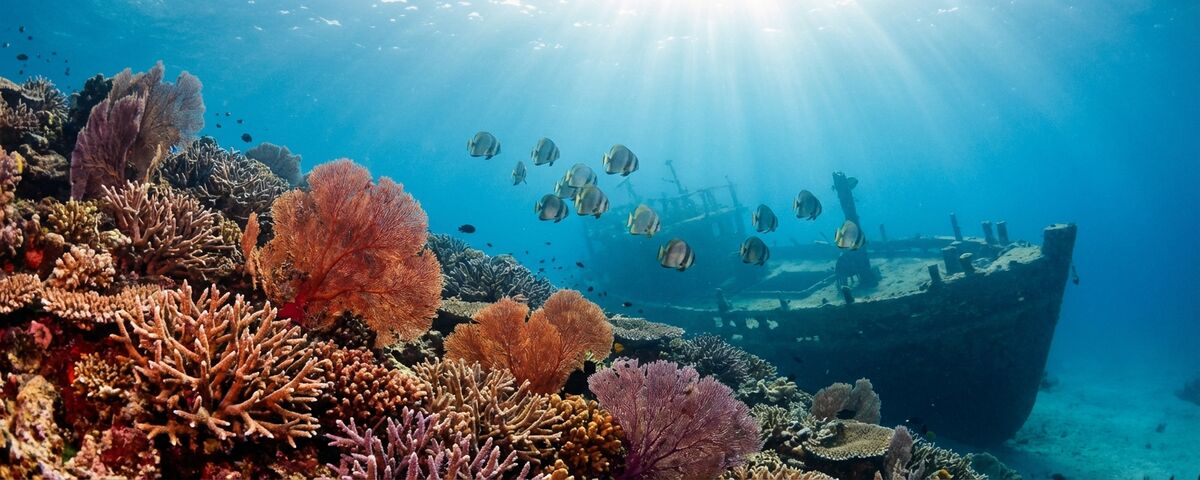
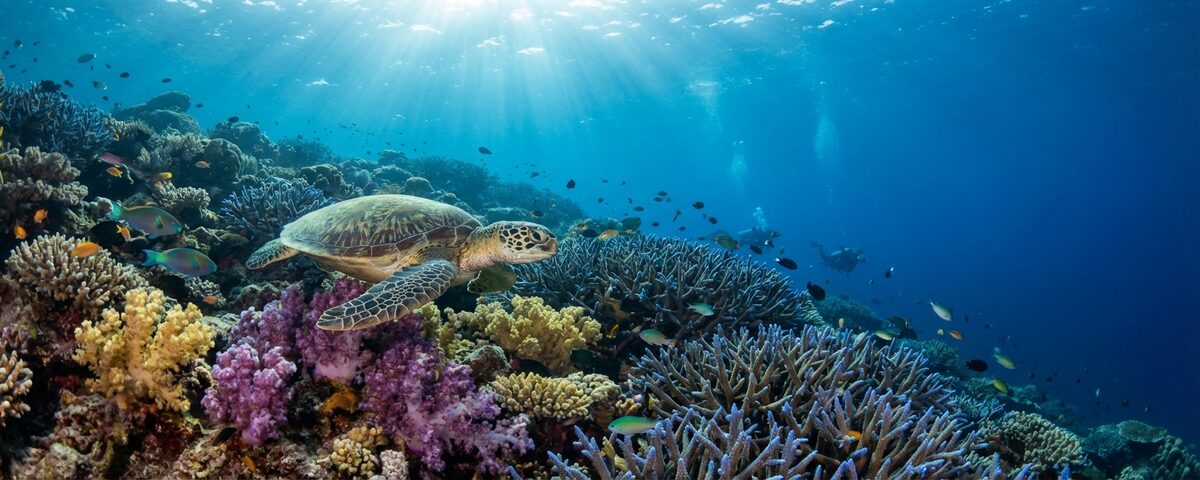
The soft coral coverage on the sheltered faces of the boulders is outstanding. Gorgonian sea fans in purple, red, and yellow stretch out into the current from every protected ledge, some of them over a metre across. Dendronephthya soft corals cluster in the overhangs, their translucent branches filtering plankton from the passing water. The colour is extraordinary when a torch picks it out at depth, though the natural light alone reveals enough to appreciate the density of growth.
Manta rays visit Boulder City during plankton-rich periods, typically December through February. They are not guaranteed here the way they are at Koh Bon further north, but when conditions align, mantas cruise through the site in feeding patterns that bring them within a few metres of divers sheltering behind boulders. These encounters are unpredictable and entirely dependent on plankton density, which is what makes them memorable rather than routine.
Larger reef fish thrive in the structure-rich environment. Napoleon wrasse patrol the mid-depths with their distinctive humped foreheads and leisurely pace. Yellowmask angelfish pick at the sponges growing on boulder surfaces. Map pufferfish drift through the swim-throughs looking perpetually confused. Banded sea kraits, the venomous but docile sea snakes, hunt in the crevices between boulders, their black and white banding visible from a distance.
Smaller residents fill every gap in the landscape. Lionfish station themselves at overhangs, fins spread and patient. Moray eels, both giant morays and white-eyed morays, peer from holes in the rock. Cleaner wrasse operate busy stations on the larger boulders, with queues of fish waiting their turn. On the sand between the boulder clusters, blue-spotted ribbontail rays shuffle away from approaching divers, and garden eels sway in their colonies, disappearing into the substrate the moment you get within three metres.
Macro life is present but takes second place to the big picture. Nudibranchs in various chromodoris species graze on sponges. Porcelain crabs shelter in anemones. Mantis shrimp occupy burrows in the rubble margins. The site is not a macro destination by any stretch, but photographers with patience and good air consumption can find subjects worth shooting on the boulder surfaces between pelagic passes.
Dive Conditions
Boulder City is an advanced dive, and the conditions enforce that rating without apology. The exposed southern position means currents hit the site from multiple directions depending on the tidal cycle, and predicting their strength on any given day is more art than science. Slack tide offers relaxed conditions where you can explore the boulder formations at your own pace. When the current picks up, it can run hard enough to make swimming against it pointless. The standard approach is to work with whatever the water gives you: hook in behind a boulder if the current is strong and watch the pelagic show, or drift through the channels when it eases.
Depth ranges from 12 metres at the shallowest boulder tops to 35 metres on the sand between the deeper clusters. Most of the best diving happens between 18 and 28 metres, which puts you firmly in the zone where air consumption matters and no-decompression limits need active monitoring. A typical dive runs 30 to 45 minutes depending on depth profile and breathing rate. Nitrox (EANx32) makes a meaningful difference here, extending bottom time by 10 to 15 minutes at the working depth and providing a more comfortable decompression margin.
Visibility is generally excellent. The same currents that make the site challenging also deliver clean oceanic water, and 20 to 30 metre visibility is normal during the core season from January to April. Early season dives in November and December can see reduced clarity from plankton blooms, dropping to 15 metres on some days. Late in the season, April dives often produce the clearest water of the year before conditions deteriorate towards monsoon season.
Water temperature stays between 27 and 30 degrees throughout the diving season. A 3mm wetsuit handles it for single dives. On repetitive dive days aboard a liveaboard, some divers prefer 5mm by the third or fourth immersion, particularly after deeper profiles where the water at 30 metres feels noticeably cooler than the surface.
Surface conditions vary more than at the protected eastern sites. Swells from the south can make entries choppy, and negative entries are sometimes required when the surface current is running. Liveaboard crews assess conditions before each dive and will modify the entry plan accordingly. On rough days, some operators relocate to the calmer eastern sites rather than risk an uncomfortable dive.
⚓ Divemaster Notes
Assess the current before anyone gets in the water. Drop a weighted line or watch the drift of the boat to gauge strength and direction. If it is running hard from the south, the dive becomes a one-way drift through the boulder field with a pickup at the northern end. If conditions are calmer, you can plan a circuit that hits the deeper boulders first and works back up to the shallower sections.
Brief your divers clearly on the plan, including contingencies for current changes mid-dive. At Boulder City, conditions can shift as the tide turns, and a gentle drift at the start can become a washing machine 20 minutes later. Establish a clear meeting point protocol: if separated, ascend to 5 metres, deploy SMB, and surface. The boat crew should be briefed on potential pickup locations before the dive starts.
Descent should be rapid and together. Use the mooring line if available, or negative entries directly to the boulder tops. Slow descenders get swept off the site before they reach the formation. If you have a diver who struggles with ear equalisation, pair them with a buddy who can wait rather than sending them down solo.
The sweet spot for pelagic action is the outer edge of the boulder field facing the open water. Position the group behind a large boulder where they can shelter from the current and watch the blue for passing trevally, sharks, and the occasional manta. Fifteen minutes sheltered with big fish passing is better than 40 minutes of fighting current through channels without seeing anything beyond soft coral.
Gas management is critical. The average depth of 22 to 25 metres on a typical profile means air disappears faster than at the gentler eastern sites. Set a firm turn pressure of 120 bar and check each diver at the start and midpoint. Anyone burning through air fast should be moved to the shallower sections early rather than dragged along at depth until they are on 50 bar.
The swim-throughs between boulders are wide enough for single-file passage but tight enough that poor buoyancy damages the soft coral growth. Brief divers on arms-in, streamlined profiles through the narrower sections. Photographers should be warned that stopping to shoot inside a swim-through blocks the entire group.
Safety stop can be done on the mooring line or free-hanging with SMBs deployed. The shallow water above the site often has a different current direction to the deeper sections, so be prepared for a drift during the stop. A hanging bar or jon line makes this more comfortable if the liveaboard provides one.
How to Get to Boulder City
Boulder City lies off the southern end of Koh Similan (Island 8), approximately 70 kilometres from the Andaman coast of Phang Nga province. All access is by boat from Khao Lak.
The standard route starts with a flight to Phuket International Airport. Bangkok to Phuket takes around 90 minutes, with frequent daily services on AirAsia, Thai Lion Air, Bangkok Airways, Nok Air, and Thai Smile. From Phuket Airport, Khao Lak is a 90-minute drive north along Route 4. Most dive operators arrange transfers from Phuket Airport or hotels in Khao Lak town as part of their package.
Liveaboards are the primary and recommended way to dive Boulder City. Multi-day trips depart from Tab Lamu Navy Pier in Khao Lak, typically in the late afternoon or evening. The overnight crossing to the Similan Islands means your first morning dive could be at Boulder City if conditions and the itinerary align. Liveaboard trips range from two-night budget runs covering the core Similan Islands to five-night extended itineraries that continue north to Koh Bon, Koh Tachai, and Richelieu Rock.
Day trip speedboats from Khao Lak reach the Similan Islands in 60 to 90 minutes, but Boulder City rarely features on standard day trip schedules. The depth profile and current exposure make it unsuitable for the mixed-ability groups that day trips typically carry. If you specifically want to dive Boulder City on a day trip, discuss it with the operator in advance, though expect them to assess conditions on arrival and potentially redirect to an easier site.
National park entry fees apply: 500 THB for foreign adults (2025/26 season). This is usually bundled into your trip cost. The park operates a strict no-littering and no-touching policy, enforced by rangers who patrol popular sites.
Gear Recommendations
A 3mm full wetsuit is standard for Similan water temperatures, but Boulder City's deeper profile means spending more time below 20 metres where the water is noticeably cooler. A 5mm suit is not overkill on repetitive dive days, especially for the third or fourth dive.
Nitrox certification is strongly recommended. The working depth of 20 to 30 metres means recreational air limits are tight, and EANx32 extends your no-decompression time significantly. Most Similan liveaboards offer Nitrox for an additional daily fee. For a site where bottom time determines the quality of the dive, it is worth the extra cost.
Carry a surface marker buoy (SMB) and reel as standard equipment. Current drifts at Boulder City can carry you away from the mooring line during ascent, and the boat crew needs to spot you. Bright orange or yellow SMBs with a minimum length of 1.2 metres. A spool with at least 20 metres of line covers the safety stop depth.
A reef hook is useful on days when the current is running and you want to anchor behind a boulder to watch the pelagic parade. Not every liveaboard provides them, so bring your own if current-swept diving is something you enjoy. Clip to dead rock only, never to living coral or sea fans.
Wide-angle is the only sensible lens choice for photography at Boulder City. The boulder formations, swim-throughs, and pelagic schools all demand a wide field of view. A fisheye or rectilinear wide-angle behind a dome port captures the dramatic scale of the site. Strobes are essential for colour below 15 metres where the soft corals lose their vibrancy under ambient light alone. A focus light helps in the darker swim-throughs.
A dive torch rated at 1000 lumens or more reveals the true colours of the gorgonians and soft corals that line the sheltered boulder faces. Without one, everything below 20 metres appears blue-grey. A compact torch clips to a BCD D-ring and adds minimal bulk.
A dive computer with clear NDL and depth displays is essential. The variable depth profile at Boulder City, bouncing between 15 and 30 metres as you navigate over and between boulders, makes accurate real-time decompression tracking critical. Set conservative factors if your computer allows it.
Recommended Dive Operators
Sea Dragon Dive Center has been running Similan trips from Khao Lak for over two decades. Their guides know Boulder City's boulder formations from thousands of dives and can read the current conditions quickly enough to adapt the dive plan on the fly. PADI 5 Star IDC Centre with instruction in English, German, and Thai. They operate both day trips and coordinate with liveaboard vessels for multi-day itineraries.
Wicked Diving runs smaller liveaboard groups than most Khao Lak operators, which is a genuine advantage at a site like Boulder City where group cohesion in current matters. Their guides carry species ID slates and emphasise marine ecology alongside the dive itself. Active involvement in Similan marine conservation projects. A strong choice for experienced divers and photographers who want more than just logging a dive.
The Manta Queen fleet operates multiple liveaboard vessels ranging from budget to mid-range. Manta Queen 3 and 6 are the better options for advanced divers, offering more cabin space and a slightly higher guide-to-diver ratio. The fleet's reliability means they run consistently through the season even when smaller operations cancel for low numbers. Boulder City features on most of their standard Similan itineraries.
MV Giamani is a sailing vessel that takes a slower, more considered approach to liveaboard diving. Four-night itineraries cover both the Similan and Surin island chains, with flexibility to spend extra time at sites like Boulder City when conditions are favourable. The smaller group size means the divemaster can tailor the dive profile to the group's ability rather than defaulting to the least experienced diver.
Khao Lak Scuba Adventures operates from a well-equipped dive centre in town and coordinates with several liveaboard vessels. Their focus on advanced and technical diving means they are comfortable taking competent divers to current-exposed sites without excessive hand-holding. Good option for experienced divers who want to be treated as experienced divers.
Liveaboard Options
Boulder City is a liveaboard site. The depth, current exposure, and distance from shore make it impractical for day trips, and the dive rewards the kind of flexible scheduling that only multi-day trips provide. If the current is too strong on one attempt, you can return the following morning on a different tidal phase.
The Manta Queen fleet covers the broadest range of budgets. Manta Queen 2 runs two-night Similan trips from approximately 10,000 to 15,000 THB, hitting the core island sites including Boulder City when conditions permit. Manta Queen 3 and 6 offer upgraded cabins and facilities for 15,000 to 28,000 THB on similar routes. All vessels carry experienced guides who have dived Boulder City hundreds of times.
MV Giamani offers a premium experience on a sailing vessel with four-night itineraries covering the Similan Islands, Koh Bon, Koh Tachai, and Richelieu Rock. Pricing runs 40,000 to 60,000 THB depending on cabin selection. The smaller group size of 16 to 20 divers means more space at the site and better guide-to-diver ratios, which matters at a current-swept advanced site. Camera facilities include rinse tanks and charging stations.
MV Sawasdee Fasai and MV Pawara are steel-hulled mid-range to premium liveaboards with air-conditioned cabins and full dive deck facilities. Four-night routes from the Similans north to Richelieu Rock run 30,000 to 55,000 THB. Both have solid safety records and crew who know when to push for a site and when to redirect.
The Junk, a converted traditional sailing vessel, runs two and four-night trips from Khao Lak with an emphasis on the diving experience over luxury amenities. The crew's decades of Similan knowledge means they read conditions accurately and adjust dive plans to maximise the chance of good encounters at sites like Boulder City.
For premium options, The Phinisi offers luxury-level diving with smaller groups, better food, and crew ratios that allow for personalised dive planning. Four-night trips from 50,000 THB upwards.
Booking three to six months ahead is standard for peak season dates (January to March). February typically offers the best combination of visibility, current activity, and pelagic encounters. November and late April provide lower pricing and fewer boats, though weather reliability decreases.