Deep Six Dive Site
Similan Islands (Andaman Sea), Thailand · Near Khao Lak
Overview
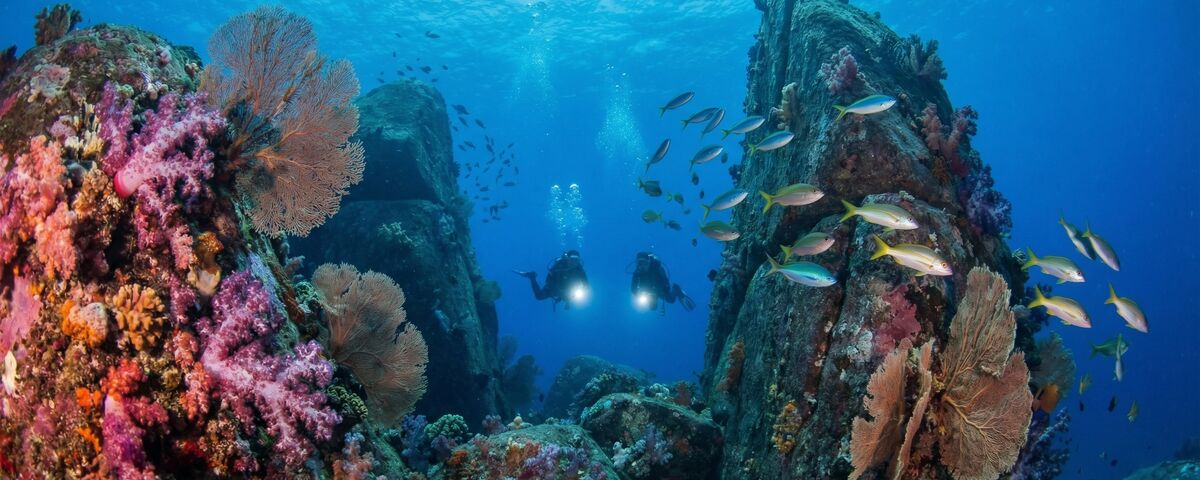
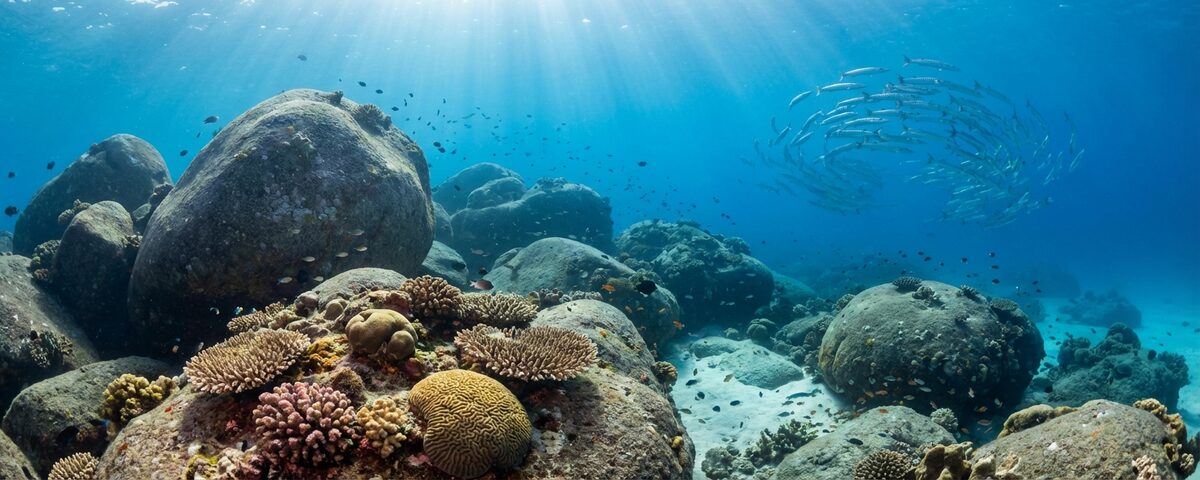
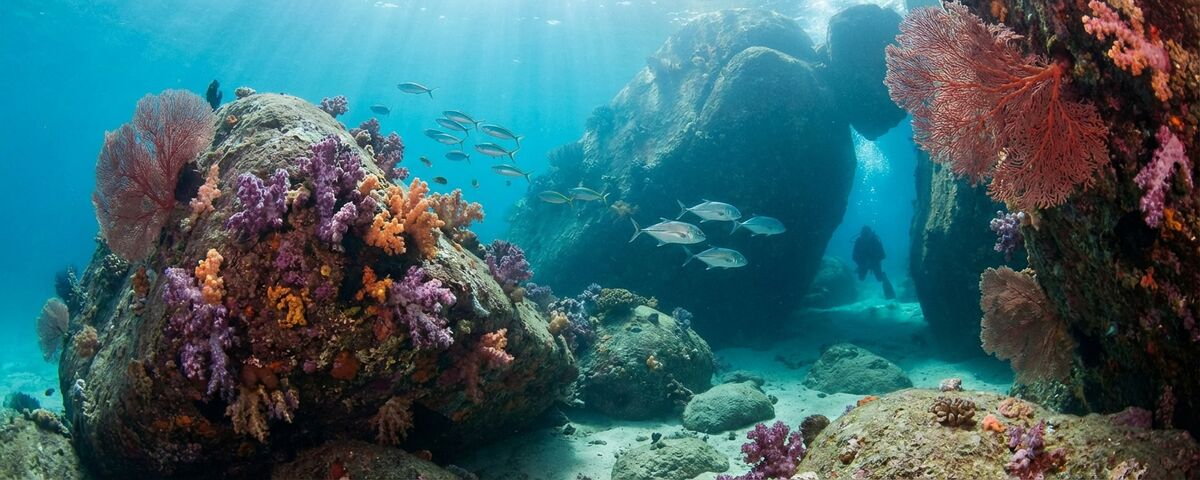
Deep Six earned its name the honest way: it sits at the northern tip of Koh Payu (Island 7, formerly numbered Island 6 before a renumbering exercise that confused everyone) and it goes deep. The site is an underwater extension of the island itself, a sprawling field of granite boulders that tumbled from the cliff face and now form one of the most dramatic underwater landscapes in the Similan archipelago. Where East of Eden on the same island offers gentle slopes and soft coral gardens, Deep Six delivers raw topography. Massive granite blocks stacked and scattered across a sloping reef, creating swim-throughs, caverns, sheer walls, and an enclosed amphitheatre known as The Living Room that ranks among the most memorable underwater formations in Thailand.
The boulders arrange themselves in a rough V-shape pointing north, with the deepest sections dropping past 40 metres at the outer edges. Viewed from above, you would see the northern tip of Koh Payu extending into a triangle of submerged rock, flanked on both sides by smaller boulders scattered across sand. The current here runs southeast to northwest (or reverses), and it can pull hard at the exposed northern point. This is not a site for beginners. Advanced certification and solid buoyancy control are prerequisites, and even experienced divers need to stay close to the rocks when the current picks up. Drifting off the boulders into open water means a long surface swim back or a frustrated safety stop in blue water while your boat circles.
But the current brings life. Giant trevally and tuna hunt along the boulder edges. Whitetip reef sharks patrol the deeper shelves. Schools of black and white snapper mass in the gaps between rocks. The granite surfaces are encrusted with gorgonian sea fans, soft corals, and staghorn formations that provide shelter for an astonishing density of smaller creatures, from frogfish hiding among sponges to ghost pipefish drifting vertically against seafan branches. Deep Six is a site that rewards multiple dives. The topography is complex enough that you could dive it ten times and still find passages you missed.
Marine Life at Deep Six
The Living Room is the site's signature feature. At around 13 metres depth, a passageway roughly five metres long leads through vibrant gorgonian sea fans into an enclosed space open to the sky above. Four walls of granite surround you on all sides, creating a natural amphitheatre where you can hover and watch the pelagic traffic cruising overhead. Tuna, barracuda, and trevally sweep across the opening. On rare occasions, a manta ray glides past the gap. Rebreather divers sometimes spend an hour in here, and photographers find the combination of light from above, colourful walls, and passing pelagics almost impossible to leave.
Marbled groupers hold station inside the passageway leading to The Living Room, seemingly unbothered by divers passing through. The gorgonian fans lining this corridor are some of the largest and healthiest in the Similans, their branches spreading a metre or more across the rock face.
Below The Living Room, at 20 metres, additional swim-throughs lead out to the outer reef where the boulders step down in a shelf system toward the deep. This is where the whitetip reef sharks tend to rest and hunt, cruising up from deeper water along the rocky slopes. Blue-spotted stingrays (Kuhl's stingrays) lie half-buried in the sandy patches between boulders, flushing away when you get within a few metres.
Schools of black and white snapper pack into the gaps between the larger boulders, creating dense walls of silver that part reluctantly as you swim through. Neon fusiliers stream past in thousands during current phases, and bluefin trevally hunt aggressively along the boulder edges, accelerating through the fusilier schools in explosive bursts.
The macro life is surprisingly good for what is primarily a big-animal site. Frogfish camouflage themselves among the pinnacles and sponge growth on the deeper boulders. Ghost pipefish have been spotted hanging vertically against sea fan branches. Red fire gobies hover above their burrows in the sandy patches, and nudibranchs crawl across the rock surfaces throughout the site. Oriental sweetlips and harlequin sweetlips shelter under overhangs, their patterned bodies motionless against the current.
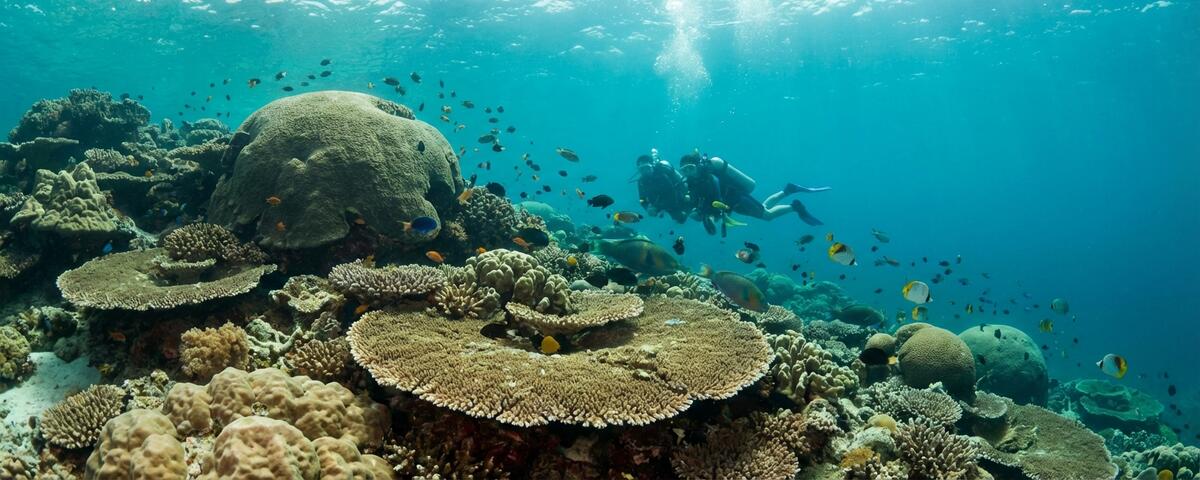
The shallow areas around 10 to 15 metres hold hard coral patches on both the east and west flanks of the site. The east side features passageways at around 12 metres with good light penetration and dense fish life. The west side opens onto a hard coral reef at 15 metres with staghorn formations and table corals. Friendly batfish hang around the shallows during safety stops, seemingly curious about divers, and colourful fusilier schools provide a final spectacle before you ascend.
Whale shark and manta ray sightings are less common here than at nearby sites like Koh Bon or Richelieu Rock. They have been seen, but Deep Six is not the site you dive specifically for those encounters. The draw here is the topography, the resident reef sharks, and the sheer density of reef life packed into and around the boulder formations.
Dive Conditions
Current is the defining factor at Deep Six. The flow runs predominantly southeast to northwest or reverses, and at the exposed northern point of the boulder formation it can build to a strength that makes forward progress impossible against it. On calm days, a gentle drift carries you pleasantly along the rocks. On strong current days, you need to stay tucked behind the boulders and use the granite blocks as shelter, working your way from rock to rock rather than trying to swim across open gaps.
The standard approach is to drop on the mooring line, which sits slightly west of centre, and descend to your planned maximum depth early while air is full and the current is manageable. From the deepest point, you work gradually upward through the swim-throughs and along the boulder faces, finishing in the shallows near the island. At the end of the dive, most groups swim out north into open water for pickup because the shallow rocks and wave action near the island make close approach by boat dangerous.
Visibility ranges from 15 to 30 metres depending on the season and current patterns. The best clarity comes during the peak months of February through April when plankton levels drop and the water turns that deep Andaman blue. During November and December, visibility can be patchier as the season establishes itself. Even on lower-visibility days, the site remains diveable and the swim-throughs actually become more atmospheric with reduced light.
Water temperature holds steady between 27 and 29 degrees Celsius throughout the diving season. Thermoclines occasionally drop the temperature by 2 to 3 degrees on the deeper sections below 30 metres, particularly early in the season.
Surface conditions vary. The northern tip of Koh Payu is more exposed than the sheltered eastern side where East of Eden sits, so waves and chop can make entries and exits more challenging. Negative entries (deflate BCD, descend immediately on entry) are standard practice here, both to avoid surface current and to reach the shelter of the boulders quickly.
The Similan Islands National Park closes from mid-May to mid-October during the southwest monsoon. Deep Six is only accessible during the November to May open season.
⚓ Divemaster Notes
Brief your group thoroughly on current management before they hit the water. The single most common problem at Deep Six is divers getting blown off the boulders at the northern point and ending up in open water with no reference. Establish the rule: if you feel current pulling you away from the rocks, grab hold and wait. Better to pause for 30 seconds behind a boulder than to fight the flow and burn through your air in ten minutes.
The mooring line descent is important. Get your group down to depth quickly using the line as a reference, then move onto the boulders before releasing. A slow, meandering descent wastes time and air that you need for the actual dive.
The Living Room is the centrepiece, so build your dive plan around reaching it with enough gas to spend quality time there. A good route: descend to 25 to 30 metres on the outer boulders, work the deeper swim-throughs heading inward, arrive at The Living Room at 13 metres with 140 to 150 bar remaining. That gives you 15 to 20 minutes in the amphitheatre before ascending through the shallow hard coral sections.
Photographers will want to know about the gorgonian corridor leading into The Living Room. The light and colour there are exceptional, and the marbled groupers inside make for compelling subjects. Wide-angle is the right choice for the swim-throughs and The Living Room; switch to macro only if you are carrying a second system or have a versatile compact setup.
Watch for whitetip reef sharks on the deeper shelves below 20 metres. They tend to cruise the outer edges of the boulder formation where the current concentrates baitfish. Position your group with their backs to a boulder face and wait. The sharks are not shy but they will not approach a group that is actively swimming toward them.
End the dive by swimming north into open water for boat pickup. Do not attempt to exit near the island rocks. The surge and shallow boulders make it hazardous for both divers and boats. Deploy SMBs in open water and ascend together as a group.
This site pairs naturally with East of Eden for a second dive. The contrast is excellent: raw granite drama followed by gentle soft coral beauty. Your group gets the full range of what Koh Payu offers in two dives.
How to Get to Deep Six
Deep Six sits at the northern tip of Koh Payu (Island 7) in the Similan Islands National Park, roughly 70 kilometres offshore from Phang Nga province in the Andaman Sea. Khao Lak is the primary gateway town on the mainland.
Speedboats depart from Tab Lamu Navy Pier near Khao Lak and reach the Similan Islands in 60 to 90 minutes. Day trip operators run daily departures during the open season, leaving between 7:30 and 8:30am. However, Deep Six is not always included on standard day trip itineraries because it requires advanced certification. Confirm with your operator before booking if this site is specifically what you want to dive.
Liveaboards provide the best and most reliable access. Multi-day trips from Tab Lamu pier cover the full Similan chain and typically include Deep Six as one of the deeper, more challenging dives on the schedule. Most liveaboard itineraries pair it with East of Eden on the same island, giving you the contrast between the gentle east side and the dramatic north point in a single day.
Getting to Khao Lak means flying into Phuket International Airport (1 hour 15 minutes from Bangkok, served by AirAsia, Thai Lion Air, Bangkok Airways, and others) and driving 90 minutes north. Most dive operators include hotel transfers from Phuket or Khao Lak in their packages. Direct minivans run from Phuket Airport to Khao Lak for 300 to 500 THB per person. Private taxis cost 1,500 to 2,500 THB.
National park entrance fees apply: 500 THB for foreign adults, 300 THB for children (2024/25 season rates). These are usually included in liveaboard and day trip pricing.
Gear Recommendations
A 3mm full wetsuit handles the 27 to 29 degree water comfortably. On liveaboards doing three to four dives per day, a 5mm suit prevents the chill that builds on repetitive deeper profiles. The deeper sections of Deep Six, particularly below 25 metres where thermoclines can knock a couple of degrees off, make the thicker suit worth considering.
Wide-angle photography equipment gets the most from this site. The swim-throughs, The Living Room amphitheatre, and the massive boulder formations all reward a fisheye or rectilinear wide lens. Strobes are essential; the granite walls and gorgonian fans need artificial light to show their true colour below 10 metres. The passageway into The Living Room, lit by dual strobes, is one of the most publishable shots in the Similan Islands.
A dive torch is important even during daytime dives. The swim-throughs and overhangs create deep shadows where groupers, sweetlips, and crustaceans hide. A torch also helps spot the ghost pipefish and frogfish that blend into the darker rock surfaces. Minimum 1000 lumens for your primary light.
Surface marker buoy and reel are mandatory here, not optional. You will end the dive in open water away from the island, and your boat needs to spot you. A brightly coloured SMB deployed from 5 metres is standard practice. Some operators require dual SMBs for redundancy.
Reef hooks are not typically used in the Similans, but on strong current days at Deep Six, having the option to clip onto a dead rock and hold position while watching the pelagic traffic is valuable. Only hook onto bare granite, never coral or living substrate.
A dive computer with clear depth and NDL displays is important given the depth range and potential for current-extended profiles. Conservative settings are wise here. The combination of depth, current, and cold thermoclines below 30 metres means air consumption runs higher than on sheltered sites.
Recommended Dive Operators
Sea Dragon Dive Center operates from Khao Lak with both day trips and their own liveaboard fleet. Their guides have dived Deep Six thousands of times across decades of operation and know how to read the current conditions to plan the best route through the boulders. PADI 5 Star IDC Centre with multilingual instructors.
Wicked Diving runs smaller group sizes on their liveaboards and puts a strong emphasis on marine conservation and underwater photography. Their guides are particularly good at finding the macro life hidden among the boulders, including the frogfish and ghost pipefish that most groups swim past without noticing.
The Manta Queen fleet operates several liveaboard vessels from Tab Lamu pier across a range of price points. All vessels include the northern Similan sites on their itineraries. The budget-friendly Manta Queen 2 starts from around 10,000 THB for two nights. Higher-numbered vessels offer more comfort.
Similan Dive Center runs both day trips and multi-day liveaboard excursions from Khao Lak. Long-established operator with experienced Thai guides and a solid track record on the more challenging Similan sites. They offer Advanced Open Water courses that include Deep Six as a training dive.
Khao Lak Scuba Adventures manages the Manta Queen fleet bookings and offers custom dive packages for groups wanting flexibility on itinerary. Good option for divers specifically targeting the deeper, current-exposed sites.
Liveaboard Options
The Similan Islands are Thailand's premier liveaboard destination, and Deep Six features on most itineraries that cover the northern Similan sites. Liveaboard access is strongly recommended over day trips for this particular site, as the early morning dives when currents tend to be calmer offer the best conditions.
The Manta Queen fleet (Manta Queen 2, 3, 5, and 6) covers the widest price range. The Manta Queen 2 runs two-night budget trips from around 10,000 to 15,000 THB covering the core Similan Islands. Higher-numbered vessels offer better cabins and more space for 15,000 to 25,000 THB on similar routes.
MV Giamani is a well-maintained sailing vessel running four-night itineraries covering both Similan and Surin Islands, including Richelieu Rock, Koh Bon, and Koh Tachai alongside the Similan sites. Premium pricing at 40,000 to 60,000 THB, but smaller groups and experienced crew justify it for divers who want quality over volume.
MV Sawasdee Fasai and MV Pawara are mid-range to premium steel-hulled vessels with comfortable cabins and mixed Thai and international crew. Four-night routes typically run 30,000 to 55,000 THB depending on cabin category. Both include Deep Six when conditions allow.
The Junk, a converted traditional wooden sailing vessel, offers character that the steel boats cannot match. Two and four-night options are available. Not the most spacious choice, but the crew's site knowledge and the atmosphere make it popular with returning divers who have done the Similans before and want a different experience.
Book early for January through March. The best vessels sell out months ahead during peak season. November, December, and April offer lower prices, fewer divers on the sites, and conditions that are still excellent for experienced divers who can handle slightly variable visibility and occasional stronger currents.