North Point Dive Site
Similan Islands, Thailand · Near Khao Lak
Overview
North Point sits at the very top of the Similan Islands chain, a scatter of granite boulders off the northern tip of Island 9 (Koh Ba Ngu) that drops into some of the deepest, clearest water in the archipelago. Also called Rocky Point on older Thai dive maps, this is the site that liveaboard crews save for good conditions: exposed to the open Andaman Sea, prone to currents that swing without much warning, and rewarding enough to justify the effort when everything lines up.
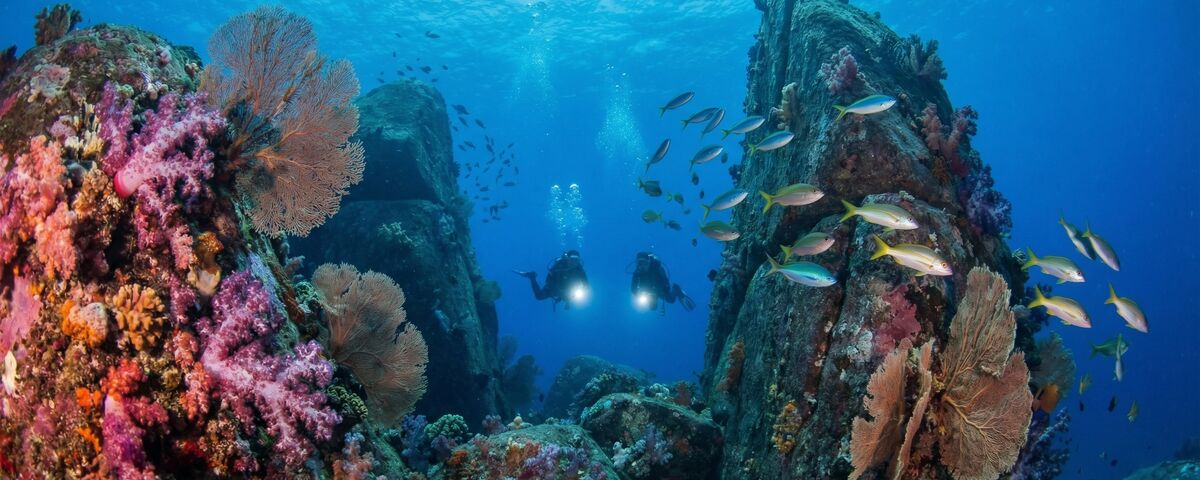
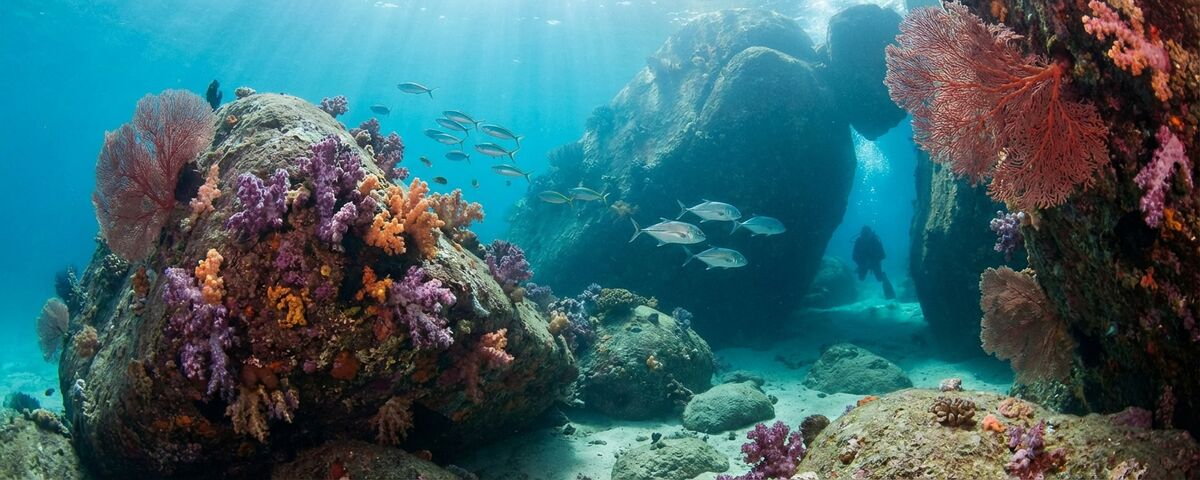
The granite here is enormous. Not the neatly stacked formations you find at some of the southern Similan sites, but genuinely massive boulders thrown together at odd angles, creating swimthroughs wide enough for two divers abreast and overhangs deep enough to shelter entire schools of snapper. The rock extends from about 5 metres below the surface down to a sandy bottom at 25 to 30 metres, with a separate pinnacle further to the northwest that drops past 40 metres for those with the certification and gas management to reach it.
What makes North Point different from its neighbours (and the reason experienced divers specifically request it) is the exposure. The site faces open ocean to the north and west. That exposure brings cleaner water, stronger nutrient flows, and the occasional visitor that has no business being on a recreational dive. Manta rays, whale sharks, and large schools of pelagic fish pass through here on unpredictable schedules, drawn by plankton blooms that turn the water slightly green for a day or two before clearing back to the 25-plus metre visibility the Similans are known for.
The site works on multiple levels. Shallow coral gardens near the island support turtles and reef fish in warm, calm water. The mid-depth boulder zone offers the swimthroughs and marine life encounters that photographers plan trips around. And the deeper reaches, out towards the pinnacle, deliver the current-swept, open-water experience that keeps advanced divers coming back to the Similans year after year.
North Point is a liveaboard dive. Day trips from Khao Lak rarely make it this far north in the chain, and the site's exposure means conditions can shift from glass-flat to genuinely challenging within an hour. That's part of the appeal. When the Andaman cooperates, there are few dives in Thai waters that match it.
Marine Life at North Point
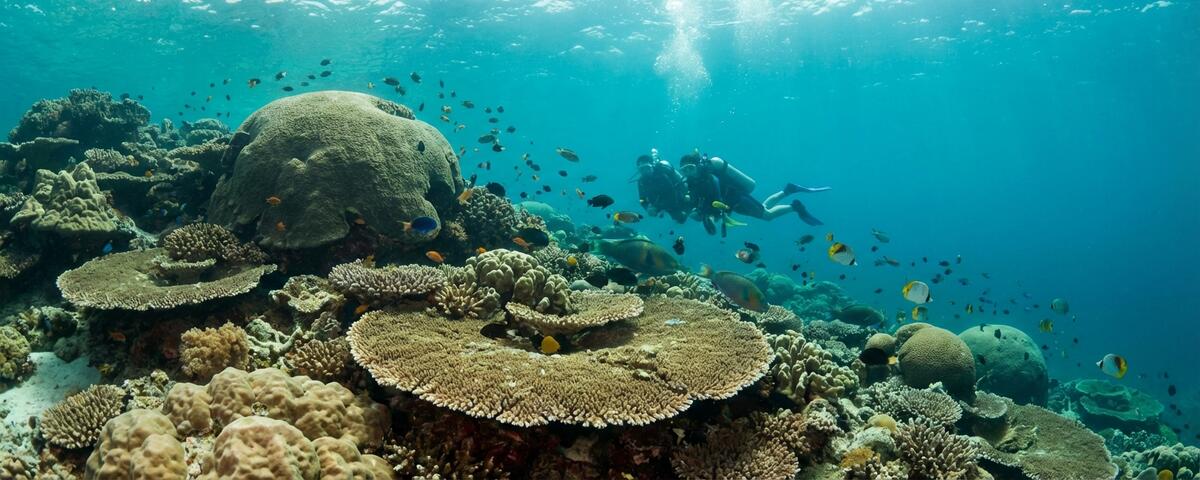
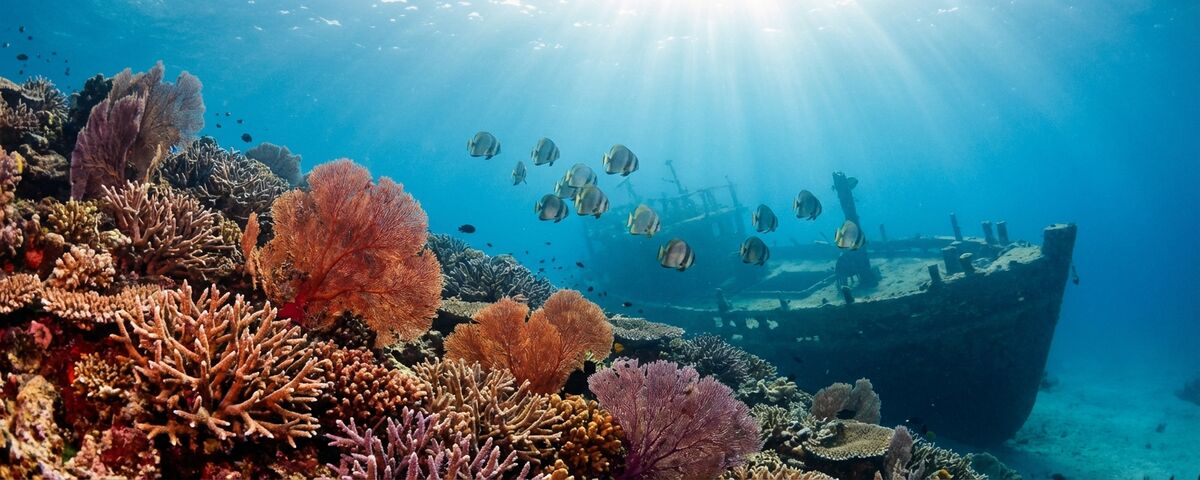
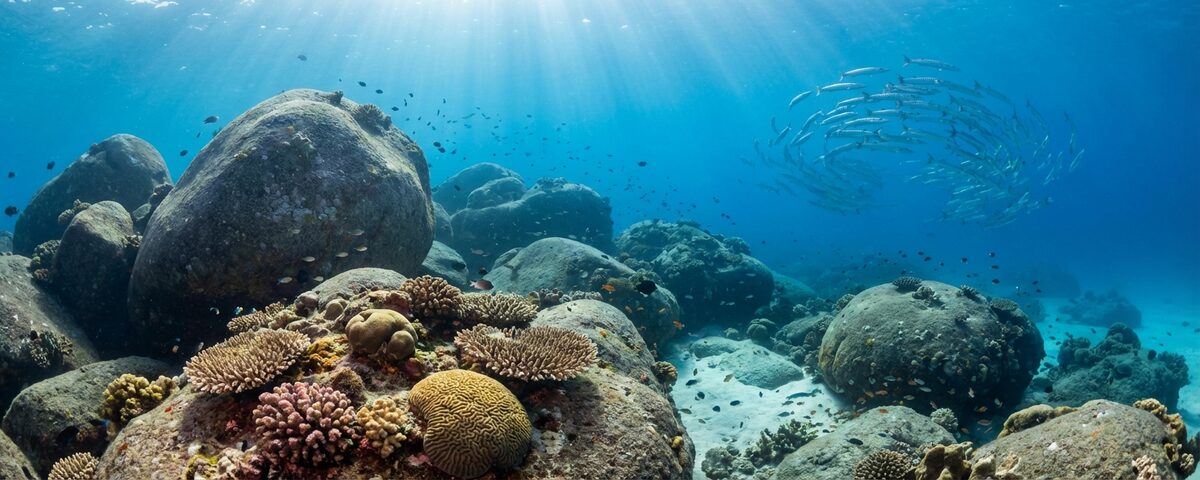
The granite boulders at North Point support a different community from the soft coral walls further south in the Similans. Hard corals dominate here: staghorn thickets in the shallows, massive porites colonies on the boulder tops, and encrusting species covering every surface that catches current. The deeper boulders carry large gorgonian sea fans, some over a metre across, their branches oriented perpendicular to the prevailing flow.
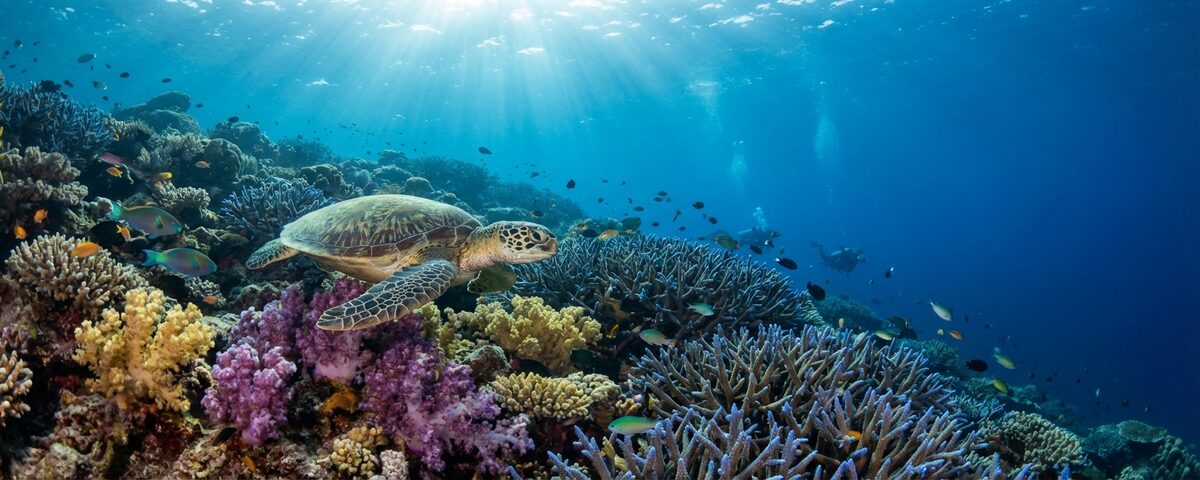
Green and hawksbill turtles are reliable residents. The hawksbills feed on sponges growing in the crevices between boulders, and they're habituated enough to divers that you can watch them prise food from the rock at arm's length. Green turtles graze the shallow coral gardens closer to the island, and mating pairs are spotted regularly during the warmer months.
Barracuda schools patrol the mid-water column, sometimes numbering in the hundreds, their silver bodies catching sunlight in a way that never photographs as well as it looks in person. Bluefin trevally hunt in organised packs around the boulder edges. Giant moray eels, some well over a metre and a half, occupy the deeper overhangs, their heads protruding from crevices with mouths gaping in that permanently threatening expression that means absolutely nothing.
The pelagic encounters are what elevate North Point from a good dive to an exceptional one. Reef manta rays visit the site, particularly during plankton-rich periods between February and April. Whale shark sightings happen perhaps a handful of times each season, always unexpected, always electric. Leopard sharks rest on the sandy patches between boulder clusters, their spotted bodies easy to miss if you're scanning mid-water for the bigger species.
Smaller life rewards patience. Ghost pipefish hide along the boulder walls, their camouflage so effective that guides mark specific locations to check on each visit. Pygmy pipehorses cling to gorgonians. Nudibranchs of various species cruise the rock surfaces. The sand channels between boulders harbour garden eels in dense colonies, their thin bodies swaying in unison with the current.
Octopus and cuttlefish are both present and surprisingly bold. The cuttlefish here seem less skittish than at more heavily dived sites, and their colour-changing displays when approached are genuinely mesmerising. Ribbon eels, while not common, have been recorded here. Blue ribbon eels in particular show up often enough that guides know which holes to check.
Dive Conditions
Depth ranges from 10 metres in the shallow reef zone to 35 metres at the main boulder site, with the separate northwest pinnacle dropping past 40 metres. Most divers spend their time between 12 and 25 metres, where the boulder formations and marine life are concentrated.
Current is the defining factor at North Point. The site's exposure to open Andaman Sea means tidal flows hit it with less protection than the more sheltered eastern sites. Moderate current is the norm, but strong surges can develop quickly, particularly during tidal changes. The current direction shifts, and what starts as a comfortable drift can become a challenging swim within the space of a dive. Liveaboard crews check conditions before committing to the site and will substitute alternatives if the flow is too aggressive.
Visibility is typically 20 to 30 metres, occasionally exceeding 30 metres during settled weather. Plankton blooms can reduce visibility to 10 to 15 metres, but these events bring the pelagic visitors that make the reduced visibility a worthwhile trade. Water temperature holds steady between 27 and 30 degrees throughout the diving season, with thermoclines occasionally dropping temperatures by 2 to 3 degrees at the deeper reaches of the site.
Surface conditions vary considerably. The northern exposure means swells from the Andaman Sea reach the site without the buffering that protects southern Similan dive sites. Entries and exits can be choppy, and the surface current sometimes differs from the subsurface flow. Negative entries (descending immediately upon entering the water) are standard practice here.
Intermediate certification is the minimum for settled conditions, but advanced certification and current diving experience are strongly recommended. The deeper pinnacle excursion is suitable only for advanced divers with good air consumption and comfort in open water with variable current.
⚓ Divemaster Notes
I've guided North Point over 200 times across nine Similan seasons, and it remains the dive I look forward to most on every trip. Not because it's the flashiest site in the chain (Richelieu Rock and Koh Bon's manta station get more attention), but because North Point rewards divers who can read a site and respond to what the ocean offers on any given day.
The dive plan depends entirely on conditions. On calm days with light current, I take groups out to the northwest pinnacle first, dropping to 30 metres to check the deep gorgonians and the sand channels for leopard sharks. From there, we work back towards the main boulder cluster at 18 to 22 metres, spending the bulk of our bottom time in the swimthroughs before ascending to the coral gardens for the safety stop. This profile gives the best chance of pelagic encounters early in the dive when gas supply allows flexibility.
On days with stronger current, I keep the group in the lee of the main boulders and work the protected eastern side. The current pushes nutrients past the boulders, and the fish aggregations on the downstream side can be staggering. Trevally, barracuda, and fusiliers stack up in the eddy behind the granite, and the hunting behaviour is far more active than on calm days.
The swimthroughs are the highlight for most guests, and they're genuinely impressive. The main passage between the central boulders is wide enough that you won't scrape anything, but it's dark enough in the middle to need a torch. I always carry one at North Point regardless of the dive plan. The overhangs shelter sleeping sharks, resting turtles, and the occasional enormous grouper that materialises from the shadows.
My tip for photographers: don't chase the big stuff. The wide-angle shots of sunlight streaming through the boulder gaps are consistently better than blurry distant whale shark photos. Bring a fisheye or rectilinear wide-angle and shoot upward through the swimthroughs. The granite geometry and the light quality in the Similan water produce frames you simply cannot get anywhere else in Thailand.
One thing to watch: the surface current at North Point often runs differently from the subsurface flow. Brief your group on negative entries and make sure everyone descends together. I've had divers separated by surface current before they even got to depth. Deploy your SMB early on the ascent, not at the last minute, because the current can push you away from the boat quickly up top.
How to Get to North Point
North Point is accessed exclusively by liveaboard from Khao Lak or, less commonly, Phuket. The Similan Islands sit roughly 70 kilometres offshore in the Andaman Sea. Liveaboard departures typically leave from Tab Lamu Pier in Khao Lak, with the crossing to the Similans taking 3 to 4 hours depending on sea state.
Khao Lak is about 80 kilometres north of Phuket International Airport, a drive of roughly 90 minutes. Most liveaboard operators arrange transfers from Phuket airport or hotels. Some operators also depart directly from Phuket's marinas.
The Similan Islands National Park is open to visitors from mid-October to mid-May each year, with the exact dates varying slightly. The park charges a 500 baht entrance fee for foreign visitors (as of the 2025/2026 season), payable in cash or through the operator. Liveaboard trips range from 2 nights/3 days to 5 nights/6 days, with most itineraries covering the Similans, Koh Bon, Koh Tachai, and Richelieu Rock.
Day trips from Khao Lak reach the southern Similan Islands but rarely venture as far north as Island 9. If North Point is a priority, book a liveaboard. The site is typically dived on the second or third day of a multi-day trip, after the boat has worked northward through the chain.
Gear Recommendations
3mm wetsuit or shorty for most of the season. A 5mm full suit is worth considering between December and February when thermoclines at depth can drop temperatures noticeably. Torch recommended for swimthroughs and overhangs, even on day dives. SMB and reel are essential given the current exposure and the distance boats sometimes need to travel for pickup.
For photography, wide-angle is the priority. A fisheye or rectilinear wide-angle lens paired with dual strobes captures the boulder topography and the swimthroughs at their best. Macro shooters will find subjects in the coral gardens and on the boulder walls, but the site's real strength is the big-picture scenery. Bring a dome port rated for the depth.
Nitrox is strongly recommended for repetitive liveaboard diving at North Point's depths. Most Similan liveaboards offer Nitrox, though some charge a supplement. Reef hooks are not commonly used here (the granite doesn't lend itself to hooking in), but a current hook can be useful on the exposed side if you want to hold position and watch the pelagic traffic.
Recommended Dive Operators
Khao Lak is Thailand's liveaboard capital, with dozens of operators running Similan itineraries between November and May. The Manta Queen fleet operates several boats at different price points and reliability levels, with Manta Queen 8 being the most established. Wicked Diving runs conservation-focused trips with experienced guides who know the Similan sites thoroughly. Similan Dive Center has operated from Khao Lak for over two decades and maintains a strong reputation for safety and site knowledge.
From Phuket, All4Diving runs well-organised liveaboard trips that include North Point on their standard itinerary. Sea Bees Diving operates larger vessels with good facilities. For budget options, the Siam Dive N Sail boats offer basic but functional liveaboard experiences.
All reputable operators check conditions before committing to North Point. If currents or swells make the site unsuitable, they will divert to sheltered alternatives. This is good seamanship, not a shortcoming. Ask your operator whether North Point is on the planned itinerary and understand that conditions may force a change.
Liveaboard Options
North Point is a liveaboard-only site in practice. Multi-day trips departing from Khao Lak or Phuket are the standard access route. Trip lengths range from 2 nights (covering the Similan chain only) to 5 nights (adding Koh Bon, Koh Tachai, and Richelieu Rock). The longer itineraries are worth the extra cost: they cover the full range of Andaman Sea diving, and the additional days give crews flexibility to revisit sites when conditions improve.
Budget liveaboards start around 15,000 to 20,000 baht for a 2-night trip. Mid-range boats with better food and smaller group sizes run 25,000 to 40,000 baht for 4 nights. Premium operators charge 45,000 baht and above for the full 5-night itinerary with smaller dive groups and dedicated photography support.
Peak season runs from February to April, when visibility is highest and manta ray encounters most likely. Book 2 to 4 months ahead for peak season departures. November and December offer fewer crowds and good conditions, though seas can be rougher as the monsoon season ends. May trips catch the tail end of the season with occasional bargain pricing.