Breakfast Bend Dive Site
Similan Islands, Thailand · Near Khao Lak
Overview
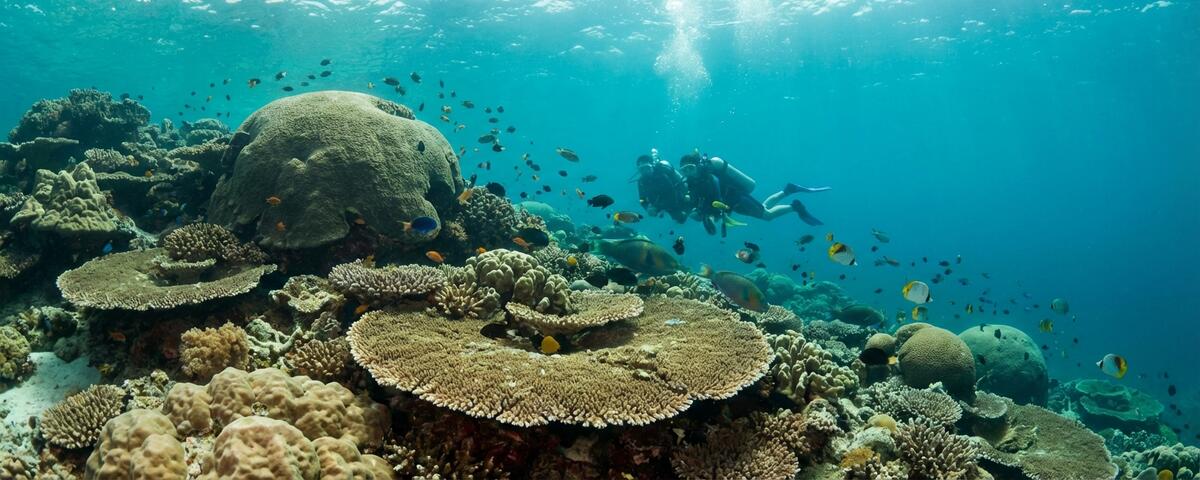
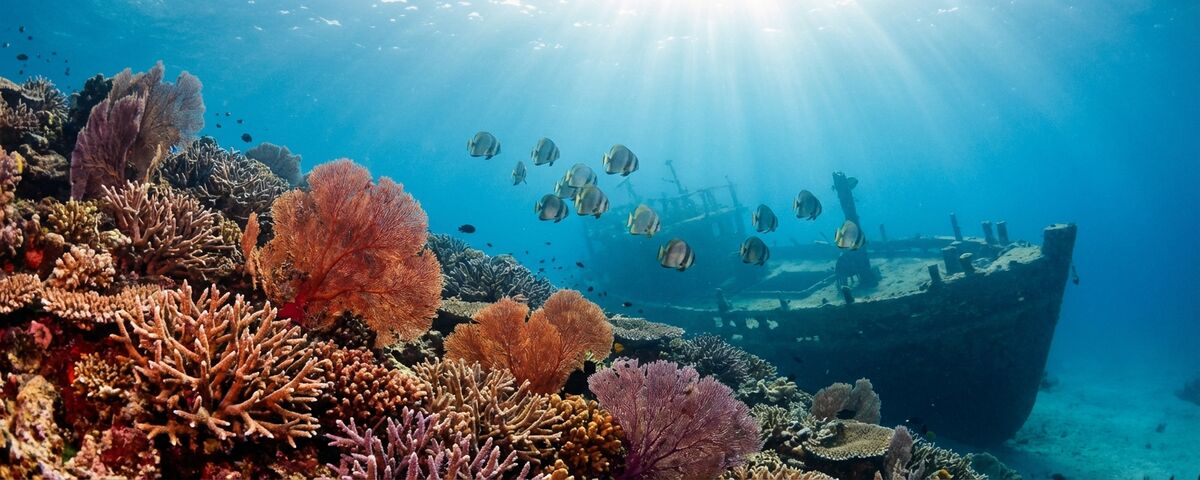
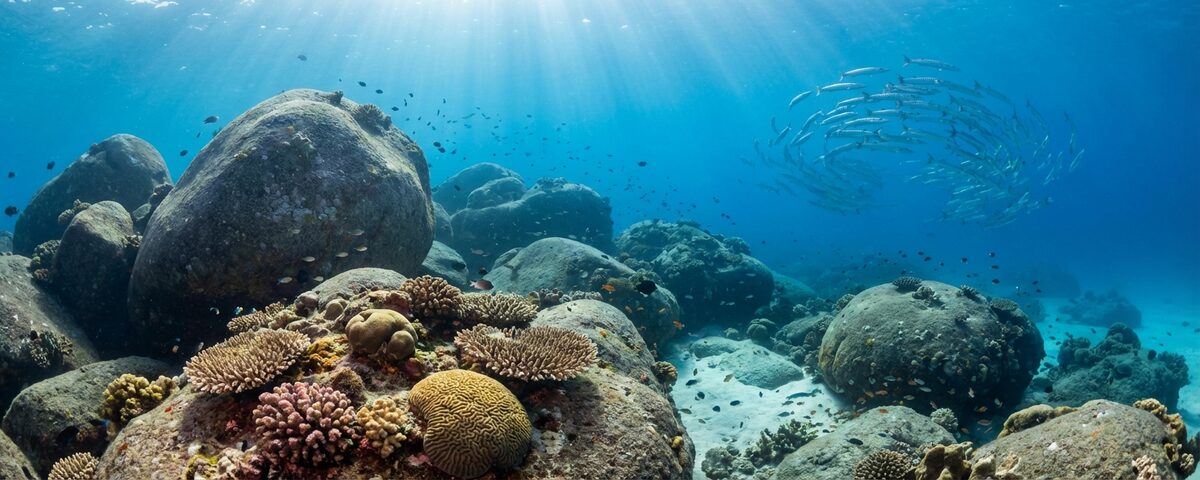
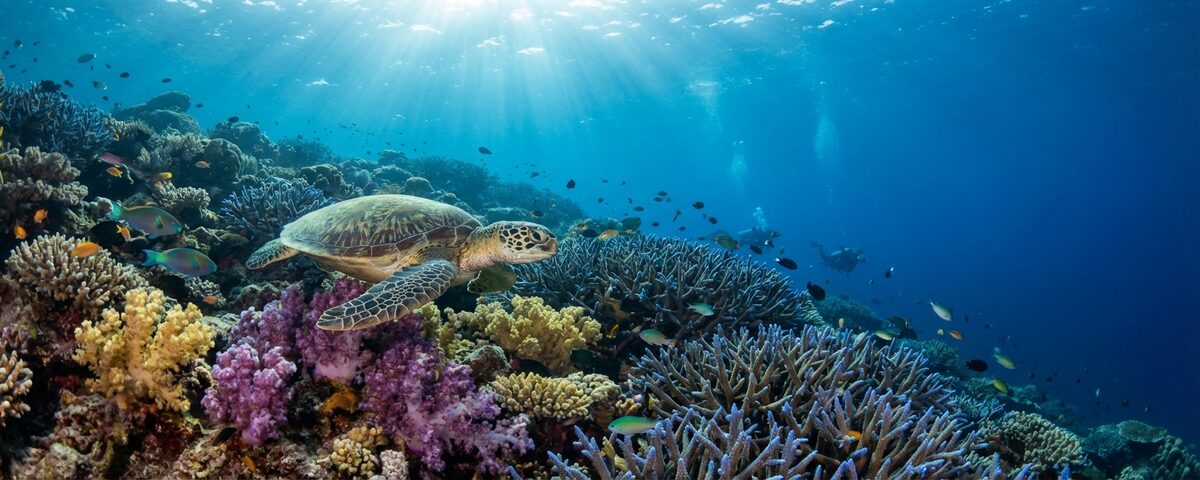
Breakfast Bend runs the entire eastern flank of Koh Bangu, Similan Island number 9, and it earned its name for the simplest of reasons: liveaboard crews have been rolling out of their bunks to dive it at sunrise for decades. The morning light hits this east-facing reef before anything else in the archipelago, and the effect is worth setting an alarm for. Sunbeams cut through the water column at shallow angles, turning the staghorn coral fields into something that looks more like stained glass than rock.
The site is also called Three Trees, after a trio of unusually tall trees on the jungle cliff above the waterline that serve as a surface landmark. Both names have stuck, and which one you hear depends entirely on which divemaster you are talking to.
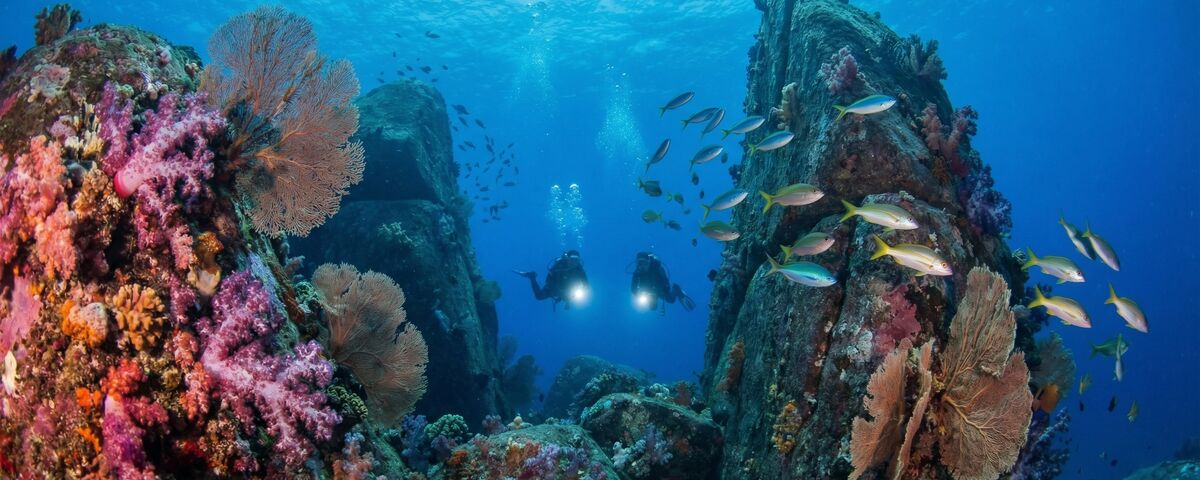
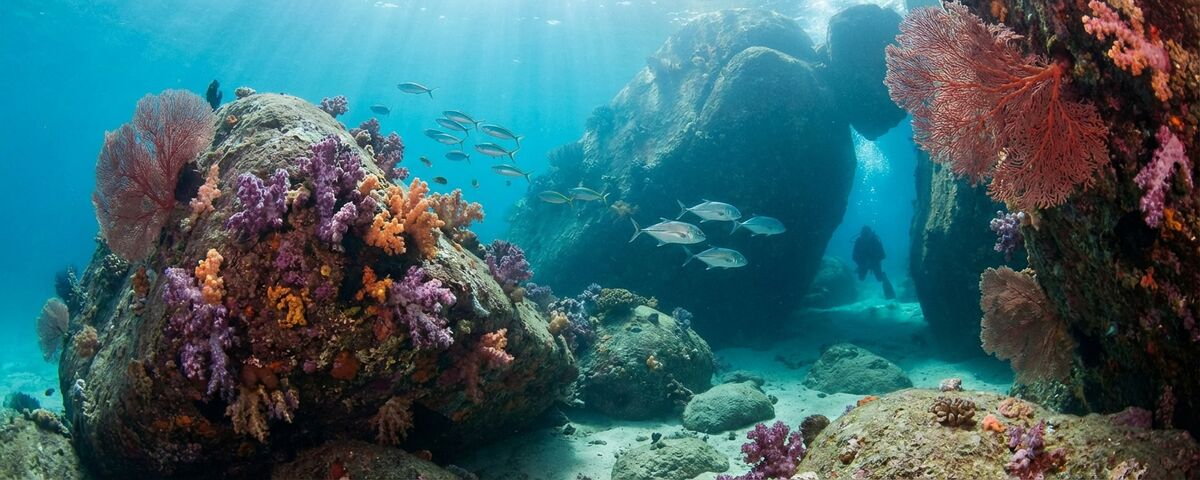
What makes Breakfast Bend stand apart from the Similans' more famous sites is its accessibility. The reef slopes gently from about 5 metres down to 30 metres, with no sharp drop-offs, no mandatory current skills, and no minimum certification beyond Open Water. That sounds like damning with faint praise, but it misses the point entirely. The reef here is genuinely beautiful. Healthy hard coral coverage blankets the upper slope, soft corals in purples and pinks decorate the deeper bommies, and the fish life is thick enough that you will burn through your camera's memory card before you burn through your air.
Liveaboard operators use Breakfast Bend as a checkout dive for exactly this reason. It lets guides assess their group's buoyancy and comfort level in forgiving conditions, with enough to see that nobody feels shortchanged. But writing the site off as a warm-up would be a mistake. Experienced divers who skip it in favour of more "advanced" sites miss the leopard sharks resting on the sand at 25 metres, the resident Napoleon wrasse that cruise the mid-reef with total indifference to bubbles, and the enormous schools of Forster's barracuda that sometimes form spinning tornado formations over the coral. Those barracuda tornadoes, when they appear, are genuinely one of the best sights in the Andaman Sea.
The reef stretches far enough that you could dive it twice and cover different ground each time. The southern section curves gently around the island's contour (the "bend" in question), while the northern end transitions towards the boulders and granite formations of North Point. A single dive typically covers either the southern or northern half, drifting with whatever mild current the day provides.
Marine Life at Breakfast Bend
The shallow reef between 5 and 12 metres is angelfish territory. Emperor angelfish, regal angelfish, blue-ringed angelfish, masked angelfish, and Koran angelfish all live here, sometimes several species visible in a single slow fin across the coral. Their colours pop absurdly in the morning light, which is probably why underwater photographers treat this section of reef like a studio.
Green turtles and hawksbill turtles are regulars. The hawksbills tend to be feeding on sponges along the reef slope, while the greens rest on coral ledges or cruise between bommies at mid-depth. They are habituated to divers and generally unbothered, though they will descend deeper if crowded or harassed.
The deeper sand flats between 20 and 30 metres are where the more unusual sightings happen. Leopard sharks (also called zebra sharks) rest on the bottom, often partially buried, and they tolerate careful approach from divers who move slowly and stay low. Kuhl's blue-spotted stingrays shuffle across the sand between coral patches. Spotted garden eels colonise the open sand in large groups, retreating into their burrows in a synchronised wave as you approach. If you settle onto the sand and wait, they re-emerge within a minute or two, swaying in the current like a field of nervous grass.
Whitetip reef sharks patrol the reef edge and occasionally rest under overhangs on the deeper bommies. Blacktip reef sharks are shyer but present, sometimes visible in the shallows during early morning dives before boat traffic picks up. Giant guitarfish have been spotted on the sandy areas between bommies, though sightings are occasional rather than reliable.
The coral bommies scattered across the sand at depth are worth exploring individually. They function as cleaning stations, attracting cleaner wrasse and banded coral shrimp, and the overhangs harbour lionfish, moray eels, and the odd well-camouflaged scorpionfish. Nudibranchs are present on the rock surfaces for anyone willing to slow down and look closely.
Schools of Forster's barracuda sometimes gather over the reef in formations of 50 to 200 fish, swirling in slow cylinders. Longfin batfish hang in loose groups at mid-water. Fusiliers stream past in the current, attracting bluefin trevally that hunt through the schools with sudden bursts of speed. On the northern end of the site, approaching the transition to North Point, chevron barracuda occasionally appear in numbers.
The whip coral garden on the northern section deserves special mention. Dense stands of sea whips grow from the sandy slope, creating an otherworldly landscape that looks nothing like the hard coral fields elsewhere on the reef. The contrast between zones is part of what makes this site worth a full hour of bottom time.
Dive Conditions
The reef top sits at roughly 5 metres, making it accessible to snorkellers as well as divers. The main body of the reef, where most of the interesting life concentrates, runs from 8 to 22 metres on the sloping sections. The sand flats and scattered bommies extend to 30 metres and slightly beyond for those with the gas and certification to explore them.
Currents at Breakfast Bend are typically mild. The east-facing aspect means the site is sheltered from the prevailing westerly swells that affect the other side of the Similan Islands during season. When current does run, it usually flows along the reef from north to south or south to north, splitting at the centre of the bend. Divemasters read the current direction on descent and choose which way to drift accordingly. Strong current is unusual here, and when it does occur, it simply makes for a faster drift rather than anything dangerous.
Visibility ranges from 15 to 30 metres depending on conditions. The clearest water tends to coincide with the early season months of November and December, when plankton levels are lower. Mid-season (January to March) brings the most reliable conditions overall. Late season (April) can see slightly reduced visibility as the water warms.
Water temperature holds between 27 and 30 degrees throughout the diving season. A 3mm shorty is plenty for most divers. Those who run cold or plan multiple dives per day might prefer a full 3mm wetsuit, particularly on predawn dives when the water feels a touch cooler before the sun warms the shallows.
The site is dived from liveaboards and day-trip speedboats. Moorings are available. Entry is a giant stride from the boat into open water, descending directly onto the reef slope. Surface conditions are almost always calm on this sheltered eastern side of the island.
The Similan Islands National Park is open to divers from approximately mid-October to mid-May each year. Outside this window, the park closes for monsoon season and marine recovery. Exact opening dates shift slightly year to year.
⚓ Divemaster Notes
I use Breakfast Bend as my first dive of every trip for reasons that go beyond tradition. The gentle slope and mild currents let me watch how each diver handles themselves before we move on to sites where buoyancy and current management actually matter. But I have stopped calling it a checkout dive to my groups because the label undersells it, and I have watched experienced divers spend the first twenty minutes not really paying attention because they think they are on a warm-up.
The trick with Breakfast Bend is to go deeper first. Drop to 22 or 24 metres at the start of the dive and work the sand flats between the bommies. That is where the leopard sharks rest, and they are most settled in the early morning before too many groups have passed through. I approach from downstream and keep the group low, finning slowly. The sharks will tolerate you within about three metres if you are calm and neutral. Any sudden movements or bubbles directly above them and they glide off.
After ten minutes at depth, I bring the group up to the 12 to 15 metre zone for the main reef section. This is where the angelfish concentrate, and the coral coverage is at its best. The hard coral here recovered well after the 2004 tsunami, particularly in the deeper sections that escaped the worst of the wave energy. The shallow sections took more damage but have been regenerating steadily.
For the barracuda, look to the north side of the reef in the mid-water column. The schools are not always present, but when they are, they tend to hold station in the same area between 10 and 18 metres. I have seen them form those spinning tornado formations twice in a single season, both times in February. Wide-angle is the only lens worth having on this dive.
One thing I always tell my groups: check the sand carefully around the deeper bommies. Giant guitarfish rest there occasionally, and they are so well camouflaged against the sandy bottom that most divers swim straight over them. I almost finned into one on a night dive here years ago. Gave us both a fright.
The whip coral garden on the northern end is best visited with some air left in the tank. It starts at about 15 metres and the sea whips grow densely enough that you need to navigate through them with care, watching your fins. The lighting through the whips at around 8am, when the sun is still low and golden, is genuinely special.
For photographers, bring wide-angle for the reef scenes and barracuda, but consider a macro lens on a second dive if your operator returns to the site. The cleaning stations on the bommies have excellent subjects, and the nudibranchs on the deeper rock surfaces are under-photographed here because everyone is looking at the big stuff.
How to Get to Breakfast Bend
Breakfast Bend is on Koh Bangu, the northernmost of the nine Similan Islands, located approximately 70 kilometres offshore from Khao Lak in Phang Nga Province, southern Thailand.
Most divers reach the Similans by liveaboard from either Khao Lak or Phuket. Liveaboards typically depart in the late afternoon or evening, sailing overnight to reach the Similans by early morning. Breakfast Bend on Island 9 is frequently the first dive of a multi-day trip for boats arriving from the north, which is how it earned its name.
Day trips to the Similans run from Tab Lamu Pier near Khao Lak, with speedboats taking roughly 60 to 90 minutes to reach the islands depending on sea conditions. Day trips visit two to three sites and return by late afternoon. While these trips occasionally include Breakfast Bend on the itinerary, the northern islands are more commonly accessed by liveaboard since the boat ride is longer.
Khao Lak is approximately 80 kilometres north of Phuket International Airport (HKT), reachable by taxi or private transfer in about 90 minutes. Phuket airport receives direct flights from Bangkok (1 hour 20 minutes), Kuala Lumpur, Singapore, and several other international hubs.
From Phuket town, liveaboards depart from various marinas and typically include minibus transfers to the departure pier. Some operators run from Chalong Pier, others from private jetties. Check with your operator for the specific pickup point.
National park fees apply. As of the current season, foreign visitors pay 500 Thai baht for park entry plus 200 baht for the diving fee. These fees are usually collected by the liveaboard crew and paid on your behalf.
Gear Recommendations
Standard tropical setup: 3mm shorty or full wetsuit depending on personal preference. Water temperature rarely drops below 27 degrees on the Similans. A full suit offers better sun protection during surface intervals on the liveaboard deck, which is worth considering on multi-day trips.
No reef hook needed. Currents here are manageable without one. SMB and reel are standard practice for safety stops, particularly if drift carries you away from the mooring. Torches are useful for illuminating overhangs and crevices where lionfish and moray eels hide, and for bringing out the true colours of soft corals at depth where reds and oranges wash out.
Wide-angle camera setup recommended for the reef panoramas and fish schools. Macro works well on a dedicated second dive for the cleaning stations, nudibranchs, and small critters in the bommie overhangs. A compact camera with a wide-angle wet lens is a solid compromise if you only have one system.
Nitrox is available on most Similan liveaboards and recommended for extending bottom time in the 20 to 25 metre range where the leopard sharks and deeper bommies are. The difference between air and EAN32 at 22 metres adds meaningful time for those who want to explore the sand flats properly.
Recommended Dive Operators
The Junk is one of the most distinctive liveaboards operating in the Similans, a converted traditional merchant vessel with character that modern fibreglass boats simply cannot match. It runs multi-day itineraries covering the full Similan chain including Breakfast Bend. Similan Dive Center operates out of Khao Lak and runs both day trips and liveaboard departures, with guides who know Koh Bangu's eastern reef intimately. MV Giamani is a well-regarded mid-range liveaboard that frequently includes Breakfast Bend as the opening dive of their Similan itineraries. For day trips from Khao Lak, Sea Star and Fantastic Similan Travel offer speedboat excursions that occasionally include the northern islands when conditions allow.
Liveaboard Options
Breakfast Bend is primarily a liveaboard dive site, given its location 70 kilometres offshore. The vast majority of divers who visit the Similans do so on multi-day liveaboard trips departing from Khao Lak or Phuket.
Liveaboard options range from budget-friendly boats starting around 15,000 Thai baht for a two-night trip to premium vessels charging 40,000 baht or more for four nights. Most itineraries cover the full Similan chain (Islands 1 through 9) plus the Surin Islands, Richelieu Rock, and Koh Bon over four days and three or four nights.
The Junk, MV Giamani, MV Pawara, and Deep Andaman Queen are well-established operators with good safety records and experienced guides. Budget options include the MV Amapon and several Thai-operated boats that offer significant savings with slightly less polished service.
Booking through a Khao Lak dive shop gives you face-to-face contact and often the same prices as booking direct. Wicked Diving, Sea Dragon Dive Center, and Similan Dive Center all broker liveaboard spaces and can match you with the right boat for your budget and preferences.
Day trips reach the Similans but rarely visit Island 9 specifically because the northern islands add significant travel time. If Breakfast Bend is on your wish list and you are limited to a day trip, confirm the itinerary includes Koh Bangu before booking.