Chicken Reef Dive Site
Raja Ampat, Indonesia · Near Waisai
Overview
Chicken Reef sits on the southeastern fringe of Gam Island in Raja Ampat's Dampier Strait, named after the small chicken-shaped rock formation that breaks the surface at its northern end. The site rarely appears on highlight reels or resort marketing materials, which is precisely what makes it worth your time. While the marquee sites in the Dampier Strait draw crowds of divers jockeying for position on the same walls and pinnacles, Chicken Reef delivers comparable biodiversity with a fraction of the traffic.
The topography is a broad, gently sloping reef system punctuated by coral bommies and sand channels that run from the shallows down to roughly 30 metres on the outer edge. It is not a wall dive. It is not a drift dive. It is a slow, exploratory meander through one of the most species-dense reef flats in a region already famous for having the highest marine biodiversity on the planet.
What sets Chicken Reef apart from other slope dives in the area is the sheer variety of habitats compressed into a single site. Hard coral gardens transition to rubble patches, which give way to sponge-covered bommies, which border sandy channels populated by garden eels and goby-shrimp pairs. Each microhabitat supports its own cast of species. A single dive here can produce encounters with reef sharks, cuttlefish, octopus, nudibranchs, and schooling fish, all within a relaxed depth profile that lets you stretch your bottom time well past an hour.
The reef slopes gradually enough that certified beginners can comfortably explore the productive shallows between 5 and 15 metres, where coral coverage is densest and fish life most concentrated. Experienced divers push deeper along the outer bommies where whitetip reef sharks rest under ledges and the occasional wobbegong shark lies perfectly camouflaged against the coral rubble. The site rewards patience and observation far more than speed or depth.
Chicken Reef is accessible from every resort and liveaboard operating in the central Dampier Strait. The boat ride from Kri, Gam, or Mansuar takes between 10 and 25 minutes depending on your starting point. Most operators visit the site during morning dives when light penetration through the shallows is at its peak, turning the hard coral gardens into a kaleidoscope of colour that wide-angle photographers find irresistible.
Marine Life at Chicken Reef
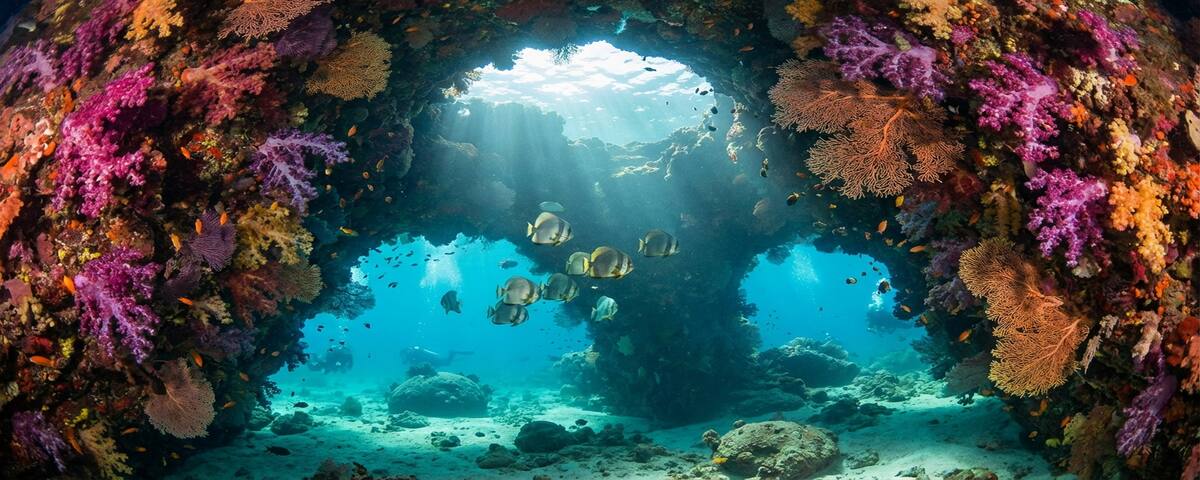
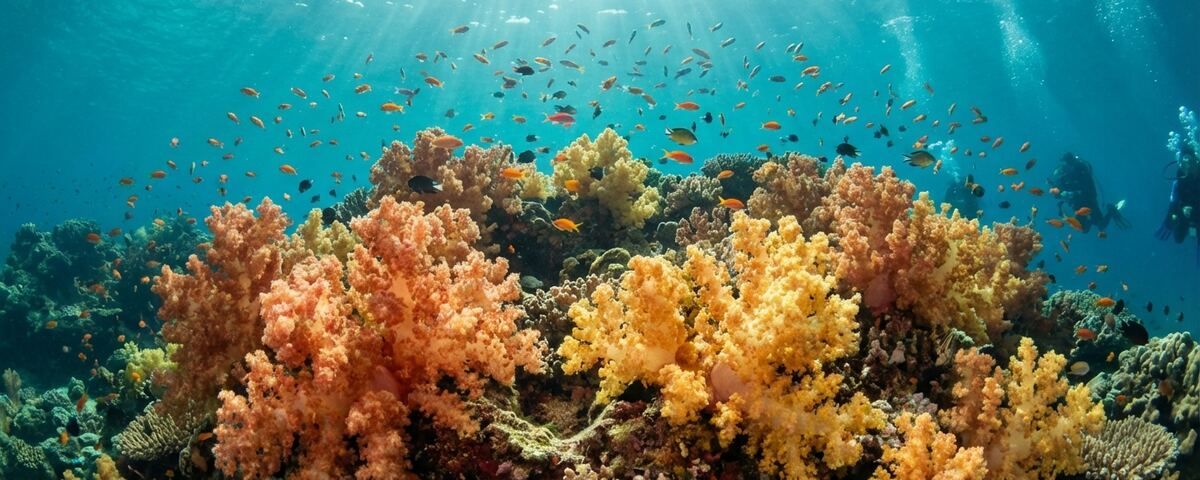
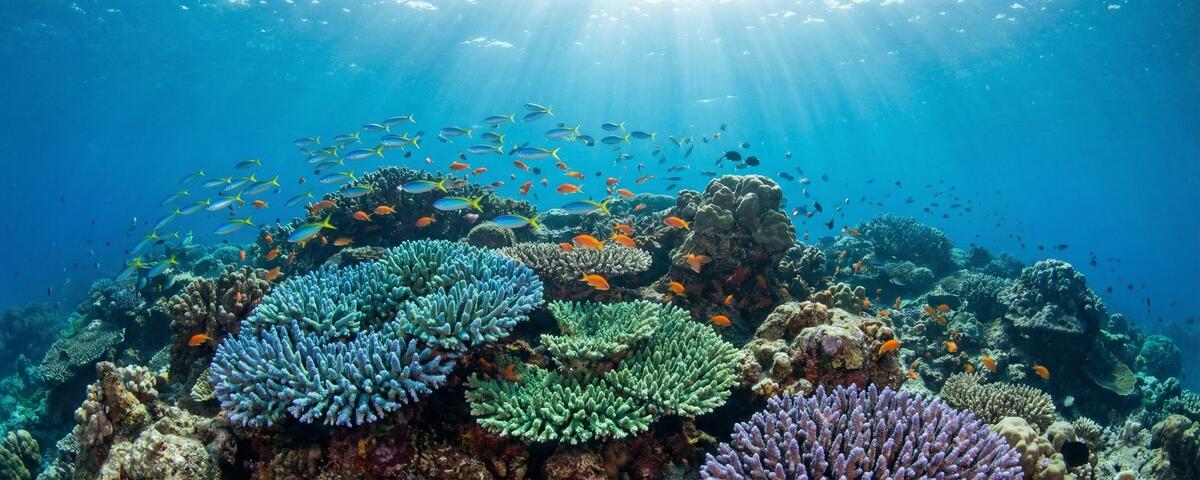
The hard coral coverage at Chicken Reef is the first thing that registers. Massive Porites colonies, some of them several centuries old, anchor the reef flat alongside branching Acropora thickets and plating corals that form terraced landscapes across the slope. The health and density of the hard coral here is remarkable even by Raja Ampat standards, with live coral coverage exceeding 80 percent in the shallows. This is reef architecture at its most intact.
Anthias clouds hover above every bommie in shifting curtains of pink and orange. Damselfish defend their algae patches with an aggression completely out of proportion to their size. Butterflyfish in a dozen species work the reef surface in pairs. Moorish idols, bannerfish, and sergeant majors fill the mid-water. The sheer volume of reef fish at this site is not flashy in the way a pelagic encounter is flashy. It is the cumulative effect of a healthy ecosystem operating at full capacity.
The sand channels between bommies are where the site reveals its muck diving credentials. Garden eel colonies wave in synchronised rhythm, disappearing into their burrows the moment you cross an invisible threshold of proximity. Shrimpgoby partnerships dot the sandy patches, with Randall's gobies and Steinitz's gobies the most commonly spotted species. Mantis shrimp occupy burrows at the channel edges, their oversized eyes tracking your approach with unsettling precision.
Cuttlefish are a regular feature, particularly the broadclub cuttlefish that favour the rubble zones between bommies. Watching one cycle through its colour repertoire while hunting or displaying to a rival is one of the most hypnotic things you can witness underwater. Reef octopus hunt across the substrate during both day and night dives, their colour changes less theatrical but equally impressive. Blue-ringed octopus appear occasionally in the rubble, though they require sharp eyes and slow movement to spot.
Nudibranchs are scattered across the reef in satisfying numbers. Chromodoris species dominate, their electric blue and orange patterns standing out against the coral. Nembrotha kubaryana, the distinctive green-and-black variable neon slug, appears on tunicates growing between the bommies. Phyllidia varieties in black and yellow are common on sponge surfaces. Macro photographers can easily fill an entire dive without looking up from the substrate.
Whitetip reef sharks rest under ledges on the deeper bommies, usually at 20 to 28 metres. They tolerate close approach from calm divers but will swim off if you push too aggressively. Blacktip reef sharks patrol the reef edge, more skittish but regularly visible as silhouettes against the blue. Tasselled wobbegong sharks are the prize find at Chicken Reef. These ornate, flat-bodied sharks lie motionless on coral heads and rocky overhangs, their fringe of fleshy appendages breaking up their outline so effectively that you can be looking directly at one and not see it until your guide points it out.
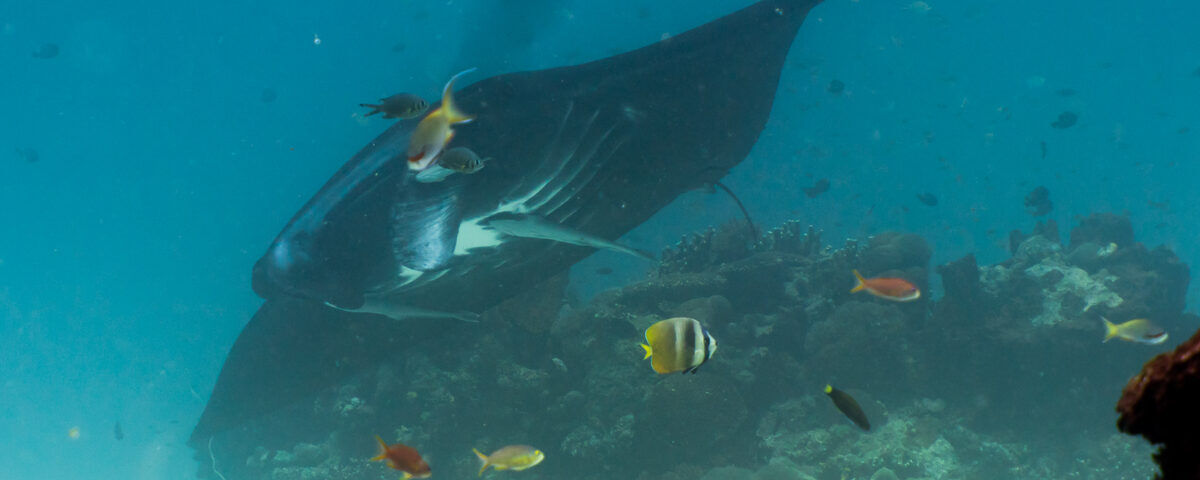
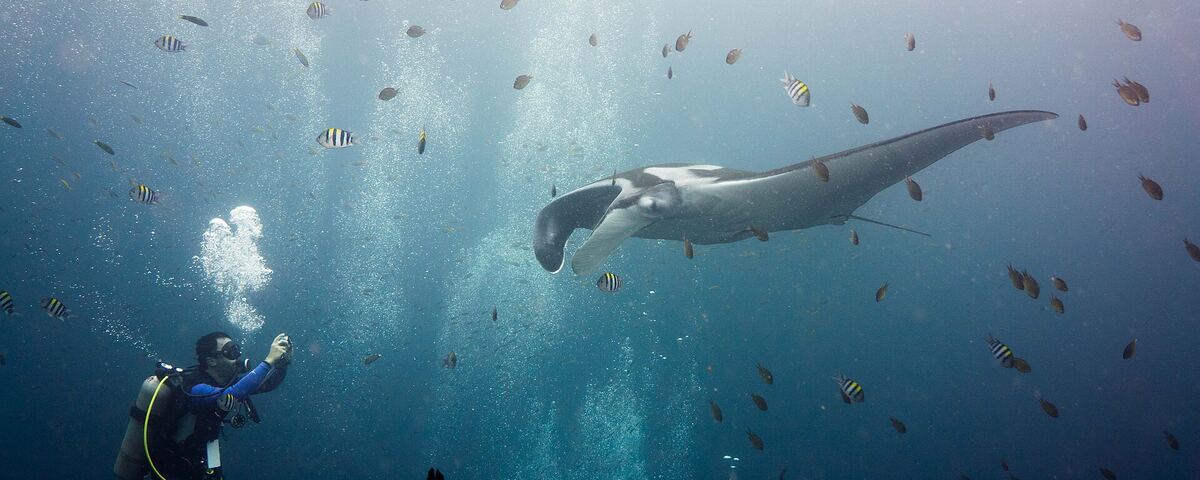
Hawksbill and green turtles cruise the reef regularly. Schools of bigeye trevally and bluefin trevally move through on current, and barracuda occasionally gather in loose formations above the reef crest. During plankton-rich periods, manta rays have been sighted passing through the deeper water off the reef edge, though this is an occasional bonus rather than a reliable feature.
Dive Conditions
Chicken Reef is one of the more forgiving dive sites in Raja Ampat, which makes it a staple on resort dive rotations when conditions elsewhere are too challenging for mixed-ability groups.
Currents are typically mild to moderate across the reef flat and slope. The site sits slightly sheltered from the main tidal flows that blast through the central Dampier Strait channel, so the current-driven drama of sites like Blue Magic or Mios Kon is replaced here by a gentler water movement that still delivers nutrients without demanding advanced drift diving skills. On occasion, currents pick up along the outer reef edge, particularly on spring tides, and divers venturing to the deeper bommies at 25 to 30 metres should be comfortable with moderate flow.
The depth profile is graduated and predictable. The reef crest starts at 2 to 3 metres, slopes to a productive zone between 5 and 18 metres where the bulk of the coral and fish life concentrates, and continues down to sand at 28 to 30 metres. There are no sudden drop-offs, no overhead environments, and no swim-throughs that might trap an inexperienced diver. The gentle gradient means you can manage your air consumption and no-decompression limits easily, spending the majority of the dive in the sweet spot without needing to monitor depth aggressively.
Visibility ranges from 10 to 25 metres depending on tidal state, season, and plankton density. The best visibility tends to occur during incoming tides on clear days between October and December. Plankton blooms, which are common in Raja Ampat's nutrient-rich waters, can reduce visibility to 10 metres or less but simultaneously increase fish activity and feeding behaviour. The trade-off is worth it.
Water temperature sits between 27 and 30 degrees Celsius throughout the year. A 3mm wetsuit is sufficient for most divers. Those who feel the cold on repetitive dives or long immersions may prefer a 5mm suit, but anything thicker is overkill in these waters.
Surface conditions depend on wind and swell. The reef is somewhat protected by Gam Island to the north, but southerly winds can create choppy surface conditions that make entries and exits less comfortable. Boat crews in Raja Ampat are experienced at managing these conditions and will advise on entry timing.
The site is diveable year-round, though October to April represents the peak season with calmest seas, best visibility, and most consistent conditions. May to September brings stronger winds and occasionally rougher seas, though the underwater experience remains excellent when boats can reach the site.
⚓ Divemaster Notes
I treat Chicken Reef as one of my go-to sites for groups that include a mix of experience levels, because the graduated depth profile lets me keep newer divers in the shallows while more experienced members of the group can push deeper along the outer bommies without anyone feeling shortchanged.
The standard profile I run starts at the northern end near the chicken rock, dropping in at around 8 metres on the reef crest. We work south along the slope, following the bommie line at whatever depth suits the group. For beginners and intermediates, I keep things between 8 and 16 metres where the hard coral coverage is densest and the fish life most abundant. For experienced groups, I take a diagonal line toward the outer bommies at 22 to 28 metres where the wobbegong sharks tend to rest.
Finding wobbegongs here requires knowing where to look, and even then they test your observation skills. I have a few reliable spots where they appear repeatedly, usually on flat-topped coral heads with an overhang that provides shade. The sharks match the coral colouration so precisely that I sometimes need to point from 30 centimetres away before the diver sees it. Once you spot one, the encounter is exceptional. They are completely unbothered by divers and will lie motionless while you photograph from point-blank range.
I always brief the group on garden eel etiquette before we hit the sand channels. The instinct is to swim directly at them, which guarantees they retract before you get close enough for a decent look. The technique is to approach at an oblique angle, moving slowly, and stop well before you reach the colony. Settle onto the sand (finding a clear patch, not on coral) and wait. They re-emerge within a minute or two and you can observe natural behaviour rather than a field of retreating tails.
The site works brilliantly for night dives. The bommies come alive after dark with hunting octopus, sleeping parrotfish in mucus cocoons, decorator crabs, and crinoids that unfurl their feathery arms to feed. Spanish dancers, the large red nudibranchs, appear on the reef surface during night dives between December and March. I have seen them here more consistently than at many dedicated muck diving sites.
One practical note: the sandy bottom between bommies silts up easily with careless finning. I emphasise frog kicks and hovering technique during the briefing, particularly for photographers who tend to get low for macro shots and forget about their fins. A silted-out sand channel takes 10 to 15 minutes to clear, which ruins the experience for everyone behind you.
How to Get to Chicken Reef
Chicken Reef lies within the Dampier Strait, approximately 30 minutes by speedboat from Waisai, the main town on Waigeo Island that serves as the administrative hub for Raja Ampat Regency.
The journey to Raja Ampat starts in Sorong, a port city on the western tip of Papua's Bird's Head Peninsula. Sorong's Domine Eduard Osok Airport receives daily flights from Jakarta (4.5 to 5 hours direct), Makassar (2.5 hours), and Manado (2.5 hours). Garuda Indonesia operates the most frequent Jakarta services, with Lion Air and Super Air Jet providing budget alternatives. Expect to pay between IDR 1,500,000 and IDR 4,000,000 for a return flight from Jakarta depending on season and booking lead time.
From Sorong, the public ferry to Waisai departs daily at 2pm and costs approximately IDR 130,000 for economy class. The crossing takes around 2 hours. Private speedboat transfers arranged through dive resorts cost substantially more (IDR 3,000,000 to 5,000,000 each way) but offer flexible scheduling and direct delivery to your resort.
Once based at a resort on Kri, Gam, Mansuar, or Arborek, Chicken Reef is a short boat ride away. Resorts on the southern coast of Gam Island can reach the site in under 10 minutes. Kri-based operations typically take 15 to 20 minutes. Liveaboards transiting the Dampier Strait include it on their itineraries when conditions and group preferences align.
Raja Ampat marine park entry permits are mandatory for all visitors. The permit costs IDR 1,000,000 for international tourists and IDR 500,000 for Indonesian nationals, valid for one calendar year. Permits can be purchased online through the Stay Raja Ampat website or at the permit office in Waisai. Some resorts handle procurement on behalf of guests, but confirm this before arrival to avoid delays.
Indonesian visa policy allows visa-free entry for citizens of many countries for stays up to 30 days, or a Visa on Arrival (VOA) for 30 days extendable to 60 days (IDR 500,000 at immigration). Sorong airport has VOA facilities, though queues during peak season can be lengthy.
Gear Recommendations
A 3mm wetsuit handles Raja Ampat's warm waters comfortably. A 5mm suit is only necessary for divers who feel the cold on third or fourth dives of the day. Macro lens (60mm or 100mm equivalent) is the priority for photographers at this site. The nudibranchs, wobbegongs, and critter life in the sand channels are the standout subjects and demand close-focus capability. A wide-angle setup earns its place for the hard coral gardens and fish aggregation scenes in the shallows, so dual-lens capability or a flip dioptre system maximises your output. A good dive torch is essential for illuminating colours under bommie overhangs and for spotting camouflaged critters like wobbegongs and scorpionfish. Red filter recommended for macro work on shy subjects. SMB mandatory as standard Raja Ampat protocol, even though Chicken Reef rarely produces currents strong enough to push you far from the boat. Reef-safe sunscreen for surface intervals. Nitrox certification recommended for multiple daily dives, extending no-decompression limits in the 15 to 25 metre zone where many of the deeper bommie encounters happen.
Recommended Dive Operators
Papua Explorers Dive Resort on Gam Island operates Chicken Reef as a regular site in their daily rotation, with the reef sitting within a short boat ride from the resort jetty. Their guides are strong on macro identification and will spend time helping photographers locate wobbegongs and nudibranchs rather than rushing through the site. Maximum group size of 4 divers per guide ensures a personalised experience. Raja Ampat Biodiversity Eco Resort, also on Gam, includes Chicken Reef in their portfolio and runs it frequently for mixed-ability groups. Their conservation focus means briefings cover reef health monitoring alongside dive site logistics. Meridian Adventure Dive on the Dampier Strait visits Chicken Reef on their regular schedule, with PADI 5 Star facilities and a strong reputation for instructor-level guiding. Kri Eco Resort on Kri Island, one of the original dive operations in Raja Ampat, schedules Chicken Reef when conditions at more exposed sites are marginal, making it a reliable option during windier periods.
Liveaboard Options
Chicken Reef is easily accessible from land-based resorts in the central Dampier Strait, so a liveaboard is not required to dive this site. That said, liveaboards provide the advantage of combining it with remote Raja Ampat regions like Misool, Wayag, and the Fam Islands in a single expedition. La Galigo Liveaboard runs regular Dampier Strait itineraries that include Chicken Reef alongside flagship sites like Cape Kri and Blue Magic. Their detailed site briefings and experienced cruise directors add context that enhances the dive. The Raja Ampat Aggressor schedules Chicken Reef on their central Raja Ampat routes, typically pairing it with wall and current dives to give groups variety in a single day. Dewi Nusantara, one of Indonesia's premium liveaboard vessels, stops at Chicken Reef during comprehensive Raja Ampat circuits that cover both the Dampier Strait and southern regions. Budget liveaboard options departing from Sorong start around USD 250 per day including diving, meals, and marine park permit assistance. Premium vessels range from USD 400 to 700 per day. Land-based diving at nearby resorts costs USD 35 to 60 per dive with package discounts available for multi-day bookings.