Citrus Ridge Dive Site
Raja Ampat, Indonesia · Near Waisai
Overview
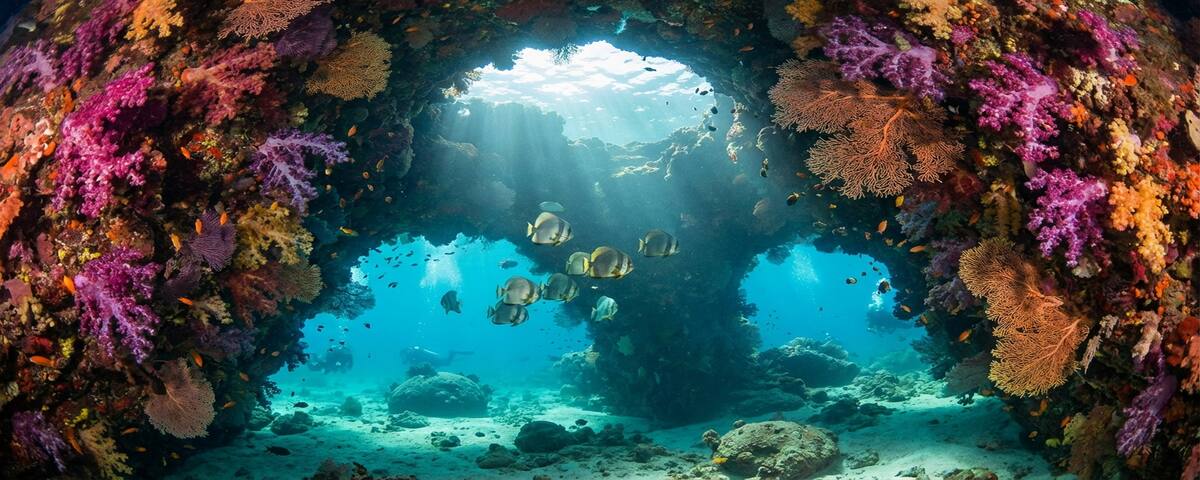
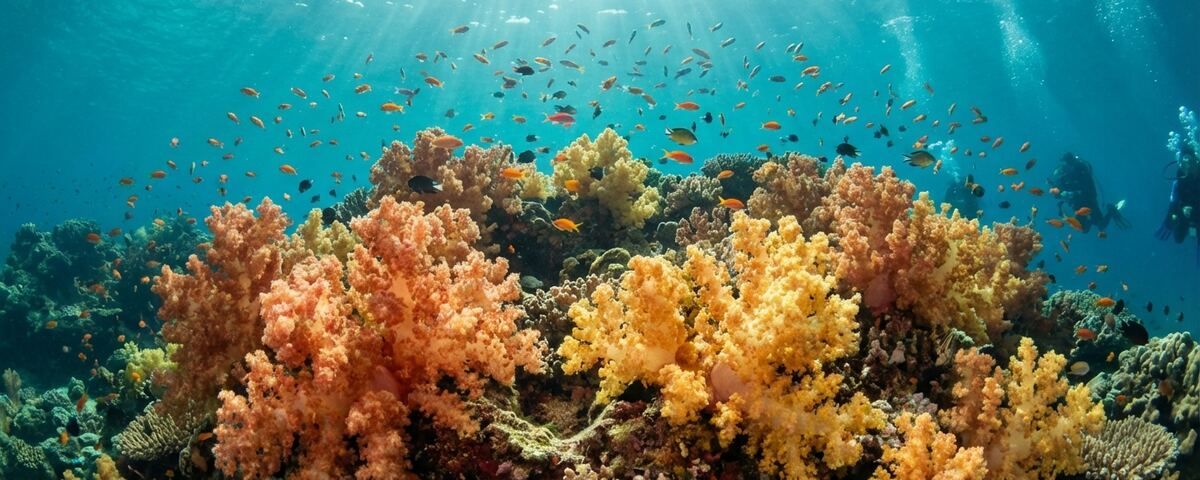
Citrus Ridge sits in the narrow channel between Gam Island and tiny Yanggelo Island, on the western side of Raja Ampat's Dampier Strait area. The site gets its name from the colours of its coral, not from anything growing on land. A central pinnacle rising to about 14 metres is smothered in soft corals so intensely orange and yellow that the whole formation looks, from a distance, like a heap of mandarins dumped on the seafloor. It's one of those rare sites where the name actually undersells the reality.
The channel topography here creates something special. Mangrove forests line both sides of the strait, their root systems pumping nutrients into the water column and fuelling a food chain that starts with plankton and ends with schools of bumphead parrotfish the size of labradors. The channel funnels current across the ridge, delivering a constant supply of food to the corals and the fish that depend on them. Everything feeds everything else, and the result is a reef so densely populated it feels like someone turned the biodiversity dial past maximum.
What makes Citrus Ridge genuinely different from other Raja Ampat channel dives is the combination of macro and wide-angle subjects on a single dive. The pinnacle itself is a wide-angle photographer's dream, all colour and movement and schooling fish. But the sandy slopes flanking it are proper muck diving territory, with crustaceans, nudibranchs, and ghost shrimps hiding in anemones. Most sites force you to choose between the two. This one doesn't.
The dive typically runs as a drift along the channel, starting from whichever end the current favours that day. You drop in near the coastline, work your way across to the central pinnacle for the main event, then drift to the opposite shore and ascend through the shallows. The whole thing takes about 50 to 60 minutes and covers enough ground that repeat dives never feel redundant. Each pass through reveals something you missed the first time.
Marine Life at Citrus Ridge
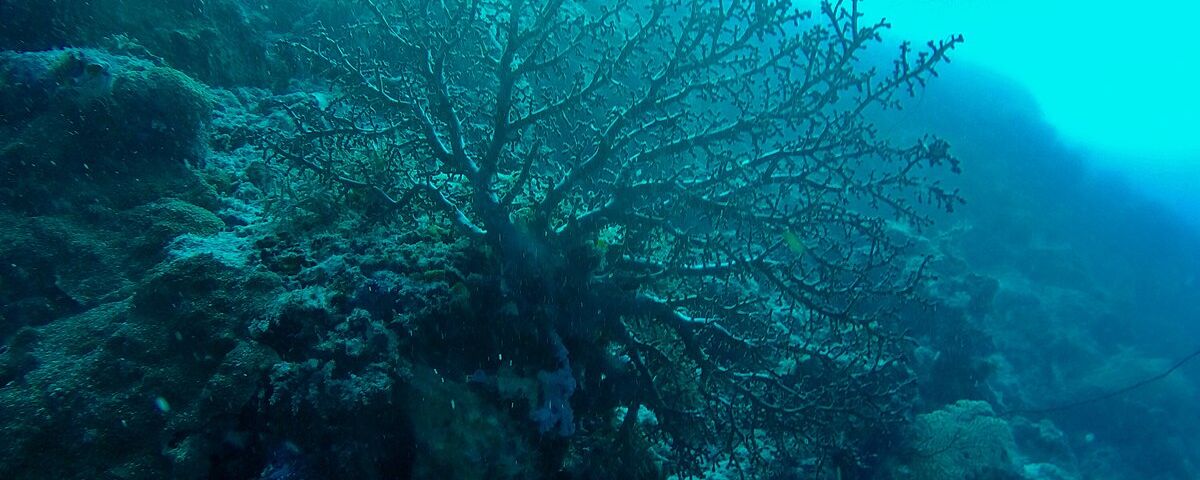
The centrepiece is the pinnacle itself, and the soft corals that gave Citrus Ridge its name deserve every bit of attention they get. Dendronephthya soft corals in shades of orange, tangerine, and bright yellow coat the upper surfaces, while deeper sections host red and purple varieties. Sea fans spread across the current-facing sides, their polyps extended and feeding. Sponge formations in barrel and tube shapes break up the coral cover, adding texture and creating hiding spots for smaller residents.
Bumphead parrotfish are the signature wide-angle encounter here. They move through in groups of 10 to 30, grazing on the reef with audible crunching sounds that you can hear from several metres away. Schools of fusilier pack the mid-water above the pinnacle, their silver and blue bodies catching the light as they shift direction in unison. Barracuda cruise the channel edges. Surgeonfish and batfish are constant presences.
Wobbegong sharks rest on the reef floor around the base of the pinnacle, their tasselled mouths and patterned bodies blending into the substrate so effectively that you can swim directly over one without noticing. Green turtles turn up regularly, often resting on coral outcrops or drifting along the channel. Scorpionfish and lionfish sit motionless on table corals in the shallows, relying entirely on camouflage.
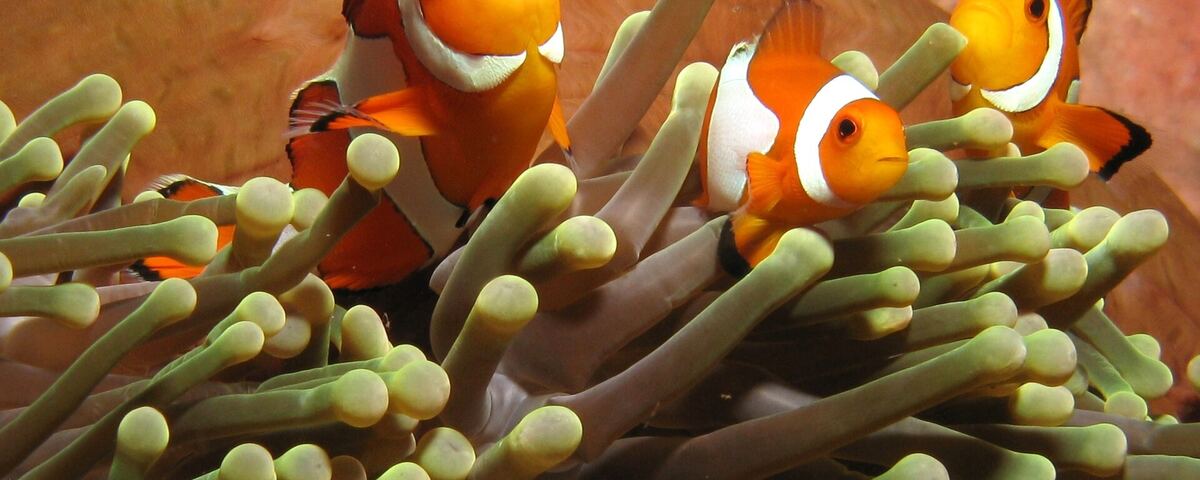
The macro life on the sandy slopes is worth the detour. Ghost shrimps share anemones with clownfish (at least three species are resident here). Nudibranchs in half a dozen varieties crawl across the substrate. Porcelain crabs perch on the edges of anemones, their feeding arms extended into the current. Octopus are present but elusive, usually spotted by guides who know exactly which crevice to check.
If you surface near the mangroves on the southern end, look up. Archer fish hunt insects from the overhanging branches, spitting jets of water at their targets with startling accuracy. It's a bizarre thing to witness on a dive and one of those details that could only happen in a mangrove-channel environment like this one.
Dive Conditions
Current at Citrus Ridge runs along the channel axis and varies from gentle to properly strong depending on the tidal cycle. The channel acts as a funnel, accelerating flow through the narrower sections. On slack tide, the site is manageable for confident beginners. When the current picks up, it becomes a genuine drift dive that suits intermediate divers and above.
The standard dive profile is a drift, entering from the upstream end and letting the current carry you through. Your guide will choose the entry point based on current direction. The crossing from the coastline to the central pinnacle involves a short swim across open water, and if current is running hard, this section can require some effort. Once you reach the pinnacle, the structure itself provides shelter and you can tuck in behind it to observe without fighting the flow.
There's a sand slope roughly halfway through some dive profiles where current can intensify. This section needs a bit of finning to cross, but it passes quickly and the current drops again on the far side. Your guide should brief this section before the dive.
Visibility is typically 15 to 30 metres, with the clearest conditions during the dry season from October to April. The mangrove nutrient input can reduce visibility slightly, particularly after rain, but rarely below 10 metres. Water temperature sits at a consistent 27 to 30 degrees year-round, and a 3mm wetsuit is sufficient for most divers. Some people feel the cold after 50-plus minutes at depth and prefer a 5mm, but that's personal preference.
Entry is by boat, typically a 30 to 60 minute ride from resorts in the Dampier Strait area depending on your base. The site is sheltered enough that surface conditions are rarely a problem, though the channel can produce some chop when wind funnels through.
⚓ Divemaster Notes
Citrus Ridge rewards patience more than most Raja Ampat sites. The instinct is to rush to the central pinnacle because that's where the colour is, but the sandy slopes on either side hold serious macro subjects that are easy to miss if you're swimming too fast. Slow down on the approach and scan the substrate properly.
Timing the crossing to the pinnacle matters. If current is strong, don't fight it across the open section. Wait for a lull or let the guide choose a route that uses the reef structure for shelter. On a strong current day, it's perfectly valid to skip the crossing entirely and work the coastline reef, which is still an excellent dive.
The pinnacle sits at about 14 metres, so air management is rarely an issue. The temptation is to drop deeper along the channel walls, but the best coral colour and fish density is between 10 and 18 metres. Going below 20 takes you onto sandy substrate with less to see and burns air faster.
Reef hooks are not necessary here and not recommended. The pinnacle corals are too fragile and too valuable to risk anchor damage. Maintain buoyancy and use the structure for visual reference rather than physical contact.
If your guide offers the option of exiting near the southern mangroves, take it. The shallow section under the mangrove canopy is a completely different environment from the open channel, with juvenile fish sheltering in the root systems and the archer fish doing their thing above the surface. It's a fitting end to a dive that manages to pack three different ecosystems into a single immersion.
Photographers should bring both macro and wide-angle if they have the option to switch mid-dive (a wet lens system works well here). Failing that, choose wide-angle for a first dive and macro for a second pass. The soft coral colours look best with artificial light, so strobes are worth the hassle even in the relatively bright shallows.
How to Get to Citrus Ridge
Raja Ampat sits in West Papua, Indonesia's easternmost province. The gateway city is Sorong, served by direct flights from Jakarta (roughly 5 hours), Makassar (roughly 3 hours), and occasionally Ambon. From Sorong, a public ferry crosses to Waisai on Waigeo Island in about 2 to 3 hours. Some resorts arrange private speedboat transfers that cut the crossing time significantly.
Citrus Ridge is located in the channel between Gam Island and Yanggelo Island, in the western part of the Dampier Strait area. Dive resorts on Kri, Mansuar, and Gam islands can reach the site by boat in 30 to 60 minutes. Liveaboards operating in the Dampier Strait routinely include it on their itineraries.
Raja Ampat requires a marine park entry permit, currently IDR 1,000,000 for foreign visitors and valid for one year. The permit is payable at the visitor centre in Waisai or online through the Raja Ampat Marine Park Authority website. Keep the card with you; operators check it before every dive trip.
Peak season runs from October to April, when seas are calmest and visibility peaks. Flights to Sorong and resort availability during this window should be booked well in advance, particularly around Christmas and New Year. The shoulder months of September and May can still deliver excellent diving with fewer crowds.
Gear Recommendations
3mm wetsuit sufficient for most divers; consider 5mm for extended dives beyond 50 minutes. SMB mandatory for drift dive exit. Wide-angle lens is the primary choice; consider a flip macro lens for the sandy slopes. Strobes recommended to bring out the full orange and yellow tones of the soft corals. Dive computer with current-aware alerts. Nitrox recommended for maximising time on the pinnacle. No reef hook needed.
Recommended Dive Operators
Meridian Adventure Dive operates from Waisai and runs regular trips to Citrus Ridge as part of their Dampier Strait dive schedule. Their guides know the site thoroughly and time entries to current conditions. Papua Diving on Kri Island is the longest-established operation in the area and includes Citrus Ridge on their western Gam itineraries. Raja Ampat Dive Resort on Mansuar provides access with experienced local guides who grew up diving these channels. For liveaboard access, La Galigo runs Raja Ampat routes that feature Citrus Ridge alongside the more famous Dampier Strait sites. The Damai and Dewi Nusantara also cover the western Gam area on their longer itineraries.
Liveaboard Options
Several liveaboards include Citrus Ridge on their Raja Ampat itineraries, particularly those focusing on the Dampier Strait and western Gam areas. La Galigo features the site as a regular stop on their 7 to 10 night routes. The Dewi Nusantara and Damai include western Gam on their longer circuits. The Papua Explorer and Arenui also cover this area. Liveaboard trips typically run during peak season from October to April, with 7 to 14 night durations. The advantage of a liveaboard at Citrus Ridge is timing: you can hit the site at optimal current conditions rather than being locked to a resort's daily schedule, and combine it with more remote sites further west that day-trip boats can't reach.