Friwenbonda Dive Site
Raja Ampat, Indonesia · Near Waisai
Overview
Friwenbonda is one of those dive sites that looks unassuming from the surface and then floors you the moment your head goes underwater. The small, arrowhead-shaped limestone island sits in the northeastern Dampier Strait, separated from neighbouring Pulau Friwen by a narrow channel that funnels nutrient-rich currents across some of the most densely packed coral growth in all of Raja Ampat.
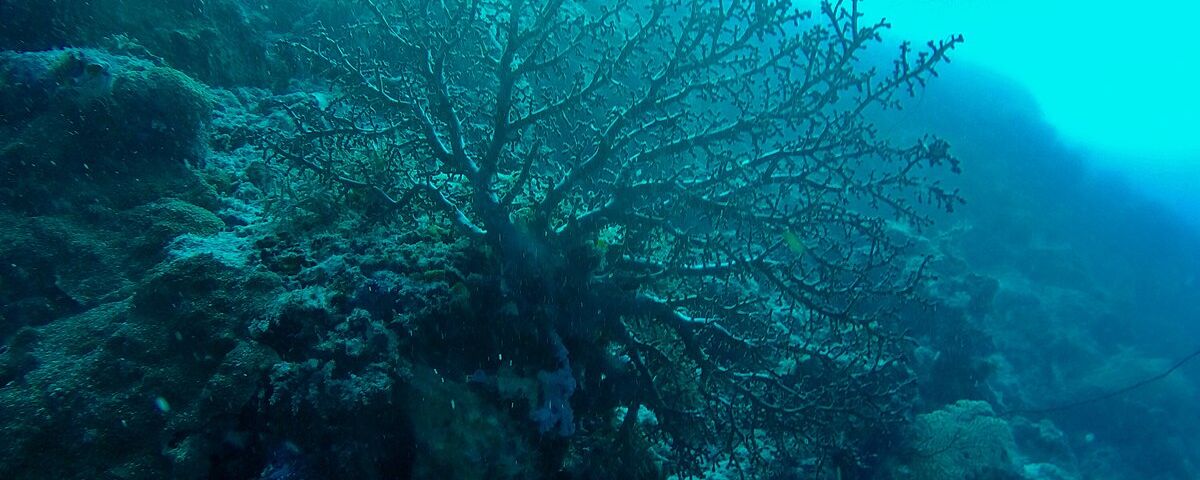
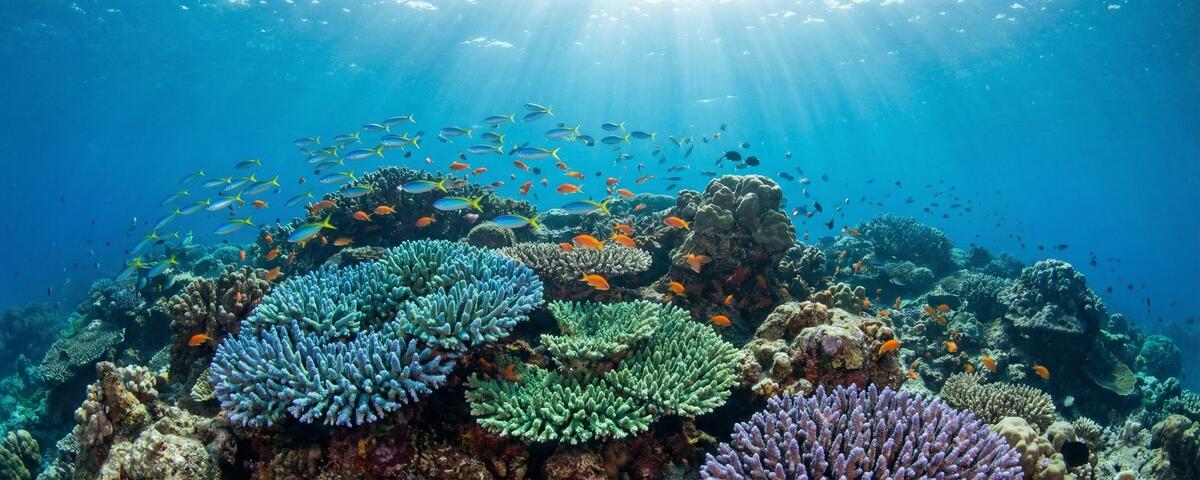
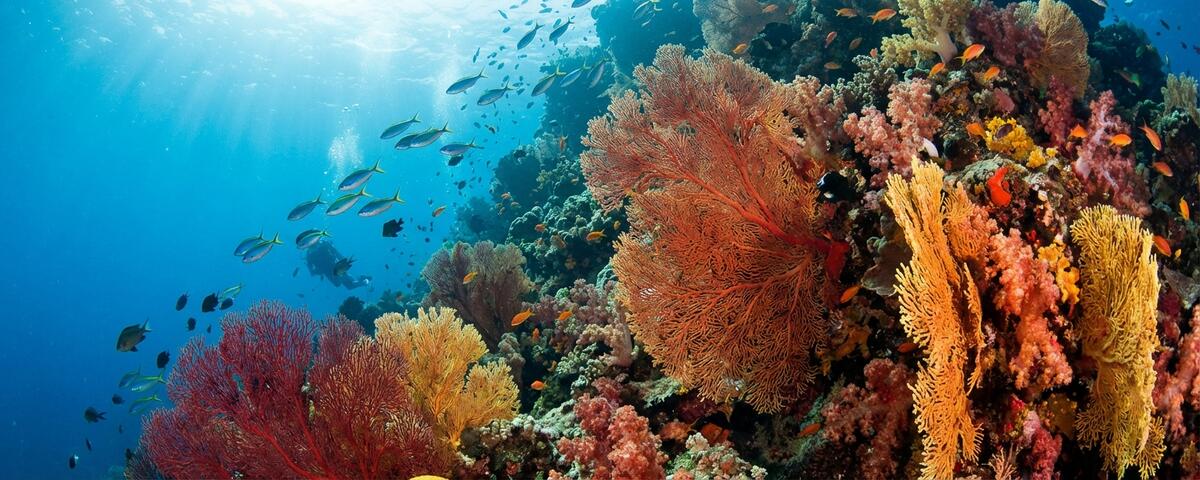
The site is best known for Friwen Wall, a vertical drop along Friwenbonda's northern coast where limestone cliffs plunge from the waterline down to roughly 25 metres. From top to bottom, every square centimetre of rock is colonised. Gorgonian sea fans the size of dining tables spread their latticed branches into the current. Barrel sponges sit in clusters along ledges. Soft corals in reds, oranges, and purples coat the overhangs. It is one of the most photogenic walls in the Dampier Strait, and the only true wall dive in the central Raja Ampat diving area.
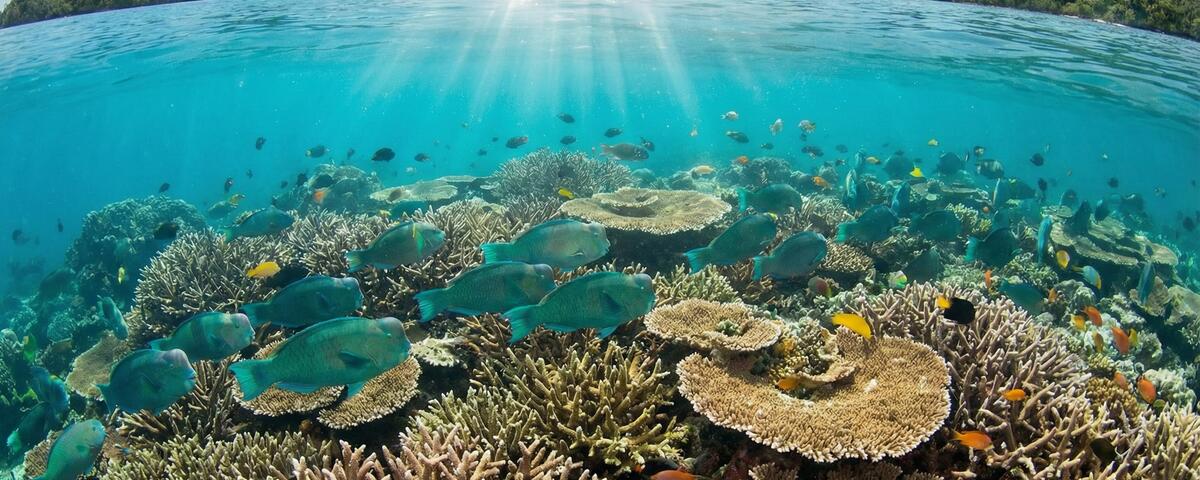
What makes Friwenbonda special is the combination of wall and slope in a single dive. Start at the northern tip where the wall is steepest and most dramatic, then follow it southwest through the channel. As you round the western end, the topography transitions into a gently sloping reef covered in hard coral formations, table corals, and soft coral gardens teeming with reef fish. Two distinct dives in one profile.
The channel between Friwen and Friwenbonda acts as a funnel for tidal currents, and this hydrodynamics is the engine behind the site's extraordinary density of marine life. When the tide turns, schooling fish pour through the gap. Fusiliers stream past in silver ribbons. Trevallies hunt in packs across the shallows. On slack tide, the wall becomes a macro photographer's studio, with nudibranchs, flatworms, and pygmy seahorses hiding in the fans and sponges.
Friwenbonda sits within a 20-minute boat ride of resorts on Gam, Kri, and Mansuar islands, making it one of the most accessible premium dive sites in Raja Ampat. For a region famous for logistical complexity and remote expeditions, that proximity is a genuine advantage. You can dive Friwenbonda twice in a morning and still be back for lunch.
Marine Life at Friwenbonda
The wall itself is the first thing that demands attention. Gorgonian fan corals are the signature feature, growing in concentrations that you rarely see outside of deep-water current-swept pinnacles. Some individual fans stretch over a metre across, their delicate branch networks perfectly positioned to filter plankton from the tidal flow. Between the fans, barrel sponges in yellows and browns sit on ledges, while whip corals extend outward like fishing rods from every available crevice.
Soft corals blanket the overhangs and undercuts along the wall. Dendronephthya species in vivid reds and pinks cluster beneath ledges where the current delivers food. The colour palette underwater, particularly on an incoming tide with good visibility, is genuinely extraordinary. Photographers shooting wide-angle with strobes will struggle to choose frames because the density of growth is uniform. There is no dead patch to skip past.
Two small caves sit at the starting point on the northern tip. Inside, flashlight fish and other species swim inverted against the ceiling, which is a strange sight for divers encountering it for the first time. The caves are shallow enough that penetration is safe and natural light remains visible from inside.
Schooling fish define the channel experience. Black-tipped fusiliers, yellowtail fusiliers, and blueline snappers form the bulk of the traffic, their numbers occasionally hitting the hundreds. Bigeye trevallies patrol in tight, circling schools, picking off stragglers. Rainbow runners cruise the blue water just off the wall. On a good current day, the biomass moving through this narrow channel is staggering for such a compact site.
Macro life is where Friwenbonda quietly competes with the region's most celebrated sites. Nudibranchs are the standout, with operators regularly logging 15 to 25 species on a single dive. Chromodoris varieties dominate, but Nembrotha, Glossodoris, and Phyllidiidae species all appear. Flatworms in vivid patterns cling to the wall surface. Pygmy seahorses hide in the gorgonian fans, their miniature bodies matching the polyp colours so precisely that finding them without a guide is nearly impossible.
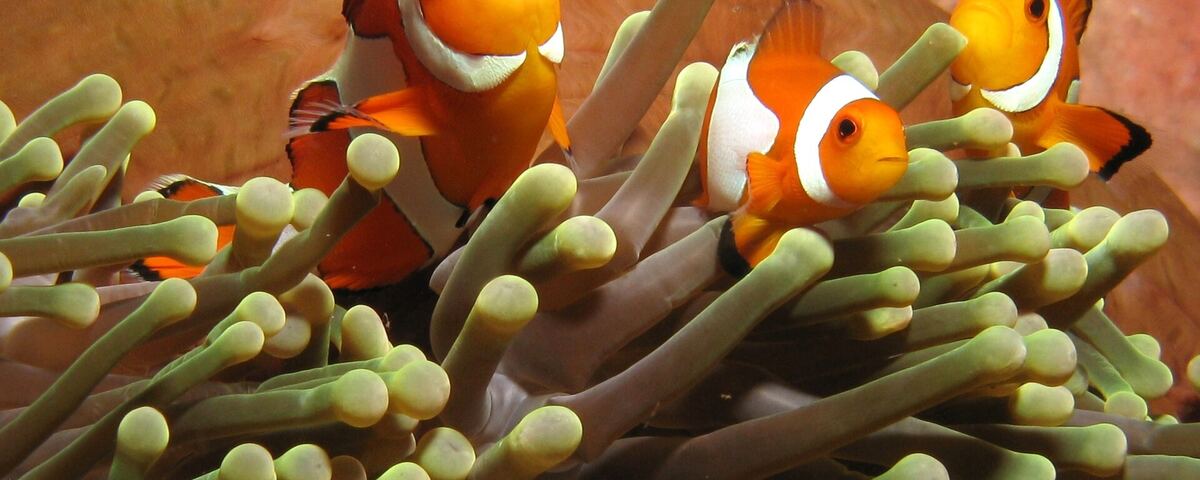
The sloping reef at the western end hosts a different ecosystem. Table corals form platforms where damselfish and anthias gather in clouds. Anemones with resident clownfish dot the hard coral landscape. Mantis shrimp occupy burrows in the rubble patches, their iridescent eyes tracking your movements. Moray eels peek from crevices in the coral heads. Octopus, including the blue-ringed variety, hunt across the substrate during quieter periods.
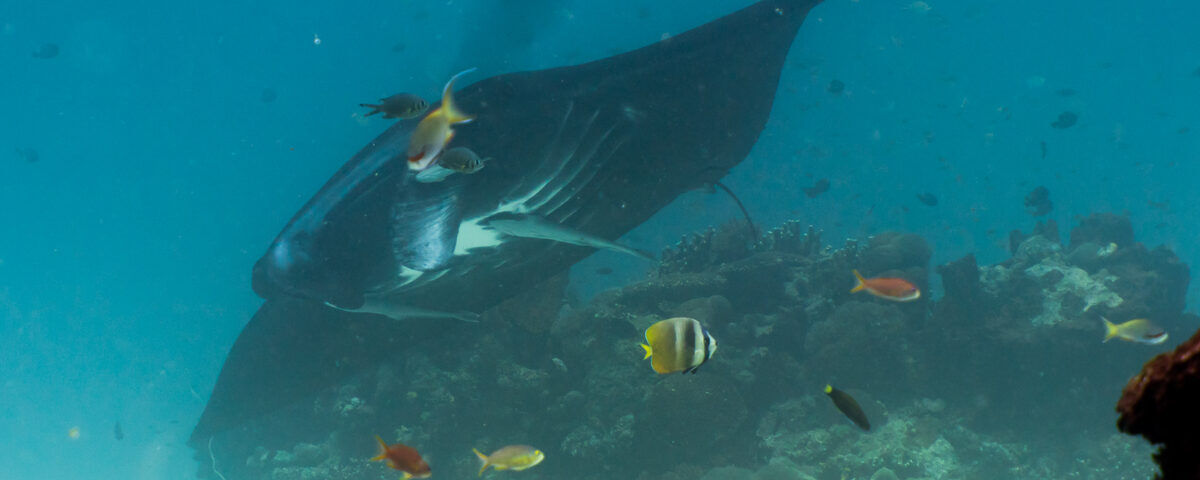
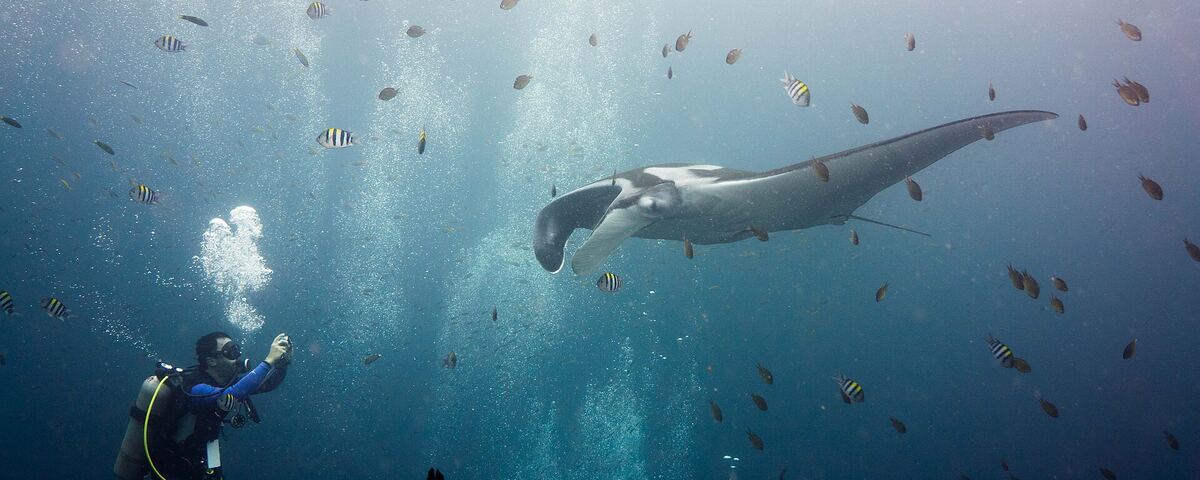
Blacktip reef sharks patrol the edges of the channel, particularly on incoming tides. Eagle rays occasionally glide past the wall during the cooler months. Hawksbill turtles are regular visitors, feeding on the sponges that grow across the wall face. On fortunate days, reef manta rays (Mobula alfredi) pass through the channel, though they are far less predictable here than at dedicated manta sites like Manta Sandy.
Dive Conditions
Friwenbonda's conditions vary considerably depending on the tidal state, which is both the site's greatest asset and the main factor divers need to respect.
On slack tide, the wall is an easy, relaxed dive suitable for confident beginners with an Advanced Open Water certification. Currents drop to near zero, visibility often pushes to 25 or 30 metres, and you can spend an entire hour hovering in front of the wall picking out macro subjects. This is when Friwenbonda earns its reputation as one of the friendliest premium sites in Raja Ampat.
When the tide is running, conditions shift dramatically. The channel between Friwen and Friwenbonda funnels water through a narrow gap, and currents can accelerate to 2 knots or more. At this point, the site becomes a drift dive, and divers need to be comfortable managing buoyancy in moving water. The reward is significantly better fish action: schools thicken, predators appear, and the wall comes alive with feeding activity. Most experienced guides prefer diving Friwenbonda on a moving tide for exactly this reason.
The depth profile is forgiving. The wall runs from 2 metres at the surface to roughly 25 or 26 metres at its base. The productive zone sits between 5 and 20 metres, where the densest fan coral and soft coral growth concentrates. At the western end, the slope tapers to shallow hard coral gardens at 3 to 8 metres, providing a comfortable safety stop area with plenty to look at.
Visibility ranges from 10 to 30 metres depending on season, tidal state, and plankton levels. The best clarity tends to come during the peak season months of October through December, when upwelling brings clear, nutrient-rich water into the strait. During plankton blooms, visibility can drop, but the trade-off is increased fish activity and feeding behaviour.
Water temperature sits between 27 and 30 degrees Celsius year-round. Raja Ampat does not experience the cold thermoclines that affect sites in southern Indonesia, so a 3mm wetsuit or even a rash guard is sufficient for most divers. A 5mm suit is only necessary if you run cold or plan multiple dives per day.
The limestone cliff face means the wall is rough and unforgiving on equipment. Divers should maintain a comfortable distance from the wall surface, both to protect the coral growth and to avoid snagging hoses or fins on the rocky protrusions. Buoyancy control matters here. Silting is minimal because the substrate is rock rather than sand, but careless fin kicks near the fans and soft corals will damage growth that took decades to establish.
⚓ Divemaster Notes
I always check the tide tables before planning a Friwenbonda dive because the experience changes so completely between slack and flow that it is essentially two different sites.
For photographers and macro enthusiasts, I schedule the dive at slack tide. We drop at the northern tip, descend to 20 metres along the wall, and work our way slowly southwest. The two small caves at the start are worth five minutes. The fish swimming upside down against the ceiling always gets a reaction, and the light filtering in from the cave mouths makes for interesting photographs. From there, the wall proper begins. I let the group set their own pace along the fans and soft corals because rushing this section defeats the purpose entirely.
For divers wanting action and fish, I time the dive for an incoming tide. We enter at the northern tip and let the current carry us through the channel. The biomass on a running tide is noticeably higher, with fusilier schools so dense they block the light. Trevallies hunting through the schools provide genuine drama. The trade-off is less time for macro since you are moving with the water rather than hovering.
I always brief the group about the western transition zone. When the wall ends and the slope begins, less experienced divers sometimes assume the dive is over and start ascending. The sloping reef at the western end is where some of the best hard coral formations sit, and the shallow bommies at 5 to 8 metres are excellent for extending the dive during the safety stop.
The pygmy seahorses on the gorgonian fans require patience and very good eyesight. I mark the locations where I have found them previously, but they do move. When I locate one, I signal the group over one at a time. Six divers crowding a single fan with their torches is a recipe for stressed animals and broken coral. One at a time, red light only, and no touching the fan.
Strong current days require a boat briefing on drift procedures. I tell everyone to stay together, carry an SMB, and inflate it if we get separated. The channel is narrow enough that the pickup boat can see bubbles easily, so separation is more of an inconvenience than a danger, but proper protocol matters.
One thing I have noticed over years diving this site: the nudibranch diversity at Friwenbonda genuinely rivals Lembeh Strait, which is saying something. I have logged over 30 species on a single dive here during peak season. For anyone building a nudibranch species list, this wall is essential.
How to Get to Friwenbonda
Friwenbonda sits in the Dampier Strait, roughly 45 minutes by speedboat from Waisai, the administrative capital of Raja Ampat Regency on Waigeo Island. Getting to Waisai is the main logistical step.
Most visitors fly into Sorong, a city on the western tip of Papua's Bird's Head Peninsula. Sorong's Domine Eduard Osok Airport receives daily flights from Jakarta (4 to 5 hours), Makassar (2.5 hours), and Manado (2.5 hours). Garuda Indonesia, Lion Air, and Sriwijaya Air all serve the route, with Jakarta departures being the most frequent.
From Sorong, a public ferry to Waisai departs daily at 2pm and takes roughly 2 hours. The fast ferry costs approximately IDR 130,000 one way. Alternatively, private speedboat transfers can be arranged through dive resorts and cost significantly more but offer flexibility on timing.
Once in Waisai, or at a resort on Kri, Mansuar, or Gam island, Friwenbonda is a short boat ride away. Resorts on Kri and Gam can reach the site in 5 to 20 minutes depending on their exact location. Liveaboards operating in the Dampier Strait include Friwenbonda on virtually every itinerary.
Raja Ampat marine park entry permits are mandatory and cost IDR 1,000,000 for international visitors (valid for one year). Permits can be purchased online through the Raja Ampat government website or at the entry permit office in Waisai. Some resorts handle permit procurement on behalf of their guests.
The dive season runs year-round, but conditions peak between October and April when seas are calmest and visibility tends to be highest. The shoulder months of May and September can still produce excellent diving, though rougher seas may occasionally prevent boats from reaching certain sites. June through August brings stronger winds and choppier seas, and some operators reduce their schedules during this period.
Gear Recommendations
Macro lens (60mm or 100mm) recommended for the wall section where nudibranch and pygmy seahorse photography is the main draw. Wide-angle setup works beautifully for the fan coral landscapes and schooling fish scenes, so photographers with two camera bodies or a flip dioptre system get the most from this site. Torch essential for illuminating soft coral colours under overhangs and inside the two small caves at the northern tip. Red filter for torches useful when observing pygmy seahorses to minimise stress. 3mm wetsuit or rash guard sufficient in Raja Ampat's warm waters. Reef hook not required as the wall provides natural shelter from current, but an SMB is essential for current dives when you may surface away from the boat. Nitrox recommended for multiple dives per day, extending no-decompression time in the productive 15 to 20 metre zone.
Recommended Dive Operators
Raja Ampat Biodiversity Eco Resort on Gam Island sits closest to Friwenbonda, with the site just 5 minutes by boat. Their small-group diving policy (maximum 6 divers per guide, typically 4) and 75-minute maximum dive times make them well-suited for thorough exploration of the wall and slope. Meridian Adventure Dive Resort is a PADI 5 Star Resort on the eastern edge of the Dampier Strait, running Friwenbonda as a regular site on their daily rotation. Their guides are particularly strong on macro identification. Papua Explorers on Gam Island offers Friwenbonda within their core dive site portfolio and caters well to underwater photographers with dedicated camera rinse facilities and photo briefings. Kri Eco Resort on Kri Island is one of the original dive operations in Raja Ampat and includes Friwenbonda on their house reef circuit. Their long-standing relationship with the site means their guides know every nudibranch hotspot and pygmy seahorse location on the wall.
Liveaboard Options
Friwenbonda is accessible from land-based resorts on Kri, Gam, and Mansuar islands, so a liveaboard is not essential for diving this site. That said, liveaboards offer the advantage of combining Friwenbonda with more distant Raja Ampat sites in Misool, Wayag, and the outer atolls during a single trip. La Galigo Liveaboard includes Friwenbonda on their Dampier Strait itineraries and provides detailed site briefings with topographic maps. The Raja Ampat Aggressor runs multiple itineraries through the region, with Friwenbonda featuring on their central Raja Ampat schedule. Dewi Nusantara and the Damai fleet both stop at Friwenbonda during their comprehensive Raja Ampat circuits. Budget liveaboard options from Sorong start around USD 250 per day including diving and meals. Premium liveaboards range from USD 400 to 700 per day. Land-based diving at resorts near Friwenbonda typically costs USD 35 to 60 per dive, with multi-dive packages available.