Lau Lau Reef Dive Site
Raja Ampat, Indonesia · Near Waisai
Overview
Lau Lau Reef sits off the south coast of Gam Island in the Dampier Strait, roughly five minutes by boat from the homestays and dive resorts that cluster along this stretch of Raja Ampat. It is a multi-level reef that drops from a shallow coral plateau at around 8 metres down to a sandy slope at 25 metres, and the structure lends itself to a natural three-stage dive that keeps things interesting from descent to safety stop.
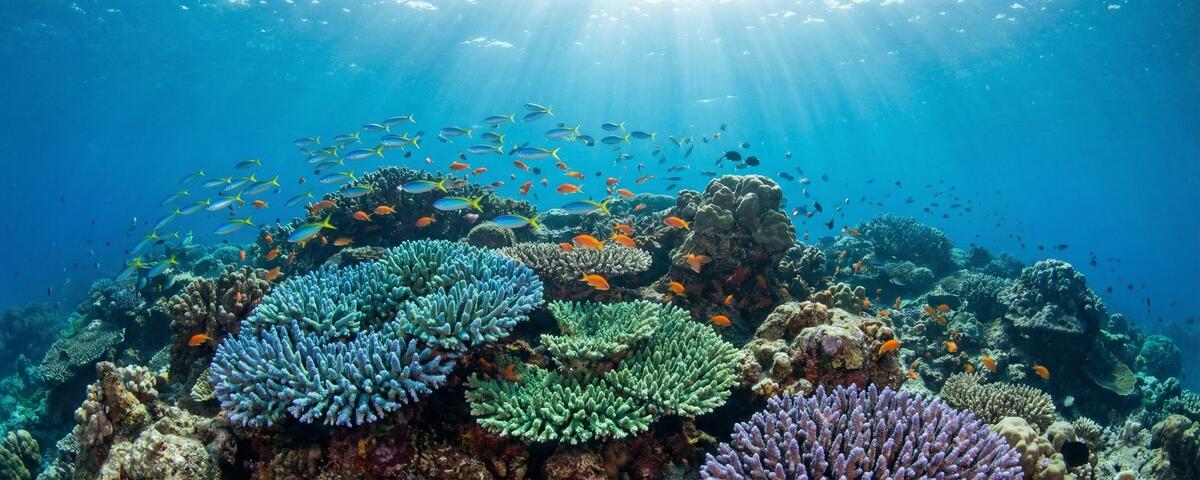
The site rarely gets the attention that Cape Kri or Blue Magic command, which is part of its appeal. Diver traffic is light. The reef is in excellent condition, with dense hard coral coverage on the upper sections and scattered soft corals along the deeper slope. Wobbegong sharks are the signature encounter here, tucked under coral ledges and overhangs where they spend most of the day motionless, waiting for something edible to wander past.
What makes Lau Lau worth the visit is the combination of easy conditions and genuine biodiversity. Current is negligible most days, visibility tends to sit between 15 and 30 metres depending on tide and season, and the depth profile means you can spend a full 60 minutes working through three distinct zones without ever feeling rushed. It is one of those sites that rewards slow, attentive diving over speed.
The Dampier Strait funnels nutrient-rich water between the islands of Gam and Waigeo, feeding the reefs on both sides. Lau Lau benefits from this flow without being directly in the current path, so it gets the nutrients without the washing machine conditions that some nearby sites are known for.
Marine Life at Lau Lau Reef
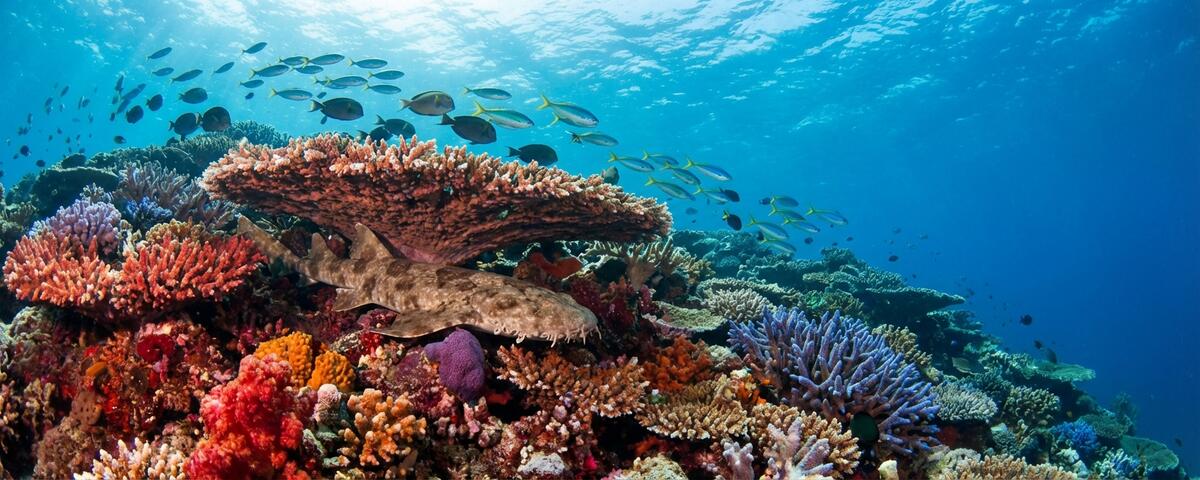
Wobbegong sharks are the headline act. These flat, tasselled sharks rest under coral overhangs throughout the reef, and on a good day you might spot three or four individuals during a single dive. They look like ornate rugs draped over the reef, and they are remarkably tolerant of divers who approach slowly. The tasselled wobbegong (Eucrossorhinus dasypogon) is the species most commonly found here, and Raja Ampat is one of the few places in the world where sightings are almost guaranteed.
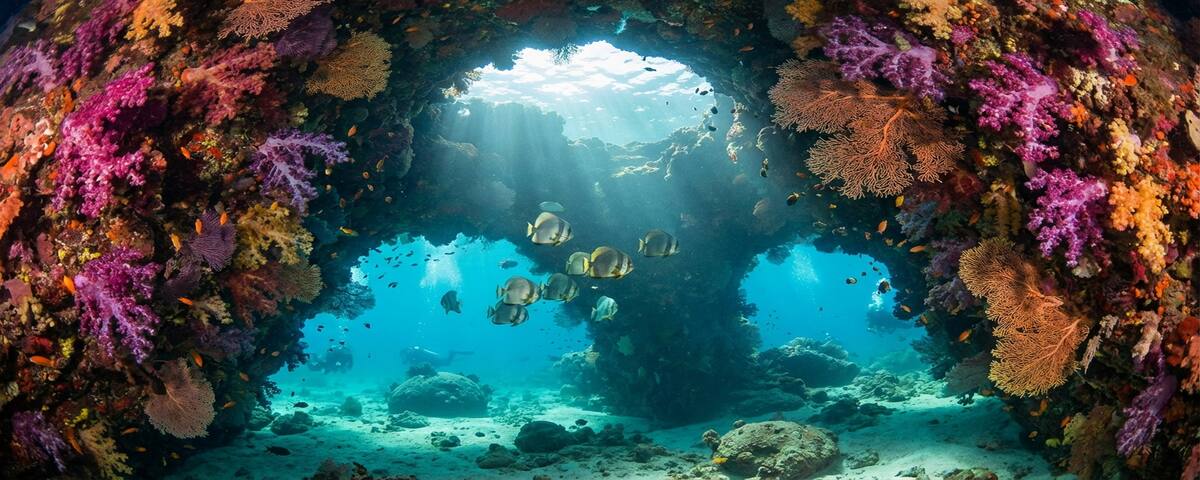
The middle section of the reef at around 18 metres is where the schooling fish congregate. Chevron barracuda hang in loose formations, and oriental sweetlips gather in groups of 10 to 20 under overhangs, their spotted patterns making them one of the more photogenic reef fish in the region. Schools of surgeonfish and yellowtail snappers move across the reef in waves, and giant trevally occasionally blast through on hunting runs.
Giant moray eels are resident. You will find them in crevices along the deeper slope, sometimes with cleaner shrimp working around their mouths. Grey reef sharks cruise the blue water off the reef edge, and eagle rays pass through periodically, particularly during tidal changes when the current picks up slightly.
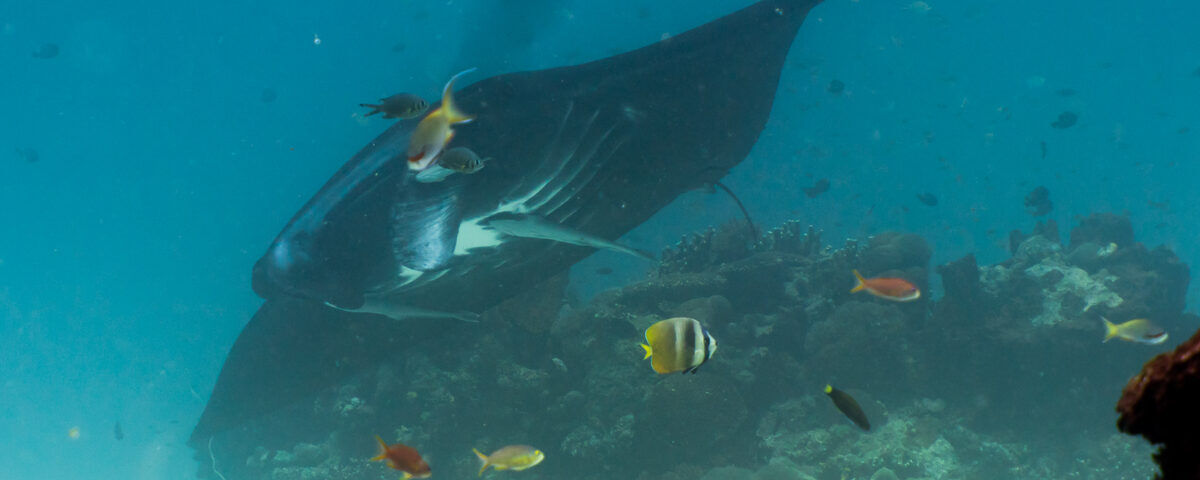
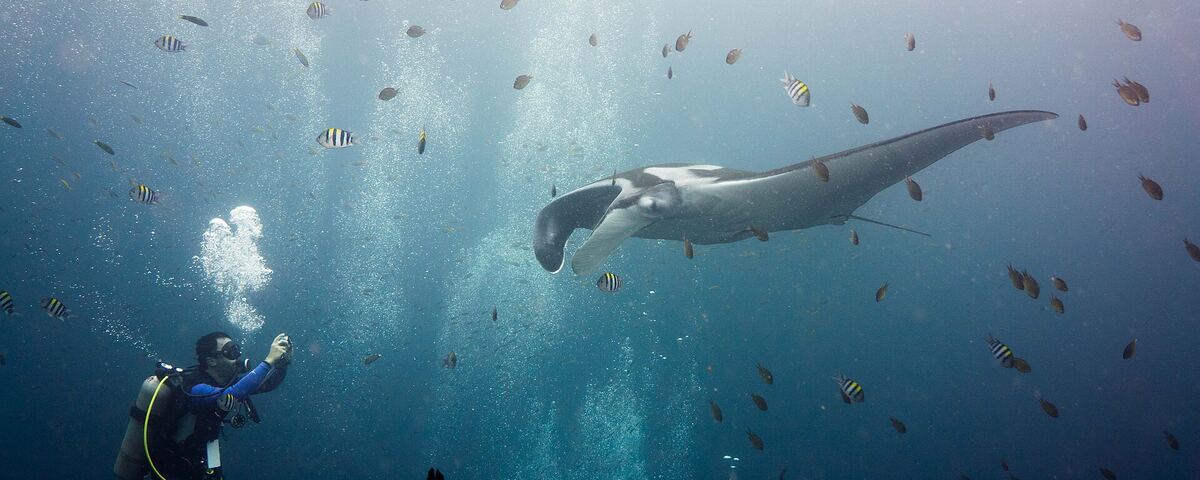
The shallow zone at 9 metres is where the macro life comes alive. Nudibranchs of various species hide among the hard coral branches. In manta season (roughly November to April), reef mantas have been spotted passing through the area on their way to and from the cleaning stations at nearby sites like Manta Sandy and Manta Ridge. These sightings are not reliable at Lau Lau itself, but they happen often enough that it pays to glance into the blue occasionally.
The coral coverage is genuinely impressive. Tabulate corals, staghorn formations, and massive porites colonies create a complex three-dimensional structure that supports the entire food chain. Anthias cloud the reef top in orange and purple, and damselfish defend their patches of algae with characteristic aggression against anything that swims past, including divers.
Dive Conditions
Lau Lau is one of the mellower sites in the Dampier Strait. Current ranges from non-existent to mild, and when it does run, it tends to push gently along the reef rather than across it. This makes it an excellent choice for less experienced divers or for days when the stronger current sites like Cape Kri or Sardines Reef are too intense.
Visibility fluctuates with the tides. Incoming tides generally bring clearer water from the open ocean, pushing visibility towards 25 to 30 metres. Outgoing tides can drop it to 15 metres as greener water flows out from the bays and mangrove channels of Gam Island. Both conditions produce good diving, but photographers tend to prefer the incoming tide for obvious reasons.
Water temperature holds steady between 27 and 30 degrees Celsius year round. A 3mm shorty is more than enough for most divers, though some people prefer a full 3mm suit for extended bottom times.
The multi-level profile is the defining feature of the dive. Most guides run it as a three-stage descent: drop to 25 metres briefly to check the sandy slope for rays and sharks, then work up to the 18-metre zone where the schooling fish and barracuda live, and finish with an extended shallow section at 8 to 9 metres for macro and coral photography. This profile is conservative, air-friendly, and keeps no-deco limits comfortable even on repetitive dives.
Entry is by boat, with a backward roll into water that is typically calm on the lee side of the reef. Surface conditions in the Dampier Strait can be choppy when wind picks up, but the site itself is sheltered enough that the dive is rarely called off.
⚓ Divemaster Notes
The three-stage profile is the way to dive this site, but do not rush the transitions. Spend a few minutes at 25 metres scanning the sand and the deeper overhangs for wobbegongs and morays, then ascend slowly to 18 metres and park yourself near the sweetlips aggregation. The barracuda school tends to hang in the mid-water column here, and patience is rewarded. They drift closer when divers stay still.
Wobbegong spotting is a skill. These sharks blend into the reef so effectively that first-time visitors often swim right over them. Look under any flat coral overhang, particularly those with a sandy floor underneath. The wobbegongs prefer spots where they can ambush prey that swims past, so overhangs near the edge of coral formations are prime locations. Once you find the first one, your eyes calibrate and the rest become much easier to spot.
The shallow section is where most groups rush through on their way back to the boat. Do not do this. The hard coral garden between 8 and 10 metres is some of the healthiest reef in the Dampier Strait, and the nudibranchs here reward anyone willing to slow down and look closely. If your group has photographers, budget at least 15 minutes for the shallow zone.
For manta encounters, keep an eye on the blue water during November through April. If mantas are in the area (your resort staff will know from reports at nearby cleaning stations), they sometimes transit across Lau Lau. Position yourself on the reef edge at around 12 metres and watch the open water. It is not a manta site, but the bonus encounters happen here more often than most guides admit.
This site works brilliantly as a first dive for guests who have just arrived and need to shake off travel fatigue. Easy conditions, guaranteed critters, and a confidence-building profile before moving on to the current-exposed sites the following day.
How to Get to Lau Lau Reef
Raja Ampat is reached via Sorong, the main gateway city in West Papua. Flights from Jakarta (Garuda, Lion Air, Batik Air) take around four hours, with a stop in Makassar or Ambon on most routes. From Sorong, a public ferry runs to Waisai on Waigeo Island (roughly two hours), or you can arrange a private speedboat transfer through your resort or liveaboard operator.
Lau Lau Reef is in the Dampier Strait, off the southern shore of Gam Island. Most dive resorts in the central Raja Ampat area can reach it in five to fifteen minutes by boat. Resorts on Gam, Kri, and Mansuar islands all include Lau Lau in their regular dive site rotation. Liveaboard itineraries covering the Dampier Strait also visit the site, typically as a relaxed dive between more demanding current sites.
The Raja Ampat Marine Park entry permit is required for all visitors and costs 1,000,000 IDR for international tourists (roughly USD 65) or 500,000 IDR for Indonesian nationals. Permits are valid for one year and can be purchased online through the Raja Ampat government website or at the Waisai port office on arrival. Your resort or liveaboard operator will usually handle this.
Best diving season runs from October to April, when seas are calmest and visibility peaks. The June to September period brings stronger winds and rougher surface conditions, though diving is still possible on sheltered sites. Some operators close entirely during the windiest months of July and August.
Gear Recommendations
Standard tropical dive gear. A 3mm full suit or shorty is fine. Torch is useful for looking under overhangs where the wobbegongs hide, even on daytime dives. The shadows under coral ledges swallow a lot of light, and a torch beam reveals the sharks far more effectively than squinting.
For photography, this site rewards both wide angle and macro setups, which creates a dilemma. If forced to choose, wide angle wins here. The wobbegongs, barracuda schools, and reef seascapes are the signature shots, and you will want at minimum a 10 to 17mm equivalent to capture them properly. Macro shooters will enjoy the shallow section but may feel frustrated missing the bigger subjects deeper down.
Reef hooks are not needed. Current is rarely strong enough to warrant one, and the reef structure does not lend itself well to hooking in. SMB and reel are standard practice for Raja Ampat diving, even on calm sites. Boats track bubbles but an SMB on ascent is expected.
Recommended Dive Operators
Raja Ampat Biodiversity Eco Resort on Gam Island is the closest resort to Lau Lau, with the site just five minutes from their jetty. Papua Diving on Kri Island (the original Raja Ampat dive operation, running since 1996) includes Lau Lau in their regular rotation and has some of the most experienced guides in the region. Meridian Adventure Dive Resort on Gam also covers this site frequently.
For liveaboard access, the major operators running Dampier Strait itineraries include Damai, Dewi Nusantara, and Samambaia. These boats typically include Lau Lau as a relaxed dive between the higher-adrenaline sites in the strait.
Homestay options on Gam and Arborek offer budget diving in Raja Ampat, with guided dives to Lau Lau available for significantly less than the resort prices. Quality varies. Ask about guide experience and group sizes before booking.
Liveaboard Options
Most liveaboard itineraries covering the Dampier Strait include Lau Lau Reef. The site works well as an early morning or late afternoon dive when conditions on more exposed sites are too strong. Damai, Dewi Nusantara, Samambaia, Archipelago Fleet, and La Galigo all run Dampier Strait routes that include this site. Trip lengths typically range from seven to twelve nights, with the Dampier Strait portion covering three to four days of diving alongside sites like Cape Kri, Blue Magic, Sardines Reef, and Manta Sandy.