Manta Ridge Dive Site
Raja Ampat, Indonesia · Near Waisai
Overview
Manta Ridge sits in the Dampier Strait between Mansuar Island and Arborek, and it is quite possibly the most reliable place in all of Raja Ampat to find manta rays in numbers. Not one or two cruising past in the blue. Groups of five, ten, sometimes thirty, circling a cleaning station on a coral ridge at depths most divers can comfortably reach.
The site is a reef slope that drops from just below the surface to beyond 40 metres, but the action happens shallow. The cleaning stations where mantas queue up to have parasites picked off by wrasse and butterflyfish sit between 6 and 17 metres. You can spend an entire dive at 10 metres and see more manta rays than most divers encounter in a lifetime. That depth profile is deceptive, though. The currents here are serious, and the southern slope carries dangerous downcurrents that have caught experienced divers off guard. This is not a site where you drift along passively and hope for the best.
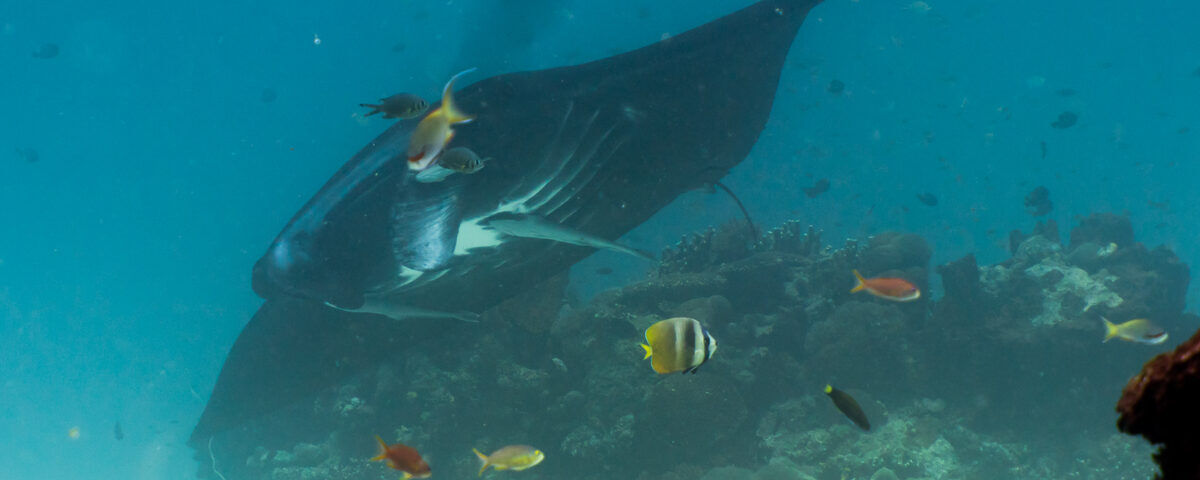
What makes Manta Ridge unusual, even by Raja Ampat standards, is the presence of both reef mantas (Mobula alfredi) and oceanic mantas (Mobula birostris) at the same location. Reef mantas are the more common visitors, but oceanic mantas, the larger of the two species with wingspans exceeding five metres, show up regularly during peak season. Some of the resident mantas here are melanistic, entirely black on both dorsal and ventral surfaces, a variation that occurs in roughly 10 percent of the Raja Ampat population but is rare elsewhere in the world.
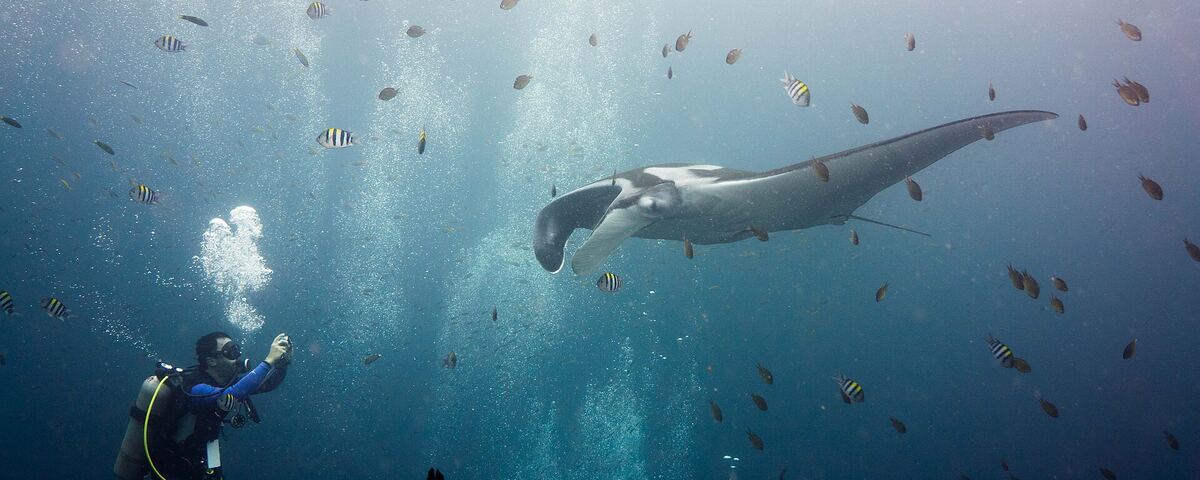
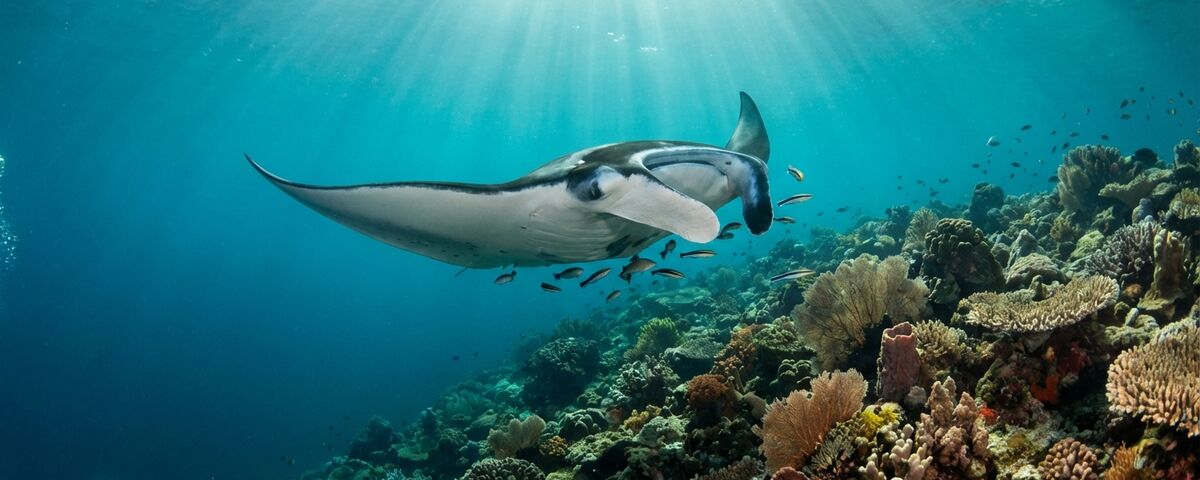
The cleaning station dynamic is what elevates this dive from a good manta encounter to something genuinely extraordinary. Mantas approach the ridge from the blue, slow down, and hover over specific coral heads while cleaner wrasse and black-lipped butterflyfish work their gill slits and undersides. The mantas are not passing through. They are stationary, sometimes for minutes at a time, at eye level with a diver hooked onto the ridge. You are not chasing them. They come to you.
Outside of manta season, the ridge itself is a strong dive on its own merits. Bumphead parrotfish move across the reef in squadrons. Blacktip reef sharks patrol the deeper sections. The hard coral gardens on the ridge top are dense and healthy, supporting the kind of fish biomass that makes Raja Ampat's species counts the highest ever recorded on a single dive.
Marine Life at Manta Ridge
The mantas are the headline. During peak season from October through April, groups of reef mantas arrive at the cleaning stations throughout the day, with mornings typically producing the largest aggregations. They approach from the deeper water to the south, riding the current up and over the ridge before settling into their cleaning circuits. Each manta follows a looping flight path, circling the cleaning station and presenting different body surfaces to the cleaner fish before peeling away and rejoining the queue. Watching this from a reef hook position 5 metres away is hypnotic. The wingbeats are slow and deliberate, and the animals show zero concern about divers who remain still.
Oceanic mantas are less predictable but appear multiple times per month during peak season. They are noticeably larger than the reef mantas, and their cephalic fins (the horn-like structures flanking the mouth) are proportionally bigger. The melanistic individuals are striking. An all-black manta with a five-metre wingspan cruising past at close range is one of the most visually arresting things the underwater world produces.
Yellow pilot fish swim in formation beneath the mantas' bellies, and remoras cling to their undersides, hitching rides between cleaning stations. Cobias follow at a respectful distance, their dark torpedo shapes shadowing the mantas' movements. Golden trevallies flash through the entourage, and the whole procession has the feel of a squadron with escorts.
The ridge itself supports a resident population of bumphead parrotfish, typically in groups of 10 to 30. They crash across the coral with the subtlety of a demolition crew, their beaked jaws audible underwater as they bite chunks from the reef surface. Blacktip reef sharks cruise the deeper slope between 20 and 30 metres, more skittish than the mantas but regularly visible.
Hawksbill turtles are common on the reef, feeding on sponges and soft corals. Moon wrasse, cleaner wrasse, and leopard wrasse populate the coral heads. Spotted eagle rays pass through occasionally, their polka-dot patterns unmistakable against the blue. In the sandy areas at the base of the slope, garden eels sway in the current and small stingrays rest on the substrate.
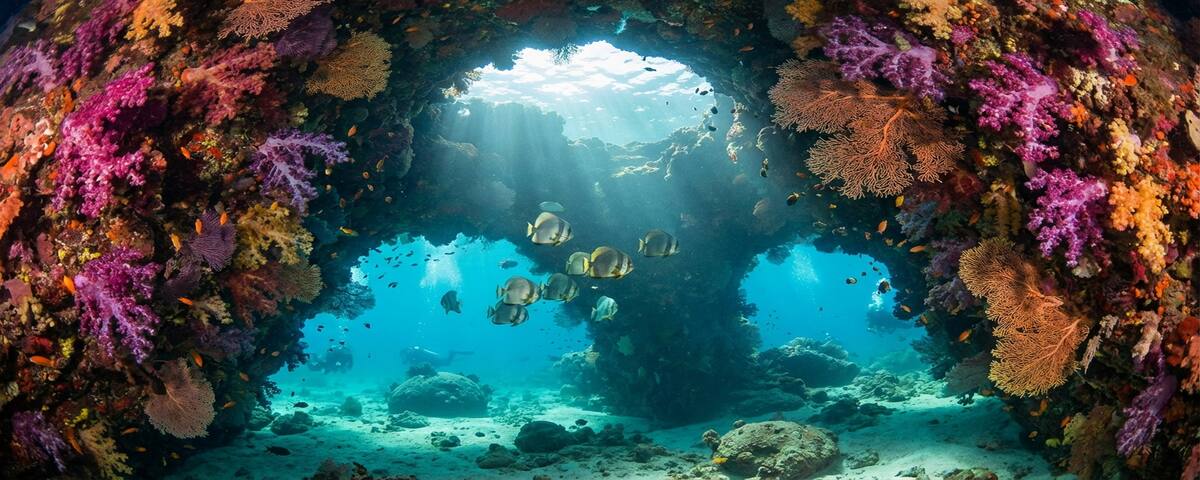
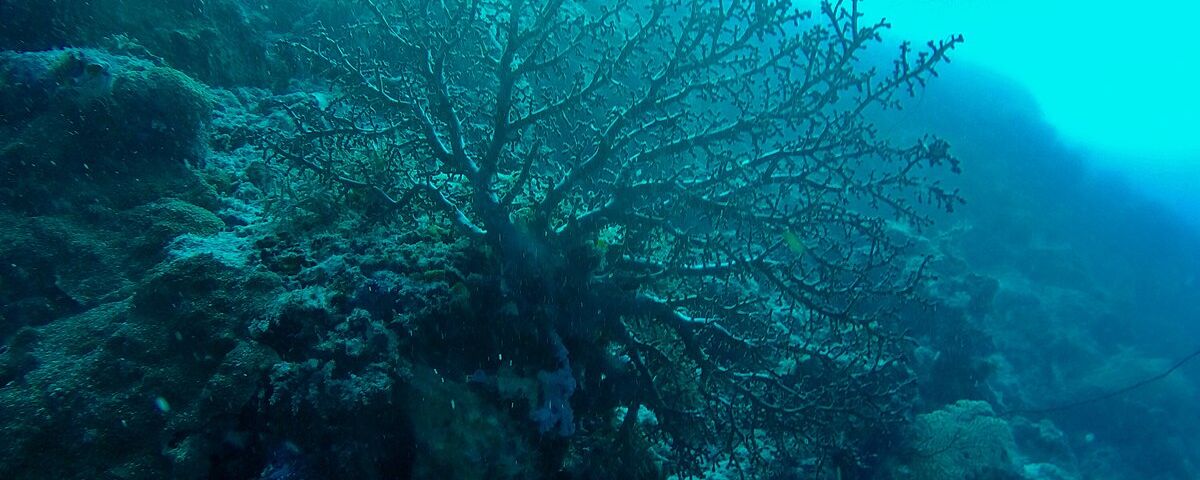
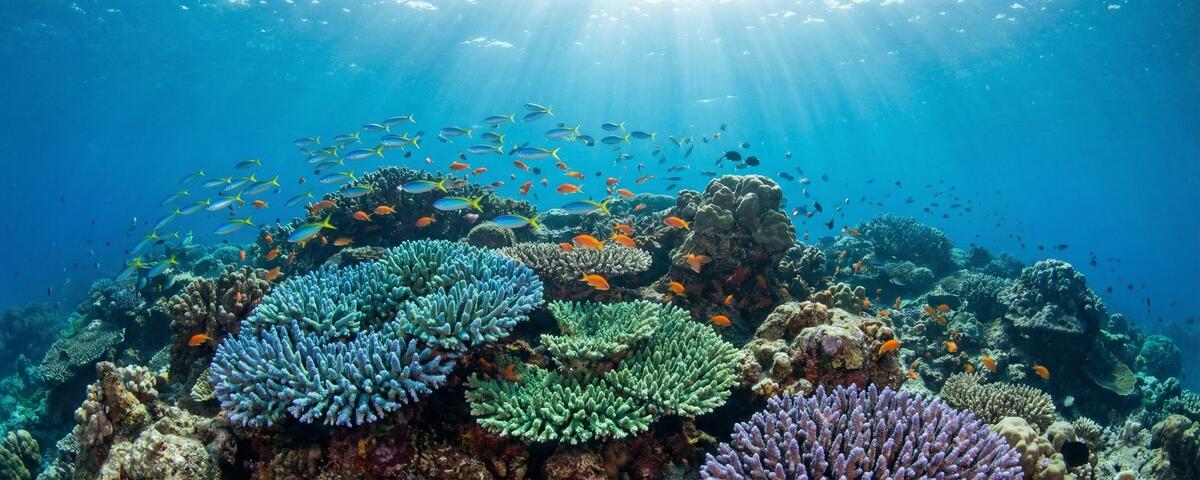
The hard coral on the ridge top is exceptional. Massive Porites heads anchor the structure, with tabulate Acropora colonies filling the gaps and staghorn formations providing shelter for clouds of chromis and damselfish. Soft coral and sea fan growth increases with depth, adding colour to the deeper sections of the slope. The overall impression is of a reef operating at full biological capacity, which makes sense given the nutrient-rich currents that feed the cleaning stations.
Dive Conditions
Manta Ridge earns its advanced rating honestly. The currents here are not the gentle flow that nudges you along a wall. They can be genuinely strong, arriving from multiple directions, and the southern slope is prone to downcurrents that intensify during tidal changes. These downcurrents are the primary hazard at this site. They pull divers deeper and away from the ridge, and they tend to be strongest precisely when you are ascending at the end of the dive. Awareness of your position relative to the ridge is constant work here, not something you can relax about after the first few minutes.
Reef hooks are not optional. Every operator worth diving with will brief you on reef hook technique before this dive, and if you have not used one before, Manta Ridge is not the place to learn. The hook clips onto a dead section of reef (never live coral), and the line lets you hover in the current like a flag in a breeze, hands free to manage your camera or simply watch. Without a hook, maintaining position at the cleaning stations in moderate current is difficult. In strong current, it is impossible.
The standard dive profile enters at the ridge top, which can be anywhere from 2 to 5 metres below the surface depending on the tide. From the entry point, divers follow the ridge westward with the reef on the right shoulder, descending gradually to the cleaning station area between 8 and 17 metres. The ridge drops away steeply to the south, and this is the slope to avoid. Briefings will emphasise staying on the northern side of the ridge, where current is typically more manageable and the cleaning stations are located.
Visibility varies significantly. On good days with incoming tides and clear water, you get 25 to 30 metres and the mantas are visible from a distance as they approach. During plankton-heavy periods, visibility can drop to 10 metres or less. The mantas are actually more active during these low-visibility conditions because plankton is their food source, so reduced vis often correlates with better encounters. The trade-off is that wide-angle photography becomes harder.
Water temperature holds between 27 and 30 degrees Celsius year-round. A 3mm wetsuit is standard. Surface conditions in the Dampier Strait can be choppy, particularly during afternoon winds from the south. Entries and exits require good timing and a responsive boat crew.
The site is diveable throughout the year, but manta presence peaks between October and April. Outside this window, mantas still appear but less frequently and in smaller numbers. June through September sees rougher surface conditions and less predictable diving, though the reef itself remains impressive regardless of season.
⚓ Divemaster Notes
I run this site differently depending on the current. On a mild day, we swim the ridge at a relaxed pace, hooking on when we reach the cleaning stations and staying put until the mantas cycle through. On a strong current day, the plan changes entirely. We drop in upstream of the cleaning stations, hook on immediately, and wait. Trying to swim against the current to reach a specific spot is a waste of air and energy.
The key to a good manta encounter here is stillness. Once you are hooked on within visual range of a cleaning station, do nothing. Do not kick. Do not adjust your position. Breathe slowly and let the mantas come to you. They will. The animals at this site are habituated to divers and will approach within touching distance (do not touch them) if you are calm and neutrally buoyant. The moment someone starts finning toward a manta, it changes course and the encounter ends for everyone.
I brief every group on the southern slope. The downcurrents there are real and they are unpredictable. On ascending, I always take the group north off the ridge into the shallows before going up. Never ascend directly from the cleaning station area on the ridge, because the water column on the south side can push you down faster than you can fin up. I have seen experienced divers pulled from 15 metres to 25 metres in seconds on this slope. Take the northern route up. Always.
For photographers, the challenge is balancing wide-angle framing with the reality of current. Mantas at this site are close enough that a 10-17mm rectilinear lens works beautifully, but holding a camera steady in moderate current while hooked on with one hand takes practice. I suggest clipping the camera to your BCD during the swim to the cleaning stations and only deploying it once you are hooked on and settled. Shooting upward against the surface light with mantas silhouetted above you produces the most dramatic images.
One detail that often gets overlooked: the ridge top between dives is excellent snorkelling. On surface intervals, I have seen mantas feeding in 2 to 3 metres of water directly above the ridge, and snorkellers get encounters that rival the diving. Worth mentioning to guests who may have non-diving partners on the trip.
How to Get to Manta Ridge
Manta Ridge lies in the Dampier Strait, roughly midway between Mansuar Island and Arborek Island. It is one of the more centrally located dive sites in the region, accessible from every resort and liveaboard operating in the central Dampier Strait corridor.
The journey to Raja Ampat begins in Sorong, the gateway city on the western tip of Papua's Bird's Head Peninsula. Sorong's Domine Eduard Osok Airport (SOQ) receives daily flights from Jakarta (4.5 to 5 hours direct with Garuda Indonesia), Makassar (2.5 hours), and Manado (2.5 hours). Budget carriers including Lion Air and Super Air Jet fly the Jakarta route at lower fares. Return flights from Jakarta typically cost between IDR 1,500,000 and IDR 4,000,000 depending on season and how far ahead you book.
From Sorong, the public ferry to Waisai on Waigeo Island departs daily at 2pm. The crossing takes approximately 2 hours and costs around IDR 130,000 for economy class. Most dive resorts arrange private speedboat transfers from Sorong directly to the resort, bypassing Waisai entirely. These transfers cost between IDR 3,000,000 and IDR 5,000,000 each way but offer flexible scheduling and door-to-door convenience.
From resorts on Kri, Gam, or Mansuar, the boat ride to Manta Ridge takes 10 to 25 minutes. Arborek-based operations reach it in under 10 minutes. Liveaboards transiting the Dampier Strait include Manta Ridge as a priority stop, often scheduling it for morning dives when current patterns and manta activity tend to be most favourable.
Raja Ampat marine park permits are mandatory. The fee is IDR 1,000,000 for international visitors and IDR 500,000 for Indonesian nationals, valid for one calendar year. Purchase online through the Stay Raja Ampat website or at the Waisai permit office. Some resorts handle this on your behalf, but confirm before arrival.
Indonesian visa policy allows visa-free entry for citizens of many countries for up to 30 days. A Visa on Arrival (VOA) extends this to 30 days, renewable once for another 30 days, at a cost of IDR 500,000. Sorong airport has VOA facilities, though queues during October to December peak season can test your patience.
Gear Recommendations
Reef hook and line are mandatory at this site. Bring your own or confirm your operator supplies them. The standard setup is a 1 to 1.5 metre line with a stainless steel hook on one end and a clip for your BCD D-ring on the other. Practice deploying and stowing it before the dive if it is unfamiliar. Wide-angle lens is the priority for photography. The mantas are large and close, and anything narrower than 16mm equivalent will struggle to fit them in frame. A fisheye or rectilinear 10-17mm behind a dome port is ideal. Strobes are useful for fill light on overcast days but not strictly necessary given the shallow depth and available ambient light. Video shooters should consider a red filter for deep sections if not using lights. A 3mm wetsuit handles the water temperature comfortably. Divers prone to cold on repetitive dives may prefer 5mm. SMB is mandatory as standard Raja Ampat protocol. Carry a whistle or audible surface signal; the Dampier Strait sees boat traffic and visibility from the surface can be limited in choppy conditions. Nitrox certification is recommended for multiple daily dives, extending no-decompression limits in the 12 to 18 metre zone where most cleaning station encounters occur.
Recommended Dive Operators
Papua Explorers Dive Resort on Gam Island runs Manta Ridge as a priority site during manta season, with experienced guides who know the cleaning station positions and current patterns intimately. Their maximum ratio of 4 divers per guide keeps groups manageable on a site where positioning matters enormously. Meridian Adventure Dive operates from the Dampier Strait with PADI 5 Star facilities and schedules Manta Ridge on morning dives when conditions are optimal. Their briefings cover reef hook technique in detail, which matters for divers who have not used one before. Raja Ampat Biodiversity Eco Resort sends groups to Manta Ridge regularly and pairs it with nearby sites like Manta Sandy for manta-focused dive days. Their conservation-oriented briefings include manta identification and behaviour guidelines. Raja Ampat Dive Lodge on Mansuar Island sits closest to the site and can reach it in under 10 minutes, giving them flexibility to check conditions and adjust timing for the best encounters.
Liveaboard Options
La Galigo Liveaboard runs regular Dampier Strait itineraries that prioritise Manta Ridge during peak season, often scheduling two dives here in a single day to maximise the chances of large aggregations. Their cruise directors have years of experience reading the currents and timing entries for optimal encounters. The Raja Ampat Aggressor includes Manta Ridge on central Raja Ampat routes, combining it with Cape Kri and Blue Magic for a Dampier Strait highlights programme. Dewi Nusantara, one of Indonesia's premier liveaboard vessels, visits the site during comprehensive Raja Ampat circuits spanning the Dampier Strait and Misool regions. For budget-conscious divers, smaller liveaboard operators departing Sorong offer Dampier Strait packages starting around USD 250 per day including diving, meals, and marine park permit assistance. Premium vessels range from USD 400 to 700 per day. Land-based diving from nearby resorts costs USD 35 to 60 per dive, with multi-day packages bringing the per-dive cost down significantly. Both options provide reliable access to Manta Ridge, though liveaboards have the advantage of flexible scheduling based on real-time current and weather conditions.