South Kri Dive Site
Raja Ampat, Indonesia · Near Waisai
Overview
South Kri sits along the sheltered southern coastline of Kri Island, one of the most celebrated diving locations in Raja Ampat's Dampier Strait. While Cape Kri at the island's northern tip draws attention for its record-breaking fish counts and ripping currents, the southern side offers something quite different: a gentle reef slope blanketed in pristine hard coral, where you can actually slow down and appreciate the staggering biodiversity without fighting the water.
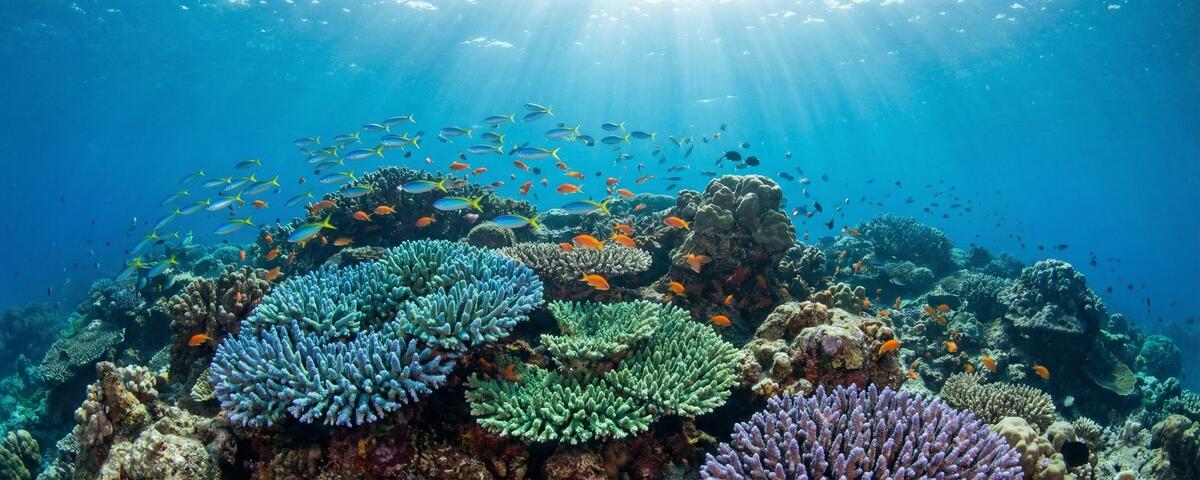
The reef begins in the shallows at around 3 metres, where table corals and branching Acropora form an unbroken canopy that stretches across the substrate. From there, the slope descends gradually to 25 or 30 metres, transitioning through zones of massive Porites boulders, staghorn thickets, and eventually soft coral gardens on the deeper sections. The topography lacks the dramatic walls and pinnacles of some neighbouring sites, but the coral coverage here is among the healthiest anywhere in the Dampier Strait.
What makes South Kri genuinely special is the combination of exceptional biodiversity and forgiving conditions. The southern exposure shields the reef from the strongest tidal flows that rip through the strait, meaning currents here are typically mild or absent altogether. This creates a site where newer divers can experience Raja Ampat's famous richness without the stress of a full drift dive, and where experienced divers can spend an entire 60-minute dive exploring a single section of reef without running out of things to discover.
The fish life is dense and varied. Schools of fusilier and surgeonfish patrol the mid-water in shifting clouds, while damselfish and anthias carpet the reef surface in orange and purple. Black-tip reef sharks pass through regularly, and wobbegong sharks rest motionless beneath coral ledges. The site is a favourite among underwater photographers precisely because the calm conditions allow the kind of patient, deliberate shooting that produces exceptional images.
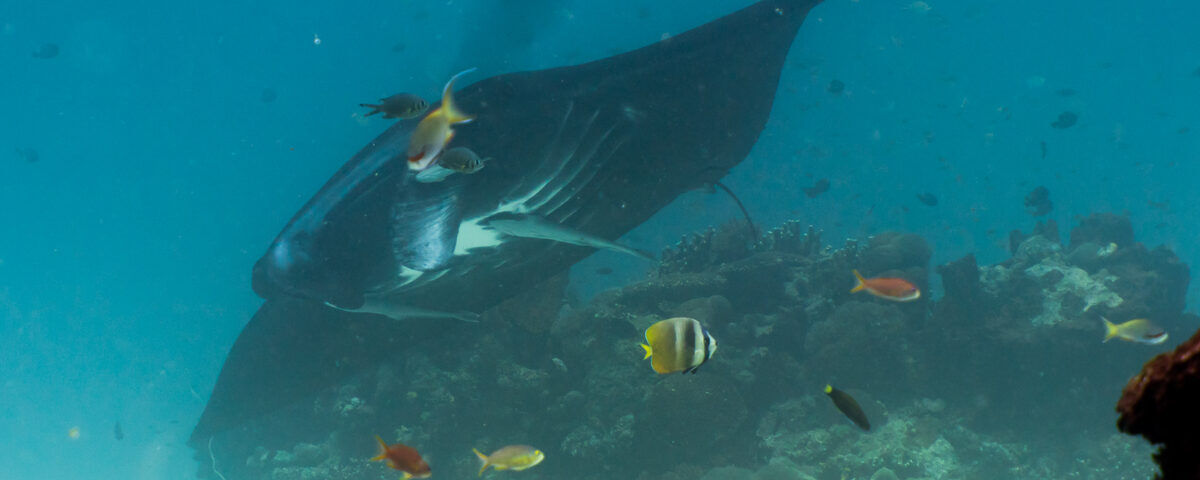
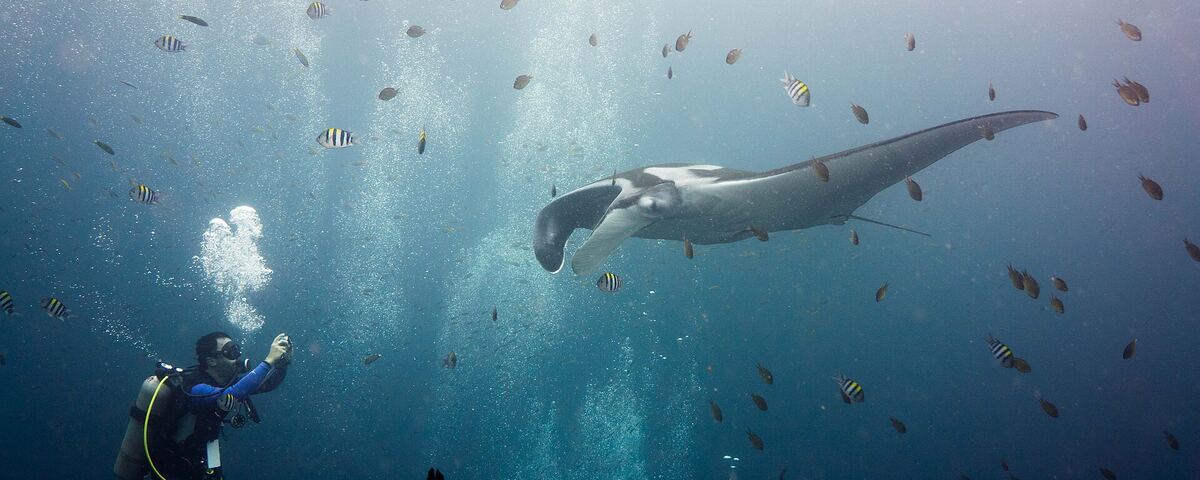
South Kri doesn't generate the same breathless dive briefings as Cape Kri or Blue Magic. It won't give you tornado-strength currents or guaranteed manta encounters. What it gives you instead is something increasingly rare in popular dive destinations: the space to actually look. To hover over a patch of reef for five minutes and count the species. To follow a hawksbill turtle across the slope without being swept away. To notice the pygmy seahorse clinging to a gorgonian fan because you're not spending all your mental energy managing your buoyancy in a current. For many divers, a single dive here redefines what they thought diving in Raja Ampat was about.
Marine Life at South Kri
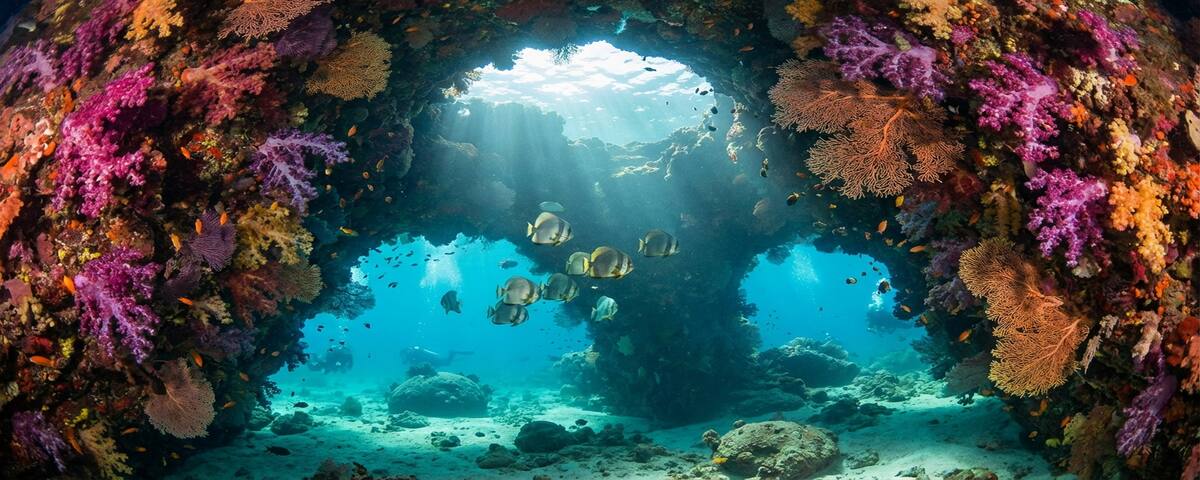
The coral coverage at South Kri is the headline attraction, and it's worth lingering on because this is some of the most intact reef in the entire Dampier Strait. The shallow sections between 3 and 10 metres support vast fields of table coral, some specimens exceeding two metres in diameter. Branching Acropora fills the gaps between the tables, creating a three-dimensional habitat that shelters an astonishing density of reef fish. Staghorn coral thickets provide nursery habitat for juvenile fish, and the overall impression from above is of an unbroken coral garden extending in every direction.
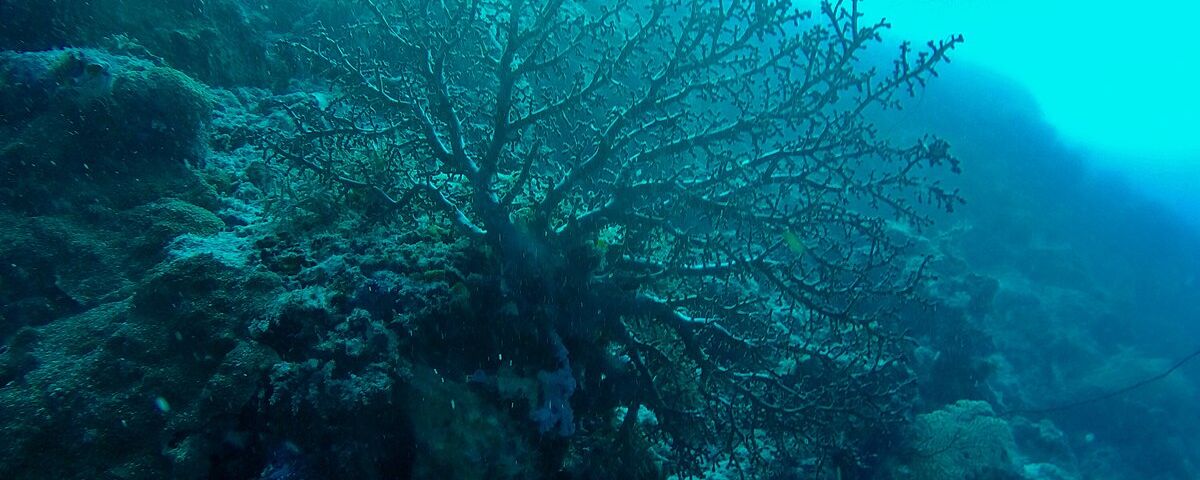
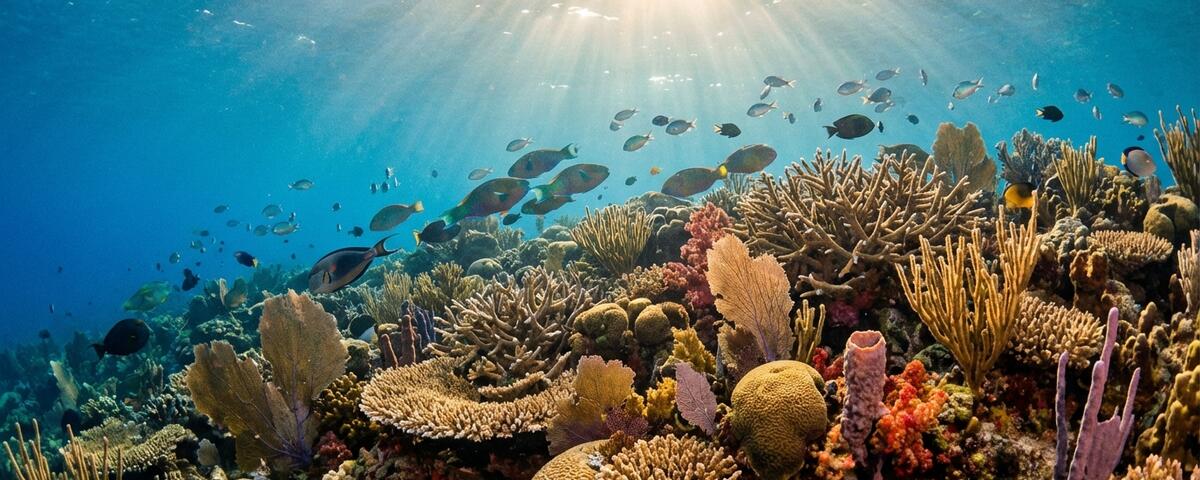
Drop below 15 metres and the hard coral gives way to increasing numbers of sea fans and soft corals. Gorgonian fans in deep red and orange grow perpendicular to what little current reaches the southern side, and these fans are where you'll find pygmy seahorses if you have the patience and eyesight to spot them. Denise's pygmy seahorse and Bargibant's pygmy seahorse are both recorded here, though your guide will likely need to point them out.
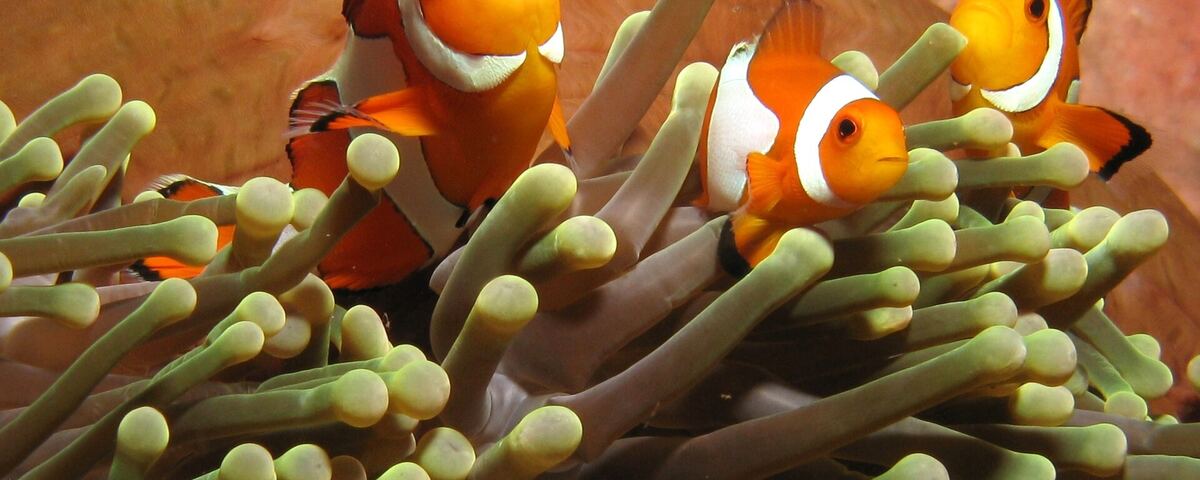
Schools of yellowtail fusilier sweep across the reef in shifting formations of several hundred individuals. Surgeonfish and unicornfish graze in loose herds along the slope. Anthias clouds hover over every prominent coral head, their orange and purple bodies creating splashes of colour against the reef. Anemonefish occupy their host anemones across the site, with Clark's anemonefish being the most common species.
Black-tip reef sharks cruise the reef edges, particularly in the early morning before boat traffic increases. Tasselled wobbegong sharks are a South Kri speciality, resting beneath overhangs and coral tables during the day. Their camouflage is extraordinarily effective, and you'll often swim directly over one without noticing until your guide signals you back. Green and hawksbill turtles are regular visitors, feeding on the sponges and algae that grow between coral colonies.
Giant trevally occasionally hunt through the shallows, their bursts of speed scattering the fusilier schools in all directions. Napoleon wrasse drift through at intervals, their bulk and calm demeanour making them easy subjects for photographers. At depth, blue-spotted stingrays rest on sandy patches between coral formations, and moray eels peer out from crevices in the reef structure.
The macro life rewards close inspection. Nudibranchs are scattered across the reef, with Chromodoris and Phyllidia species being the most common. Mantis shrimp occupy burrows in the sandy patches. Porcelain crabs hide within the tentacles of host anemones. Cuttlefish are frequently spotted in the shallows, particularly during dawn and dusk dives when they hunt more actively.
Dive Conditions
South Kri benefits from its position on the sheltered lee side of the island, where the strongest Dampier Strait currents are deflected by Kri's landmass. Current at the site ranges from absent to moderate, with the stronger flows typically occurring during spring tides and mid-tide transitions. Even on days when Cape Kri is pumping with aggressive current, the southern side often remains diveable for less experienced groups.
Most dives are conducted as gentle drift or swim-along profiles, following the reef slope at whatever depth suits the group. There is no need for reef hooks here, and the lack of strong current means you can stop, reverse direction, and hover over points of interest without penalty. This flexibility is what makes South Kri particularly valuable for photography and for training dives.
Visibility ranges from 15 to 30 metres, broadly tracking the seasons. The best clarity comes during October to April, when calmer seas and reduced rainfall keep particulate levels low. From May to September, plankton blooms can reduce visibility to 10 to 15 metres on some days, but this same plankton brings increased manta activity to nearby sites and boosts the nutrient supply that feeds the reef.
Water temperature holds steady between 27 and 30 degrees Celsius throughout the year. Thermoclines are uncommon at this site due to the relatively shallow maximum depth, though occasional cool-water upwellings from the deeper strait can drop temperatures by 2 to 3 degrees briefly. A 3mm wetsuit is appropriate for most divers; those who chill easily should consider a 5mm or a hooded vest.
Entry is always by boat, typically from Kri Island resorts or liveaboards anchored in the Dampier Strait. The boat ride from most Kri-based operations is under 10 minutes, sometimes as little as 3 to 5 minutes depending on the specific entry point. Surface conditions on the southern side are generally calmer than the north, making entries and exits straightforward even for less confident boat divers.
⚓ Divemaster Notes
South Kri is the site I recommend when someone tells me they felt overwhelmed at Cape Kri. That's not a criticism of either site; it's an acknowledgement that sensory overload isn't always the goal. Some of the most rewarding dives in Raja Ampat happen when you can actually stop and look, and South Kri is built for exactly that.
The reef slope lends itself to a classic multilevel profile. Start at your maximum planned depth of 20 to 25 metres where the soft corals and gorgonians dominate, then work your way up the slope over the course of the dive, finishing in the shallow coral gardens at 5 to 8 metres. The shallows here are so productive that you could easily spend an entire dive between 3 and 10 metres and not feel short-changed.
For photographers, South Kri is arguably more productive than the marquee current-driven sites. The calm conditions allow you to set up wide-angle reef scenes without fighting drift, and the coral coverage provides consistently strong backgrounds. Macro shooters should focus on the gorgonian fans at depth for pygmy seahorses and the overhangs for wobbegongs. If you're carrying both wide-angle and macro lenses, bring the wide-angle. The reef panoramas here are the stronger images.
Wobbegong spotting is something of a game at this site. They're present on almost every dive, but their camouflage is so effective that you genuinely need to train your eye to pick them out. Check under every substantial coral table and overhang, and look for the fringed edges of their flattened bodies against the substrate. Once you spot your first, you'll start seeing them everywhere.
The site works well for night diving, with the sheltered conditions making navigation straightforward. Epaulette sharks (the famous walking sharks of Raja Ampat) are occasionally spotted on the sandy patches between coral formations during night dives. Cuttlefish hunting behaviour is spectacular under torch light.
One practical consideration: South Kri sees less boat traffic than Cape Kri or Blue Magic, which means fewer surface interval conflicts and more flexibility in dive timing. If your resort gives you input on the dive plan, request South Kri as an early morning first dive when the reef sharks are most active and the light angles produce the best underwater visibility.
How to Get to South Kri
South Kri is located on the southern coastline of Kri Island, in the Dampier Strait of Raja Ampat, West Papua, Indonesia. Reaching it follows the same route as all Dampier Strait dive sites.
The gateway city is Sorong, on the northwest tip of the Bird's Head Peninsula. Direct flights operate from Jakarta (roughly 5 hours), Makassar (roughly 3 hours), and Ambon (roughly 2 hours). Several airlines serve Sorong, including Garuda Indonesia, Lion Air, and Sriwijaya Air, though schedules change frequently and cancellations are more common than on mainline Indonesian routes. Build in a buffer day in Sorong if connecting from an international flight.
From Sorong, you have two options to reach the Dampier Strait. The public ferry to Waisai on Waigeo Island takes approximately 2 to 3 hours and runs twice daily. From Waisai, resorts arrange speedboat transfers to Kri Island and surrounding areas. Alternatively, some resorts offer direct speedboat transfers from Sorong to Kri, cutting travel time but at significantly higher cost.
Raja Ampat charges a marine park entry permit of IDR 1,000,000 for foreign visitors, valid for one year from the date of purchase. The permit is available at the visitor centre in Waisai or can sometimes be arranged through your resort in advance. Keep the receipt; it may be checked at dive sites.
Once on Kri Island or at a neighbouring resort, South Kri is a 3 to 10 minute boat ride depending on your departure point. Several resorts sit directly on Kri's southern coast, placing the dive site essentially at their doorstep.
Peak season runs from October to April, and booking accommodation during this window should be done several months in advance. Some resorts close entirely from June to August due to rougher seas and reduced demand.
Gear Recommendations
Wide-angle lens is the priority; the coral seascapes are the strongest photographic subjects. Macro lens as a secondary option if targeting pygmy seahorses on the gorgonians. 3mm wetsuit is sufficient for most divers. Torch recommended for inspecting overhangs and wobbegong habitats. SMB for surface signalling at dive end. Nitrox recommended for extending bottom time in the productive 10 to 15 metre zone. Reef-safe sunscreen applied before the dive; the shallow safety stop areas receive strong tropical sunlight.
Recommended Dive Operators
Papua Diving operates Kri Eco Resort, the original dive operation on Kri Island and the closest resort to South Kri. Their Papuan guides know every overhang and coral bommie on the southern reef, and group sizes are kept small. Kri Eco Resort pioneered diving in this area and their institutional knowledge of local conditions is unmatched.
Raja Ampat Biodiversity Nature Resort on Gam Island runs personalised dive programmes with a maximum of 4 to 6 divers per guide. South Kri is within their standard dive radius, and they routinely use it as a first dive for guests still adjusting to conditions.
Soul Scuba Divers on Kri Island offers PADI courses and fun diving with local instructors. Their location on Kri places South Kri within minutes, and they cater well to both beginners and experienced divers.
Raja Ampat Dive Lodge on Mansuar Island provides access to South Kri as part of their standard Dampier Strait dive rotation. Well-maintained equipment and experienced guides.
For liveaboard access, the Damai, Dewi Nusantara, and Papua Explorer all include Dampier Strait diving on their Raja Ampat itineraries, with South Kri available as part of the Kri Island dive selection.
Liveaboard Options
Raja Ampat liveaboards operating in the Dampier Strait routinely include Kri Island sites in their itineraries. The Dewi Nusantara, Damai, Arenui, and Papua Explorer all offer South Kri as part of their dive rotation when conditions or group preferences suit a more relaxed profile. Liveaboards have the advantage of diving South Kri at dawn before resort boats are on the water, which produces the best shark and turtle encounters. Most Raja Ampat liveaboard itineraries run 7 to 14 nights during the October to April peak season, combining Dampier Strait sites with more remote areas like Misool, the Fam Islands, or Wayag. Expect to pay between USD 3,500 and USD 8,000 depending on vessel and duration.