Yenbuba Jetty Dive Site
Raja Ampat, Indonesia · Near Waisai
Overview
Yenbuba Jetty sits on the east side of Mansuar Island in the Dampier Strait, and it belongs to the trio of village jetty dives (alongside Arborek and Sawandarek) that have become a defining feature of Raja Ampat diving. The wooden jetty extends from Yenbuba village into the strait, and the reef beneath it slopes from about 4 metres down to 30, covered in a density of coral that makes the site feel more like an aquarium exhibit than a natural reef. Except aquariums don't have wobbegong sharks sleeping under ledges or blue-spotted stingrays shuffling across sandy patches between coral heads.
What separates Yenbuba from most jetty dives worldwide is the sheer volume of fish occupying what is, by any measure, a small area. The jetty pilings function as artificial reef structures that concentrate marine life in a way open reef rarely does. Schools of sergeant major fish swarm between the wooden posts, batfish hang in loose groups beneath the platform, and sweetlips queue up at cleaning stations with the patience of commuters waiting for a bus. The surrounding reef adds another layer: funnel coral, boulder coral, and maze coral formations provide habitat complexity that supports everything from nudibranchs to reef sharks.
The site's position in the Dampier Strait means it benefits from the nutrient-rich currents that feed the entire region's extraordinary biodiversity, but the jetty itself sits in a sheltered pocket. Currents here rarely exceed a gentle drift, making it accessible to divers at any experience level. Beginners get a confidence-building dive on a world-class reef. Experienced divers get to slow down and actually look at things instead of fighting water movement. Photographers get the kind of calm, subject-rich conditions that produce portfolio shots.
Yenbuba Jetty is also part of what local operators call the "three jetty Raja Ampat tour," a circuit of the Dampier Strait's three most biodiverse village jetty sites. Each jetty has its own character. Yenbuba tends to be the quietest of the three, with fewer visiting boats and a reef that feels more personal as a result. The village above the water is home to a small Papuan community who welcome visitors warmly, and a post-dive coffee with the locals has become part of the ritual for many returning divers.
For night diving, Yenbuba transforms. Bobtail squid emerge from the sand, Spanish dancer nudibranchs unfurl their crimson skirts across the reef, and if conditions are right, bioluminescent plankton turns every fin kick into a trail of underwater stars. The calm, shallow profile makes it one of the safest and most rewarding night dive sites in the region.
Marine Life at Yenbuba Jetty
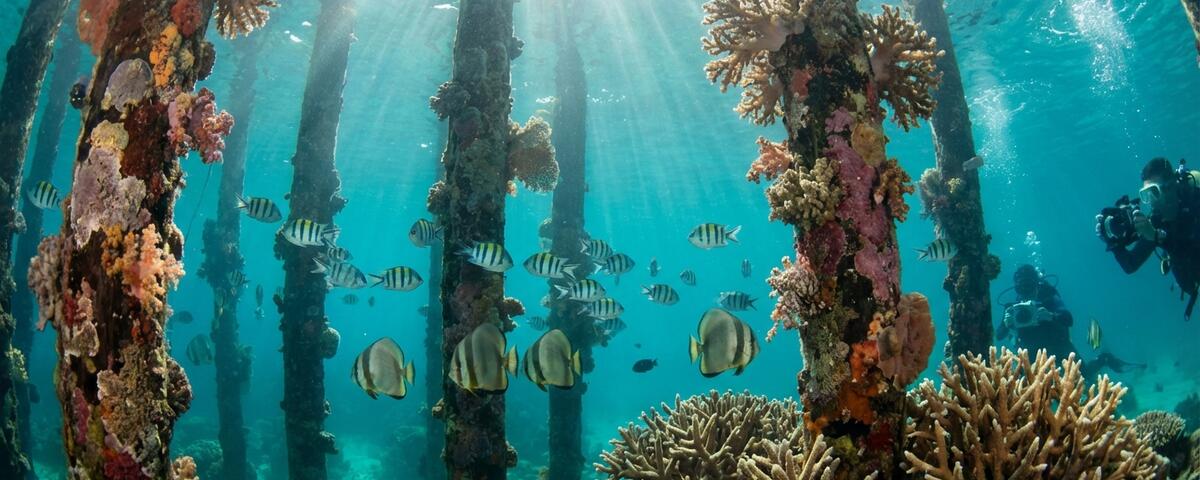
The jetty pilings are the opening act. Each post is encrusted with sponges, tunicates, and soft coral that have turned the wooden structures into vertical reef walls. Schools of sergeant major fish, easily numbering in the hundreds, swarm between the pilings in shifting clouds of yellow and black. Batfish congregate in small groups beneath the jetty platform, their disc-shaped bodies hanging nearly motionless in the water column, occasionally tilting sideways to present themselves to cleaner wrasse.
Sweetlips are a constant presence here. Harlequin sweetlips and oriental sweetlips hover at cleaning stations along the reef slope, mouths open, gills flared, while tiny wrasse work over their skin picking off parasites. The cleaning stations are worth extended observation. Park yourself a couple of metres away, stay still, and within minutes the fish forget you exist. Groupers join the queue. Occasionally a black-tip reef shark drifts in from the blue, slowing to a near-stop at the station's edge before presenting a flank for attention.
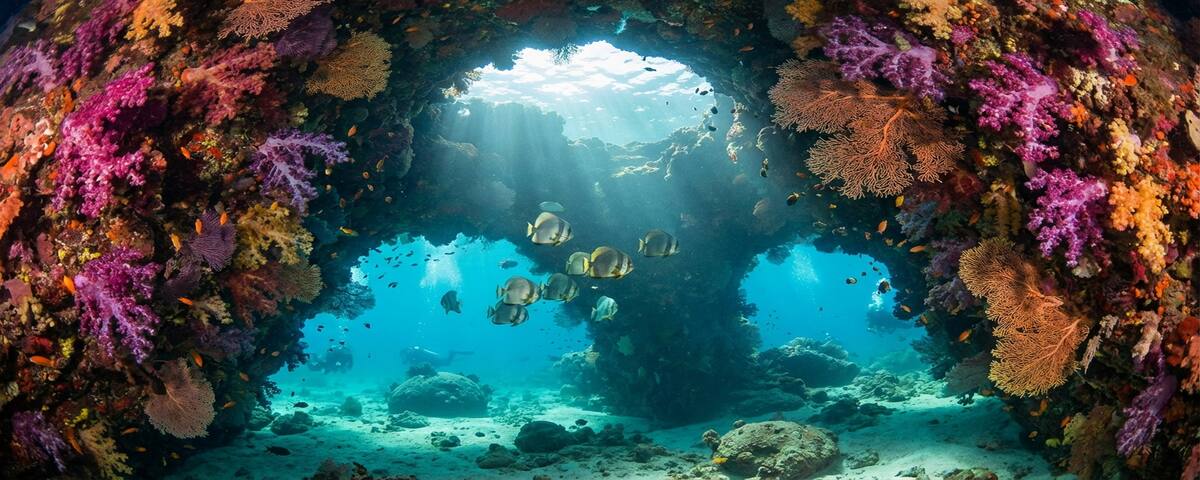
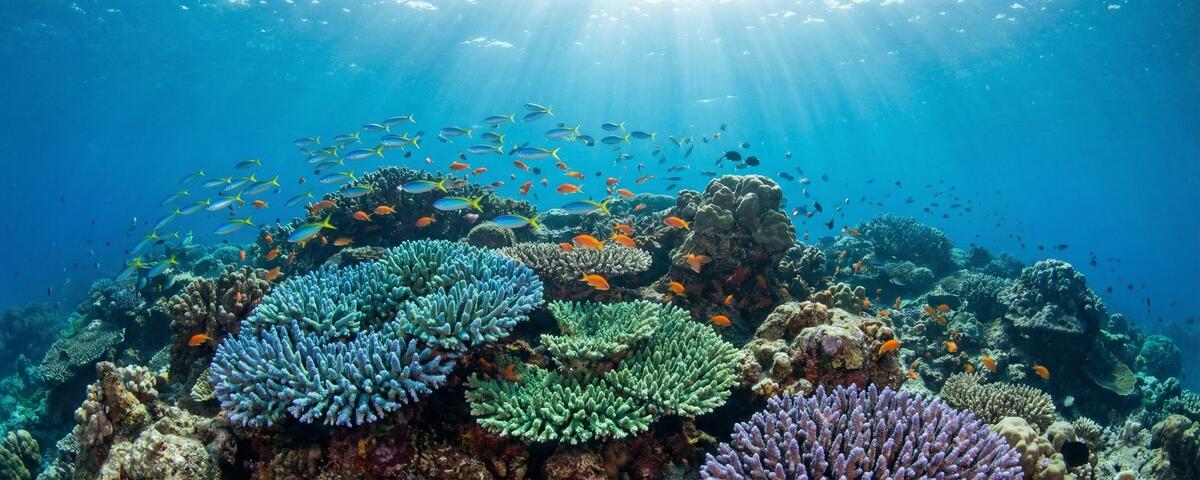
The coral formations across the reef slope are outstanding. Funnel coral, with its distinctive trumpet-shaped growth, boulder coral in massive dome formations, and maze coral with its winding channels create a topography that supports an extraordinary density of smaller reef species. Anthias hover in orange and purple clouds above prominent coral heads. Butterflyfish work in pairs across the reef face. Damselfish defend their patches of algae-covered rubble with a ferocity that seems absurd given their size.
Green sea turtles graze regularly on the reef slope, and they are well habituated to divers here, allowing careful approach without bolting. Hawksbill turtles appear less frequently but have been recorded foraging on sponges around the deeper coral formations.
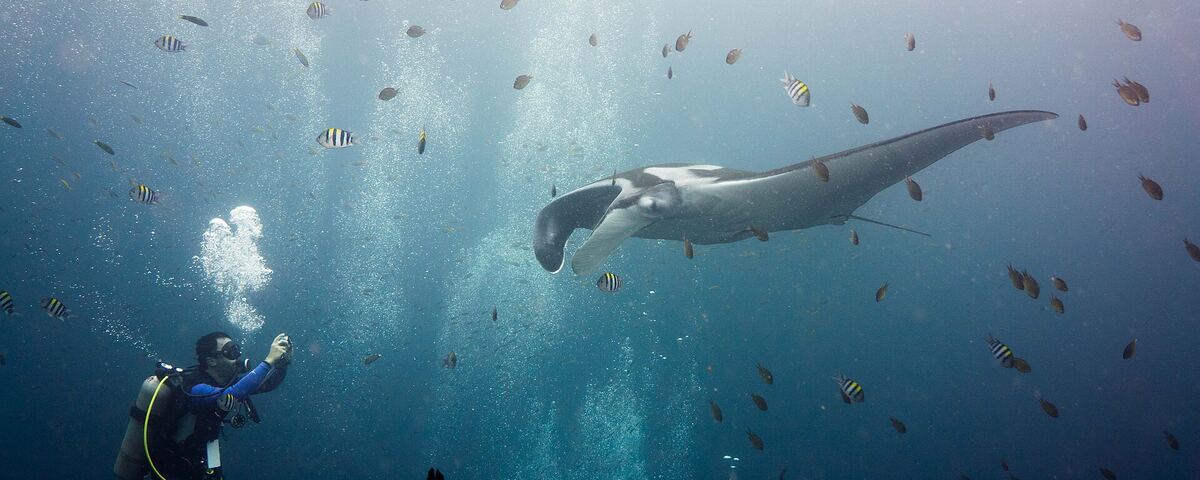
Wobbegong sharks, Raja Ampat's signature ambush predators, flatten themselves under coral ledges and table formations throughout the site. Their camouflage is genuinely excellent. Most divers swim directly over one without noticing until a guide taps a tank and points. Blue-spotted stingrays rest on sandy patches between coral heads, occasionally lifting off the bottom and gliding to a new resting spot when approached.
For macro subjects, the reef delivers nudibranchs in reliable variety. Chromodoris species with their vivid mantles, Phyllidia with their bumpy texture, and occasional Nembrotha add colour to every surface. Cuttlefish hunt across the shallows, their skin rippling with chromatic displays. Mantis shrimp occupy burrows in the rubble zones, peering out with those strange, independently tracking eyes.
Night dives reveal a completely different cast. Bobtail squid, barely larger than a marble, emerge from the sand and hover in torch beams. Spanish dancer nudibranchs, the largest in the region, swim through open water with undulating crimson bodies. Decorator crabs emerge to forage. And the plankton, when conditions align, produces bioluminescence that turns every movement underwater into a light show.
Dive Conditions
Yenbuba Jetty benefits from the shelter of Mansuar Island's eastern coastline, which blocks the full force of the Dampier Strait's tidal flows. Most dives encounter no current at all, or a mild drift that lets you cover ground with minimal effort. On stronger tidal changes, the current can push from east to west or vice versa, creating a gentle drift dive where you keep the reef on your left or right depending on direction. Even at its strongest, the flow here rarely approaches what sites like Cape Kri or Blue Magic produce.
Visibility ranges from 10 to 25 metres depending on season, tide state, and recent rainfall. The best clarity arrives during the dry season from October to April, when reduced runoff keeps the water column clean. During the wet season (May to September), plankton blooms can reduce visibility to 8 or 10 metres, though this nutrient richness brings its own benefits: increased filter-feeder activity and occasional pelagic visitors drawn by the food supply.
Water temperature holds between 27 and 30 degrees Celsius throughout the year. Thermoclines are uncommon given the moderate maximum depth, though occasional cold-water pulses from deeper in the strait can briefly drop temperatures by 2 to 3 degrees at the bottom of the slope. A 3mm wetsuit handles the warmth comfortably. Anyone who runs cold, particularly on second or third dives of the day, will appreciate a 5mm or a hooded vest for the deeper sections.
The shallow profile allows generous dive times. Sixty to seventy-five minute dives are standard for photographers working the shallows, limited by air consumption rather than decompression concerns. The deepest section of the slope bottoms out around 30 metres, but the densest marine life sits between 4 and 18 metres, so there is little incentive to push deep unless specifically hunting for gorgonian fans.
Surface conditions are calm by Dampier Strait standards. The channel between Mansuar and Kri blocks open-ocean swells, keeping boat rides smooth and surface entries straightforward. This matters for divers prone to seasickness and for surface intervals spent floating near the jetty.
One practical note: the jetty is a working village structure with occasional boat traffic. Stay aware of boats approaching or departing when surfacing near the pilings. Guides typically manage this, but a quick look up before ascending through the jetty area is good practice.
⚓ Divemaster Notes
Yenbuba is the jetty dive I send people to when they want the three-jetty experience but would rather skip the crowds that sometimes gather at Arborek. The reef quality is comparable, the fish life is comparable, but on most days you will have the site to yourself or share it with one other boat at most.
The cleaning stations are the main event, and they require patience. I brief my divers to pick one station and commit to it for 5 to 10 minutes. Settle onto the sand nearby, control your breathing, minimise movement. The reef needs time to forget you are there. Rush in and everything scatters. Give it a few minutes and sweetlips will be lining up at arm's length, mouths open, completely unbothered by your presence.
For a multilevel profile, start at 20 to 25 metres where the reef slope levels into sand and scattered coral, spend 10 to 15 minutes there among the gorgonians, then work up the slope through the cleaning station zone at 10 to 18 metres. Finish the last 20 minutes under and around the jetty pilings between 4 and 8 metres, where the sergeant major schools and batfish provide the visual finale.
Photographers should bring both wide-angle and macro if they can manage two setups. Wide-angle for the jetty pilings with sunburst effects from above, the fusilier and sergeant major schools, and the reef panoramas. Macro for the nudibranchs, wobbegong portraits, and cuttlefish detail. If forced to choose one lens, go wide. The pilings with fish schools and filtered sunlight produce images that are hard to get anywhere else.
Night dives here are genuinely special and underrated. The calm conditions make navigation simple. Start at the jetty, work out along the reef slope, and keep your eyes on the sand and rubble between coral heads. Bobtail squid are common, Spanish dancers show up reliably, and the bioluminescent plankton, when present, turns the whole dive into something you will talk about for years.
One thing I always mention in briefings: respect the village. Yenbuba is someone's home. Keep noise down around the jetty, don't climb onto structures that are not designated for divers, and consider buying something from the village shop or leaving a small contribution. The community's relationship with visiting divers is positive because operators and guests have generally been respectful. Keep it that way.
How to Get to Yenbuba Jetty
Yenbuba Jetty follows the standard Raja Ampat access route. Fly into Sorong on the northwest tip of Papua's Bird's Head Peninsula. Direct flights operate from Jakarta (roughly 5 hours), Makassar (roughly 3 hours), and Ambon (roughly 2 hours). Garuda Indonesia, Lion Air, and Sriwijaya Air serve the route, though schedules shift regularly and cancellations are more common than on mainland Indonesian routes. Build a buffer day into your plans.
From Sorong, the public ferry to Waisai on Waigeo Island takes 2 to 3 hours and runs twice daily. Resorts on Kri and Mansuar islands arrange speedboat transfers from Waisai, adding another 1 to 2 hours depending on conditions and destination. Some operators offer direct Sorong-to-resort speedboat transfers that bypass Waisai, costing more but saving time.
The Raja Ampat marine park entry permit costs IDR 1,000,000 for foreign visitors, valid for one year. Purchase it at the visitor centre in Waisai or arrange through your resort beforehand. Keep the receipt. It gets checked.
Once based on Kri or Mansuar Island, Yenbuba Jetty is a 5 to 10 minute boat ride from most resorts. The site sits on Mansuar's eastern shore, directly accessible from Kri-based operations across the narrow channel. Some Mansuar-based resorts and homestays can reach it in under 5 minutes.
Yenbuba village itself has several homestay options for budget travellers. From these, the jetty dive begins right off the village waterfront. Diving requires coordination with a nearby dive centre, as the homestays typically do not operate their own dive facilities.
Peak season runs October to April. Book accommodation well in advance during this window, particularly the established resorts on Kri, which fill months ahead.
Gear Recommendations
A 3mm full wetsuit handles the 27 to 30 degree water comfortably. Divers who feel the cold on repeat dives should bring a 5mm or hooded vest, particularly for the deeper sections where occasional thermocline pulses can briefly drop temperatures.
No reef hook needed. Currents are mild enough that you will never require one here, freeing up hands for photography or just enjoying the reef.
Surface marker buoy (SMB) and reel are standard safety kit for any diving in the Dampier Strait, even at sheltered sites. Currents can occasionally pick up unexpectedly during tidal changes, and a visible SMB ensures the boat spots you promptly on surfacing.
Torch or dive light is recommended for all dives, not just night dives. The overhangs where wobbegongs rest are dark, and a light reveals soft coral colours that ambient light washes out below 12 metres. Essential for night dives, with a backup light carried as standard.
Photographers will benefit most from wide-angle setups. The jetty pilings with schools of fish and sunburst lighting from above are the signature shots. Macro lens works well for nudibranchs, wobbegong detail, and cuttlefish portraits. Strobes are useful below 10 metres; above that, ambient light is strong enough that a focus light may be all you need.
Computer and audible surface alert are essential. The relaxed conditions at Yenbuba make it easy to lose track of bottom time, especially in the shallows where decompression limits are generous but not infinite. Nitrox extends bottom time at depth and is worth using if available from your operator.
Recommended Dive Operators
Papua Diving at Kri Eco Resort pioneered recreational diving in this part of Raja Ampat, and Yenbuba Jetty sits within 10 minutes of their base. Their Papuan guides have dived these reefs for decades and know every cleaning station and wobbegong hiding spot. Small group sizes and unmatched institutional knowledge of the Dampier Strait.
Soul Scuba Divers on Kri Island includes Yenbuba Jetty as a regular part of their dive rotation. SSI training centre offering both courses and guided fun dives. Flexible scheduling with morning, afternoon, and night dive options. Local instructors who grew up in the area.
Meridian Adventure Dive Resort on Waigeo operates as a PADI 5-Star Eco Resort and includes Yenbuba Jetty among their site portfolio. They won the PADI Green Star award, and their guides provide a conservation-focused briefing that adds context to the marine life encounters.
Raja Ampat Biodiversity Nature Resort on Gam Island runs personalised dive programmes with a maximum of 4 to 6 divers per guide. Their boat ride to Yenbuba takes about 15 minutes from Gam. The resort specifically highlights Yenbuba as part of their three-jetty circuit alongside Arborek and Sawandarek.
Raja Ampat Dive Lodge on Mansuar Island sits on the same island as the dive site, placing Yenbuba within easy reach. Well-maintained rental equipment and experienced guides who can tailor the dive profile to your interests.
For budget travellers, several homestays on Kri and in Yenbuba village itself can arrange diving through partnerships with established centres. Quality varies, so confirm equipment standards and guide qualifications before committing.
Liveaboard Options
The Damai runs premium Raja Ampat itineraries with extensive Dampier Strait diving. Yenbuba Jetty sits within their site rotation when anchored near Kri and Mansuar. Twelve guests, spacious cabins, dedicated camera room, and a crew that knows the area intimately.
Dewi Nusantara, one of Indonesia's longest-established luxury liveaboards, covers Raja Ampat from October through April. The Dampier Strait is a highlight of their standard route, and Yenbuba is available as part of the Kri and Mansuar area selection. Capacity for 18 guests with individual dive tenders for small group flexibility.
Grand Komodo operates Raja Ampat seasons alongside their Komodo itineraries. Their Dampier Strait programme includes the three-jetty circuit, with Yenbuba as a regular stop.
Papua Explorer runs more affordable Raja Ampat liveaboard trips focused on the Dampier Strait and surrounding areas. Yenbuba features as part of their Mansuar Island dive selection. A solid option for divers who want liveaboard convenience at a lower price point.
Liveaboard guests should note that operators typically default to the headline sites (Cape Kri, Blue Magic, Manta Sandy) in their dive planning. If Yenbuba Jetty is on your wish list, mention it to the cruise director early in the trip. The site's proximity to the Kri and Mansuar anchorage makes it easy to slot in, particularly as a night dive or as a calm alternative after a current-heavy morning.