Coral Garden (Sipadan) Dive Site
Sipadan, Malaysia · Near Semporna
Overview
Coral Garden on Sipadan's southwest flank is the island's gentle giant. While other sites around this volcanic sea mount are famous for current-swept walls and pelagic spectacles, Coral Garden earns its reputation from something quieter and arguably more beautiful: one of the densest, healthiest hard coral formations in the entire Celebes Sea.
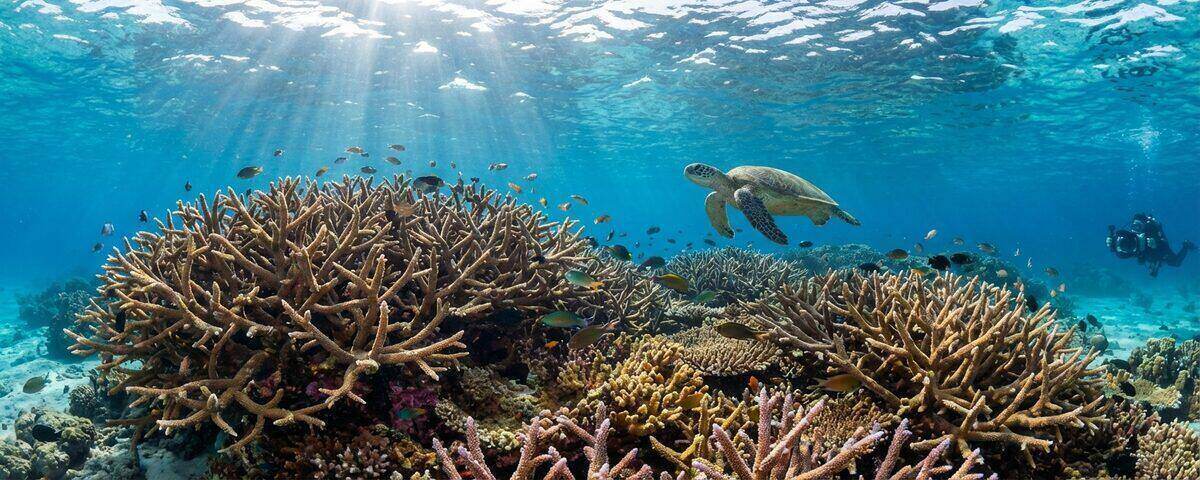
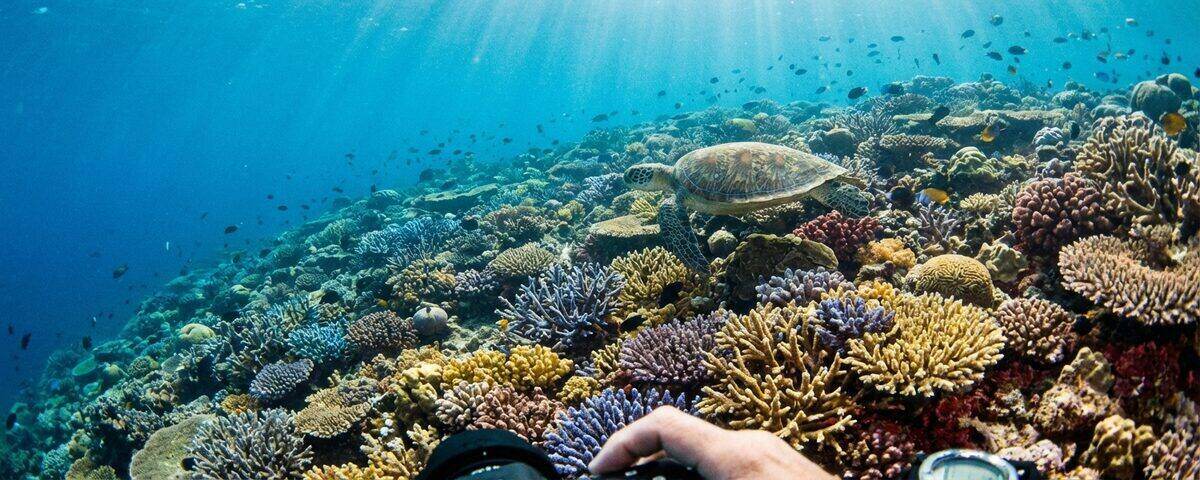
The site stretches along a gradually sloping reef between 3 and 20 metres, carpeted in table corals, staghorn thickets, and massive porites bommies that have been growing undisturbed for decades. Sipadan's protected status since 2004, when all resorts were removed from the island, has allowed this reef to recover and flourish to a degree that genuinely surprises divers who arrive expecting the corals to play second fiddle to the sharks and barracuda elsewhere on the island.
There is a misconception among some visitors that Coral Garden is the "easy dive" you do when conditions are too rough for Barracuda Point or South Point. That framing misses the point entirely. This site is world-class reef diving by any standard. The coral coverage approaches 90 percent in the shallower sections, with hard coral species diversity that marine biologists from Sabah Parks have documented at over 70 species within a single transect. Few reefs anywhere in Southeast Asia can match that density.
The topography works as a series of coral terraces stepping down from the reef flat. The shallowest terrace at 3 to 7 metres is dominated by branching and plate corals in overlapping layers, creating a three-dimensional structure that shelters hundreds of reef fish species. A sandy channel at around 10 metres separates this from a deeper terrace of massive corals and soft coral gardens that extends to 18 or 20 metres before the slope steepens towards the wall.
Green turtles are the constant companions here, just as they are everywhere around Sipadan. But at Coral Garden they behave differently. The gentle current and abundant food sources mean turtles feed actively rather than simply transiting, and watching a green turtle methodically cropping sponges from a coral bommie at arm's length is one of the more intimate wildlife encounters available in recreational diving.
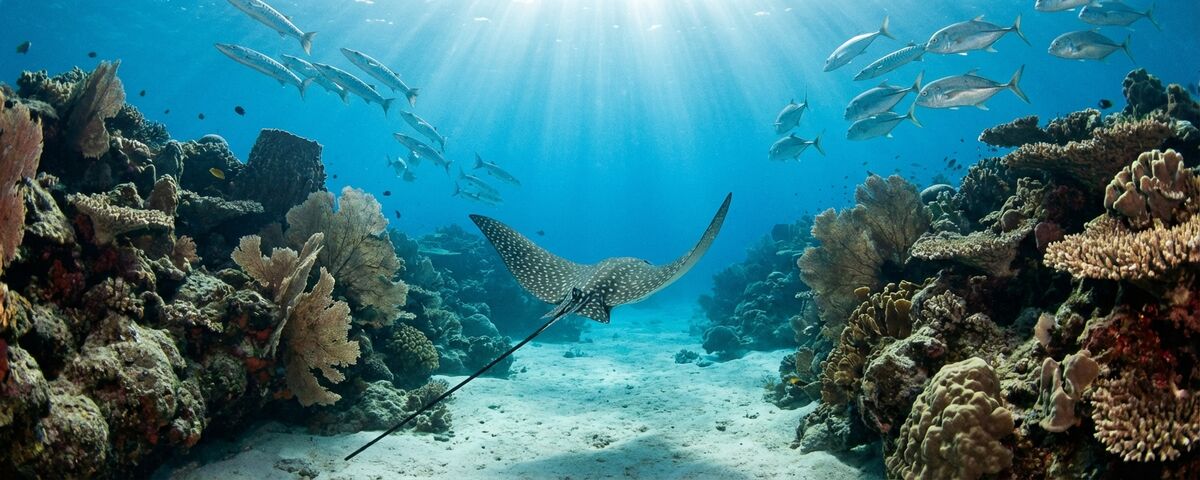
The site works beautifully for photography. The shallow depth means abundant natural light, the coral formations provide endless composition opportunities, and the relaxed pace of the dive allows time to set up shots properly. Wide angle and macro shooters both find material here, which is unusual for a single site. The wide-angle shots of coral terraces stretching into blue water are postcard material, while the macro life hiding in and around the coral heads keeps dedicated photographers occupied for the entire dive.
Marine Life at Coral Garden (Sipadan)
The coral itself is the headline attraction. Table corals measuring two to three metres across overlap in stacked formations that create layered habitats. Staghorn coral thickets in pastel blues, pinks, and yellows fill the gaps between the larger formations. Massive porites bommies, some estimated at several hundred years old, anchor the deeper sections like underwater boulders covered in living tissue. Leather corals and mushroom corals dot the sandy patches between the hard coral zones.
Green turtles are everywhere. Sipadan's turtle population is one of the healthiest in the world, and Coral Garden's calm conditions and feeding opportunities concentrate them in numbers that feel almost absurd. Twelve to twenty turtles on a single dive is normal. They rest on coral bommies, feed along the reef surface, and hover at cleaning stations where wrasse pick parasites from their shells. Hawksbill turtles are less common but reliably present, their pointed beaks working the sponges that grow in crevices between coral heads.
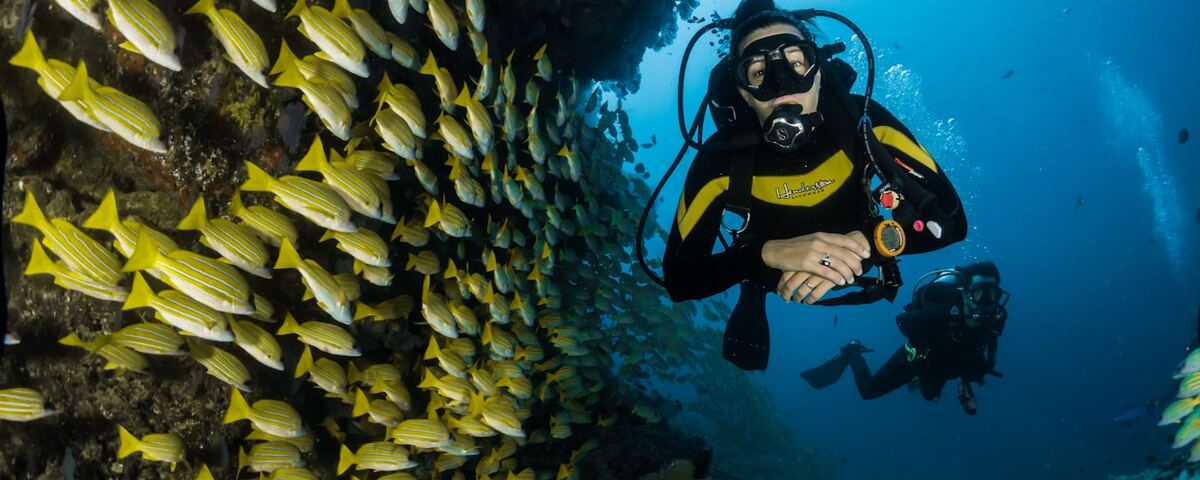
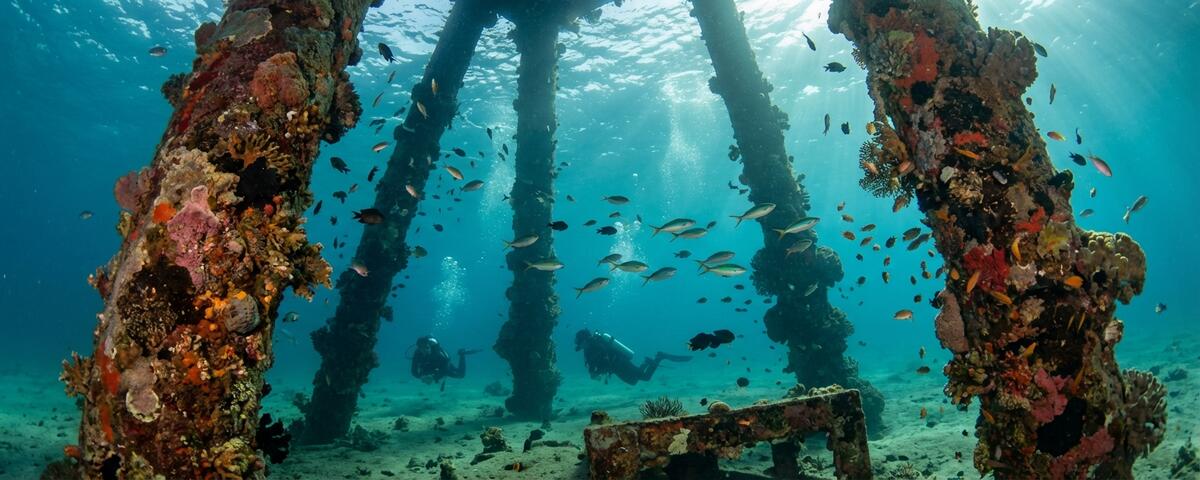
Reef fish diversity is exceptional. Anthias swarm in orange and pink clouds above the coral terraces, their numbers so dense they create a shimmering haze when backlit by sunlight. Schools of blue-green chromis pulse in coordinated waves over the staghorn thickets. Butterflyfish patrol in pairs through the coral heads: longnose, raccoon, and ornate species all present on a typical dive.
Clownfish occupy anemones scattered across the reef, with Clark's anemonefish and false clown anemonefish being the most common. Titan triggerfish patrol territories with their usual belligerence during nesting season (roughly April to July), so give them space. Oriental sweetlips shelter under overhanging table corals in groups, their spotted patterns distinctive even from a distance.
For macro enthusiasts, the coral structure hides nudibranchs, flatworms, porcelain crabs, and commensal shrimp in the anemones. Scorpionfish sit motionless on coral rubble patches, their camouflage so effective that divemasters point them out to guests who have been staring directly at them. Moray eels occupy holes throughout the reef, with giant morays and snowflake morays both common.
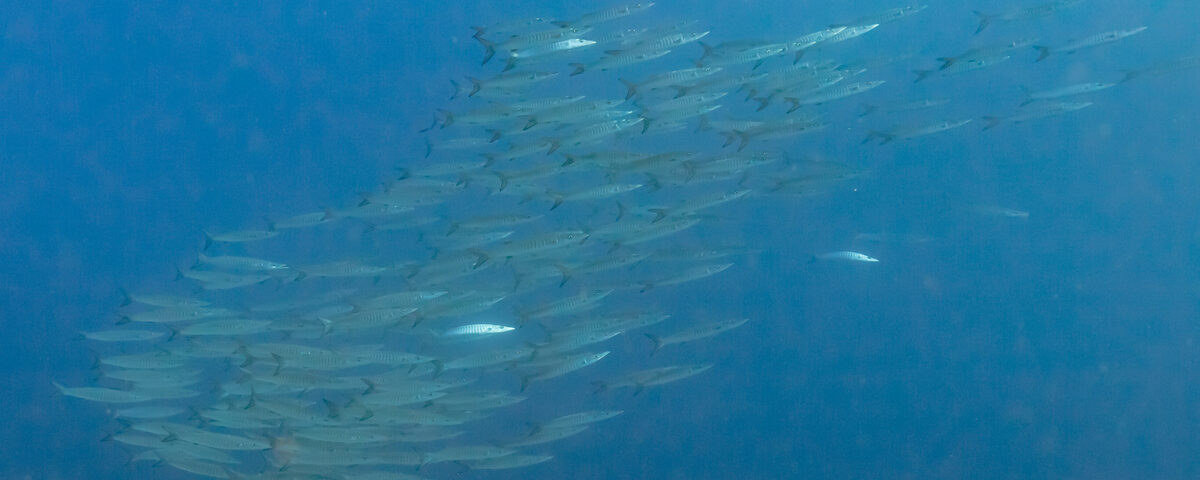
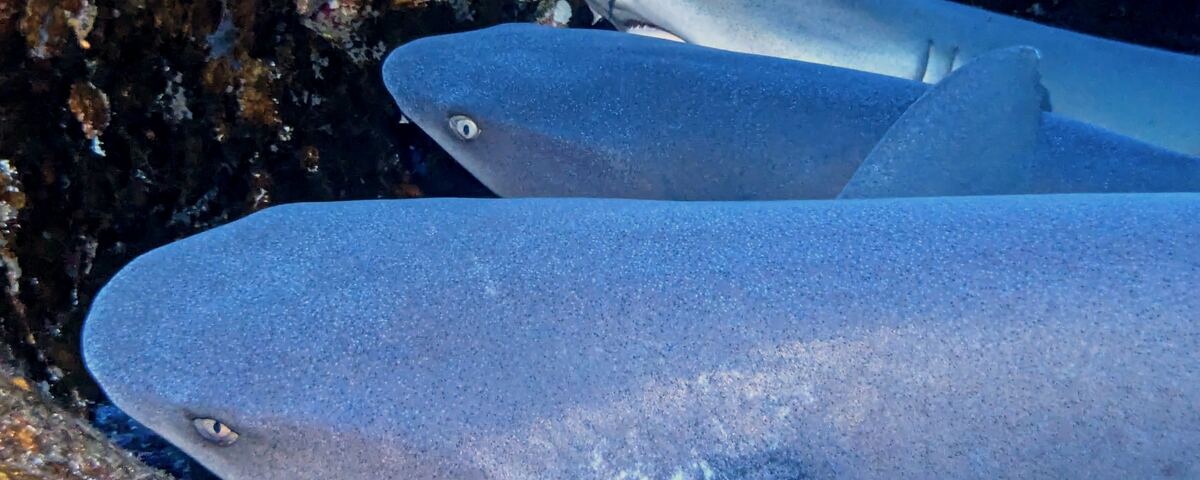
Larger visitors include Napoleon wrasse that drift through with stately calm, bumphead parrotfish in small herds crunching through the coral tops, and occasional whitetip reef sharks resting on sandy patches at the deeper end of the site. Schools of fusiliers stream along the reef edge, and hunting trevally sometimes crash through the shallows in explosive ambush runs that scatter everything in their path.
Dive Conditions
Coral Garden occupies Sipadan's southwest face, which provides natural shelter from the prevailing easterly and northeasterly conditions that affect the island for most of the year. This makes it one of the calmest sites around Sipadan, with surface chop rarely a factor for entries and exits.
The reef slopes gently from 3 metres on the flat to approximately 20 metres where it transitions into the steeper wall. Most of the dive takes place between 5 and 15 metres, which means excellent natural light, long bottom times, and a forgiving profile for less experienced divers. The absence of a dramatic wall drop-off removes the depth management challenges that make sites like Barracuda Point and Drop Off less suitable for newer divers.
Current runs gentle to moderate on most days. The southwest position means Coral Garden catches less of the tidal flow that rips around the northern and eastern points of the island. Occasional stronger surges occur during spring tides, but even then the current rarely reaches the intensity found at the current-driven sites. Divers can comfortably hover and explore specific coral formations without being swept along.
Visibility ranges from 15 to 30 metres. The clearest conditions typically arrive between April and June and again in September to November, during the transition periods between monsoons. Plankton blooms in the Celebes Sea occasionally reduce visibility to 15 metres, though these blooms bring nutrient enrichment that supports the reef's health.
Water temperature holds between 26 and 30 degrees Celsius year round. A 3mm wetsuit is sufficient. Those doing three or more dives daily might prefer 5mm, particularly from December through February when temperatures occasionally dip to the lower end of the range.
Dive time routinely extends to 55 or 60 minutes given the shallow profile. Air consumption is the main limiting factor rather than decompression time, and divers with good air management regularly surface with 20 to 30 minutes of no-stop time remaining. This extended bottom time is one of the site's significant advantages for photography.
⚓ Divemaster Notes
Coral Garden is the site I use to reset expectations. Divers arrive at Sipadan fixated on Barracuda Point and the tornado, and fair enough. But after a morning of fighting current and watching their air consumption spike, I bring them to Coral Garden for the afternoon dive and watch their shoulders drop. The pace changes completely. This is where you actually look at the reef instead of being swept past it.
I start the dive at the sandy channel around 10 metres and work shallower, which is the opposite of most Sipadan site profiles. The reason is simple: the best coral coverage is between 5 and 8 metres, and if you start deep you will burn through air before reaching it. Working up means you arrive at the prettiest section of the reef with plenty of gas and no decompression concerns, and your safety stop happens surrounded by table corals and turtles rather than staring at blue water.
The turtle encounters here are different from elsewhere on the island. At Barracuda Point or Drop Off, turtles are transiting through current, moving with purpose. At Coral Garden they are feeding, resting, being cleaned. They are relaxed. I tell photographers to pick one turtle, settle in at two metres distance, and wait. Within a minute or two the turtle forgets you exist and goes back to eating. The resulting images have a natural, intimate quality that is impossible to get at the current-swept sites.
One section I always visit is a cluster of massive porites bommies between 12 and 15 metres on the southern end. These are some of the oldest coral structures around Sipadan, and the crevices between them hide moray eels, lionfish, and sometimes sleeping whitetip sharks. The bommies also attract cleaning wrasse, so you get turtles queuing for the spa treatment. I have seen four turtles stacked in a loose column, each waiting its turn at the cleaner station. Genuinely one of the most charming things I have witnessed underwater.
For photography briefings: wide-angle shooters should work the 5 to 8 metre terrace where the table corals create layered compositions with sun rays penetrating from above. Macro shooters should focus on the bommie clusters at 12 to 15 metres where the crevice life is densest. The sandy patches between coral zones are where you will find scorpionfish and the occasional cuttlefish.
I always remind divers not to touch or stand on the coral. This sounds obvious but the shallow depth and gentle current make it easy to drift low and accidentally fin-kick a table coral. These formations took decades to grow. One careless fin stroke can break what nature spent a century building.
How to Get to Coral Garden (Sipadan)
Sipadan Island sits 36 kilometres off the southeast coast of Sabah, Malaysian Borneo. No accommodation exists on the island. All divers base themselves on nearby Mabul Island or, less commonly, Kapalai, and take day boats to Sipadan.
Semporna is the mainland gateway town. The nearest airport is Tawau (TWU), which receives daily flights from Kota Kinabalu (50 minutes) and direct flights from Kuala Lumpur (2 hours 40 minutes via AirAsia and Malaysia Airlines). From Tawau Airport, the road transfer to Semporna takes approximately 90 minutes. Dive resorts arrange transfers as part of their packages.
From Semporna, the boat ride to Mabul takes 30 to 45 minutes by speedboat. From Mabul to Sipadan is another 15 to 20 minutes. Operators depart for Sipadan early morning, typically between 7:00 and 8:00 AM, returning in the afternoon after three dives.
The Sabah Parks permit system is the critical logistics factor. Approximately 176 daily permits are distributed among licensed operators, and each permit allows one diver one day of diving at Sipadan with a maximum of three dives. Permits cannot be obtained independently; they must be arranged through your dive operator or resort.
Booking 3 to 6 months ahead is standard during peak season from April to October. Most Mabul-based resorts offer packages that include a guaranteed number of Sipadan days (typically 2 to 3 days within a 4 to 5-night stay), with the remaining days spent diving Mabul and Kapalai sites. Some operators hold larger permit allocations than others, so choosing a resort with reliable Sipadan access matters.
Gear Recommendations
A 3mm wetsuit is standard for Sipadan's warm waters. No reef hook needed here as currents are gentle. SMB and reel required for surfacing safely. Wide-angle lens recommended for the coral terrace compositions and turtle encounters. Macro lens equally productive given the abundant crevice life and nudibranch hunting opportunities. Nitrox recommended to extend bottom time in the already-generous shallow profile. Torch useful for illuminating true coral colours and peering into crevices where morays and scorpionfish hide. Dive computer with conservative settings as always, though the shallow depth profile makes this one of the most forgiving sites around Sipadan.
Recommended Dive Operators
Scuba Junkie Mabul Beach Resort combines solid accommodation with professional guiding and consistent Sipadan permit allocations. Their dive team knows Coral Garden well and positions groups on the best coral terraces. Seaventures Dive Rig, the converted oil platform off Mabul, offers a unique stay with good Sipadan access and one of the region's best house reefs for non-permit days. Sipadan Water Village is the premium choice on Mabul, with water bungalows and strong permit priority. Borneo Divers has operated in the area since the 1980s and runs their own island resort on Mabul with deep experience across every Sipadan site. Uncle Chang's in Semporna provides a budget-friendly option with day trips, though Sipadan permit availability can be less reliable than the island-based operations.
Liveaboard Options
Sipadan operates on a resort-based permit system rather than a liveaboard model. All diving is conducted via day boats from Mabul or Kapalai islands. The Celebes Explorer runs occasional itineraries that include the Sipadan area as part of broader Sabah routes, but permit allocation for liveaboard operators is limited and less reliable than for established island resorts. The most practical approach is a 4 to 5-night stay on Mabul, which maximises your allocated Sipadan permit days while providing excellent muck diving at Mabul and reef diving at Kapalai on non-permit days. This mixed itinerary actually works in Coral Garden's favour, as some operators save it for the last Sipadan dive of a permit day, giving divers a relaxed finale after the high-intensity morning sites.