Staghorn Crest Dive Site
Sipadan, Malaysia · Near Semporna
Overview
Staghorn Crest is the dive site on Sipadan that people forget to talk about, and that is entirely to its advantage. Positioned on the western flank of the island, just northwest of South Point, it sits in the shadow of the more famous sites that draw the headlines. Barracuda Point gets the tornado. Drop Off gets the shore-dive legend. Turtle Cavern gets the spooky skeleton stories. Staghorn Crest, meanwhile, quietly delivers one of the most beautiful coral landscapes on the entire island, and the divers who know Sipadan well will tell you it is among their favourites.
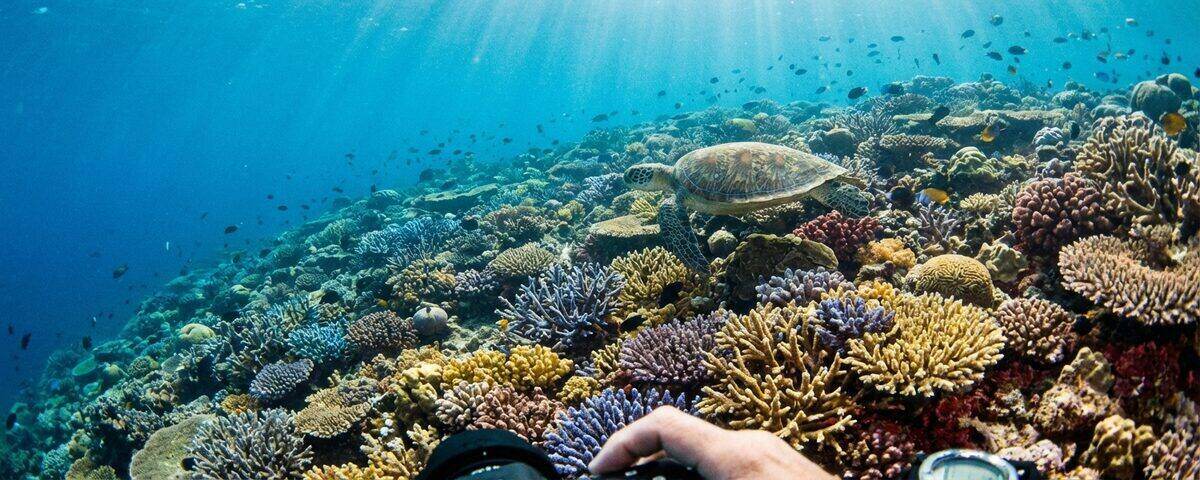
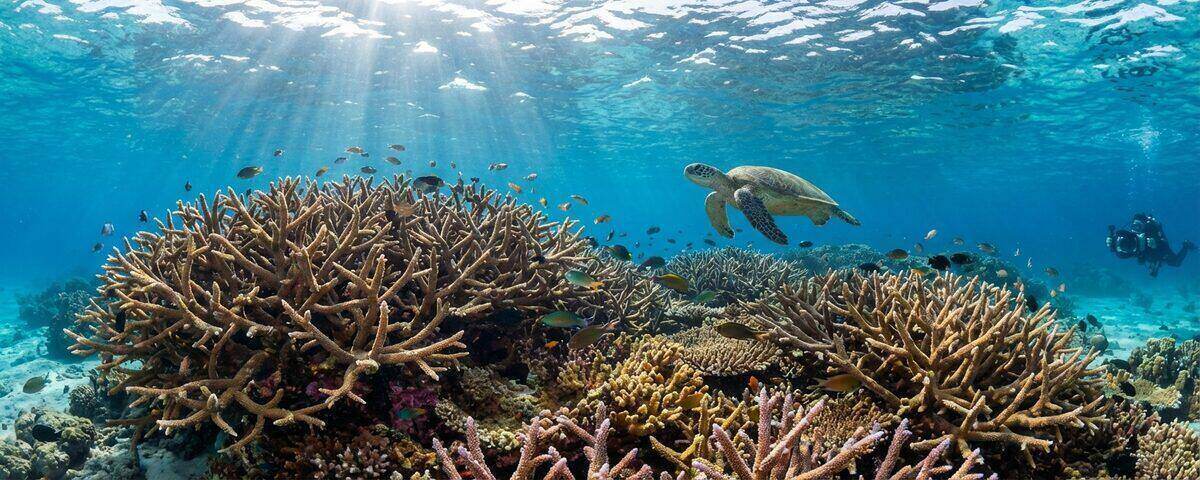
The site takes its name from the enormous staghorn coral colonies that blanket the shallow reef crest between 5 and 12 metres. These formations are genuinely impressive: dense, healthy thickets of Acropora that extend across the plateau in every direction, their branching arms reaching toward the surface where sunlight hits them full force. The coral coverage here is some of the best-preserved on Sipadan, partly because the site draws fewer divers than the marquee locations and partly because the shallow plateau naturally limits how much boat traffic passes directly overhead.
Below the staghorn fields, the reef drops away to a plateau at roughly 15 metres before the wall begins its vertical descent into the Celebes Sea. The wall itself is Sipadan's signature feature: a sheer face that plunges from the island's shallow fringing reef to the seabed more than 600 metres below. Sipadan is Malaysia's only oceanic island, formed by a living coral reef growing on the summit of an extinct volcanic cone that rises from the deep ocean floor. That geological isolation is what creates the extraordinary biomass density around the island. Nutrients upwell along the walls, currents concentrate plankton, and the result is an ecosystem that supports everything from nudibranchs to hammerhead sharks within a few hundred metres of each other.
The western aspect of Staghorn Crest means the site is best dived in the afternoon, when the sun swings around to illuminate the wall and the shallow coral gardens. Morning dives here are fine, but the colours of the staghorn colonies truly ignite when the sun is overhead or angled from the west, and underwater photographers consistently report better results from afternoon sessions.
Sipadan's permit system applies here as it does at every site on the island. Only 120 dive permits are issued per day, allocated through the resorts on Mabul and Kapalai. You cannot freelance a trip to Sipadan; your operator handles the permits, and your Sipadan days are distributed across your stay rather than granted as unlimited access. The scarcity means booking several months in advance is standard practice, and even then, weather and sea conditions may redirect your boat to alternative sites on the day.
What makes Staghorn Crest worth requesting specifically is the combination of that pristine shallow reef with the deep wall below. Many Sipadan sites excel at one or the other. Barracuda Point is about the pelagics and the current. Turtle Cavern is a penetration dive. The Drop Off is a wall dive from the shore. Staghorn Crest gives you both worlds: a coral garden above that would be a destination dive site anywhere else on the planet, and a wall below that hosts the full spectrum of Sipadan's marine life.
Marine Life at Staghorn Crest
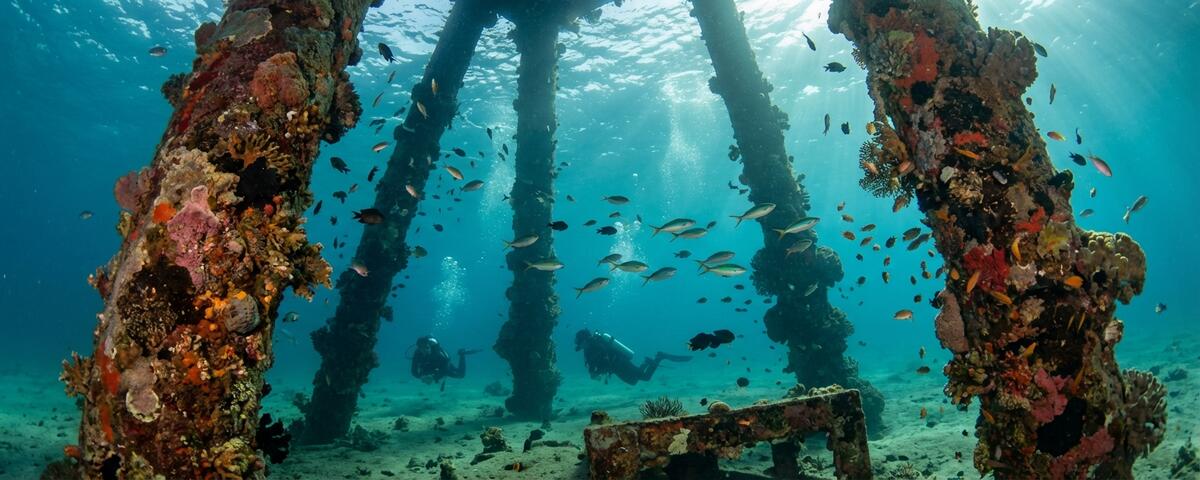
The staghorn colonies themselves are the first thing you register. These are not small patches scattered across a mediocre reef. They are massive, continuous fields of branching Acropora in shades of tan, cream, and pale blue that cover the plateau from roughly 5 to 12 metres. Swimming over them feels like flying above a forest canopy, and the effect is heightened by the fish life that uses the coral as shelter. Damselfish hover above their individual coral heads in territorial clouds, darting back into the branches at the first sign of threat. Chromis form loose aggregations above the staghorn tips, feeding on plankton drifting in the current.
Green turtles are everywhere on Sipadan, and Staghorn Crest is no exception. You will see them resting on the reef, cruising along the wall, and surfacing for air with the unhurried confidence of animals that have been protected here for decades. Counting double figures in a single dive is unremarkable. Hawksbill turtles also appear, though less frequently, and they tend to be found on the wall rather than the shallow reef, picking at sponges with their narrow beaks.
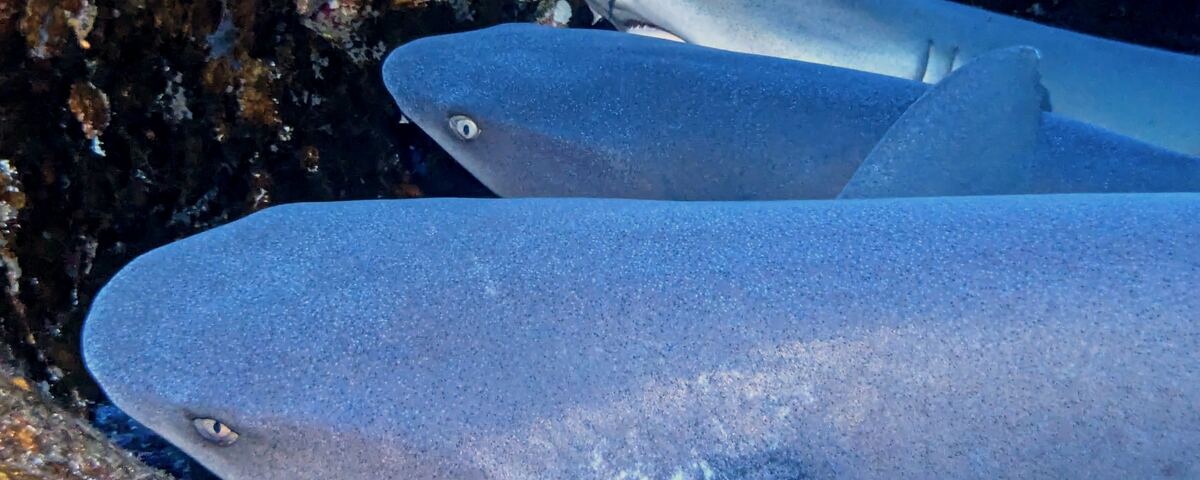
The wall hosts white-tip reef sharks in numbers that would make them the main attraction at most dive sites. Here, they are so common they become part of the scenery. They rest on ledges, patrol along the wall face, and occasionally cruise past in groups of three or four. Blacktip reef sharks are less common but present, usually in the shallower water near the reef crest. On fortunate days, particularly during the months when currents are strongest, grey reef sharks appear deeper on the wall.
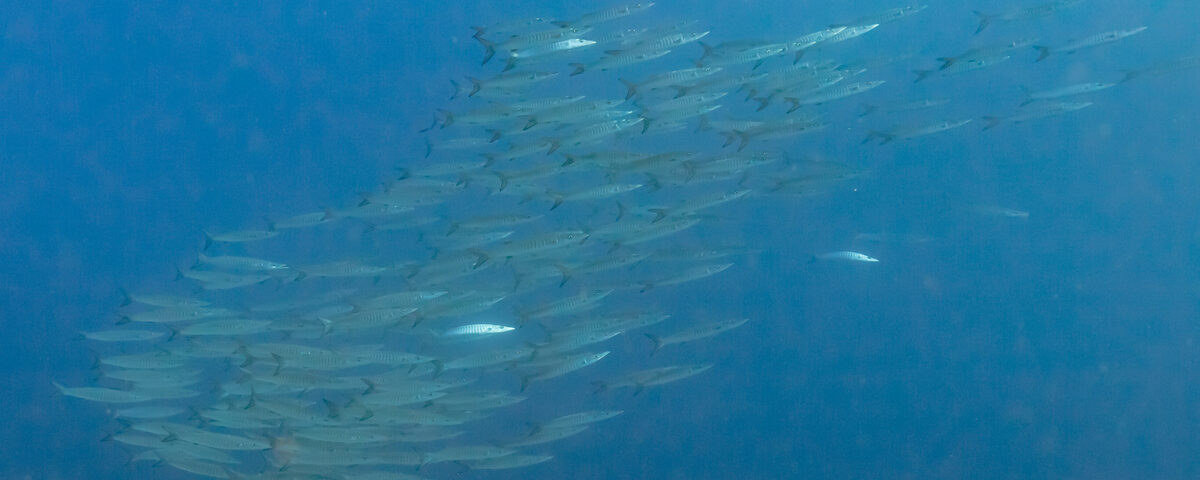
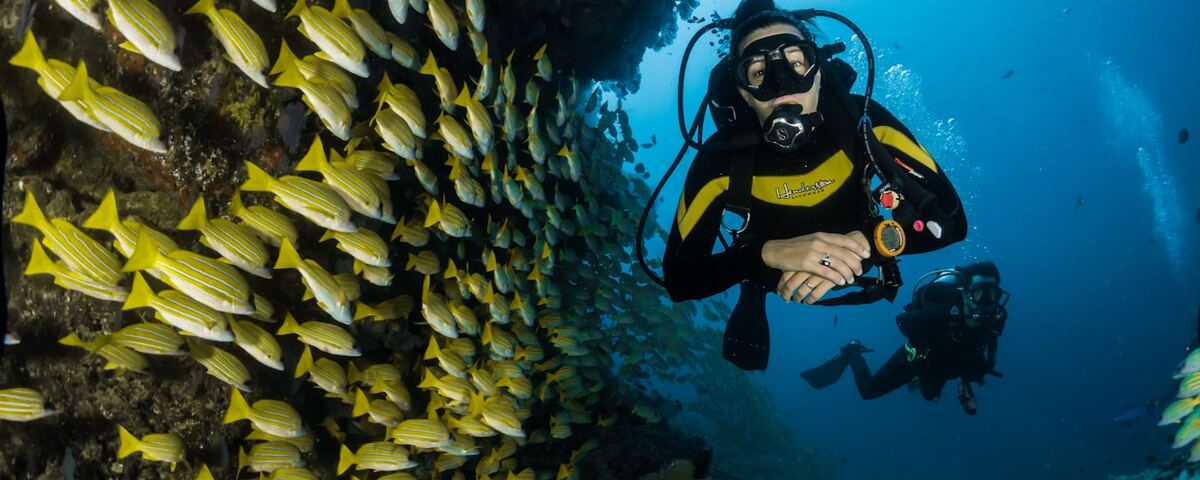
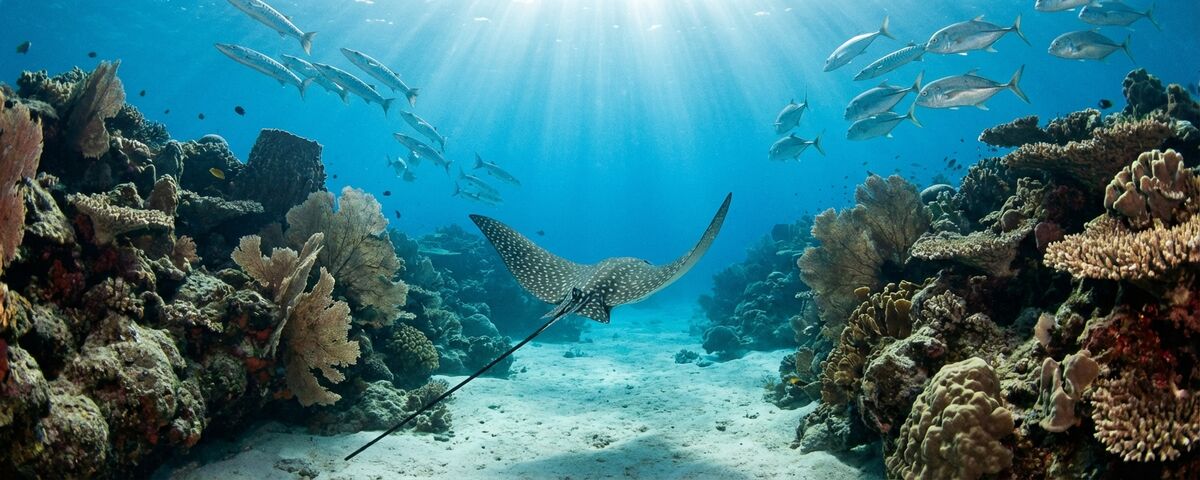
Schooling fish are a constant presence. Bumphead parrotfish move through in groups, their bulk and the crunching sound of their feeding audible from a distance. Schools of fusiliers stream past in blue and yellow ribbons. Big-eye trevally form loose balls near the wall's edge, and if conditions are right, you may catch the edge of the barracuda school that is more typically associated with the northern point of the island.
Macro life is where Staghorn Crest genuinely surprises people. The cracks and crevices along the wall are dense with nudibranchs, flatworms, and shrimp. Cleaning stations are scattered across the reef, and if you hover near one for a few minutes you will see morays, groupers, and sweetlips queueing for attention. Orangutan crabs hide in bubble corals. Porcelain crabs sit in anemones. The diversity per square metre is remarkable, even by Sipadan standards.
Angelfish and butterflyfish work the reef in pairs, their colours vivid against the pale coral. Emperor angelfish, regal angelfish, and the occasional Moorish idol add flashes of pattern and movement. Triggerfish, particularly the titan trigger during nesting season (roughly April to July), should be given a wide berth; they defend their nests aggressively and a bite from one is a memorable experience for all the wrong reasons.
Deeper on the wall, beyond 30 metres, the soft corals take over. Gorgonian sea fans spread their lattice networks perpendicular to the current, and the wall face is draped in sponges, tunicates, and whip corals. The transition from the sunlit hard coral above to the deeper soft coral zone below is one of the visual highlights of the dive, and it happens gradually enough that you do not need to rush your descent to appreciate it.
Dive Conditions
Staghorn Crest is a wall dive with a shallow coral garden on top. The reef crest begins at around 5 metres, with the dense staghorn colonies covering a plateau that extends to roughly 12 metres. From there, the reef slopes briefly to a secondary plateau at about 15 metres before the wall drops vertically. Most recreational divers stay between 5 and 30 metres, though the wall continues well beyond recreational limits into the deep blue of the Celebes Sea.
Currents range from mild to strong and are the primary factor determining whether your boat heads to Staghorn Crest on any given day. The site's position on Sipadan's western side means it receives currents differently from the northern and eastern sites. When the flow is moderate, the dive is a comfortable drift along the wall with time spent on the shallow reef at the beginning or end. When the current is strong, the dive becomes more demanding and less suitable for divers without solid drift diving experience. Your operator will assess conditions on the morning boat and may redirect to a more sheltered site if the current is running hard.
Visibility typically ranges from 15 to 30 metres. The clearest conditions occur during the dry season months of April through September, when reduced rainfall means less sediment runoff from Borneo's coast reaching the offshore waters. Even during the wetter months from October to March, Sipadan's oceanic position means visibility rarely drops below 15 metres; the island sits far enough from the mainland that coastal turbidity is not the factor it would be at nearshore sites.
Water temperature holds between 26 and 30 degrees Celsius year-round, with the warmest months from April to June. A 3mm wetsuit is sufficient for most divers through the year. Some people prefer a 5mm during the slightly cooler months of December to February, particularly for deeper wall dives where the thermocline can drop temperatures by a couple of degrees.
Entry is by boat from Mabul or Kapalai. The crossing to Sipadan takes roughly 15 to 25 minutes depending on sea conditions and the speed of your operator's vessel. Giant stride entries are standard, and the boat typically drops you at the northern end of the site so you drift south along the wall toward South Point. The boat follows your bubbles and picks you up at the end of the drift. Surface marker buoys are mandatory on every Sipadan dive.
The site is classified as advanced, and operators will typically require a minimum of Advanced Open Water certification or equivalent, plus logged experience with wall dives and drift dives. This is not a checkout site for newly certified divers. The combination of depth, current, and wall diving demands competent buoyancy control and awareness of depth management.
⚓ Divemaster Notes
I always request Staghorn Crest for the afternoon Sipadan dive when conditions allow. The western exposure means the sun hits the shallow reef and upper wall beautifully from around 1pm onward, and the difference in colour rendition compared to a morning dive is significant. If you are here primarily for photography, push for the afternoon slot.
The dive plan I prefer is to start on the shallow plateau at 8 to 10 metres, spending five to seven minutes cruising over the staghorn fields before dropping to the wall. This gives the group time to settle their buoyancy and enjoy the coral garden without burning bottom time at depth. From there, I take the wall to 25 to 30 metres (depending on the group's certification and experience), working south along the face where the cracks and overhangs concentrate the most life. The return to the shallows for the safety stop brings you back to the staghorn plateau, which doubles as one of the most pleasant safety stop environments on the island.
For photographers, the staghorn fields in the shallows are excellent wide-angle territory. The coral is dense and colourful enough to fill a frame, and the fish life above it adds movement. A fisheye or rectilinear wide-angle with two strobes is the setup to bring. Switch to the wall for macro if you have a second camera body or are willing to change lenses between the shallow and deep portions of the dive. The nudibranchs concentrate on the sponge-covered sections of the wall between 18 and 25 metres.
Buoyancy discipline matters enormously on the shallow plateau. The staghorn corals are healthy precisely because divers have generally been careful around them, and a careless fin kick through a colony does real damage to structures that took years to grow. I brief every group on hover technique and frog kicks before we enter. Anyone who demonstrates poor buoyancy on the shallow section does not get taken to the wall; I keep them on the plateau where the depth is forgiving and the risk of damage is limited to the immediate area.
Watch for current shifts mid-dive. The western exposure means the tidal flow can change direction during a 50-minute dive, and what started as a gentle southward drift can reverse. This is not dangerous if you are paying attention, but it changes your exit point and the boat needs to track your position. Keep your SMB ready to deploy from 15 metres if the current picks up and you need the boat to find you quickly.
Titan triggerfish are territorial here during nesting season, roughly April to July. Their nests are cone-shaped zones extending upward from the seabed, so swimming horizontally away (not upward) is the correct escape if one starts displaying aggressive behaviour. I have seen divers bitten here, and it always happens because they try to ascend out of the trigger's territory instead of swimming laterally.
How to Get to Staghorn Crest
Staghorn Crest is on Sipadan Island, off the northeast coast of Sabah, Malaysian Borneo. No accommodation exists on Sipadan itself; the island was cleared of all resorts in 2004 to protect the marine environment. All diving operates from resorts on the nearby islands of Mabul and Kapalai, with daily boat transfers to Sipadan.
The gateway town is Semporna, a small fishing port on the Sabah mainland. Most visitors fly into Tawau Airport (TWU), which receives direct flights from Kota Kinabalu and Kuala Lumpur. From Tawau, the road transfer to Semporna takes approximately one hour. Some operators arrange airport pickup; others require you to make your own way to the Semporna jetty where resort boats depart.
From Semporna jetty, the boat to Mabul Island takes roughly 40 to 50 minutes. Kapalai is slightly further. Once based at your resort, the morning boat to Sipadan departs early, usually around 7 to 7.30am, and the crossing takes 15 to 25 minutes depending on conditions.
Accommodation on Mabul ranges from budget (Scuba Junkie Mabul at roughly MYR 300 to 500 per night) to mid-range (Sipadan Mabul Resort, Mabul Water Bungalows) to the converted oil rig platform Seaventures Dive Rig which sits on stilts off Mabul's coast. Kapalai has a single resort, Sipadan Kapalai Dive Resort, built on stilts over a sandbar. All resorts include dive packages with allocated Sipadan days.
Permits are the critical planning factor. The 120 daily permits for Sipadan are distributed among the licensed operators, and each resort has a fixed allocation. During peak season (July to September), bookings fill months in advance. Even in quieter periods, securing your preferred number of Sipadan days requires booking at least four to six weeks ahead. Your resort will typically allocate you two to three Sipadan days during a five-night stay, with the remaining days spent diving the excellent sites around Mabul and Kapalai.
For international visitors connecting through Kuala Lumpur, the most common routing is KL to Tawau on AirAsia or Malaysia Airlines, then the road transfer. Some divers fly KL to Kota Kinabalu and connect onward to Tawau, which adds flexibility for seeing more of Sabah before or after the dive trip. Budget a full travel day in each direction between KL and your resort.
Gear Recommendations
A 3mm wetsuit handles the 26 to 30 degree water comfortably for most of the year, with a 5mm or hooded vest worthwhile for the cooler months of December to February, particularly on deeper wall dives. Wide-angle lens setup is the priority for this site; the staghorn coral gardens and wall scenery demand a fisheye or rectilinear wide-angle to capture the scale. A macro lens (60mm or 100mm) earns its place on the wall section where nudibranchs and small critters hide in every crack. Dual strobes for wide-angle work in the shallows where the ambient light is strong enough to cause backscatter if your strobe positioning is poor. Surface marker buoy is mandatory on all Sipadan dives; carry a reel with at least 20 metres of line. Torch or focus light is essential for peering into wall crevices and illuminating the deeper sections where ambient light fades. Reef hook is not used at Staghorn Crest (unlike current-heavy sites like Barracuda Point), but carry one anyway as your operator may redirect to a site that requires one if conditions change.
Recommended Dive Operators
Seaventures Dive Rig operates from their converted oil platform off Mabul and has strong Sipadan permit allocations. Their guides know the western sites well and will route Staghorn Crest dives to maximise both the shallow coral and the deeper wall sections. Sipadan Mabul Resort (SMART) runs one of the larger Mabul-based operations and includes Staghorn Crest in their standard Sipadan site rotation, with experienced divemasters who can manage mixed groups across the depth range. Scuba Junkie Mabul offers budget-friendly packages with solid guide-to-diver ratios and includes Sipadan days in their multi-night stays; their guides are particularly good at finding macro life on the wall. Borneo Divers, one of the original Sipadan operators, brings decades of site knowledge to their guided dives and runs smaller group sizes that allow more time at individual sites. Sipadan Kapalai Dive Resort, based on the Kapalai sandbar, offers the shortest boat crossing to Sipadan and includes Staghorn Crest in afternoon dive schedules when the light is best for the western sites.
Liveaboard Options
Several liveaboards operate in the Sipadan area, though the permit system means they face the same 120-permit daily cap as land-based operators. Celebes Explorer is the most established liveaboard serving Sipadan and the surrounding islands, typically running four to six-night itineraries that include two to three days of Sipadan diving alongside Mabul, Kapalai, and Mataking. The vessel carries 12 to 16 divers and offers a good guide-to-diver ratio with knowledgeable local divemasters. Liveaboard diving in the Sipadan area offers the advantage of accessing more remote sites around Mabul and the offshore reefs that shore-based operators visit less frequently, though Sipadan access itself is identical: you still need permits, still limited to the daily cap, and still subject to weather on the crossing. Peak season bookings (July to September) fill well in advance.