Ray Channel Dive Site
Sipadan, Malaysia · Near Semporna
Overview
Ray Channel earned its name the honest way. The sandy channel on Sipadan's eastern flank funnels currents between two coral ridges, and those currents bring rays. Lots of them. Spotted eagle rays cruise through in loose formations, blue-spotted stingrays shuffle along the sand, and on good days you will count more rays in a single dive than you have seen in an entire dive trip elsewhere.
The site sits between Drop Off to the north and Turtle Cavern to the south, occupying a stretch of reef that most divers pass over without realising it has its own character. Where Drop Off is about the vertical wall and Turtle Cavern draws people for the cavern system, Ray Channel is all about what moves through the gap. The topography creates a natural funnel that concentrates nutrients, plankton, and the species that feed on them into a corridor roughly 30 metres wide.
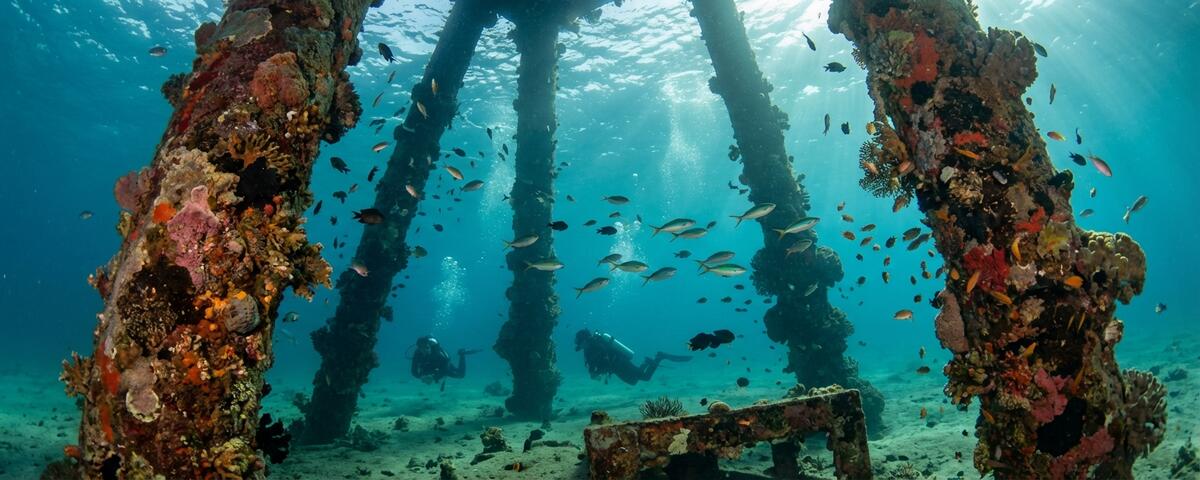
You enter from the reef top at around 5 metres and drift along the channel as it descends gradually to 20-25 metres at the sand floor. The walls on either side are covered in hard coral, with leather corals and barrel sponges punctuating the edges. The sand itself is not barren. Spend a minute hovering over it and you will find garden eels, gobies perched on their burrows, and the occasional well-camouflaged crocodilefish lying flat and hoping you will swim past.
Sipadan operates under a strict 120-permit-per-day system administered by Sabah Parks. This means Ray Channel never feels crowded, even during peak season. Your dive group will likely have the channel to themselves for most of the dive. The permit system is both a blessing and a minor logistical headache; you need to book well in advance through a licensed operator based in Semporna or on Mabul Island, and permits are allocated by lottery for each day.
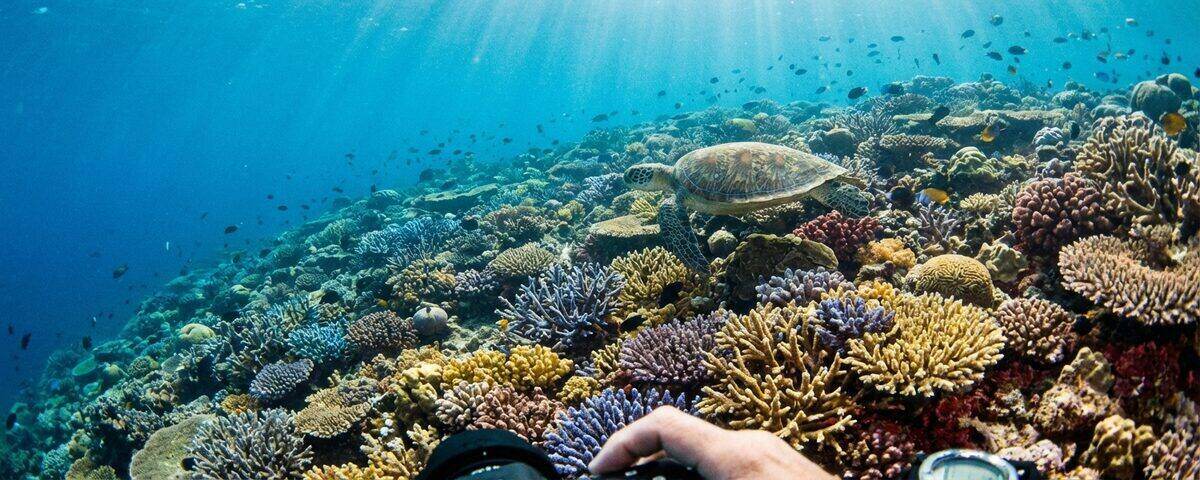
What makes Ray Channel special is not just the rays. The channel acts as a highway for pelagics moving around the island. White-tip reef sharks rest under the overhangs during daylight hours. Bumphead parrotfish pass through in the mornings, their crunching audible before you see them. Green turtles are so common on Sipadan that they barely register as a sighting any more, but watching one glide through the channel alongside an eagle ray is the kind of moment that reminds you why you learned to dive in the first place.
Marine Life at Ray Channel
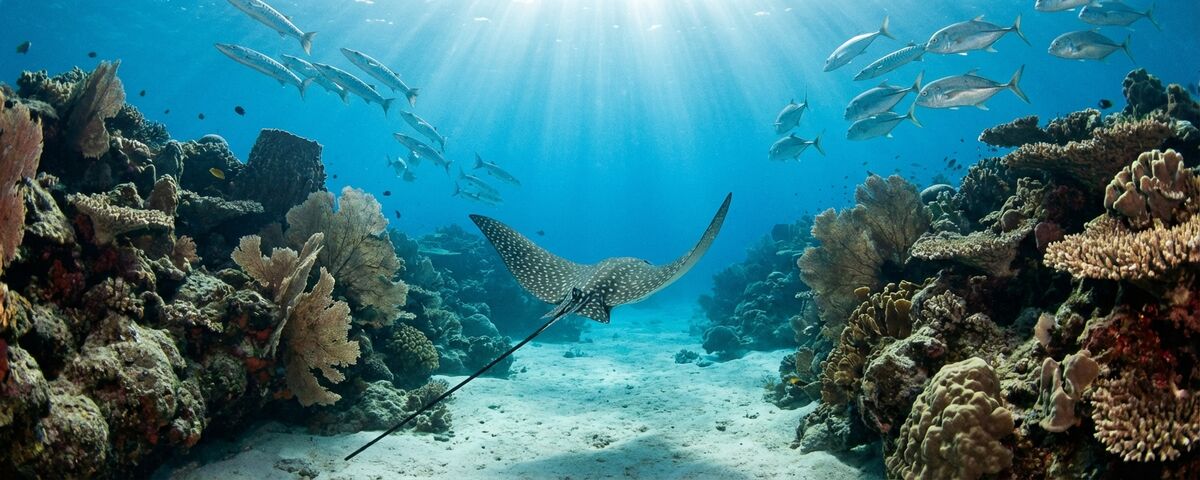
Spotted eagle rays are the headliners, and they deliver consistently. Groups of two to six are typical, though formations of a dozen or more pass through during current-rich periods between July and September. They tend to glide mid-water through the centre of the channel, giving photographers a clean blue-water backdrop if they position themselves correctly.
Blue-spotted ribbontail rays are everywhere on the sandy bottom. They are skittish, so approach slowly and low. Marble rays appear less frequently but are worth watching for, particularly in the deeper sections where the channel opens onto the reef slope.
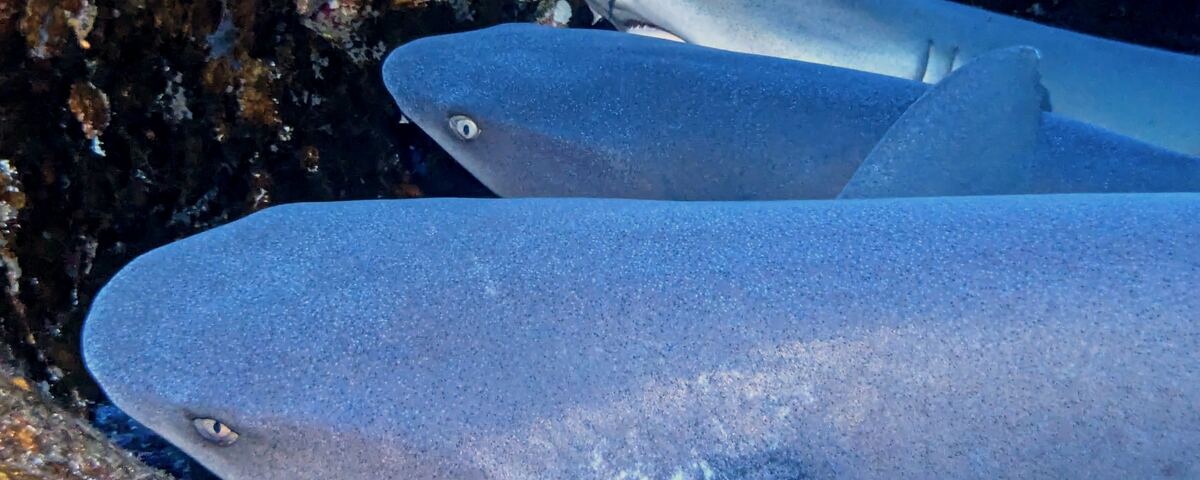
White-tip reef sharks tuck themselves under coral overhangs along both channel walls. Morning dives catch them before they have settled in for the day, and you might see three or four actively patrolling. The occasional grey reef shark passes through the deeper end of the channel, though they rarely linger.
Bumphead parrotfish schools move along the channel, usually in the first hour after sunrise. If your operator schedules an early boat, you stand a good chance of encountering a group of 30 or more grinding their way along the reef edge. The sound carries surprisingly well underwater.
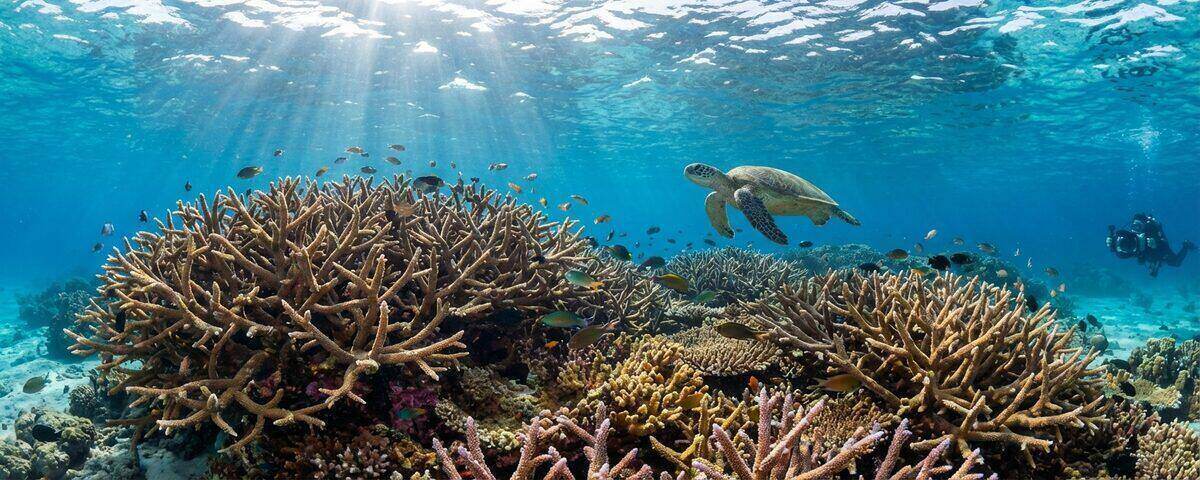
Green and hawksbill turtles are resident. Sipadan has one of the densest turtle populations in the region, and Ray Channel is no exception. You will see them resting on coral heads, feeding on sponges, and occasionally swimming alongside you for stretches of the channel.
The sand and rubble zones between the coral ridges hold the smaller finds: robust ghost pipefish, leaf scorpionfish, various nudibranchs, and mantis shrimp peering from their burrows. Garden eels colonise patches of the sand floor in the deeper sections, retreating into their holes if you drift too close.
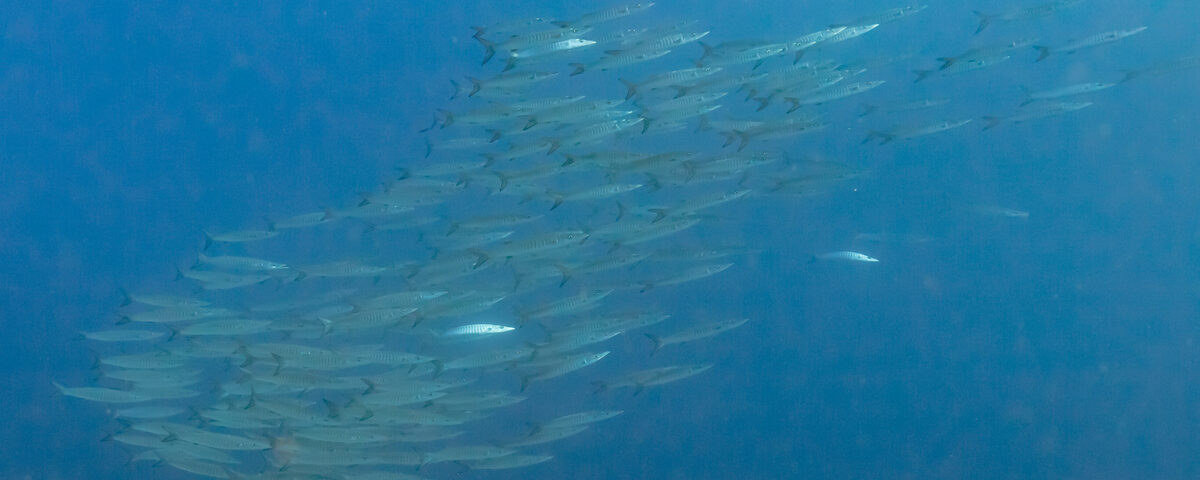
Schools of jacks and barracuda are common in the blue water above the channel, particularly on incoming tides. They tend to hold position in the current, making for dramatic wide-angle shots with the channel walls framing the scene below.
Dive Conditions
The channel runs roughly north to south along Sipadan's eastern face, with the reef top at 5 metres dropping to a sand floor at 20-25 metres. The channel walls rise 5-10 metres above the sand, creating a natural corridor that concentrates current flow.
Currents range from gentle to strong depending on tidal phase. Incoming tides push water through the channel from the open ocean side, bringing clearer water and more pelagic activity. Outgoing tides reverse the flow and can reduce visibility as sediment lifts off the sand floor. Your divemaster will read the current before entry and plan accordingly.
Visibility averages 20-25 metres on good days, occasionally stretching to 30 metres during incoming tides with calm conditions. After storms or on outgoing tides, it can drop to 15 metres, which is still perfectly workable but less ideal for wide-angle photography.
Water temperature stays between 27 and 30 degrees Celsius year round. A 3mm wetsuit is sufficient for most people, though those who run cold or plan multiple dives per day might prefer a 5mm.
The dive is typically conducted as a drift, entering from the boat at the northern end of the channel and exiting where the channel opens onto the broader reef slope to the south. Bottom time is usually 45-55 minutes depending on depth profile and air consumption. The reef top provides an excellent safety stop area with plenty to look at while you off-gas.
Surface conditions are generally calm within the lee of the island. Swells can build during the northeast monsoon season (November to March), which is also when permits become harder to secure and some operators reduce their Sipadan schedules.
⚓ Divemaster Notes
I brief Ray Channel as a drift dive with a slow start. The temptation is to drop straight to the sand floor at 20 metres, but the best approach is to begin on the reef top at 5-8 metres and work your way along the channel wall, descending gradually. The rays cruise mid-water, so if you go too deep too fast you end up looking up at them against the surface glare instead of having them at eye level.
Stay tight to the channel walls rather than swimming down the centre. The rays are habituated to divers but they give the centre of the channel to the current, and if you park yourself there you will spook them wider. Hug the coral ridge, keep your fins still, and let them come to you. They almost always do.
Buoyancy control matters here more than at some other Sipadan sites. The sand floor is fine-grained and kicks up easily. One poorly placed fin stroke and you have killed the visibility for everyone behind you. I ask my groups to stay at least two metres above the sand unless they are specifically looking at something on the bottom.
The best time for eagle rays is the first dive of the morning, particularly on an incoming tide. By mid-morning the channel gets more current and the rays spread out across the broader reef. If your operator offers a dawn departure, take it.
For photography, the morning light hits the channel from the east and illuminates the sand floor beautifully for the first couple of hours. Wide-angle with a fisheye or rectilinear 10-17mm equivalent gives you the best results for ray portraits with the channel walls in frame. Bring strobes if you want to fill in colour on the coral walls.
One thing people miss: check the underside of the coral overhangs at the channel entrance. I have found ornate ghost pipefish, painted frogfish, and juvenile barramundi cod tucked in there on separate occasions. Most groups swim straight past.
How to Get to Ray Channel
Sipadan Island is off the southeast coast of Sabah, Malaysian Borneo. The nearest town is Semporna, which serves as the staging point for all Sipadan diving.
From Kota Kinabalu, fly to Tawau (roughly one hour). From Tawau airport, it is a 90-minute drive to Semporna. Several operators run shuttle transfers, or you can arrange a private car.
From Semporna, speedboats to Sipadan take approximately 45 minutes to one hour depending on sea conditions. All boats depart from the Semporna jetty or from resort jetties on Mabul or Kapalai islands.
Most divers stay on Mabul Island (15 minutes by boat from Sipadan) or on the Kapalai water bungalows. Staying in Semporna is cheaper but adds significant daily transit time. Mabul gives you the best balance of proximity and accommodation options.
Sipadan permits must be arranged through a licensed dive operator. The 120 daily permits are distributed among the operators, so your permit is tied to your booking. Book at least two to three months in advance for peak season (April to September). Some operators guarantee a minimum number of Sipadan days within a package, others allocate permits as they receive them. Ask explicitly before booking.
There is no accommodation on Sipadan itself. The island is a protected marine park with only a ranger station and basic facilities. All diving is conducted as day trips from Mabul, Kapalai, or Semporna.
Gear Recommendations
3mm wetsuit for most divers. Water temperature rarely drops below 27 degrees, but a hood is unnecessary and gloves are not permitted in the marine park. If you are doing three or more dives per day across Sipadan and Mabul, a 5mm gives more comfort on later dives when you start to feel the cumulative cooling.
SMB and reel are mandatory. The drift takes you along the island's edge and your boat captain needs to track your exit point. Deploy at 5 metres during your safety stop.
For cameras, wide-angle is the primary recommendation. A fisheye or ultra-wide rectilinear lens (10-17mm equivalent) captures rays in the channel context. Bring a macro setup for the sand sections if you have a second camera body or can swap lenses between dives. The muck life between dives on Mabul also rewards macro.
Dive computer with Nitrox capability is recommended. Most operators offer Nitrox (typically 32%), which extends bottom time usefully given the 20-25 metre depth profile. The extra minutes at depth translate directly into more time watching rays pass through.
Reef hook is not used at Ray Channel. The current is manageable by finning or tucking behind coral heads, and the sand sections do not lend themselves to hooking in. Save the reef hook for Barracuda Point if you are diving both sites on the same day.
Torch is useful for peering into the overhangs and crevices along the channel walls, particularly the deeper sections where frogfish and scorpionfish hide. Not essential but adds value for anyone interested in the smaller species.
Recommended Dive Operators
Scuba Junkie operates from both Semporna and Mabul, with a strong reputation for guide quality and marine conservation work. Their Mabul accommodation is mid-range and the dive operation is well-organised. They are transparent about permit allocation.
Sipadan Scuba is one of the longest-running operations in the area, based in Semporna with daily boats to Sipadan. Their guides know the sites intimately and are particularly good at finding macro subjects in the channel's sand sections.
Seaventures Dive Rig is a converted oil platform off Mabul that doubles as accommodation and dive centre. It is one of the more unusual places to stay in Southeast Asia, and the house reef beneath the rig is excellent for muck diving between Sipadan trips.
Borneo Divers, based on Mabul, was the first operator to bring recreational diving to Sipadan in the 1980s. Their experience on the island is unmatched, and their divemasters have logged thousands of dives at Ray Channel specifically.
Big John Scuba in Semporna offers budget-friendly packages with Sipadan permits included. Accommodation is basic but functional, and the guides are experienced. A solid choice for divers who want to maximise dive days without spending resort-level money.
Liveaboard Options
Sipadan is not a typical liveaboard destination due to the permit system. Most liveaboards operating in Sabah waters include Sipadan as part of a broader itinerary that covers the Celebes Sea, though permits must still be secured in advance and are not guaranteed.
Celebrity Soleil runs multi-day trips from Semporna that incorporate Sipadan days alongside Mabul muck diving and outer reef sites. Their permit success rate is high due to long-standing operator relationships.
MV Celebes Explorer offers Sipadan-inclusive itineraries during peak season. The vessel is comfortable for the price point and the crew know these waters well. Trips typically include two to three Sipadan days out of a five or six day itinerary.
For most divers, the resort-based approach from Mabul or Kapalai is more practical than a liveaboard for Sipadan specifically. You get more flexibility with permit days, and the house reefs on Mabul provide outstanding muck diving between Sipadan excursions. The liveaboard option makes more sense if you want to combine Sipadan with sites further afield in the Celebes Sea that are not reachable on day trips.