Whitetip Avenue Dive Site
Sipadan, Malaysia · Near Semporna
Overview
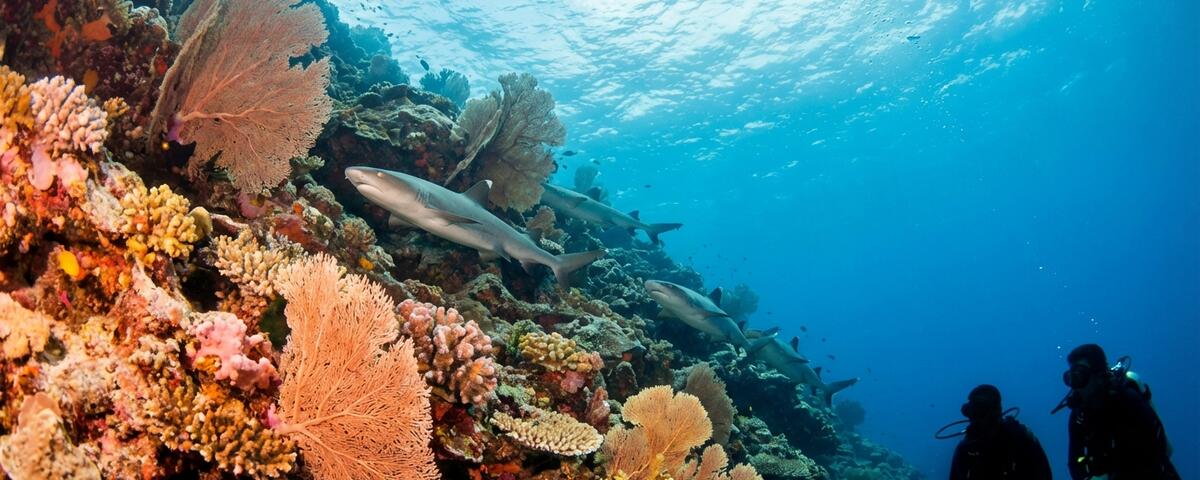
Whitetip Avenue sits on Sipadan's southeastern wall, running along a stretch of reef where whitetip reef sharks gather in numbers that border on the absurd. The site earned its name honestly. On any given dive, you can expect to see between five and twenty whitetip reef sharks cruising the wall, resting on sandy ledges, or stacked in loose formations inside overhangs and crevices. Some divers count thirty or more on a single pass. This is not a site where you hope to see a shark; it is a site where you stop counting them.
The wall drops from a shallow coral plateau at about 5 metres straight down into the Celebes Sea. Below 40 metres, the blue just keeps going. The wall itself is in excellent condition, covered in hard corals along its upper sections and punctuated by sea fans, sponges, and soft coral clusters deeper down. But nobody comes here for the coral. You come for the sharks, and the sharks deliver every single time.
Sipadan's volcanic origins created the underwater topography that makes sites like Whitetip Avenue possible. The island is the exposed peak of a seamount rising from 600 metres, and its walls plunge vertically on all sides. That deep water proximity brings nutrients and currents that sustain a food chain from plankton to pelagics. Whitetip reef sharks sit comfortably in the middle of that chain, hunting at night and resting during the day along the wall's ledges and overhangs.
The site sits between South Point and Turtle Cavern, two of Sipadan's most famous dives, and it sometimes gets overlooked in favour of its flashier neighbours. That works in your favour. While groups queue up for Barracuda Point's tornado and South Point's hammerhead lottery, Whitetip Avenue offers a quieter wall dive with guaranteed shark encounters and enough coral coverage to keep photographers busy between shark sightings.
Sipadan operates under a strict permit system limiting daily visitors to 176 divers. You cannot dive here independently. All dives must be booked through licenced operators based on Mabul or Kapalai islands, and permits are allocated on a rotating basis. This restriction keeps the reefs in remarkable condition compared to unregulated sites elsewhere in Southeast Asia, and it means even at full capacity, you rarely share a dive site with more than one other group.
The best conditions run from April through December, with peak visibility from April to June and September to November. The monsoon transition months of January through March bring rougher seas and reduced visibility, though diving remains possible. Water temperatures hold steady between 26 and 30 degrees year round, warm enough that a 3mm suit is standard.
Marine Life at Whitetip Avenue
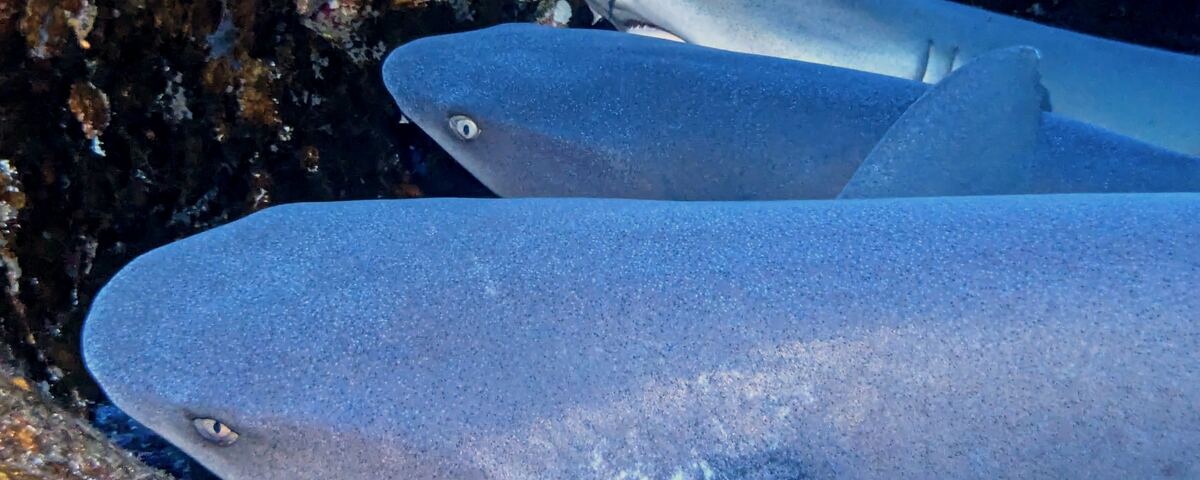
Whitetip reef sharks are the headline act, and they do not disappoint. These are not timid animals here. Sipadan's whitetips have grown accustomed to divers over decades of careful interaction, and they will swim within a metre of you without changing course. During the day, groups of three to eight sharks rest on sandy shelves at 15 to 25 metres, barely moving except for the rhythmic pumping of their gills. They stack on top of each other in the overhangs, sometimes wedged so tightly into crevices that their tail fins poke out while their heads remain hidden inside the rock.
At the deeper sections of the wall, below 25 metres, grey reef sharks patrol in loose groups. They are less approachable than the whitetips, maintaining a wider buffer from divers, but they pass close enough for clear observation. On strong current days, both species become more active, riding the flow along the wall face and making occasional passes through mid-water.
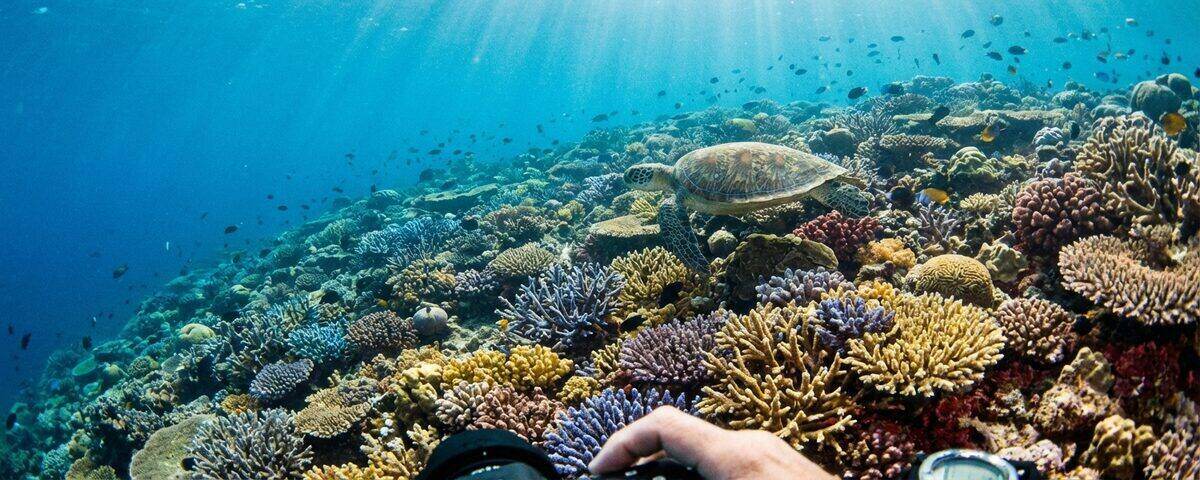
Green turtles are everywhere. Sipadan holds one of the largest resident turtle populations in Southeast Asia, and Whitetip Avenue is no exception. You will see them feeding on sponges along the wall, cruising past at eye level, and resting in coral alcoves. Hawksbill turtles appear less frequently but do inhabit the site, recognisable by their pointed beaks and the overlapping scales on their shells.
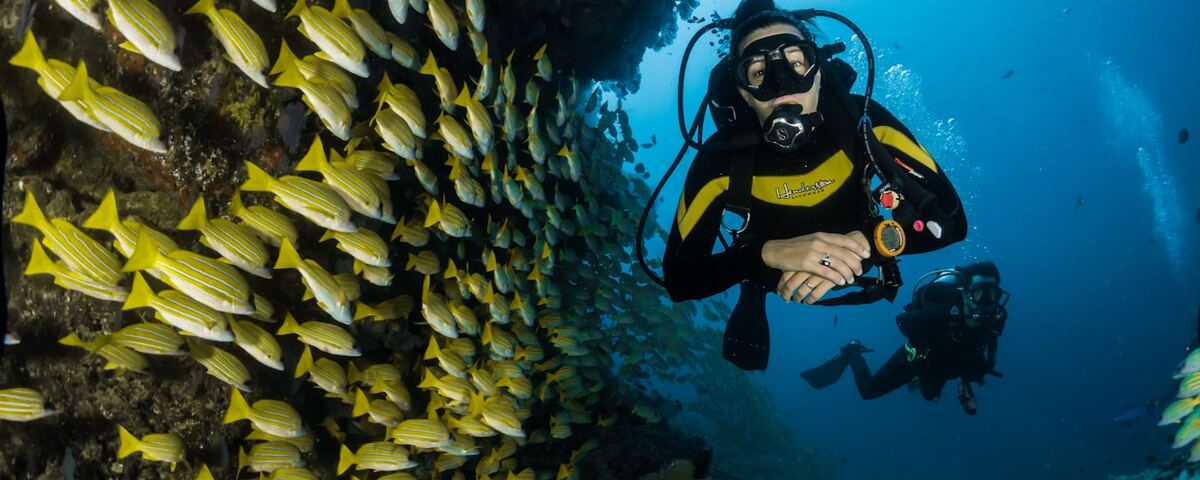
The wall's upper sections between 5 and 15 metres host dense hard coral growth dominated by staghorn, table, and brain corals. Anemones with their resident Clark's and false clown anemonefish dot the reef flat. Schools of bluestripe snapper hang in golden curtains along the wall edge, shifting position with the current. Fusiliers stream past in the thousands, their silvery bodies catching the light as they change direction in perfect unison.
Bumphead parrotfish make regular appearances, usually in groups of 10 to 30, grinding coral with their fused teeth and leaving clouds of white sand in their wake. Hearing them before you see them is common. The crunching carries surprisingly well underwater.
In the crevices and along the wall's deeper overhangs, look for giant moray eels, sometimes sharing a hole with a whitetip shark in an arrangement that looks uncomfortable but seems to suit both parties. Lionfish hang upside down under ledges. Leaf scorpionfish hide on coral rubble patches. Nudibranchs, particularly Chromodoris species, graze on the sponges covering the lower wall.
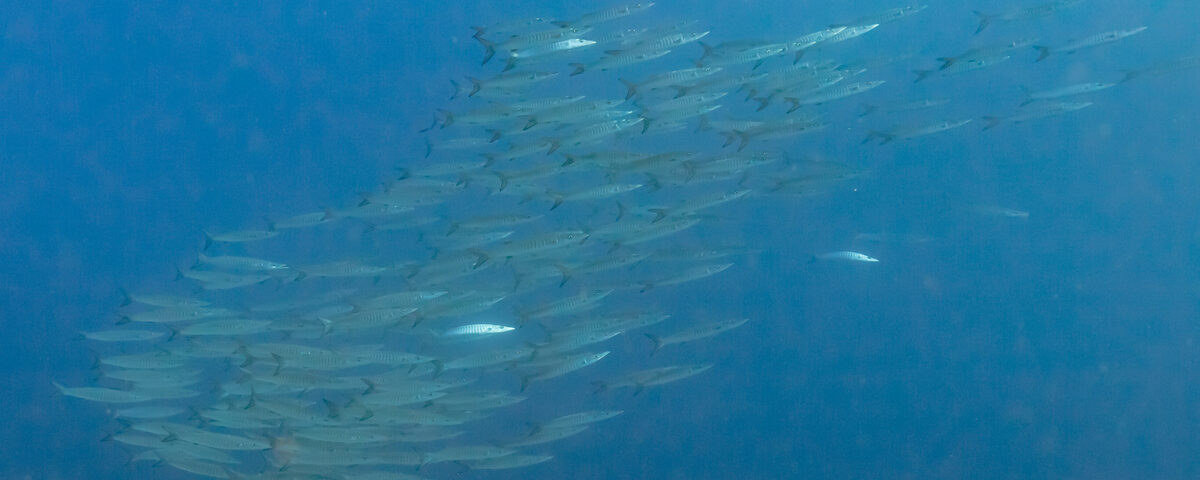
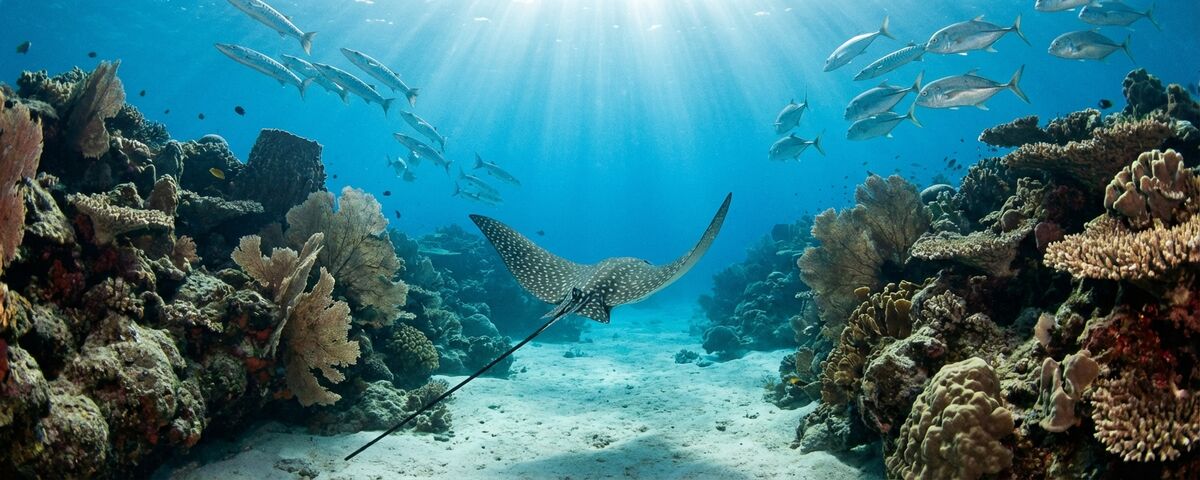
Barracuda occasionally sweep through in small groups, though the massive tornado formation is more reliably seen at Barracuda Point to the north. Trevally hunt along the wall edge in the early morning. During plankton-rich periods, mobula rays and eagle rays pass through the deeper water beyond the wall, visible as silhouettes against the blue when visibility cooperates.
Dive Conditions
Whitetip Avenue sits on Sipadan's southeastern face, which means it catches currents from the Celebes Sea with varying intensity. On calm days, the current barely registers and you can hover along the wall at your own pace, stopping to watch sharks or photograph coral. On strong current days, and these happen regularly, the flow can push hard enough to make the dive a genuine drift that requires solid buoyancy control and wall awareness.
The current direction is unpredictable. It typically runs north to south or south to north along the wall, but it can shift mid-dive and occasionally pushes divers off the wall into open water. Experienced guides read the surface conditions and brief accordingly, but the possibility of current changes is why this site gets an intermediate to advanced rating. If you are not comfortable managing your position in moving water while maintaining depth control against a vertical wall, this dive will test you.
Depths range from 5 metres on the reef flat to well beyond recreational limits as the wall drops into the abyss. The productive zone for most divers sits between 10 and 30 metres, where the shark activity and coral coverage are most concentrated. Deep divers with appropriate certification sometimes descend to 40 metres along the wall, where the grey reef sharks are more common and the occasional hammerhead passes at the edge of visibility.
Visibility swings between 15 and 40 metres depending on conditions. The Celebes Sea delivers genuinely outstanding water clarity during the calmer months from April through November, with 30 metre plus visibility being the norm rather than the exception. Plankton blooms during current upwellings can temporarily reduce visibility to 15 metres, though this also correlates with increased pelagic activity as the nutrients attract larger visitors.
Water temperature stays between 26 and 30 degrees throughout the year. Thermoclines are possible below 25 metres, with temperature drops of 2 to 3 degrees not uncommon. A 3mm full suit is sufficient for most divers. Those doing three or four dives per day on a Sipadan permit might prefer a 5mm by the afternoon.
Surface conditions are generally calm in the lee of the island, though swell from the Celebes Sea can make boat entry choppy during the northeast monsoon (November to March). Giant stride entries from the dive boat are standard.
⚓ Divemaster Notes
Start the dive heading south along the wall if the current allows. The densest concentration of resting whitetip sharks sits between two prominent overhangs at 18 to 22 metres, roughly 150 metres south of the standard entry point. On slack current days, you can reach this section in about 8 minutes at a comfortable pace. On current days, adjust your entry point so the drift carries you through the shark zone rather than past it.
Brief your group on shark etiquette before entry. Whitetips at this site are habituated to divers, but they have limits. Approaching a resting shark head-on triggers a flight response that clears the whole ledge. Approach from the side, stay at their depth or slightly above, and keep horizontal. Groups that settle on the sand shelf opposite the overhangs and simply wait are rewarded with sharks swimming within arm's reach.
Watch your depth along this wall. The profile is vertical and the water is clear enough that you can see deep without realising you are descending. The grey reef sharks at 30 metres plus act as a powerful magnet, especially for less experienced divers seeing them for the first time. Set clear depth limits during the briefing and enforce them. A computer set with a 28 metre maximum depth alarm is a reasonable precaution for intermediate groups.
The reef flat between 5 and 10 metres is an excellent safety stop zone with enough coral life and fish activity to keep divers occupied. Bumphead parrotfish frequently feed through this area in the early morning, and the resident turtle population provides reliable entertainment during the final minutes of the dive.
Photographers should bring wide angle for the sharks and wall scenery. The whitetips rest in low-light overhangs, so strobes are important for properly exposing a shark against a dark background. The classic composition is a line of resting whitetips receding into the overhang, with blue water visible beyond. A fisheye lens at 10 to 15mm equivalent captures both the sharks and their environment.
Night diving at Whitetip Avenue, when occasionally permitted, is extraordinary. The resting sharks activate and hunt, using the wall's topography to corner prey fish. Seeing a pack of whitetips in coordinated hunting mode, flushing reef fish from coral heads and striking in rapid succession, is one of diving's great spectacles. Check with your operator about night dive availability, as it requires specific permit arrangements.
This site pairs naturally with Turtle Cavern (immediately north) for a second dive, or with South Point if your group wants a contrast between wall diving and a more exposed point dive with potential pelagic encounters.
How to Get to Whitetip Avenue
Sipadan Island lies in the Celebes Sea off the southeast coast of Sabah, Malaysian Borneo. The gateway town is Semporna, a small fishing port roughly 90 minutes by road from Tawau, the nearest city with a commercial airport.
Flights to Tawau Airport (TWU) connect through Kota Kinabalu (daily flights on Malaysia Airlines and AirAsia, about 50 minutes), Kuala Lumpur (direct flights on AirAsia, about 2 hours 45 minutes), and occasionally Sandakan. From Tawau Airport, transport to Semporna takes 60 to 90 minutes by road. Most dive resorts arrange airport transfers; expect to pay around 100 to 150 MYR for a private car or 25 to 40 MYR for a shared minivan.
From Semporna, speedboats operated by the licenced dive resorts on Mabul and Kapalai islands take roughly 45 minutes to reach their respective islands. Sipadan itself is a further 15 to 25 minutes by speedboat from Mabul or Kapalai. You cannot stay on Sipadan. Overnight accommodation is prohibited. All divers are based on Mabul, Kapalai, or in Semporna and boat out to Sipadan on their allocated permit days.
Sipadan diving permits are limited to 176 per day, allocated among the licenced operators. Permits are not available independently. You must book through one of the authorised dive resorts or operators, and permits are assigned on a rotational basis meaning you may not dive Sipadan every day of your trip. A typical five-day package includes two or three Sipadan days, with the remaining days spent diving Mabul and Kapalai house reefs (which are excellent in their own right for macro diving).
Permit fees are included in most resort packages. As of 2025, the conservation fee is 40 MYR per diver per day. Budget around 3,000 to 8,000 MYR for a four to five night dive package including accommodation, meals, diving, equipment, and Sipadan permits, depending on the resort tier.
The journey from Kuala Lumpur to being underwater at Whitetip Avenue takes roughly 8 to 10 hours door to door: flight to Tawau, transfer to Semporna, boat to Mabul, and boat to Sipadan the following morning.
Gear Recommendations
A 3mm full wetsuit handles Sipadan's warm water comfortably. For multi-dive days with three or four dives back to back, a 5mm suit prevents the gradual chill that builds during afternoon dives, particularly if deeper profiles take you below the occasional thermocline at 25 metres.
Wide-angle photography gear is essential for Whitetip Avenue. A rectilinear wide or fisheye lens in the 10 to 16mm equivalent range captures the sharks in their environment, which is the whole point. Dual strobes are strongly recommended. The overhangs where whitetips rest are dark, and available light alone produces flat, blue-tinted images that do not do the scene justice. Position one strobe high and one low to light the shark from above while filling shadows underneath.
A compact camera with a wide-angle wet lens produces perfectly good results here. The sharks are close, the visibility is excellent, and the main challenge is composition rather than reach. If you are shooting a GoPro, the HERO12 or later models with improved low-light performance handle the overhangs better than older models.
A dive torch is useful for peering into crevices where moray eels and crustaceans hide, and for signalling your buddy in the event of current-related separation. Keep it off the sharks; shining a light directly at resting whitetips disturbs them. A 1000 lumen primary torch is plenty for daytime use.
A surface marker buoy (SMB) and reel are non-negotiable on Sipadan. Currents can push divers off the wall and into open water, and the Celebes Sea beyond the island's reef system is deep and featureless. Every diver should carry their own SMB, not rely on the guide's. Most operators will brief this requirement, but do not wait to be told.
Reef-safe sunscreen is appropriate given Sipadan's protected status. Mineral-based formulations with zinc oxide are the responsible choice. The permit system exists specifically to protect these reefs, so matching your personal choices to that conservation ethic makes sense.
A dive computer with nitrox capability is standard for Sipadan diving. Most operators offer enriched air nitrox (typically 32%), which extends bottom times on the multi-dive days and adds a safety margin. If you are doing three dives per day across wall sites averaging 20 to 25 metres, nitrox is worth the modest surcharge.
Recommended Dive Operators
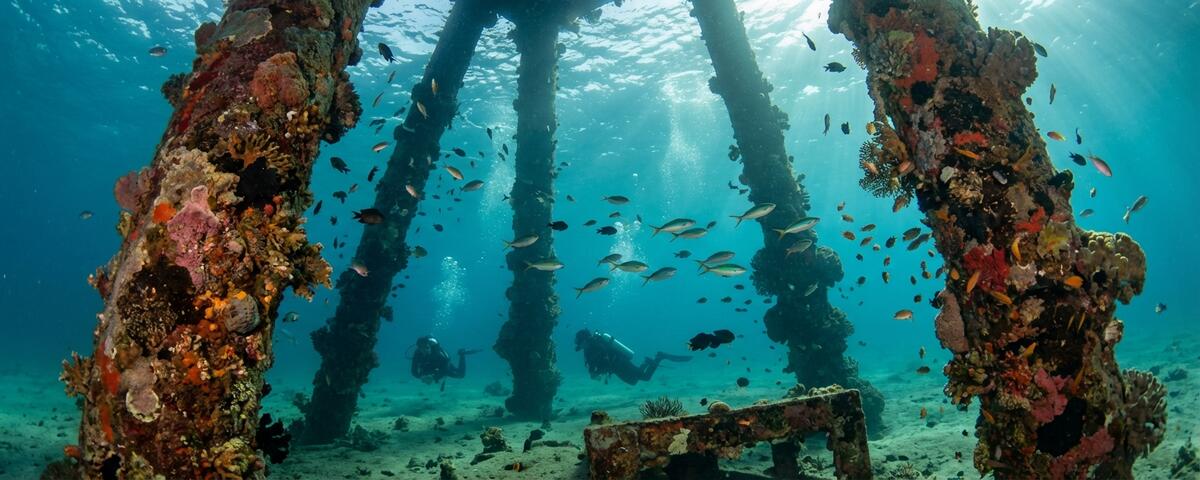
Seaventures Dive Rig is a converted oil rig sitting in the water between Mabul and Sipadan, offering one of the most unusual dive accommodations in the world. Beyond the novelty factor, their dive operation is well-run with experienced guides who know every metre of Sipadan's walls. The unlimited house reef diving directly beneath the rig is a bonus, with muck diving that rivals Lembeh Strait.
Sipadan Scuba operates from Mabul Island with a strong reputation for small group sizes and knowledgeable local divemasters. Their guides have been diving Sipadan for years and can place you in the right spot on the wall for the best shark encounters at Whitetip Avenue. They offer PADI courses up to Divemaster level.
Sipadan Water Village is a resort built on stilts over the water off Mabul Island, combining comfortable overwater chalets with a solid dive operation. Their Sipadan packages include all transfers, meals, and equipment. The resort's house reef below the chalets provides excellent macro diving on non-Sipadan days, with mandarin fish, flamboyant cuttlefish, and blue-ringed octopus regularly spotted.
Borneo Divers was the first operator to bring recreational diving to Sipadan in the 1980s and maintains a well-established operation on Mabul. They have the longest relationship with the site and their senior divemasters carry decades of collective experience on the island's reefs. Premium pricing reflects the heritage and service level.
Scuba Junkie runs a more budget-friendly operation from both Semporna and Mabul Island, popular with backpackers and younger divers. Their Sipadan packages are among the most affordable in the region without cutting corners on safety. They also run marine conservation programmes and coral restoration projects around Mabul.
Liveaboard Options
Sipadan is primarily a resort-based destination rather than a liveaboard one. The permit system is structured around land-based operators on Mabul and Kapalai islands, and most divers access Sipadan through multi-day resort packages rather than from liveaboard vessels.
That said, a small number of liveaboards operate in the Celebes Sea and include Sipadan permits as part of broader Sabah itineraries. These are typically 7 to 10 night trips covering Sipadan, the Mabul and Kapalai reefs, and sometimes extending to Layang-Layang Atoll (when the season aligns) or the Turtle Islands.
MV Celebes Explorer runs dedicated Sabah itineraries that include multiple Sipadan permit days alongside Mabul, Kapalai, and occasionally Mataking Island. The vessel carries 16 passengers and offers a good balance between comfort and diving focus. Pricing varies by season but typically ranges from 8,000 to 15,000 MYR for a week-long trip.
For most divers, the resort-based approach offers better value and more flexibility. Mabul's house reefs provide outstanding muck and macro diving on non-Sipadan days, and the ability to do unlimited house reef dives (including night dives) means your non-permit days are far from wasted. Many divers report that the macro life under Seaventures Rig or along Mabul's sandy slopes rivals the big-animal spectacle at Sipadan itself.
If you specifically want a liveaboard experience in Borneo, consider combining a Sipadan resort stay with a separate liveaboard trip to Layang-Layang (March to August for hammerheads) or a Kota Kinabalu-based liveaboard covering the Tunku Abdul Rahman Marine Park and Mantanani Islands.