Dari Laut Dive Site
Anilao (Batangas), Philippines · Near Anilao
Overview
Dari Laut is a sunken floating casino with one of Anilao's stranger backstories. The structure operated as an offshore gambling venue during the 1980s, anchored in the waters off Tingloy near Maricaban Island. Local boatmen maintain that the casino never turned much profit, and the prevailing theory is that the owners torched it for the insurance payout. Whatever the truth, the burned-out hulk settled onto a sloping seabed and spent the following decades transforming into one of Batangas province's most distinctive artificial reefs.
The wreck sits on a gradient. The upper portion of the skeletal framework begins at roughly 13 metres, and the structure slopes downward to about 28 metres at its deepest point. This gradient is deceptive during the dive; the slope pulls you deeper without obvious visual cues, and divers who aren't watching their computers can find themselves well below their planned depth before they notice. It's a gentle trap, not a dangerous one for anyone paying attention, but worth understanding before you descend.
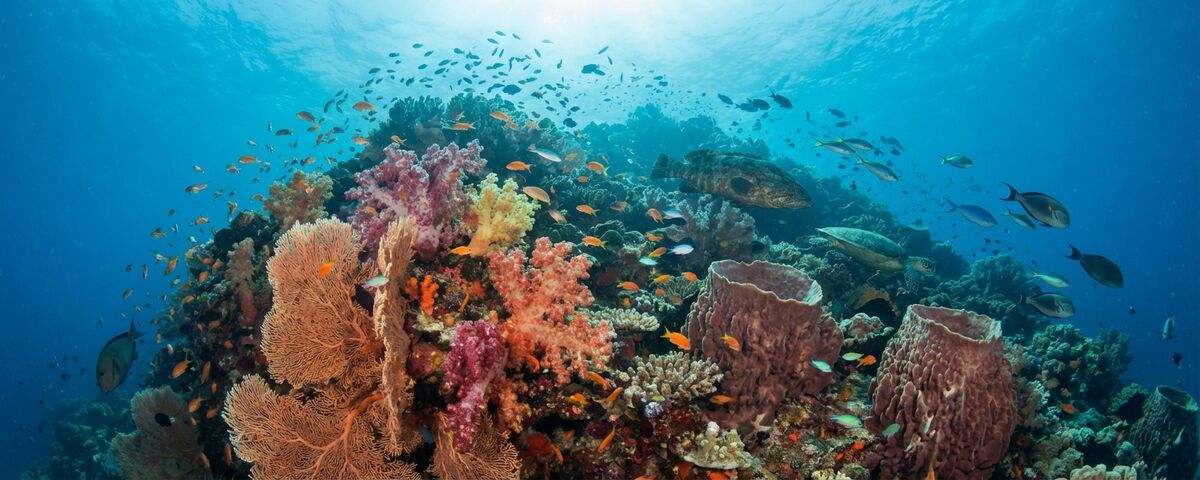
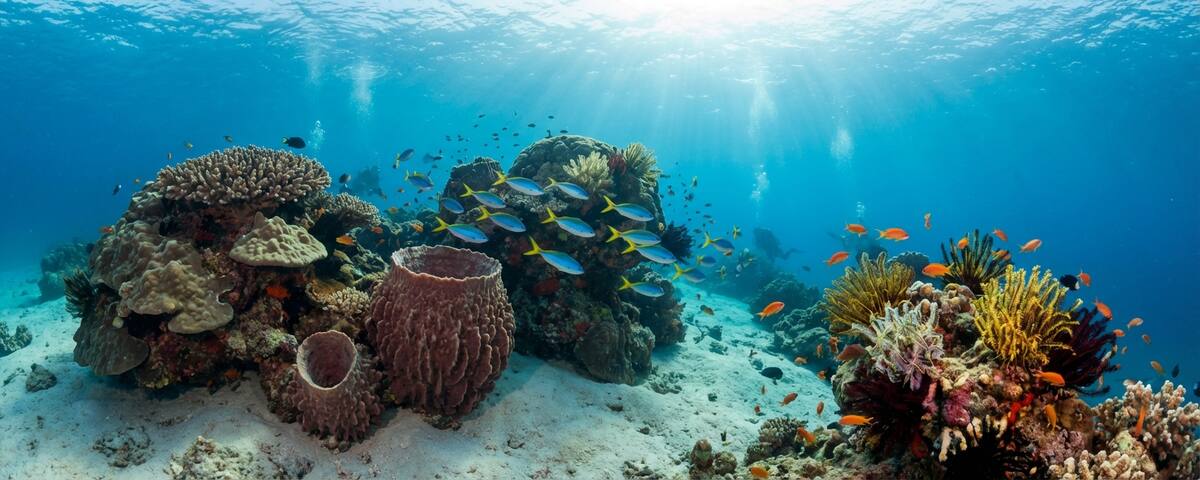
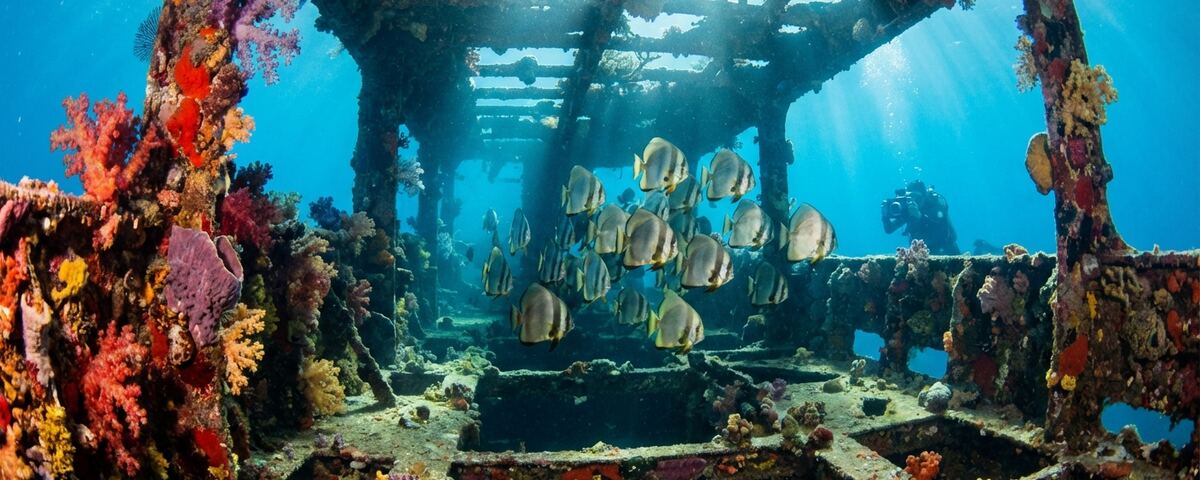
What makes Dari Laut compelling isn't drama or difficulty. It's the transformation itself. Four decades of submersion have turned a gambling barge into a living sculpture. The metal framework is now barely visible beneath layers of soft coral, sponges, tunicates, and encrusting organisms. Fish have colonised every cavity and overhang. The wreck no longer looks artificial; it looks like a coral reef that happens to have straight edges and right angles.
The site works particularly well for newer divers building wreck experience. Currents are typically mild to negligible, the structure is open (no overhead environments requiring penetration skills), and the depth profile lets you spend most of the dive in the 13 to 20 metre range if you stay disciplined about the slope. Photographers find that the combination of structural complexity and marine life density creates compositions that are difficult to replicate on natural reef sites.
Dari Laut sits within easy boat range of the Anilao resort strip, typically a 15 to 25 minute ride depending on conditions and departure point. Most dive operations include it as a standard rotation site, and it pairs well with nearby reef dives for a two-tank morning session. The name itself is a local construction: "Dari" was reportedly the owner's name, while "Laut" simply means sea in both Filipino and Malay, giving you "Dari's sea" or "Dari at sea" depending on interpretation.
The site sees moderate diver traffic during peak season but rarely feels crowded. The wreck is large enough to absorb several groups simultaneously without anyone bumping into each other, and the sloping profile means groups naturally spread across different depth bands.
Marine Life at Dari Laut
The resident batfish school is the first thing most divers notice and the last thing they forget. Tall-finned batfish (Platax teira) and orbicular batfish hover in loose formations around the upper structure, unbothered by divers and curious enough to approach within arm's reach. They drift with a slow, deliberate grace that makes them easy photographic subjects, and a group of fifteen or twenty batfish silhouetted against the surface light is the signature image of this site.
Snappers congregate in dense schools around the wreck's midsection. Yellow-lined snappers are the most numerous, forming tight clusters that shift and reform as divers pass through. Groupers of various species occupy the wreck's cavities and overhangs, some large enough to have clearly been resident for years. They watch passing divers with the calm territorial confidence of animals that know they own the place.
The encrusted surfaces of the wreck framework host exceptional macro life. Electric flame scallops (Ctenoides ales) are a highlight, their bioluminescent tissue producing flickering blue-white light displays visible in the shadows of the structure. These are genuinely mesmerising to watch; the pulsing light is produced by silica nanospheres rather than chemical bioluminescence, making them one of the odder organisms in the invertebrate world.
Nudibranchs populate the sponge-covered sections of the framework. Chromodoris and Glossodoris species are common, their vivid colour patterns standing out against the encrusted surfaces. Patient searching through the softer growth reveals flatworms, commensal shrimps, and the occasional skeleton shrimp clinging to hydroids in the current.
Morey eels occupy holes throughout the wreck structure, with giant morays and white-eyed morays both present. Their heads protrude from openings in the metal framework, mouths gaping rhythmically in a display that looks threatening but is simply how they breathe. Lionfish patrol the overhangs and shaded sections, their elaborate fins fanned out as they drift along the structure hunting smaller fish.
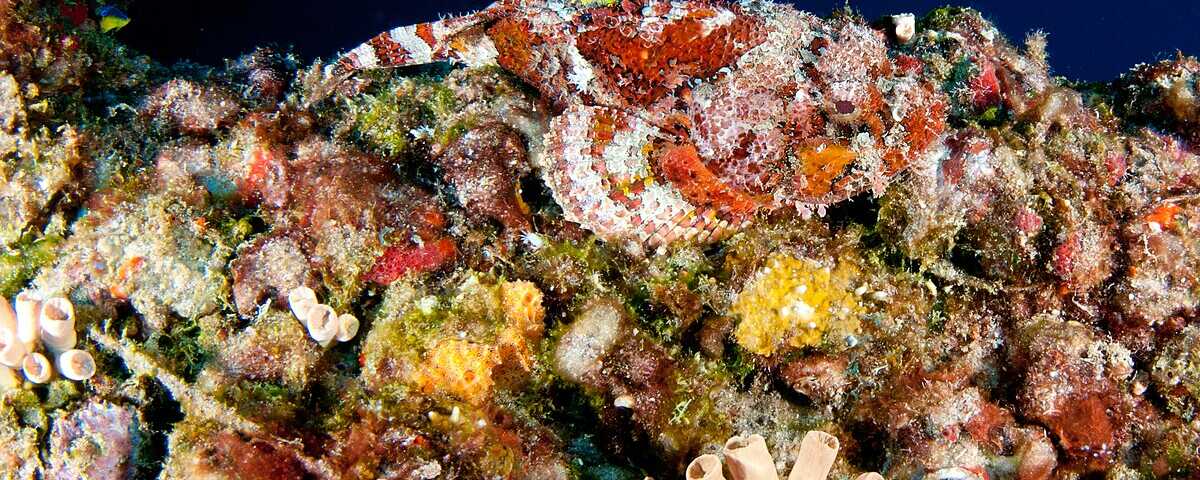
Scorpionfish and stonefish camouflage themselves on the lower sections of the wreck where growth is thickest. Their presence is a reminder to maintain good buoyancy and keep hands clear of surfaces. Cuttlefish visit the site regularly, hunting across the wreck and displaying their remarkable colour-change abilities when they notice divers watching them.
Sea turtles pass through occasionally, particularly green turtles resting on or near the structure. These sightings aren't guaranteed but happen often enough that regular visitors consider them likely rather than lucky. The wreck's artificial reef function is working exactly as intended: it's become a genuine ecosystem, not just a novelty dive.
Dive Conditions
Dari Laut is one of Anilao's most sheltered dive sites, protected by Maricaban Island from the prevailing swell. Current is typically mild to absent, making it reliable for divers of all experience levels. Occasional tidal shifts can produce light flow across the structure, but nothing that would challenge a comfortable Open Water diver.
Visibility ranges from 10 to 25 metres depending on season and recent weather. The dry season (November to May) consistently delivers the clearer end of that range. After heavy rains, runoff from the island can reduce visibility temporarily, but conditions usually recover within a day or two.
Water temperature sits between 25 and 29 degrees year-round. A 3mm wetsuit is standard for most divers, though those who feel the cold on longer dives might prefer 5mm during the cooler months (January to February). The relatively warm water and mild conditions make this a forgiving site for newer divers or those returning to diving after a break.
The sloping profile is the main hazard to understand. The wreck descends from 13 to 28 metres on a gradient, and the slope is gradual enough that depth creep happens without obvious visual warning. The solution is simple: check your computer regularly and establish a maximum depth before descending. Most of the interesting marine life concentrates between 13 and 20 metres anyway, so there's no compelling reason to push deep unless you specifically want to explore the lower structure.
Bottom time at the shallower sections is generous. Divers staying above 18 metres can comfortably log 50 to 65 minute dives on a single tank, which is more than enough time to explore the wreck thoroughly. Those who descend to the deeper sections will need to manage their no-decompression limits more carefully, particularly on second dives.
Entry is by giant stride from the dive boat, with a direct descent to the wreck structure. There's no surface swim required, and the mooring lines (where present) provide a reference for descent and ascent. The open structure of the wreck means there are no genuine penetration hazards; all exploration happens within the skeletal framework with open water above.
⚓ Divemaster Notes
I like Dari Laut as a first wreck experience for divers who haven't done wreck diving before. There's nothing overhead, the current is reliably gentle, and the structure is interesting enough to create that genuine sense of exploring something submerged without any of the risks that proper penetration diving introduces. It's a confidence builder.
The depth gradient is the thing I brief most carefully. I've watched divers drift from 15 metres to 24 metres without realising it, simply because they were following the wreck structure downward and the slope is so gradual that it doesn't feel like descending. I set a firm maximum depth during the briefing and remind my group at the start of the dive. For Open Water divers, I keep the whole dive above 18 metres, which still covers the most interesting sections of the wreck.
Batfish encounters here are more reliable than almost anywhere else in Anilao. The school tends to hang around the upper structure, roughly 13 to 16 metres, and they're remarkably tolerant of divers. I position my group slightly below and to the side, then let the batfish come to us. Chasing them produces worse encounters and worse photos; patience produces close approaches and relaxed subjects.
For photographers, the electric flame scallops are worth seeking out specifically. They're tucked into crevices and overhangs in the structure, and their bioluminescent display photographs best with ambient light turned down (fast shutter speed, tight aperture, single strobe at low power to illuminate the scallop while keeping the background dark). The flickering blue-white light is rapid, so continuous shooting mode captures the best displays.
I sometimes run this site as the first dive of the day, paired with a reef site like Sombrero Island or Twin Rocks for the second dive. The wreck dive uses slightly more air than a reef dive at equivalent depth (excitement factor, plus the tendency to go a bit deeper than planned), so getting it done on a full tank makes sense. The second dive on a shallower reef then extends bottom time nicely.
One observation from years of guiding here: the wreck continues to develop. Each season brings more coral growth, more encrustation, and occasionally new sections that collapse or shift. The site is still evolving, and comparing photographs from five years ago to current conditions shows meaningful change in the reef structure. It's a living demonstration of artificial reef succession, and explaining this context to guests adds a layer of appreciation beyond the marine life itself.
How to Get to Dari Laut
Dari Laut is accessed by dive boat from the Anilao resort strip along the Batangas coast. The boat ride takes 15 to 25 minutes depending on sea conditions and your departure point. Some operators running from the eastern end of the resort strip may take slightly longer.
Anilao is roughly 2.5 to 3 hours by road from Manila, depending on traffic. The route follows the South Luzon Expressway south through Batangas province, then the coastal road to Mabini and Anilao proper. Traffic leaving Manila can add significant time on weekday mornings and Friday afternoons, so early departures are worth considering.
Manila's Ninoy Aquino International Airport (NAIA) is the standard arrival point for international visitors. Most Anilao resorts can arrange van transfers from the airport, which is considerably more comfortable than navigating Manila traffic independently. Expect to pay 3,000 to 5,000 PHP for a private transfer.
The alternative approach is via Batangas City port if arriving from other Philippine islands. Fast ferries from Puerto Galera and other Mindoro destinations dock at Batangas port, from which Anilao is roughly 45 minutes by road.
Most divers stay at resorts along the Anilao coast and dive Dari Laut as part of their multi-day itinerary. The site pairs well with other Anilao dives for two or three-tank day trips, and operators include it in their standard site rotation alongside reef sites like Twin Rocks, Secret Bay, and Kirby's Rock.
Gear Recommendations
3mm wetsuit for most divers; 5mm if you run cold, particularly during January and February. Standard recreational scuba setup with no specialist wreck gear required. Torch recommended for illuminating the shaded interiors of the structure and for revealing the electric flame scallop displays. Macro lens (60mm or 100mm equivalent) for the critter photography; wide angle for the batfish school and structural shots. A compact camera with a good macro mode will capture excellent images here. No current management equipment needed.
Recommended Dive Operators
Crystal Blue Resort runs regular trips to Dari Laut with experienced guides who know the wreck intimately. Their photographer-friendly approach (small groups, patient pace) works well for the site's macro opportunities. Aiyanar Beach and Dive Resort offers solid guide service and comfortable boats for the crossing. Buceo Anilao includes Dari Laut in their critter-focused dive packages and pairs it well with nearby macro sites. Planet Dive Anilao provides reliable operations with local guides who can point out the electric flame scallops and resident macro life that first-time visitors would otherwise miss.
Liveaboard Options
Anilao is a shore-based diving destination. All diving at Dari Laut operates from resort-based day boats. No liveaboard operators serve this site directly. Visitors stay at one of the many coastal resorts in Anilao and access the site as part of their daily dive schedule.