Batangas Channel Dive Site
Puerto Galera (Mindoro), Philippines · Near Puerto Galera
Overview
Batangas Channel sits on the western side of Puerto Galera's dive zone, about two minutes by bangka from the Casalay area and roughly ten minutes from the main Sabang departure points. It occupies a channel mouth where tidal water moves between the protected bays and the open Verde Island Passage, and that flow is what gives the site its character. On slack water, it is a gentle reef potter through some of the strangest coral formations in Puerto Galera. On an ebbing tide, it becomes a proper drift dive that carries you along the shoreline towards open ocean at a comfortable cruising depth of around 15 metres.
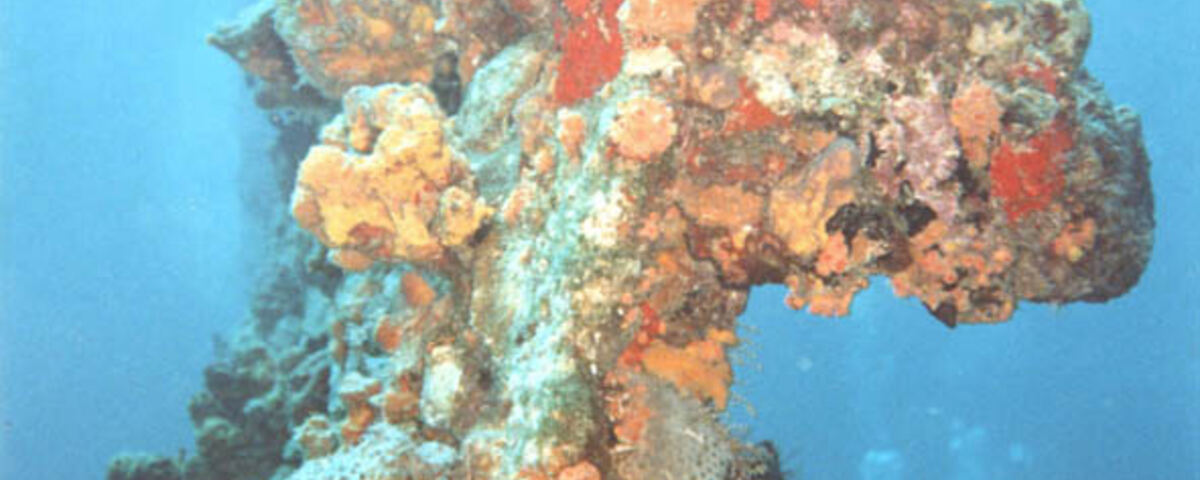
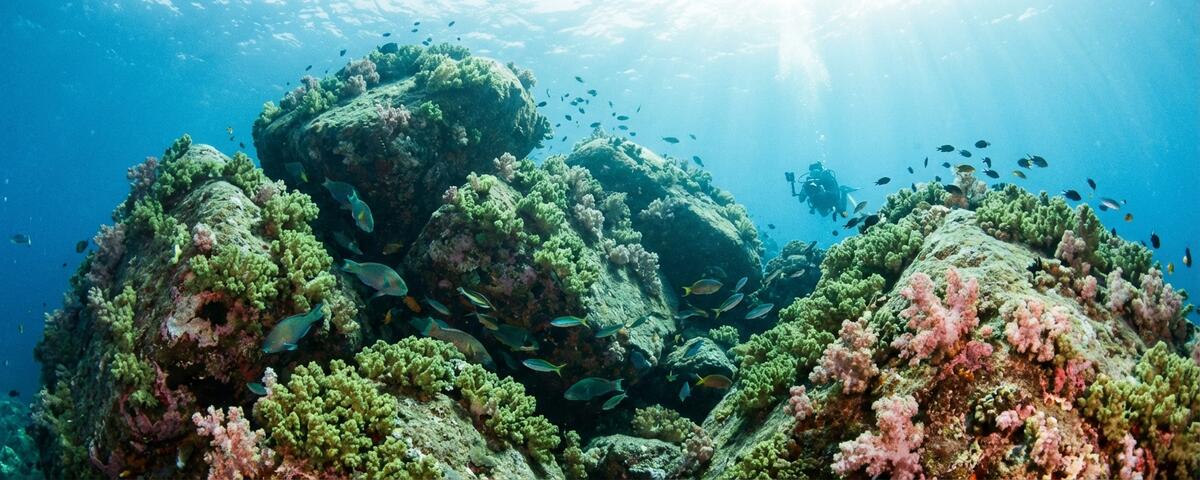
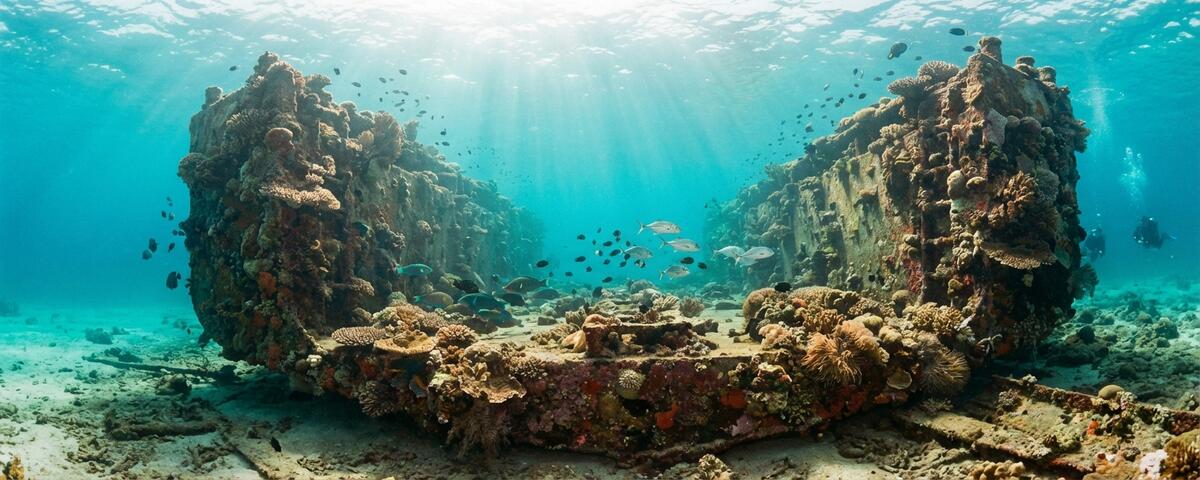
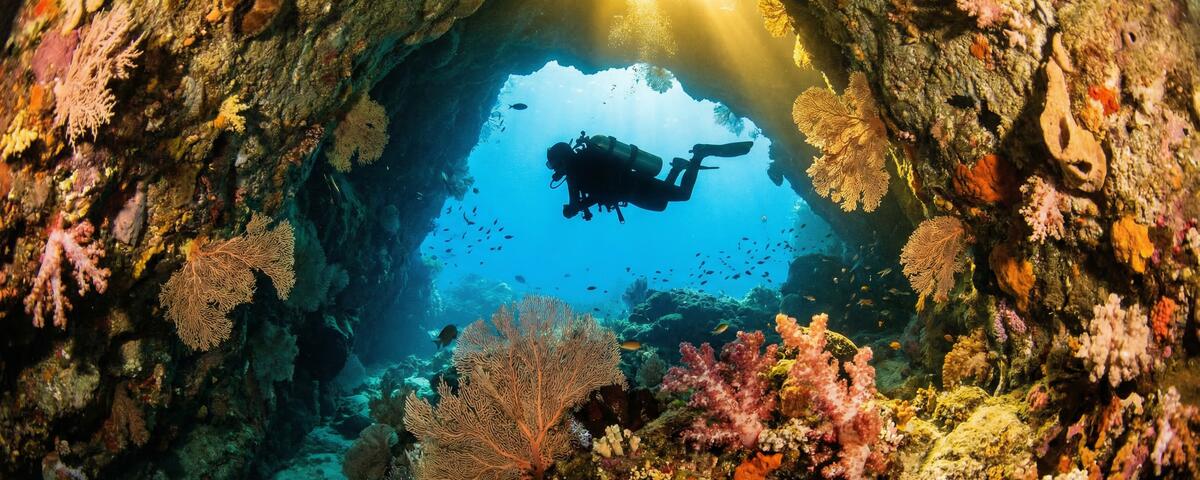
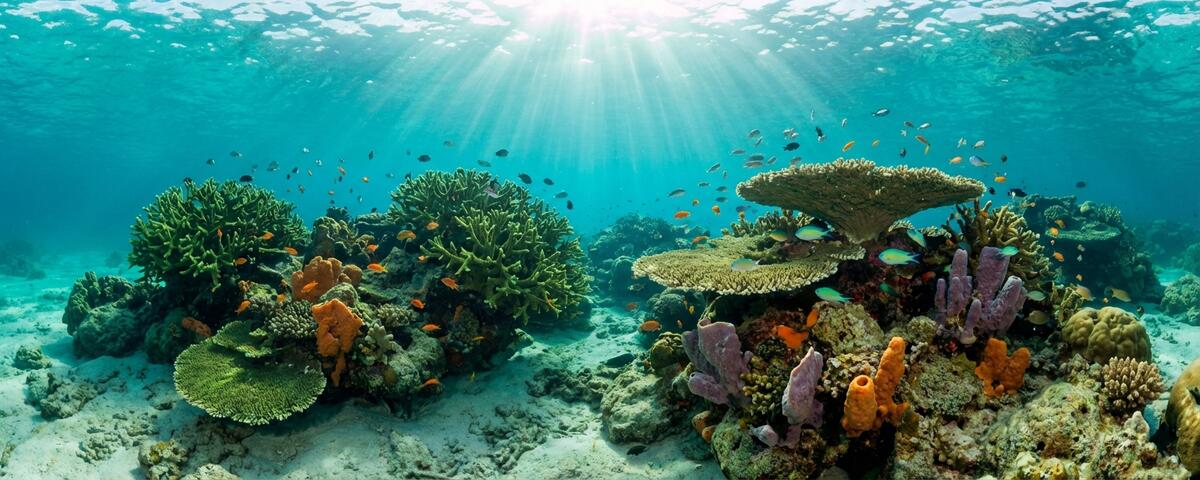
What makes Batangas Channel worth knowing about is not one headline species or a single dramatic feature. It is the terrain. The reef here looks different from anything else in Puerto Galera. The bottom has a peculiar lunar quality to it, with undulating plains of sand and rubble interrupted by twisted coral and sponge formations that look like they were sculpted by someone with a surrealist streak. Large sponges in colours that range from the expected purples and oranges to genuinely odd yellows and greens dot the landscape. Rock formations covered in green tree corals and table corals rise from the substrate like oversized mushrooms, and the spaces beneath them hide the sort of critters that macro photographers lose entire dives to.
The Verde Island Passage pushes nutrient-laden water through this channel with every tidal cycle. Scientists from the California Academy of Sciences identified this passage as containing the highest concentration of marine species per unit area recorded anywhere on Earth, and Batangas Channel benefits from sitting right in the flow path. The nutrients sustain the sponge growth that gives the site its distinctive appearance and attract the filter feeders and small predators that populate every square metre of reef.
Puerto Galera has been a diving destination since the 1960s, one of the oldest in Southeast Asia. More than 30 operators work these waters, prices sit around 1,200 to 1,500 PHP per dive, and the boat rides are short enough that you can comfortably fit three dives into a day without feeling rushed. Batangas Channel often appears on schedules as a second or third dive because of its shallow profile and relaxed pace, but it deserves first-dive attention on days when the ebb tide timing is right for a quality drift.
The shallow maximum depth of 20 metres makes this site accessible to newly certified Open Water divers, while the macro life and unusual topography give experienced divers plenty of reasons to come back. It is the kind of site that rewards patience and sharp eyes more than depth or adrenaline. Slow down, look under the mushroom corals, check every sponge surface, and the dive reveals far more than a quick swim-through would suggest.
Marine Life at Batangas Channel
The sponge garden is the first thing that registers. Large barrel sponges, tube sponges, and encrusting sponges cover the rocky substrate in a palette that feels almost artificial. Some of the barrel sponges here have grown to over a metre across, their interiors hosting small communities of gobies and cardinalfish that shelter inside the barrel walls. The variety of sponge species in this relatively small area is unusual for a shallow site. On a single dive, you can count a dozen distinct types without trying particularly hard.
Green tree corals dominate the rock formations, their branching structures creating miniature forests on the tops and sides of coral mounds. Table corals extend horizontally from these same formations, some of them large enough to create genuine overhangs. These overhangs are where the interesting things hide. Sweetlips rest in small groups under the larger tables, their bodies swaying slightly in the current. Lionfish hover beneath overhangs with their pectoral fins spread wide, and scorpionfish sit on ledges so perfectly camouflaged that your guide will need a torch beam to make them visible.
The critter hunting here is excellent. Pipefish are a reliable find, their stick-thin bodies aligned along whip corals or resting against gorgonian fans where they become nearly invisible. Several nudibranch species use the sponge surfaces as both food source and highway. Frogfish turn up on the site with enough regularity that the local guides know their favourite perches and check them on every dive. The frogfish here tend to favour the sponge formations, matching their colour to the substrate they have chosen, so finding one feels like solving a puzzle rather than spotting wildlife.
Blue-spotted stingrays rest on the sandy patches between coral formations, particularly in the deeper sections around 15 to 18 metres. They tolerate a closer approach here than at busier sites, possibly because Batangas Channel gets less diver traffic than the headline destinations nearby. Groupers of several species patrol the reef edges, some of them large enough to suggest these fish have been undisturbed for years. Snappers school loosely around the larger rock formations, and surgeonfish move across the reef in small feeding parties.
The sandy channel floor between the coral formations hosts its own community. Gobies sit at the entrances to their burrows, paired with the pistol shrimps that excavate and maintain these tiny homes. The relationship is visible if you hover patiently at a distance: the shrimp pushes sand out of the burrow while the goby watches for predators, one antenna always touching the fish. Sea cucumbers move across the sand in slow processions, and hermit crabs occupy shells of various sizes, sometimes dragging surprisingly ambitious homes across the substrate.
Damselfish are everywhere. They occupy territories on the coral formations and defend them with an aggression completely disproportionate to their size. Sergeant majors, chromis, and various anemonefish populate the shallower sections, creating the constant movement and colour that makes the reef feel alive even when the larger animals are not cooperating. Butterflyfish work the coral in pairs, their paired behaviour so consistent that seeing a lone butterflyfish feels genuinely odd.
Dive Conditions
The reef starts at around 5 metres on the shallow crest near the channel mouth and slopes gradually to a sandy bottom at approximately 20 metres. Most of the productive diving happens between 8 and 18 metres, where the sponge and coral formations are densest. The gentle slope and moderate maximum depth make this a forgiving site for less experienced divers, with plenty of room to manage buoyancy without risk of exceeding comfortable limits.
Current defines how you dive this site. On slack water, there is essentially no flow, and you can navigate the reef freely, spending as long as you want at each formation. This is the better option for macro photography, where positioning and patience matter more than coverage. On an ebbing tide, a drift develops that carries you gently along the shoreline towards the open ocean. The speed is manageable, rarely fast enough to cause problems for competent divers, but sufficient to cover the full length of the site in a comfortable 45 to 50 minute dive.
The ebbing tide produces the best drift conditions. Your dive guide will drop you in shallow water at the channel mouth and you drift gently southwest, staying at 12 to 15 metres for most of the dive. The current brings cleaner water from the channel and tends to improve visibility on these dives. Flood tides can push water into the channel and create less predictable conditions, so most operators schedule Batangas Channel on the ebb when timing allows.
Visibility ranges from 8 to 25 metres depending on season, weather, and tidal state. The dry season from November to May produces the clearest conditions, with 15 to 25 metre days common. The wet season from June to October brings more plankton and occasional runoff that can reduce visibility to 8 to 12 metres, though the increased particulate matter attracts more filter feeders. After heavy rain, the channel can carry turbid water, but conditions usually clear within a day or two.
Water temperature sits between 25 and 30 degrees Celsius throughout the year. A 3mm wetsuit handles most conditions comfortably, though some divers prefer 5mm during the cooler months from December to February when deeper sections occasionally dip to 24 degrees. Thermoclines are uncommon at this depth range.
Entries are by boat. The bangka positions over the channel mouth for drift dives or over the reef crest for slack water dives. Negative entries are used on current days to get below the surface flow quickly. Surface conditions are typically calm in the morning, with afternoon chop possible when the southwest wind picks up. The short boat ride from most departure points means sea conditions are rarely a factor in deciding whether to dive.
⚓ Divemaster Notes
This is my go-to site when divers tell me they want to see weird stuff. Not weird as in rare, just weird as in genuinely strange topography that does not look like a typical tropical reef. The sponge garden section looks like it belongs on a different planet, and first-time visitors always comment on it.
I run this site two ways depending on conditions. On slack water, I start at the deeper end around 18 metres and work upslope slowly, spending the majority of the dive between 12 and 15 metres where the mushroom coral formations are densest. This is the critter hunt version. I check the known frogfish spots first because they move every few days, and knowing which sponge they have adopted this week saves the group ten minutes of searching. Then I work through the overhangs looking for lionfish and sweetlips, check the whip corals for pipefish, and let the group spread out slightly on the sandy patches to look for gobies and blue-spotted rays.
On the ebb drift, the approach is completely different. I drop the group at the channel mouth around 8 metres and let the current set the pace. We drift at 12 to 15 metres, and my job shifts from critter hunting to making sure everyone stays together and at roughly the same depth. The drift is gentle enough that I can still point out highlights as we pass them, but there is no stopping at formations the way we do on slack dives. The compensation is coverage. You see the entire site in one pass, and the moving perspective shows how the terrain transitions from the channel's unusual landscape to more conventional reef further along the shore.
I always bring a torch here, even on bright days. The sponge formations create shadows that hide scorpionfish and the lionfish that tuck themselves under table corals. Without a light, you miss half the macro life. I also use the torch to illuminate the inside of barrel sponges, where gobies and cardinalfish hide. Shining a light into a big barrel sponge and watching three or four fish scatter is a minor spectacle that always gets a reaction.
For photographers, I recommend the slack water version every time. The drift is fun but you cannot compose shots while moving. The sponge garden on a calm day with good visibility is a wide-angle photographer's dream, and the frogfish and nudibranch subjects demand the kind of patience that current will not allow. I tell photographers to bring both macro and wide-angle if they can manage two lenses, because this site genuinely rewards both.
One thing I mention in the briefing is that Batangas Channel works brilliantly as a pairing with nearby sites. A morning dive at Manila Channel or the Hill followed by an afternoon ebb drift through Batangas Channel makes a perfect two-dive day with minimal boat time between sites. The contrast between the muck-style diving at adjacent sites and the reef and drift character of Batangas Channel keeps the day varied.
How to Get to Batangas Channel
Puerto Galera sits on the northern coast of Mindoro island, roughly 130 kilometres south of Manila. The standard route from Manila involves driving south to Batangas City, which takes about 2 to 2.5 hours depending on traffic (or 1.5 hours from the airport), then catching a ferry across the Verde Island Passage. Several companies operate the crossing, including Si-Kat, Montenegro, and FastCat, with multiple daily services. The ferry takes 45 minutes to an hour and lands at either Muelle pier in Puerto Galera town or directly at Sabang beach.
Batangas Channel sits on the western side of Puerto Galera's dive area, close to the Casalay and Lalaguna beach areas. From Sabang, the boat ride takes about 10 minutes heading west. From the Lalaguna and Casalay area, it is roughly 2 to 5 minutes, making it one of the closest sites for operators based on that stretch of coast.
Manila's Ninoy Aquino International Airport is the main international gateway. Budget airlines fly direct from most major Asian cities, with flights from Singapore, Hong Kong, and Bangkok taking 2 to 4 hours. Several operators offer door-to-door transfer packages from Manila airport to Puerto Galera including the drive and ferry, typically costing 2,500 to 4,000 PHP per person for shared transfers.
Accommodation in the Puerto Galera dive areas ranges from budget guesthouses at 500 PHP per night to mid-range resorts at 3,000 to 5,000 PHP. The Casalay area near Batangas Channel offers a quieter alternative to the busier Sabang strip, with several boutique operations that combine accommodation and diving. Restaurants, ATMs, and basic services are available throughout the area.
Gear Recommendations
A 3mm wetsuit handles the warm water comfortably year-round, though a rashguard alone works from March to June when temperatures peak. Torch essential for revealing hidden critters in sponge formations, under table coral overhangs, and inside barrel sponges. Without artificial light, the scorpionfish and frogfish that make this site special become nearly invisible. SMB and reel required for drift dives, as exits happen in open water downstream of the entry point. Dive computer recommended for monitoring depth on the drift, where the gentle slope can carry inattentive divers deeper than planned. Camera with macro lens ideal for slack water dives targeting frogfish, nudibranchs, and pipefish. Wide-angle lens works well for the sponge garden landscape shots and the mushroom coral formations. Reef hook not necessary here as the current is typically manageable without anchoring. Nitrox recommended for repetitive dive days, extending bottom time on the 12 to 18 metre profiles where the best formations and marine life concentrate.
Recommended Dive Operators
Casalay Boutique Villas and Dive Resort sits closest to Batangas Channel, with the site just two minutes away by boat. Their operation combines a small resort with a well-run dive centre, and they treat Batangas Channel as one of their house reef options. Guides here know every frogfish perch and nudibranch trail on the site. Atlantis Dive Resorts runs one of the most professional operations in Puerto Galera from their resort on the Sabang to Lalaguna stretch. Their SSI-trained guides, small group sizes of four divers per guide, and well-maintained equipment set a high standard. They include Batangas Channel in their regular site rotation. BADLADZ Scuba Diving offers PADI courses and guided dives from their beach resort, with experienced local divemasters who have thousands of logged dives in these waters. Their pricing is competitive and group sizes stay small. Action Divers has operated in Sabang since the 1990s. Their longevity reflects consistent quality, and the experience of their guides shows in the critters they find. Asia Divers is another long-established operation popular with European divers. They run a well-equipped centre with rental gear, Nitrox fills, and a dedicated camera room for underwater photographers.
Liveaboard Options
Puerto Galera is a shore-based dive destination rather than a liveaboard hub. The sites sit close together and are well-served by the local bangka fleet, making resort-based diving the practical approach. The Atlantis Azores, run by Atlantis Dive Resorts, schedules trips through the Verde Island Passage that can include Puerto Galera sites alongside the wider passage and Anilao. Discovery Fleet Philippines operates itineraries along Mindoro's western coast, Apo Reef, and occasionally uses Puerto Galera as an embarkation or disembarkation point. For most divers, the resort-based approach is more practical and significantly cheaper. A week of diving from a Puerto Galera resort, including accommodation, meals, and 15 to 20 dives, typically costs less than three nights on a liveaboard covering the same waters.