Dry Dock Dive Site
Puerto Galera (Mindoro), Philippines · Near Puerto Galera
Overview
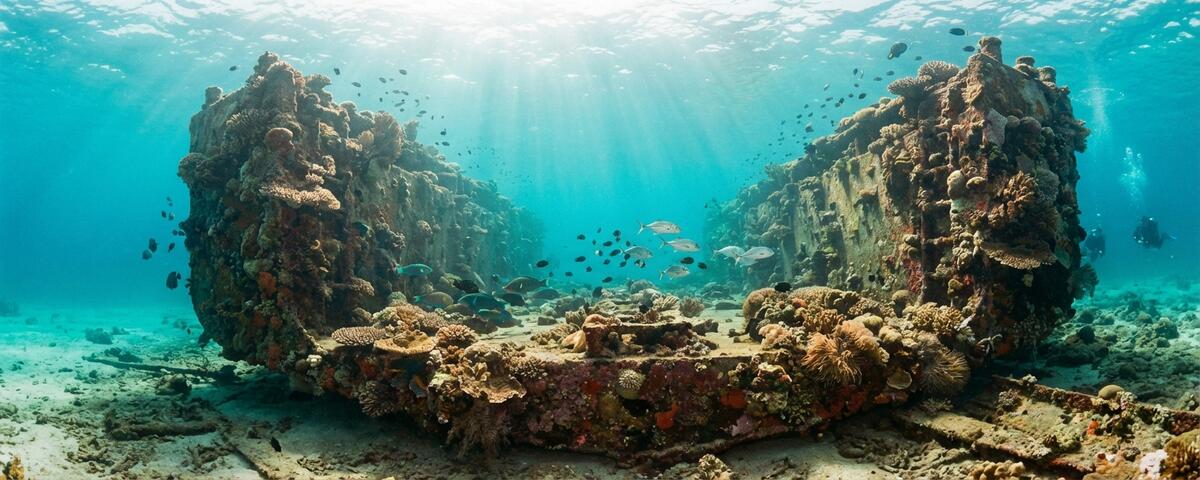
Dry Dock is one of Puerto Galera's deeper and more demanding reef sites, sitting on the edge of the Verde Island Passage where nutrient-laden currents sweep across a reef structure that was once used as a sheltered mooring area for vessel repairs. The name comes from the site's historical use by local fishermen, who would haul boats into the shallower sections for maintenance, though there is no actual dry dock structure underwater. What remains is a reef system shaped by both natural forces and decades of human interaction with the water.
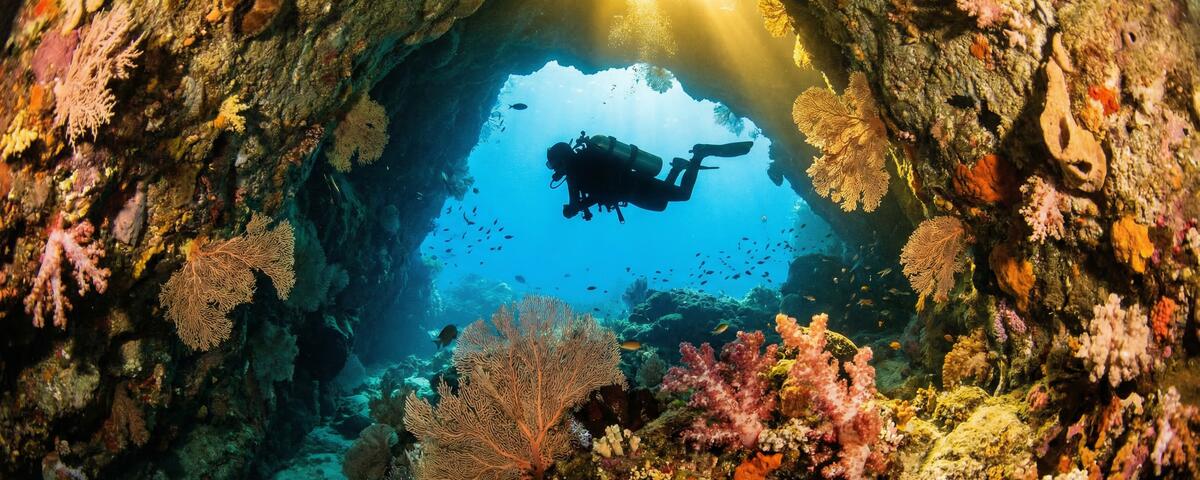
The site drops from a shallow reef flat at around 8 metres down a series of stepped ledges and slopes to a sandy bottom at 28 metres. The topography creates multiple levels of interest: the shallow reef flat is dense with hard coral growth, the mid-depth ledges host gorgonian fans and soft corals that benefit from the current flow, and the deeper sandy areas are where the larger pelagic visitors tend to cruise.
Dry Dock sits in the Verde Island Passage, which marine biologists have identified as the global centre of shore-fish biodiversity. That is not marketing language. A study published in the journal Conservation Biology found more species of reef fish per unit area in this strait than anywhere else on earth. The passage acts as a funnel between the South China Sea and the Sulu Sea, concentrating nutrients and creating conditions that support an extraordinary density of marine life.
The current is what defines this dive. When the passage is pushing water through, Dry Dock transforms from a pleasant reef dive into something far more dynamic. Schools of fusiliers and jacks materialize out of the blue, reef sharks patrol the deeper sections, and the gorgonian fans extend fully to filter the nutrient stream. The reef comes alive in current, and the site rewards divers who are comfortable managing their position in moving water.
Unlike the more famous Canyons or Hole in the Wall, Dry Dock receives relatively few visitors. Most operators save it for experienced groups who have already ticked the headline sites and want something less travelled. This lower traffic has been good for the reef. Coral coverage is excellent, and the marine life behaves with less wariness around divers than at the busier locations.
The site's position on the passage edge means it catches current from multiple angles depending on the tidal cycle. This unpredictability is part of its character. Some days you will drift gently along the reef edge with barely a fin kick required. Other days the current pins you against the reef or pushes you sideways across the slope, demanding constant adjustment and awareness. Your guide will read the conditions before the dive and plan the entry and exit points accordingly.
Marine Life at Dry Dock
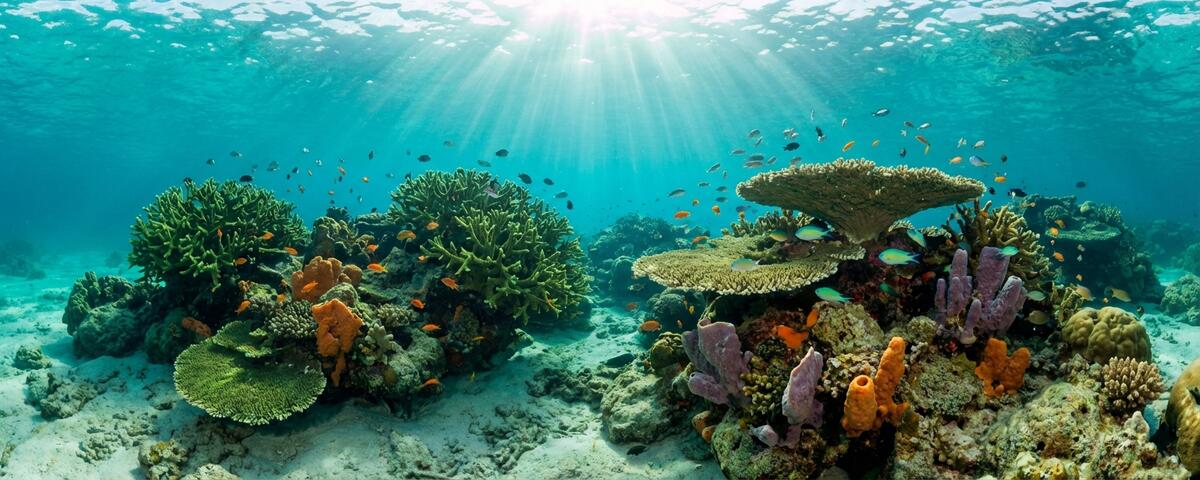
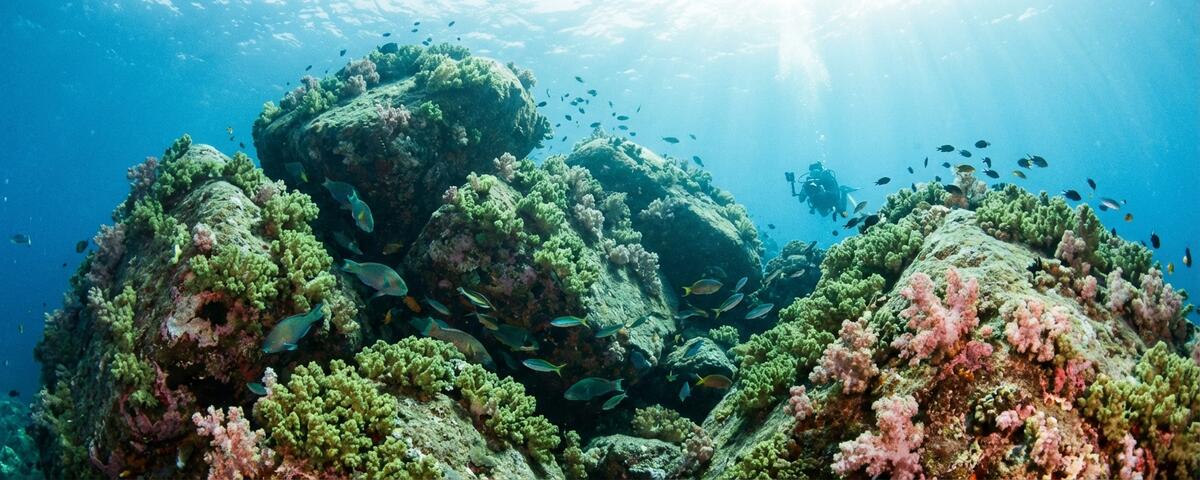
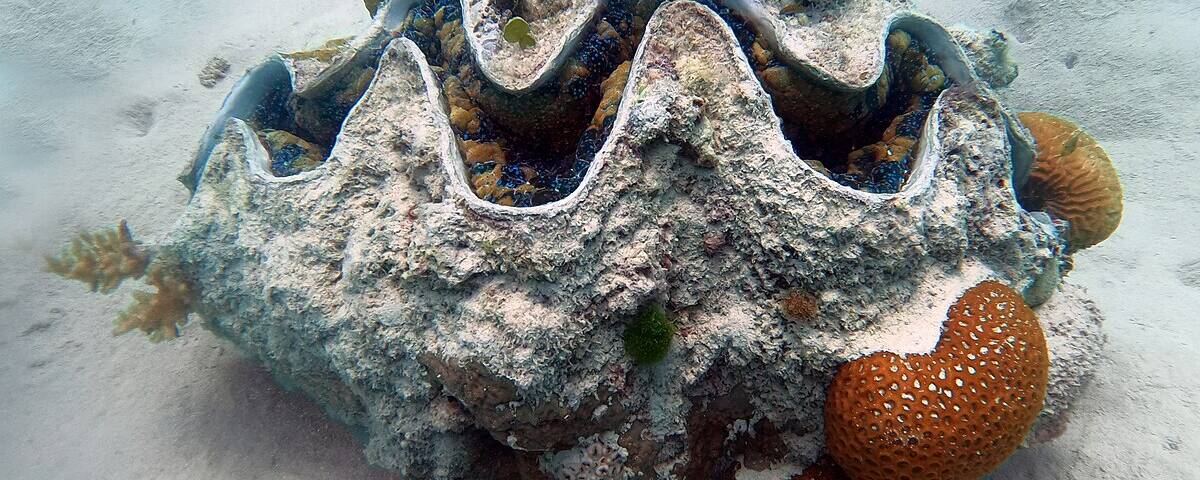
The reef flat between 8 and 15 metres is carpeted with tabletop corals, many of them a metre or more across, interspersed with massive Porites colonies that have been growing for decades. Brain corals, staghorn formations, and encrusting species fill every gap between the larger structures, creating a continuous coral landscape with almost no bare substrate visible.
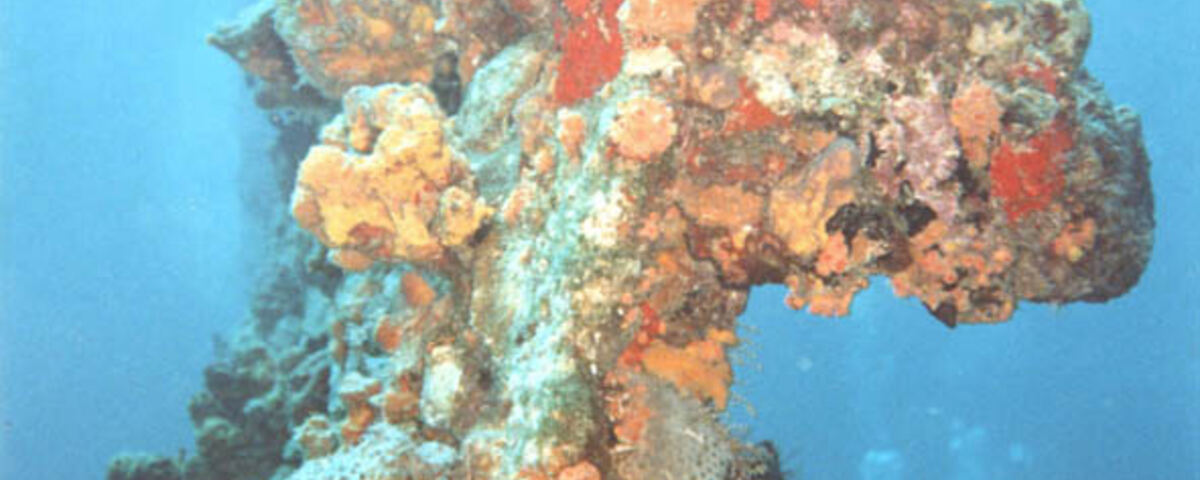
Below 15 metres, the hard corals give way to soft coral dominance. Gorgonian sea fans, some over a metre in span, grow perpendicular to the current flow along the ledge edges. Dendronephthya soft corals in reds, oranges, and purples cluster in the overhangs where the current creates eddies. The colour density increases with depth, peaking between 18 and 22 metres where light is still sufficient for photography but the soft corals are at their most vibrant.
Fish life is dense and varied. Schools of blue-stripe fusiliers stream along the reef edge in the hundreds, their silver bodies catching the light as they turn. Yellowtail barracuda form loose aggregations in the mid-water column, occasionally tightening into defensive spirals when a predator approaches. Trevally hunt along the reef margin, picking off smaller fish that stray from the shelter of the coral.
The ledges and overhangs shelter the site's resident population of sweetlips, squirrelfish, and soldierfish. Oriental sweetlips in particular are common, their spotted juveniles performing the exaggerated swimming dance that makes them one of the most photographed reef fish in the Philippines. Moray eels occupy crevices throughout the site, with giant morays and snowflake morays both present.
Turtles frequent Dry Dock, with green turtles resting on the reef flat and hawksbills feeding on sponges along the wall sections. Encounters are not guaranteed on every dive, but they are common enough that regular visitors consider it unusual to complete a dive without seeing at least one.
The deeper sandy sections below 24 metres are worth checking for blue-spotted stingrays, kuhl's stingrays, and the occasional bamboo shark resting on the bottom during the day. White-tip reef sharks patrol the reef edge at depth, particularly when current is running, and sightings have increased in recent years as the reef's protection has allowed the population to recover.
Macro life is strong for a current site. Nudibranchs of multiple species are present on the coral surfaces, particularly in the sheltered areas behind the larger gorgonians. Porcelain crabs live in the anemones scattered across the reef flat, and mantis shrimp occupy burrows in the sandy patches between coral heads. Frogfish appear seasonally, usually on the sponges along the deeper ledges, though finding them requires a guide who knows the site well.
The site's position in the passage means occasional visits from larger species. Reef sharks are the most regular pelagic presence, but eagle rays, devil rays, and even whale sharks have been recorded at Dry Dock during the right season (typically March to May when plankton concentrations peak). These sightings are unpredictable and should be treated as bonuses rather than expectations.
Dive Conditions
Current ranges from negligible on slack tides to strong when the Verde Island Passage is at peak flow. The site is normally dived as a drift when current is present, with the banca following divers and picking them up at the end. On slack days, it becomes a stationary dive with more time for macro exploration.
Visibility runs from 8 metres during plankton blooms (which are more common in the wet season) to 25 metres on clear days in the dry season. The nutrient-rich current that feeds the reef also carries particles that reduce visibility, so clear water and strong marine life activity do not always coincide. Some of the best fish action happens when visibility drops to 10 or 12 metres, as the plankton attracts feeding schools.
Water temperature sits between 25 and 30 degrees Celsius year-round. The cooler end of the range occurs during the northeast monsoon (December to February) when upwelling brings deeper, colder water into the passage. A 3mm wetsuit is sufficient for most divers; those who feel the cold should consider 5mm for the deeper sections during the cooler months.
Depth ranges from 8 metres on the reef flat to 28 metres at the sandy base. Most of the interesting diving sits between 12 and 22 metres, which allows comfortable bottom times of 40 to 50 minutes on a single tank.
The site is recommended for Advanced Open Water divers and above. Open Water divers can technically access the shallower sections, but the current exposure and depth make this inadvisable for less experienced divers. Solid buoyancy control and comfort in current are prerequisites for enjoying the dive rather than surviving it.
Best diving conditions run from November to May, coinciding with the dry season and the northeast monsoon. June to October brings the southwest monsoon with rougher surface conditions, reduced visibility, and stronger, less predictable currents. The site remains diveable year-round, but the experience is significantly better in the dry season.
⚓ Divemaster Notes
Dry Dock is my contingency site when Canyons is too blown out for the group I am guiding. The current at Dry Dock tends to be slightly more manageable because the reef structure provides shelter and the entry point can be adjusted to give the group a lee side to descend on. That said, it can also switch on you mid-dive, so always have a plan for current reversal.
I brief guests to stay close and maintain eye contact. The reef structure here does not channel current the way Canyons does, which means it can hit from unexpected angles. Maintaining group cohesion is more important at Dry Dock than at the canyon sites where the topography keeps everyone funnelled together.
The gorgonian fans between 18 and 22 metres are the photographic highlight. Plan your profile to give the group 10 to 15 minutes at this depth before ascending to the shallow reef flat. The fans are at their most photogenic when current is moderate, as they extend fully and the passing fusiliers provide foreground action.
For photographers, the ledge system between 14 and 18 metres offers the best combination of light, subject diversity, and current protection. You can tuck behind a ledge, stabilise yourself, and shoot wide-angle or macro without being swept away. This is where I park photographers who need time to compose.
The reef flat safety stop area is good, with plenty of hard coral and enough fish life to keep everyone entertained during the last 3 to 5 minutes. I use a conspicuous reference point (usually a large barrel sponge at 8 metres) as the rally point so the group stays together for the ascent.
Night dives at Dry Dock are excellent but require careful current assessment. On slack nights, the deeper sections come alive with hunting lionfish, Spanish dancers, and the occasional sleeping turtle. I only run night dives here when I am confident the current will remain manageable for the duration.
How to Get to Dry Dock
Puerto Galera sits on the northern tip of Mindoro island. From Manila, the standard route is a bus or private car to Batangas port (approximately 2 to 3 hours depending on traffic) followed by a ferry crossing to Puerto Galera (1 to 1.5 hours). Several ferry companies operate the Batangas to Puerto Galera route daily.
From Sabang Beach, where most dive operators are based, Dry Dock is approximately 15 to 20 minutes by banca (traditional Filipino outrigger boat). The site sits further along the coast than the more central dive sites like Sabang Wrecks, so boat time is slightly longer.
Most operators include Dry Dock in their regular site rotation for advanced divers. It is not typically offered to beginners or on introductory dive days. If you specifically want to dive Dry Dock, request it when booking and the operator will assess conditions on the day. Current conditions may lead your guide to suggest an alternative if the passage is running particularly hard.
Gear Recommendations
A 3mm wetsuit covers most conditions, though 5mm is worthwhile from December to February when cooler upwelling water enters the passage. Surface marker buoy is essential for drift dive exits. Reef hook is useful for photographers who want to hold position at the gorgonian fan section without kicking against the current. Wide-angle lens for the reef scenery and fish schools; macro lens for the nudibranch and critter hunting on the sheltered sections. Torch for peering into overhangs and crevices where sweetlips and morays shelter. Dive computer with nitrox capability recommended, as most operators offer enriched air and the reduced nitrogen loading allows longer bottom times at the 18 to 22 metre sweet spot.
Recommended Dive Operators
Asia Divers, Action Divers, and Sabang Divers all run Dry Dock regularly for their advanced groups. These Sabang Beach operators have the longest track records in Puerto Galera and guides who know the site's current patterns intimately. Tech Asia, the technical diving branch of Asia Divers, offers extended range dives on the deeper sections for qualified tech divers. South Sea Divers and Frontier Scuba also include Dry Dock in their rotation and maintain good safety standards.
Liveaboard Options
Puerto Galera diving is shore-based. Day trips by banca from Sabang Beach or Puerto Galera town are the standard access method. No liveaboard operations service this area specifically, though some Manila-based liveaboards include Puerto Galera as a stop on broader Mindoro itineraries.