Ernie's Cave Dive Site
Puerto Galera (Mindoro), Philippines · Near Sabang Beach
Overview
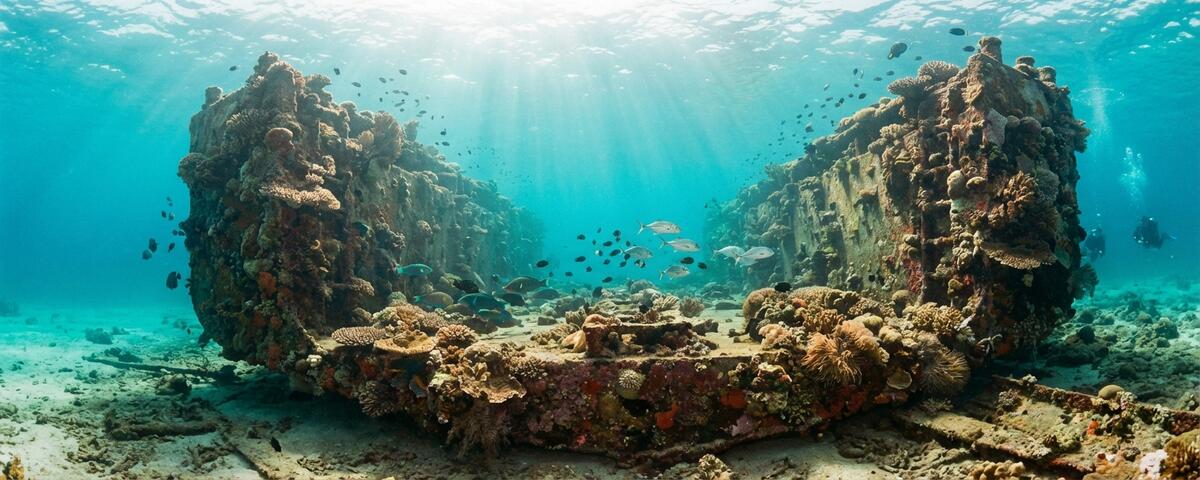
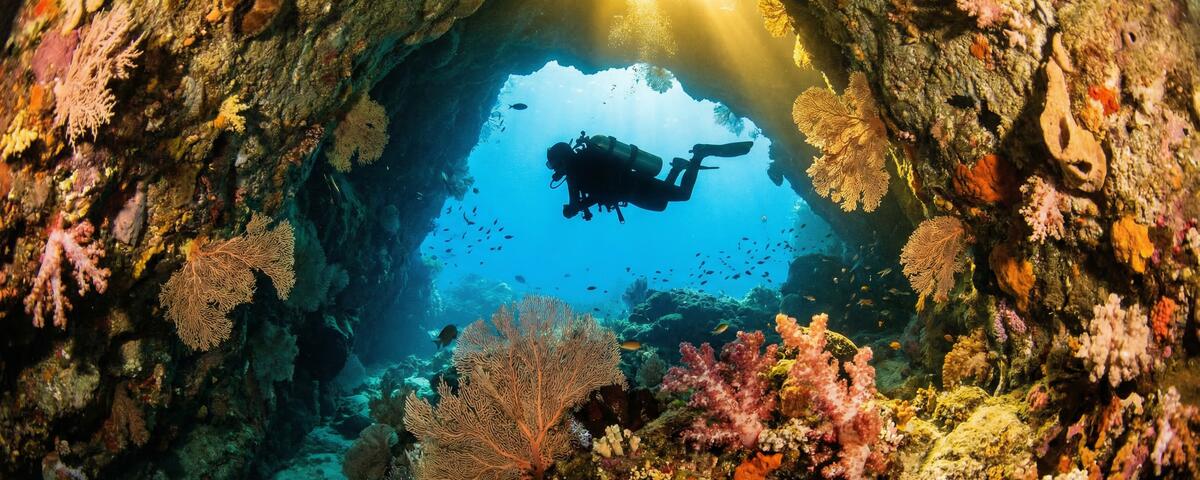
Ernie's Cave sits on the western side of the Sabang coastline in Puerto Galera, tucked into a rocky reef slope that drops from about 8 metres to well beyond 25. The cave itself is what brings divers here, a genuine overhead environment carved into the reef wall at around 18 to 22 metres, with a wide entrance that narrows as you push further inside before opening into a small chamber where the ceiling traps a pocket of air.
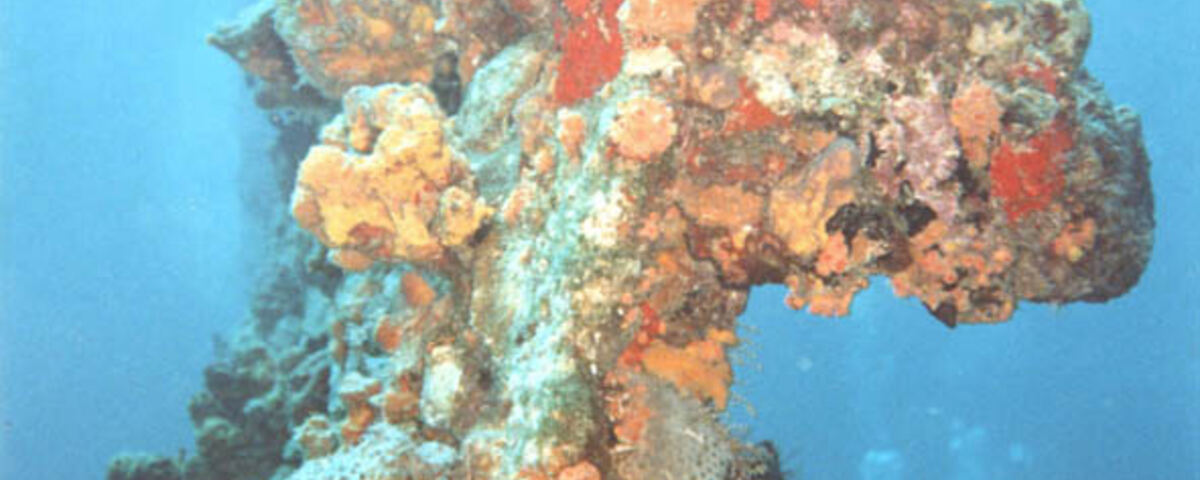
This isn't a cavern dive in the technical sense. The entrance is broad enough for two divers side by side, natural light penetrates for most of the passage, and the exit is always visible from inside. But it's a proper cave, not a swim-through with a fancy name. The walls are encrusted with orange cup corals and sponges, and the ceiling hosts clusters of small shrimp and the occasional sleeping whitetip reef shark wedged into a crevice.
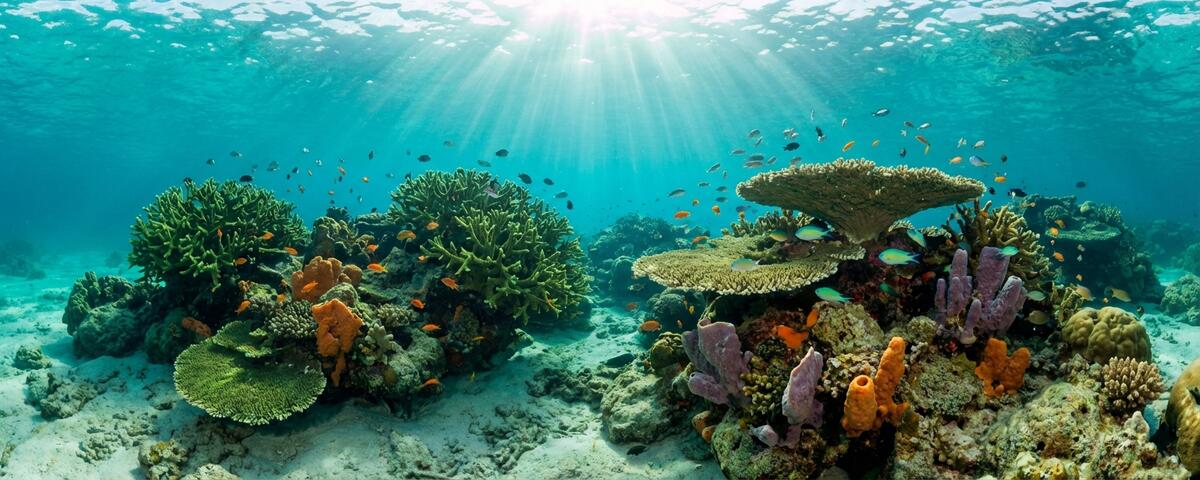
The site is named after Ernie, a local dive guide who first started bringing divers to this section of reef in the early days of Puerto Galera's dive industry. Before he mapped the cave, boats would pass right over it heading to the more famous sites further east. The reef around the cave entrance is healthy and varied, with table corals, barrel sponges, and dense schools of anthias that make the approach dive worth the trip even without the cave.
What makes Ernie's Cave worth the visit over the dozens of other sites in Puerto Galera is the combination. You get a genuine overhead environment that provides a taste of cave diving without requiring technical certification, surrounded by a reef slope that rivals anything on the Sabang side of the peninsula. The cave's depth means you'll spend your bottom time where the reef is at its most interesting, between 15 and 25 metres, where gorgonian fans spread wide and the bigger fish patrol.
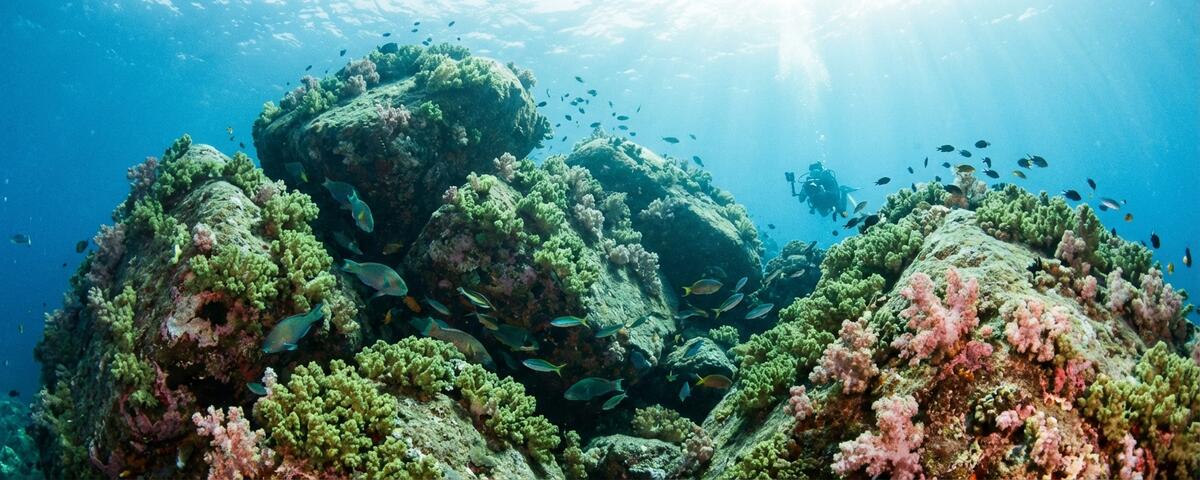
Most operators run Ernie's Cave as a morning dive when the current tends to be lighter and the sun angle sends shafts of light into the cave entrance. The effect is genuinely photogenic, blue beams cutting through the silty water inside the cave, illuminating the orange walls. Afternoon dives work but lose that lighting magic.
The site sees moderate traffic compared to Puerto Galera's headline dives like Canyons and Hole in the Wall. That's partly because the cave requires confident buoyancy and partly because operators reserve it for their more experienced guests. The result is a quieter dive with fewer fin-kicking photographers blocking the entrance.
Marine Life at Ernie's Cave
The cave interior is the main attraction, but the reef slope surrounding it delivers consistently. Whitetip reef sharks rest inside the cave during daylight hours, typically one or two animals tucked against the back wall or wedged into the ceiling crevices. They're accustomed to divers and won't bolt unless you crowd them, though a respectful 2-metre distance keeps everyone comfortable.
The cave walls are covered in orange cup corals (Tubastrea) that open fully during the day since no sunlight reaches them directly. This creates a wall of colour inside the cave that photographs beautifully with strobes. Small cleaner shrimp stations operate on the cave walls, and you'll often see grouper hovering near them waiting for service.
Outside the cave, the reef slope is classic Verde Island Passage diversity. Barrel sponges the size of oil drums sit at 20 to 25 metres, many hosting resident hawksbill turtles that return to the same sponge repeatedly. Gorgonian sea fans, some over a metre across, extend from the wall into the current at 15 to 20 metres.
Schools of yellowtail fusilier sweep along the reef edge in groups of several hundred. Trevally hunt through them in bursts. Sweetlips cluster under overhangs in groups of 10 to 15, their spotted patterns providing camouflage against the dappled reef. Napoleon wrasse appear occasionally, usually cruising the deeper sections below 20 metres.
Nudibranchs are everywhere if you look. Puerto Galera sits in the Verde Island Passage, one of the most biodiverse marine corridors on the planet, and the nudibranch count reflects that. Chromodoris, Nembrotha, and Phyllidia species are common on the sponges and soft corals along the approach. Macro photographers who skip the cave entirely to hunt nudis on the surrounding reef aren't wasting their time.
Cuttlefish are regular visitors to the sandy patches between coral heads at 12 to 15 metres. They're less skittish here than at busier sites, presumably because fewer divers means less harassment. Broadclub cuttlefish are the most common species, and their colour-change displays are worth watching for a few minutes if you spot one.
The shallower reef top at 8 to 10 metres supports dense hard coral coverage with branching Acropora and Porites colonies hosting clouds of damselfish and chromis. Clownfish in various species (Clark's, tomato, and occasionally spine-cheek) occupy anemones scattered across the reef flat. It's a solid safety stop zone with enough to look at that you won't be staring at your computer.
Dive Conditions
Ernie's Cave is an advanced dive, and that rating is honest rather than aspirational. The cave portion requires controlled buoyancy in a confined space with a silty bottom that punishes poor fin technique within seconds. One misplaced fin kick inside the cave can reduce visibility from 10 metres to zero in the time it takes to blink. If your buoyancy isn't dialled in, stay outside the cave and enjoy the reef. Seriously.
Current at the site ranges from negligible to moderate depending on tidal state. The cave itself is sheltered from current, but the approach along the reef slope can have a mild drift, usually running west to east. This is manageable for any diver comfortable with Puerto Galera conditions, which generally run milder than sites like Canyons or Verde Island.
Visibility fluctuates between 8 and 20 metres. The best visibility arrives during the dry season months of January through April when plankton loads drop and the seas calm. Inside the cave, visibility is always lower than outside due to suspended particles and the inevitable silt disturbance from divers. On a good day, you'll see 10 to 12 metres inside; on a poor day, 5 to 6 metres. Either way, the exit light is always visible.
Water temperature runs 27 to 30 degrees from March to October, dropping to 25 to 27 degrees in the cooler months of November to February. Most divers manage fine in a 3mm full suit year-round. The cave interior feels slightly cooler than the open water, though whether that's actual temperature difference or psychological is debatable.
The dive profile is straightforward. Drop to the reef slope at 12 to 15 metres, follow the wall west to the cave entrance at about 18 metres, explore the cave interior (which bottoms at 22 metres at the back wall), exit and work the reef slope at 15 to 20 metres heading back east, then ascend to the reef top for your safety stop. Total dive time runs 45 to 55 minutes on air, longer on nitrox.
Advanced Open Water certification is the minimum. Most operators require at least 30 logged dives, and some ask for 50. Peak Buoyancy specialty or equivalent experience is strongly recommended. If the operator doesn't ask about your experience level before bringing you here, that's a red flag about their operation.
⚓ Divemaster Notes
The cave is the draw, but it's also where things go sideways if you bring the wrong diver. I brief Ernie's Cave like this: if you can't hover motionless at 20 metres for 60 seconds without adjusting, you're not going inside. I know that sounds harsh, but one diver silting out the cave ruins the dive for everyone behind them, and it's happened enough times that I don't feel guilty about the gatekeeping.
I run modified flutter kick or frog kick inside the cave. No scissor kicks, ever. The silt layer on the cave floor is deceptively thin, maybe 5 centimetres of fine particles sitting on rock, and it goes from crystal clear to zero visibility with one badly placed fin. I demonstrate the kick pattern during the briefing on the boat and watch everyone practice. Anyone who defaults to scissor kicks under pressure stays outside.
The route I use: enter at 18 metres where the cave mouth is widest, stay near the ceiling (the silt is on the floor, not the ceiling), push to the back chamber where you can surface into the air pocket (fun novelty, but don't remove your reg; the air is stale), then exit along the same path. Total time inside is about 8 to 12 minutes. Don't rush it, but don't linger either. Every minute inside adds silt to the water column.
The whitetip sharks inside have been using the cave for years. They're habitual. If they're missing, it usually means a recent storm or a previous group spooked them. Don't chase them and don't block their exit path. I position divers along one wall so the sharks always have a clear route to the entrance.
Photographers: bring strobes and set them wide. The cave interior is dark enough that autofocus struggles without a focus light. Wide angle is the right lens for the cave entrance shots with the blue water behind. If you want macro shots of the cup corals, you'll need a second dive or a willingness to skip the reef portion.
Air management is critical because the cave sits at 18 to 22 metres. I set a turnaround pressure of 130 bar and a firm ascent at 80 bar. Nitrox 32 is ideal here, giving you an extra 10 to 15 minutes of bottom time at the cave's depth without changing the deco status.
How to Get to Ernie's Cave
Puerto Galera sits on the northern tip of Mindoro Island, directly across the Verde Island Passage from Batangas on the Luzon mainland. The standard route from Manila takes about 3 to 4 hours door to door: taxi or bus to Batangas Pier (2 to 2.5 hours depending on traffic), then a fast ferry or bangka across to Puerto Galera (45 to 90 minutes depending on the vessel).
Si-Kat and Montenegro Lines operate the most frequent ferry services from Batangas to Puerto Galera, with departures roughly every hour during daylight. The fast ferry takes about 45 minutes and costs around PHP 300 (about USD 5.50). Bangkas (traditional outrigger boats) are cheaper but slower and rougher in anything above mild seas.
Most divers arrive at Muelle Pier in Puerto Galera town and transfer to Sabang Beach by tricycle (15 minutes, PHP 150). Sabang is where nearly all dive operators are based and where boats depart for Ernie's Cave and the other western sites.
For direct Manila airport connections, some dive resorts arrange private van transfers to Batangas Pier, which cuts the travel hassle considerably. This typically costs PHP 3,000 to 5,000 per vehicle (fits 4 to 6 people with dive bags).
Ernie's Cave is a short boat ride from Sabang Beach, roughly 5 to 10 minutes by bangka heading west along the coastline. The proximity makes it easy to combine with other western sites like Monkey Beach or Manila Channel on a two-dive morning trip.
Peak diving season runs November to May during the northeast monsoon, when seas are calmer and visibility peaks. The southwest monsoon (June to October) brings rougher conditions and reduced visibility, though diving continues year-round. Some operators suspend trips to exposed western sites like Ernie's Cave during the worst of the monsoon swells in July and August.
Gear Recommendations
Torch essential, not optional. The cave interior is dark enough that you'll miss the wall detail and marine life without one. A primary light of at least 1,000 lumens plus a backup clip-on is the minimum. Strobes mandatory for photography inside the cave where ambient light drops to near zero. Wide-angle lens recommended for cave entrance silhouette shots; switch to macro for the nudibranch hunting on the surrounding reef. 3mm full wetsuit is standard year-round, though a hood helps if you're spending extended time inside the cave where the water feels cooler. Reef-safe sunscreen applied well before the dive; the shallow reef top on the safety stop has healthy corals worth protecting. Dive computer with backlight function you can actually read in low-light conditions. SMB and reel for surface signalling, standard Puerto Galera requirement. Nitrox certification recommended to extend bottom time at the cave's 18 to 22 metre depth range.
Recommended Dive Operators
Action Divers has been operating from Sabang Beach since the late 1990s and their guides know the cave intimately. They run small groups (maximum 4 divers per guide) and their pre-dive briefing for Ernie's Cave is thorough, covering buoyancy expectations, silt management, and the route through the cave. Equipment is well-maintained and they carry a good range of rental sizes.
Sabang Divers operates from the beachfront and offers Ernie's Cave as part of their advanced site rotation. Their divemasters are mostly long-term locals who grew up freediving these reefs before certification was standard. That local knowledge translates to better marine life spotting and route choices based on the day's conditions.
Asia Divers is one of the original Puerto Galera operations and runs a professional outfit with a strong focus on diver safety. Their approach to Ernie's Cave is conservative, they'll assess your buoyancy on an easier site first and only take you to the cave if they're satisfied you won't silt out the interior. Equipment and boats are a step above the budget operators.
Tech Asia runs out of Sabang and caters to more experienced divers. If you want to push deeper around the cave area or combine it with sidemount practice, they're the operator to choose. Their guides have technical diving backgrounds and won't rush the cave portion of the dive.
All operators charge roughly PHP 1,500 to 2,500 per dive (USD 27 to 45) including equipment rental, with discounts for multi-dive packages. Nitrox is available at most shops for an additional PHP 200 to 400 per fill.
Liveaboard Options
Puerto Galera is not a liveaboard destination. The sites are close enough to shore that day-boat diving from Sabang Beach covers everything. Boat rides to Ernie's Cave take under 10 minutes from the beach. Budget accommodation in Sabang starts at PHP 800 per night (USD 15) for basic fan rooms. Mid-range resorts with air conditioning, pools, and dive shop partnerships run PHP 2,500 to 5,000 per night (USD 45 to 90). Several dive resorts offer all-inclusive dive-and-stay packages at PHP 4,000 to 7,000 per night that include 2 to 3 boat dives daily, equipment, and breakfast. Most divers book 4 to 7-night stays and dive twice daily, cycling through 15 to 20 sites during their visit. Sabang has enough restaurants, bars, and beach infrastructure that you won't feel isolated between dives.